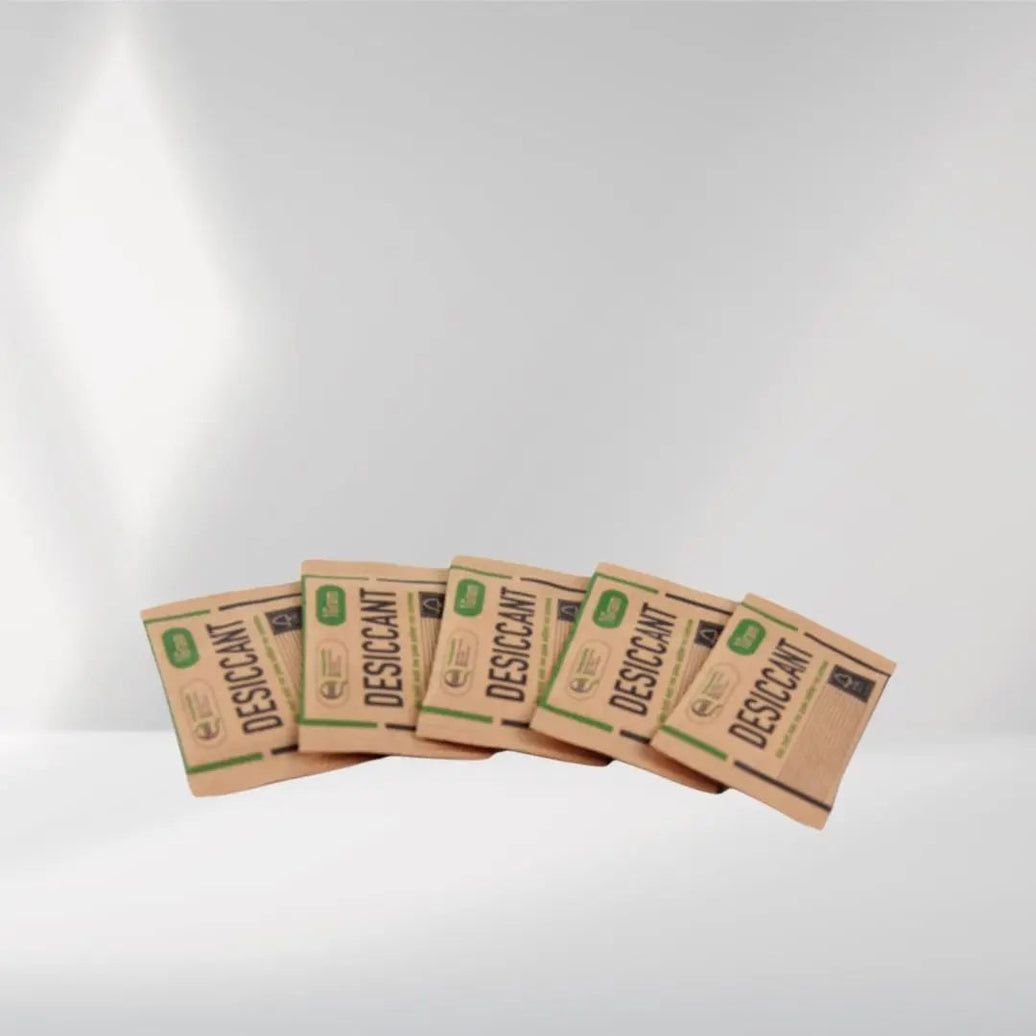
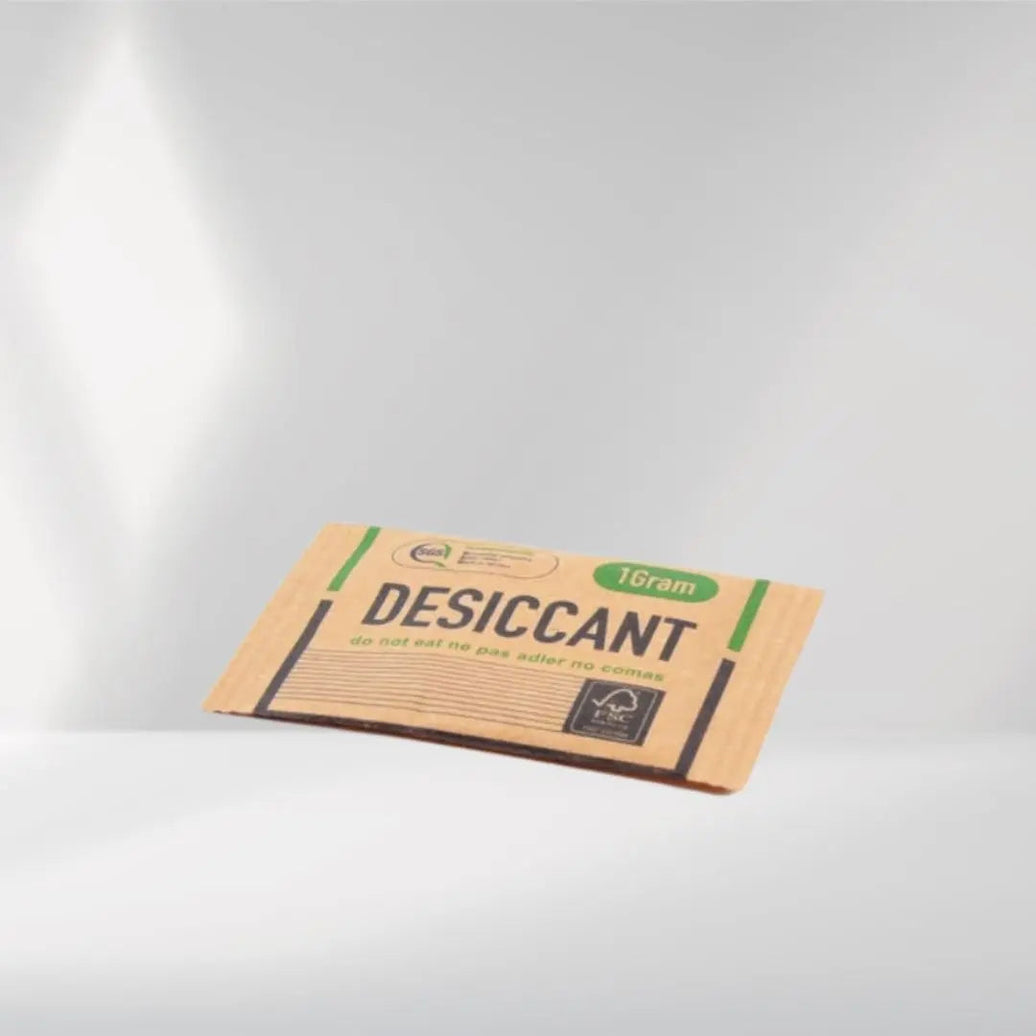
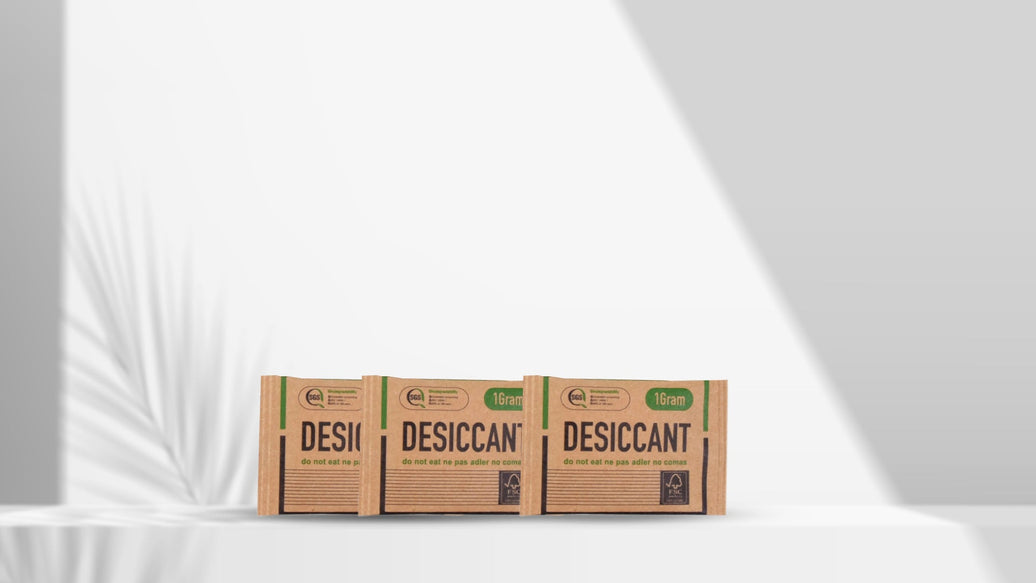
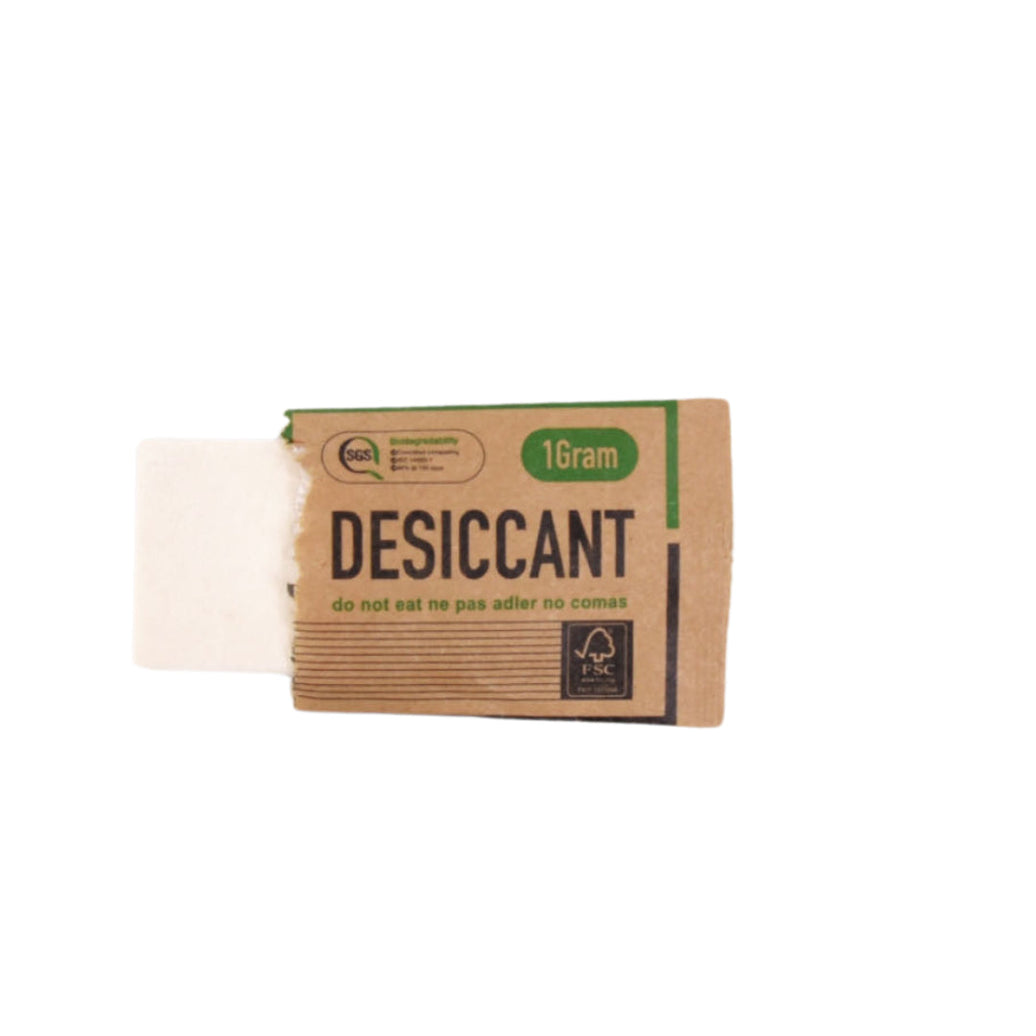
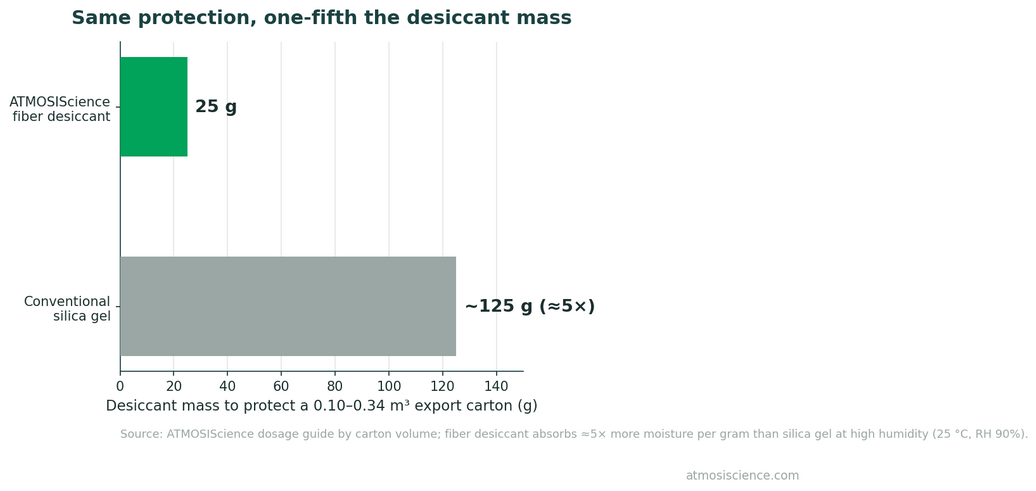
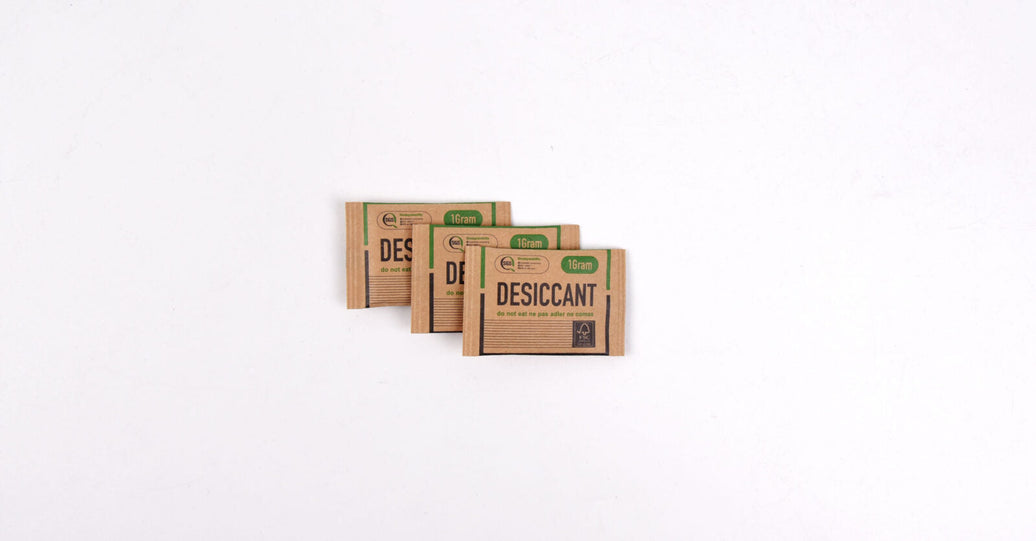
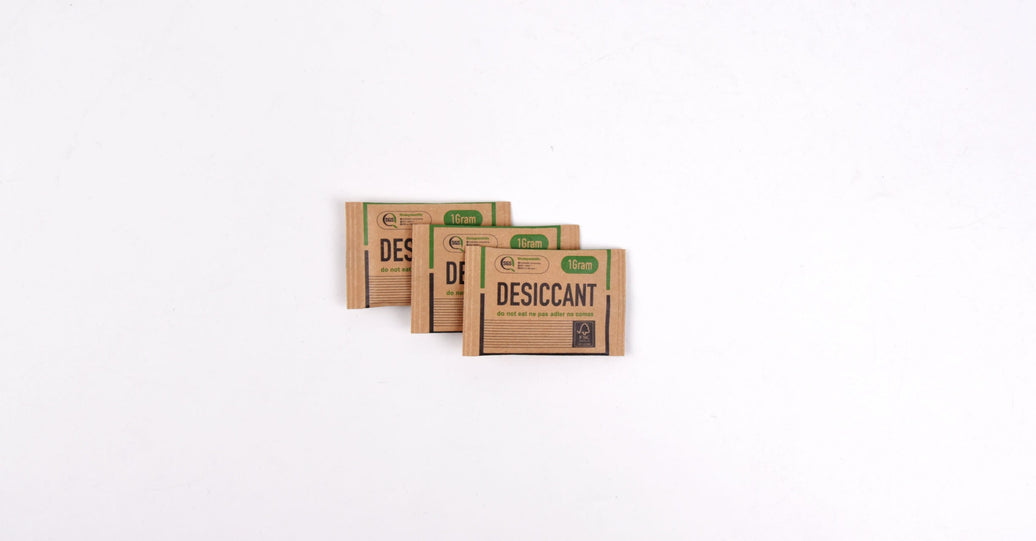
Quick answer: A custom-printed desiccant card is a flat, rigid paper desiccant with your logo printed in the center. The ATMOSIScience Fiber Card does this: it sits flat under the lid or on the powder, holds over 70% of its own weight in moisture at 90% RH (about 2.3 times silica gel), and replaces the generic DO NOT EAT pillow with the one insert every customer sees each time they open the pack.
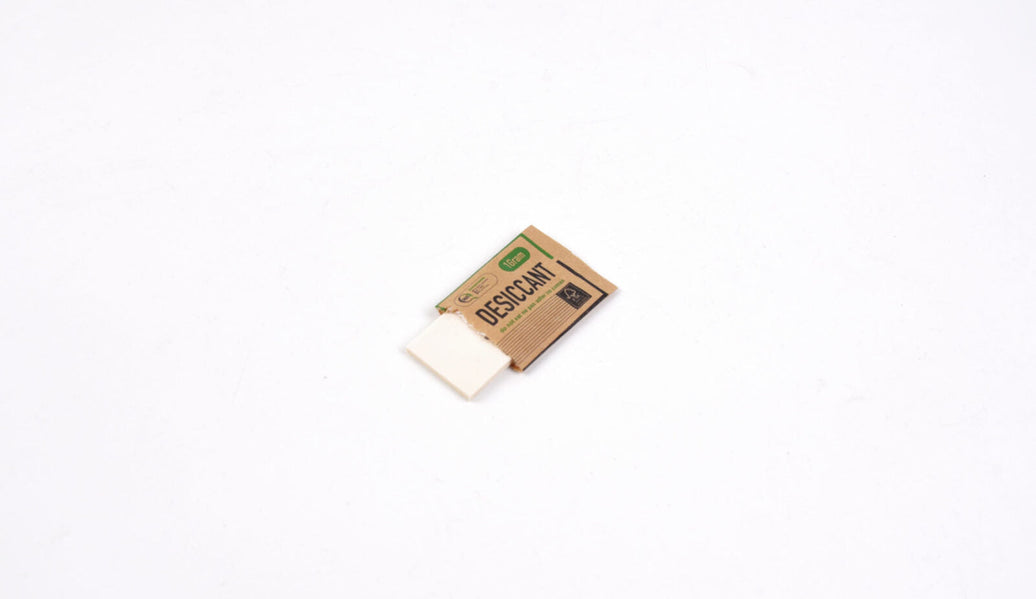
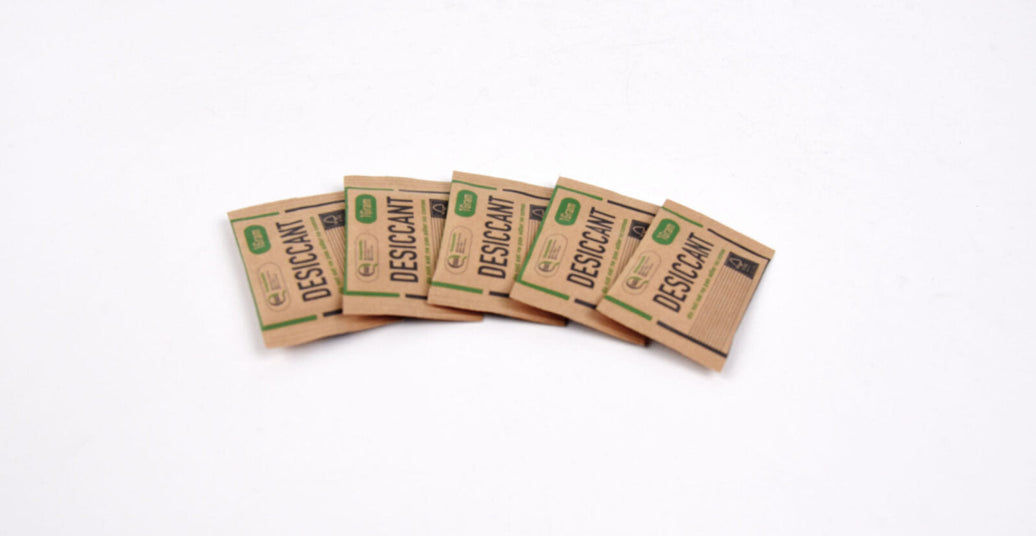
Packaging teams spend real money making the unboxing on-brand: printed tissue, branded tape, a founder's note. Then, sitting on top of the product, is the first thing the customer actually touches: a generic pillow stamped DO NOT EAT. A printed desiccant card turns that required insert into branded space. This guide covers what the card is, where it earns its keep, and how to spec one.
What the Fiber Card is
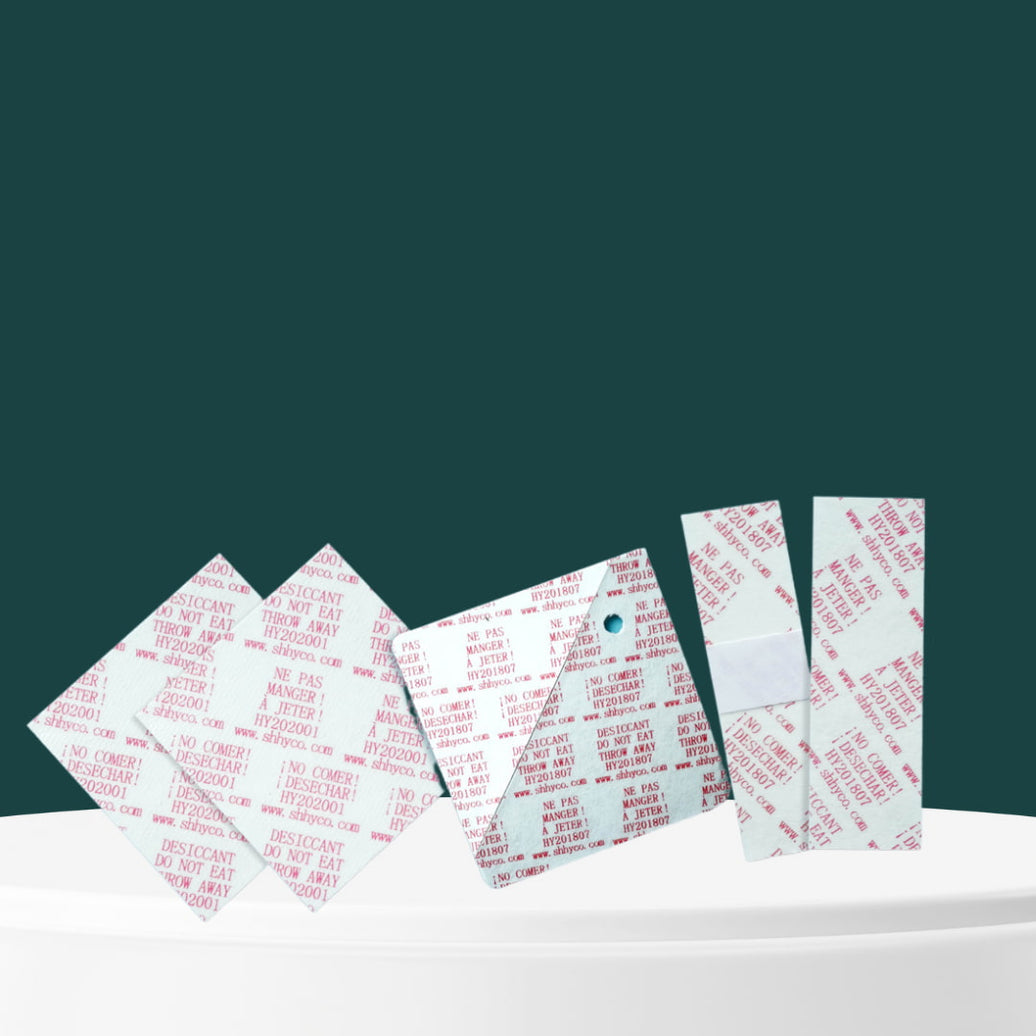
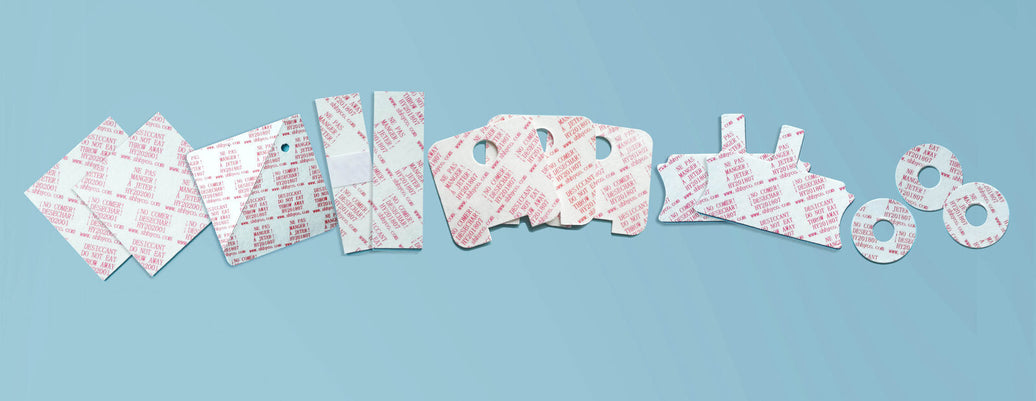
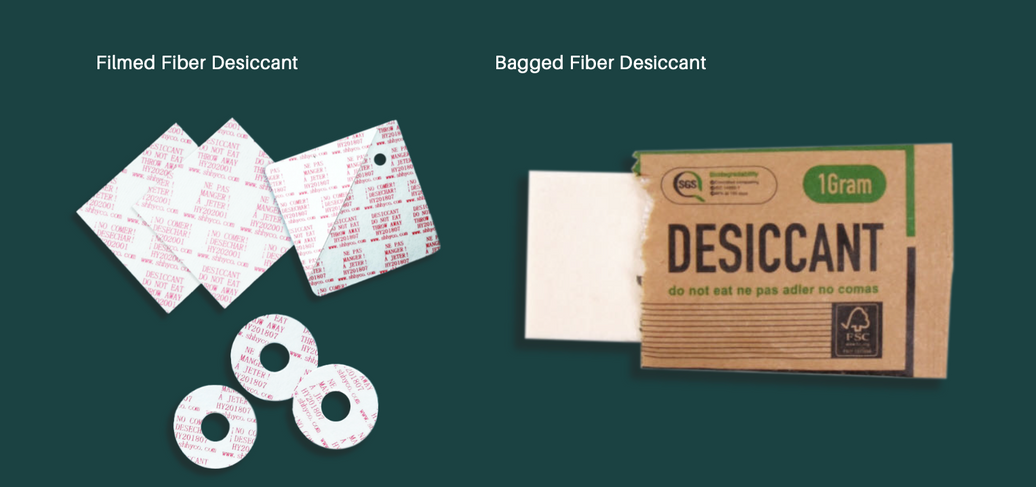
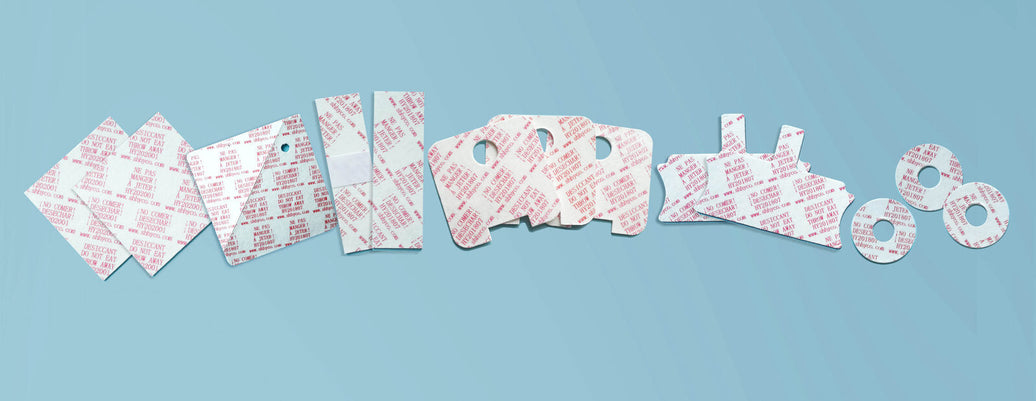
The Fiber Card (earlier called film desiccant or film card) is a flat card built on a plant-fiber substrate with food-grade calcium chloride bound inside it. It uses the same absorption chemistry as our bagged fiber sachets, in card form. Because the active layer is a continuous mat rather than loose beads, the card can be die-cut to squares, circles or custom shapes without releasing material. More on the format in what paper desiccant is.
Reference sizes, about 1 mm thick:
| Size | Dimensions | Weight | Replaces about |
|---|---|---|---|
| FF-3 | 25 x 12 mm | 0.15 g | 0.5 g silica gel |
| FF-6 | 30 x 20 mm | 0.35 g | 1 g silica gel |
| FF-15 | 60 x 25 mm | 1.0 g | 2.5 g silica gel |
Most B2B programs run custom die-cut sizes matched to the package.
Why the construction matters for printing
Rigid. A printed surface only works if it stays visible. The card is stiffer than some credit cards, so it sits flat on the powder bed or under the lid and shows its face. A soft sachet crumples, buries itself and hides whatever is printed on it. Rigidity also helps automated insertion (see the co-packer insertion guide).
Paper-wrapped. The print sits on a paper surface that looks and feels like premium unboxing material, and the card is certified industrially compostable. One honest note: the core contains PLA, so describe it as paper-based or compostable, not plastic-free.
Center print. A full-color logo or mark, centered on the card face. Artwork is set up per program during quoting.
The impression math
Take a daily-use powder: protein, greens, collagen, an electrolyte mix. The customer opens the tub 30 or more times a month and looks into it every time. Over a three-month use life that is roughly a hundred brand impressions, at the moment of use, for the marginal cost of printing a part the pack already needed. The founder's note gets read once.
The same logic applies wherever the desiccant sits at the point of daily use: cap inserts in supplement bottles (bottle cap inserts), lid cards in pet treat tubs (pet food guide), and on-powder cards in protein powder, drink mixes and spices.
There is a quieter benefit too. A card carrying the brand's own logo is clearly meant to be there. An anonymous sachet in food sometimes triggers the there-was-something-in-my-tub review.
Where the card fits
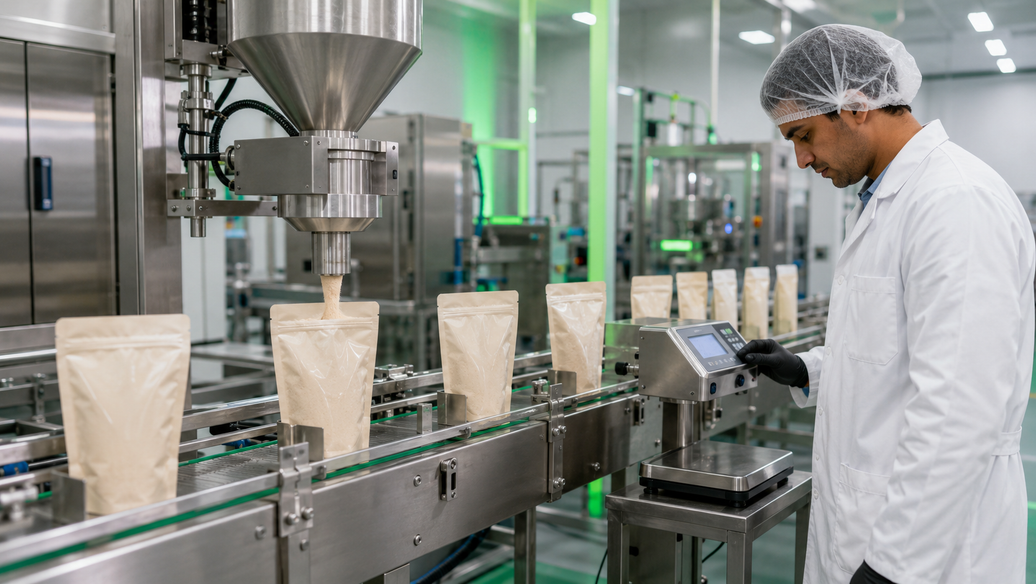
- Powder tubs and canisters: a rigid, visible card on top of the powder. Why powders need it: why powders cake.
- Bottle caps and jar lids: die-cut circles that sit in the cap with no headspace cost.
- Blister packs, diagnostics and kits: the flat profile fits where a sachet cannot.
- Flat-pack goods: garments, footwear and leather (garments and footwear guide).
- Compact food packs: dried fruit, jerky, sea moss.
The function does not change
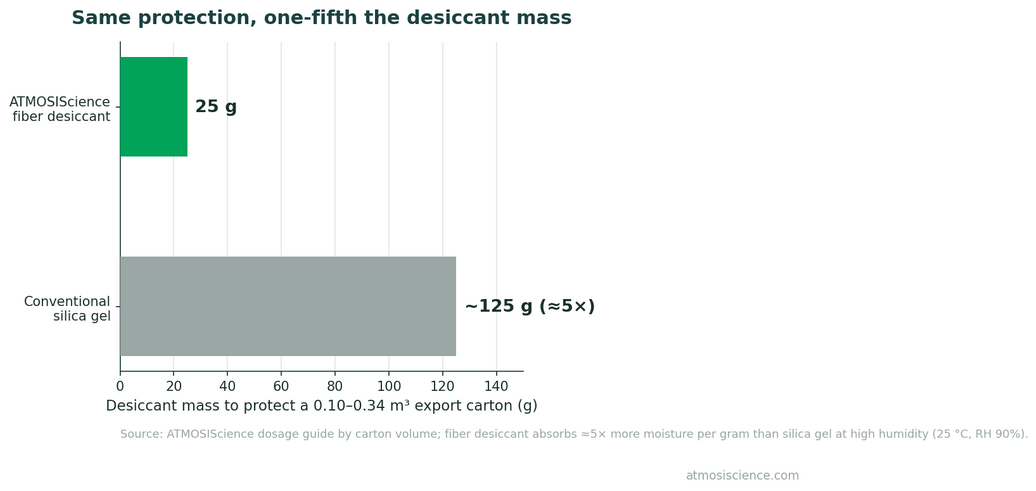
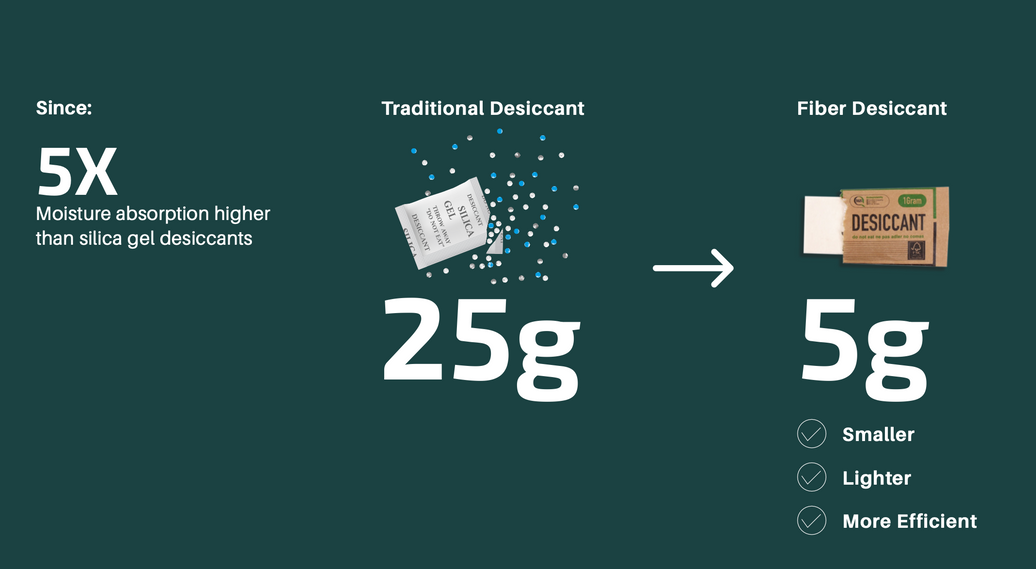
The card still holds over 70% of its own weight at 25°C and 90% RH, against about 30% for silica gel. It is one-way, so size it for the full shelf life rather than planning to dry and reuse it. The documentation is listed below.
How a print program runs
- Send package dimensions, annual volume and artwork.
- Receive a die-cut recommendation and a print mockup.
- Test a sampled card in the real container.
- Run at volume.
Most brands start with one hero SKU, the daily-use product opened most often, then extend once the unit math works.
FAQ
What can be printed?
A full-color logo or mark, centered on the card. Short text such as a removal instruction in brand voice is handled per program during artwork setup.
Does printing affect food-contact status?
Ink is a new component, so treat it as one. Ask for the ink documentation and where the print sits relative to the product. The questions to ask are in ink migration and food contact.
Is film desiccant the same as the Fiber Card?
Yes. Film desiccant and film card were earlier names for the same format. Fiber Card is the current name.
What is the minimum order for printed cards?
It depends on size and print run. Send dimensions and annual volume and the team replies with MOQ and lead time, quoted next to the plain-card price so the branding premium is clear.
Can we print on sachets instead?
The card is the printable format; its flat, rigid face keeps the logo visible. Sachets remain the right choice for drums and bulk liners where no customer looks.
Documents
SGS ISO 9001 certificate (CN05/31171), SGS compostability testing to EN 13432 and ASTM D6400, ISO 14067 carbon footprint of 1.44 kg CO₂e per kg, and raw-material disclosure (lignocellulose fiber, calcium chloride, PLA, food-grade paper, water). Full list: supplier qualification pack.
See your logo on the card
Send package dimensions, annual volume and your logo. We reply with a die-cut spec, a print mockup, certificates and pricing.
Prefer email? info@atmosiscience.com