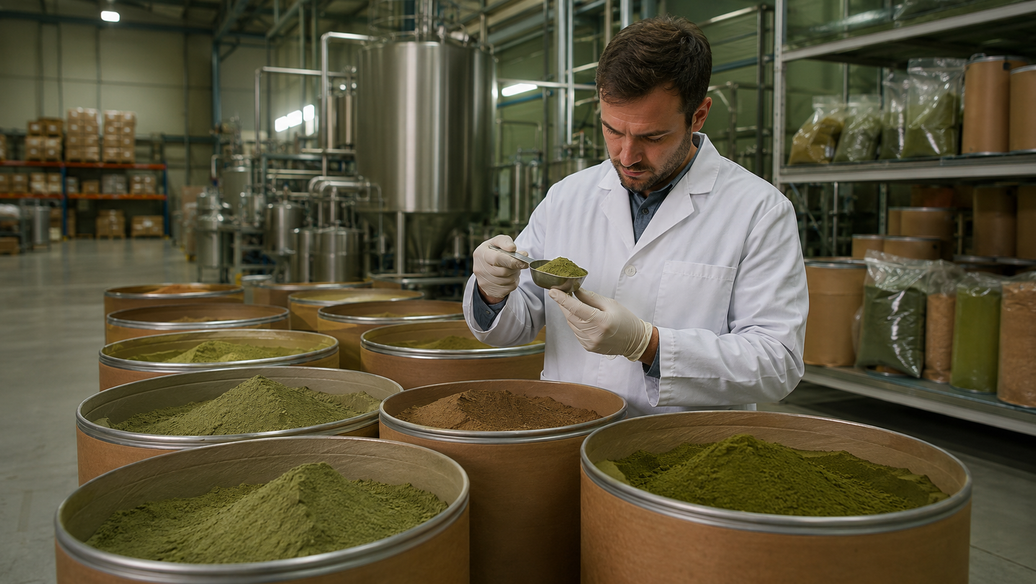
Ask any seasoning co-packer which SKUs generate the most complaints and the answer is consistent: garlic powder, onion powder, and any blend built on them. They cake in the jar, bridge in the hopper, and harden in the drum — and the shaker cap stops shaking. The driver is not the recipe. It is headspace humidity meeting some of the most deliquescent ingredients in food manufacturing.
This guide covers how moisture degrades spices and seasoning blends, where the risk concentrates in US production and distribution, and how processors spec a desiccant for spices that is itself food-safe, dust-free, and audit-ready.
Three ways moisture degrades a spice product
1. Caking and flow loss. Garlic and onion powders are deliquescent: above their critical humidity they dissolve in the moisture they attract, then recrystallize into solid bridges. A blend's most deliquescent component sets the caking threshold for the whole formula — add salt, dextrose, or fruit-acid systems and the threshold drops further. The full mechanism is in our pillar on why powders cake.
2. Color fade. Paprika, turmeric, chili powders, and dried herbs lose visual intensity faster at elevated moisture — water activity accelerates the oxidative and enzymatic pathways that dull carotenoids and chlorophyll. On a retail shelf, faded color reads as old product.
3. Flavor and aroma loss. The volatile oils that define a spice degrade faster in a humid headspace, and moisture-driven clumping reduces the surface area that releases aroma when the consumer opens the jar.
There is also a hard food-safety line: enough moisture raises water activity toward the range where mold becomes possible in botanical material. Desiccant keeps the headspace far from that line.
Where the moisture actually gets in
At filling. Air sealed into the jar or pouch on a humid production day carries its own moisture load — one reason caking complaints cluster seasonally.
Through the wall. PET jars and many flexible films permeate slowly over a 18–36 month spice shelf life. Slow times long equals significant.
At every opening. A consumer spice jar is opened hundreds of times over its life, frequently next to a steaming pot. Steam-laden kitchen air is the worst-case exchange — and shaker-cap jars cannot be resealed tightly.
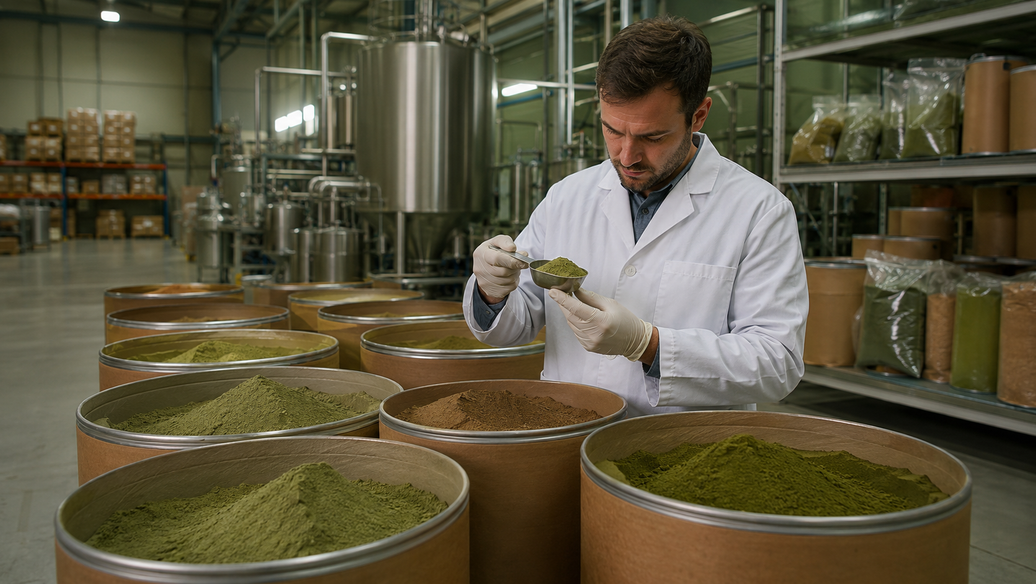
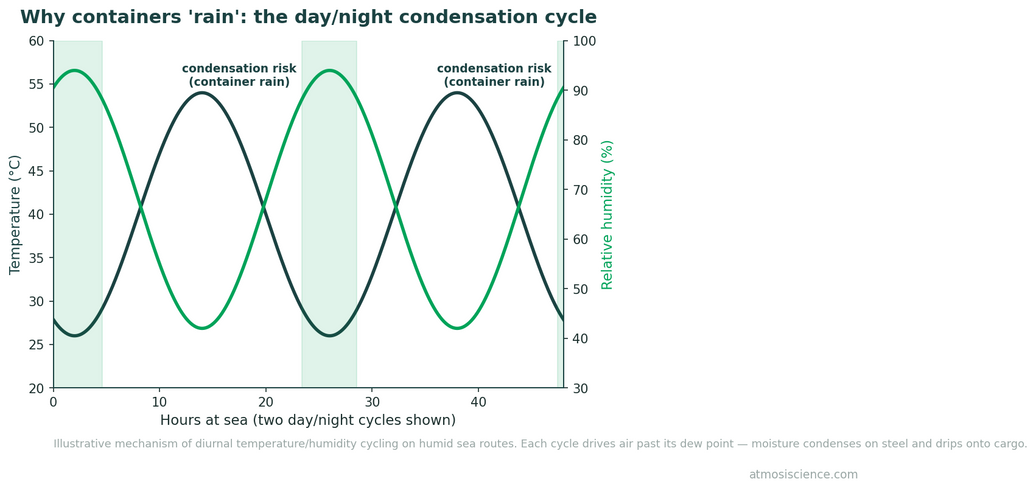
In bulk. Imported spices arriving by sea container have already been through humidity cycling; our article on container desiccant covers that leg. Once in US warehouses, fiber drums and totes keep breathing with the seasons.
Speccing desiccant for spice formats
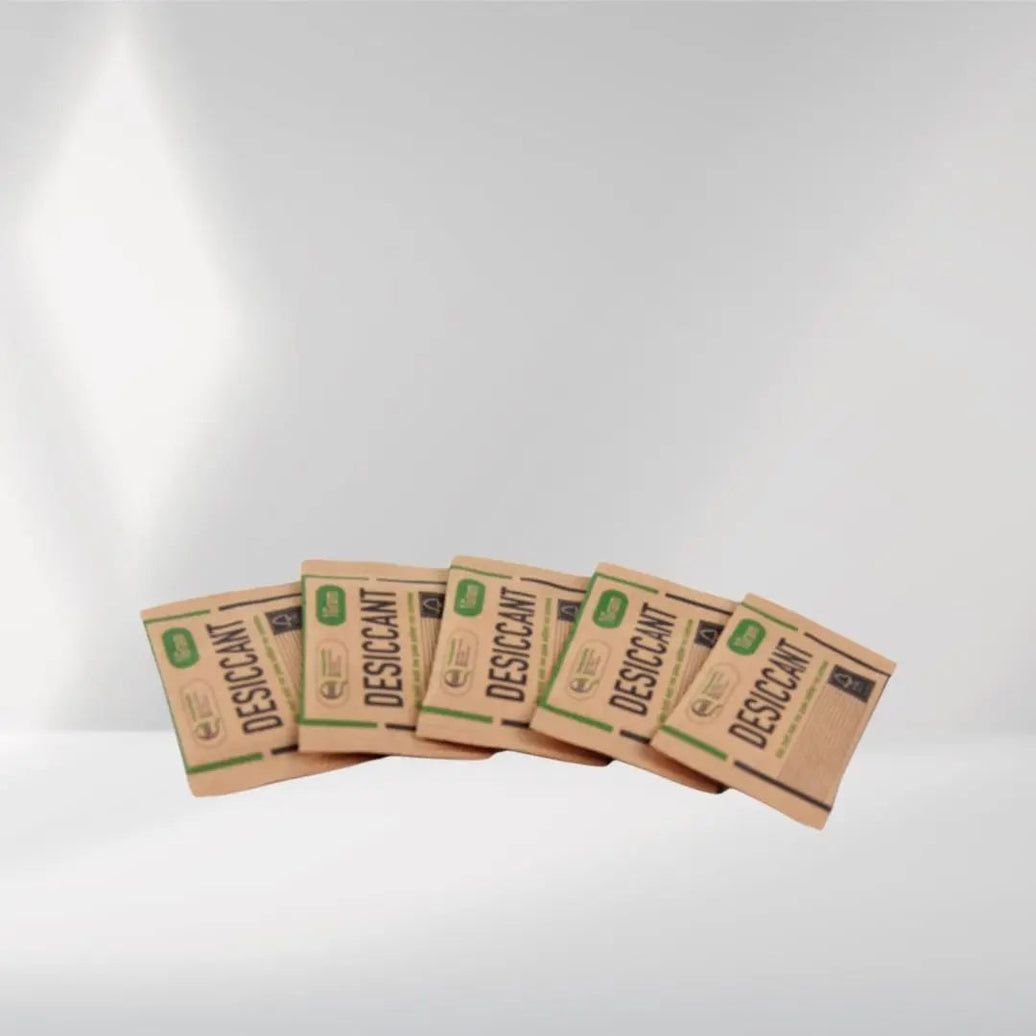
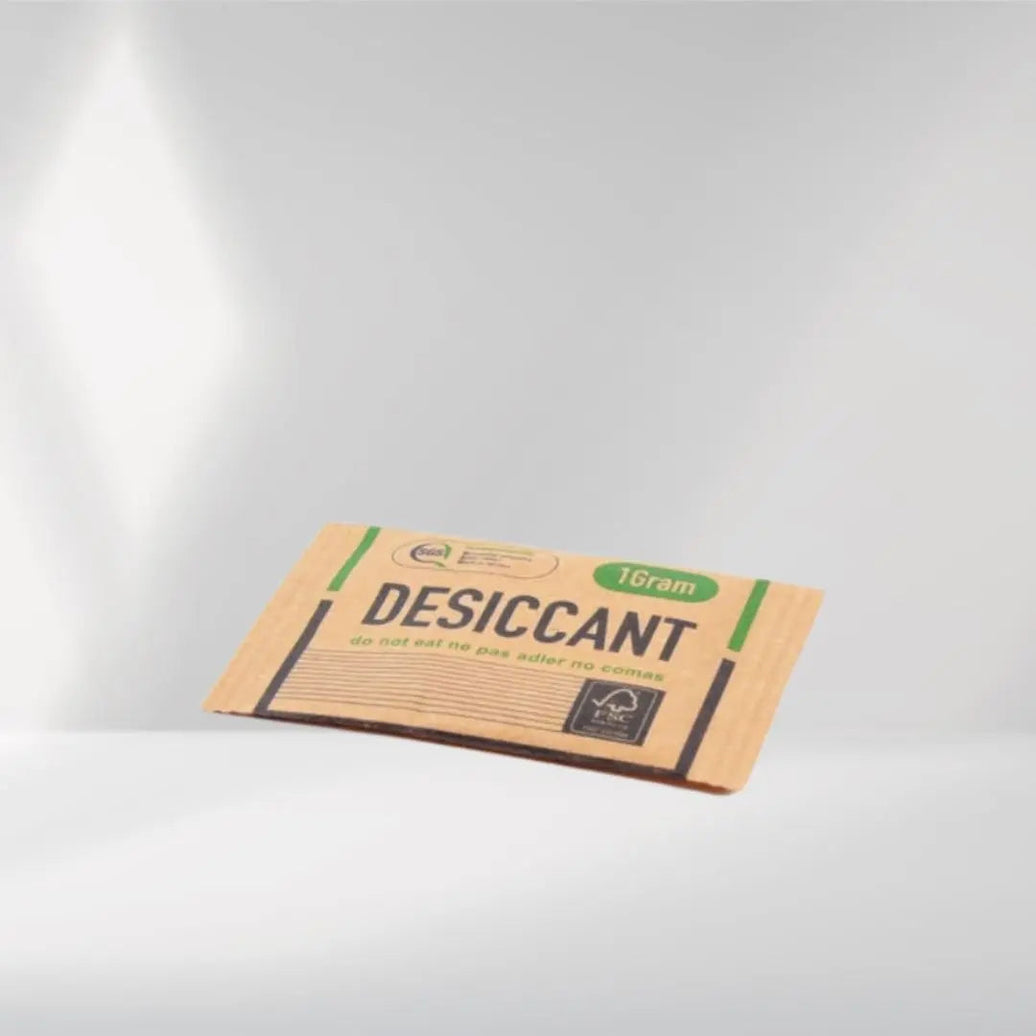
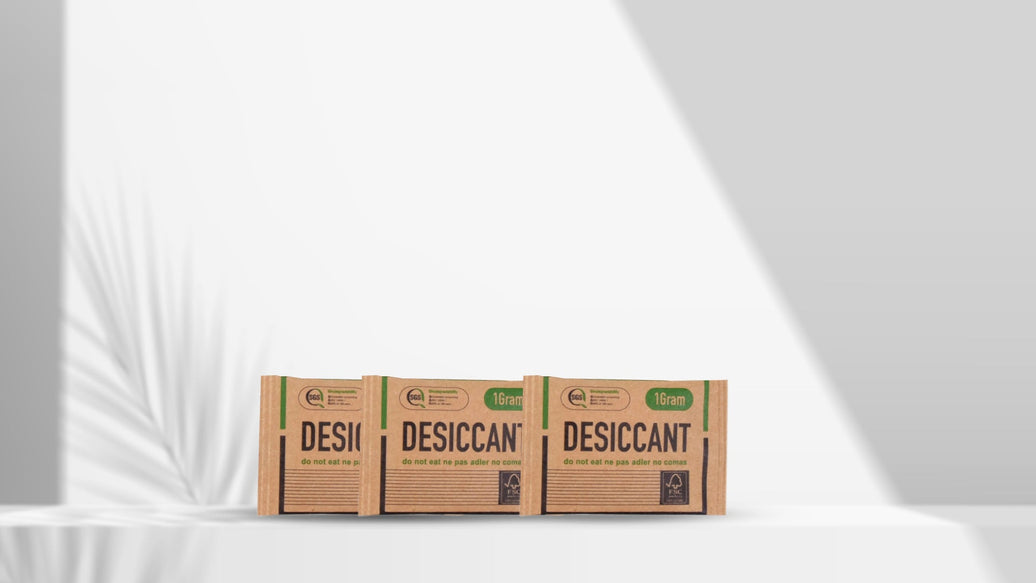
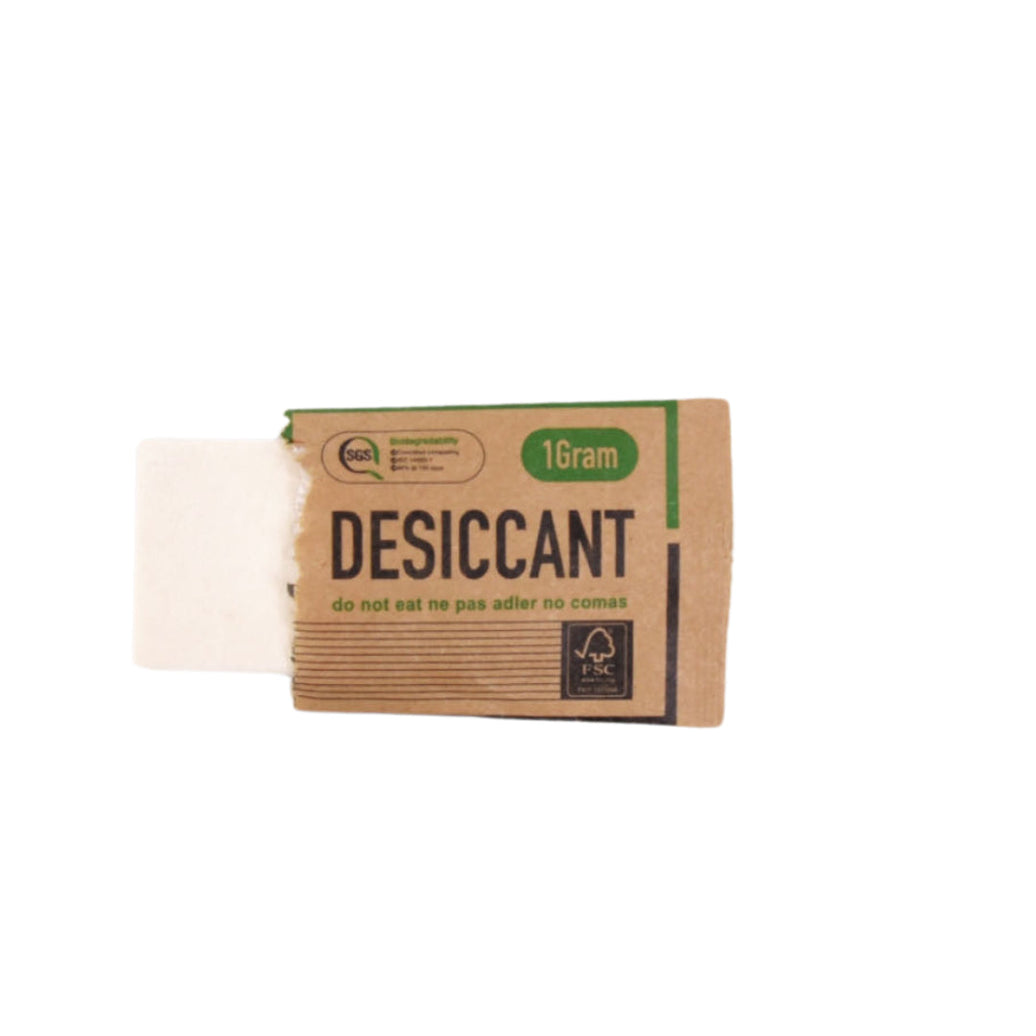
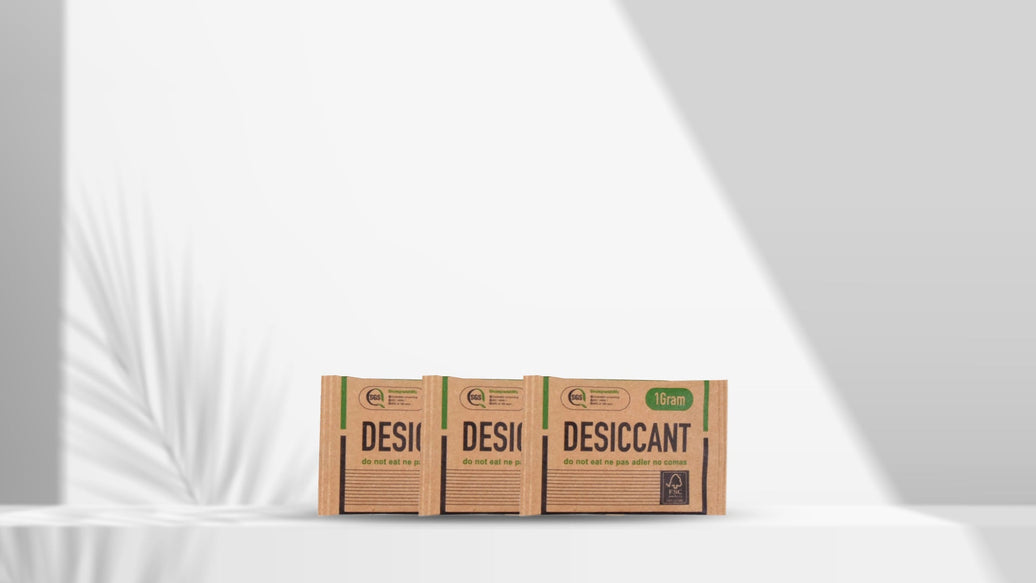
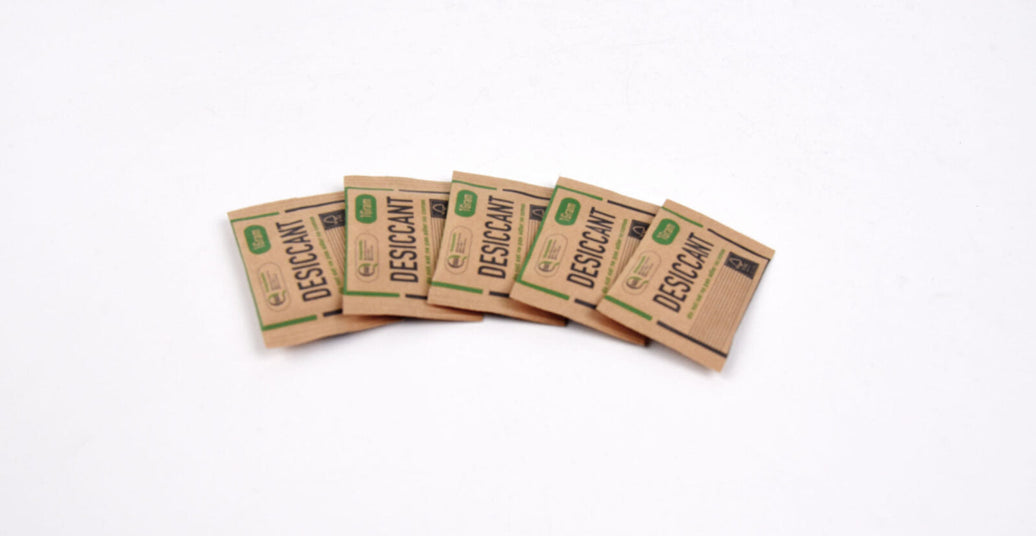
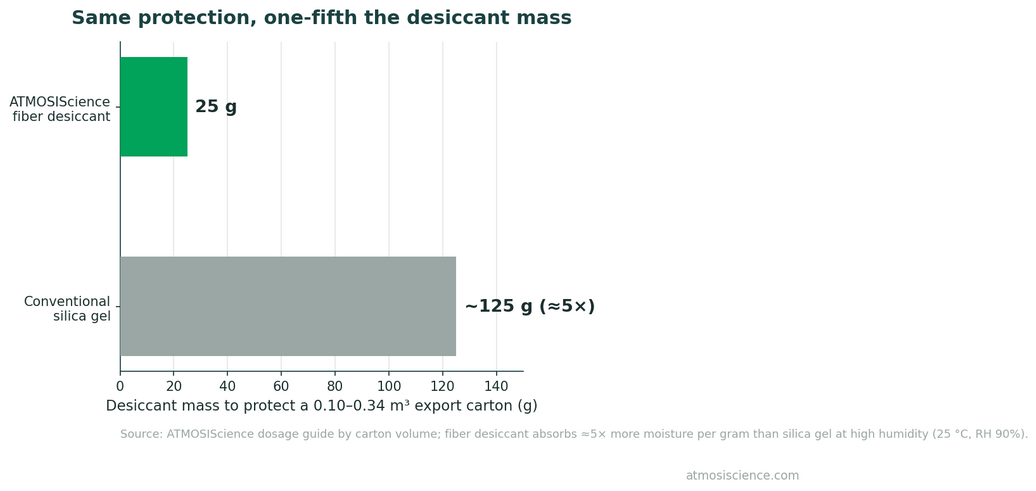
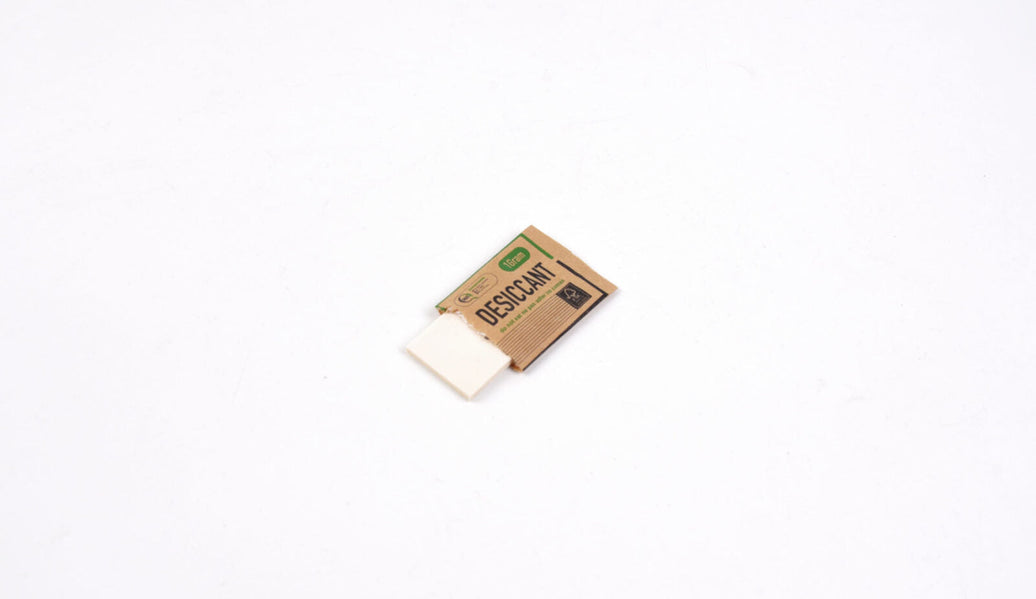
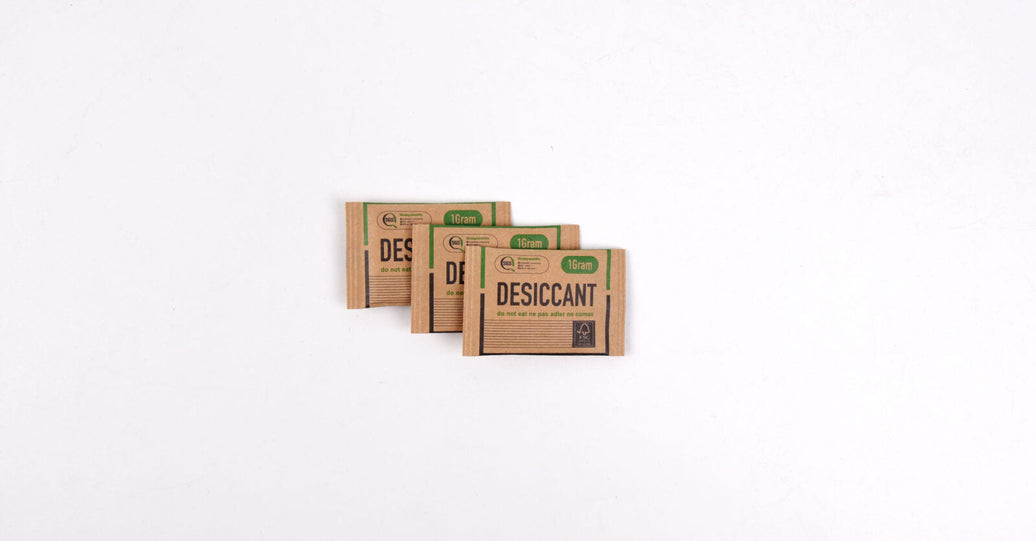
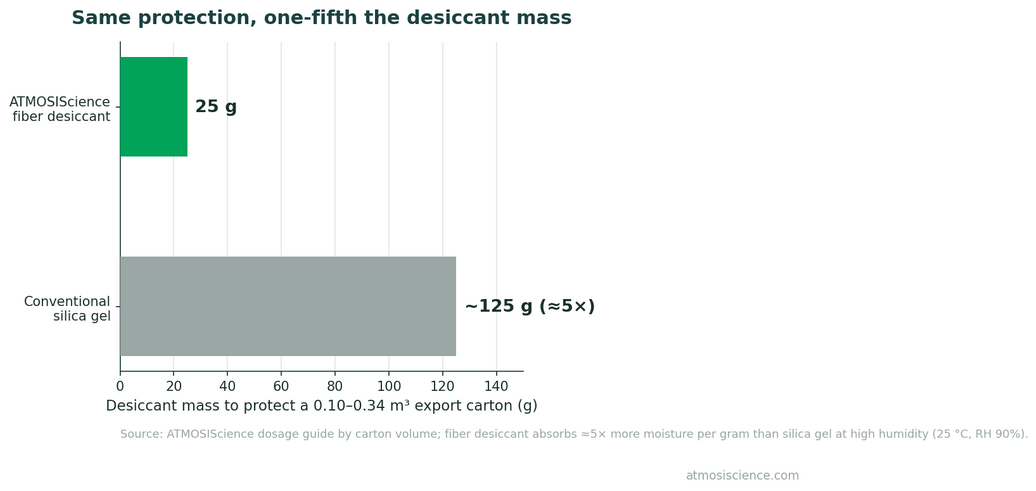
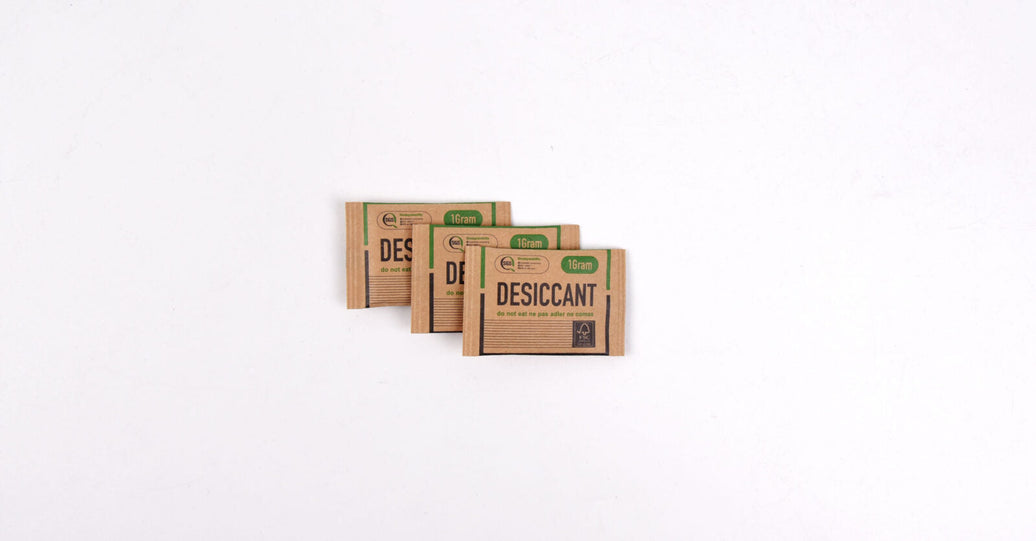
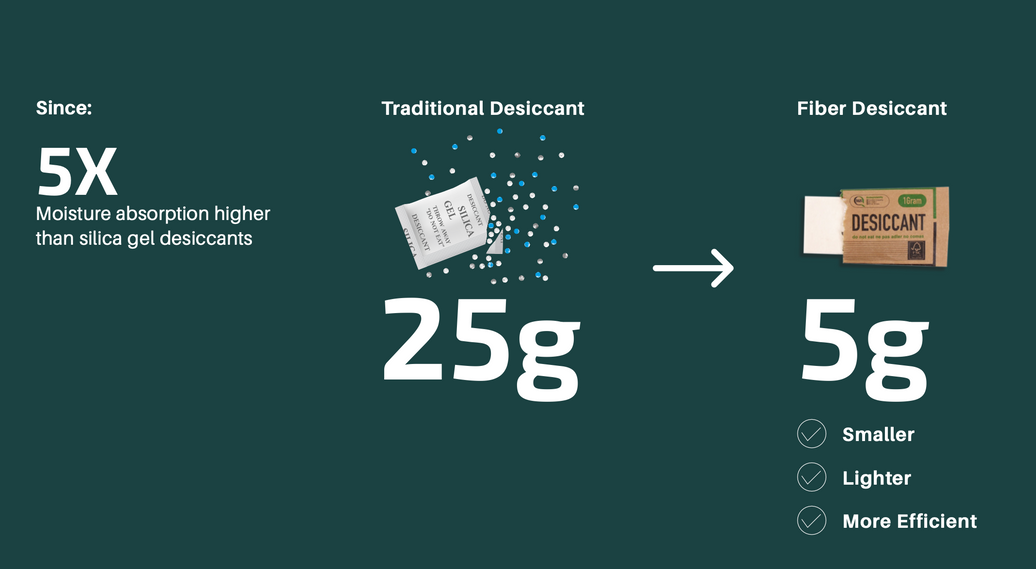
Bulk drums, totes, and liners (processors and co-packers). High-capacity fiber sachets (25–60 g, custom weights available) inside the liner hold the headspace down between openings. Fiber desiccant absorbs over 70% of its own weight at 25°C and RH 90% — roughly 5x conventional silica gel — so about 25 g protects a standard 0.10–0.34 m³ carton. Dosage math is in our dosage guide by carton volume.
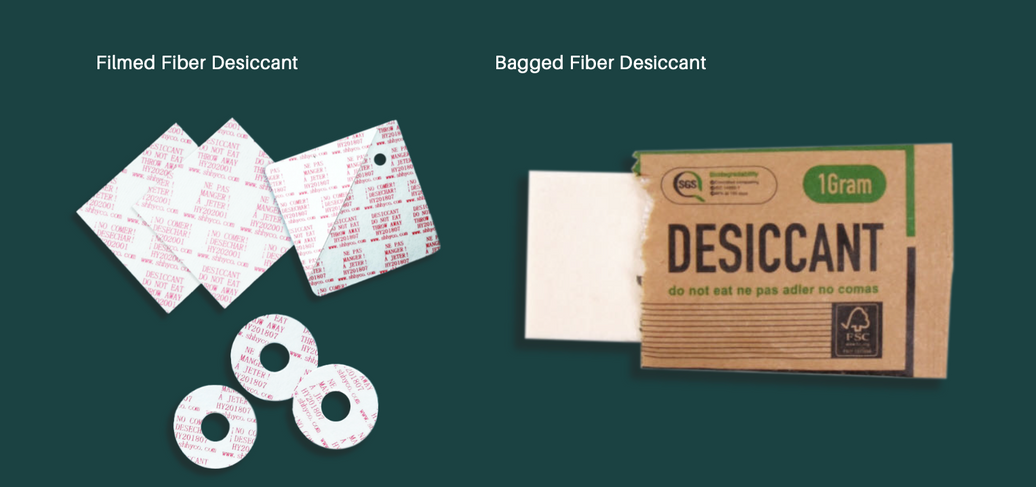
Retail jars and shaker containers. A flat film desiccant card under the lid or seal liner. ATMOSIScience film desiccant is a rigid card — stiffer than some credit cards — wrapped in paper rather than plastic, die-cuttable to the jar diameter (square or circle), so it sits flat, stays put, and lifts out cleanly. The center can be printed with a full-color logo, turning the protective insert into brand real estate. Details in the film desiccant guide.
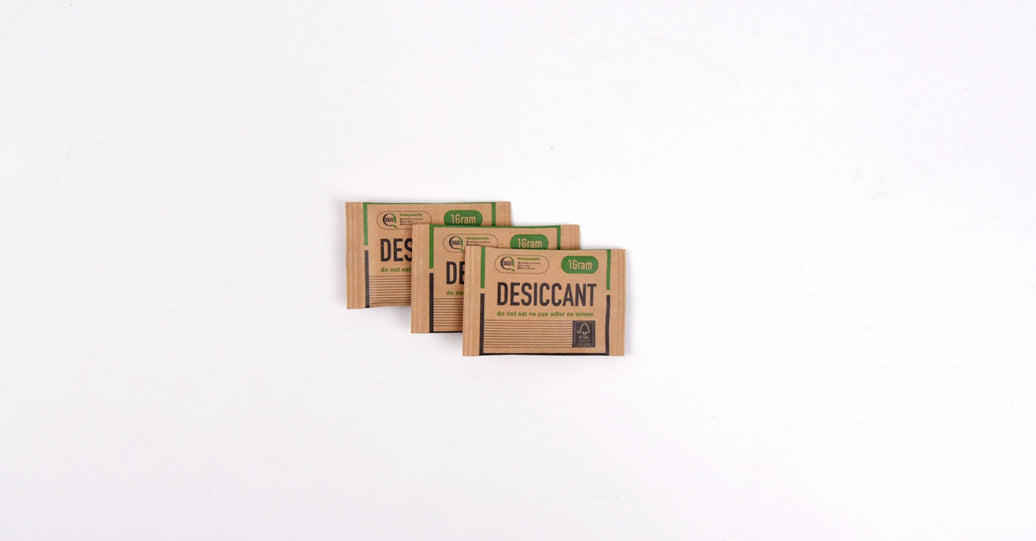
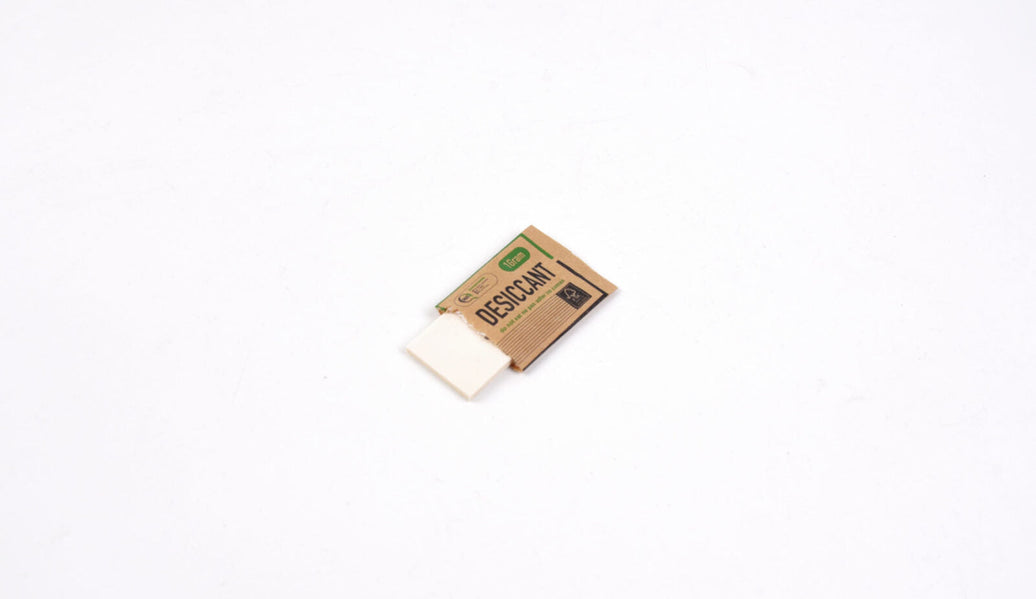
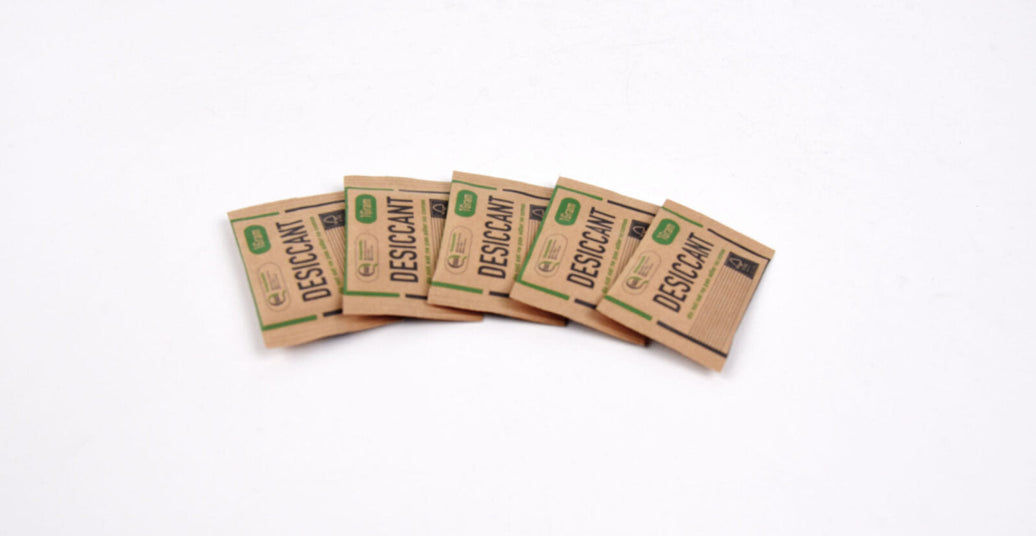
Pouches and foodservice tubs. A 1–9 g fiber sachet sized to headspace and reopening frequency.
Whatever the format, the desiccant itself must clear food QA: ATMOSIScience fiber desiccant is manufactured under SGS ISO 9001 (Cert. CN05/31171) and dust-free by construction — no clay fines or silica beads to end up in a spice blend, a risk covered in loose-fill desiccant risks in food packaging.
The clean-label angle: desiccant vs. more anti-caking agent
The conventional response to caking is to add more flow agent — silicon dioxide, calcium silicate, rice hull concentrate. But anti-caking agents only slow liquid bridging; they do not remove the moisture driving it. Controlling headspace RH with desiccant attacks the cause, which can allow a lower flow-agent load — a meaningful lever for the growing clean-label segment where "fewer ingredients" is the selling point. Reformulation should be validated with stability data, but the direction is consistent: drier headspace, less additive needed.
Sustainability documentation closes the loop for retail buyers: ATMOSIScience fiber desiccant is compostable under ASTM D6400 and EN 13432, with a documented carbon footprint of 1.44 kg CO₂e/kg — roughly 31% lower than silica gel.
Frequently asked questions
Why do garlic and onion powder cake faster than other spices?
They are deliquescent — above their critical humidity they dissolve in the moisture they attract, then recrystallize into hard bridges. They activate at everyday kitchen humidity, which is why they dominate complaint logs.
Can a desiccant go inside a retail spice jar?
Yes — if it is food-contact documented and formatted so it cannot shake out or shed material. A rigid, paper-wrapped film card die-cut to the jar diameter meets both conditions.
Does desiccant replace anti-caking agents?
It addresses the cause (moisture) while flow agents address the symptom (particle bridging). Many processors use desiccant to reduce — not always eliminate — the flow-agent load, supporting clean-label positioning.
What about organic and clean-label certification?
The desiccant is a packaging component, not an ingredient, but auditors still ask for documentation. Full raw-material disclosure (lignocellulose fiber, calcium chloride, PLA, food-grade paper, water) keeps the file clean.
Keep the shaker shaking
ATMOSIScience supplies food-grade fiber desiccant in bulk sachets and die-cut printable film cards at B2B scale, with ISO 9001 and compostability documentation on file.
Test it against your toughest blend first. Order the Fiber Desiccant, or request bulk pricing and certificates through our desiccant solutions page or contact our team.
Related reading: Why Powders Cake · Desiccant for Powdered Drink Mixes · How to Choose a Bulk Desiccant Supplier
Get a desiccant spec & bulk quote for your spice line
Tell us your blend, container format, and shelf-life target — our team responds with a capacity calculation, format recommendation, certificates, and bulk pricing.