Sourcing desiccant for a product line is rarely a one-time purchase. It is a recurring line item that touches packaging engineering, quality assurance, procurement, and sustainability reporting all at once. A weak supplier shows up later as failed stability tests, customs holds on undocumented materials, or a cost-per-unit that quietly climbs every quarter.
This checklist breaks down the seven criteria that separate a reliable bulk desiccant supplier from a commodity reseller — so the next sourcing decision holds up under audit, under load, and under a CFO's review.

Why supplier selection matters more than the desiccant itself
Most buyers start by comparing materials: silica gel versus clay versus molecular sieve versus fiber. That comparison matters, but it answers the wrong question first. Two suppliers can ship the same nominal material and deliver completely different outcomes once documentation, consistency, and supply continuity enter the picture.
The global pharmaceutical desiccant market alone was valued at roughly USD 105.6 million in 2024 and is projected to reach USD 176.34 million by 2035, according to Market Research Future. Demand is growing across food, supplements, electronics, and diagnostics — and so is regulatory scrutiny. The supplier a team chooses today is the partner whose paperwork their auditors will read for years.
A useful reframe: you are not buying desiccant. You are buying moisture protection that survives an audit. Everything below evaluates the supplier against that standard.
The 7-point B2B desiccant supplier checklist
1. Compliance documentation — verify, don't assume
The first filter is paperwork, because it is the easiest place for a supplier to overstate. For products that contact food, supplements, or pharmaceuticals, ask for the specific certifications by number, not by marketing label.
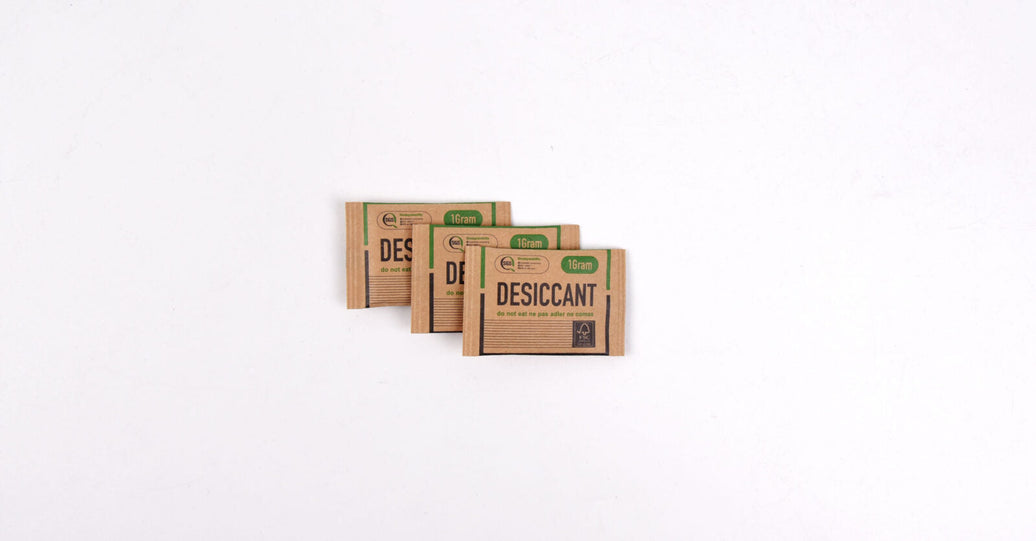
ATMOSIScience Fiber Desiccant, for reference, is manufactured under SGS ISO 9001 (Cert. CN05/31171), and certified compostable under ASTM D6400 and EN 13432. Those are the kinds of named, verifiable references a procurement team should require — and a supplier should be able to produce the actual certificate, not a logo on a slide.
A practical test: request the test reports and certificate numbers up front. A serious desiccant manufacturer sends them within a day. A reseller asks the factory and gets back to you next week.
2. Material transparency — know exactly what is inside
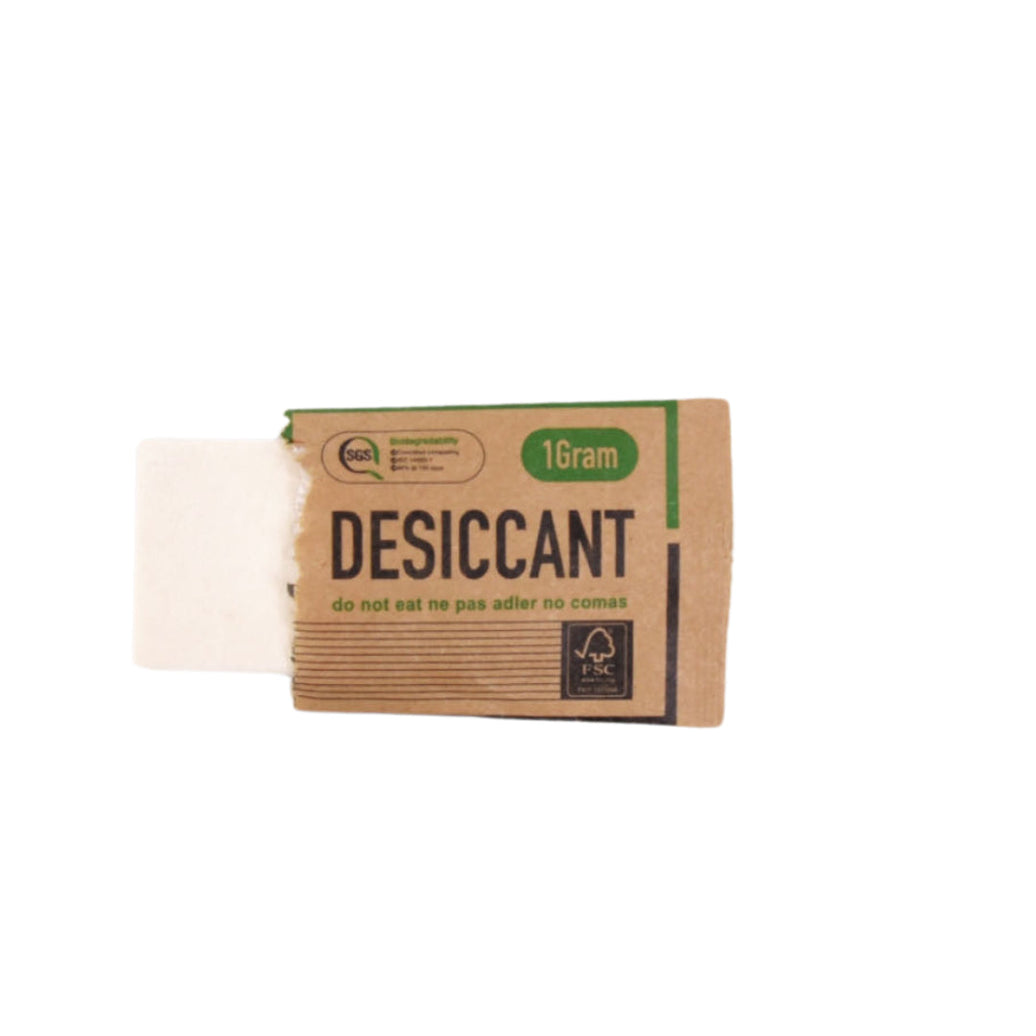
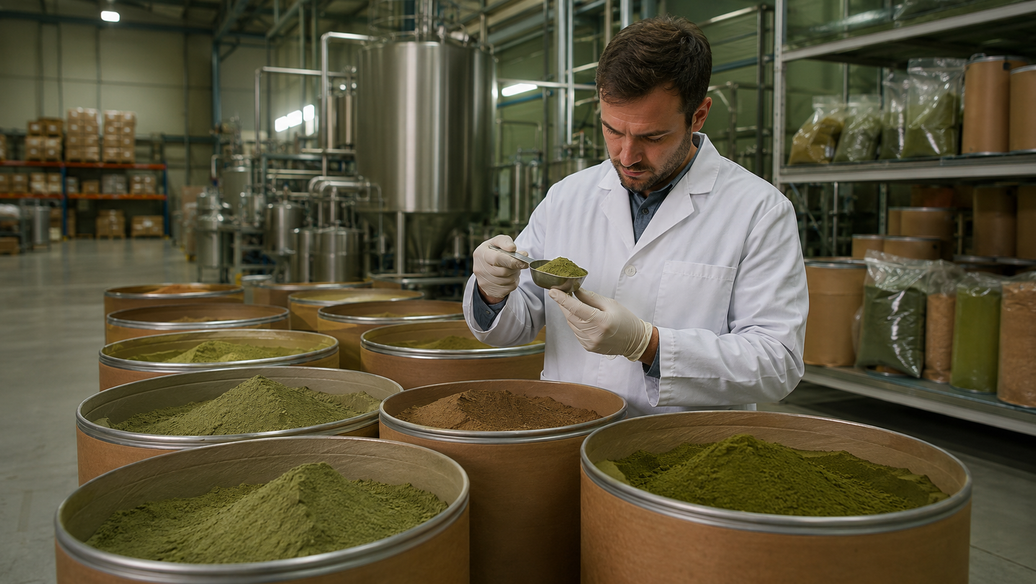
"Desiccant" is not a single ingredient. A buyer should receive a full raw-material composition for the exact SKU being quoted. ATMOSIScience documents its fiber composite as lignocellulose fiber, calcium chloride, PLA (polylactic acid), food-grade paper, and water — with the overwrap specified per SKU as compostable nonwoven or food-safe Tyvek®.
That level of disclosure does two things. It lets a QA team run a clean stability protocol, and it pre-empts customs and regulatory questions in export markets. Vague material descriptions are a future delay waiting to surface.
3. Performance under your real conditions, not a datasheet ideal
Absorption numbers are only meaningful when tied to a relative humidity and temperature. The team observed in side-by-side testing that fiber desiccant absorbs over 70% of its own weight at RH90% and 25°C, where conventional silica gel holds roughly 30% under the same conditions. At RH95% and 45°C the gap widens further.
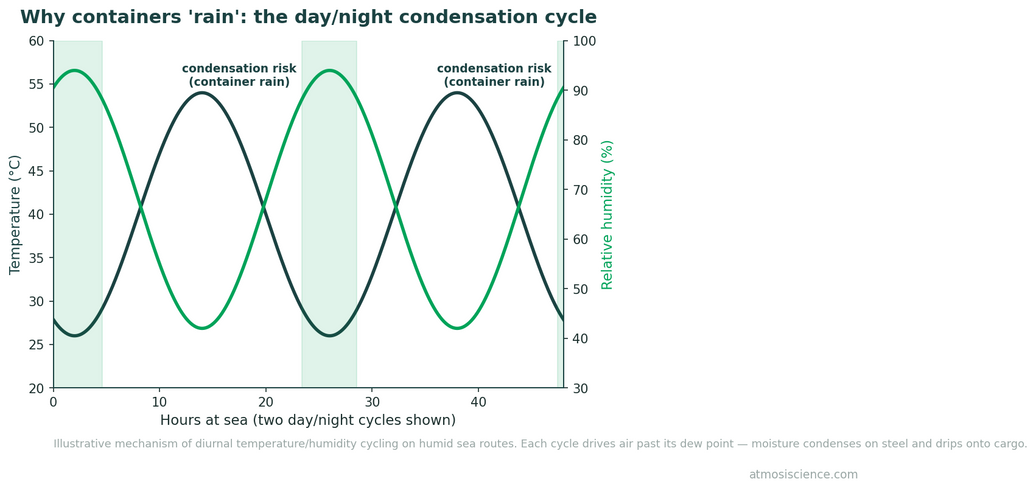
When evaluating any supplier, ask for adsorption capacity stated at the RH and temperature your product actually sees in distribution — not a single best-case figure. A desiccant that performs in a lab at 50% RH may underperform in a humid container crossing the equator.
4. Cost-per-protection, not cost-per-gram
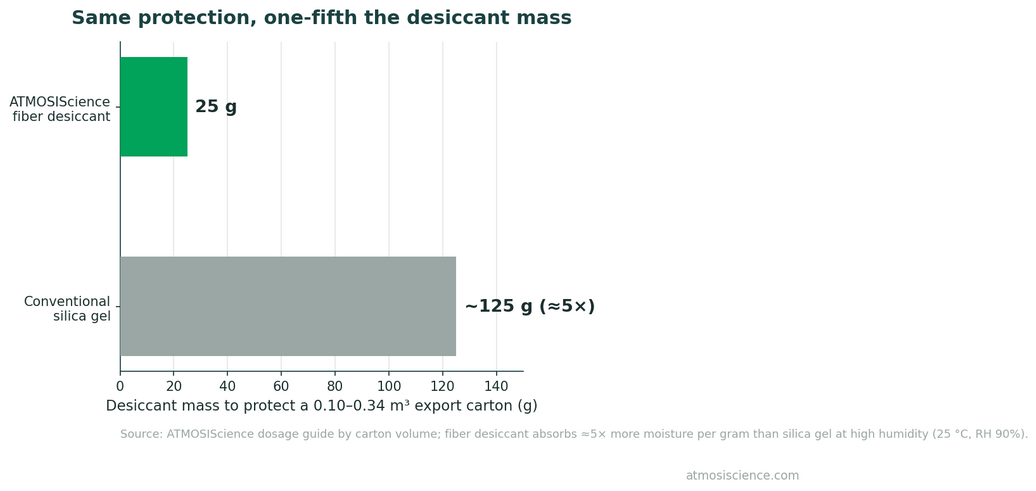
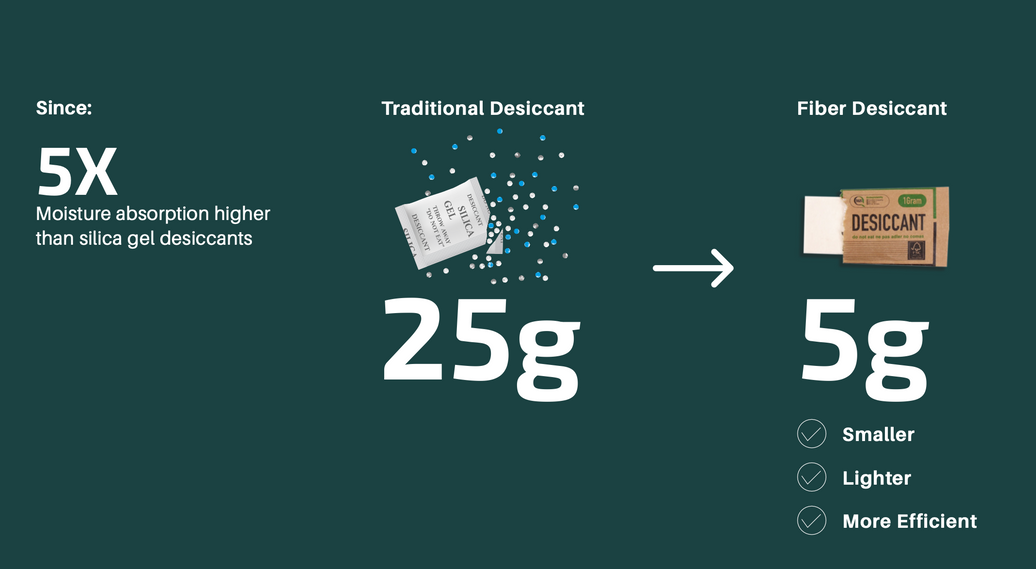
Per-gram pricing is the most common procurement trap. A material that absorbs five times more moisture per gram changes the math entirely: less desiccant per package, fewer units to handle, lower freight weight, and smaller package footprints.
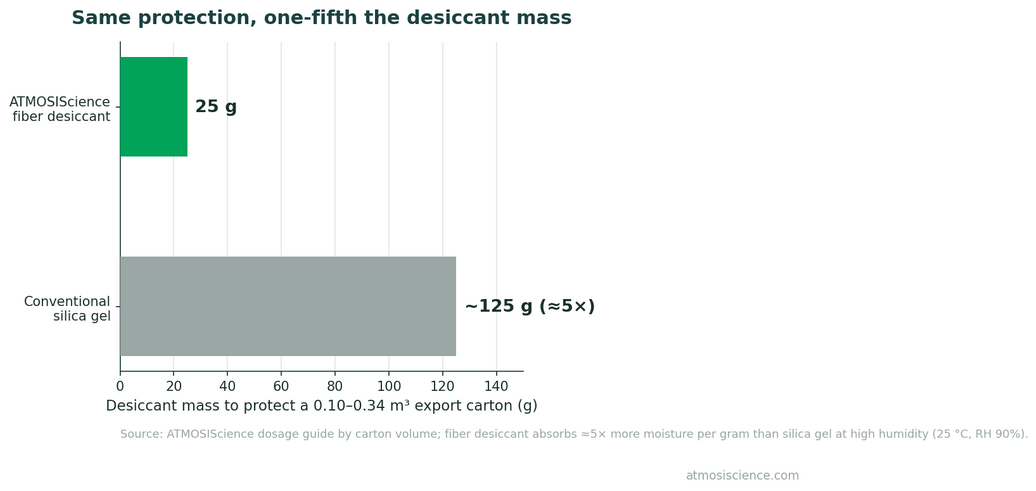
Consider the dosage difference. To protect a standard 0.10–0.34 m³ carton, only about 25 g of fiber desiccant is required, because it absorbs roughly 5x more moisture than the same weight of silica gel. The honest comparison is total landed cost to keep a product dry through its shelf life — never the sticker price on a single sachet.

5. Customization and format range
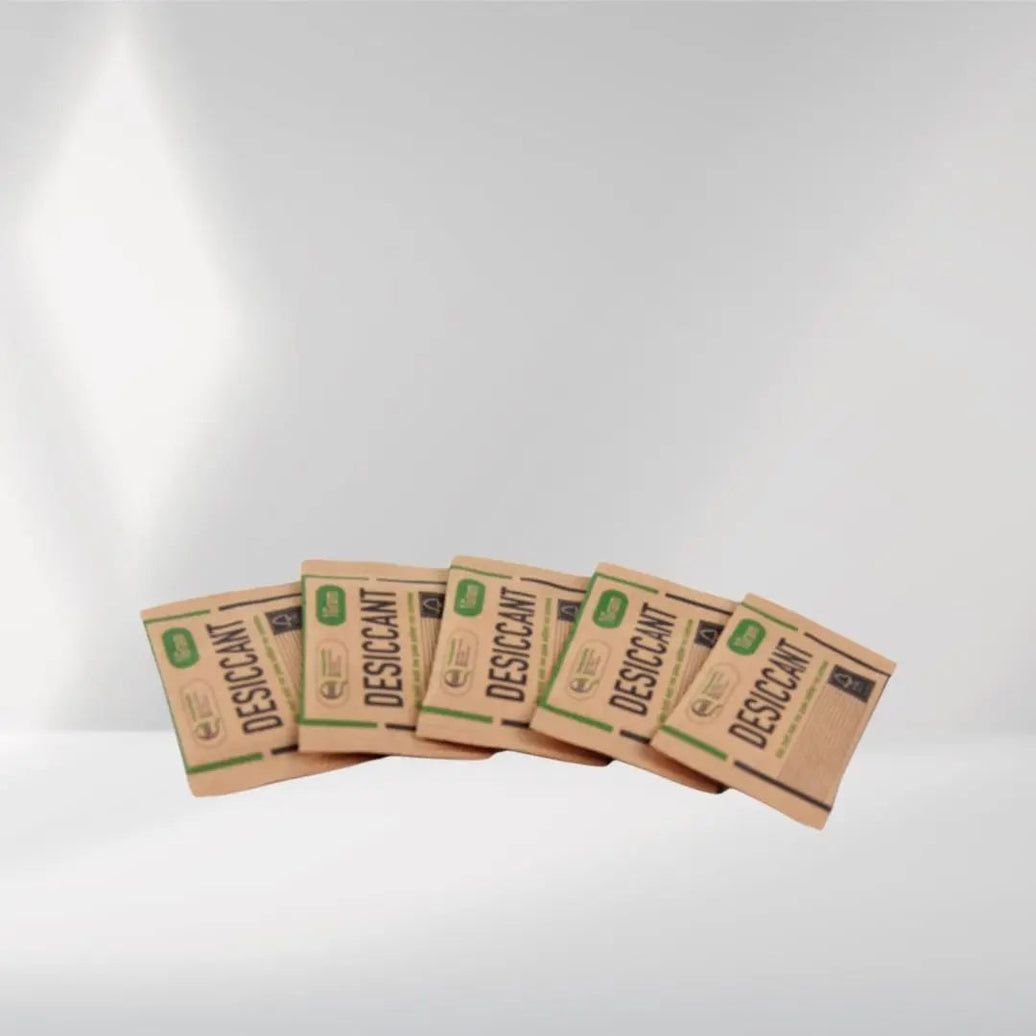
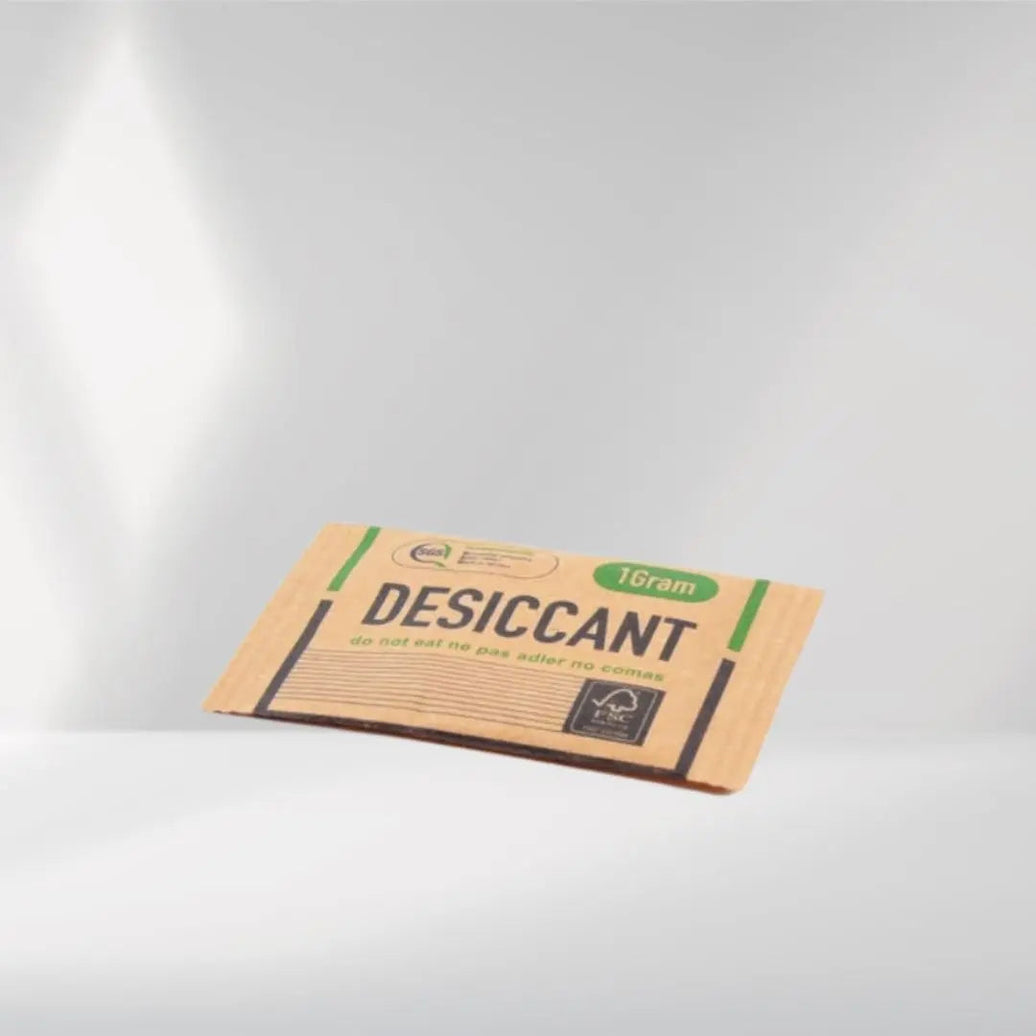
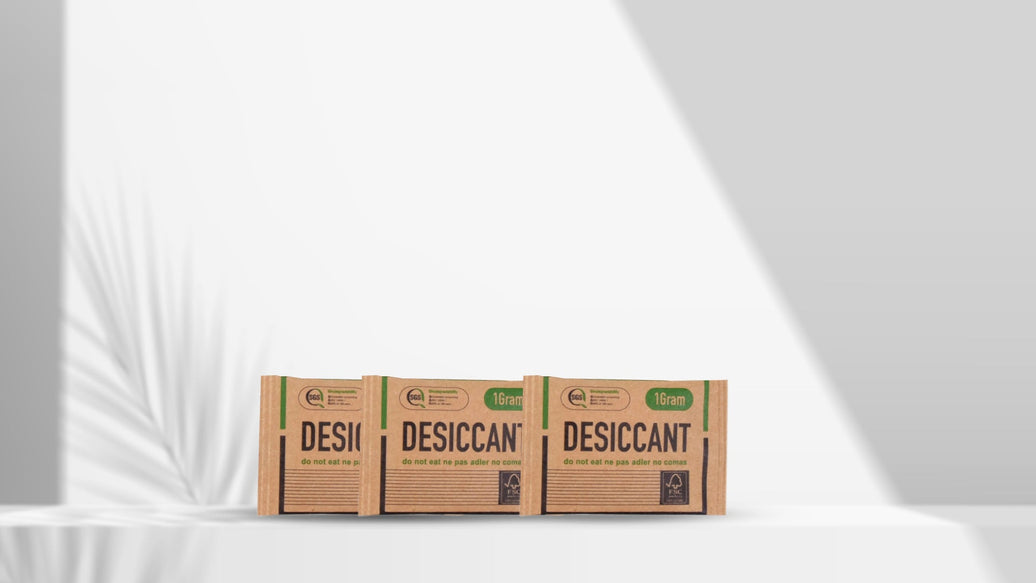
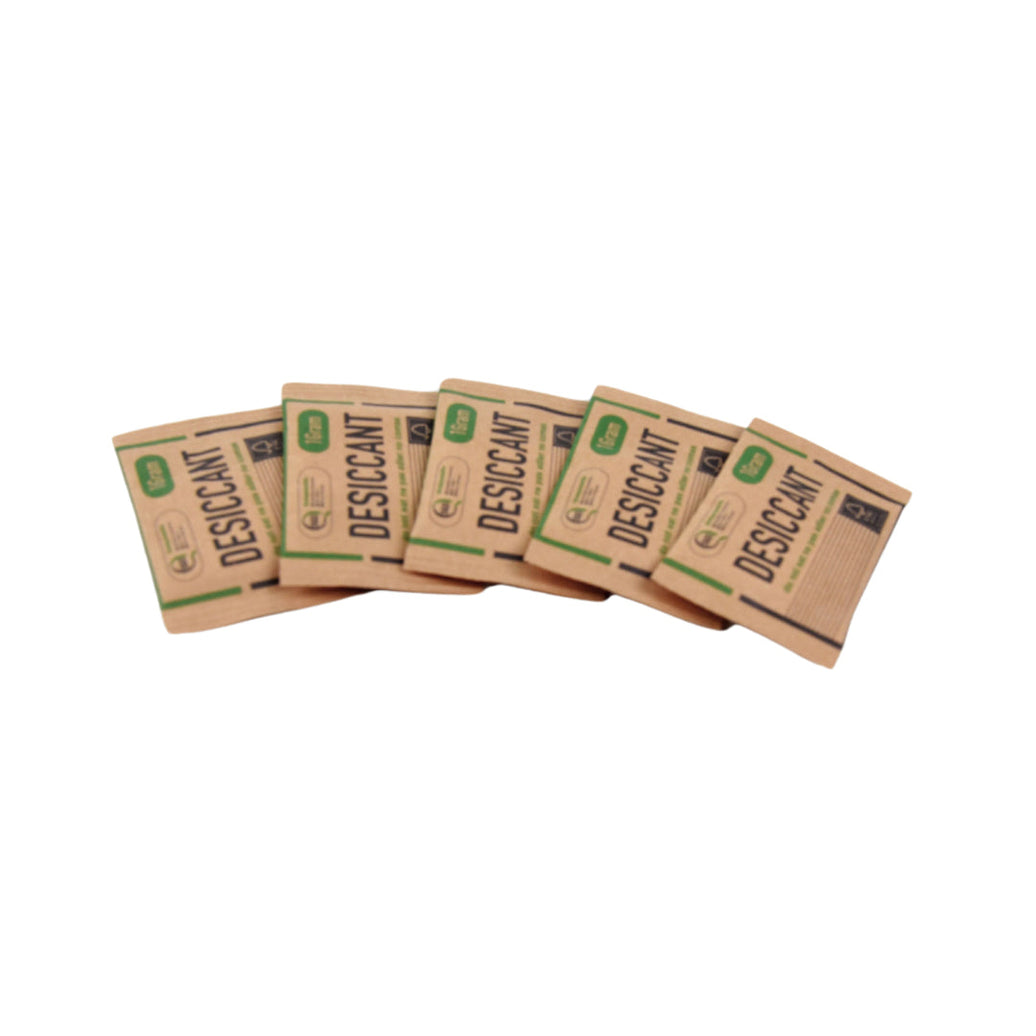
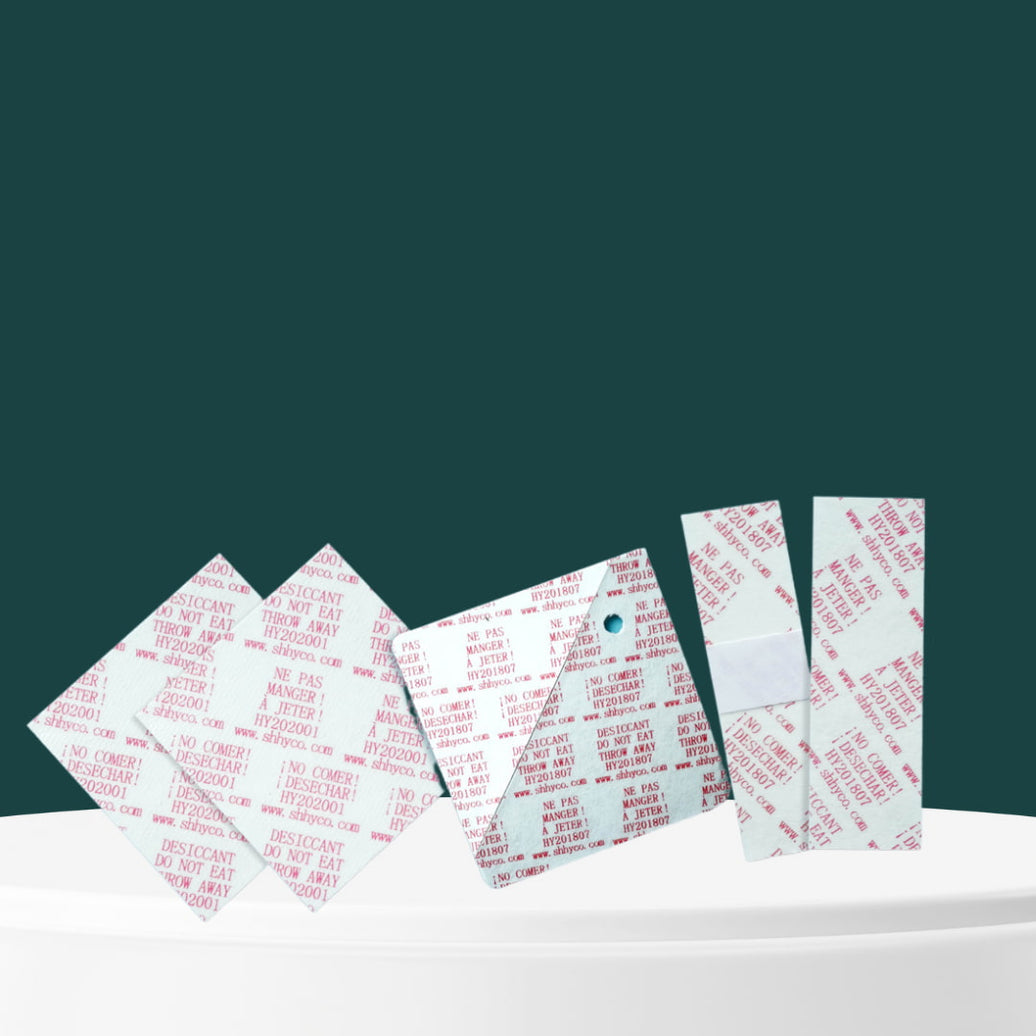
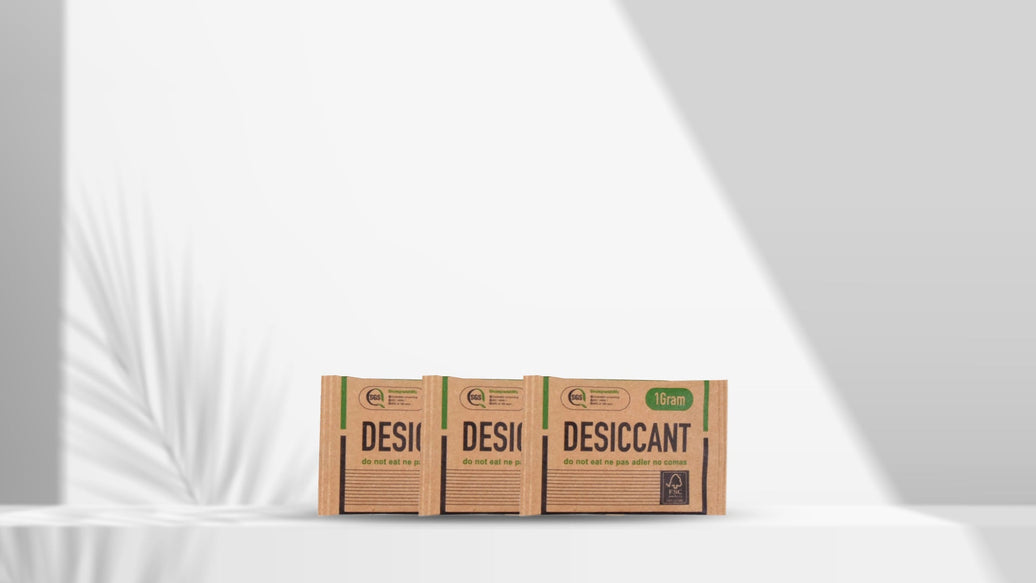
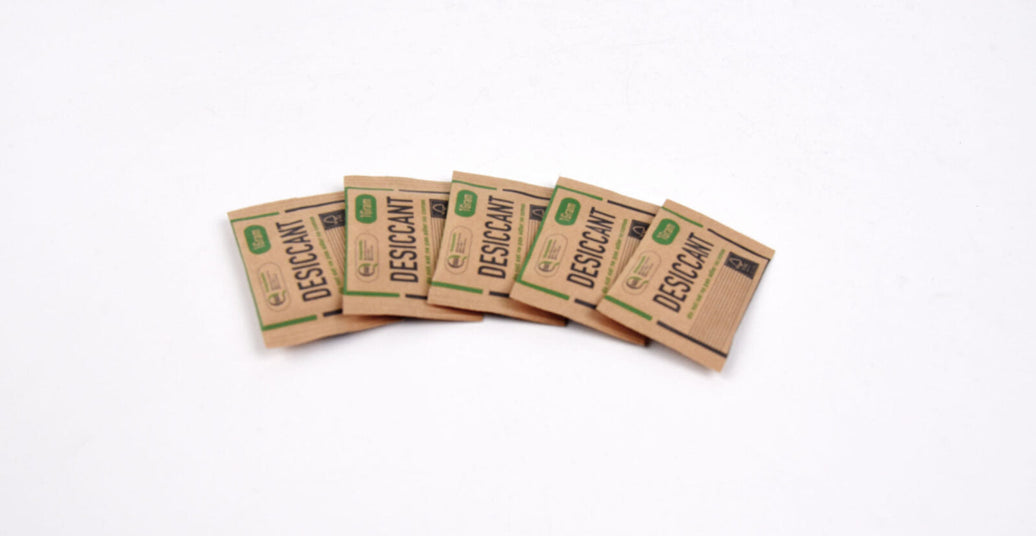
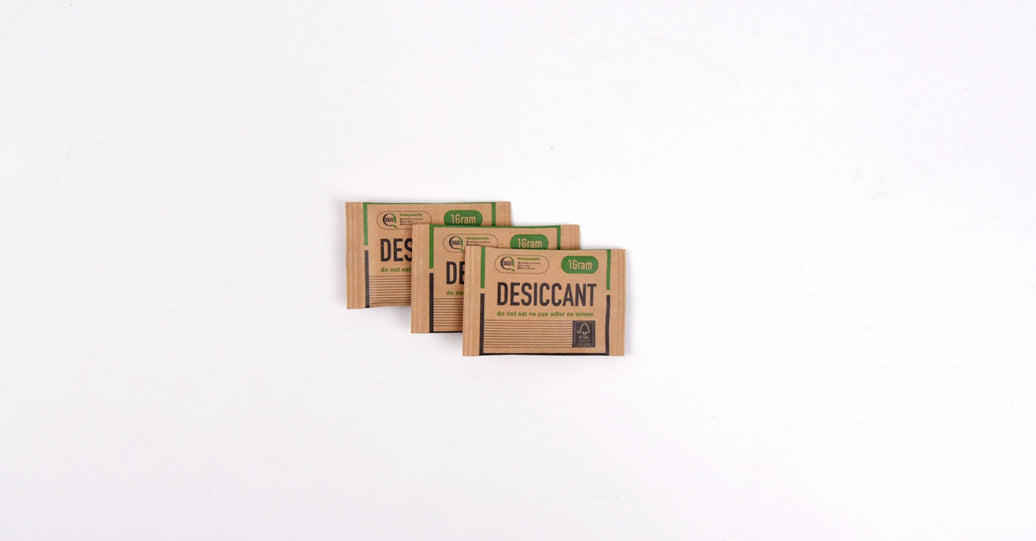
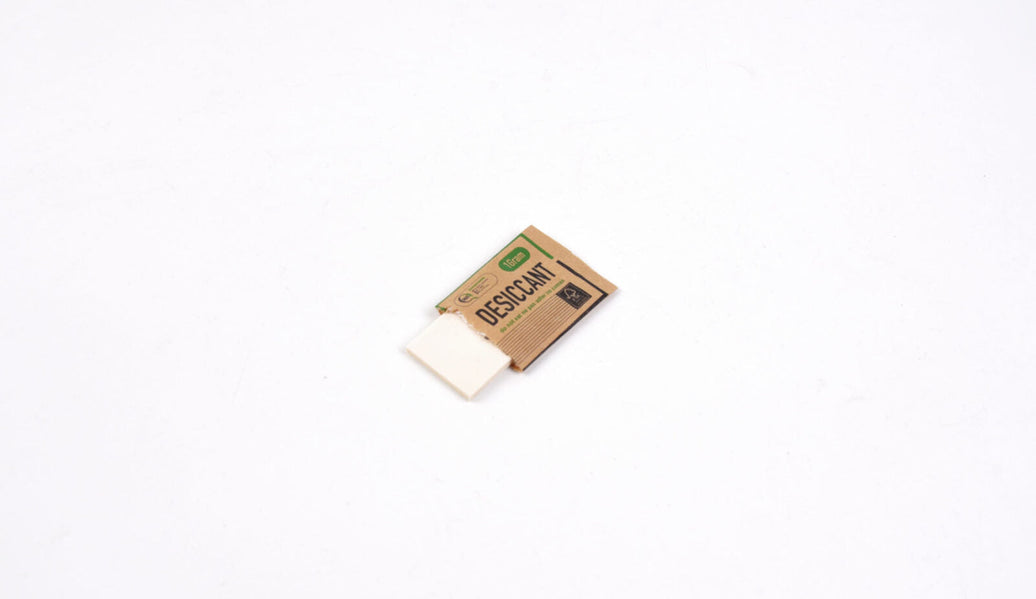
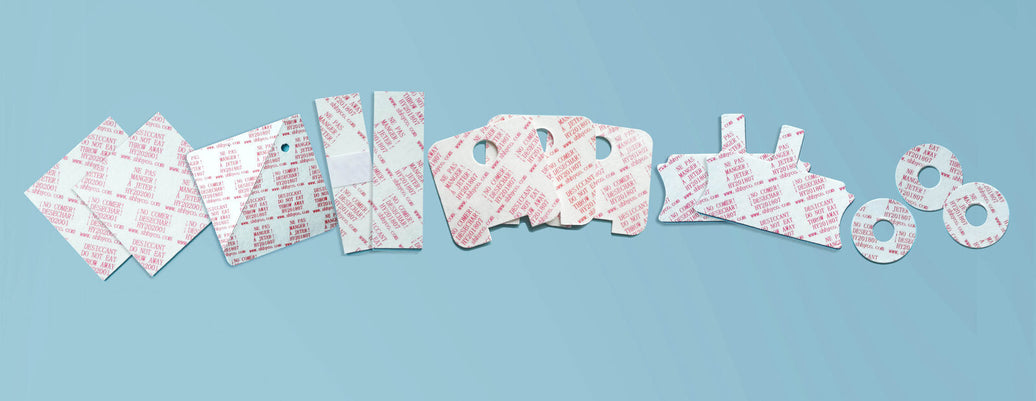
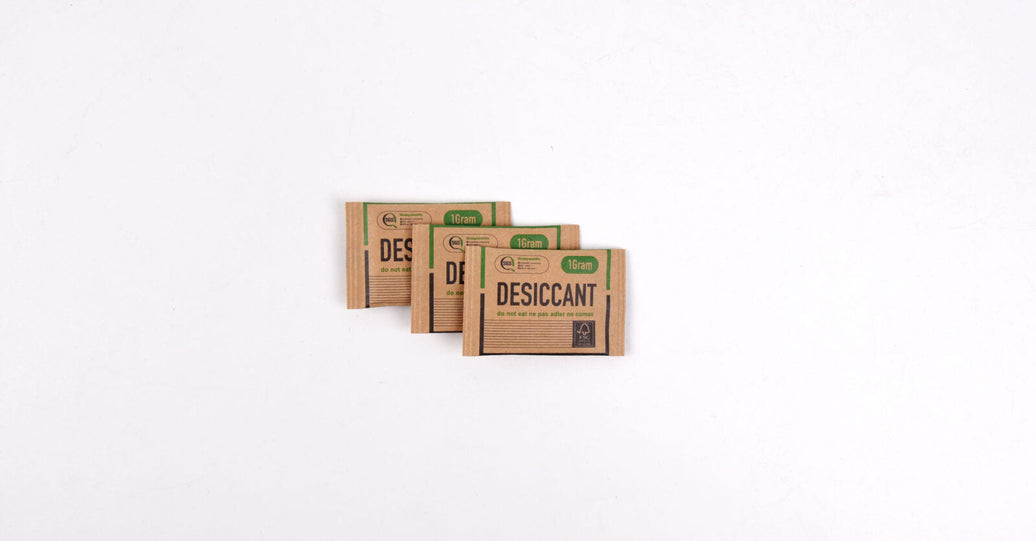
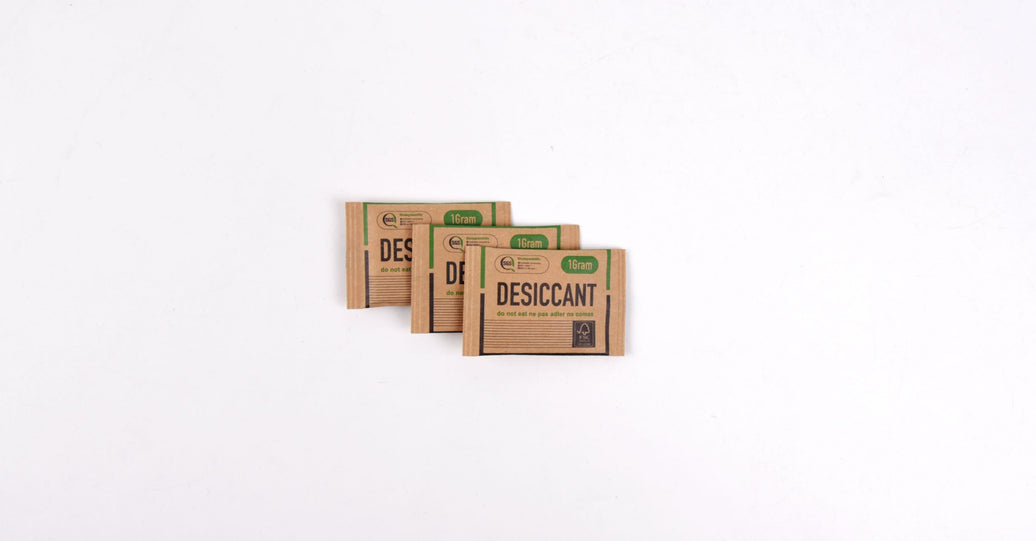
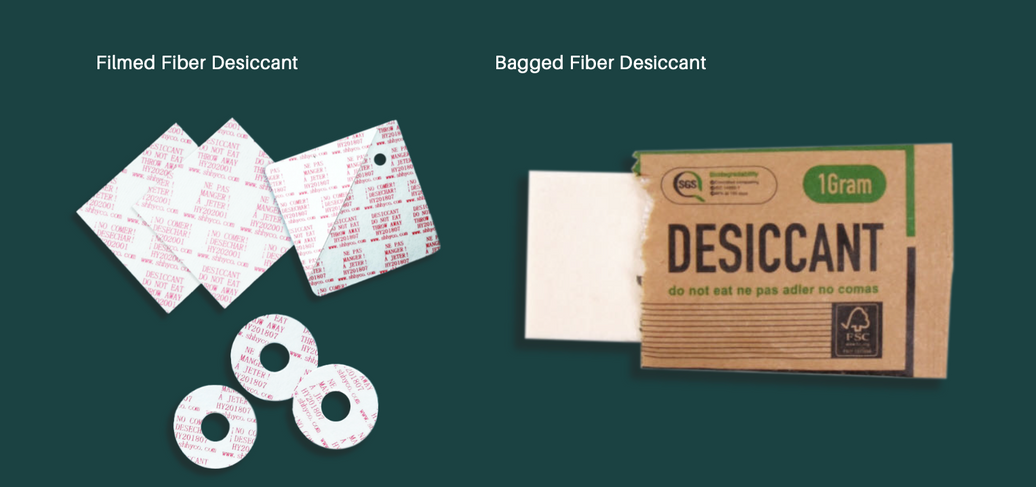
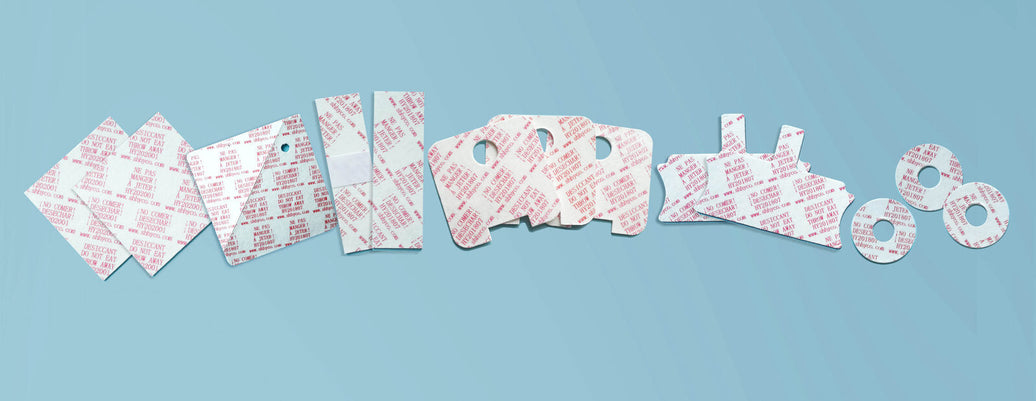
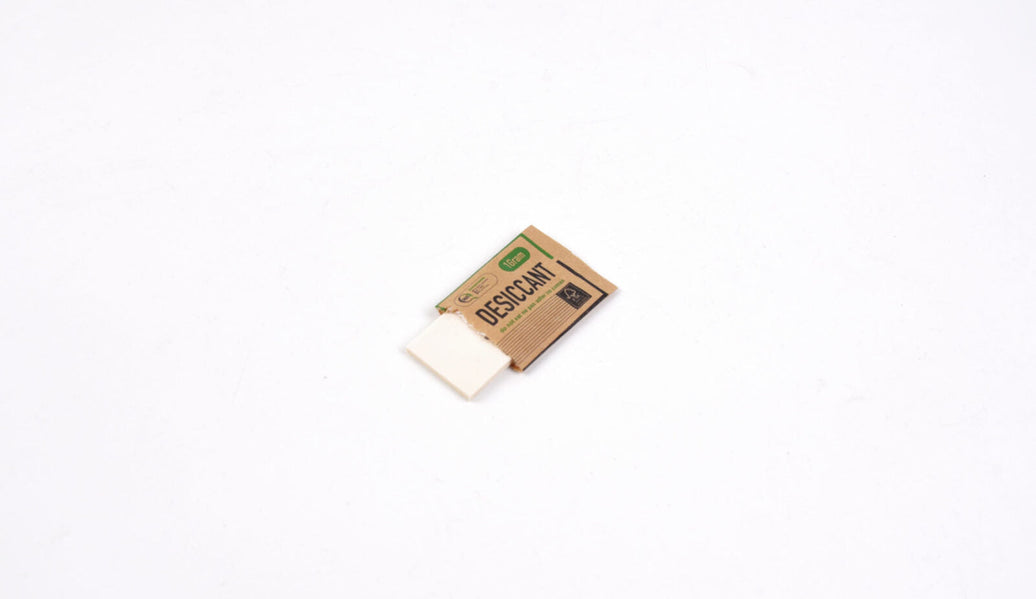
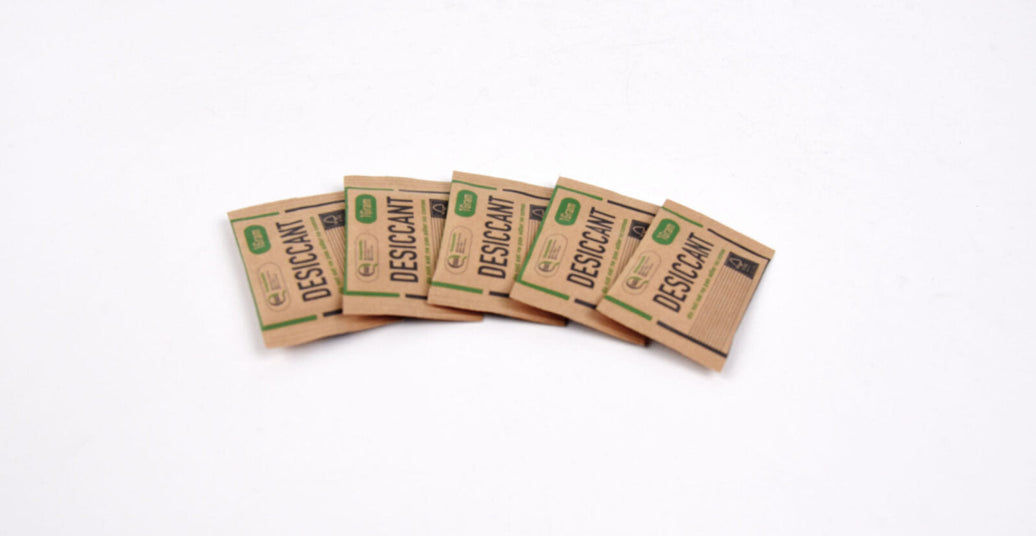
Bulk buyers rarely fit a stock size. The right supplier offers the format the product line needs: bagged sachets across a wide weight range (ATMOSIScience runs 1 g, 5 g, 9 g, 18 g, 25 g, 60 g, and custom), filmed pads that can be die-cut into squares, circles, or custom shapes for bottle caps and blister packs, and printable laminated film for branded inserts.
If a supplier can only sell one format, the packaging line ends up redesigned around the desiccant instead of the other way around.
6. Supply continuity and lead time
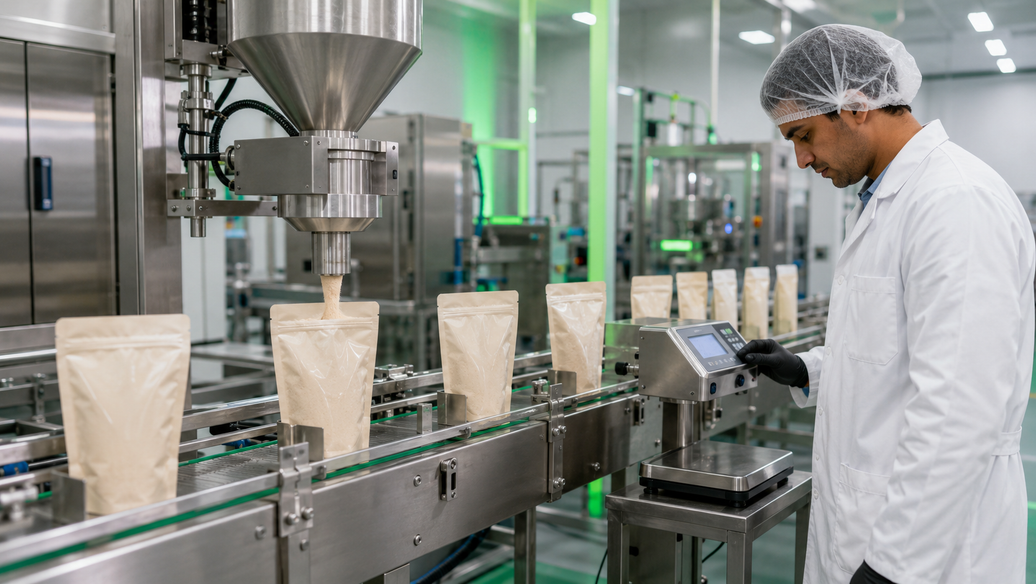
A desiccant program is only as strong as its weakest reorder. Vet the supplier's manufacturing depth, inventory buffers, and realistic lead times before committing a SKU to it. ATMOSIScience draws on 25+ years of R&D and 70+ patents worldwide through its manufacturing partner, which matters less as a brag and more as evidence that the supply will still exist at the next reorder.
Ask directly: what is the lead time at your typical volume, what is the minimum order, and what happens to lead time if volume triples next quarter?
7. Sustainability and disposal documentation
Sustainability is now a procurement requirement, not a bonus. Retail buyers, ESG reporting, and a growing list of municipalities ask what happens to packaging components at end of life. A biodegradable, compostable desiccant with a documented Product Carbon Footprint — ATMOSIScience reports 1.44 kg CO₂e/kg, roughly 31% lower than silica gel — turns a compliance question into a marketing advantage.
If a supplier cannot answer the disposal question with documentation, that gap becomes the buyer's problem at the worst possible time.
Red flags to walk away from
A few signals reliably predict trouble: certifications described in words but never produced as documents; absorption claims with no stated RH or temperature; a single format with no customization; no clear answer on lead time at scale; and no disposal or end-of-life documentation. Any one of these is a reason to keep looking. Two or more is a reason to stop.
Frequently asked questions
What certifications should a food or pharma desiccant supplier provide?
At minimum, food-contact documentation, a quality-system certificate (ISO 9001), and, for sustainability claims, compostability standards like ASTM D6400 or EN 13432. Always request the certificate and number, not just a logo.
How is bulk desiccant priced for B2B orders?
Pricing scales with volume, format, and material, but the metric that matters is cost-per-protection — how much desiccant is actually needed to keep a given package dry through its shelf life — not the price of a single sachet.
Can a desiccant supplier customize size and shape?
A capable supplier offers a range of bagged weights and die-cut filmed formats (square, circle, or custom) for applications from bottle caps to blister packs to large cartons. Stock-only suppliers force the packaging line to adapt instead.
What makes fiber desiccant different from silica gel for bulk buyers?
Fiber desiccant absorbs roughly 5x more moisture per gram, is dust-free and non-leaking, is documented for food contact, and is biodegradable — which lowers material use, freight weight, and disposal liability at scale.
Source the right partner, not just the right material
ATMOSIScience supplies fiber desiccant at B2B scale with the documentation, format range, and performance data this checklist demands — backed by SGS ISO 9001 and compostability certification.
Test it against your own conditions first. Explore the Fiber Desiccant to evaluate the material, or request bulk pricing and certificates through our desiccant solutions page or contact our team.
Related reading: Calcium Chloride vs. Silica Gel vs. Fiber Desiccant: A Procurement Comparison · How Much Desiccant Per Package? A Dosage Guide by Carton Volume
Get a desiccant spec & bulk quote for your product
Tell us about your packaging needs, and our sales team will respond with a customized fiber-desiccant solution, supporting certificates and competitive bulk pricing.