Quick answer: Matcha, loose-leaf tea and roasted coffee all degrade through the same three doors — moisture, oxygen and light — and a desiccant only closes one of them. Moisture drives colour loss in matcha, flatness in green tea and staling in ground coffee, so a desiccant helps in every case. But for whole-bean coffee the dominant issue is oxidation and CO₂ off-gassing, which needs a one-way valve and often nitrogen flush; the desiccant is a supporting control there, not the lead. Match the tool to the actual failure mode before adding anything to the pack.
Premium tea and coffee packaging attracts more attention to graphics than to physics. Yet the most common complaint in both categories — "it tasted flat" — traces back to a small number of measurable variables, and moisture is the one most often left uncontrolled.
Matcha: colour is the first thing to go
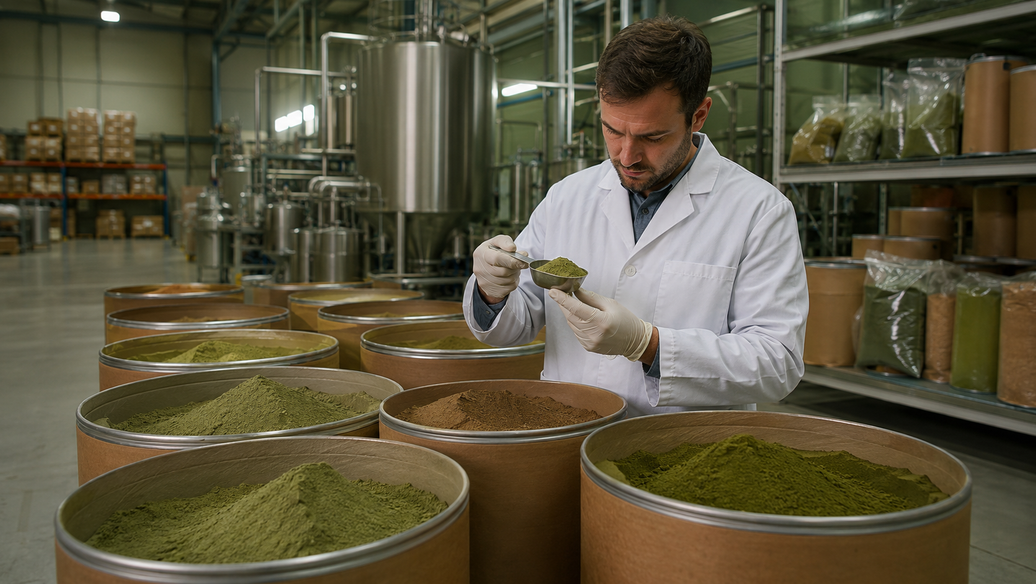
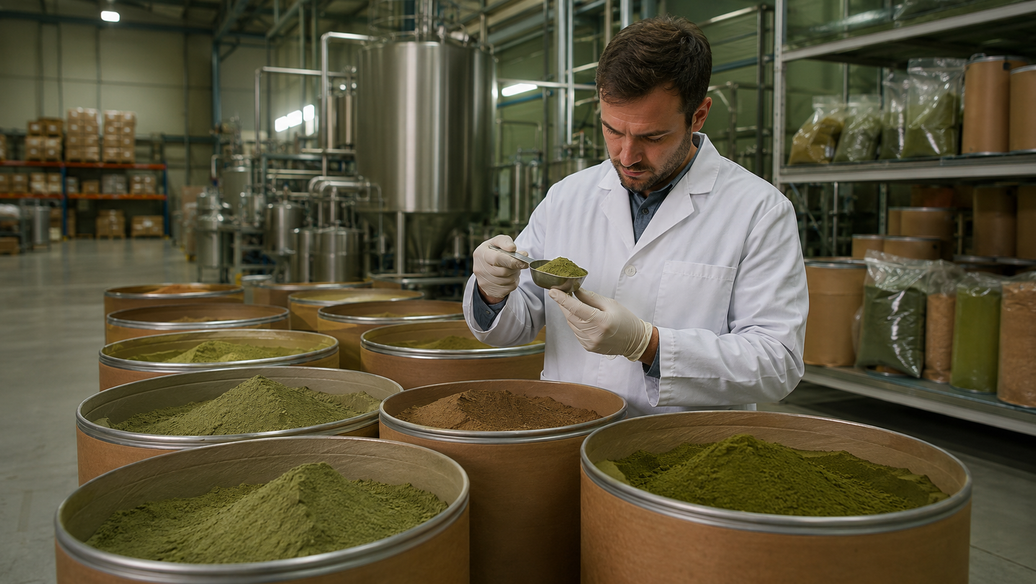
Matcha is a fine powder with an enormous surface area relative to its mass, which makes it unusually reactive. The commercially visible failure is colour: vivid green drifts toward olive and then yellow-brown. Buyers notice colour before they notice flavour, and colour is what appears in customer photographs.
Moisture accelerates that shift and also degrades flow — damp matcha clumps, resists sifting and whisks poorly. Because the particle size is so fine, matcha behaves like the hygroscopic powders covered in why powders cake rather than like leaf tea.
Practical implications:
- Small tins and pouches with high headspace-to-product ratios need proportionally more moisture control, not less.
- Ceremonial-grade product in a resealable tin is opened repeatedly, so the in-use moisture budget matters — see desiccant for resealable packs.
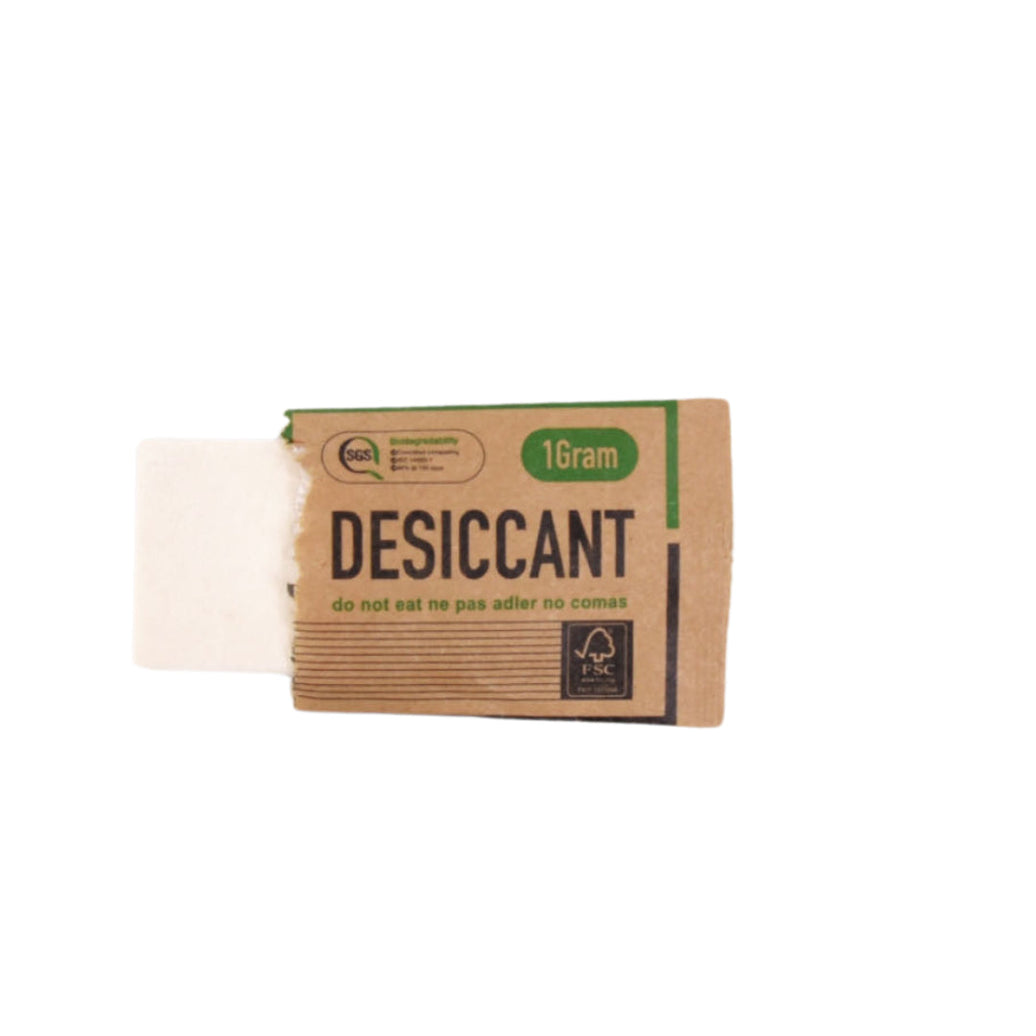
- A dust-free bonded format is important. Loose granules in a fine powder are a visible contamination risk and a customer-complaint magnet.
Loose-leaf tea: moisture, then aroma migration
Leaf tea is more forgiving than matcha because the surface area is lower, but it fails in two distinctive ways. Above roughly the mid-single-digit percent moisture range, green and white teas lose freshness quickly and become vulnerable to microbial issues at the top end. Below that, over-drying makes leaves brittle, and broken leaf changes brew character and lowers perceived grade.
That two-sided constraint is the argument for holding a humidity band rather than driving toward zero — the reasoning behind two-way humidity control. A one-way desiccant sized generously can leave a shipment of premium leaf noticeably more fragile than it arrived.

Aroma migration is the second issue. Flavoured teas can scent an unflavoured product in shared storage, and some sachet materials are more permeable to volatiles than others. Where a range includes strongly flavoured SKUs, ask specifically about the sachet outer's aroma barrier rather than assuming.
Whole-bean coffee: know what you are actually fighting
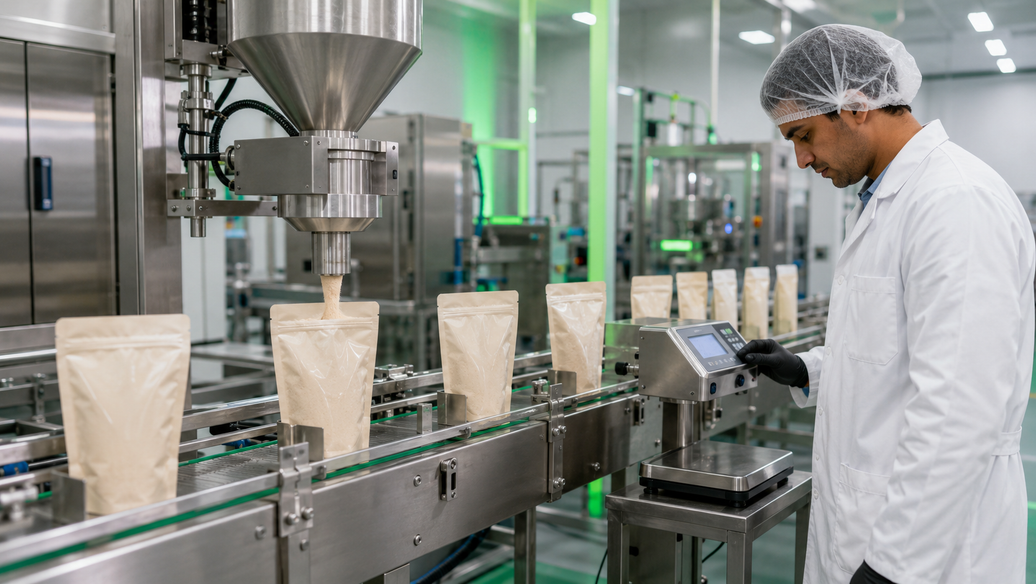
Roasted coffee has a genuinely different problem hierarchy. Freshly roasted beans off-gas carbon dioxide for days, which is why a one-way degassing valve exists at all. The dominant staling mechanism is oxidation of lipids and loss of volatiles, not moisture uptake — which is why nitrogen flush and valve design get the engineering attention.
Moisture still matters, in three specific places:
- Ground coffee, where surface area is high and moisture uptake is fast enough to affect extraction.
- Humid supply chains, where a paper-based or compostable pouch is used and the barrier is weak.
- Retail and office resealable packs opened daily.
The comparison of when each control is the right lead is set out in desiccant vs oxygen absorbers vs nitrogen flush. Adding a desiccant to a well-flushed valve bag of whole bean is rarely the highest-value change; adding one to a compostable ground-coffee pouch in a tropical market often is.
The sustainability constraint these categories share
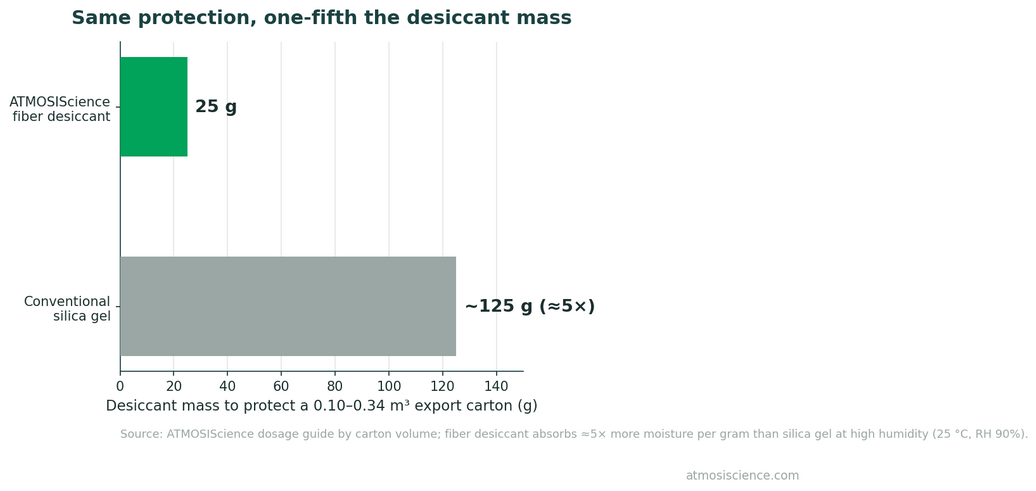
Specialty tea and coffee brands are among the fastest movers to compostable and paper-based pouches — and those structures have far higher moisture transmission than the foil laminates they replace. The desiccant load usually goes up, not down, when the pouch gets greener.
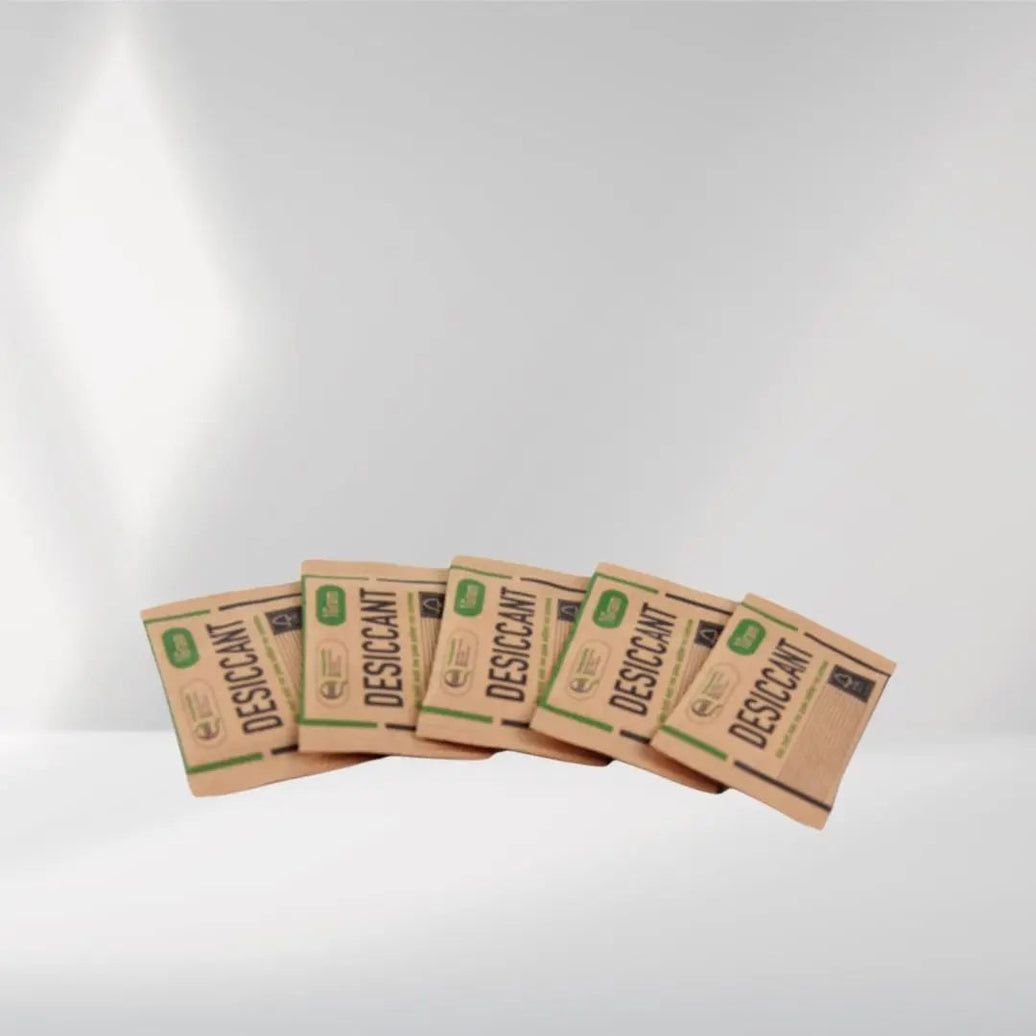
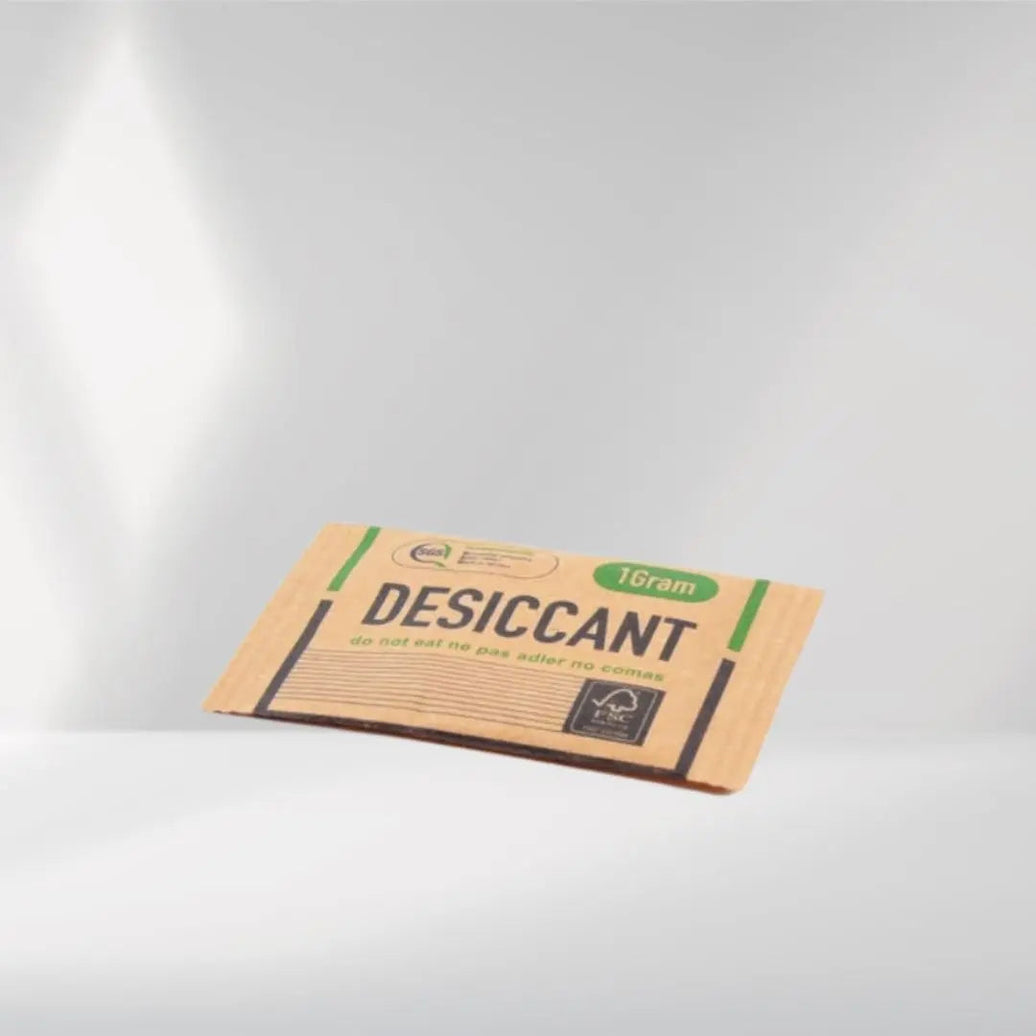
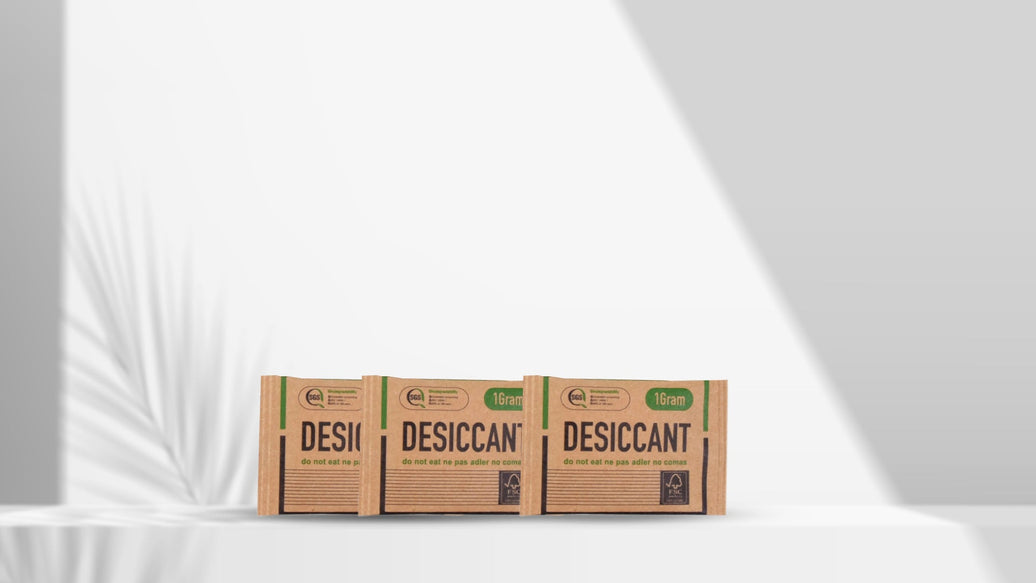
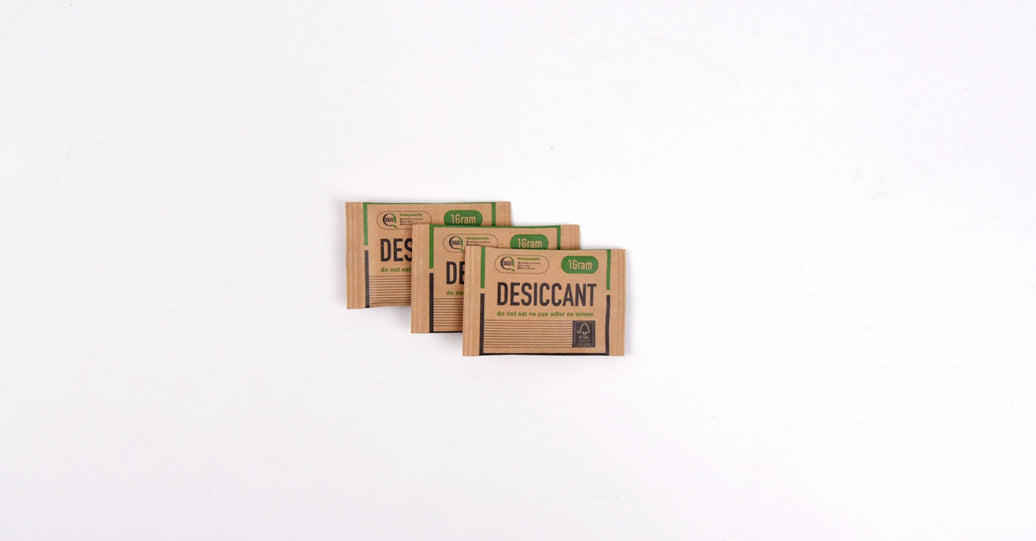
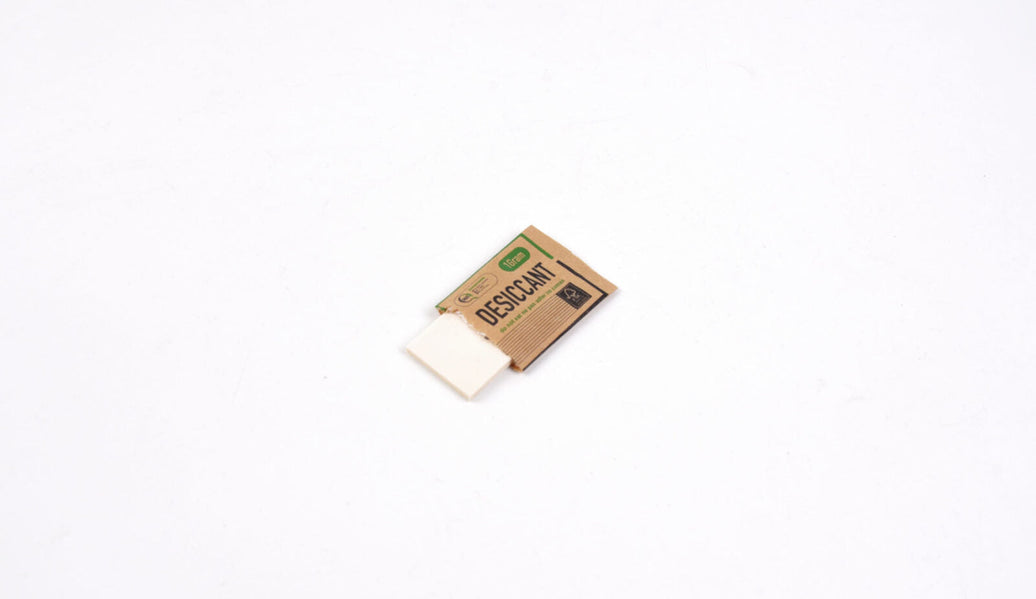
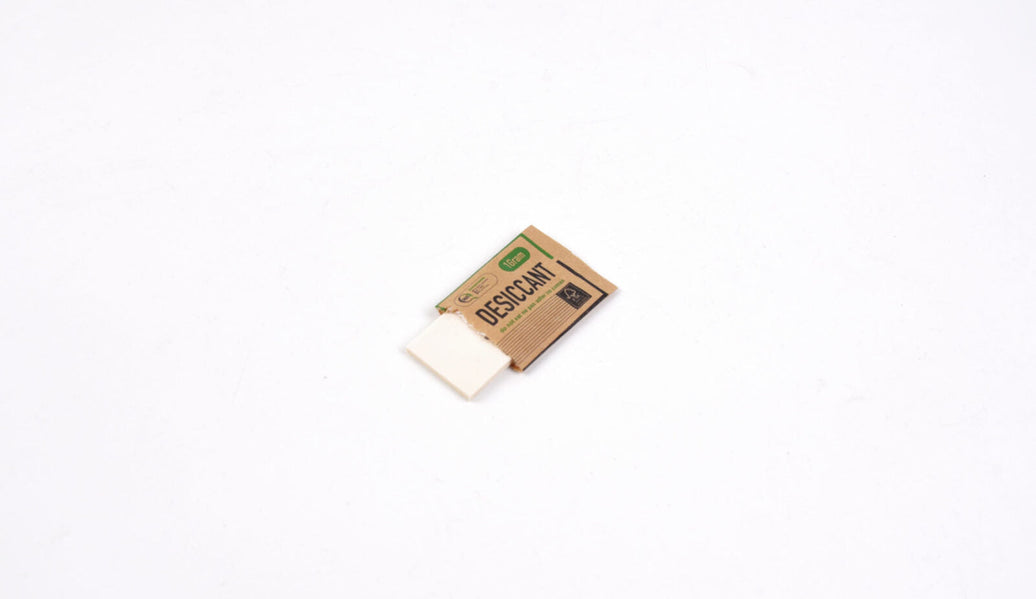
A visible plastic sachet inside a compostable pouch also undermines the claim it was meant to support. Where the pouch is certified compostable, the desiccant outer should be consistent with it. ATMOSIScience pouch films meet ASTM D6400 and EN 13432, and the substrate itself is natural plant fiber. Certification scope and how to describe it honestly are covered in the sustainable desiccant guide and which compostability certification you actually need.
FAQ
Will a desiccant keep matcha green?
It removes one of the accelerants. Light and oxygen also drive colour loss, so moisture control alone will slow the shift rather than stop it. Opaque packaging and low-oxygen headspace do the rest.
Can a desiccant go in the same pack as a one-way valve?
Yes. They address different variables and do not conflict. The valve manages pressure and gas exchange; the desiccant manages the moisture that enters with any air movement.
Does a desiccant dry out tea leaves too much?
An over-sized one-way desiccant can. For premium leaf, specify a two-way product that stabilises within a band and confirm the target band against your own moisture data.
What sachet appearance suits a premium pack?
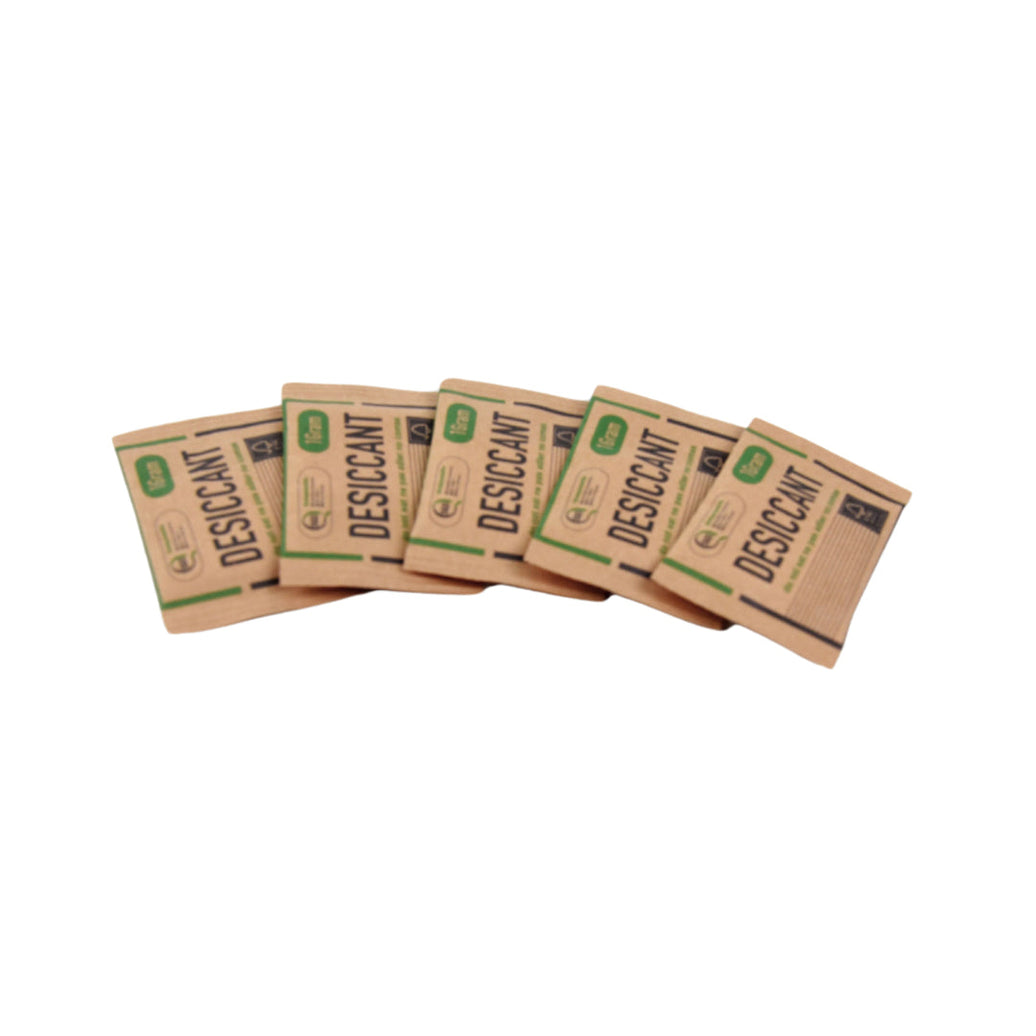
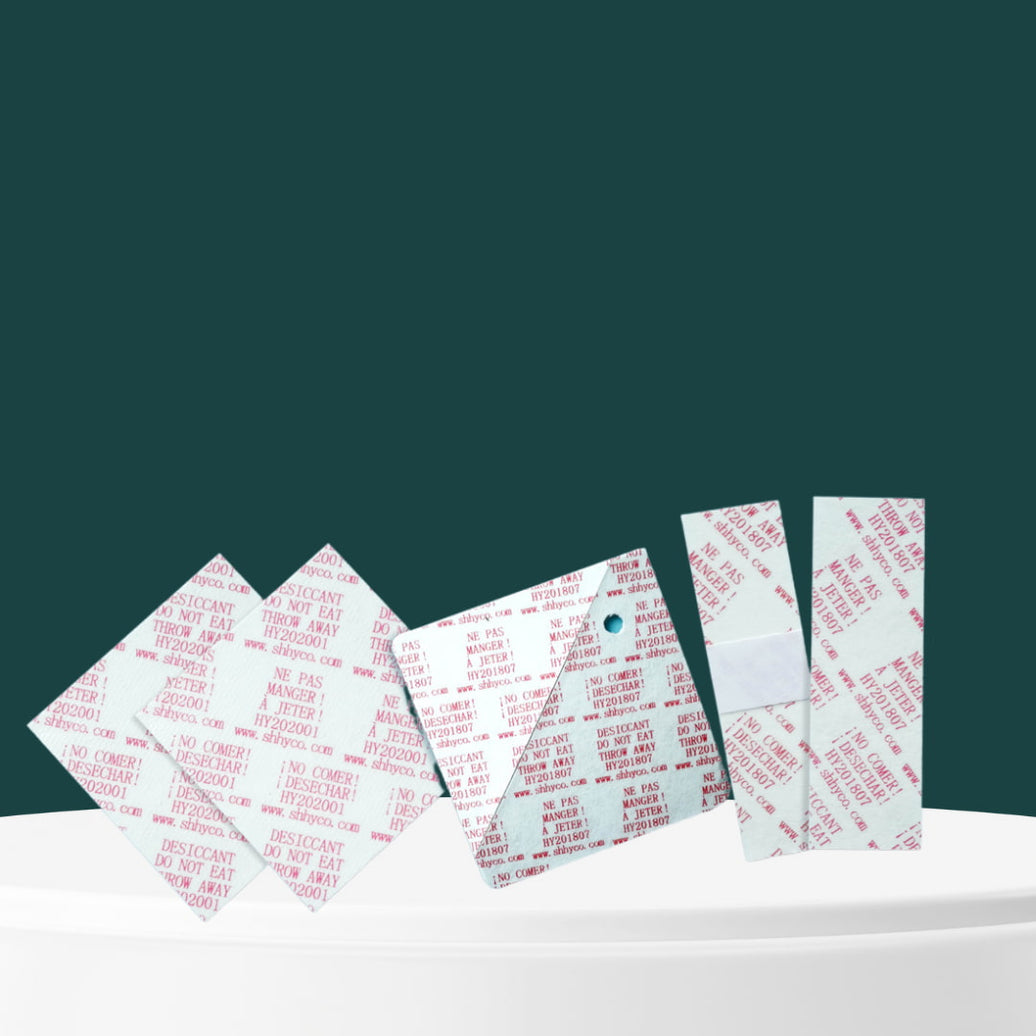
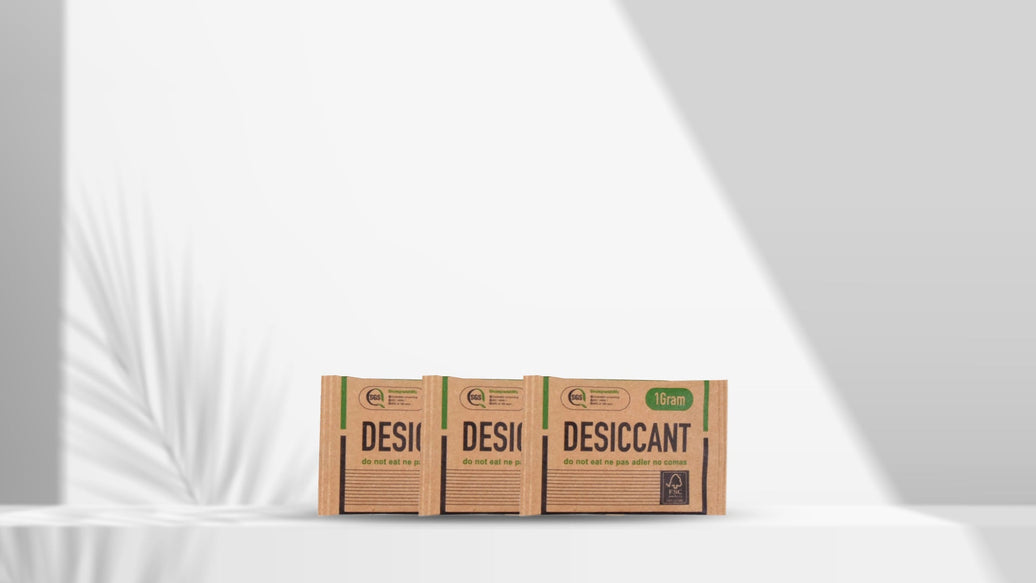
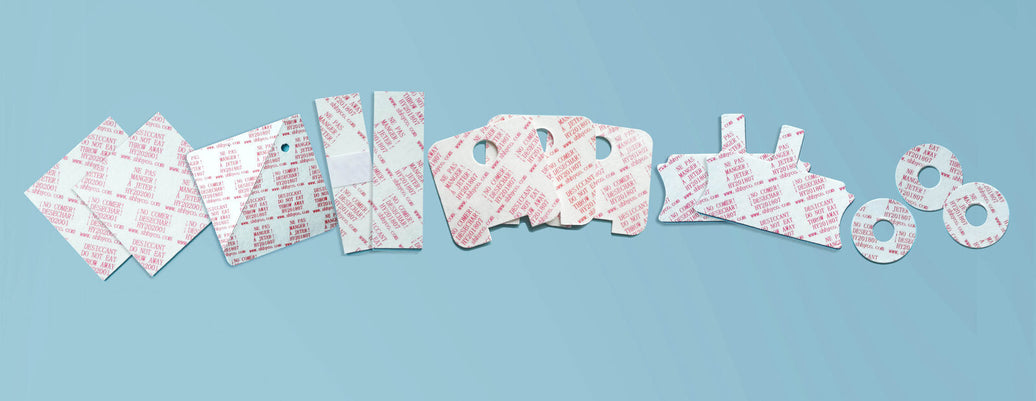
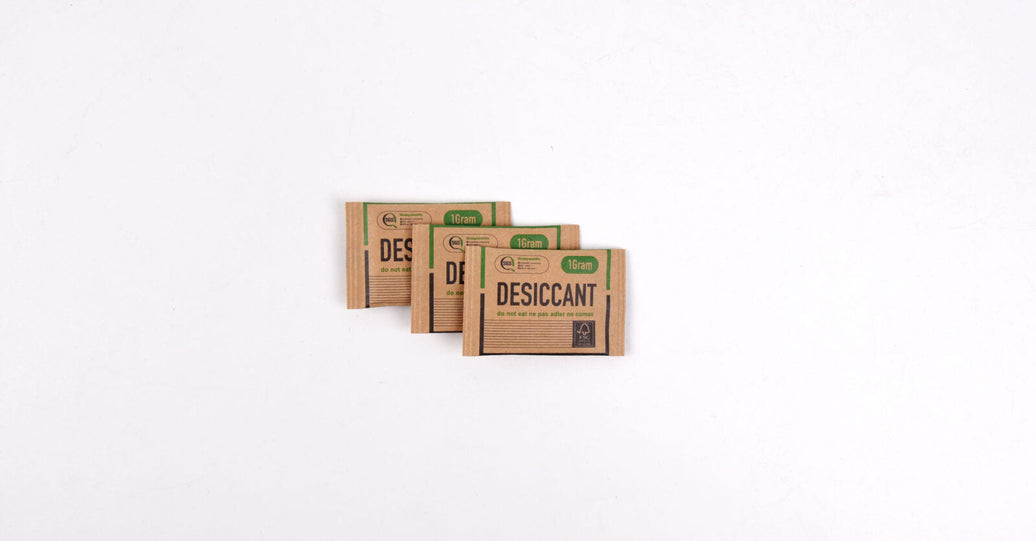
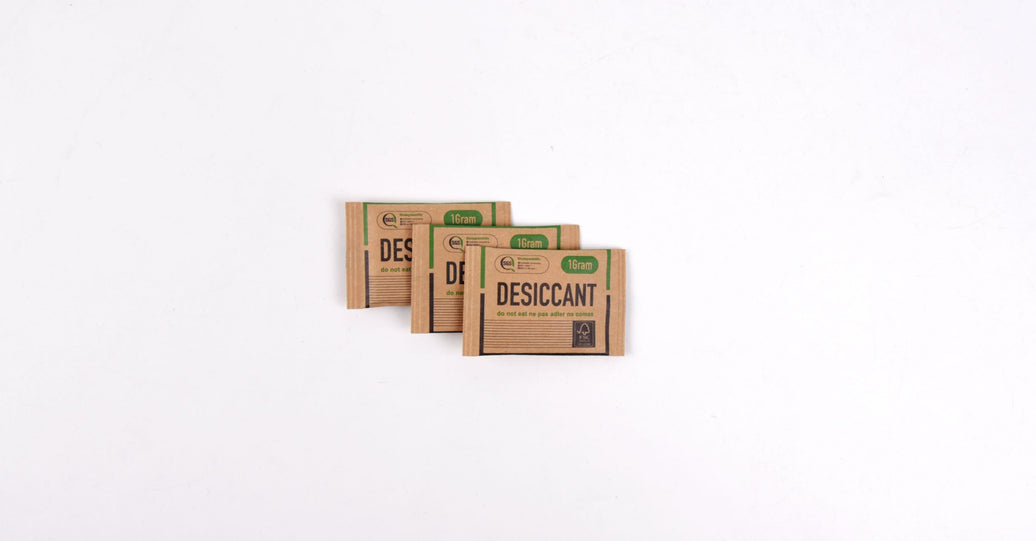
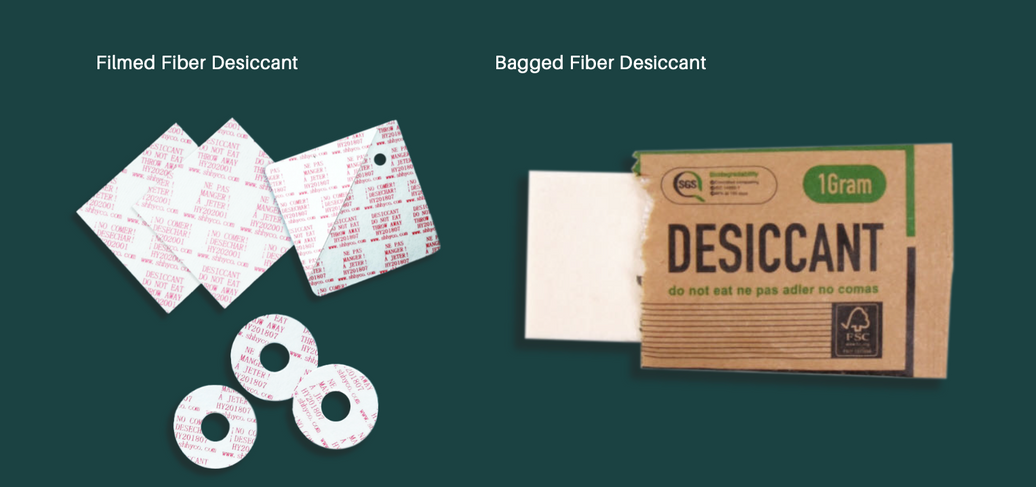
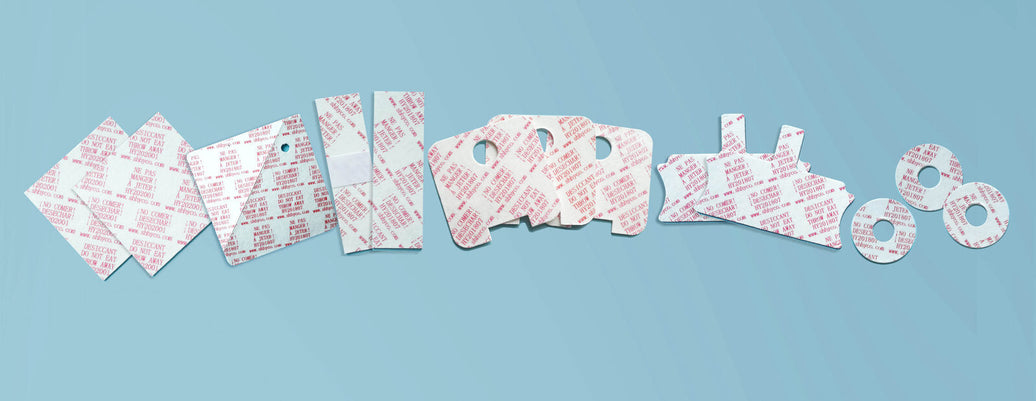
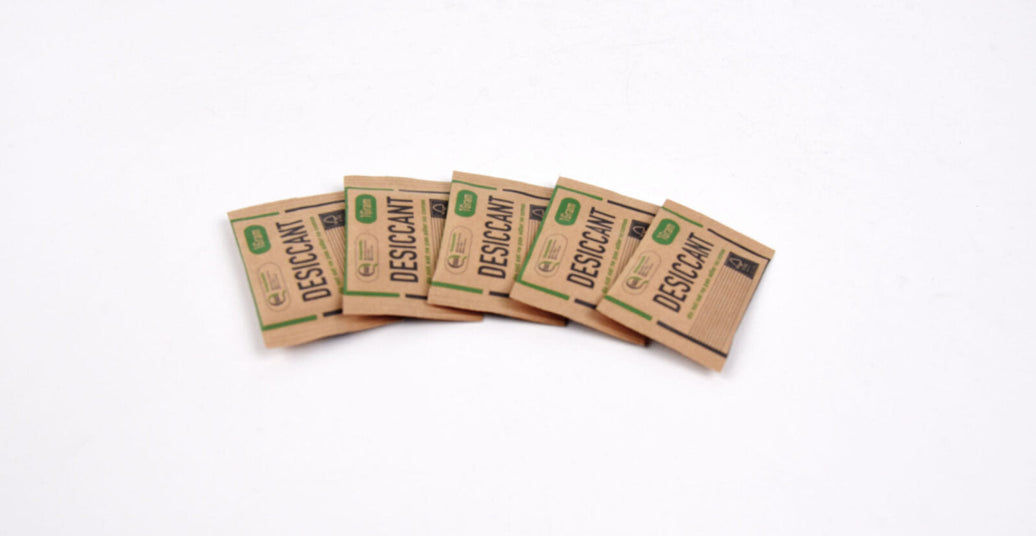
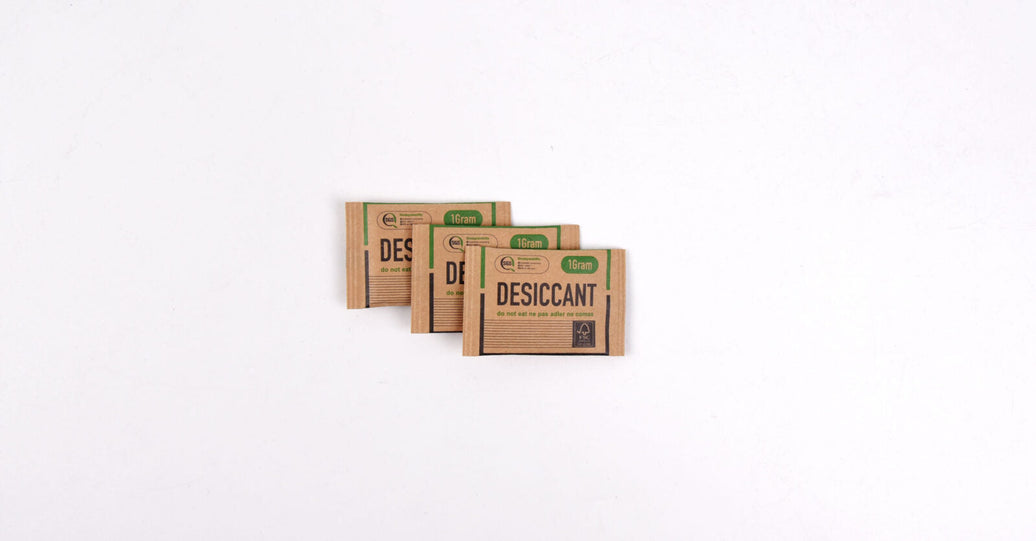
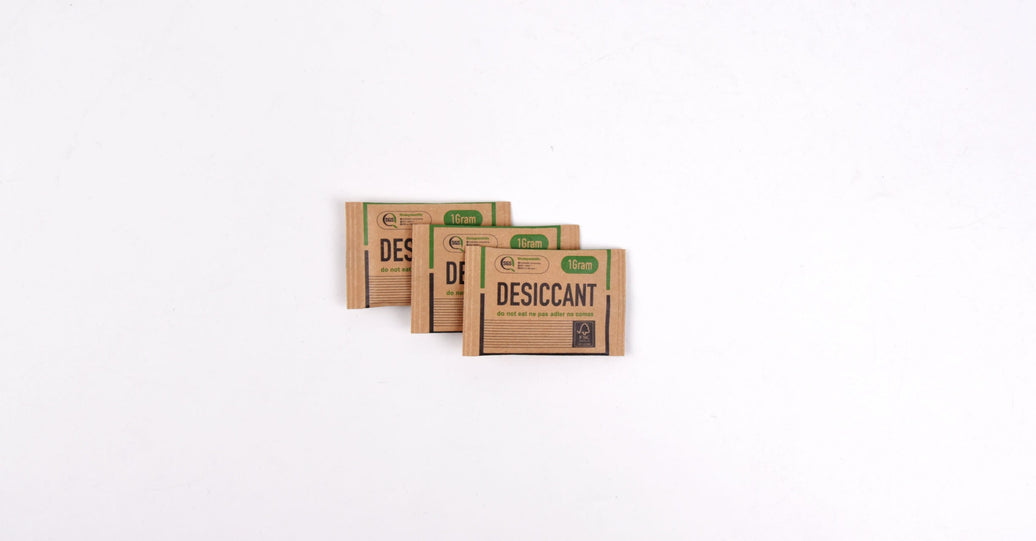
Kraft or paper-wrapped outers read as consistent with natural-product branding, and film cards can be printed. Options are compared in sachet, film card or cap insert.
Is a desiccant needed in a foil-lined tin?
Often only a small one. The tin handles permeation; the desiccant handles moisture sealed in at packing and admitted during opening.
Packing tea or coffee in a compostable pouch? Get the moisture numbers first
Tell us the pouch structure, pack size and destination markets. ATMOSIScience returns a dosage recommendation and sachet options that match your sustainability claim.
Prefer email? info@atmosiscience.com