Quick answer: Creatine monohydrate cakes for physical reasons — surface moisture bridging between fine particles — not because the molecule breaks down in the tub. Dry creatine is stable; conversion to creatinine is essentially a solution-phase reaction. So the packaging job is to hold in-pack humidity below the powder's caking threshold across the whole opened life of the pack, which means budgeting for three moisture sources: air sealed in at fill, vapour permeating the wall, and vapour admitted every time the consumer opens the lid. Size the desiccant against that total, not against tub volume.
Creatine is one of the highest-volume single ingredients in sports nutrition and one of the most complained-about on the shelf. The complaint is rarely potency. It is a scoop that will not break the surface, a brick at the bottom of a 500 g tub, or stick packs that arrive at retail feeling like little cardboard tiles.
The distinction matters because it changes what the packaging has to do.
Creatine does not "go off" in a dry tub — it fuses
Creatine monohydrate carries one water molecule of crystallisation, which is bound and not the problem. The problem is free water arriving on the particle surface. Micronised grades make it worse: finer particles mean far more surface area per gram, so the same absolute quantity of water spreads across more contact points and forms more liquid bridges between particles. Those bridges harden, and the powder sets.
Degradation to creatinine is a different mechanism. It is driven by water in solution, heat and low pH — which is why creatine in a ready-to-drink beverage is a formulation problem and creatine in a sealed dry pack is a packaging problem. Suppliers who market desiccant as "stopping creatinine conversion in the tub" are overselling it. The honest claim is simpler and more useful: keep the powder dry and it stays scoopable, dissolvable and saleable.

The three moisture routes into a creatine pack
1. Sealed-in headspace. A 500 g tub is mostly air. Whatever the relative humidity of the filling room is at the moment the induction seal goes on, that air is now inside the pack permanently. A room running at 60% RH loads the tub before it leaves the line — see how in-plant humidity taxes powder packing lines.
2. Wall permeation. Every package structure passes water vapour at some rate. An HDPE tub with an induction seal behaves very differently from a foil-laminate stick pack, and a paper-based compostable pouch different again. This is the input most brands skip; the method for using it is in desiccant dosage by MVTR.
3. Opening cycles. This is the one that separates creatine from most powders. A 60-serve tub gets opened around 60 times, often in a bathroom or a gym bag, and each opening flushes the headspace with ambient air. Dosage models built on a sealed pack systematically under-size for tubs. The behaviour is covered in more depth in desiccant for resealable packs.
Find the caking threshold before you size anything
Every powder has an RH above which it starts bridging. For creatine blends the threshold shifts with particle size, with any flow agent present, and with co-ingredients — a creatine-plus-electrolyte or creatine-plus-carbohydrate blend usually cakes at a much lower RH than plain monohydrate, because the deliquescent partner sets the ceiling.
Run a moisture sorption isotherm on the actual finished blend rather than on the raw creatine. The read-across method is in how to read a moisture sorption isotherm, and the reason QA teams get confused between the two moisture numbers is explained in water activity vs. moisture content.
The threshold is the target. Everything downstream is arithmetic.
Why capacity per gram decides the sachet you can fit
A tub has limited free space and a stick pack has almost none, so capacity per gram of desiccant is not an academic comparison — it decides whether the sachet fits at all.

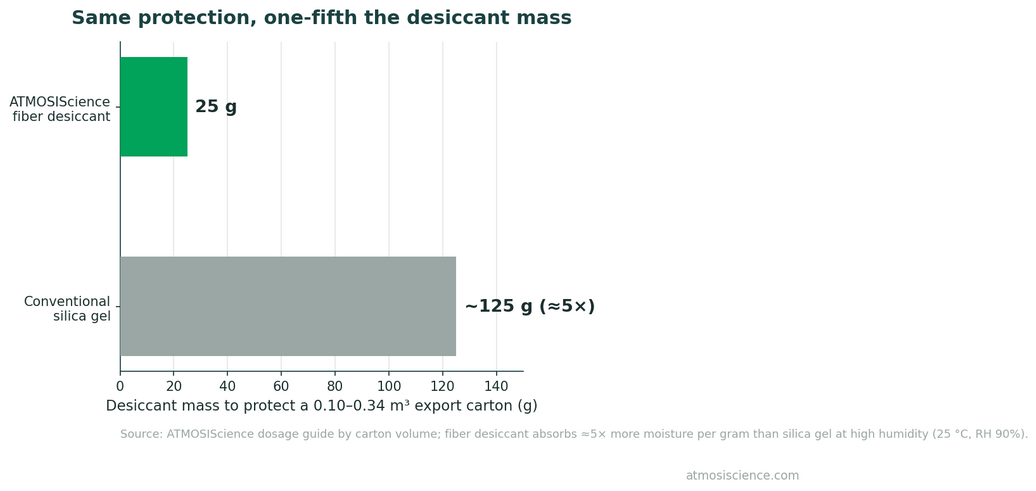
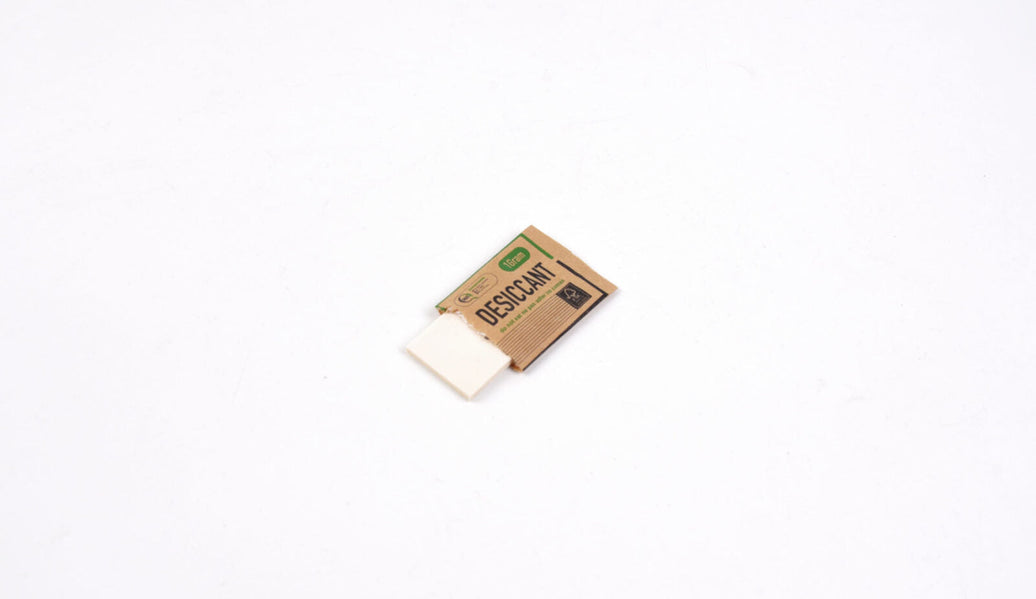
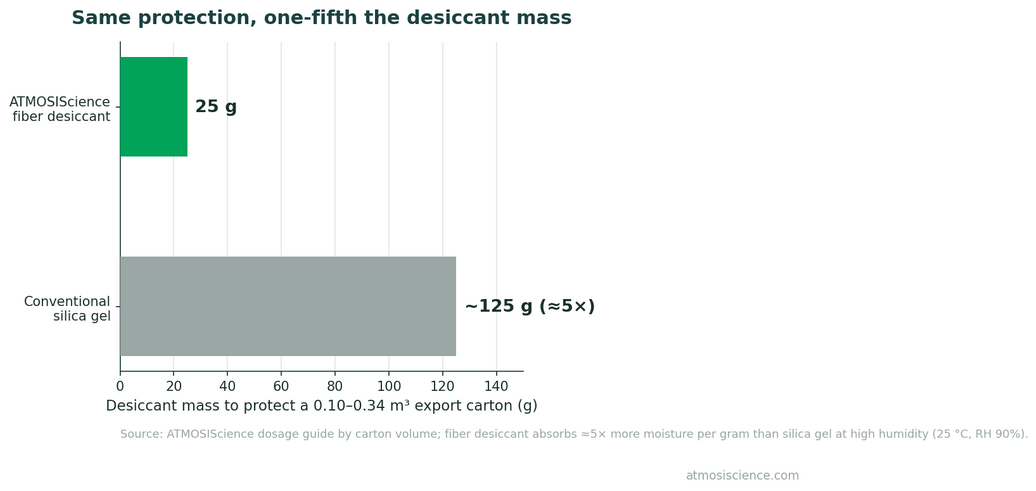
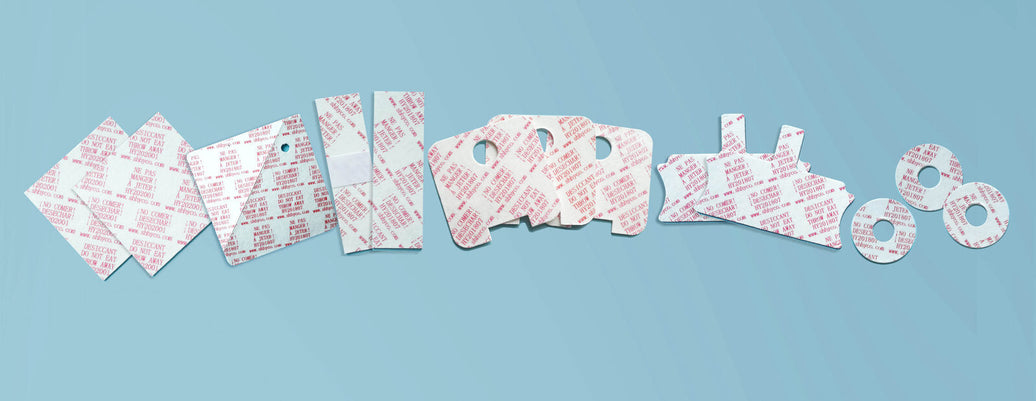
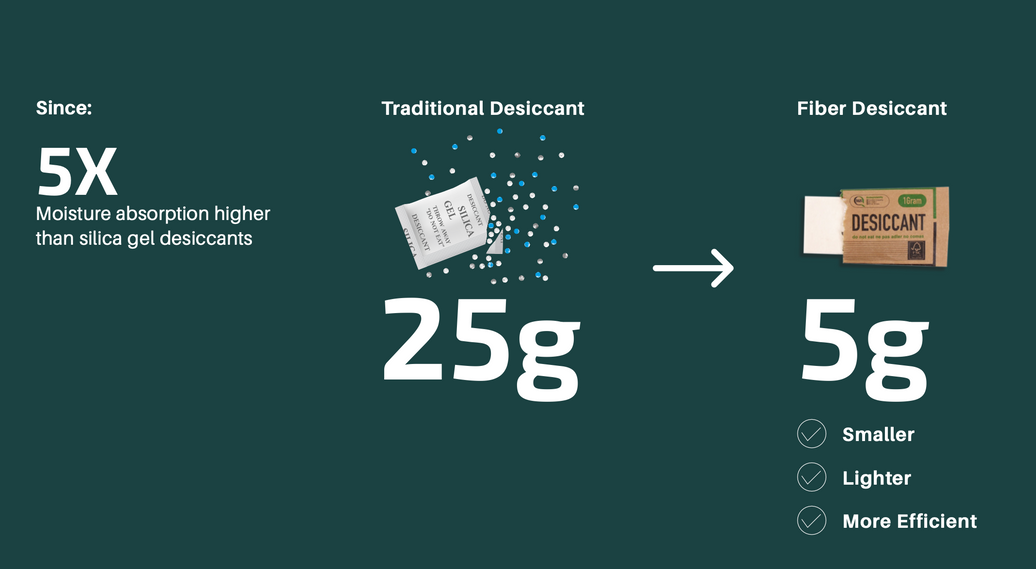
ATMOSIScience fiber desiccant adsorbs more than 35% of its own weight at RH50 and more than 70% at RH90 (25°C), and more than 100% at saturation, with loss on drying below 10%. Typical silica gel sits nearer 30% at RH90. In a tub with 15 mm of clearance under the lid, that difference is the difference between one sachet and three.
It also matters in the opposite direction. Creatine does not need to be bone dry — it needs to be below threshold. A two-way material that buffers rather than strips avoids the over-drying that makes some powders dusty and hard to disperse. The reasoning is set out in why "drier is better" is wrong.
Format by pack type
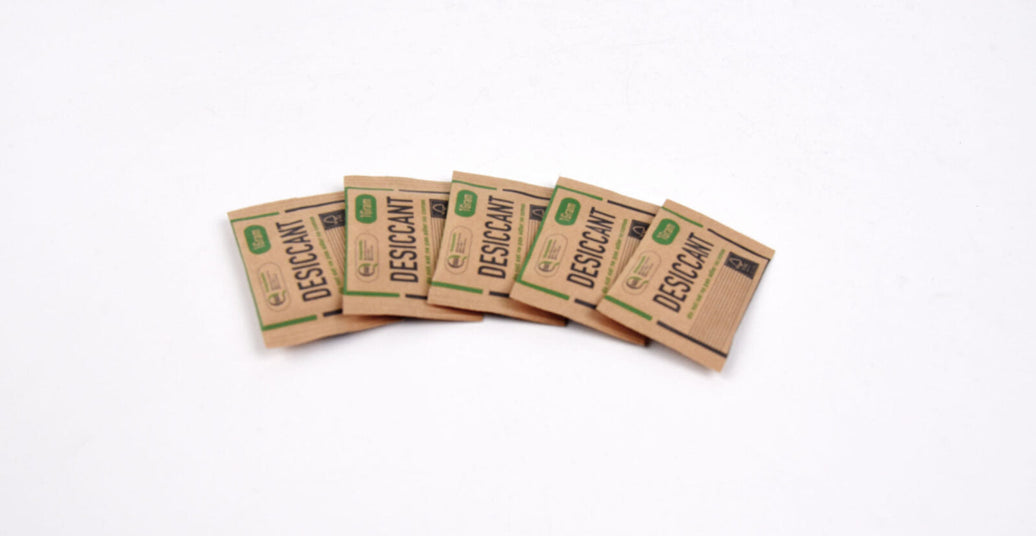
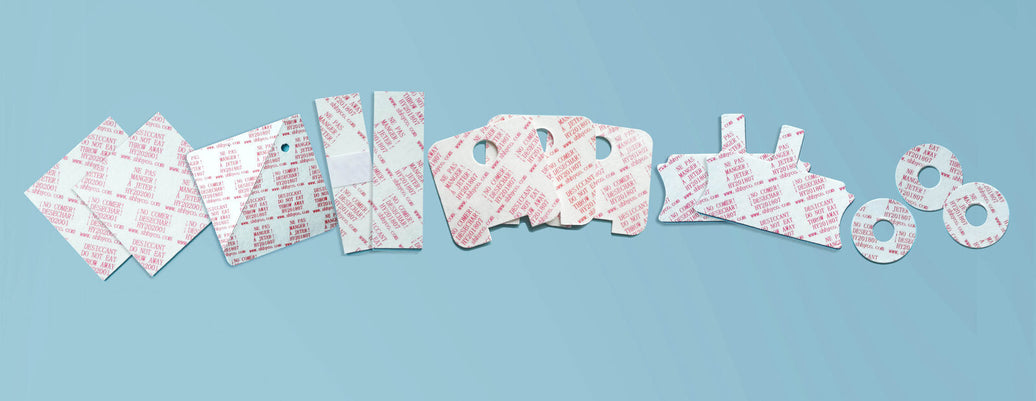
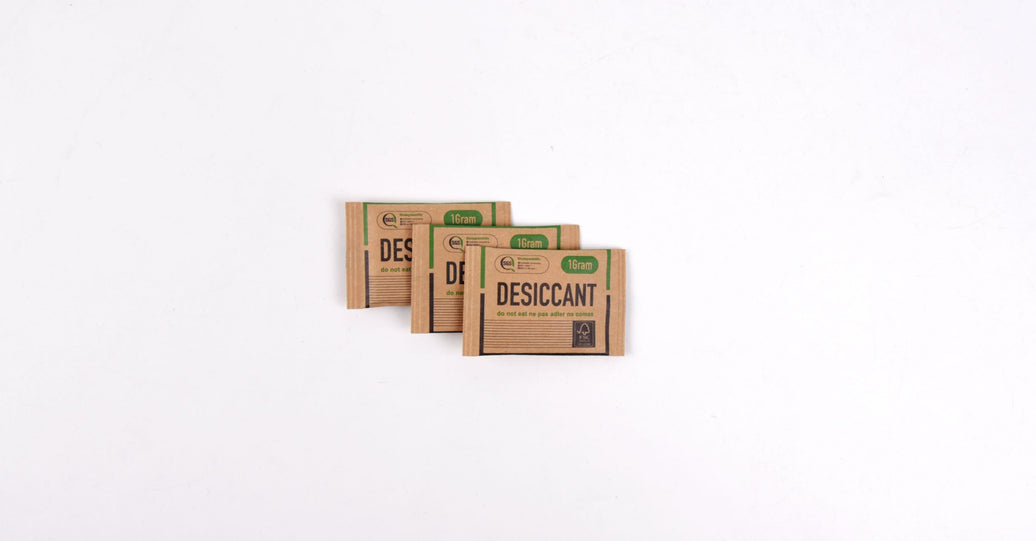
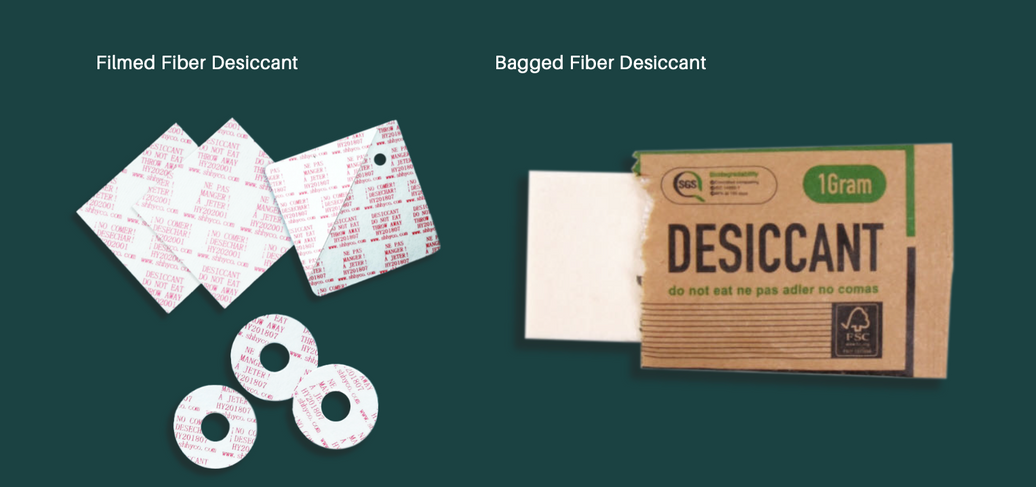
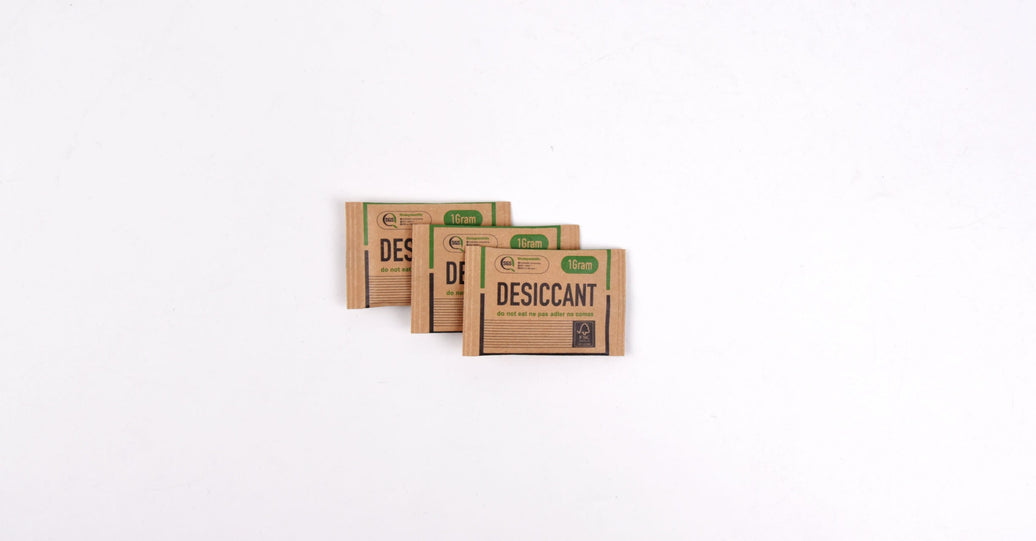
- Tubs (300 g–1 kg). A loose sachet works, but it gets scooped, buried and occasionally thrown away by the consumer on day two. A die-cut card seated in the cap or under the induction seal stays where it was put. Fiber Desimat cards come in 0.5 mm and 1.0 mm thicknesses and can be cut square or circular to the closure diameter.
- Stick packs and single serves. There is no room for an in-pack sachet. Protection has to come from the film structure plus a desiccant in the secondary carton or shipper.
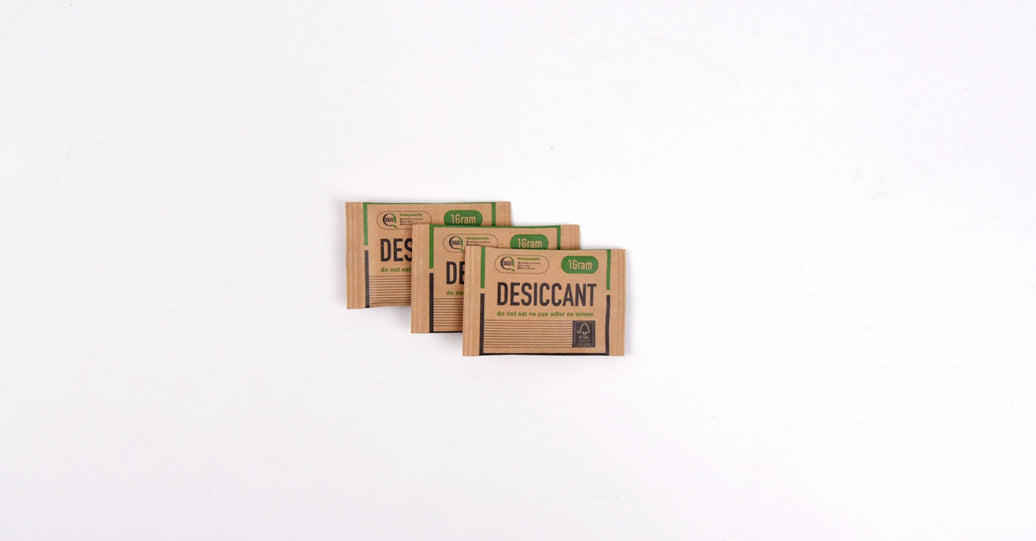
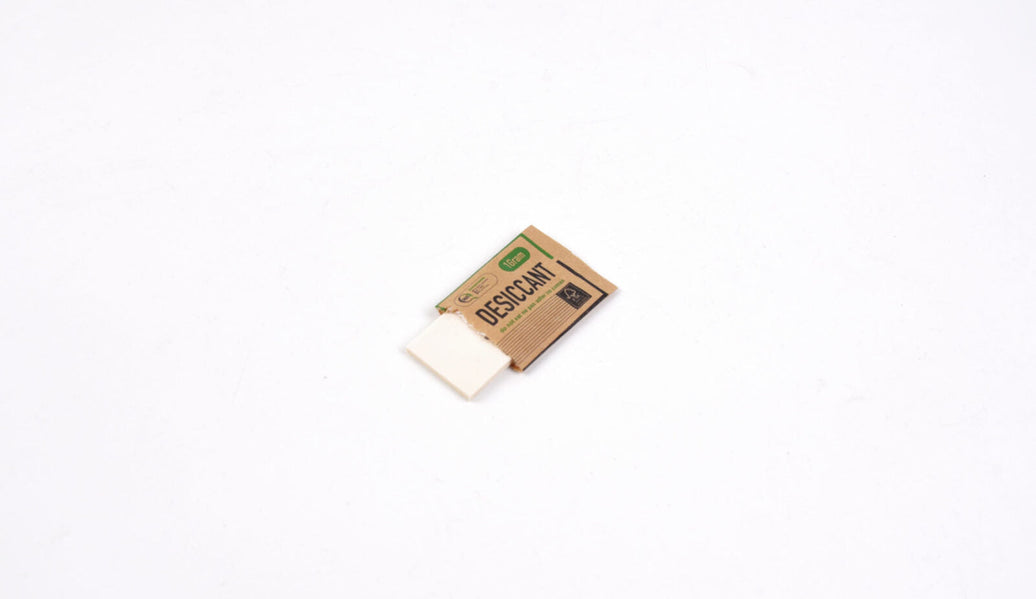
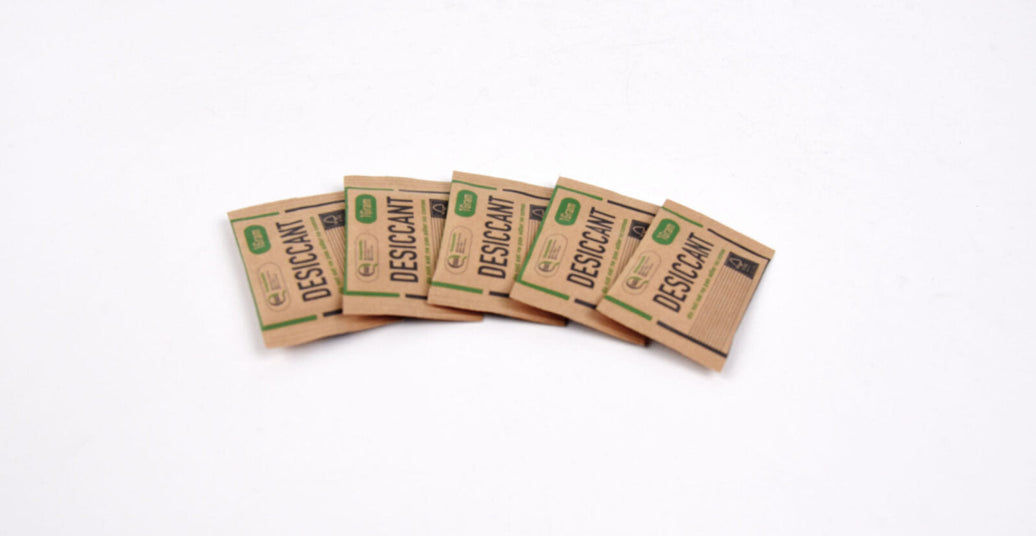
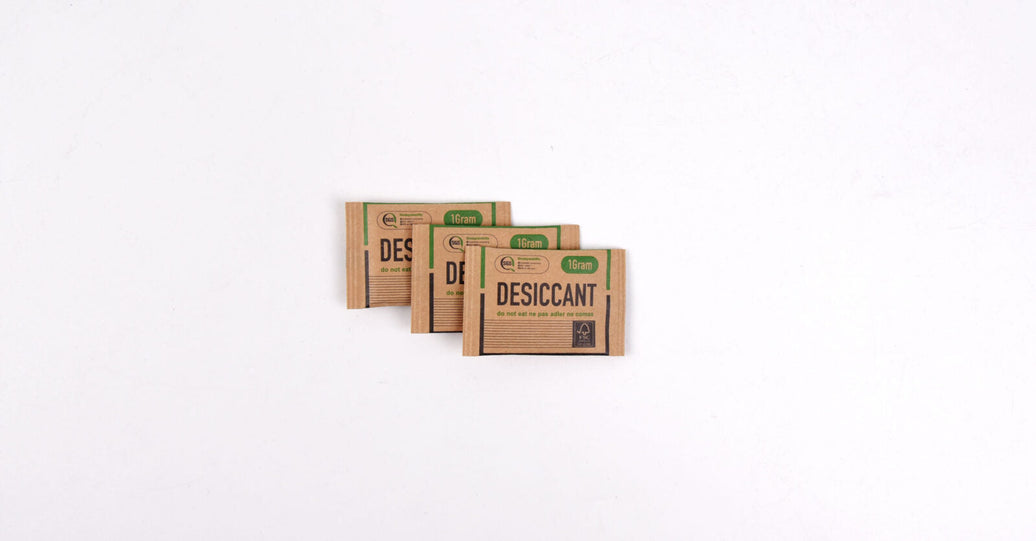
- Bulk totes and 25 kg sacks for co-packers. Larger pouches — ATMOSIScience supplies from 1 g to 1,000 g per pouch — sized against the headspace and the storage window, not the powder mass.
The full decision tree across formats is in sachet, film card or cap insert.
What a creatine brand's QA file should contain
Contract manufacturers and retailers ask for the same short list. Have it ready before the first PO, not after the first audit:
- Food-contact documentation — ATMOSIScience fiber desiccant is supported by FDA 21 CFR 175.300 documentation. What that citation does and does not cover is unpacked in food-contact desiccants and FDA 21 CFR.
- Per-lot COA with adsorption capacity and test conditions stated. A capacity number with no RH and no temperature attached is not a specification.
- Dust and particulate control. Loose-fill beads and powder desiccants create a foreign-body complaint risk in a scoopable product; a bound fiber pad does not shed.
- Compostability evidence if the pouch carries a claim — the ATMOSIScience sachet film is certified to ASTM D6400 and EN 13432. Note that the certification applies to the pouch material. Claim discipline is covered in the sustainable desiccant guide.
Frequently asked questions
Does desiccant stop creatine turning into creatinine?
Not in any meaningful sense, and it is not the right reason to buy one. Creatinine conversion is driven by water in solution, heat and low pH. In a sealed dry pack the realistic risk is caking, scoop drag and lumps that fail visual QC. Desiccant addresses those directly.
How much desiccant does a 500 g creatine tub need?
It depends on headspace volume, the tub's water vapour transmission rate, the number of expected openings and the ambient RH those openings happen in. Two tubs of identical size can need very different dosages. Start from dosage by carton volume, then correct for opening cycles.
Will a desiccant make the powder too dry to mix?
A one-way adsorbent driven hard can over-dry a blend and increase dusting. A two-way fiber buffers toward a target band instead of pulling everything to near-zero, which is usually the better behaviour for a scooped consumer product.
Can the sachet go in a compostable pouch without breaking the claim?
It can if the sachet material carries its own compostability certification. A conventional plastic-film sachet inside a certified compostable pouch is the most common way brands accidentally invalidate the claim on the outer pack.
What about micronised versus standard mesh?
Micronised grades have more surface area and generally cake at a lower RH, so run the isotherm on the grade actually being packed. Do not carry over a dosage from a coarser mesh.
Get a dosage recommendation for your creatine pack
Send the pack format, fill weight, film structure and expected shelf life. ATMOSIScience returns a sizing recommendation and a sample set for worst-case testing.
Prefer email? info@atmosiscience.com