Quick answer: Condensation after cold storage is dew-point physics: any surface colder than the surrounding air's dew point collects liquid water. Three fixes work together — (1) temper: let packages warm before opening or unwrapping; (2) seal + desiccant: a barrier pack with internal moisture control keeps condensate off the product even when the outer pack sweats; (3) buffer the swing: two-way humidity control absorbs the internal RH spike as cold contents warm. Desiccant alone cannot stop dew forming on the outside of a cold pack — protocol has to do that part.
Every cold chain has the same weak moment: the exit. Frozen goods hit a loading dock in summer; refrigerated reagents come out for use; chilled containers open at a tropical port — and everything “sweats.” Complaints then arrive as mold, soggy labels, clumped powder or corroded components, and the cold chain itself gets blamed. The chain was fine. The transition was unmanaged.
The physics in one paragraph
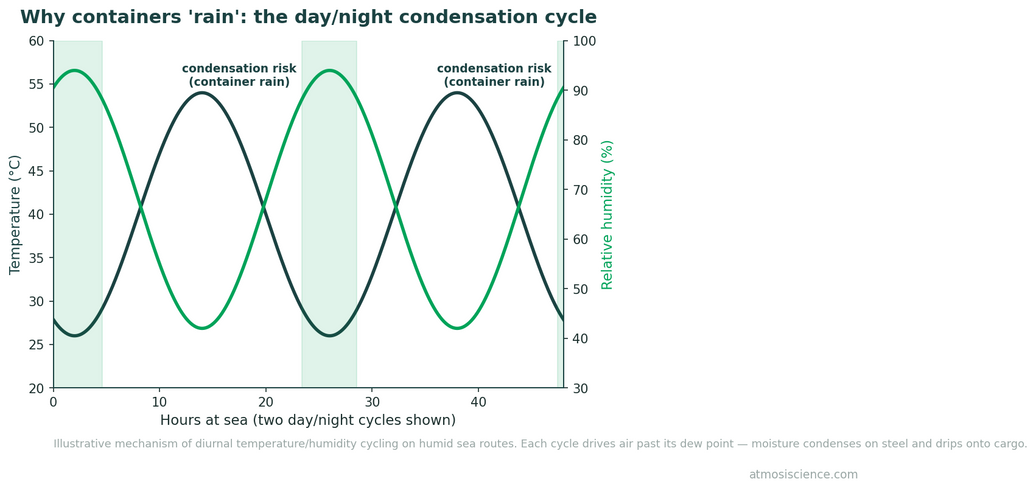
Warm air holds more water vapor than cold air. When warm, humid air touches a surface at or below its dew point, the excess condenses as liquid on that surface — instantly. A package pulled from a cold room into a humid warehouse is that cold surface. The same cycle drives container rain at sea: cargo heats by day, the container skin cools at night, and moisture rains back onto the goods.

Where it bites
Frozen-to-dock: cartons frost over and soak; corrugate loses strength; labels wrinkle and reject scanners. Reefer-to-port in humid climates: the first hour after door-open is the highest-condensation window of the whole voyage. Fridge-to-shelf retail: chilled goods sweat inside display packaging. Cold lab reagents and diagnostics: a vial opened cold pulls room moisture straight onto the contents — one reason moisture-critical kits ship with sieve- or desiccant-protected packaging, as covered in the diagnostics guide. Electronics: condensate on boards and connectors is a failure mechanism of its own — detailed in the electronics & PCB guide.
The three-layer fix
Layer 1 — temper before opening. Move goods from cold to ambient in stages, or hold them sealed until surface temperature clears the room's dew point. Opening a cold pack immediately is the single most common self-inflicted wound: it invites room air to condense directly on the product. Simple rule for teams: if it feels cold, it isn't ready to open.
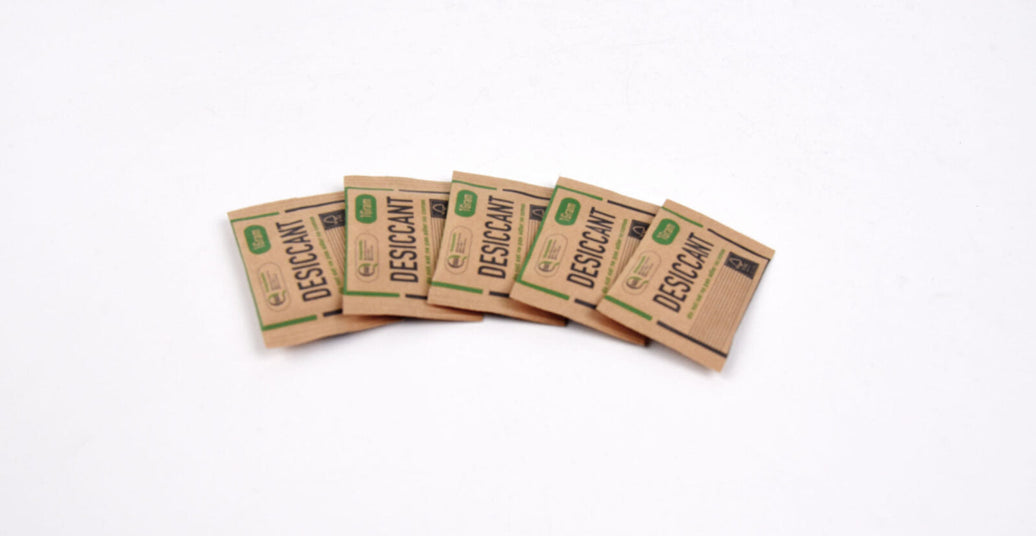
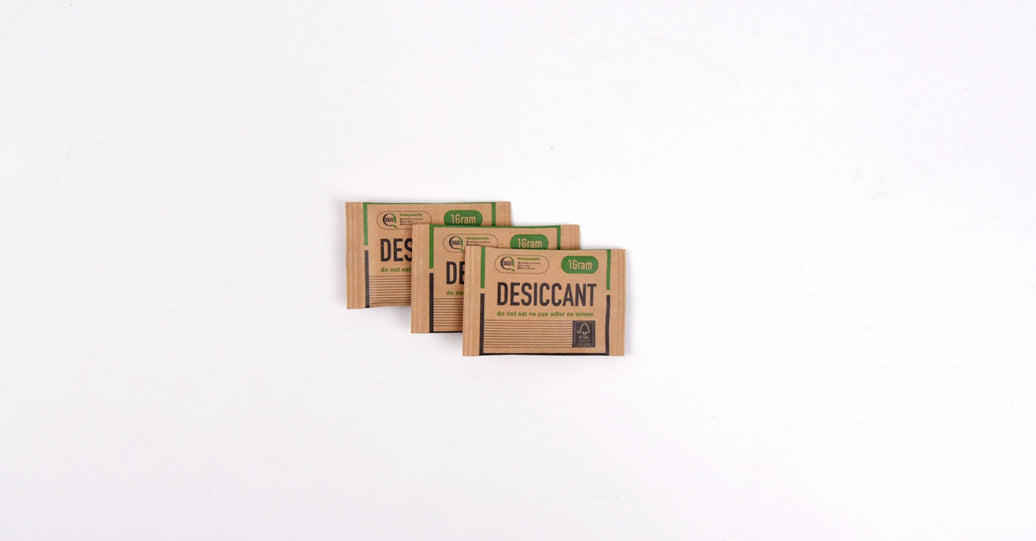
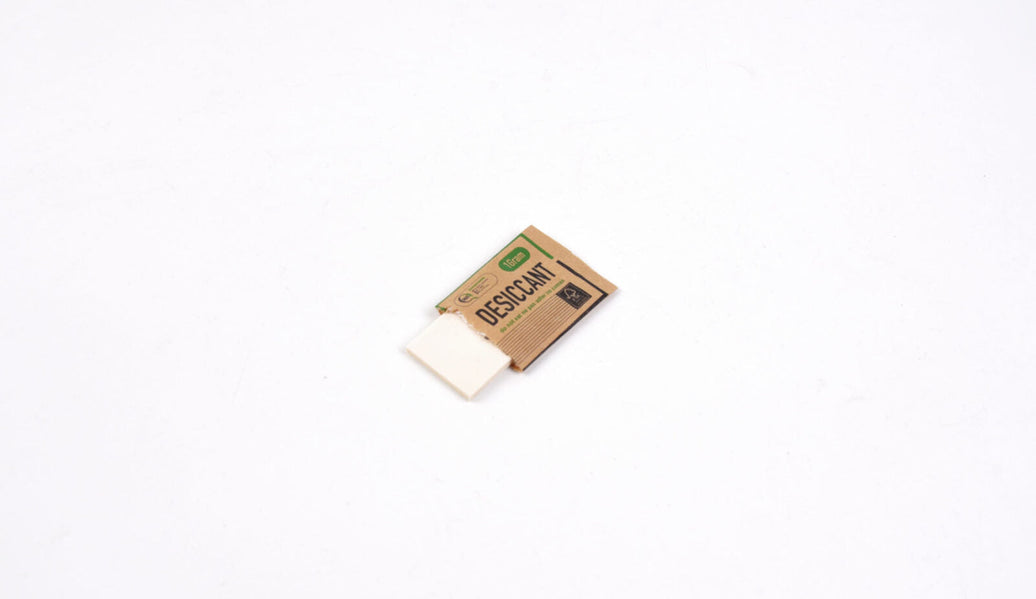
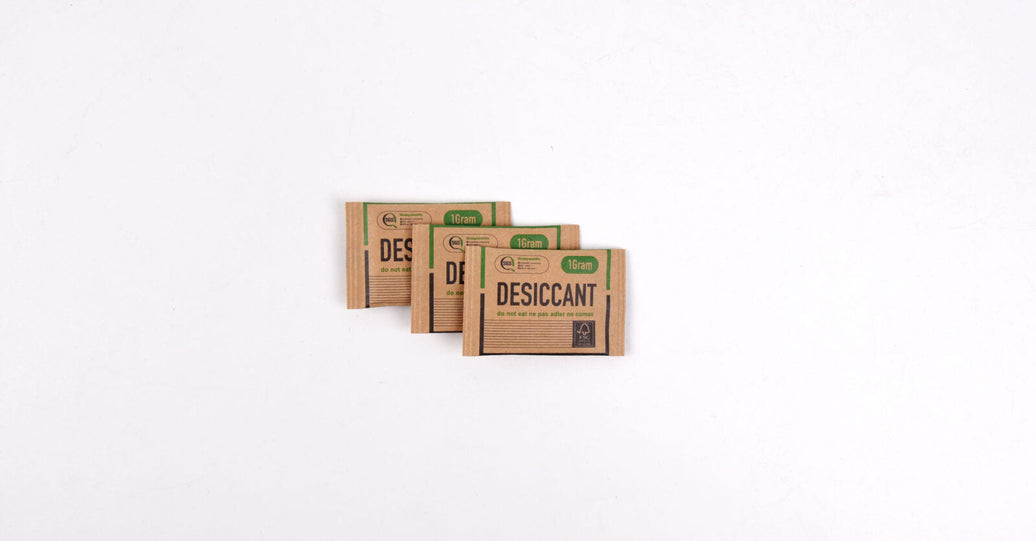
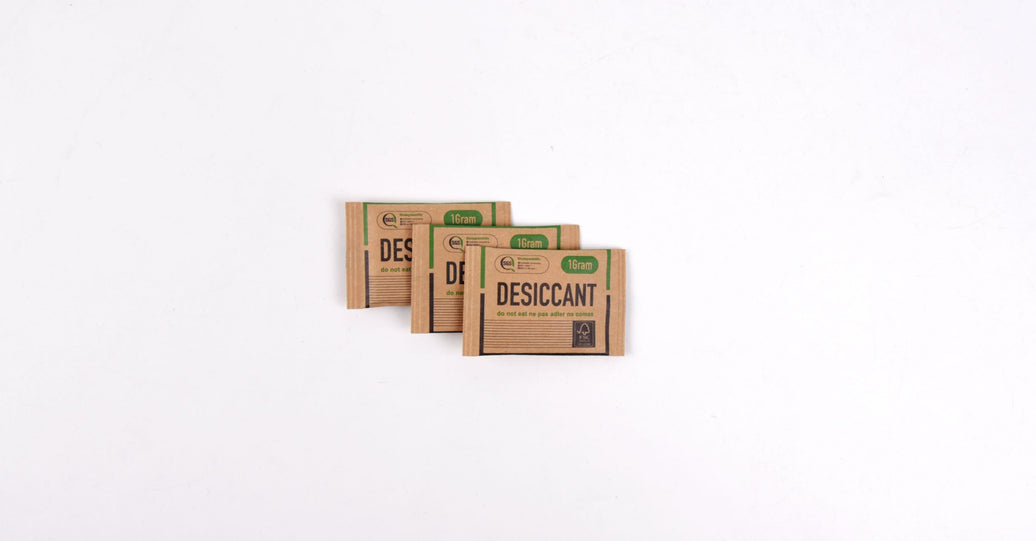
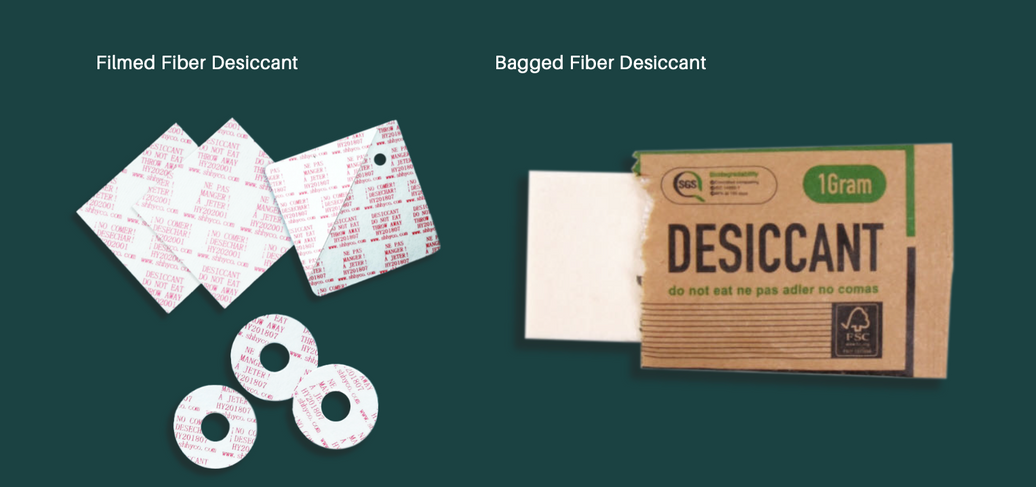
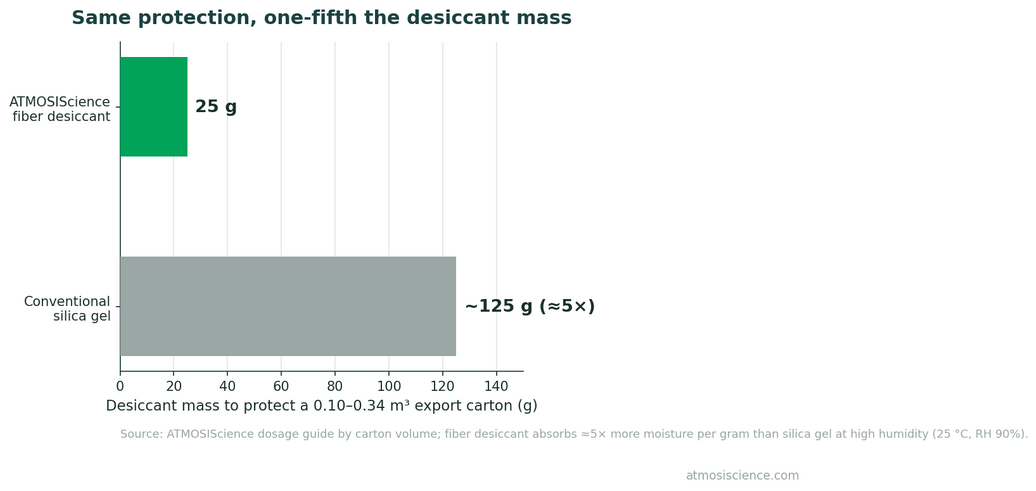
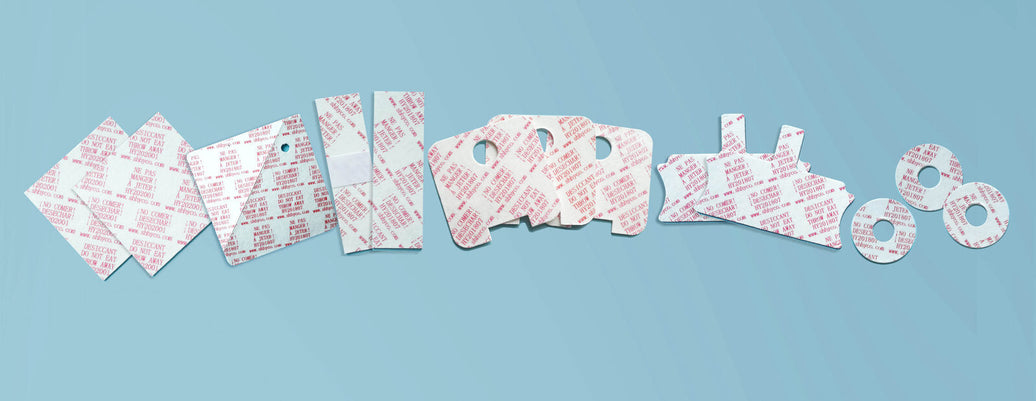
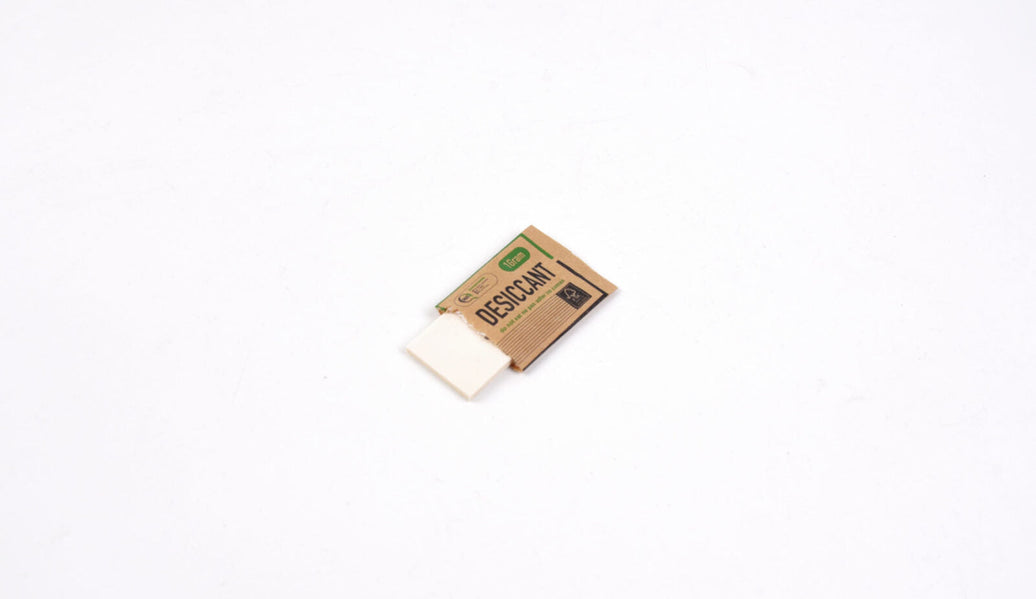
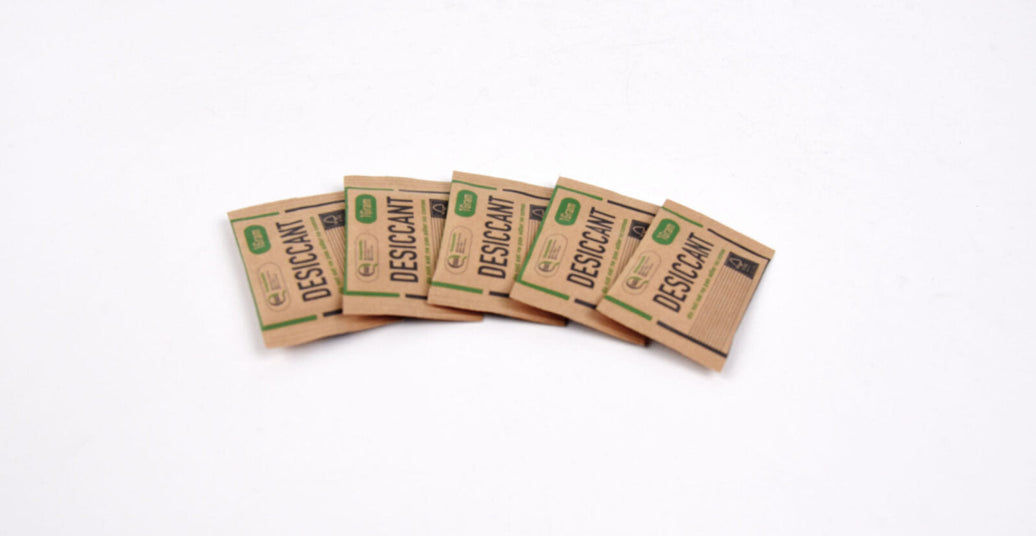
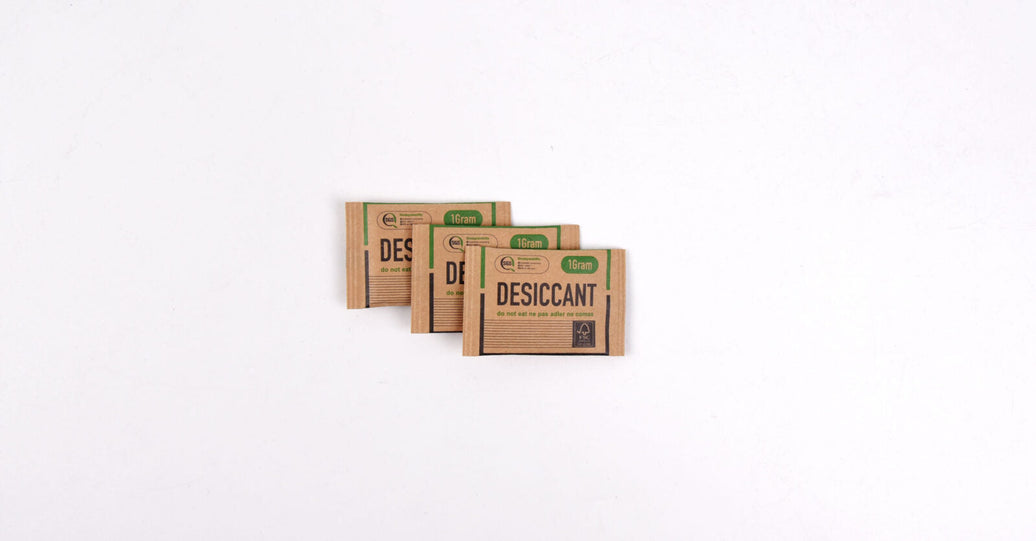
Layer 2 — barrier + internal desiccant. A sealed moisture-barrier pack means any dew forms on the outside — cosmetic, not catastrophic. Inside, a correctly placed desiccant (rules in the placement guide) handles the vapor that entered at packing time plus what leaks in through the film over the dwell.
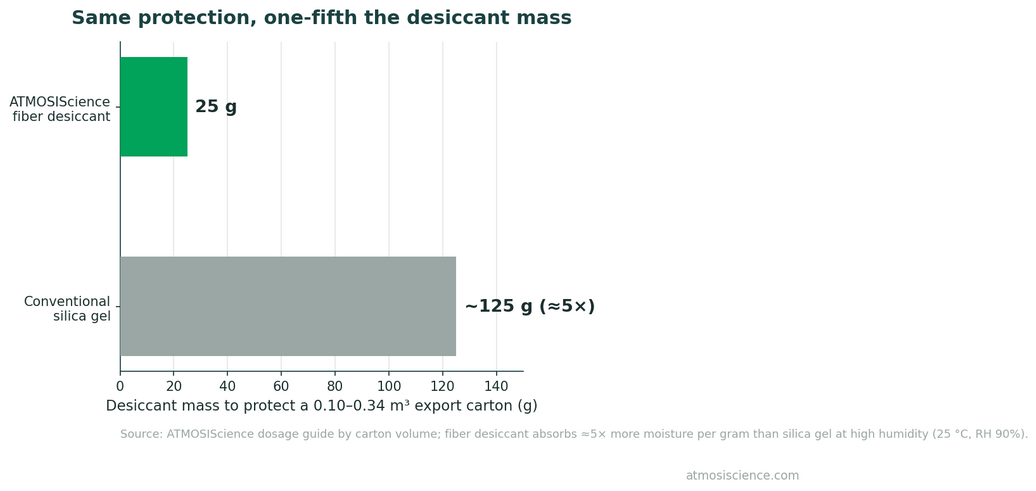
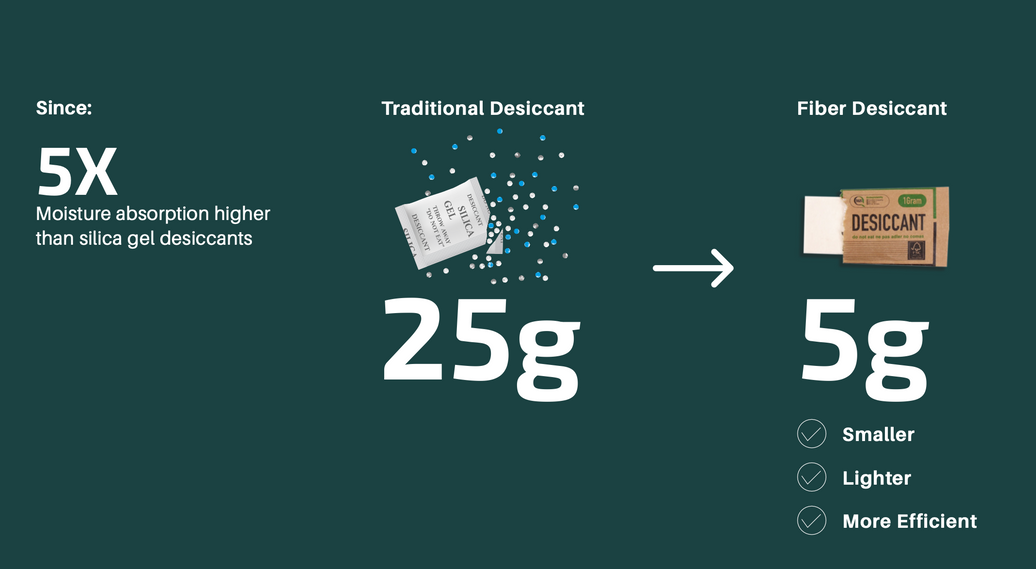
Layer 3 — buffer the internal swing. As cold contents warm inside a sealed pack, internal RH climbs toward saturation before re-equilibrating. One-way desiccant just eats capacity on every cycle. Two-way humidity control absorbs the spike and releases moisture back as conditions settle, holding the interior in a band instead of whiplashing — the mechanism behind the fiber platform's anti-condensation applications in electronics and enclosures, explained in the certain-humidity principle and the two-way anti-condensation article.
What not to do
Do not throw more one-way desiccant at an exterior-dew problem — the sachet inside cannot dry the warehouse outside. Do not shrink-wrap goods while still cold, sealing condensate in. And do not skip the tempering step to save dock time; the hour saved is repaid in claims.
FAQ
Why does my product sweat after taking it out of cold storage?
Its surface is below the room air's dew point, so the room's moisture condenses onto it. It stops once the surface warms past dew point — which is why tempering works.
Does desiccant prevent condensation?
Inside a sealed pack, yes — it removes the vapor that would condense on interior surfaces. It cannot prevent dew on outer surfaces exposed to room air; that is protocol territory.
How long should packages temper before opening?
Until surface temperature exceeds the room's dew point — depends on mass and delta-T; dense pallets need hours, single cartons far less. An infrared thermometer at the dock answers it per lot.
What is the difference between this and container rain?
Same physics, different geometry: container rain is the cycle repeating nightly at sea; cold-storage sweat is a single large transition. Both are managed with barrier, moisture control and timing.
Describe your cold-chain route — get a condensation-control plan
Route legs, temperatures, packaging and where the sweating shows up. The team maps the dew-point events and returns a tempering + packaging recommendation — including where two-way control pays and where simple protocol is enough.