Quick answer: Canisters are chosen to keep loose desiccant beads out of the product; sachets are chosen for low cost and easy bulk insertion. If the reason for a canister is dust control, a bound fiber pad inside a sealed sachet removes the problem at the source — there is no loose fill to escape. Canisters still win where a rigid body is needed for a bottle neck or where the pack must survive heavy vibration.
The canister-versus-sachet question is almost never really about geometry. Ask a packaging engineer why they want a canister and the answer is usually one of three things: the beads are getting into the product, the line is dusty, or a rigid unit is easier to handle in a bottle. Only the third is a format requirement. The first two are consequences of loose-fill desiccant, and they can be designed out.
The formats on the table
| Format | Construction | Typical use |
|---|---|---|
| Canister | Rigid plastic tube, vented cap, loose beads inside | Pharma bottles, diagnostic vials |
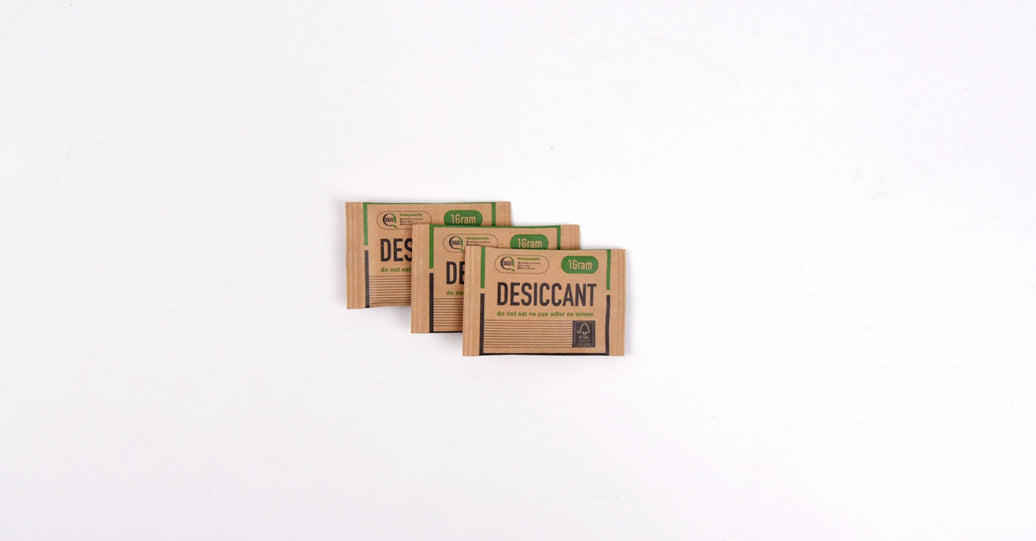
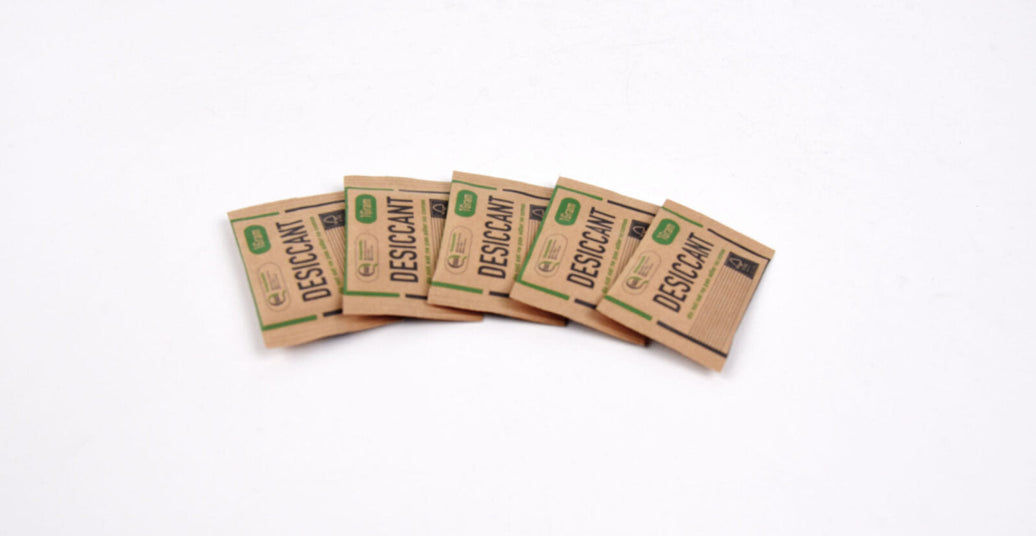
| Sachet (loose fill) | Paper or Tyvek pouch holding beads or granules | Cartons, shippers, general packaging |
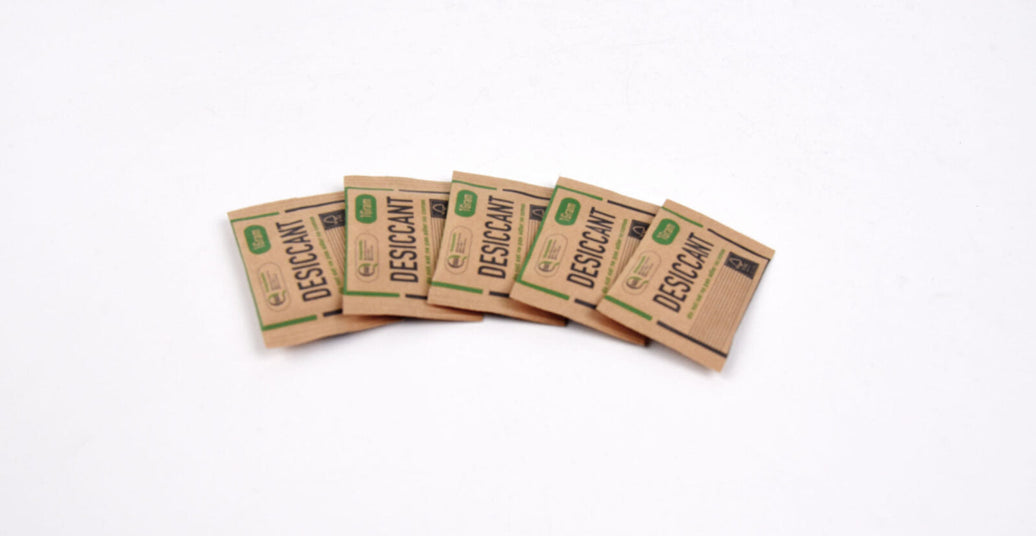
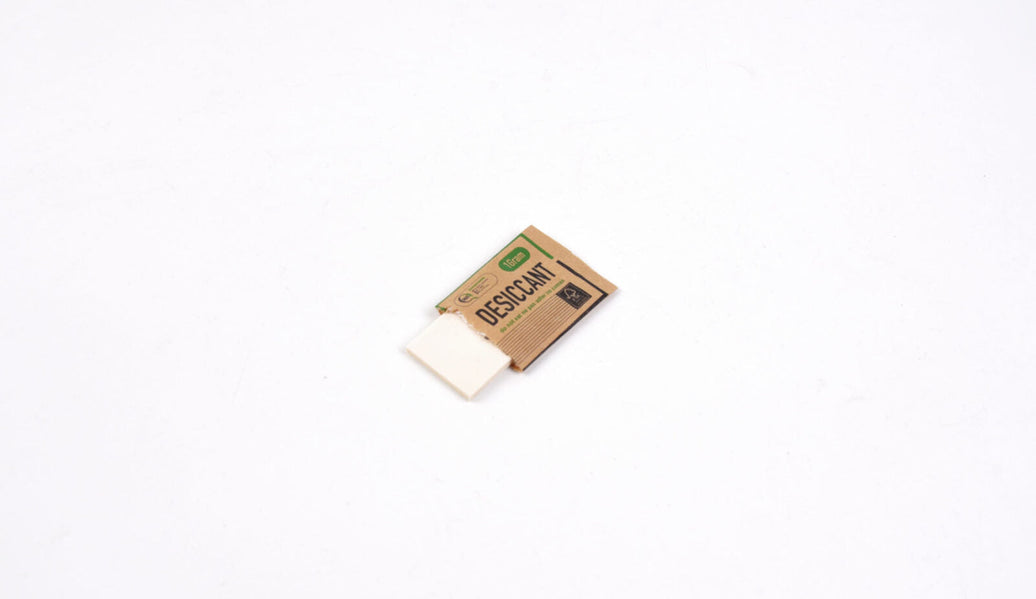
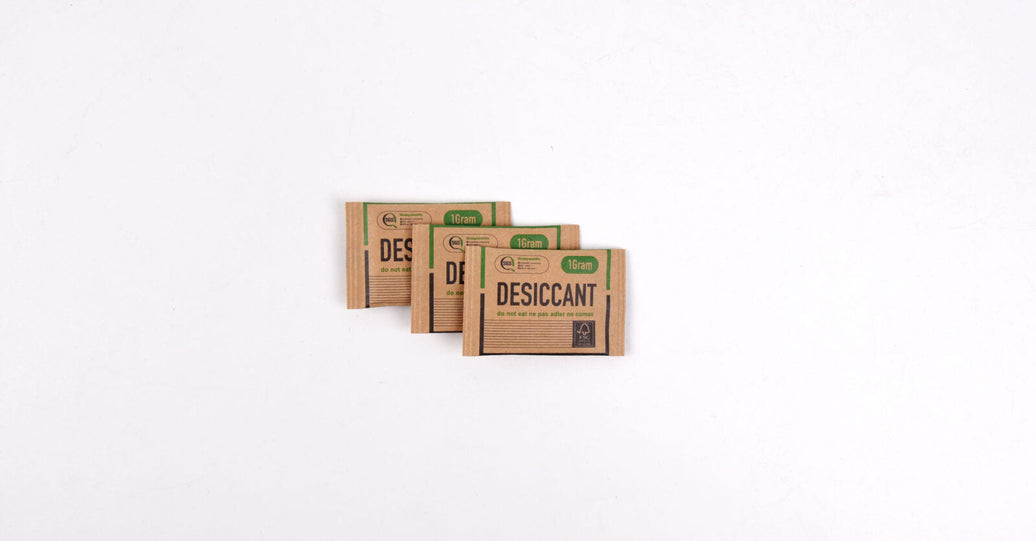
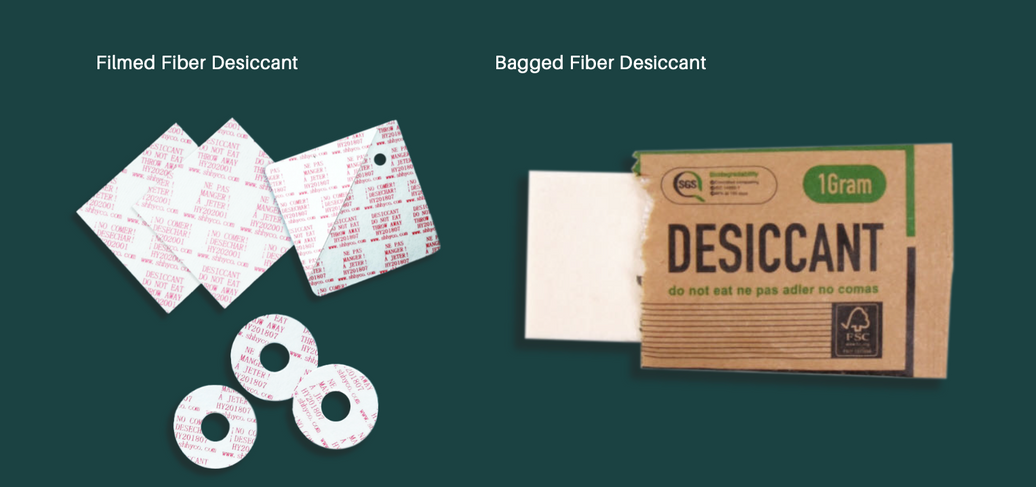
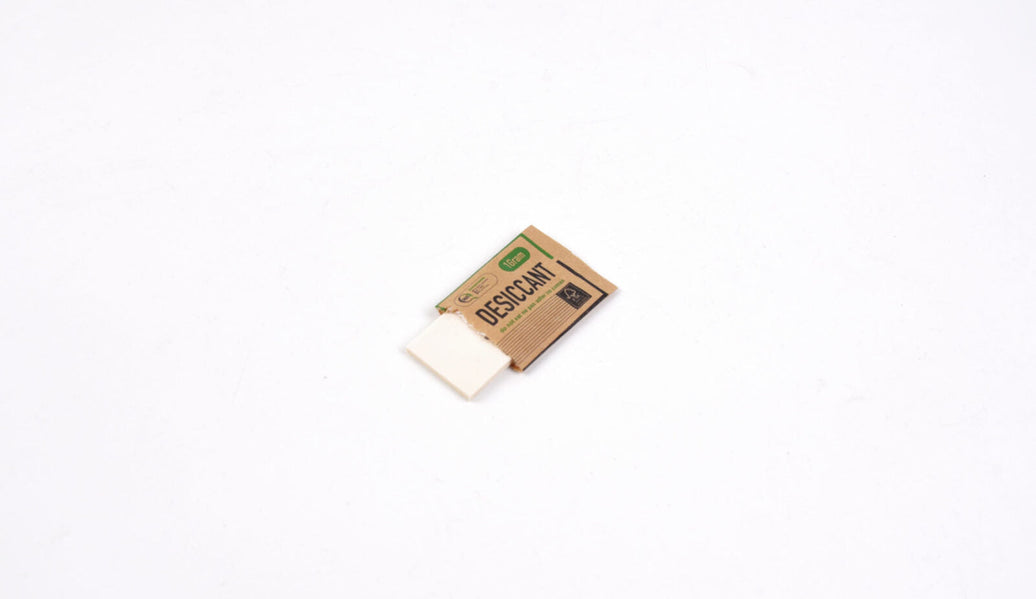
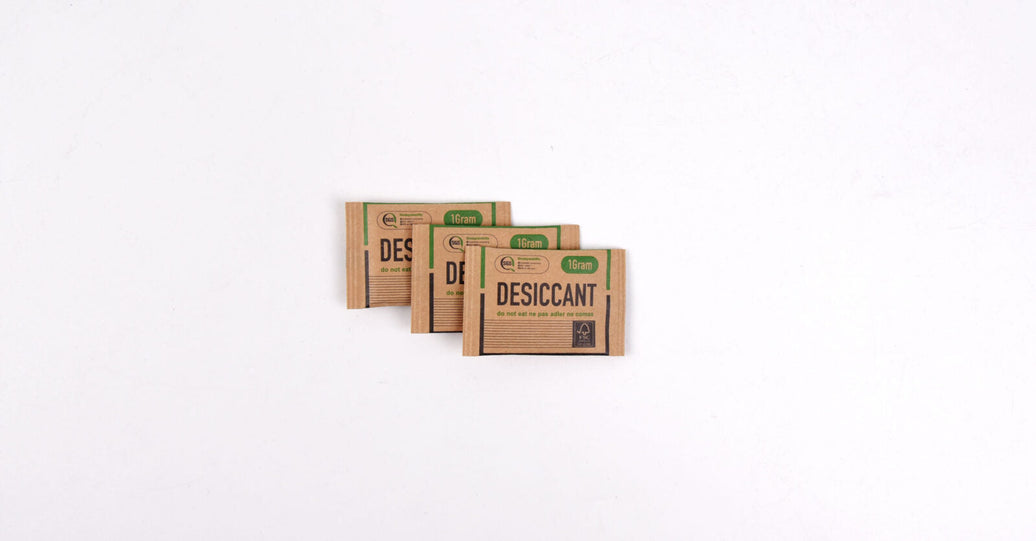
| Sachet (bound fiber pad) | Solid fiber substrate inside a wrapped pouch, nothing loose | Food, supplement, pharma, electronics |
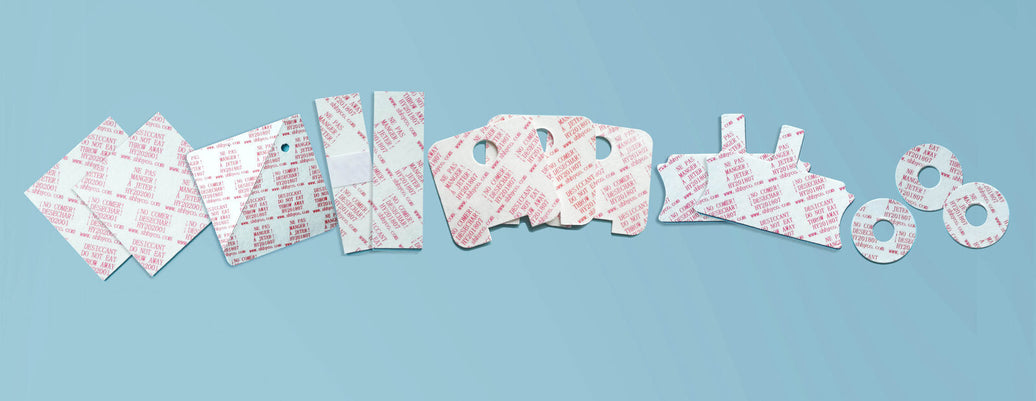
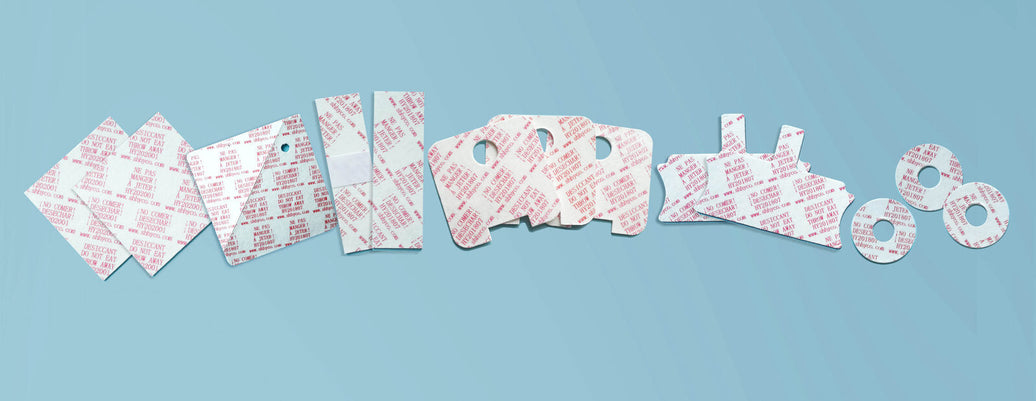
| Film card / die-cut pad | 0.5–1.0 mm laminated card, cut to shape, printable | Bottle caps, blisters, thin packs, automated lines |
Grouping all sachets together is what makes the comparison misleading. A loose-fill sachet and a bound fiber pad behave completely differently on a filling line even though both are “a sachet”.

1. Dust and foreign-material risk
A loose-fill sachet can shed. Beads abrade in transit, fines migrate through the paper, and a punctured pouch releases its contents straight into the product. In a powder pack that is a foreign-material event with a recall attached. Canisters exist largely to contain that risk behind a rigid wall and a vented cap.
A bound fiber substrate solves it differently. The adsorbing material is a solid sheet roughly 2.5 mm thick, not a bed of particles, so there is nothing to shed even if the wrap is damaged. Powder and loose-fill desiccant risks in food packaging sets out the failure modes in detail.
2. Product contact
In a bottle of powder or capsules, the desiccant is in direct contact with product. That makes the wrap or canister wall a food-contact or pharmaceutical-contact material, and it needs documentation to match. ATMOSIScience fiber desiccant is documented against FDA 21 CFR 175.300 for food-contact applications; the direct versus indirect contact explainer covers which declaration applies to which arrangement.
Whichever format is chosen, the do-not-eat marking obligation follows the unit into the pack. See desiccant safety, warnings and child-safe packaging.
3. Line behaviour and handling
What decides throughput is rarely capacity — it is whether the placement device can pick, hold and drop the unit reliably at line speed:
- Canisters feed well from a bowl or track because they are rigid and uniform, but they are bulky and need their own hopper.
- Loose-fill sachets are floppy and variable in thickness, so vacuum pickup is inconsistent and jams are common.
- Bound pads and film cards are dimensionally stable and stiff, which is what dispensers actually want. Card stiffness, more than any other property, sets achievable line speed — see why card stiffness decides line speed.

4. Headspace cost
A canister is the most expensive format in volume terms. It occupies space that would otherwise hold product or allow fill tolerance, and in a slim bottle it can force a larger container. A die-cut card laid against a cap or a wall costs almost nothing in headspace, which is why cap-integrated formats exist — see bottle-cap desiccant inserts with zero headspace cost.
5. Consumer experience and reclosability
For a reclosable pack that the consumer opens repeatedly, the desiccant has to survive handling as well as moisture. A canister rattles and reads as an industrial object; a printed card can carry brand copy instead, turning a required insert into something intentional. Custom-printed desiccant cards covers that option.
Reclosable packs also change the sizing. Every opening admits fresh humid air, so the desiccant must be sized for the number of expected opening cycles, not just for permeation.
Choosing between them
- Choose a canister when a rigid body is genuinely required — a narrow bottle neck, an existing validated pharmaceutical format, or heavy vibration with an abrasive product.
- Choose a bound fiber sachet when dust and foreign-material risk drove the question, and when bulk insertion into cartons or shippers is the mode.
- Choose a film card when headspace is tight, when the pack is thin, when the line is automated, or when the surface can carry print.
If it is still unclear, sachet, film card or cap insert? works the decision through by pack type.
Frequently asked questions
Will a canister reduce dust and line contamination?
It contains loose fill behind a rigid wall, so it reduces the consequences. It does not remove the loose fill. A bound fiber pad removes it entirely, which is a different and more durable fix.
Can the desiccant touch the product?
Yes, where the contact surface is documented for food or pharmaceutical contact. That documentation, not the format, is the deciding factor.
Is a canister reclosable after first opening?
The canister stays intact, but the pack it sits in is what gains humidity on each opening. Size the desiccant for the opening cycles regardless of format.
Which format is cheapest?
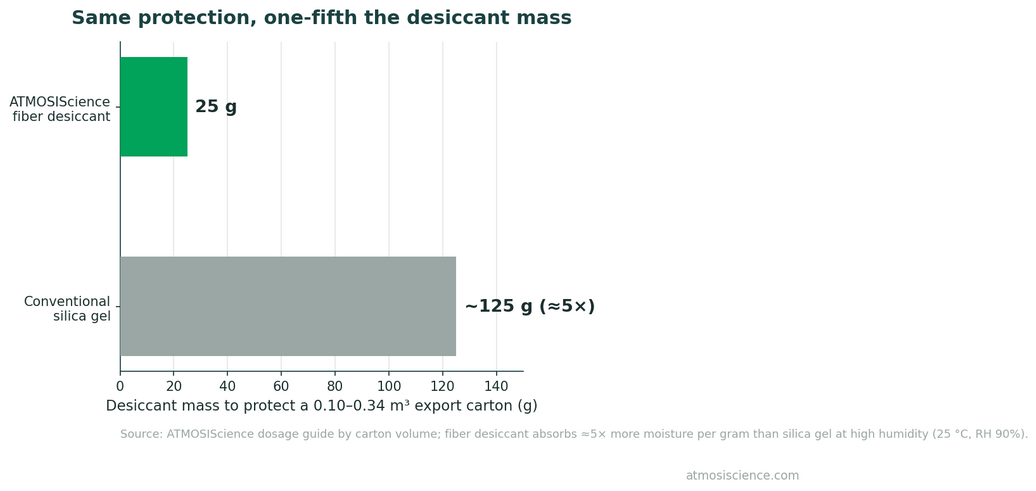
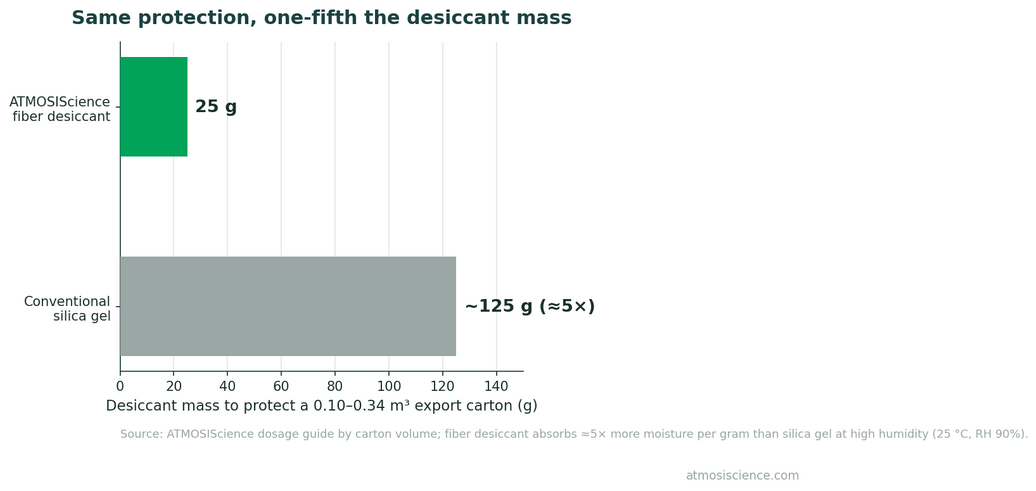
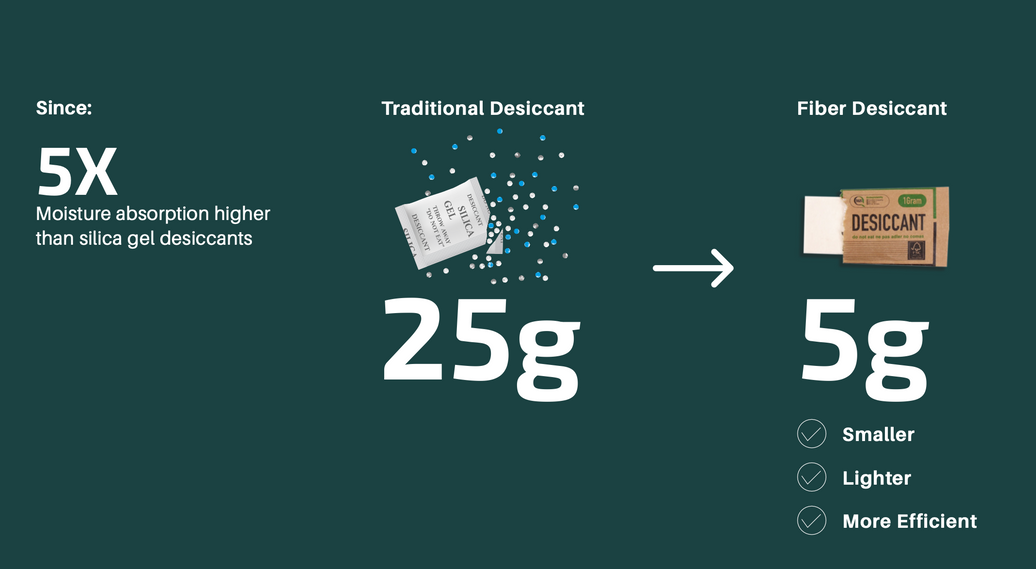
Per piece, a plain sachet. Per unit of protection delivered, the comparison shifts — a higher-capacity material needs fewer grams, which lowers freight and storage. Silica gel equivalency puts the formats on the same basis.
Can one pack use more than one format?
Commonly, yes. A card in the closure for the retail unit and a larger pouch in the shipper is a normal combination, with each sized for its own moisture load.
Not sure which format fits your line?
Describe the pack and how the desiccant would be placed. ATMOSIScience will recommend canister, sachet or die-cut card — and say plainly where a format change is not worth the validation effort.
Prefer email? info@atmosiscience.com