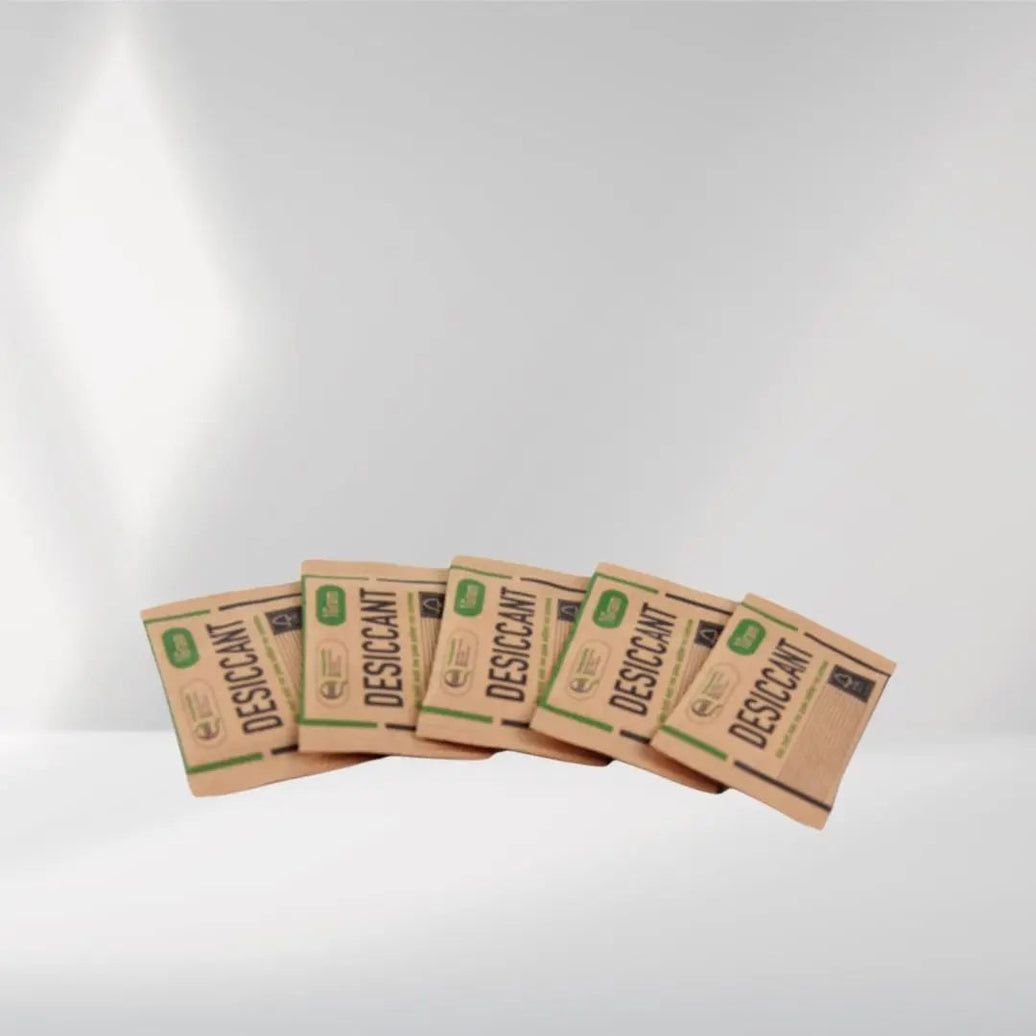
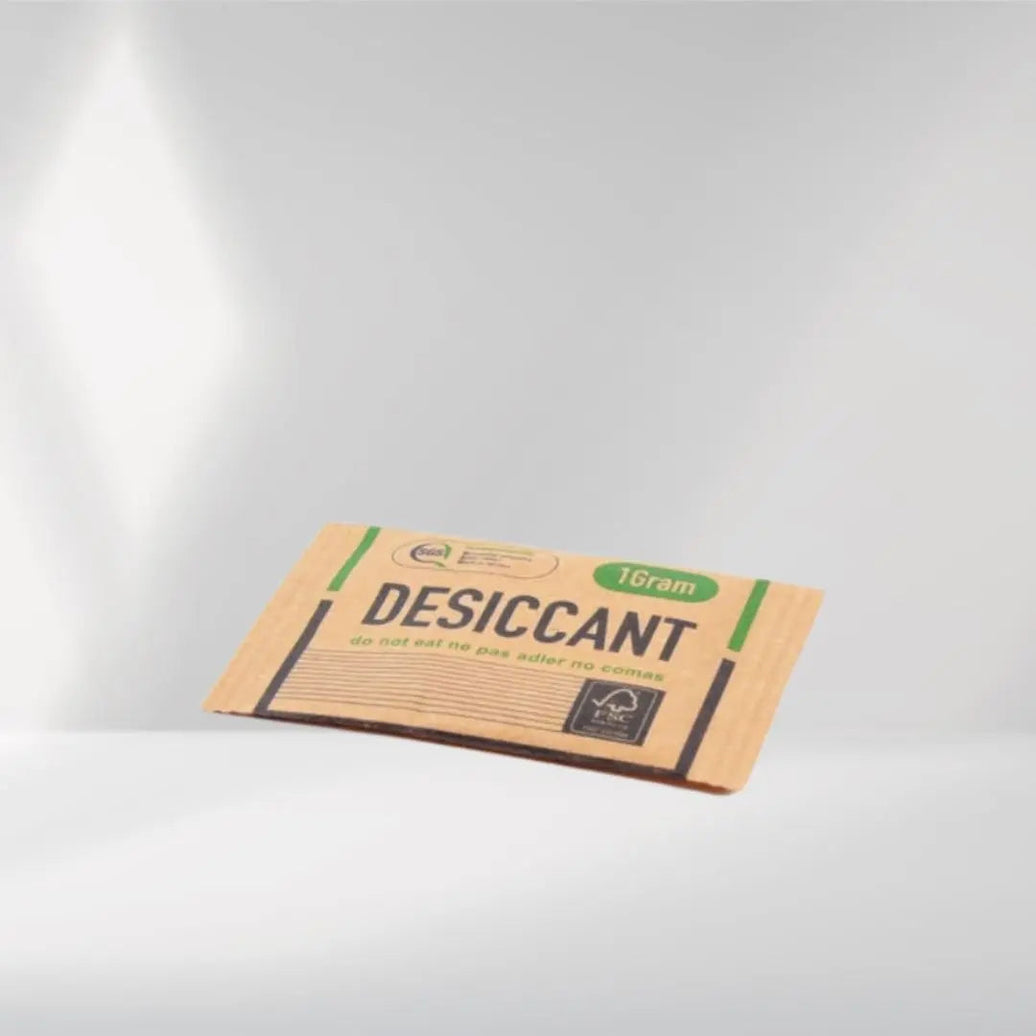
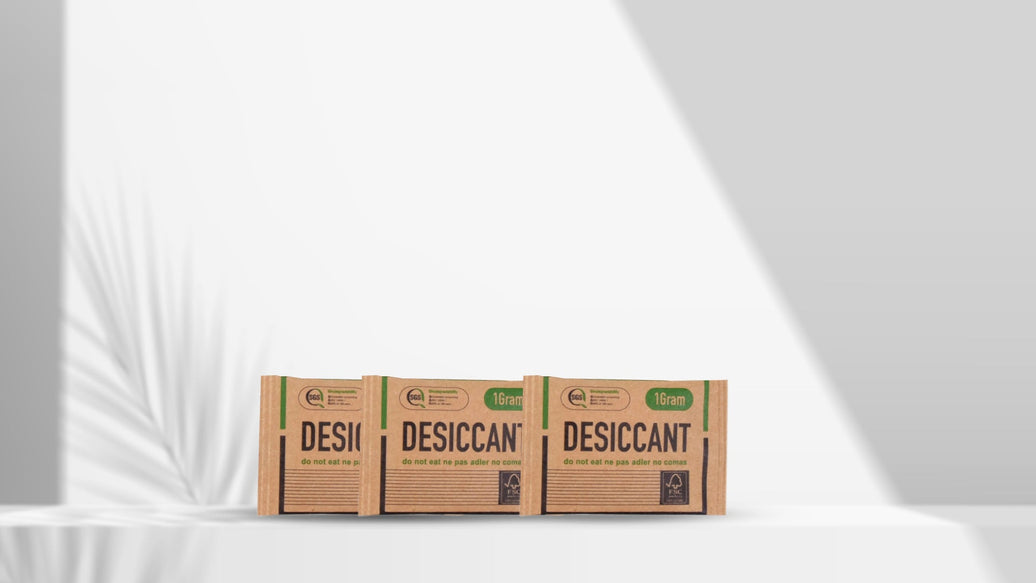
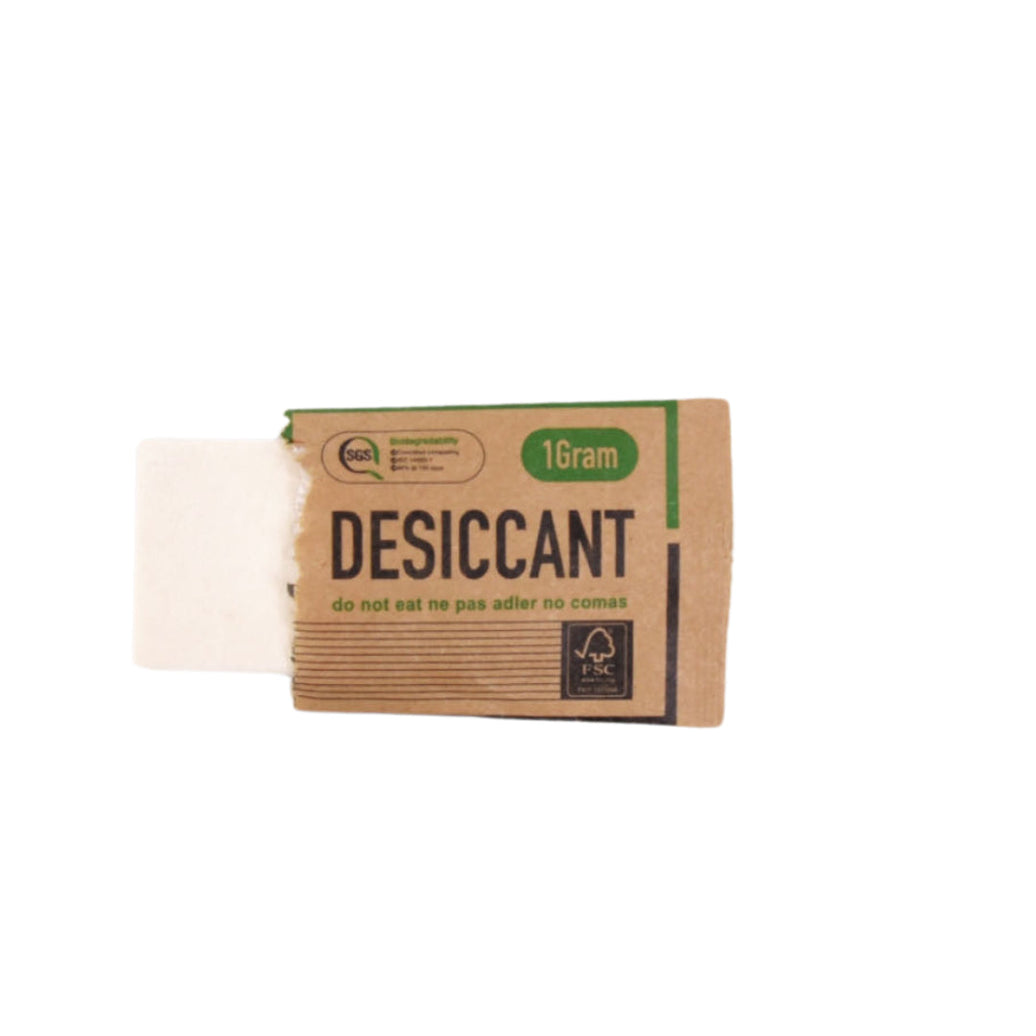
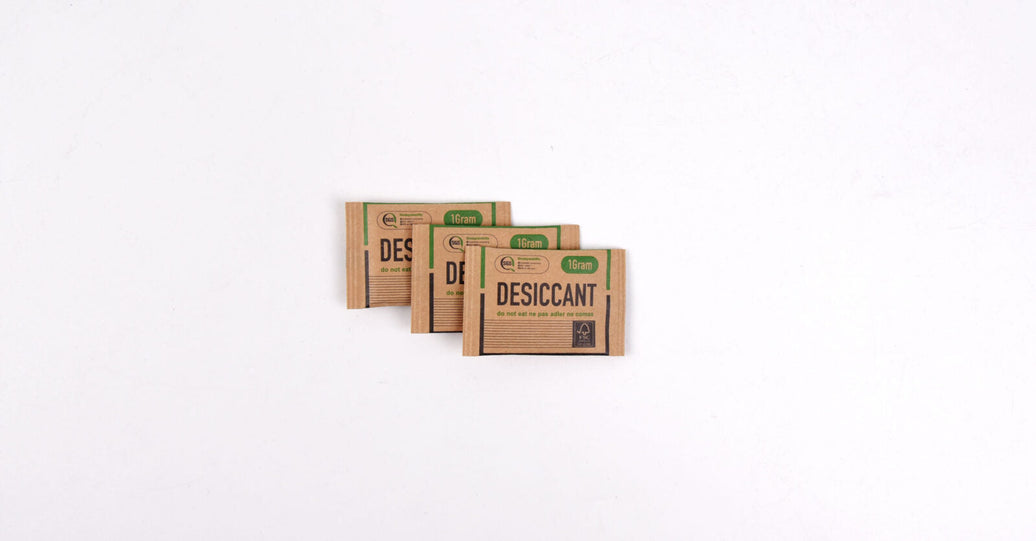
Quick answer: A desiccant for protein powder has to protect against three moisture sources: air sealed in at filling, vapour that permeates the tub or pouch over months, and the humid air that rushes in every time a customer opens the lid. Whey, casein and plant proteins cake once that moisture builds up, and whey concentrate is especially prone because of its lactose. Size the desiccant for the scoop cycle, not just for shelf life, place it where it stays put (under the lid or on the pouch wall), and use a dust-free, food-contact documented format. ATMOSIScience fiber desiccant adsorbs more than 35% of its own weight at 50% RH and more than 70% at 90% RH (25 °C), about 2.3 times common silica gel at 90% RH.
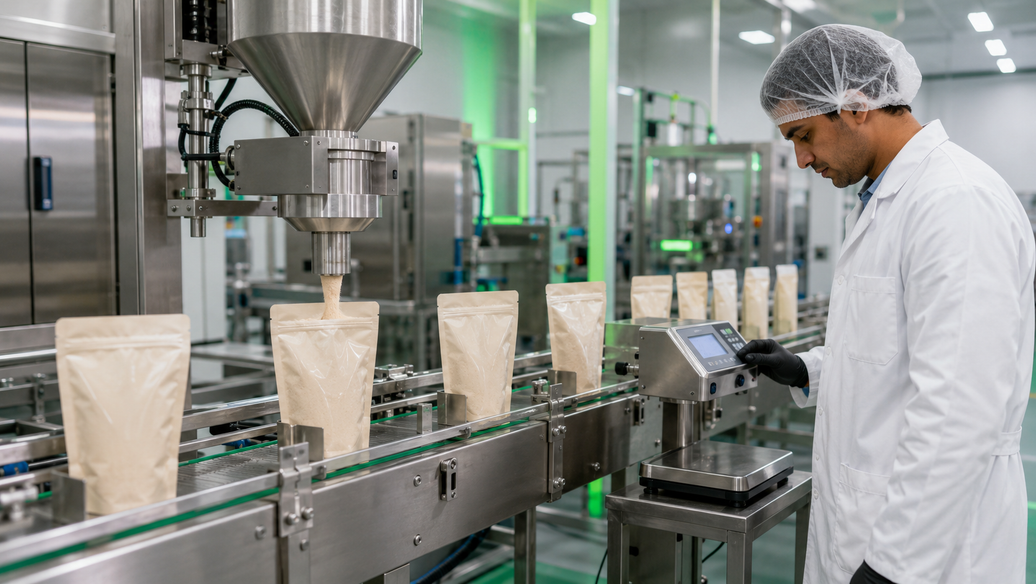
Protein powder is one of the most caking-prone categories a co-packer handles, and the reviews show it: arrived clumpy, turned into a rock after two weeks, scoop cemented into the powder. For a category sold heavily through Amazon and subscriptions, those reviews suppress rankings, drive refunds and end subscriptions. Most of them trace back to moisture, and most of that moisture enters after the customer opens the tub.
Why protein powder cakes
- Whey concentrate: spray drying leaves lactose in a non-crystalline form. As it takes up moisture it turns sticky, particles fuse, and the lactose can crystallise into hard bridges. This is the classic brick in the tub.
- Whey isolate and casein: less lactose, but flavours, sweeteners and the proteins themselves still take up water.
- Plant proteins: pea, soy and rice proteins carry water-binding groups, and blends often add gums, fibers and sugars.
- Add-ins: creatine, electrolytes, greens and fruit powders lower the caking threshold of the whole blend.
The general mechanism is set out in why powders cake. For your own formula, a sorption test shows the humidity at which water uptake speeds up; see how to read a moisture sorption isotherm.

The scoop cycle: why tubs fail when sealed samples pass
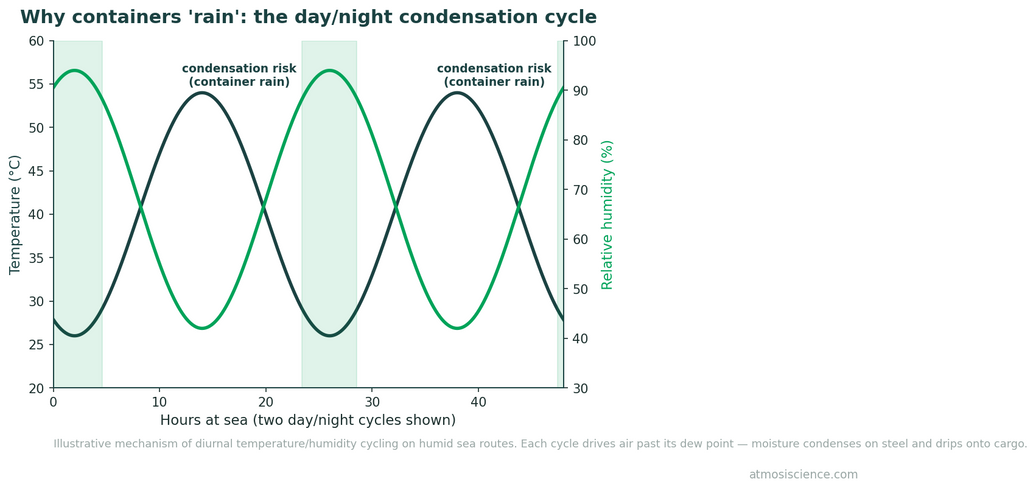
A protein tub is not a sealed package. It is opened 30 to 90 times, often in a kitchen or gym bag. Each opening replaces the headspace with room air, which in a humid summer can be far wetter than the air in your stability chamber. That is why stability data on sealed samples often overstates real-world performance.
The desiccant therefore has to absorb a fresh moisture load with every opening across the whole use life. Capacity per gram decides whether it is still working at the last scoop. The sizing method for packs opened many times is in desiccant for resealable packs opened 30 times.
How much water a fiber desiccant holds

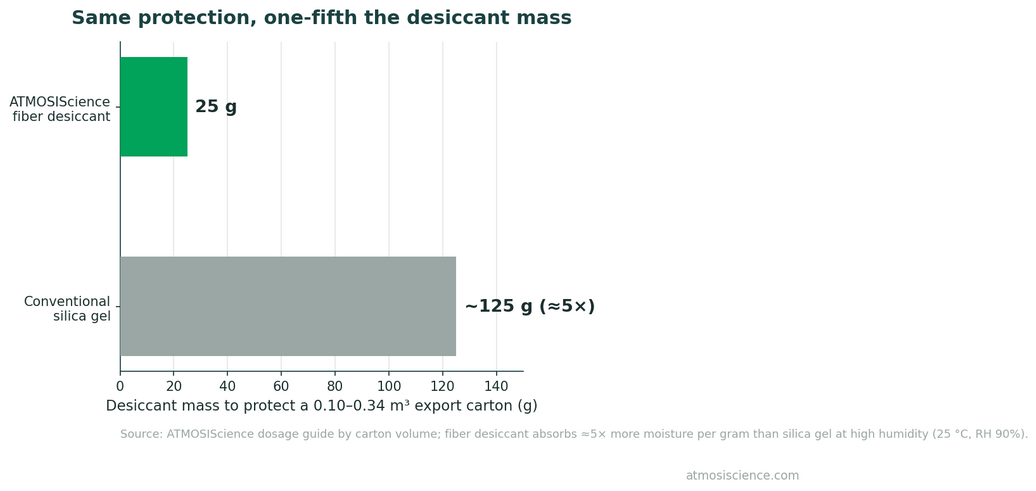
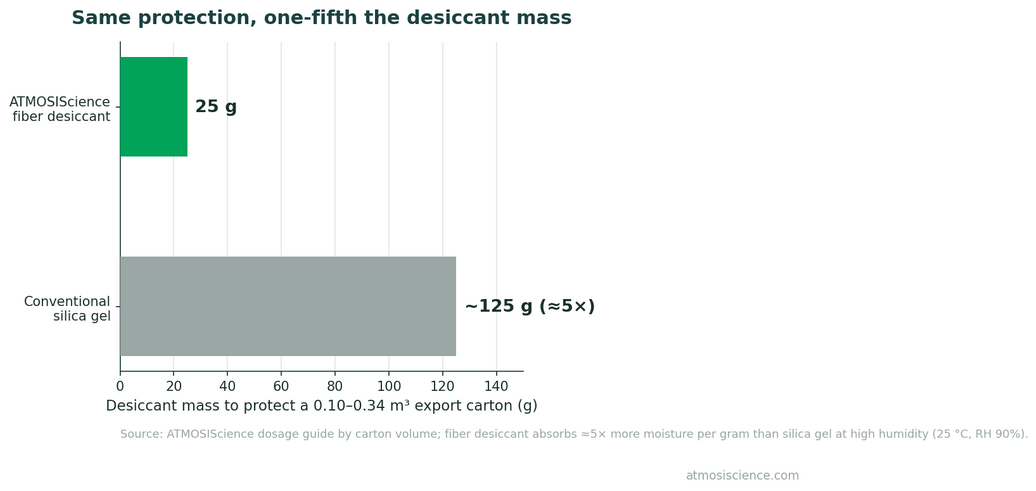
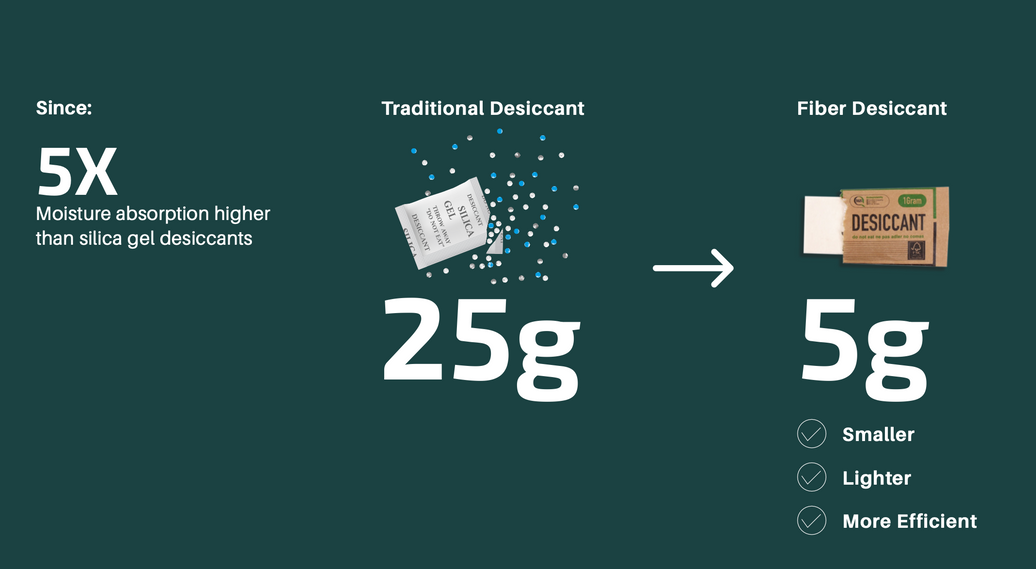
ATMOSIScience fiber desiccant adsorbs more than 10% of its own weight at 20% RH, more than 35% at 50% RH and more than 70% at 90% RH (25 °C). Common silica gel holds about 30% at 90% RH, so at that condition the fiber holds roughly 2.3 times as much per gram. Size at the humidity you want to hold the tub at, not at 90%. The comparison is laid out in full in calcium chloride vs silica gel vs fiber desiccant.
Fiber desiccant is a one-way desiccant: it takes moisture out and holds it. Protein powders are generally more stable dry, but very dry powder can be dustier and more prone to static on a filling line, so size for the target your stability data supports rather than for maximum dryness.
Format: what goes in a tub, a pouch and a stick pack
| Pack | Usual approach |
|---|---|
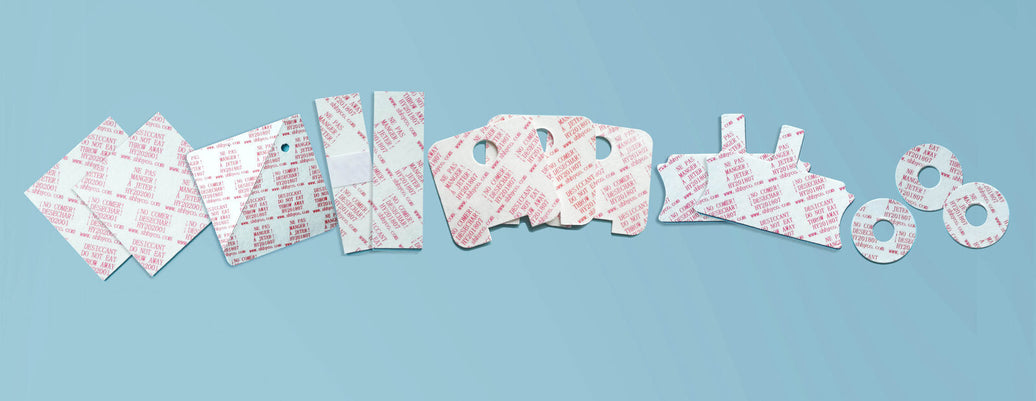
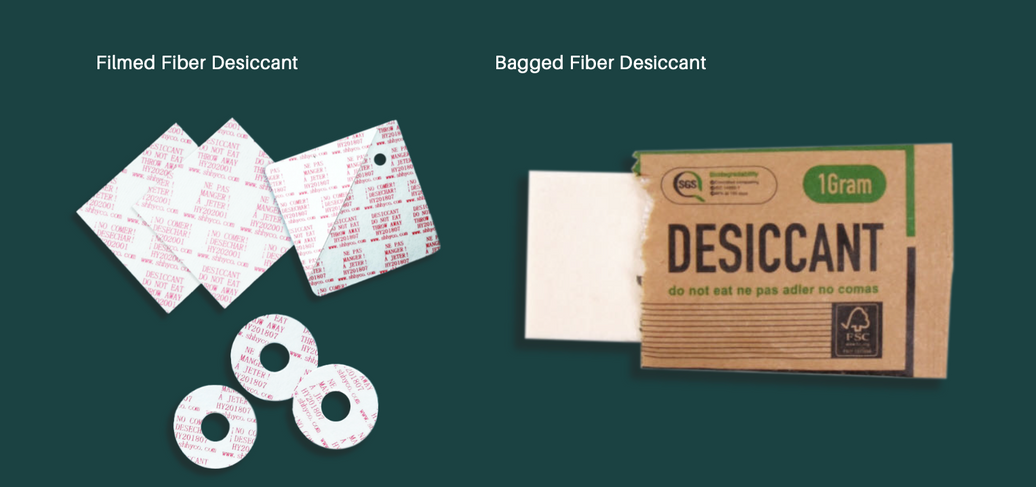
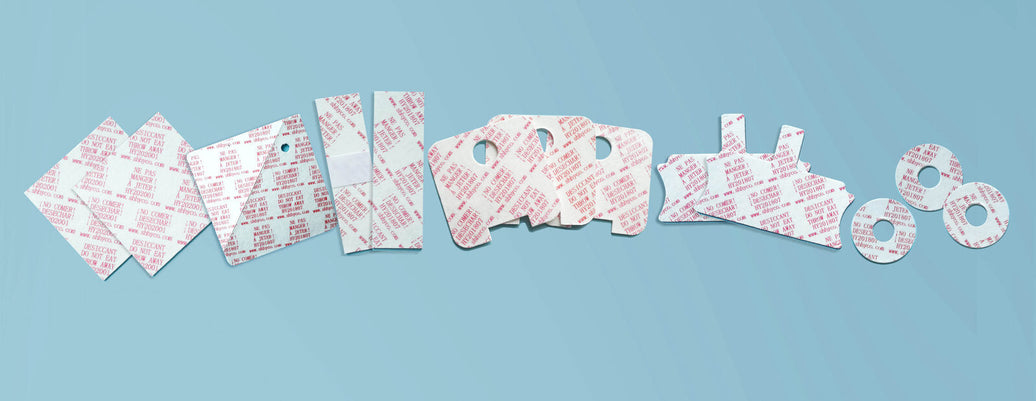
| Tubs and canisters (most complaints) | A rigid Fiber Card fixed under the lid, sized to headspace and use life |
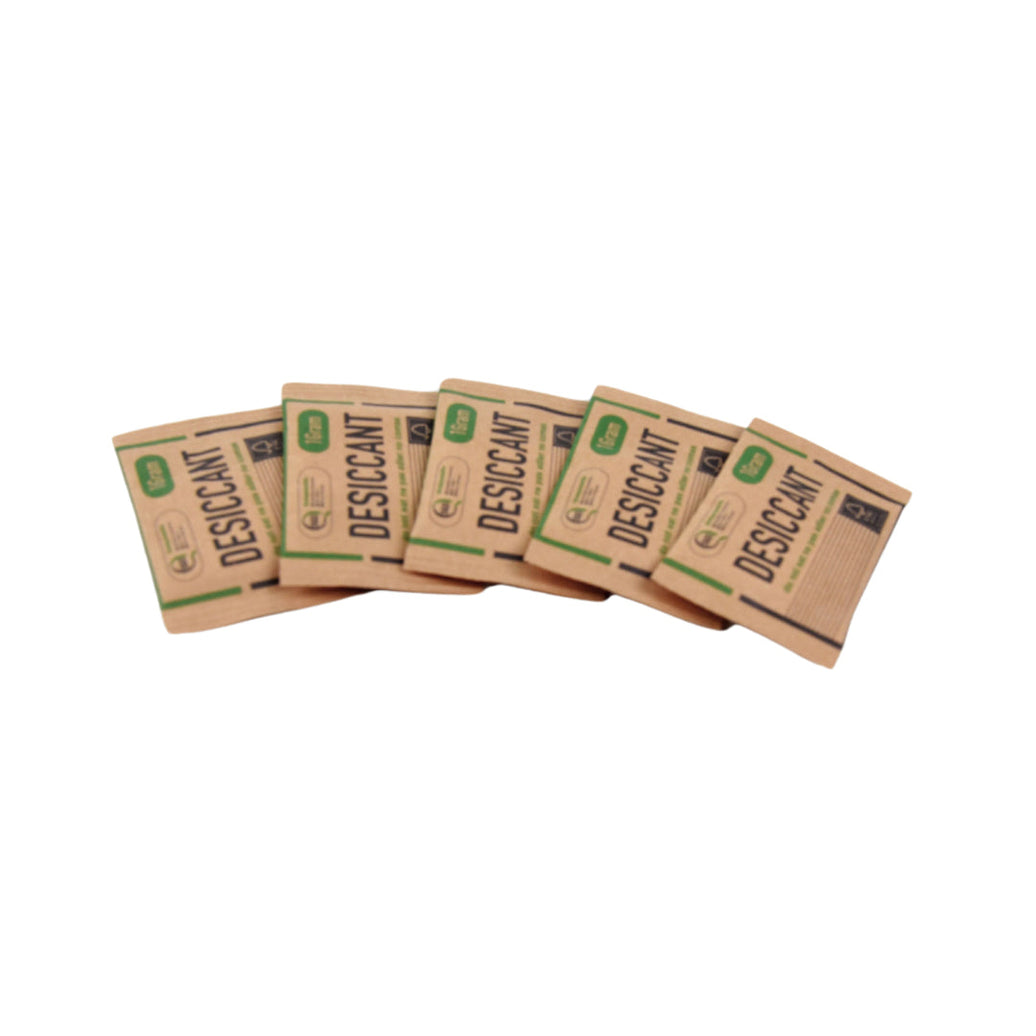
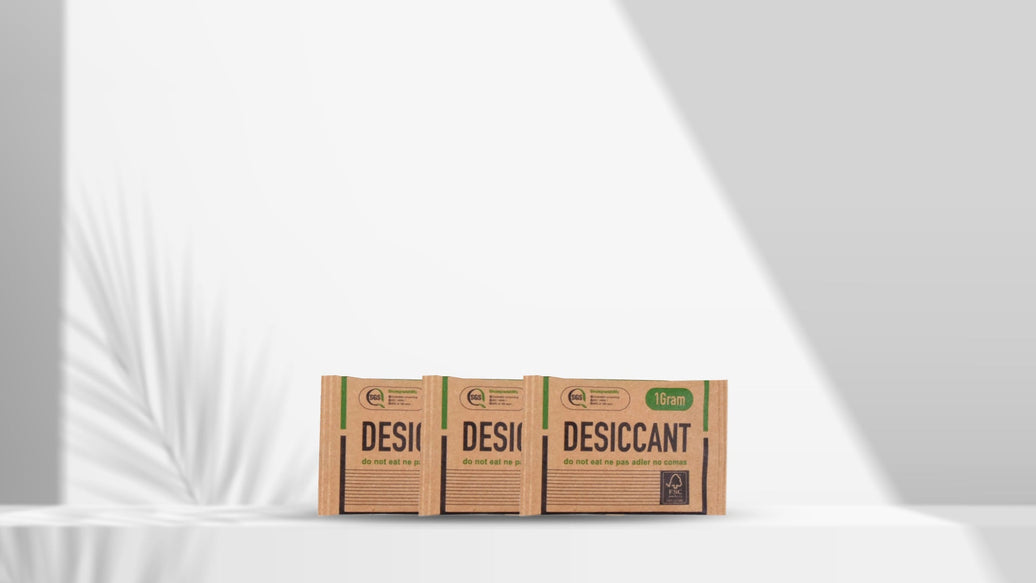
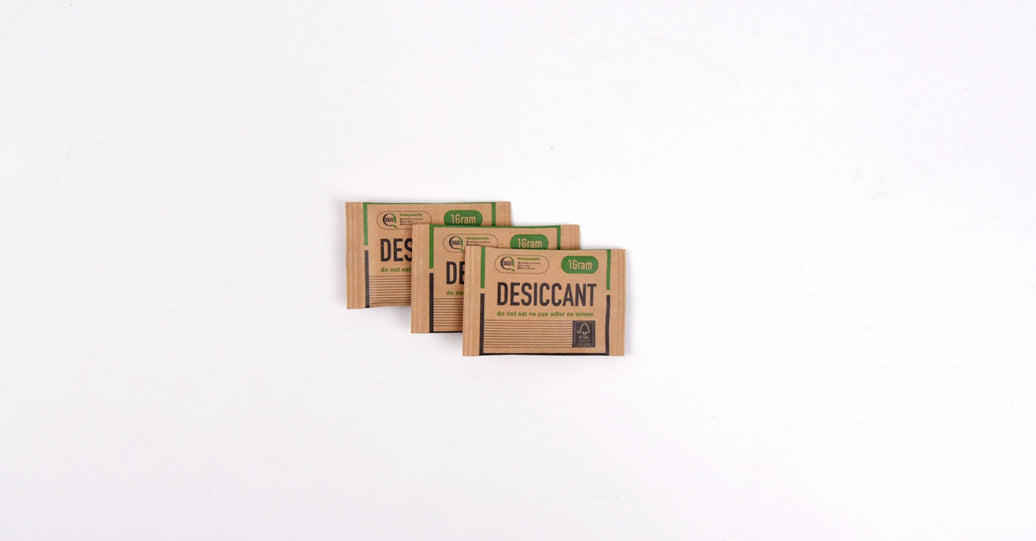
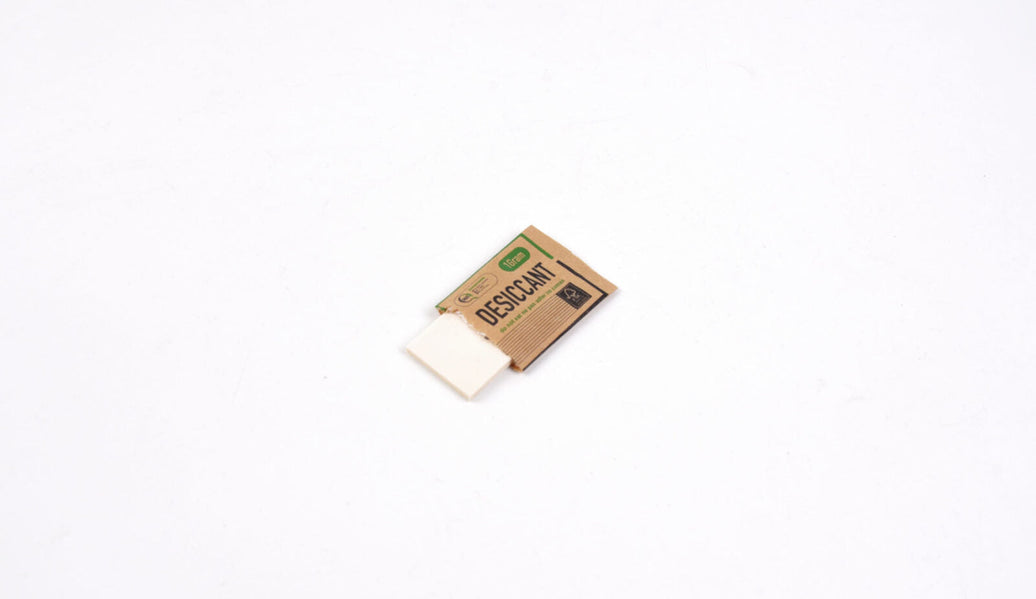
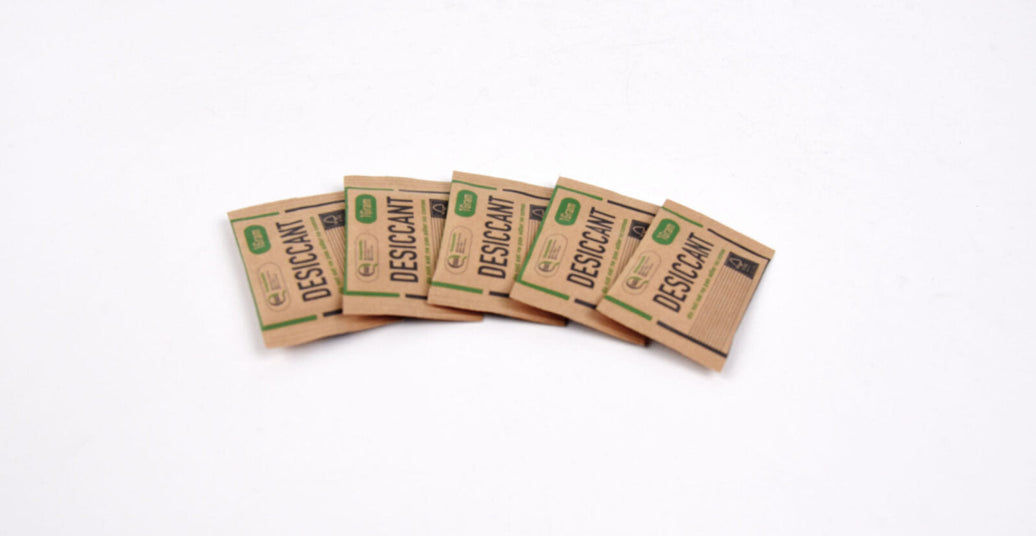
| Resealable pouches | A card on the inside wall above the fill line, or a dust-free fiber sachet |
| Stick packs and single-serve sachets | Often no desiccant if the film barrier is good; verify with water activity through shelf life |
| Bulk drums and totes | High-capacity fiber sachets between liner and lid, sized for route and hold time |
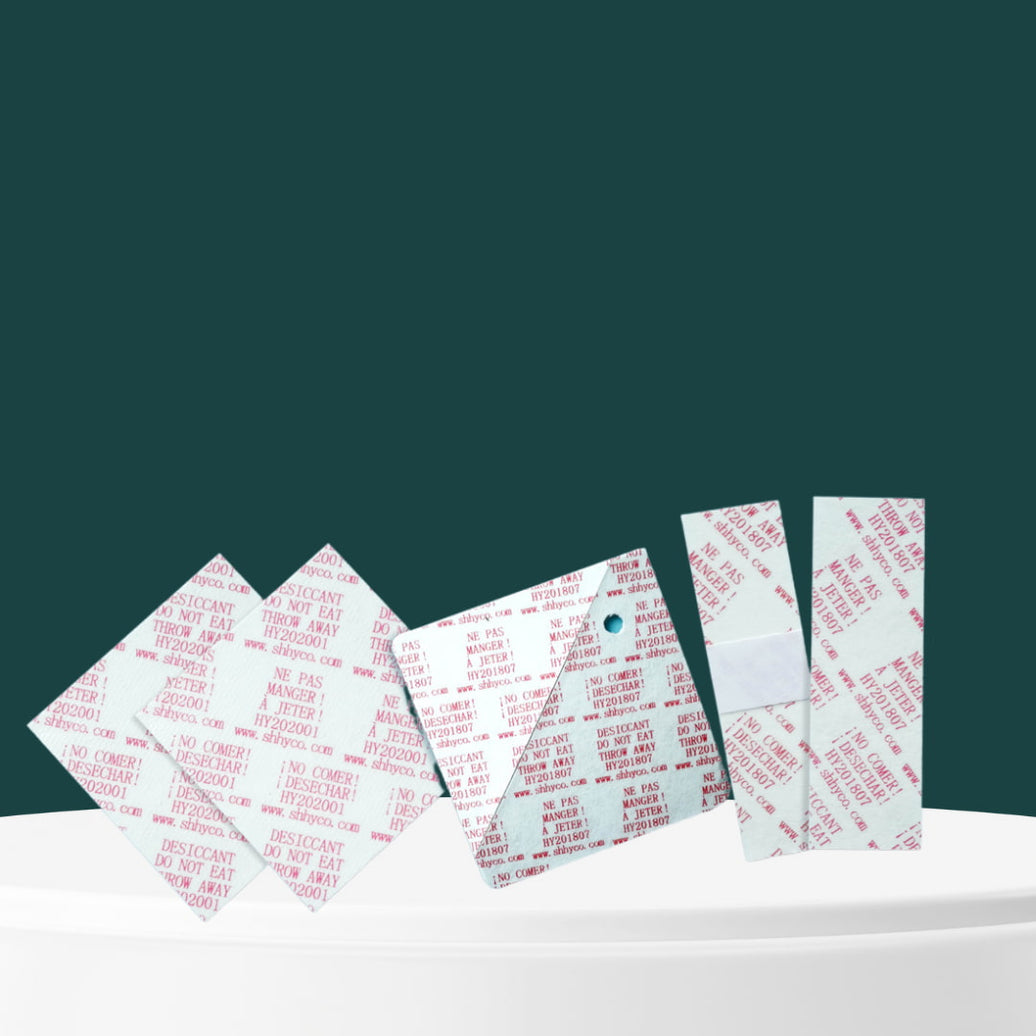
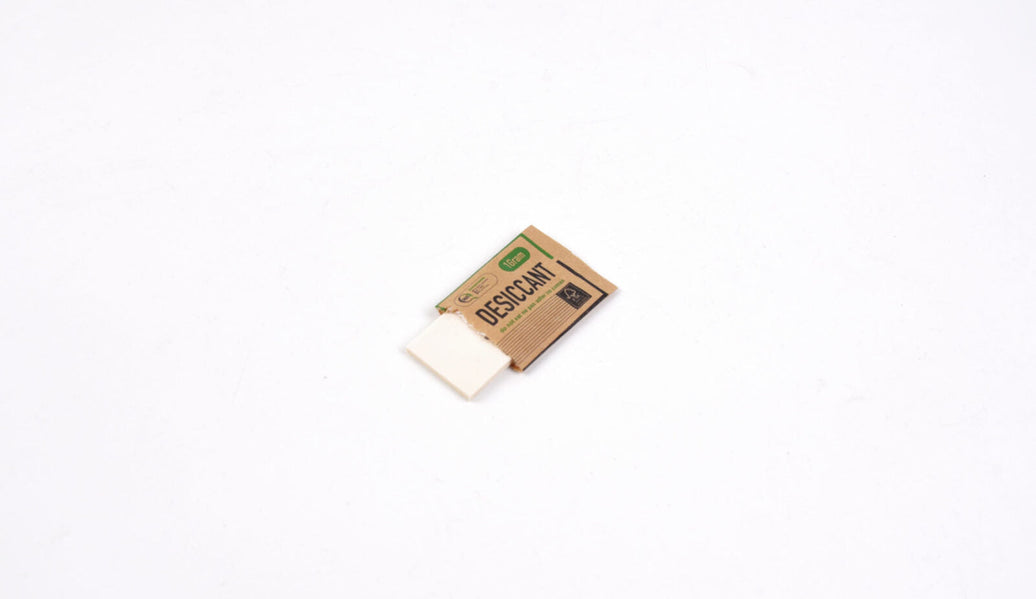
Format choice is covered in sachet, card or cap insert, flat formats in what a paper desiccant is, and stick packs in desiccant in stick packs.
The foreign-matter problem with loose sachets
A bead-filled sachet dropped into a scooped powder gets buried, scooped at and occasionally torn. Loose beads in a powder people drink is a complaint, and potentially a recall conversation. A rigid card under the lid avoids that: it stays visible, cannot be scooped, and has no loose media. Its printable face can say keeps your protein fresh, please leave in the tub, which turns a worry into a quality cue. See loose-fill desiccant risks and custom-printed desiccant cards.
What supplement QA teams need on file
Supplements made under 21 CFR Part 111 need packaging components documented like other materials. For its fiber desiccant, ATMOSIScience provides SGS ISO 9001 manufacturing (Cert. CN05/31171), a raw-material disclosure (lignocellulose fiber, calcium chloride, PLA, food-grade paper and water) and compostability testing to ASTM D6400 and EN 13432. The checklist is in the desiccant supplier qualification pack and food-contact desiccants and FDA 21 CFR.
Frequently asked questions
Why does protein powder clump even in a sealed tub?
Moisture sealed in at filling plus slow permeation through the wall can be enough to push sticky ingredients past their caking point in warm distribution. A desiccant absorbs that load.
Will a desiccant make my protein powder too dry?
Protein powders are generally more stable dry. Very dry powder can be dustier on the line, so size for the target your stability data supports.
Is one desiccant enough for a 5 lb tub?
It depends on headspace, wall barrier, opening frequency and climate. Calculate the load and test; do not rely on a single standard size.
Can the desiccant touch the powder?
Use food-contact documented, dust-free materials either way. Fixing the card under the lid avoids contact and keeps it out of the scoop.
Can a desiccant reduce the need for anti-caking agents?
Controlling headspace humidity attacks the cause of caking, which can reduce the anti-caking load. Confirm with stability data. See anti-caking agent or desiccant.
Protecting a protein or sports nutrition powder?
Tell us your tub or pouch format, fill weight and servings. ATMOSIScience will recommend a Fiber Card or fiber sachet size and send samples.
Prefer email? info@atmosiscience.com