In pharmaceutical and supplement packaging, a desiccant is not a passive insert. It is a packaging component that regulators treat as part of the product system — which means it carries documentation obligations, stability implications, and audit exposure. A desiccant that protects the tablet but fails the paperwork is a liability, not a solution.
This guide outlines what a compliance, QA, or regulatory affairs team must verify before approving any FDA-compliant desiccant for pharmaceutical or nutraceutical packaging — and how to separate genuine documentation from marketing language.

What "FDA-compliant" actually means for a desiccant
There is widespread confusion on this point, so it is worth stating plainly. The FDA does not "approve" desiccants the way it approves drugs. Instead, materials that contact food, supplements, or pharmaceutical products are governed by food-contact regulations under Title 21 of the Code of Federal Regulations (21 CFR). A desiccant earns its standing by meeting the relevant section for its materials and intended contact.
The most commonly cited desiccants — silica gel, molecular sieve, and clay — have established histories in this space. Silica gel in particular is frequently described as the default for direct contact. That history is real, but it has also created a blind spot: buyers sometimes assume silica gel is the only option with documented food-contact standing, and stop evaluating alternatives.
That assumption is worth retesting. ATMOSIScience Fiber Desiccant is documented against FDA 21CFR175.300 for food-contact safety, obtained in 2022. For a compliance team, the right move is never to trust a category reputation — it is to read the specific regulation, certificate, and test report tied to the exact SKU under review.
The compliance verification checklist
1. Confirm the food-contact basis in writing
Ask the supplier which 21 CFR section the material is documented under, and request the certificate and supporting test report. A named reference — for example, FDA 21CFR175.300 — is verifiable. A phrase like "FDA approved" with no citation is not, and should be treated as unverified until the document arrives.
2. Obtain the full material composition
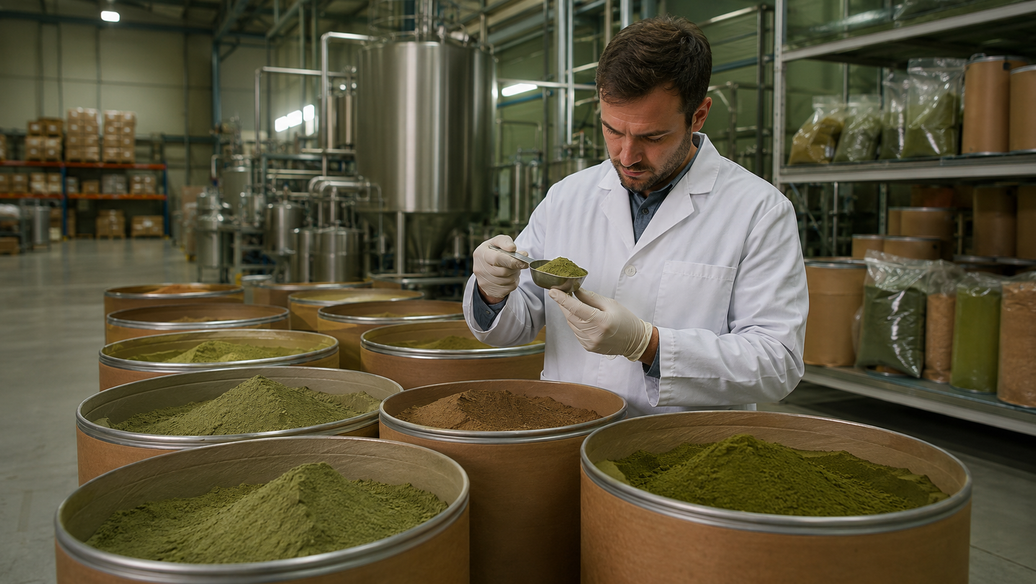
Stability and extractables assessments depend on knowing every component. A pharmaceutical-grade desiccant supplier should disclose the complete raw-material composition for the SKU. ATMOSIScience documents its fiber composite as lignocellulose fiber, calcium chloride, PLA (polylactic acid), food-grade paper, and water, with the overwrap specified per SKU as compostable nonwoven or food-safe Tyvek®.
Full disclosure lets the QA team design a clean protocol and anticipate any interaction questions before they reach a regulator.
3. Verify dust-free, non-leaking construction
In blister packs, bottles, and direct-contact applications, particulate matter is a contamination risk and a finding waiting to happen. A desiccant that sheds dust or can leak its absorbent introduces a foreign-particle hazard into the package.
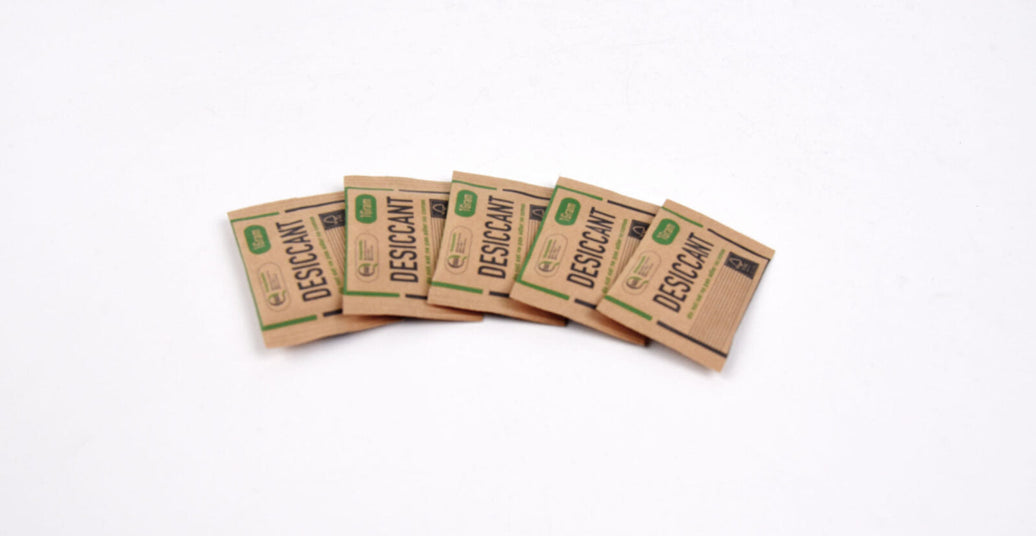
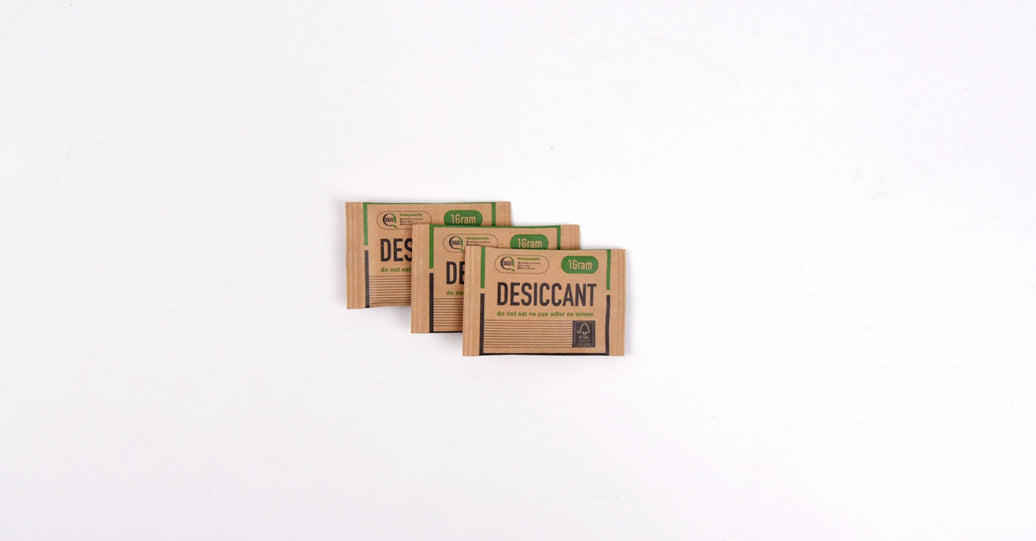
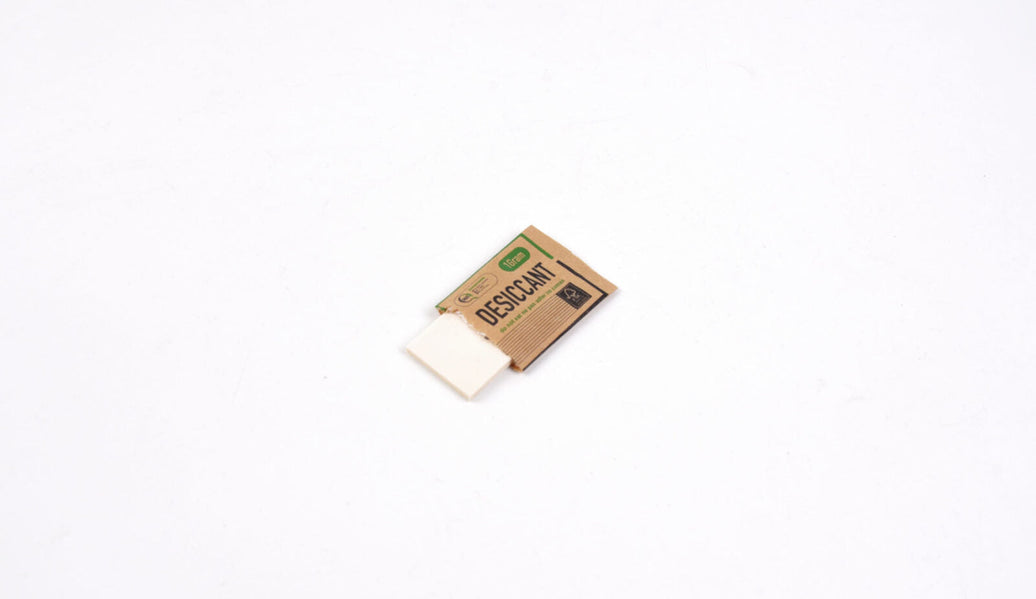
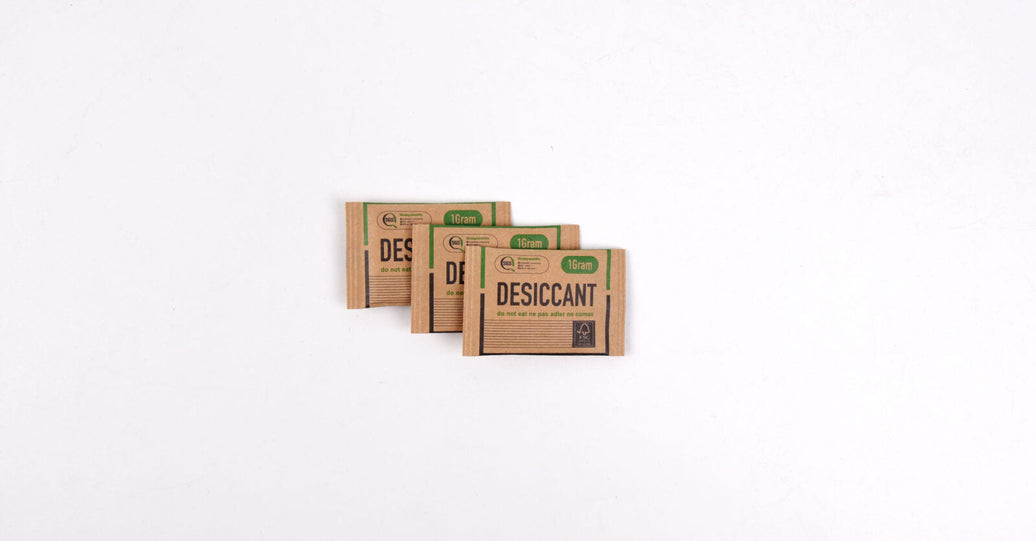
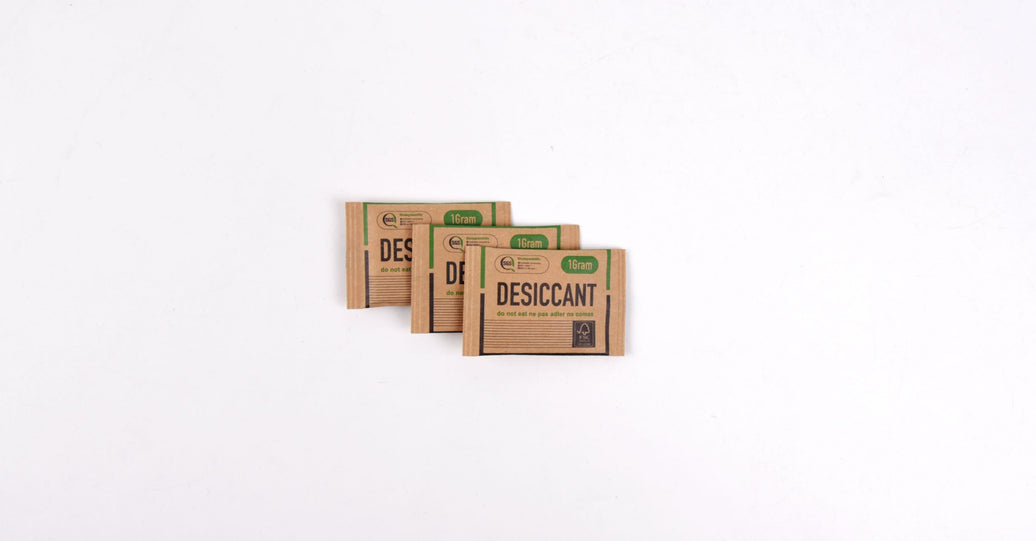
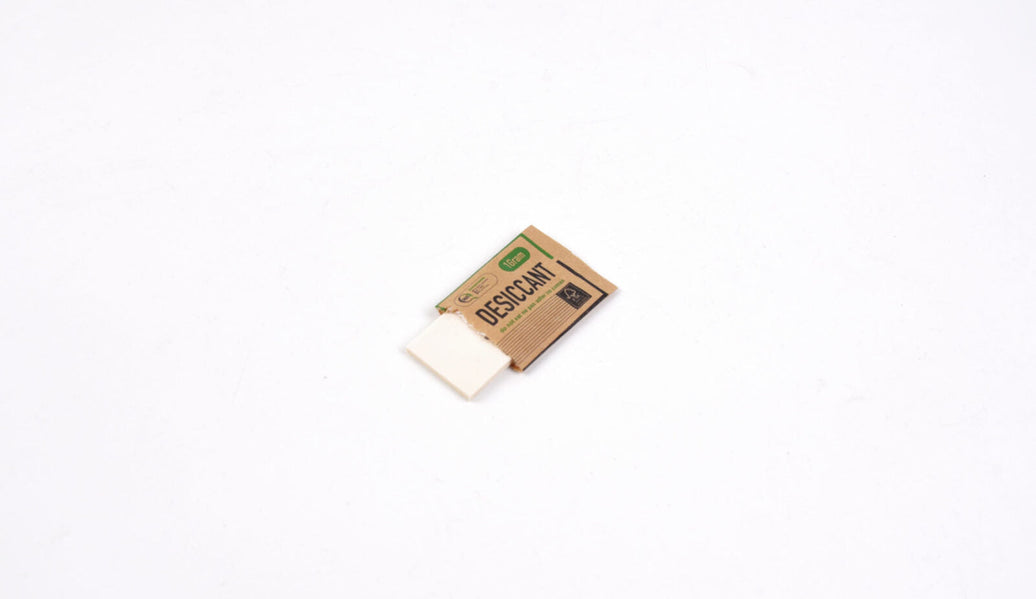
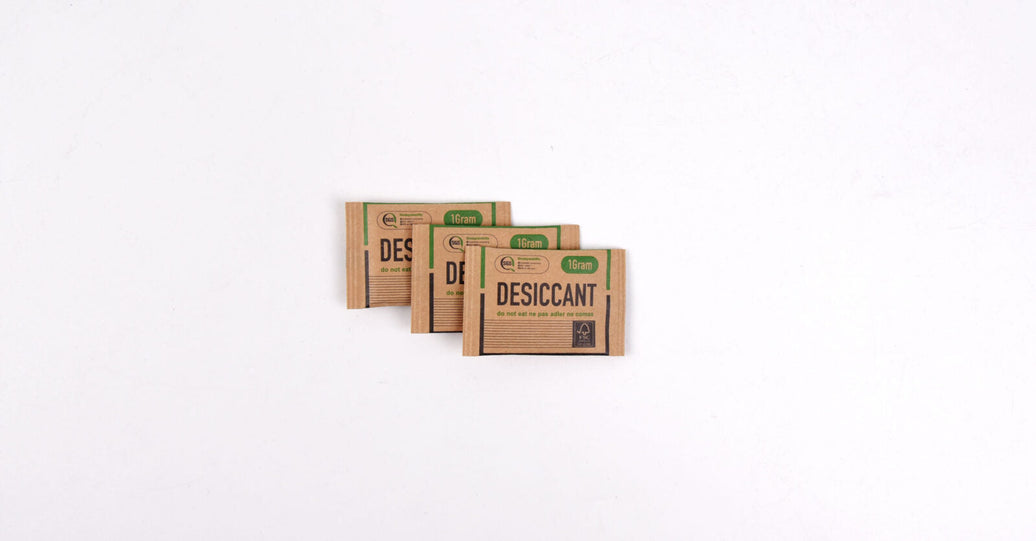
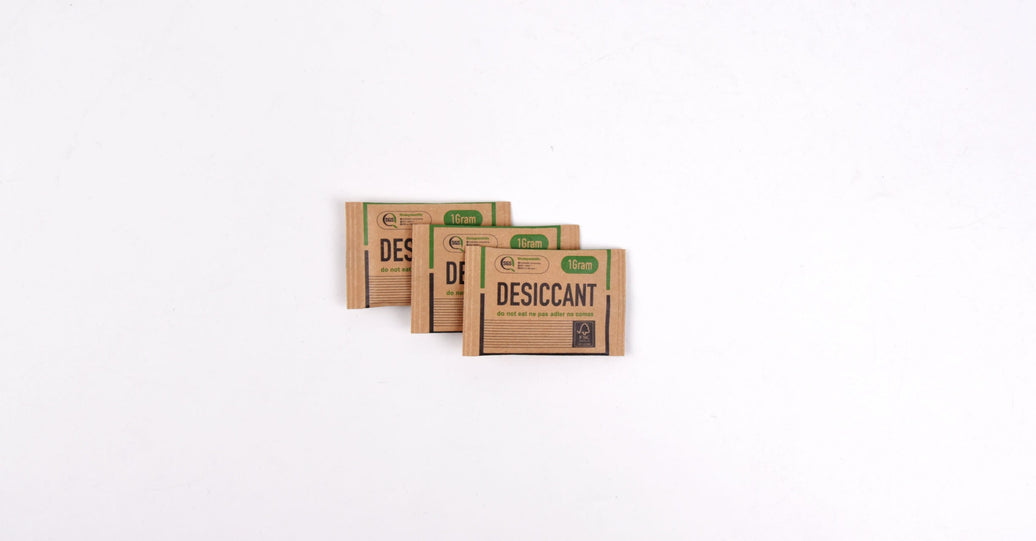
Fiber desiccant is constructed as a dust-free, non-leaking alternative to loose-fill formats — the absorbent is held in a fiber matrix rather than packed as free beads or powder. For compliance teams, that construction removes an entire class of contamination concern.

4. Match the format to the dosage form
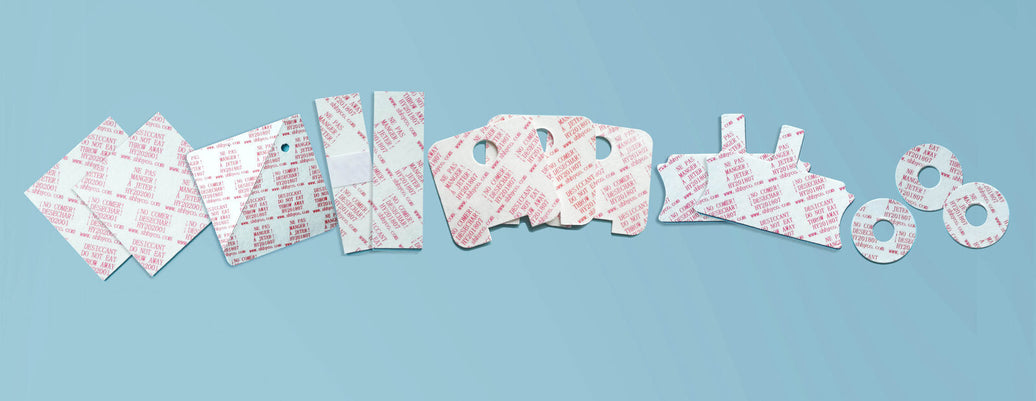
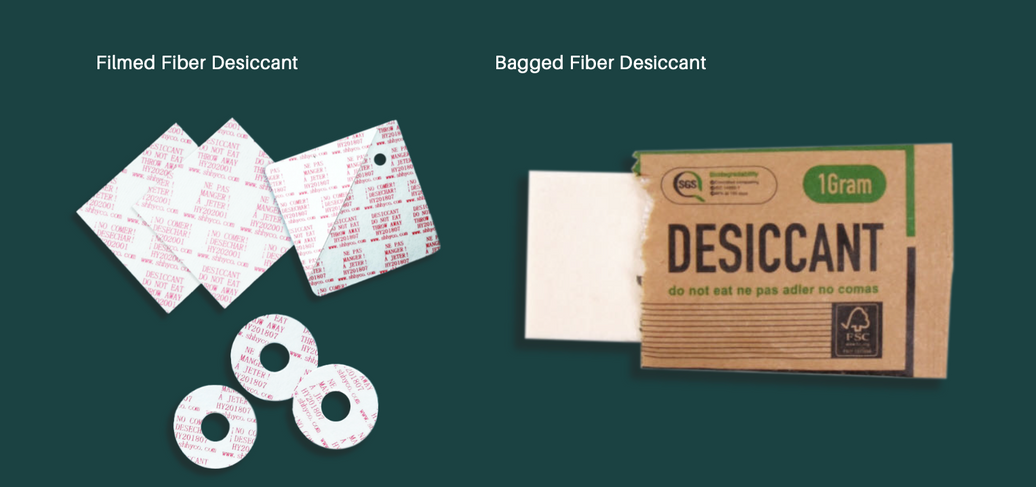
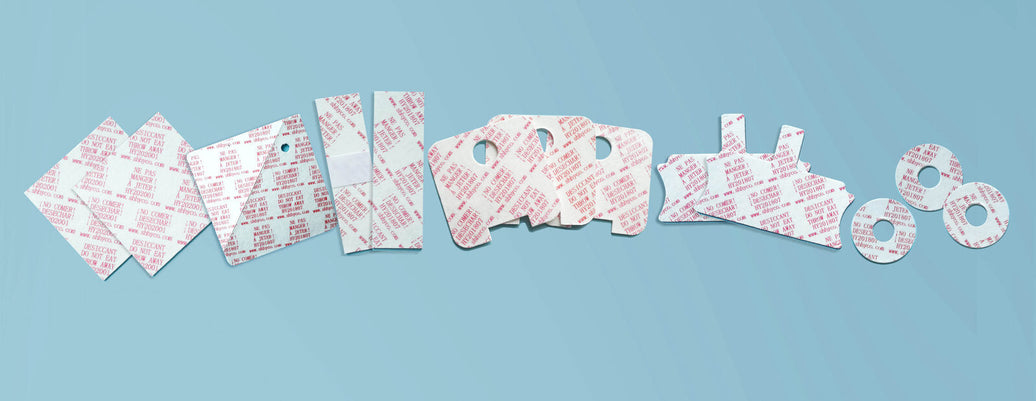
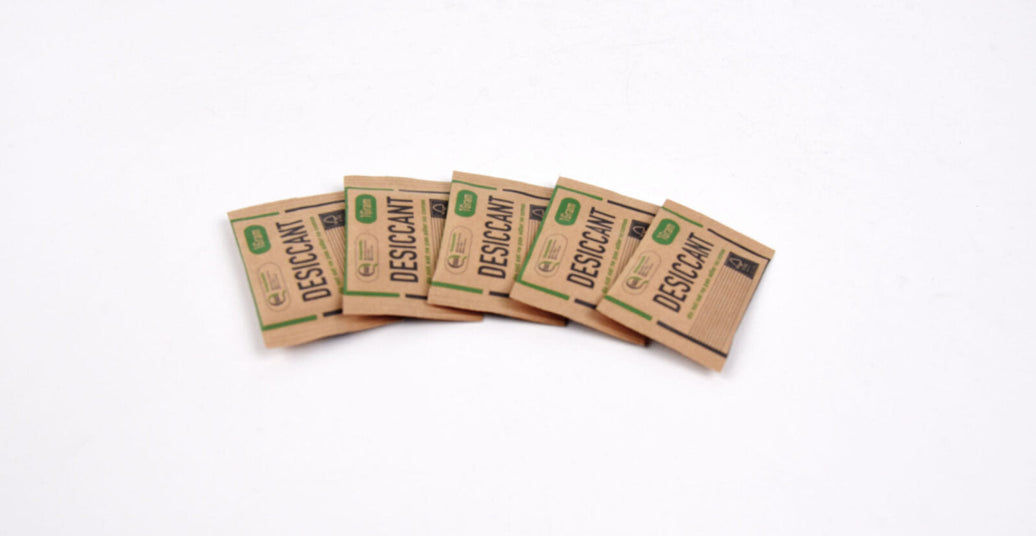
Pharmaceutical packaging is diverse, and the desiccant must fit the format rather than the reverse. Filmed fiber desiccant can be freely cut into squares, circles, or custom die-cut shapes at 0.5 mm or 1.0 mm thickness — suitable for bottle caps, blister packs, pouches, and tags. Bagged formats cover a wide weight range for bottles and cartons. The right supplier supplies the geometry the line already uses.
5. Tie absorption capacity to real storage conditions
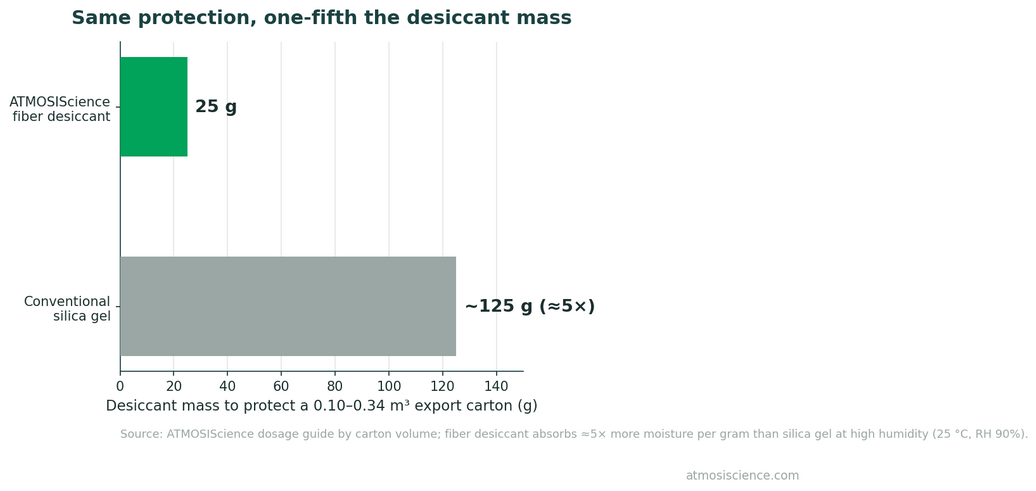
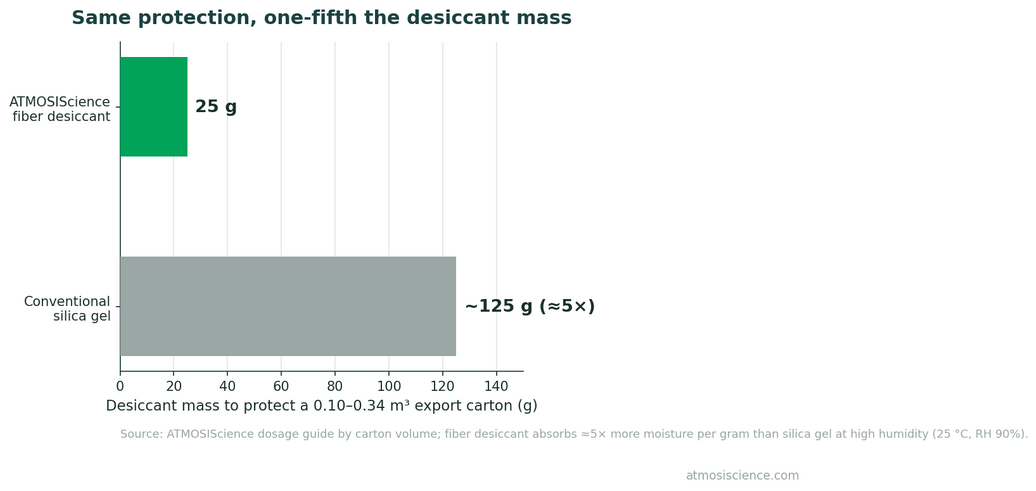
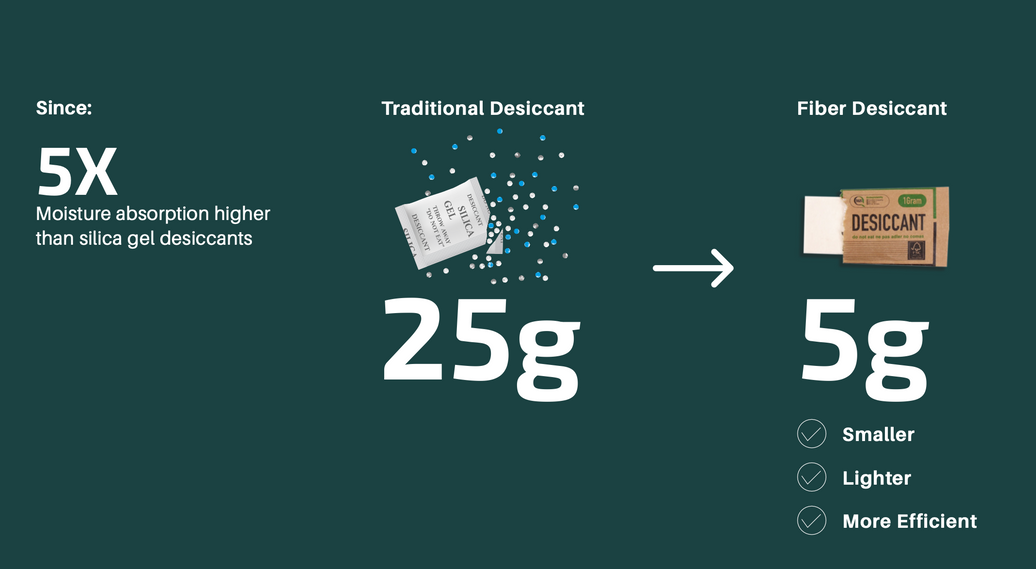
Stability programs run at defined climatic conditions, so absorption data must be stated the same way. The team observed fiber desiccant absorbing over 70% of its own weight at RH90% and 25°C, versus roughly 30% for silica gel under the same conditions. A compliance review should require capacity figures at the RH and temperature in the product's stability protocol, not a single headline number.
6. Confirm quality-system and traceability documentation
Beyond food-contact status, the manufacturing system matters. ATMOSIScience fiber desiccant is produced under SGS ISO 9001 (Cert. CN05/31171), with ISO 14001 environmental certification and a certified Product Carbon Footprint. A documented quality system is what makes batch traceability and consistent specifications credible across reorders.
7. Check disposal and sustainability documentation
Pharmaceutical and supplement brands increasingly carry ESG and packaging-waste obligations. A biodegradable, compostable desiccant — certified under ASTM D6400 and EN 13432, with a Product Carbon Footprint of 1.44 kg CO₂e/kg — answers the end-of-life question with evidence instead of a shrug. That documentation belongs in the file alongside the food-contact certificate.
A note on calcium chloride and "salt-free" claims
Some buyers see calcium chloride in a composition and pause, associating it with leaking liquid desiccants. The distinction matters: in a fiber composite, the calcium chloride is bound within the fiber matrix and overwrap, which is precisely what makes the format dust-free and non-leaking. The compliance question to ask is not "does it contain calcium chloride," but "is the construction documented as non-leaking for direct or near-direct contact." Require that answer in writing.
Frequently asked questions
Is fiber desiccant FDA-compliant for pharmaceutical packaging?
ATMOSIScience Fiber Desiccant is documented against FDA 21CFR175.300 for food-contact safety and manufactured under SGS ISO 9001. Compliance teams should request the certificate and test report for the specific SKU before approval.
What is the difference between "FDA approved" and "FDA-compliant" for desiccants?
The FDA does not approve desiccants as products. Desiccants meet food-contact requirements under 21 CFR for their materials and intended use. Always ask for the specific section and certificate rather than accepting an "FDA approved" label.
Why does dust-free construction matter in pharma packaging?
Loose beads or powder can shed particulate into the package, creating a foreign-particle contamination risk. A fiber matrix holds the absorbent in place, removing that hazard from blister packs and bottles.
What documentation should accompany a pharmaceutical desiccant order?
A complete file includes the food-contact certificate (e.g., 21 CFR), full material composition, quality-system certificate (ISO 9001), absorption data at stability conditions, and disposal/compostability documentation.
Give your compliance team a desiccant that survives the audit
ATMOSIScience supplies pharmaceutical and supplement packaging teams with fiber desiccant backed by FDA 21CFR175.300 documentation, full material disclosure, and ISO 9001 manufacturing — in dust-free bagged and die-cut filmed formats.
Request the certificates and bulk pricing through our desiccant solutions page or contact our team, or evaluate the material first with the Fiber Desiccant.
This article is general information for packaging and procurement teams and is not regulatory or legal advice. Verify all certifications against the specific SKU and your own regulatory requirements before approval.
Related reading: How to Choose a Bulk Desiccant Supplier: A B2B Buyer's Checklist · Desiccant for Dietary Supplements & Nutraceuticals
Get a desiccant spec & bulk quote for your product
Tell us about your packaging needs, and our sales team will respond with a customized fiber-desiccant solution, supporting certificates and competitive bulk pricing.