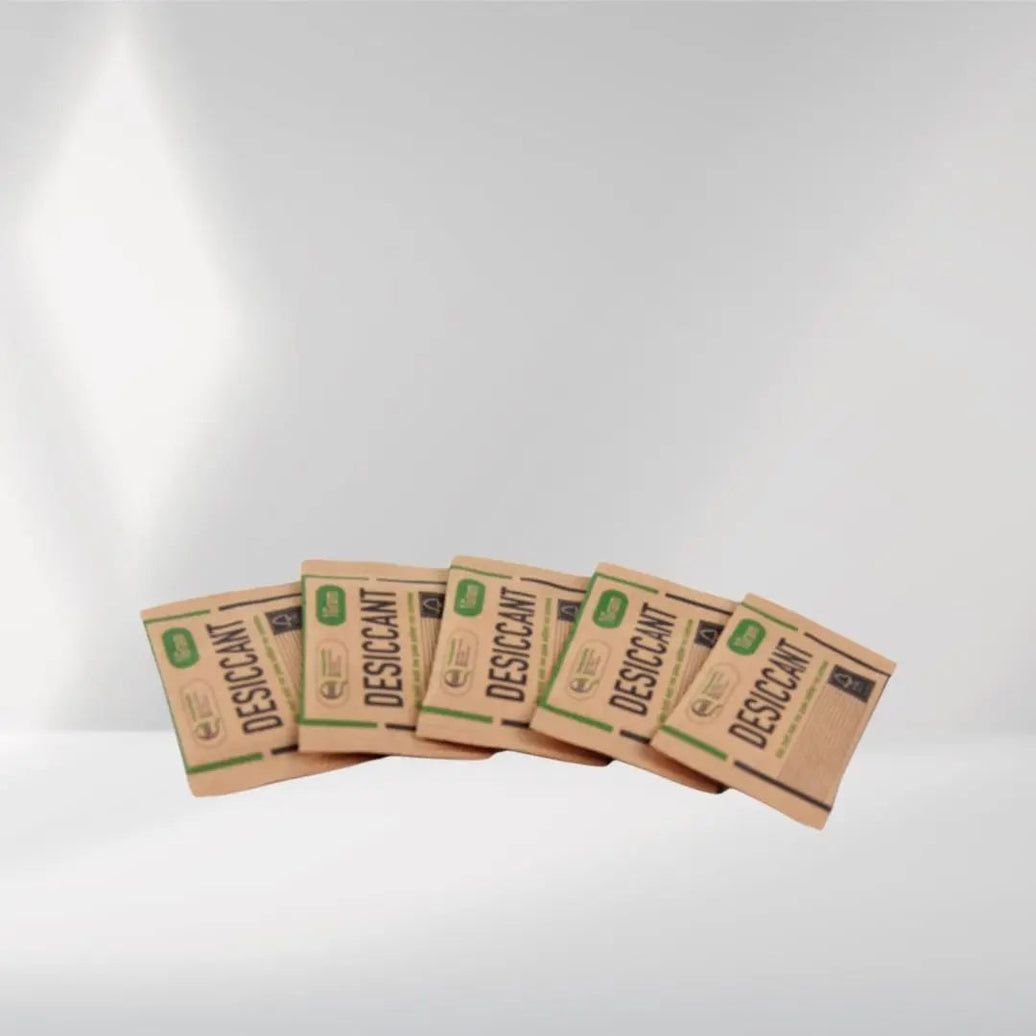
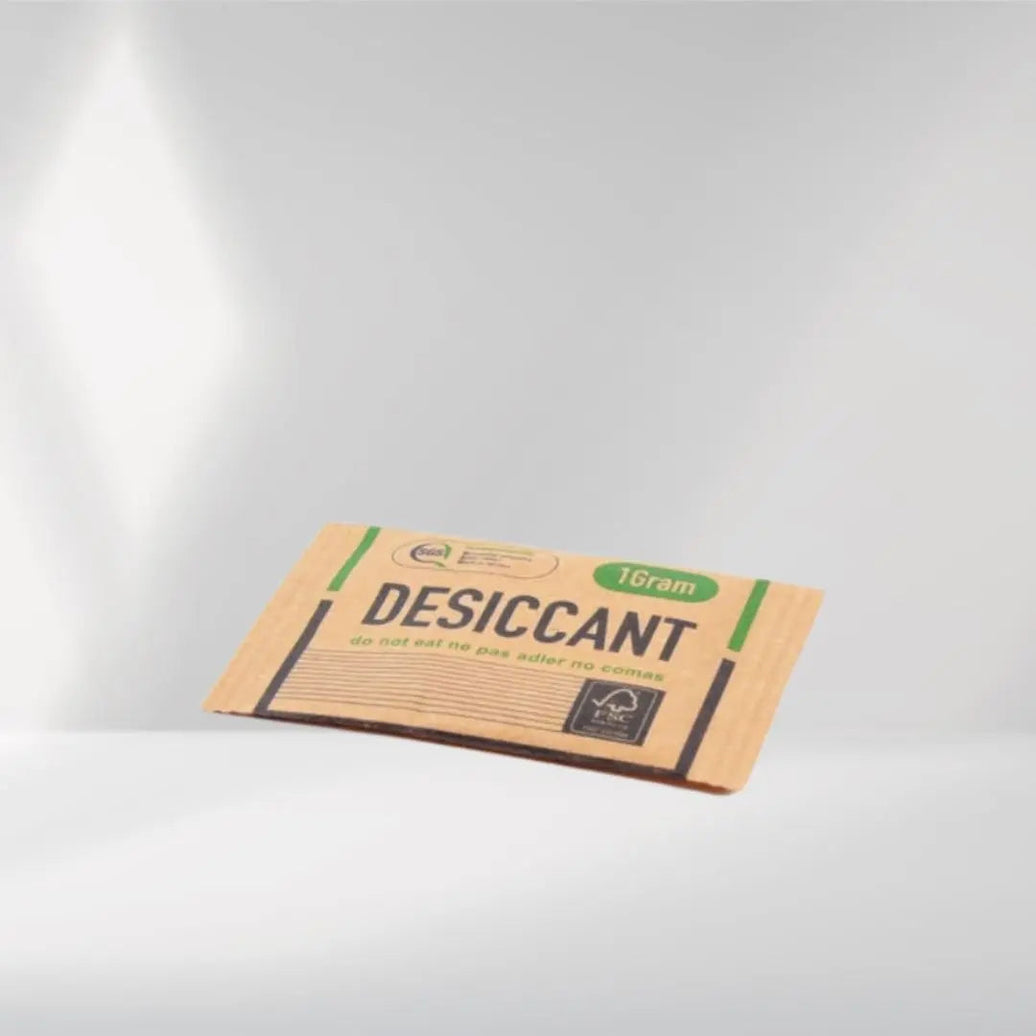
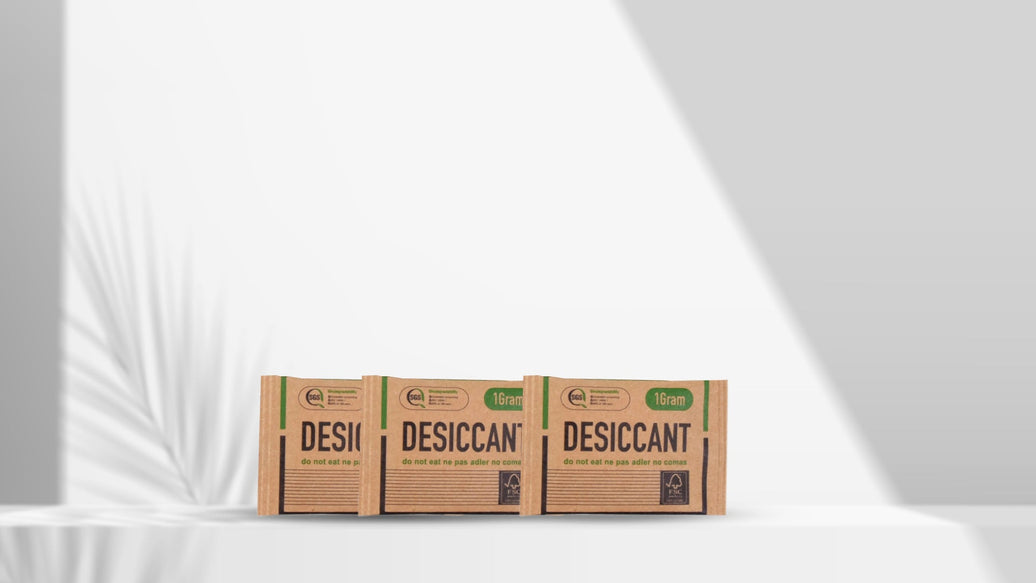
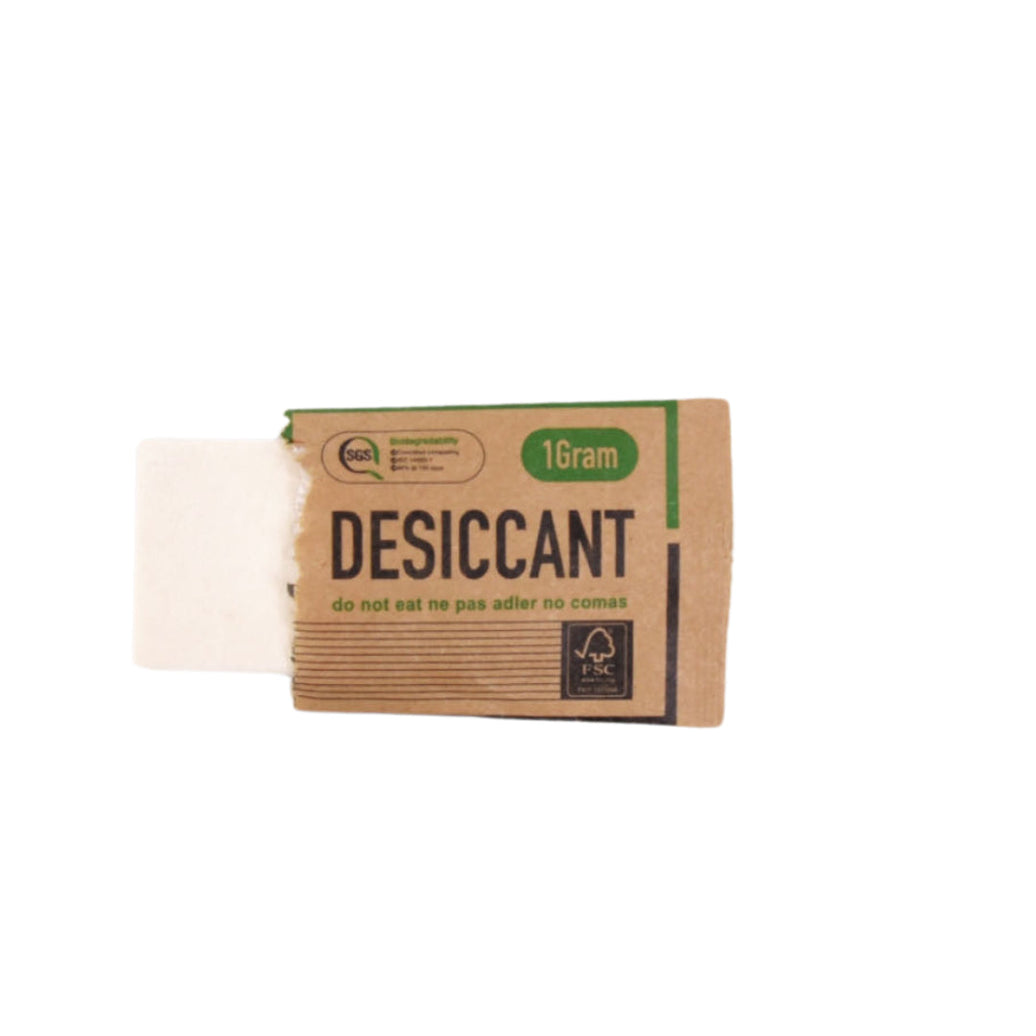
Quick answer: An adsorption claim is only comparable when three things are stated: the humidity (RH) at which it was measured, the temperature, and whether the figure is a rate at that condition or total saturated capacity. "Absorbs 30% of its weight" at RH 90% and at RH 40% are different products. Normalize every candidate to the same RH points — 20/50/90% is a practical set — and treat any sheet without test conditions as a marketing document, not a specification.
Buyers report the same frustration across the desiccant market: packets that match on paper perform inconsistently in real packages. Nearly always, the paper was the problem — the claims weren't measured under comparable conditions.
The three numbers that make claims comparable
1. Adsorption rate at stated RH
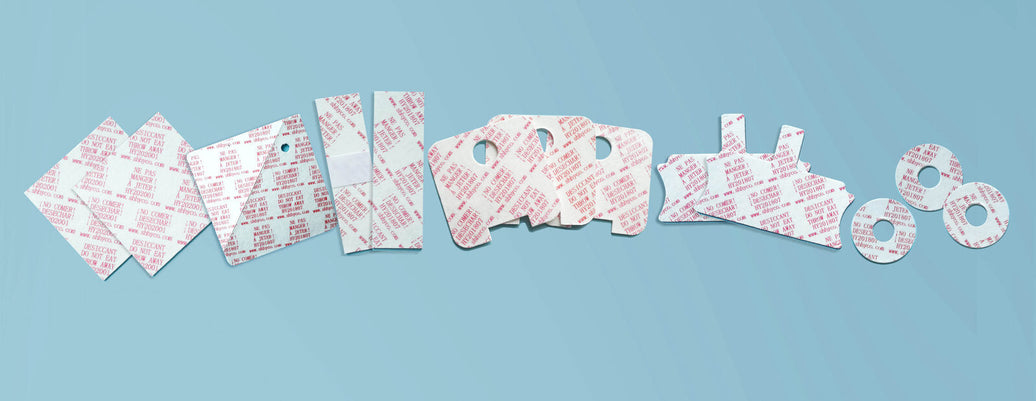
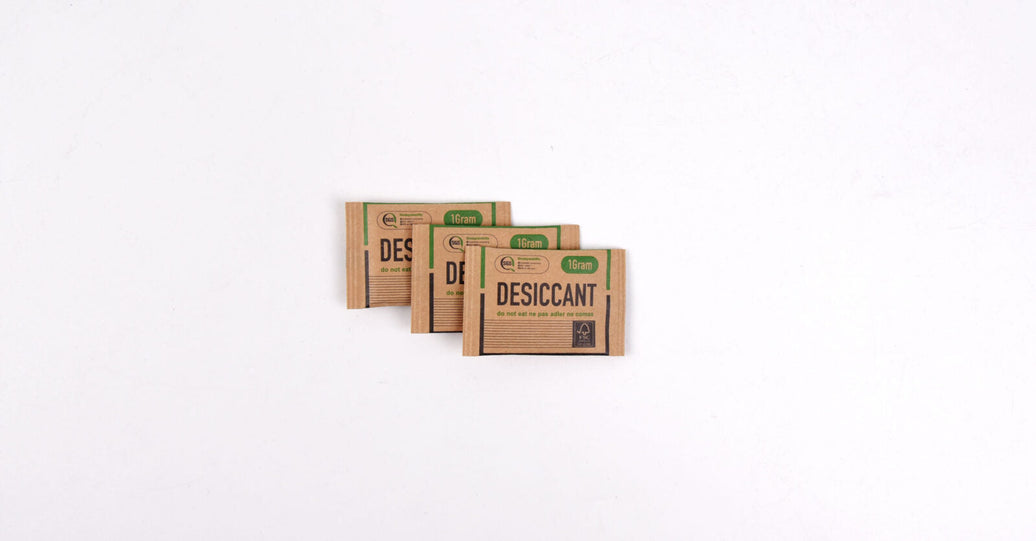
Sorbents behave differently across humidity bands. Silica gel does its best work at high RH; molecular sieves dominate at very low RH; capacity at the middle band decides most food and powder applications. A proper sheet publishes the curve or at least band values. For reference, the ATMOSIScience fiber desiccant substrate specifies: more than 10% of its own weight at RH 20%, more than 35% at RH 50%, and more than 70% at RH 90% (25°C basis) — three points a lab can verify.

2. Saturated capacity vs. working capacity
Saturated capacity (ATMOSIScience fiber: over 100% of its own weight) tells you the ceiling; working capacity at your package's target RH tells you what you'll actually use. Sizing from saturated capacity alone undersizes protection — the desiccant must hold the package below your product's damage threshold, where its remaining capacity is lower. The dosage guide walks the math.
3. Loss on drying
Capacity already spent in the warehouse isn't available in your package. LOD below 10% is the ATMOSIScience fiber spec; a sheet with no LOD line means freshness is unmanaged — and seasonal performance drift is coming (how LOD shows up on the COA).
Red flags on a spec sheet
- No test conditions. A bare "absorption: 35%" is unfalsifiable — and unverifiable.
- Only saturated capacity. Impressive ceiling, silent on performance at your working RH.
- Suspiciously round numbers with no tolerance. Real QC data carries ranges (±) and minimums (>), like ">35%" — absolutes suggest copywriting, not testing.
- No dust or integrity spec. For powder and food plants, media containment is a hazard spec, not a nice-to-have (why).
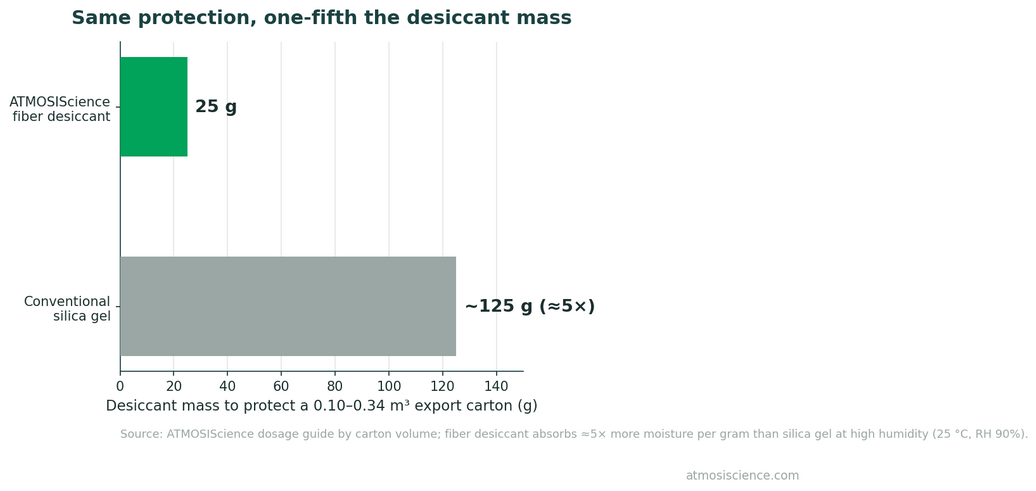
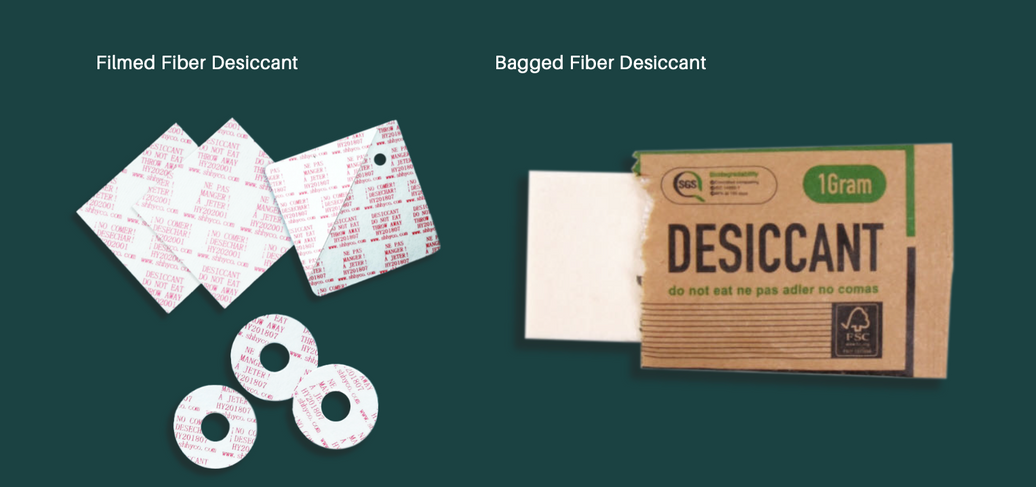
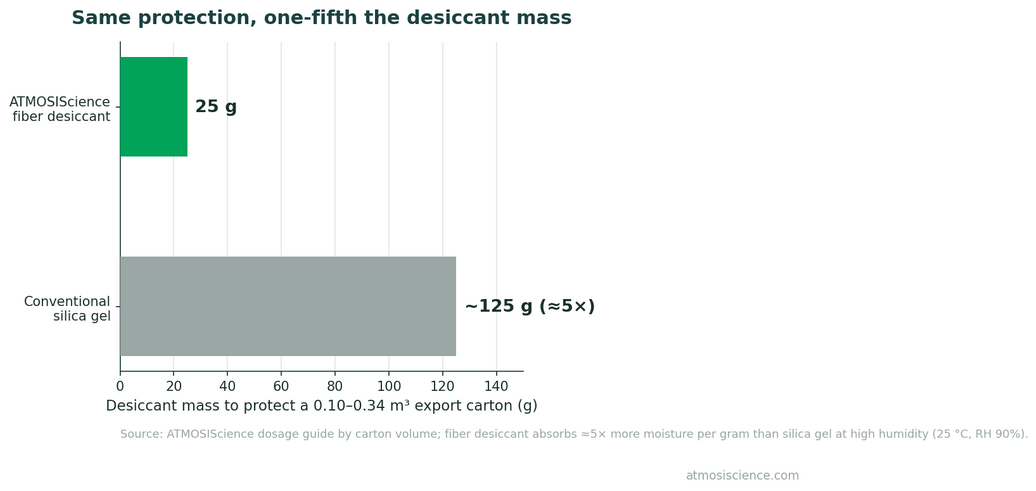
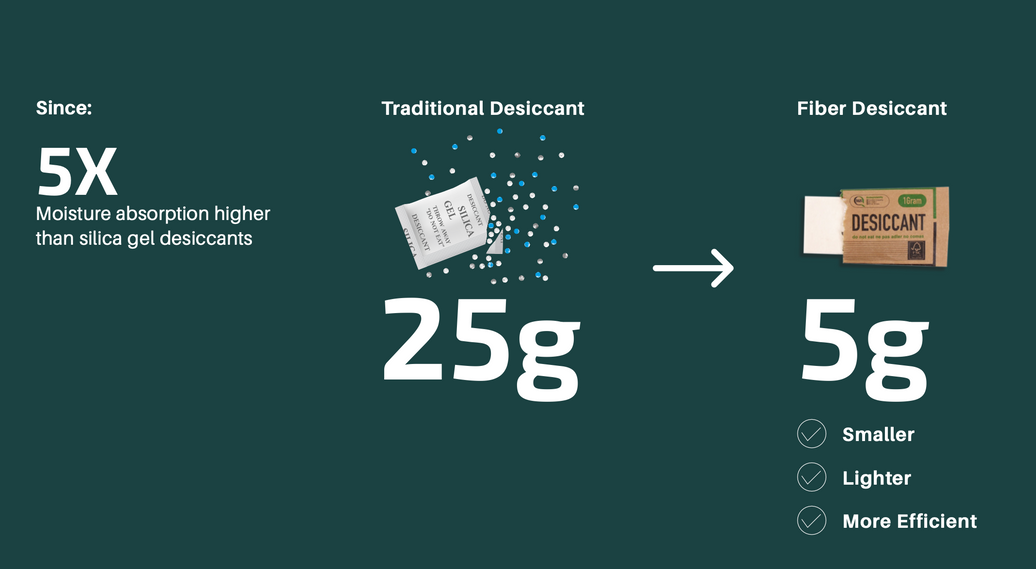
- Silica-equivalency claims with no basis. Equivalency is real — fiber formats replace multiples of silica mass — but the sheet must show the RH basis for the ratio. The math is worked through in the equivalency guide.
A worked comparison
Candidate A claims "30% absorption." Candidate B (fiber) publishes >35% at RH 50% / >70% at RH 90%. If your target is holding a supplement tub near the powder's caking threshold through 60 opening cycles, the deciding figure is capacity at the mid-band your headspace actually sits in — which Candidate A's sheet doesn't disclose at all. The comparison isn't A vs. B; it's B vs. an unknown. Qualification-shopping means refusing to price unknowns.

Verify once, then trust the paper
Normalize sheets first, then run one gain-in-weight bench test on the shortlist under your worst-case condition — protocol in the sample evaluation guide. One afternoon of bench work converts spec-sheet claims into your own data.
FAQ
What temperature should claims state?
25°C is the common basis; adsorption behavior shifts with temperature, so cold-chain or hot-route applications should ask for data at the relevant condition — or run the bench test there.
Are third-party test reports necessary?
For audited programs, supplier data plus one independent or in-house verification is the practical standard. What matters is that claims are stated verifiably — conditions, tolerances, lot linkage.
Why do fiber formats claim multiples of silica performance?
Per gram of sorbent at food-relevant humidity bands, the fiber substrate adsorbs several times what silica gel holds — which is why one thin card replaces grams of beads. The basis and limits are in the fiber desiccant science explainer.
Compare against a published spec
Request the ATMOSIScience technical spec sheet — adsorption by RH band, LOD, formats 1–1,000 g — plus samples for your own bench verification.