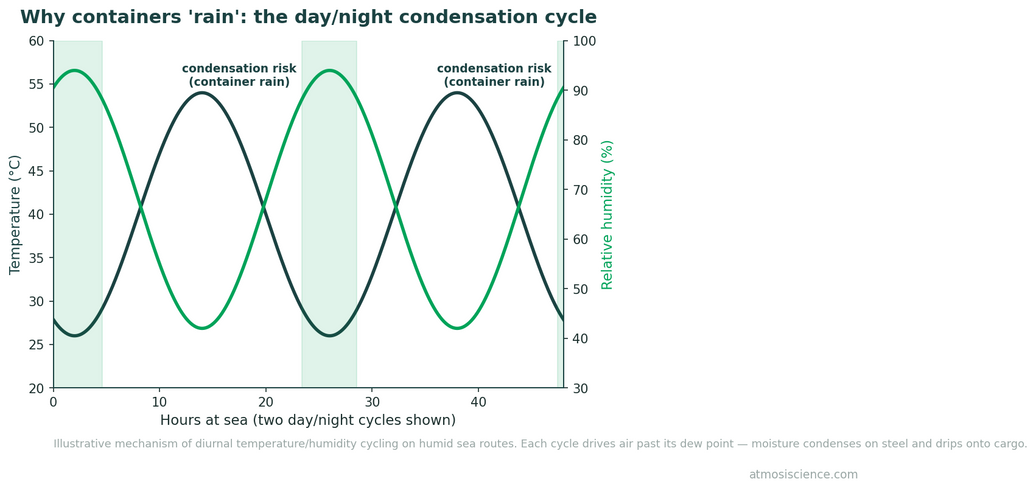
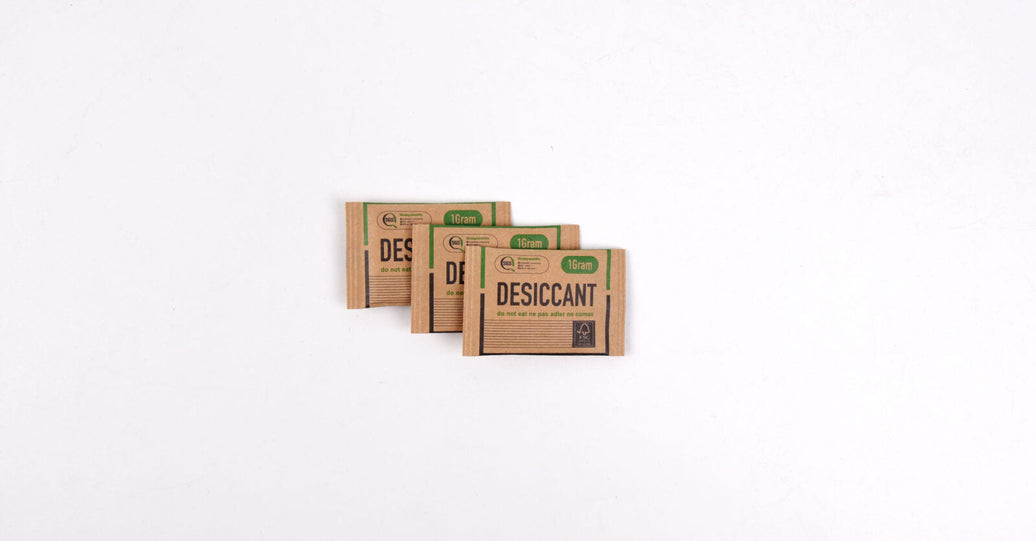
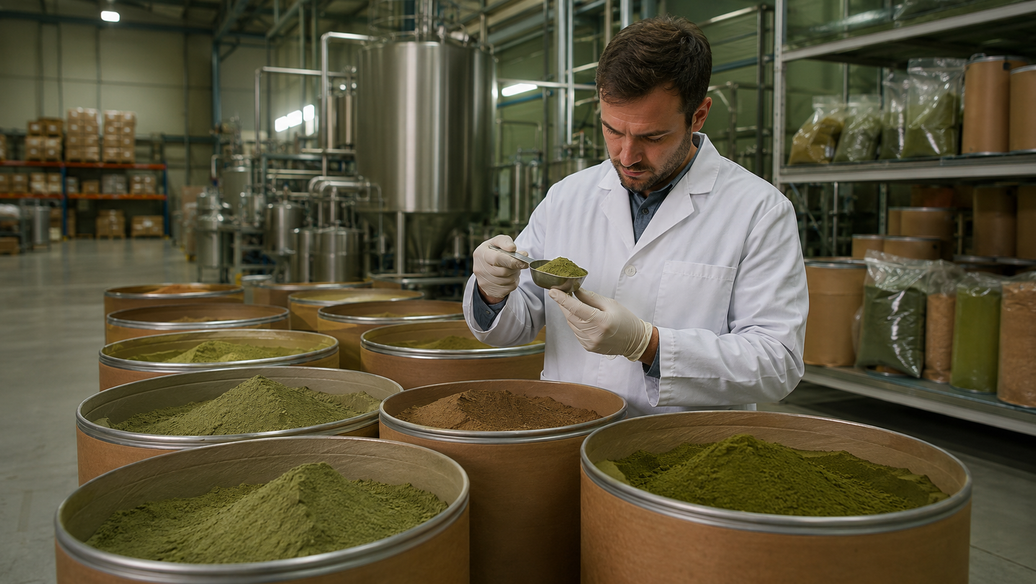
Quick answer: Powdered eggs and dehydrated food powders — whole egg, egg white, and vegetable or fruit powders — are hygroscopic and heat-sensitive. Even a small rise in headspace humidity causes caking, browning and a drop in whip and reconstitution performance. A food-grade fiber desiccant sized to the can or pouch headspace holds the interior below the caking threshold, adsorbing more than 35% of its weight at RH50 and more than 70% at RH90 (25°C), dust-free. It is compostable.
Dehydrated foods are bought for shelf stability, so moisture failure is doubly damaging: it undercuts the exact promise the product is sold on. For emergency-food packers, institutional suppliers and bakeries buying powdered egg, a caked or browned lot is a direct loss.
Why powdered egg and food powders fail
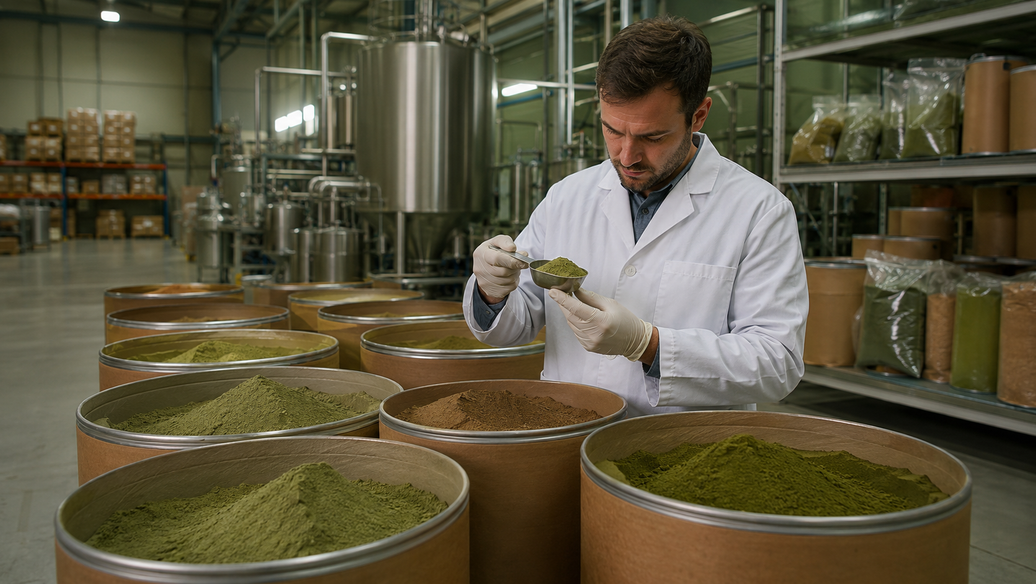
Three moisture-driven failures dominate. Caking, as fines absorb water and bridge together. Non-enzymatic (Maillard) browning, which accelerates with both moisture and temperature and dulls color and flavor. And loss of functionality — powdered egg that has taken on moisture loses foaming and binding power, so it no longer performs in a cake or meringue. All three track headspace humidity.

Formats: cans, pouches and institutional packs
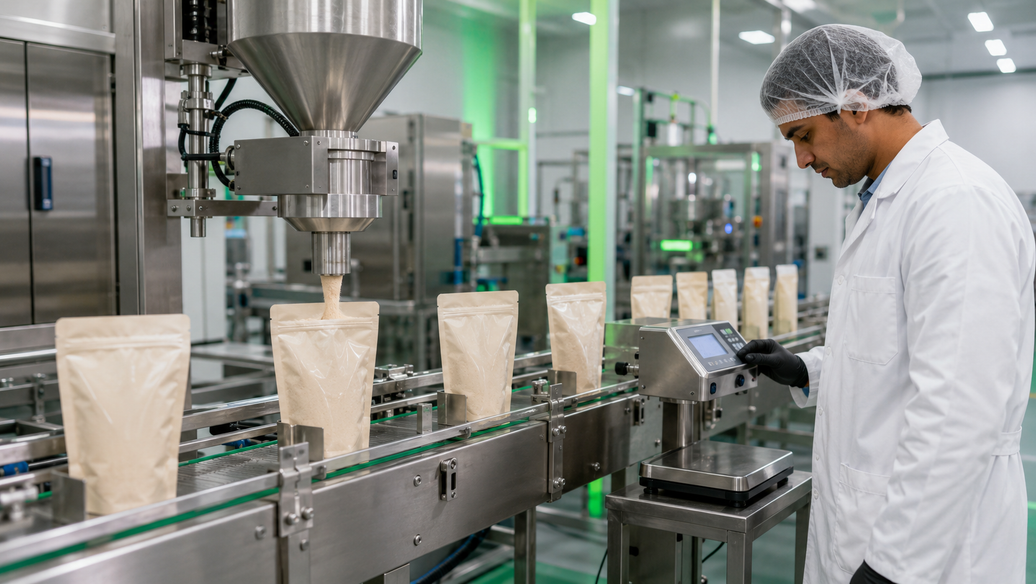
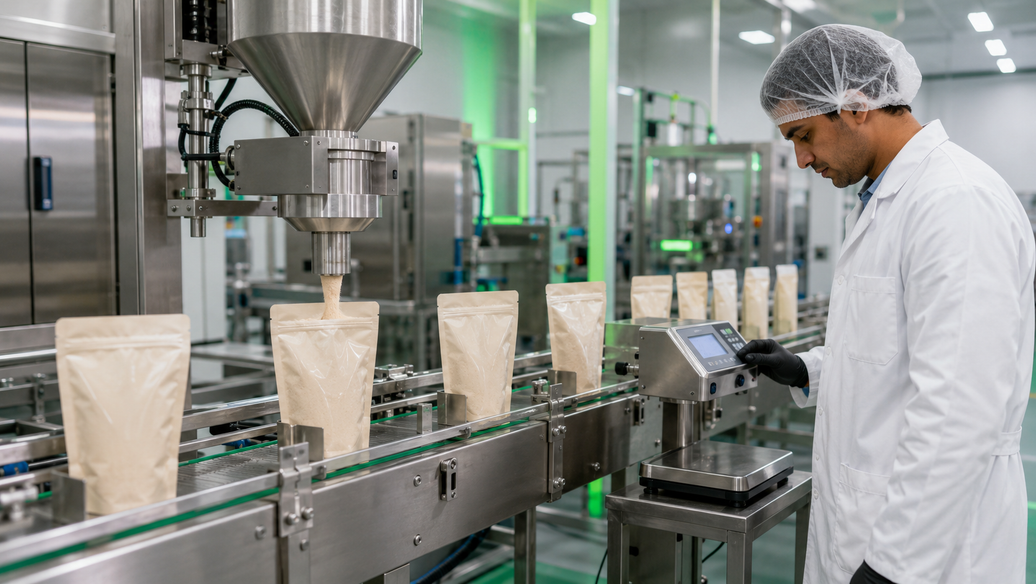
Powdered egg and dehydrated foods ship in #10 cans, foil pouches, buckets and food-service sacks. Each has a different headspace and barrier, so desiccant dose should be matched to the pack, not copied across the range.
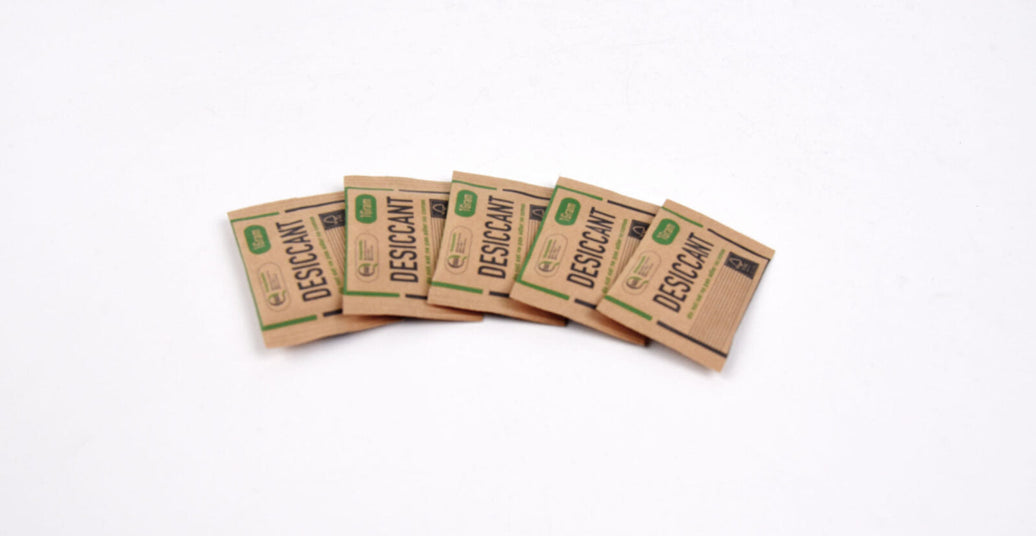
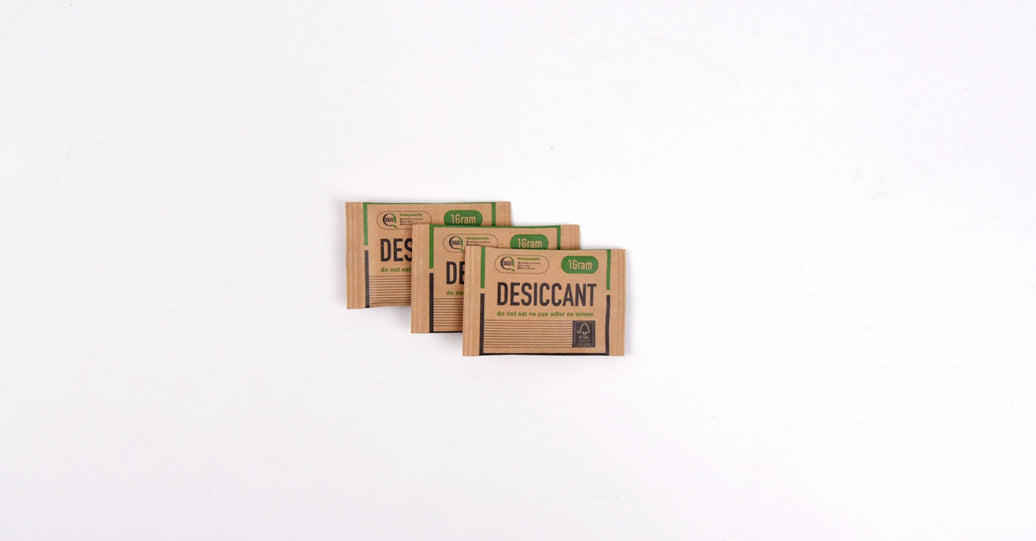
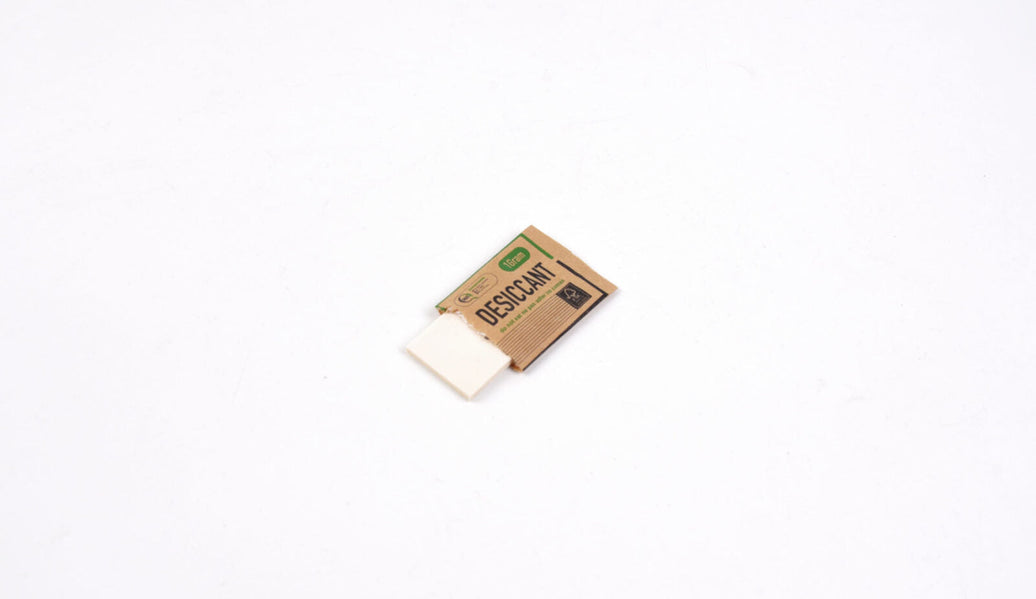
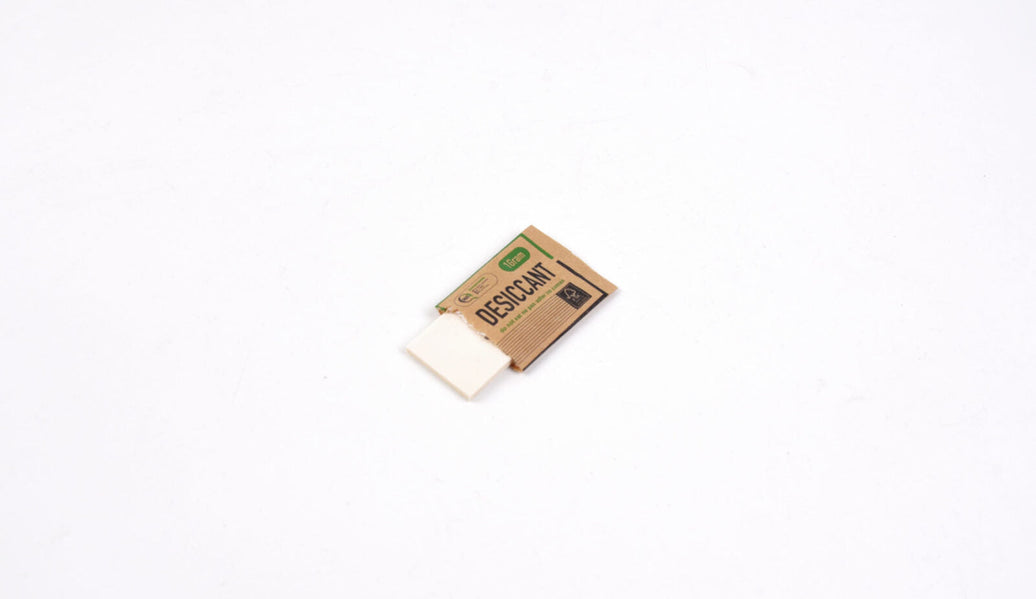
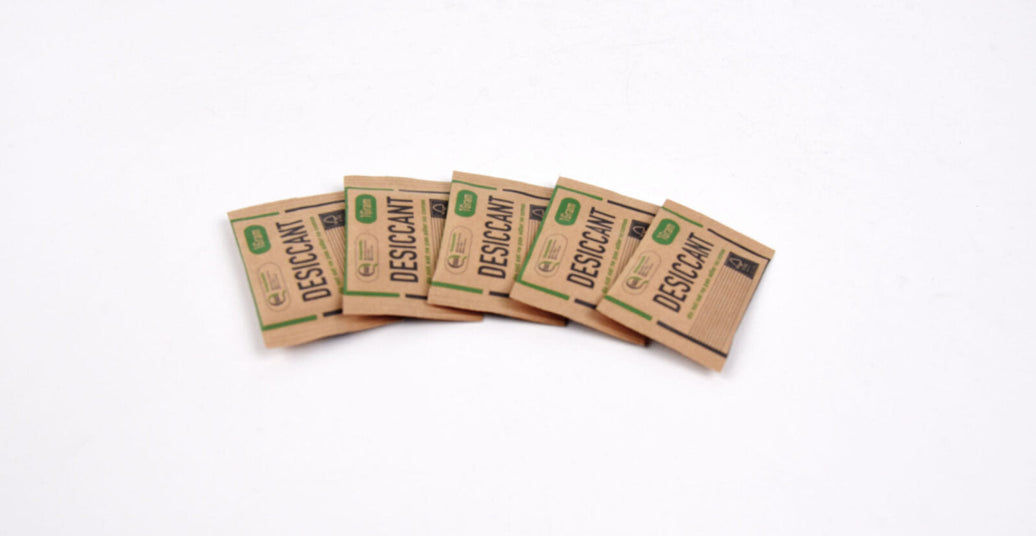
- #10 cans and buckets: a 5–10 g fiber sachet.
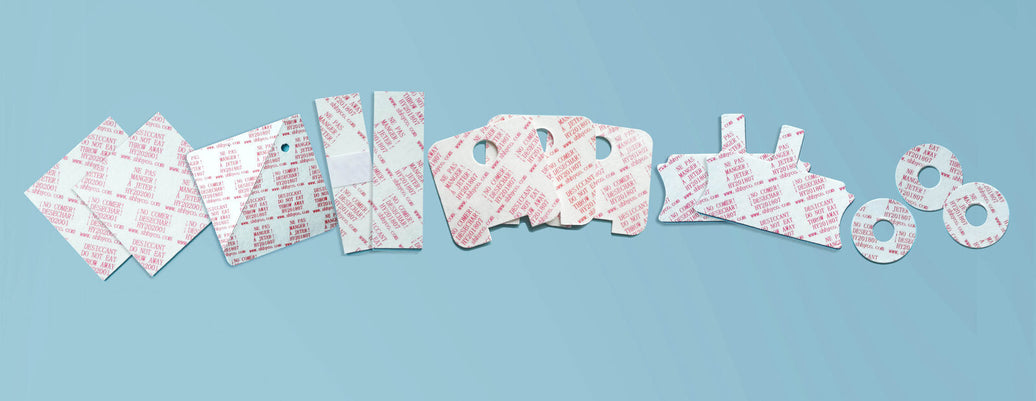
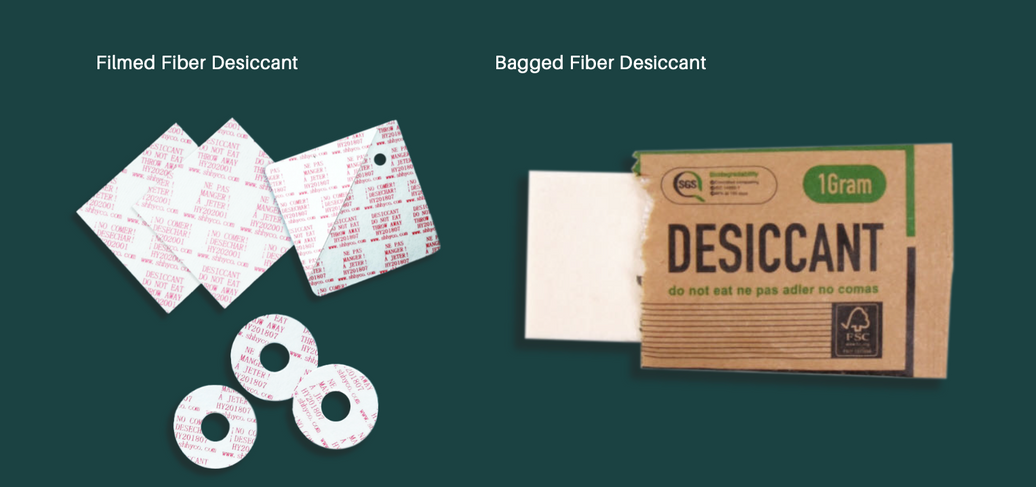
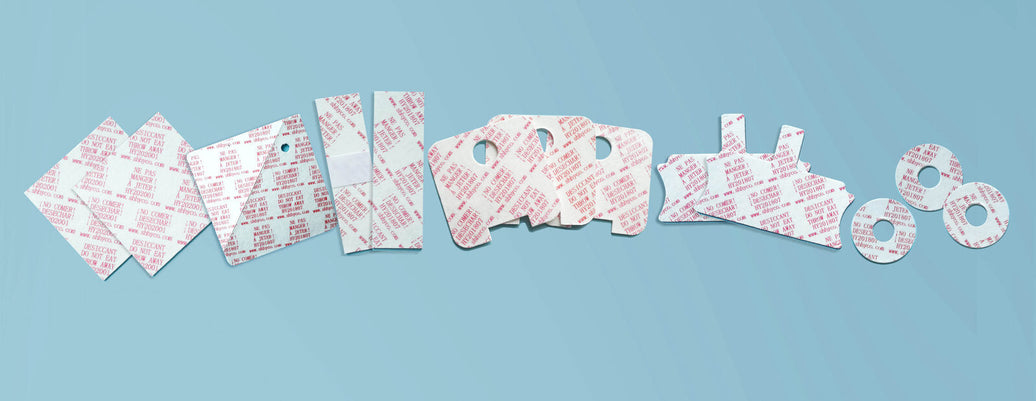
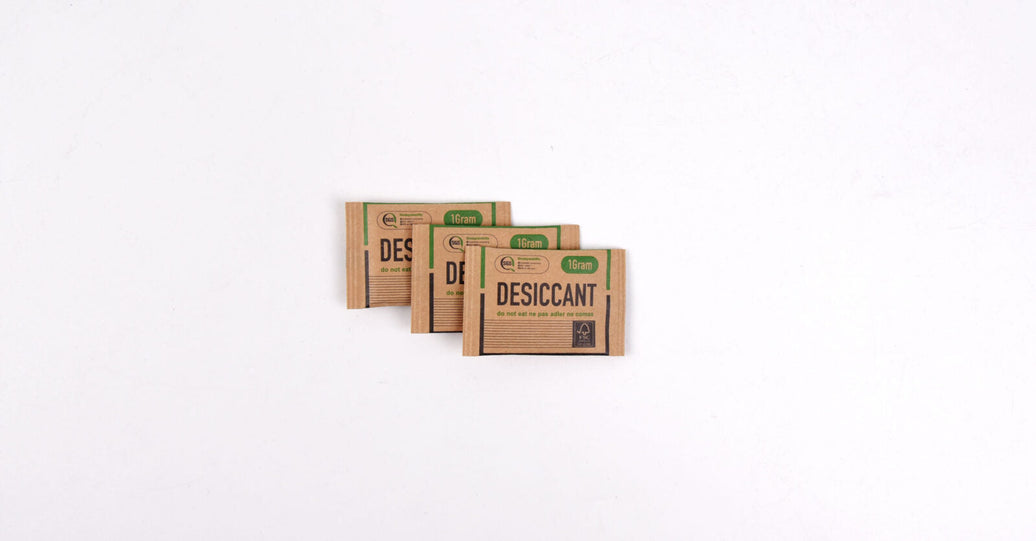
- Retail foil pouches: a 1–2 g sachet or die-cut film card.
- Food-service sacks: larger 20–100 g sachets through the fill.
Why fiber, and why dust-free matters
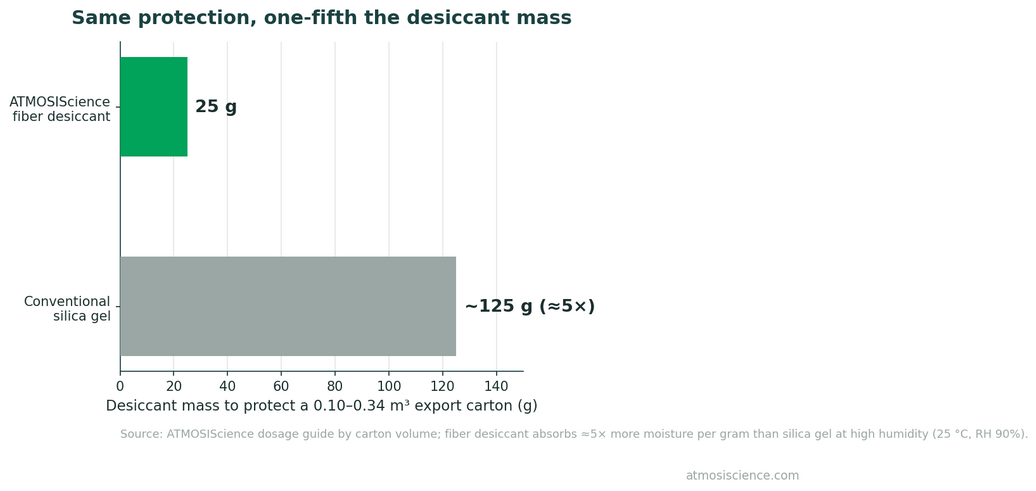
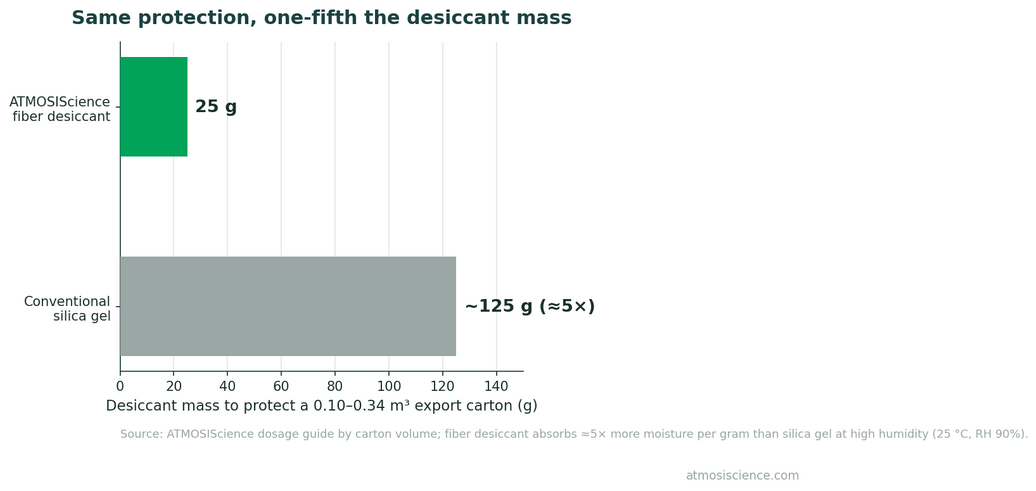
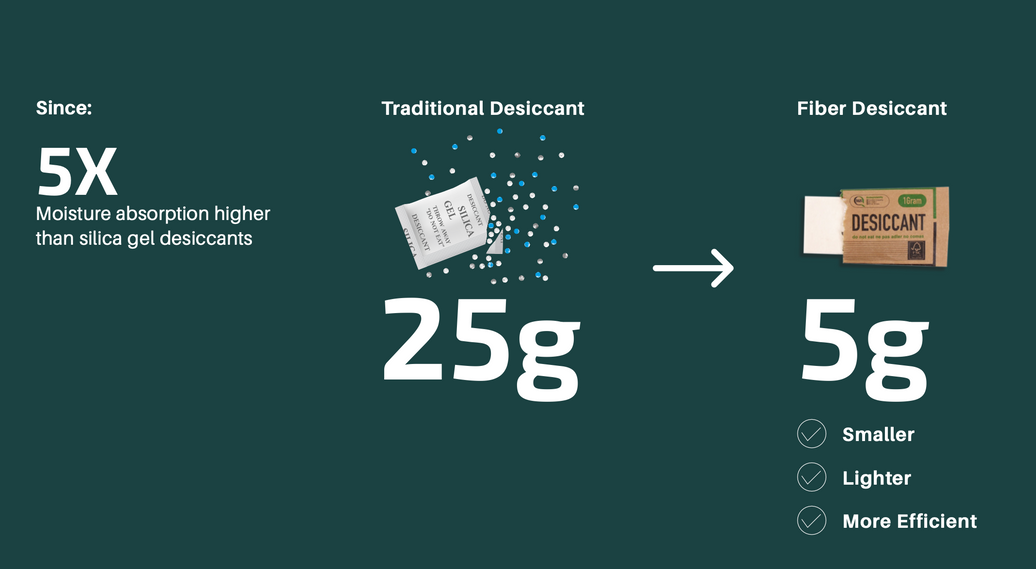
Fiber desiccant adsorbs far more per gram than silica — more than 70% of its weight at RH90 versus roughly 30% for silica — so a smaller pack protects a long-shelf-life can. It is dust-free, which keeps a pale egg or vegetable powder clean. The compostable sachet suits the sustainability positioning many emergency- and natural-food brands now carry.

Frequently asked questions
Does a desiccant stop browning in powdered egg? It slows moisture-driven browning by holding humidity low; pair it with a high-barrier can or pouch and cool storage for best shelf life.
How much desiccant for a #10 can? Typically a 5–10 g sachet, depending on fill and headspace. Share your can spec for a precise dose.
Is it safe against food? Yes — food-contact grade and dust-free, rated for direct contact.
Related reading: how desiccants extend powder shelf life, desiccant for baking mixes and flour blends, and water activity vs. relative humidity. Browse the fiber desiccant range.
Packing powdered egg or dehydrated food?
Send your pack format, fill weight and shelf-life target. ATMOSIScience will size a food-grade fiber desiccant and send a free sample to test against your worst-case storage.