A baking mix is a moisture trap by design: flour that absorbs water gradually, sugars that cake, dairy and egg powders that turn sticky, and — the quiet failure — chemical leavening that begins reacting the moment humidity reaches it. A pancake mix that pours but no longer rises is a product failure no consumer attributes to humidity. They attribute it to the brand.
This guide covers how moisture degrades baking mixes and flour blends, and how US co-packers and brands spec a desiccant for baking mixes across retail and bulk formats.
Four moisture-sensitive systems in one bag
Leavening. Baking soda and baking acids (SAPP, SALP, monocalcium phosphate) are formulated to react when wet — in the bowl, not in the bag. Adsorbed headspace moisture starts that reaction early at particle contact points, quietly consuming the CO₂ potential the recipe depends on. The product still looks fine; it just underperforms in the oven.
Sugars. Powdered and fine-granulated sugars in cake and frosting mixes cake through the classic dissolution–recrystallization cycle described in our pillar on why powders cake.
Dairy and egg powders. Amorphous lactose and spray-dried egg turn sticky as humidity rises — the same mechanism detailed in our dairy powder guide.
Flour itself. Flour equilibrates with its environment; elevated moisture raises water activity toward the range where shelf life shortens and, eventually, mold becomes possible in long-stored bulk.
Where mixes take on moisture
Paper-based retail packaging. Many baking mixes ship in cartons with paper or low-barrier liners — formats that breathe with the warehouse. A mix packed in a dry plant and staged through a humid Southeast summer arrives equilibrated to the warehouse, not the plant.
Resealable pouches. Better barrier, but the consumer opening cycle still exchanges headspace air — and baking products live in kitchens, next to steam.
Bulk totes and 50 lb bags. Co-packers staging ingredient inventory through non-conditioned warehouses see bridging and flow problems at the bottom of the stack first.
Speccing the desiccant
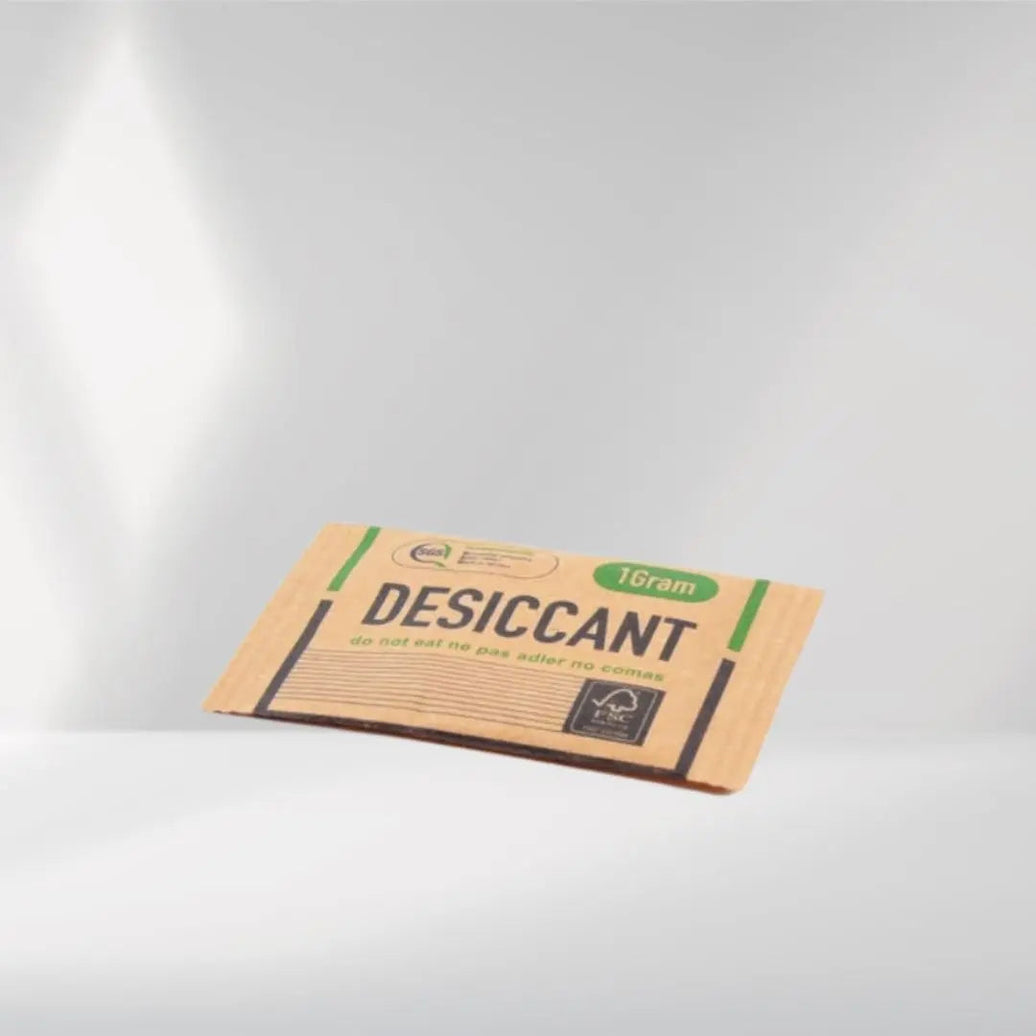
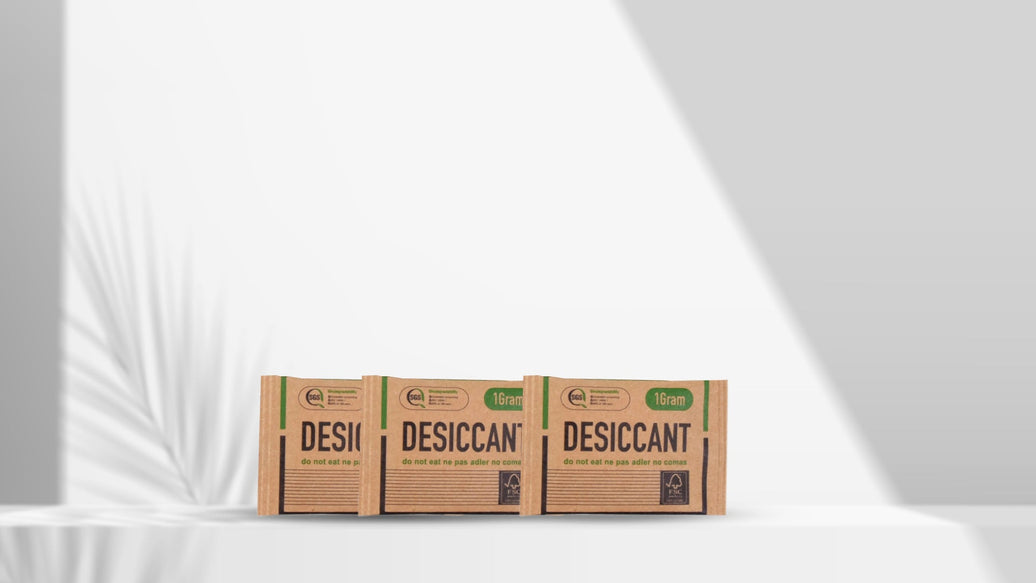
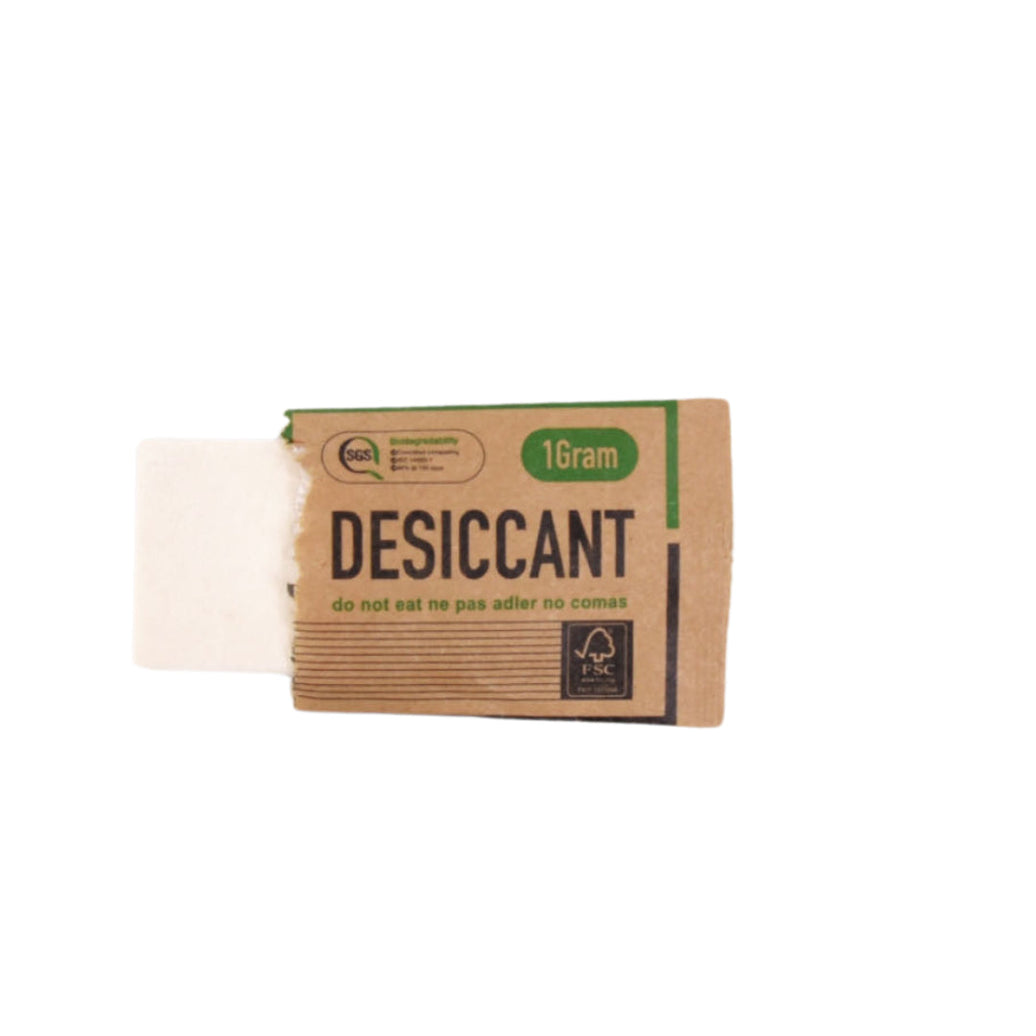
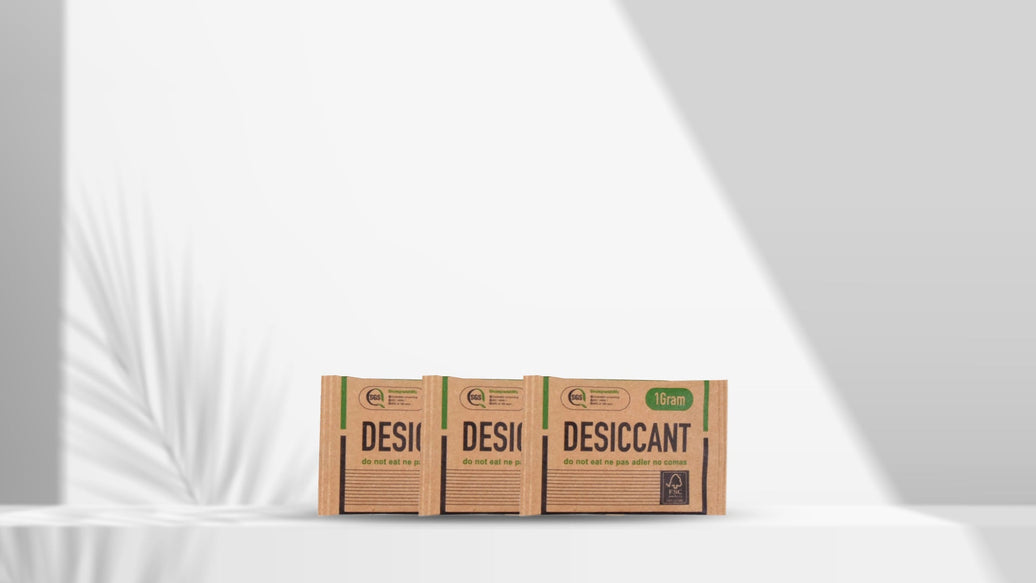
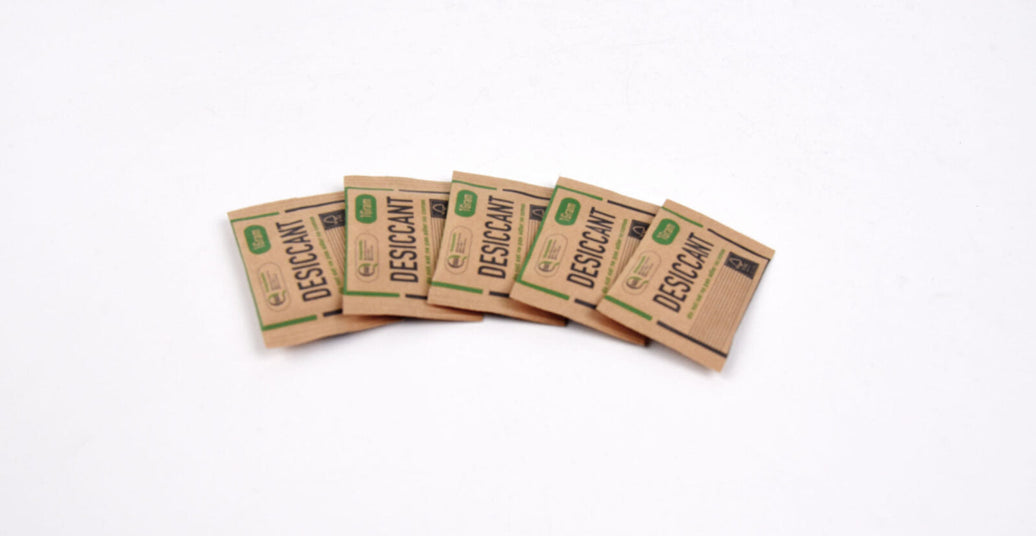
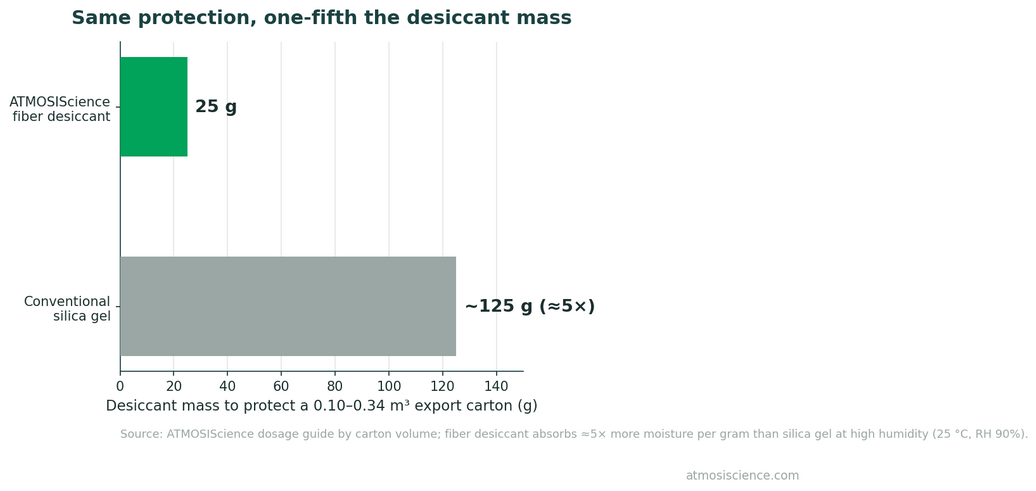
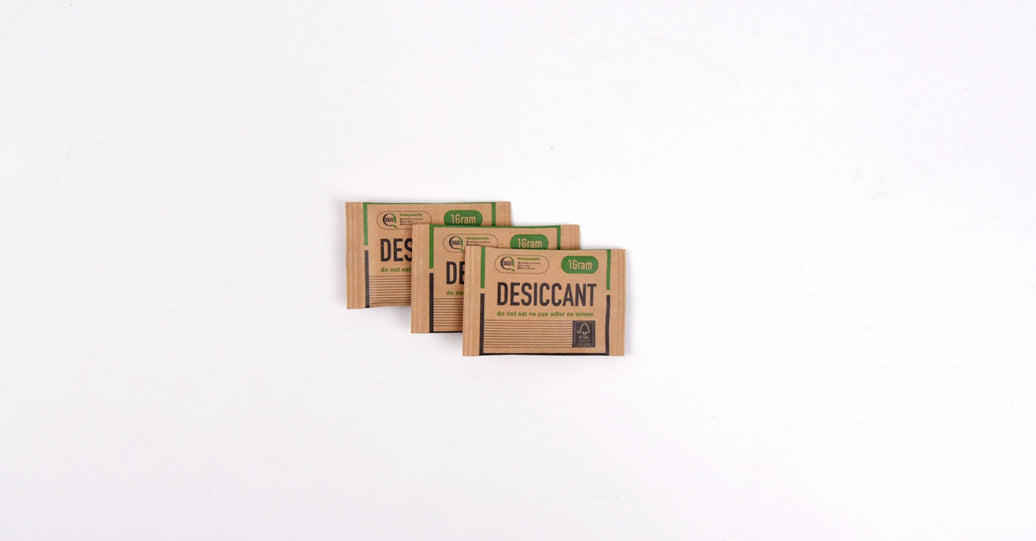
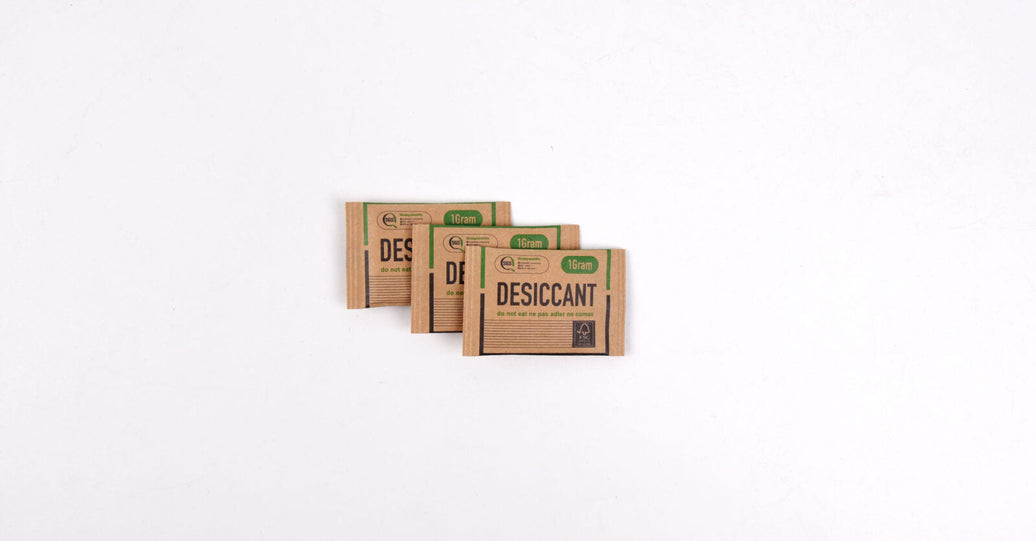
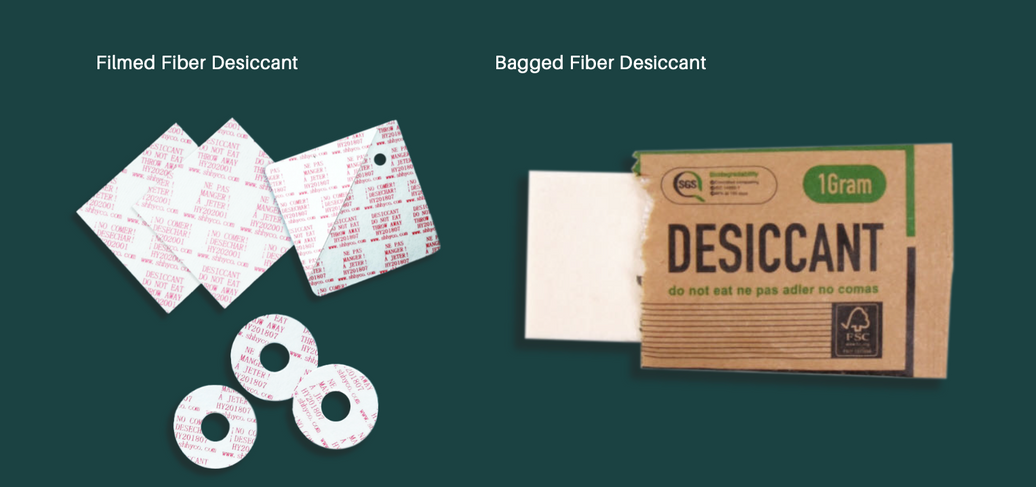
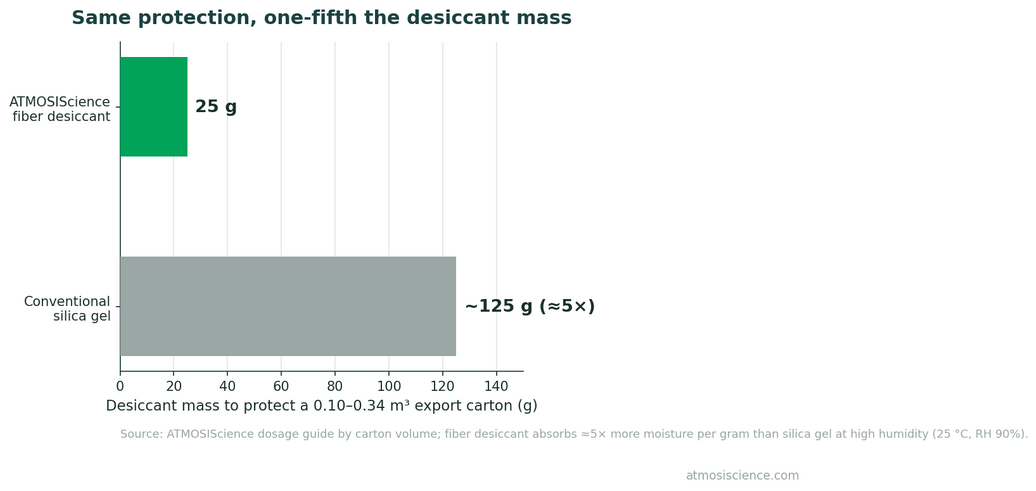
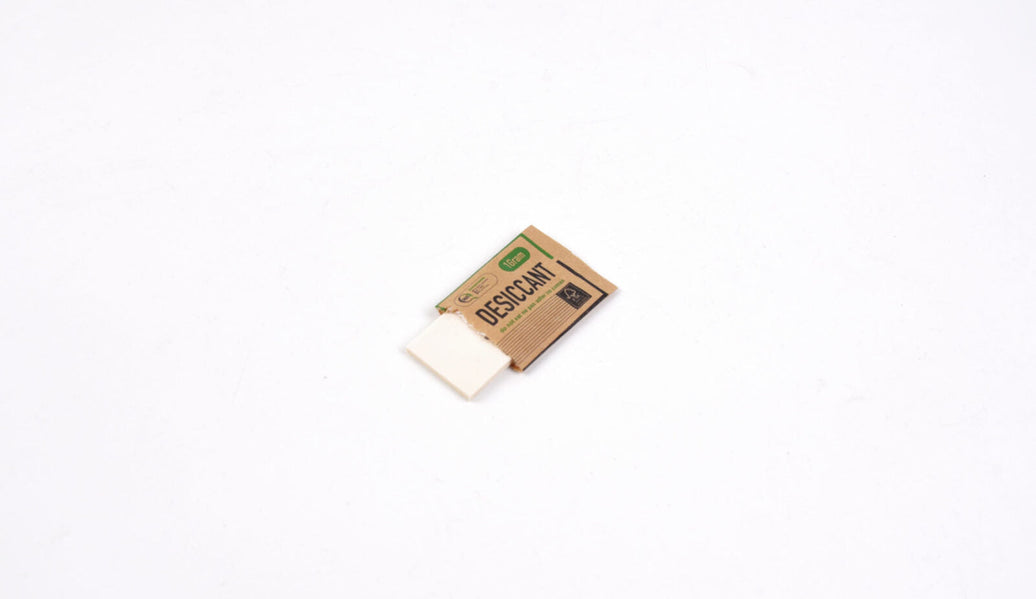
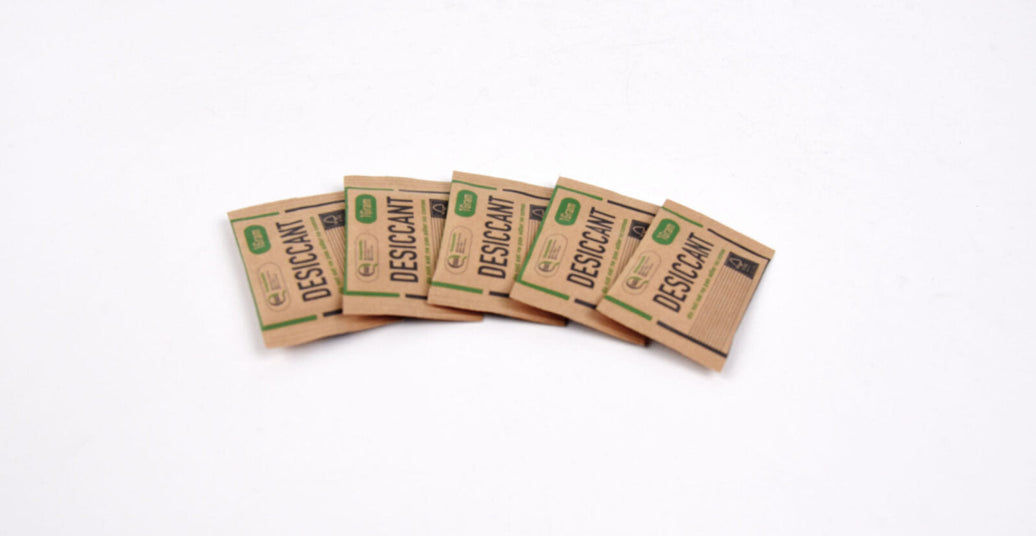
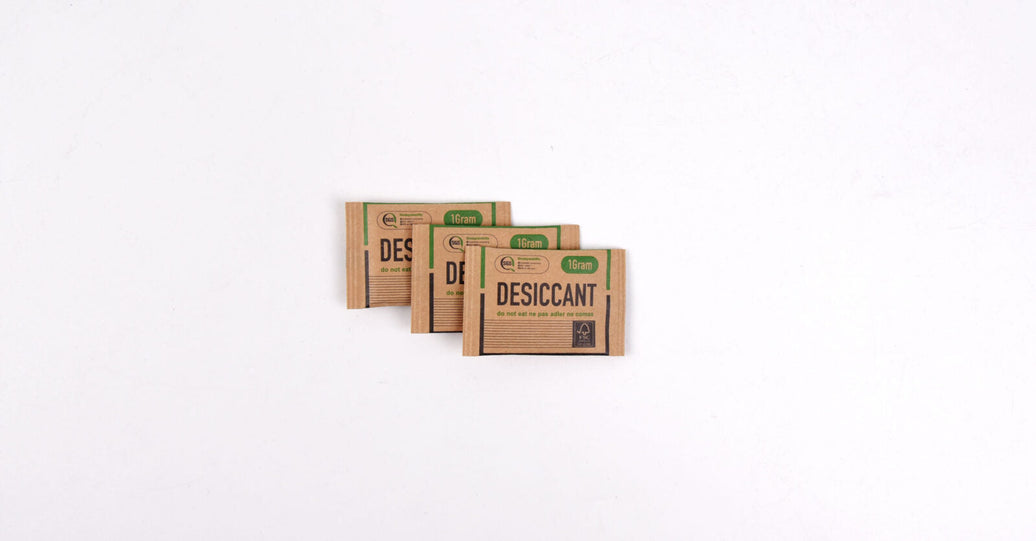
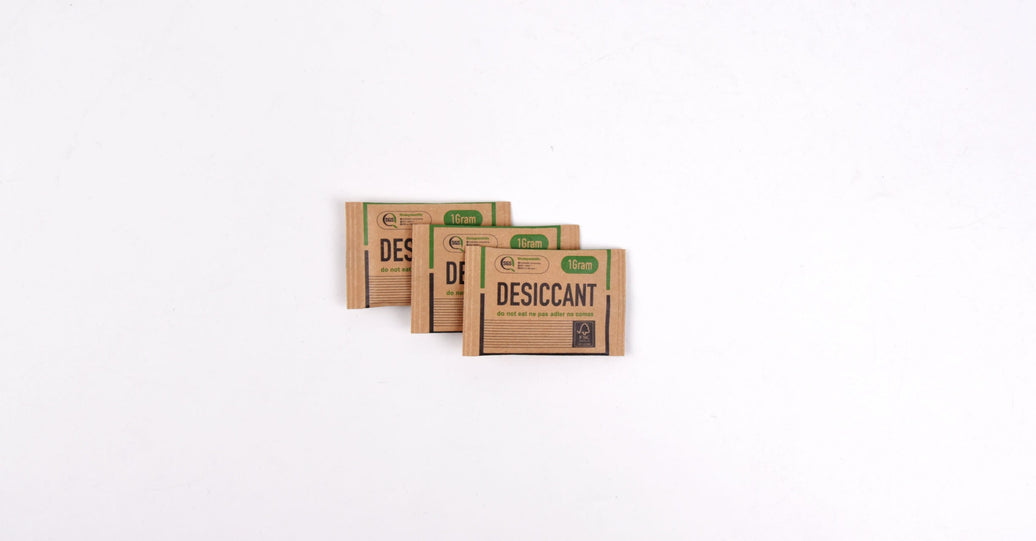
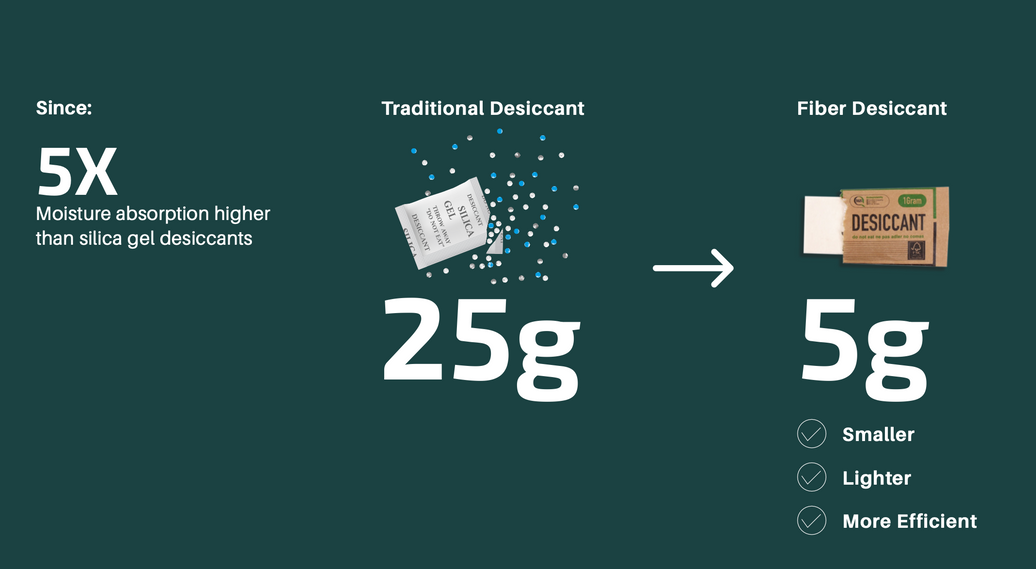
Bulk liners and totes: high-capacity fiber sachets (25–60 g, custom weights) inside the liner. Fiber desiccant absorbs over 70% of its own weight at 25°C and RH 90% — roughly 5x conventional silica gel — so about 25 g covers a standard 0.10–0.34 m³ carton. Per-package math: the dosage guide.
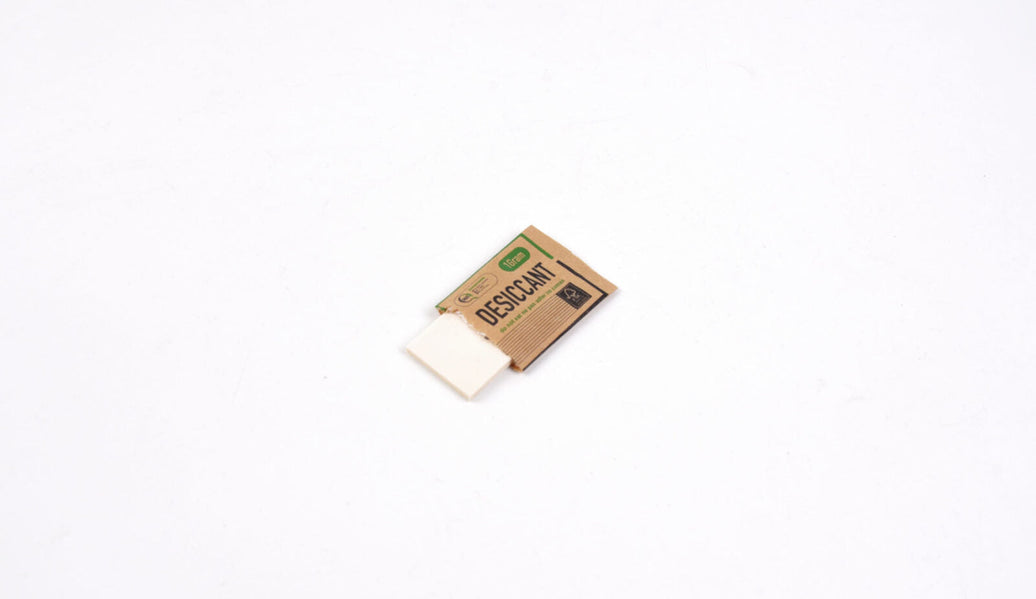
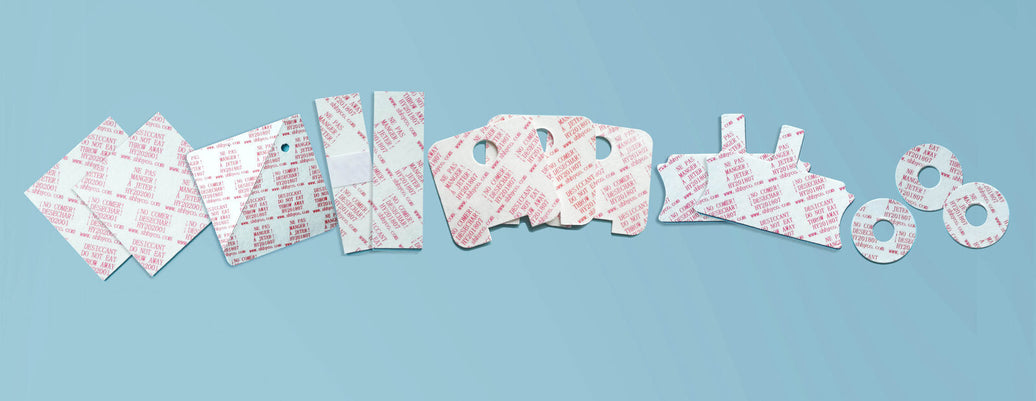
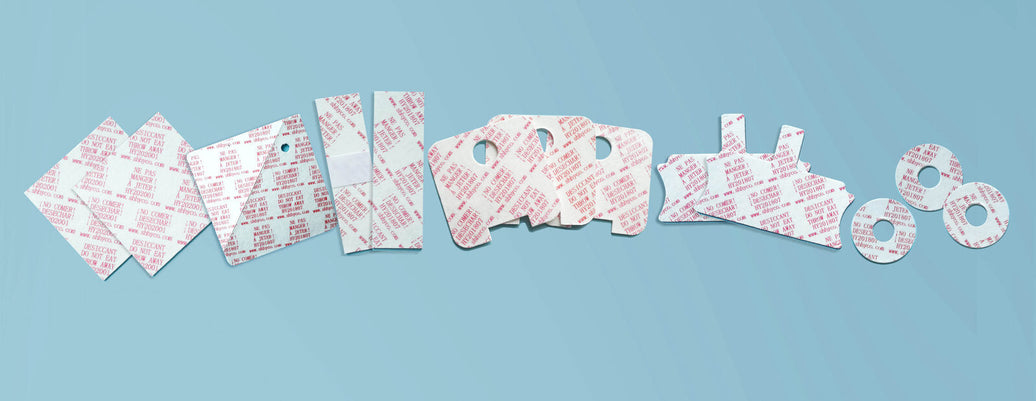
Retail pouches and canisters: a small fiber sachet (1–9 g) or, for canisters and tubs, a film desiccant card — rigid (stiffer than some credit cards), paper-wrapped rather than plastic, die-cut to the container, and printable with a full-color logo in the center. Details in the film desiccant guide.
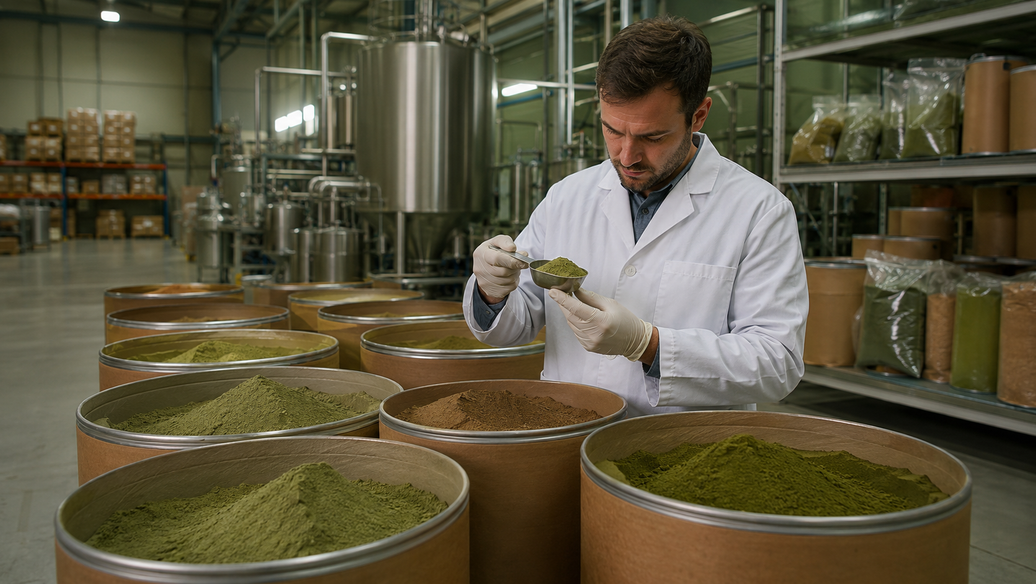
Food-safety file: in a scooped or poured food, the desiccant must be dust-free and documented. ATMOSIScience fiber desiccant is manufactured under SGS ISO 9001 (Cert. CN05/31171), with no loose beads or fines — the loose-fill failure mode is covered in loose-fill desiccant risks. Compostability under ASTM D6400 and EN 13432 keeps the insert consistent with paper-forward baking-brand packaging.
The co-packer angle: protect the spec, not just the powder
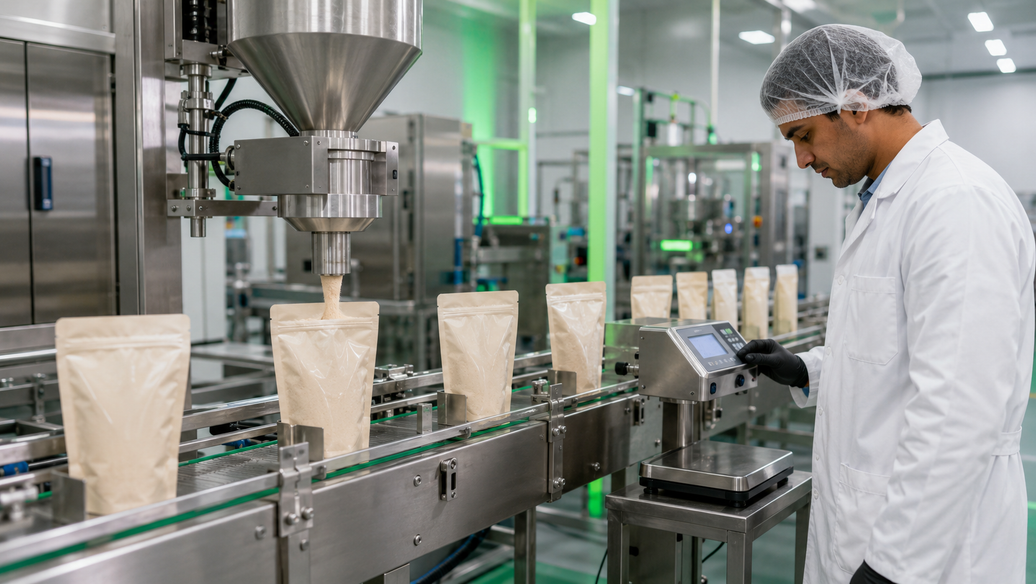
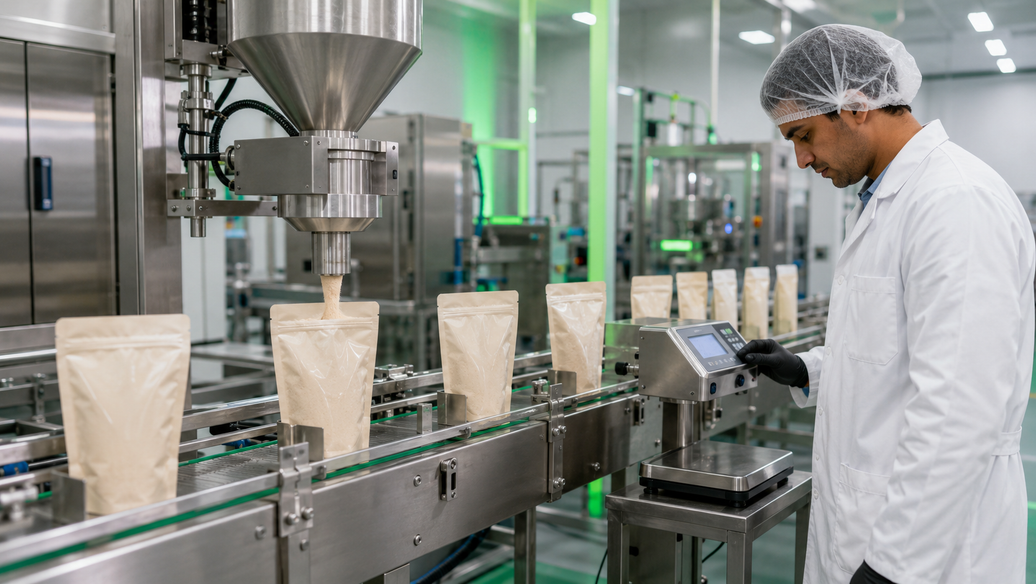
Co-packers carry the contract risk when a customer's mix fails a bake test after six months in distribution. Headspace desiccant is one of the cheapest ways to defend the leavening spec through shelf life — and a differentiator to offer brand customers as a line item. For automated insertion, the rigid film card runs on pick-and-place equipment that soft sachets jam; see the co-packer automation guide.
Frequently asked questions
Why does an old pancake mix rise poorly even when it looks fine?
Moisture pre-reacts the chemical leavening at particle contact points, consuming CO₂ potential before the bowl. The visual change comes much later than the performance change.
Can desiccant go inside a flour-based retail mix?
Yes — with food-contact documentation and a dust-free, removable format. A rigid film card or sewn fiber sachet meets both; a loose bead sachet does not belong in a poured powder.
Does desiccant extend the shelf life printed on the box?
Shelf-life claims must be validated, but holding headspace RH down protects the leavening and flow characteristics that shelf-life testing measures — typically the binding constraints for mixes.
What about gluten-free mixes?
Gluten-free blends often lean on starches and gums that are more hygroscopic than wheat flour, making headspace control more important, not less.
Defend the bake, not just the bag
ATMOSIScience supplies food-grade fiber desiccant in bulk sachets and printable film cards at B2B scale, with ISO 9001 and compostability documentation for baking QA files.
Test it against your own mix first. Order the Fiber Desiccant, or request bulk pricing and certificates through our desiccant solutions page or contact our team.
Related reading: Why Powders Cake · Desiccant for Spices & Seasoning Blends · Desiccant vs. Oxygen Absorbers vs. Nitrogen Flush
Get a desiccant spec & bulk quote for your mix line
Tell us your mix type, package format, and shelf-life target — our team responds with a capacity calculation, format recommendation, certificates, and bulk pricing.