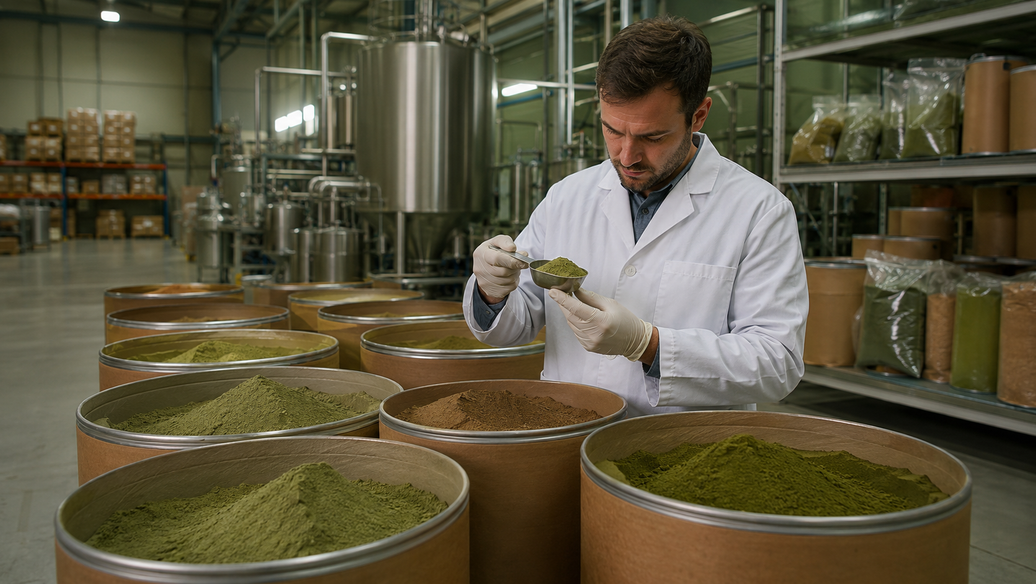
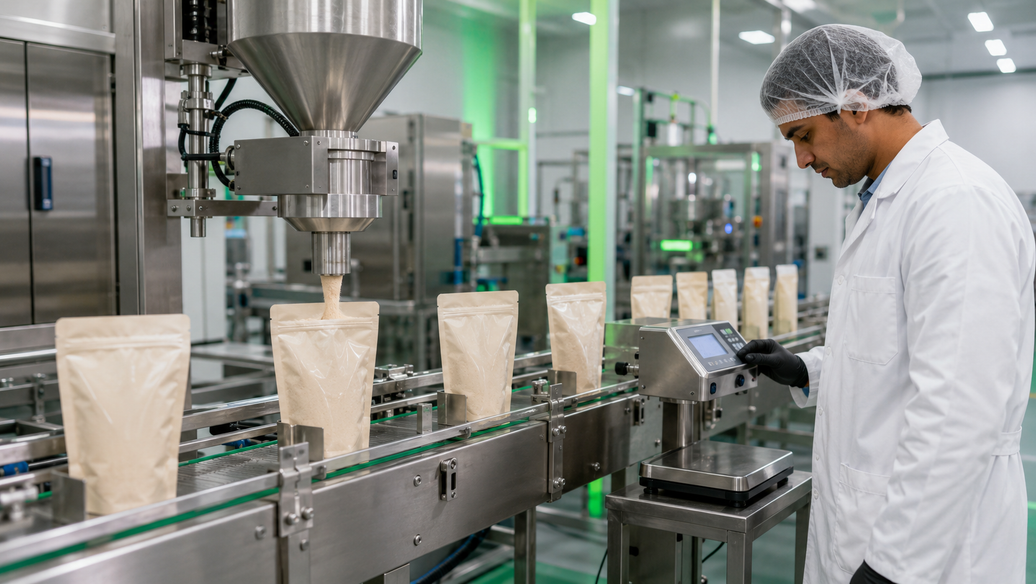
Dairy powders are built around the single most studied caking ingredient in food science: lactose. Spray-dried milk powder, whey, and infant formula all carry lactose in its amorphous state — stable when dry, and quick to turn sticky the moment headspace humidity rises. The result shows up across the supply chain: bridged 25 kg bags in the warehouse, caked retail cans, formula that clumps in the scoop during the weeks a parent uses it daily.
This guide covers the moisture mechanics specific to dairy powders and how US processors, exporters, and formula brands spec a desiccant for milk powder across bulk and retail formats.
Why dairy powders are uniquely moisture-sensitive
Amorphous lactose and the sticky point. Spray drying locks lactose into an amorphous glass. When that glass adsorbs moisture, its glass-transition temperature drops below ambient: particle surfaces turn sticky, fuse, and then crystallize — releasing bound water that accelerates caking in the surrounding powder. The cascade feeds itself, which is why dairy caking often appears suddenly rather than gradually. The general mechanism is covered in our pillar on why powders cake.
Fat and protein make it worse. Whole milk powder and high-fat formula carry surface fat that softens with temperature, adding a second stickiness mechanism on top of lactose. High-protein whey concentrates clump through protein plasticization.
Flavor and color follow moisture. Elevated moisture accelerates the staling and browning chemistry that QA tracks in aged dairy powder — protection is a quality play, not just a flow play.
Where the exposure happens
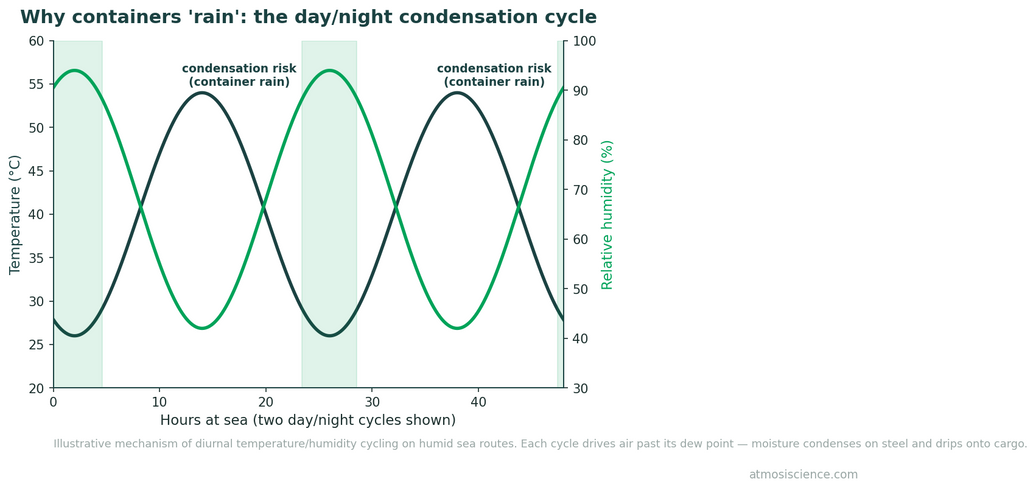
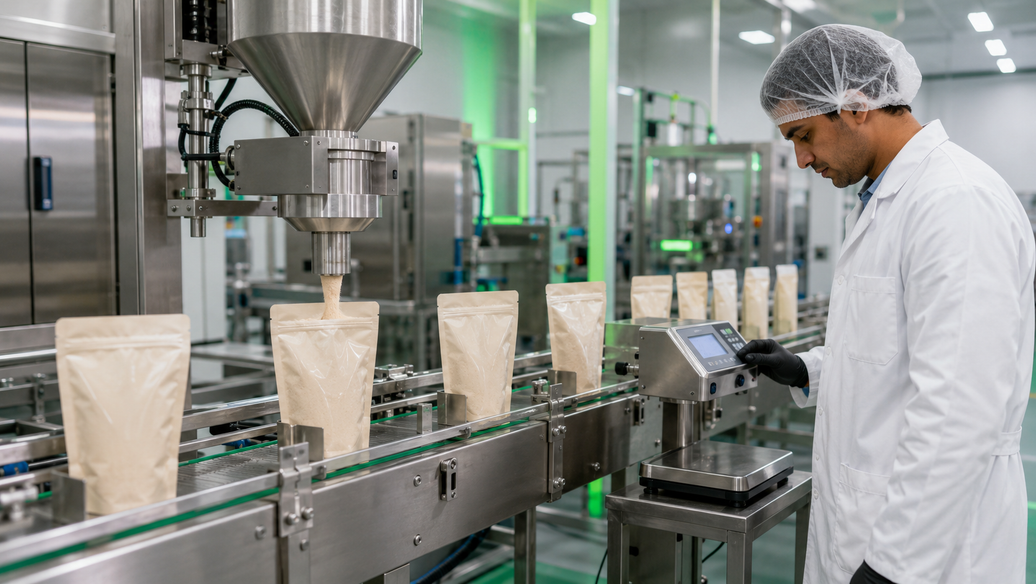
Bulk 25 kg bags and totes. Multi-wall bags breathe. A pallet staged through a humid Gulf port or a non-conditioned warehouse cycles with the seasons, and the bottom bags bridge first. For export legs by sea container, the condensation risk is covered in our container desiccant guide.
Retail cans and tubs. A formula can is opened multiple times a day for weeks — the most aggressive scoop cycle in food. Every opening exchanges protected headspace for kitchen air. Sealed-sample stability data does not model this; capacity through the use life decides the outcome.
Pouches and refill bags. Resealable closures reduce but do not eliminate the exchange, and thin films permeate over a long shelf life.
Speccing the desiccant
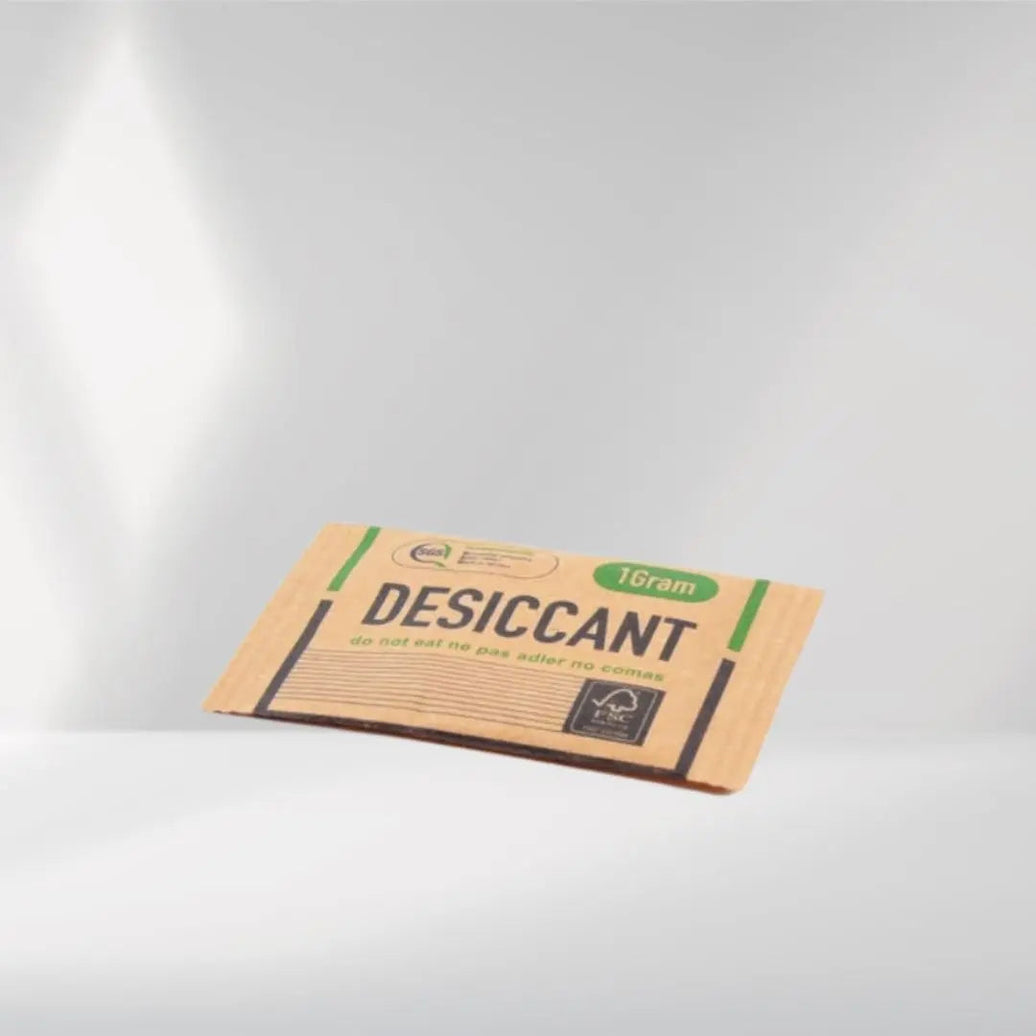
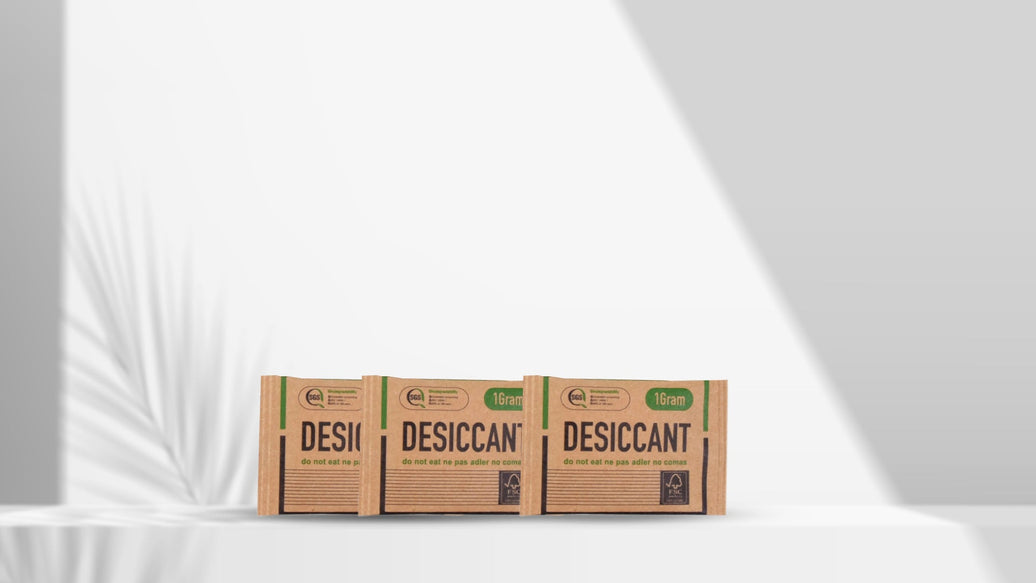
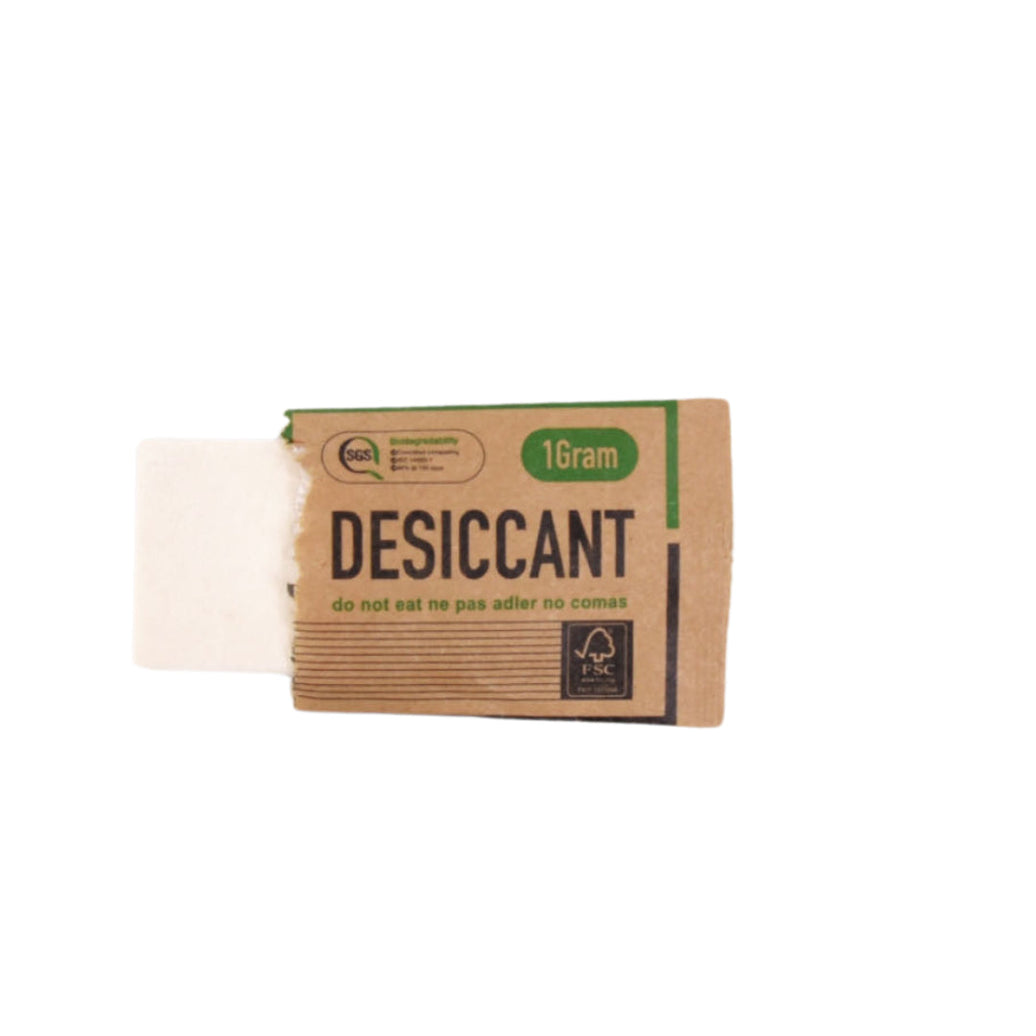
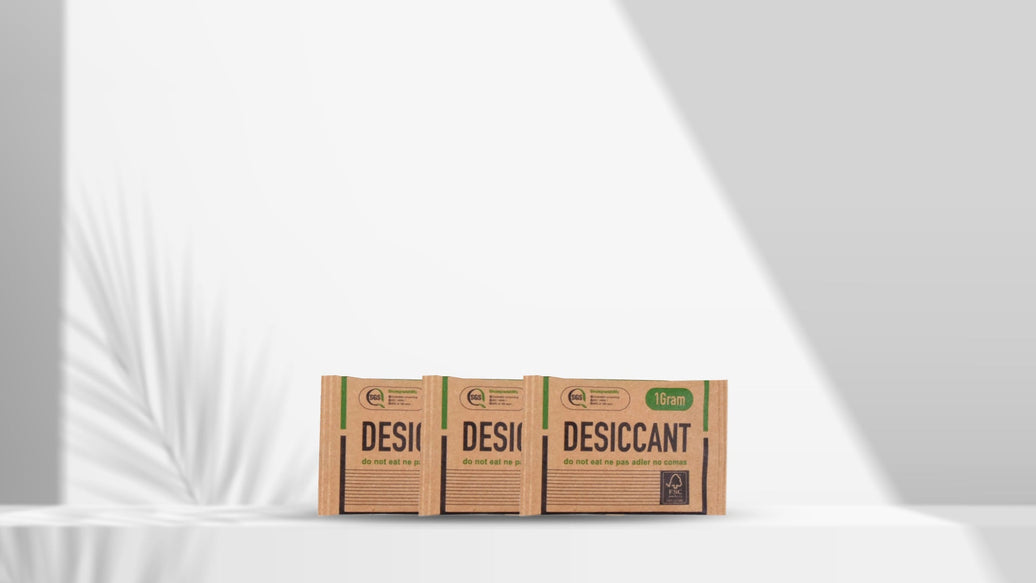
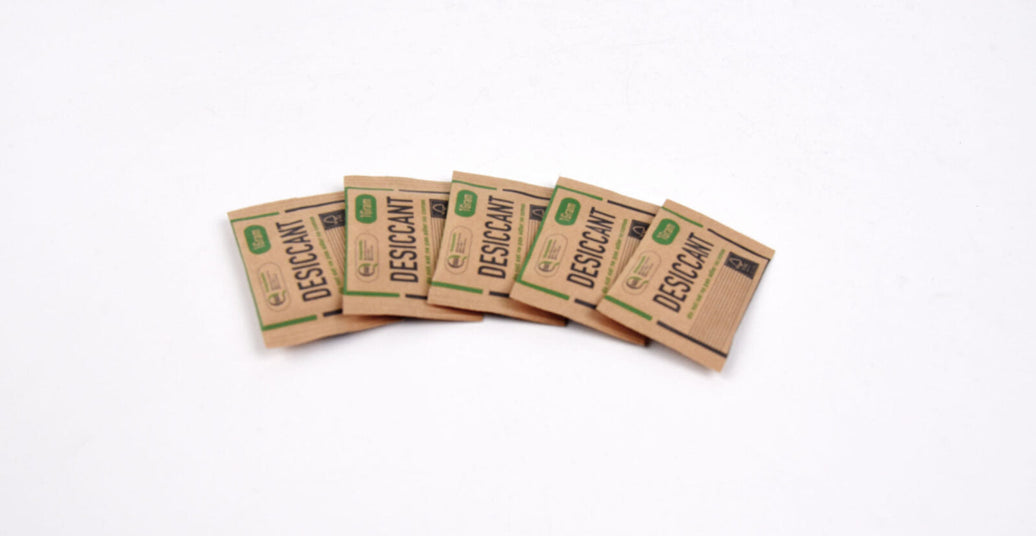
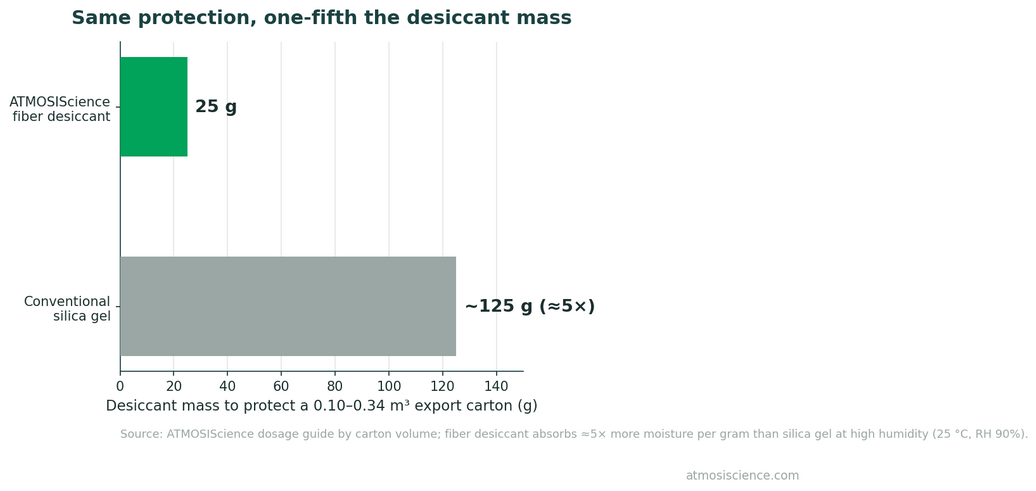
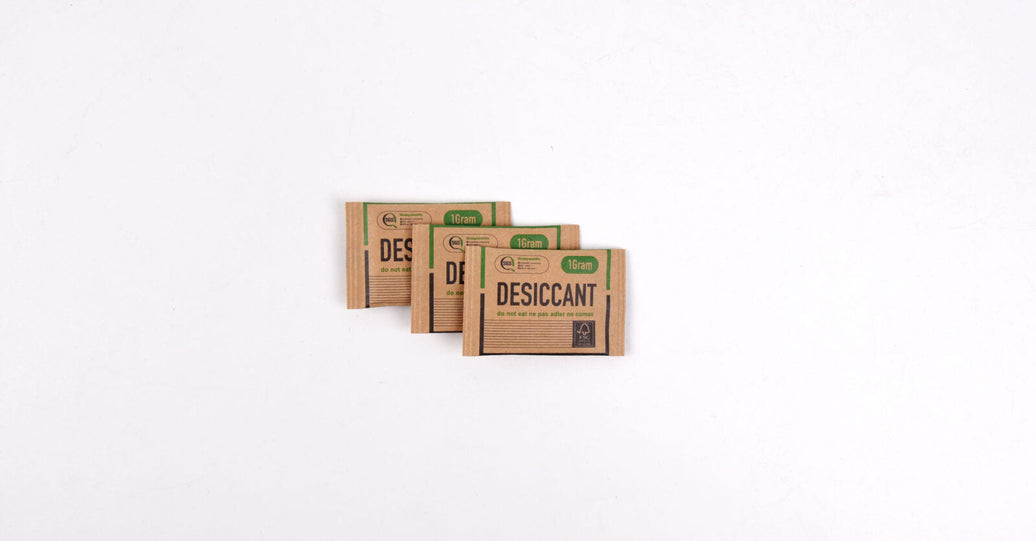
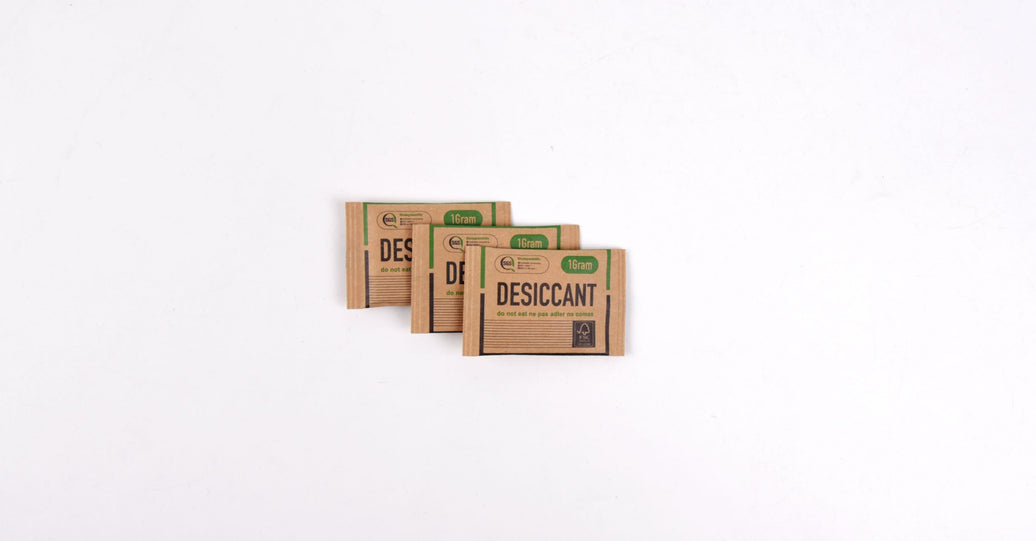
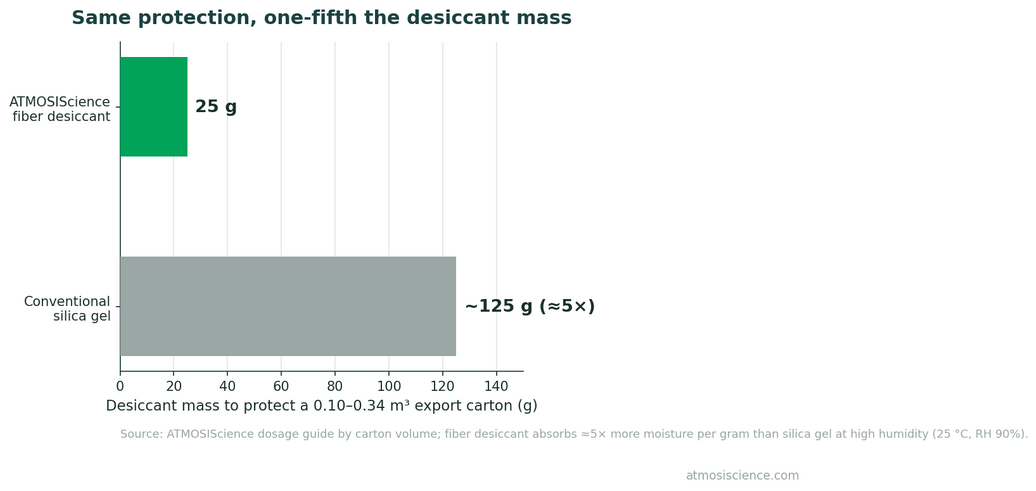
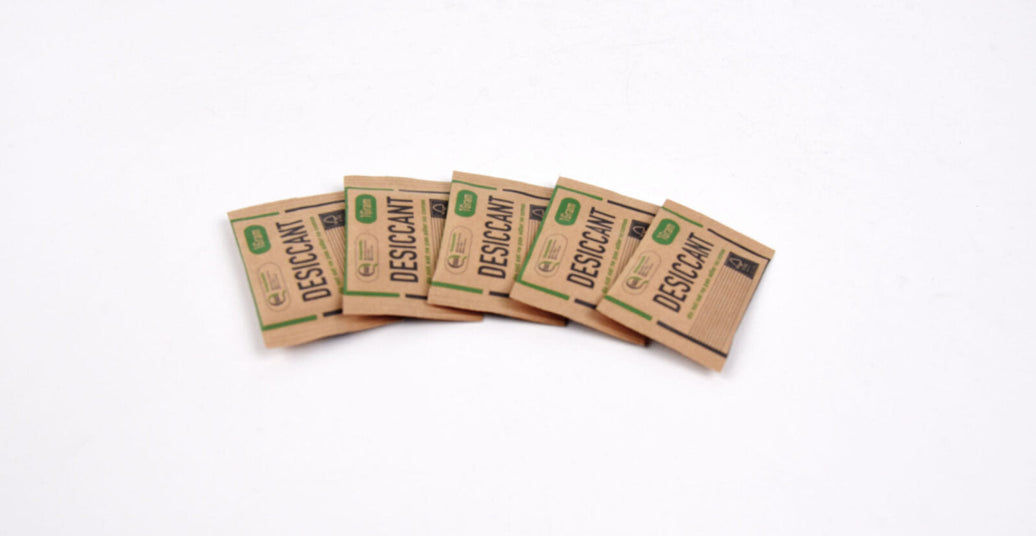
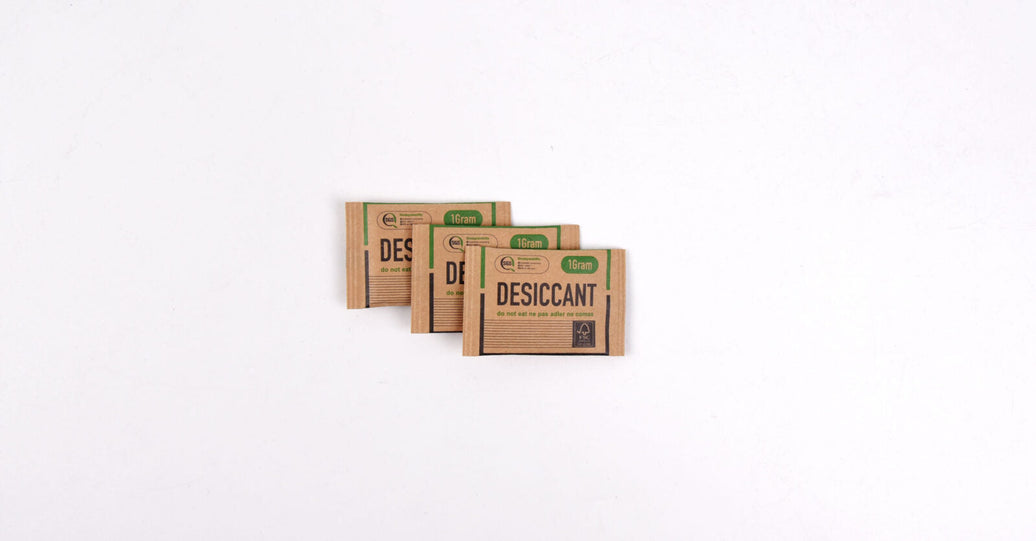
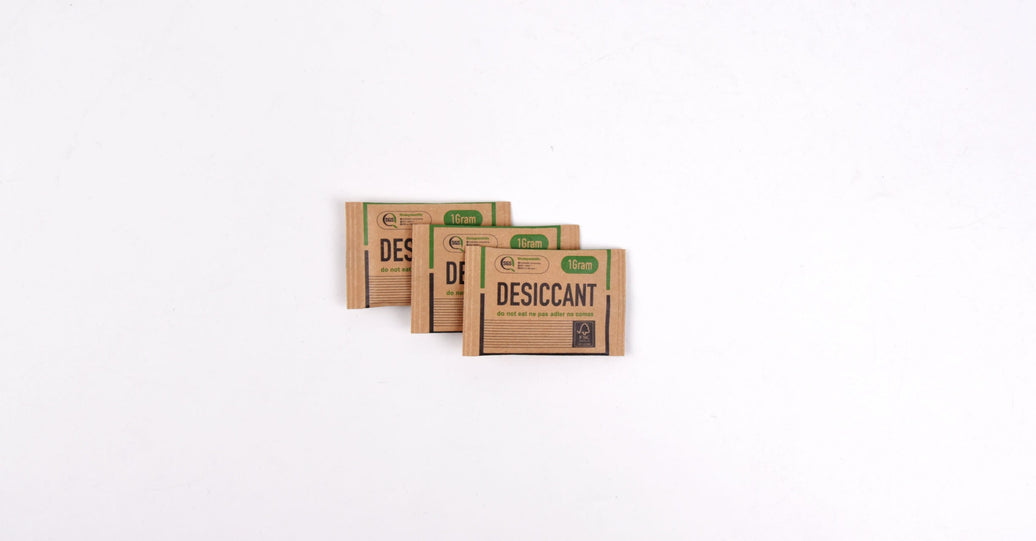
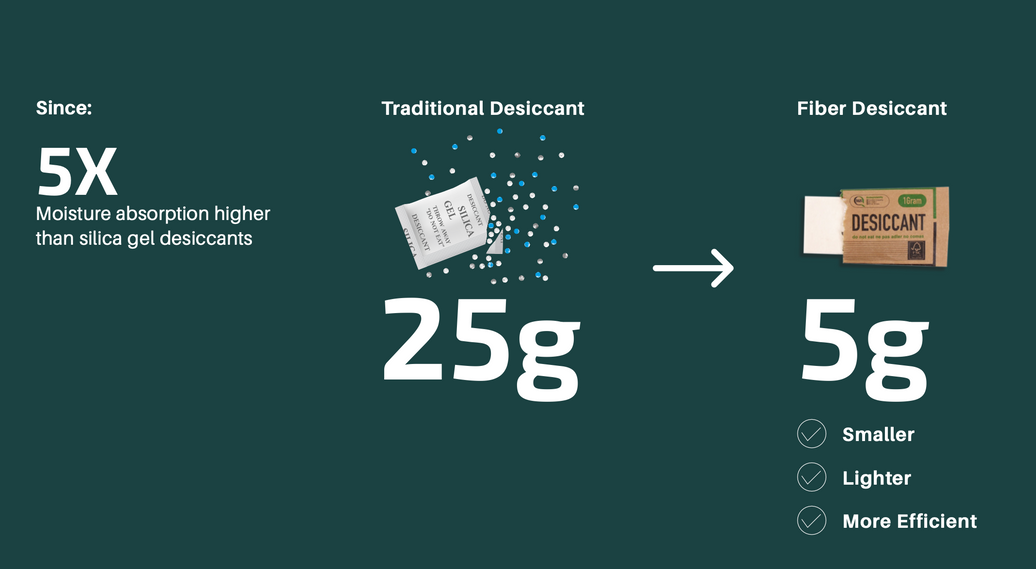
Capacity at real humidity. Fiber desiccant absorbs over 70% of its own weight at 25°C and RH 90% — roughly 5x conventional silica gel under the same conditions. That margin is what keeps protection alive at week four of a daily-opened can. About 25 g protects a standard 0.10–0.34 m³ carton; per-package math is in the dosage guide.
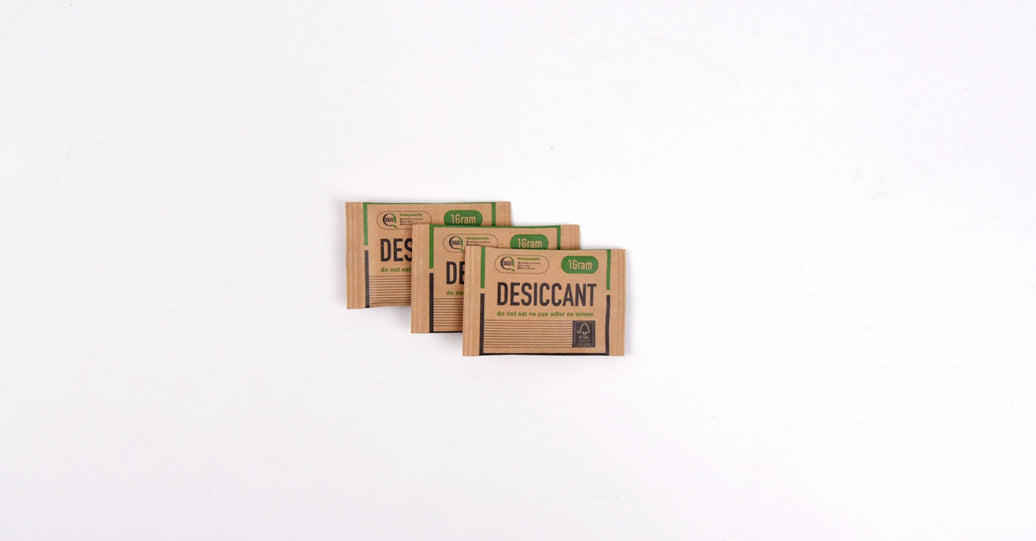
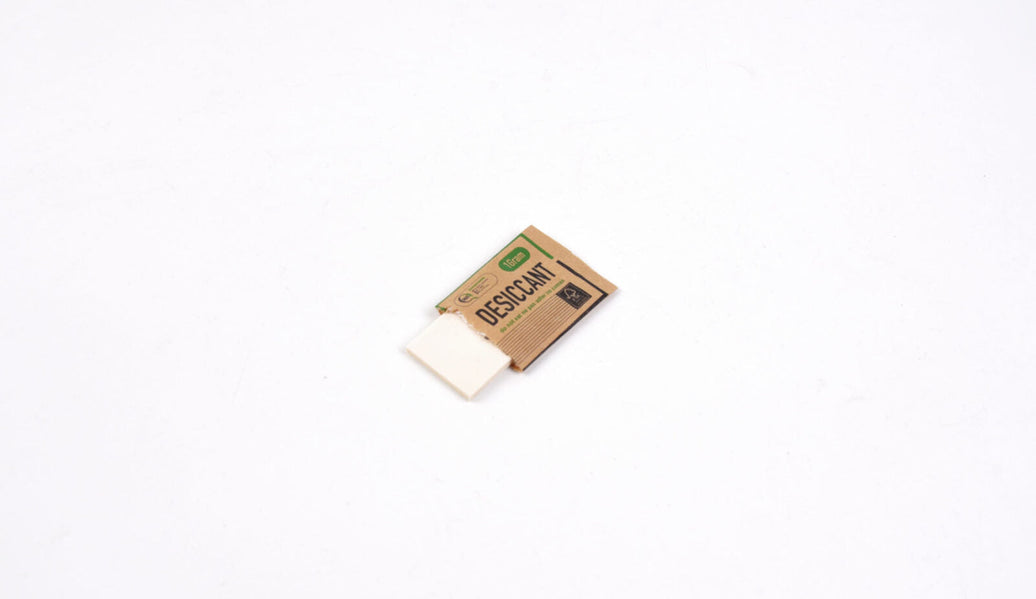
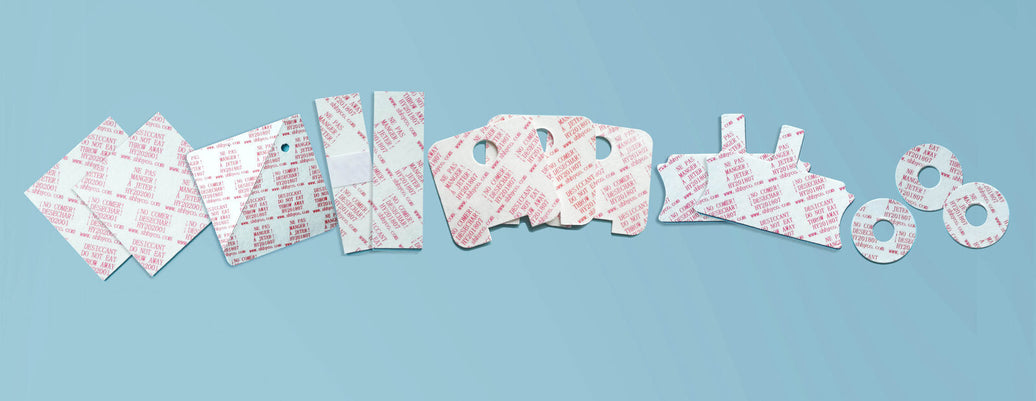
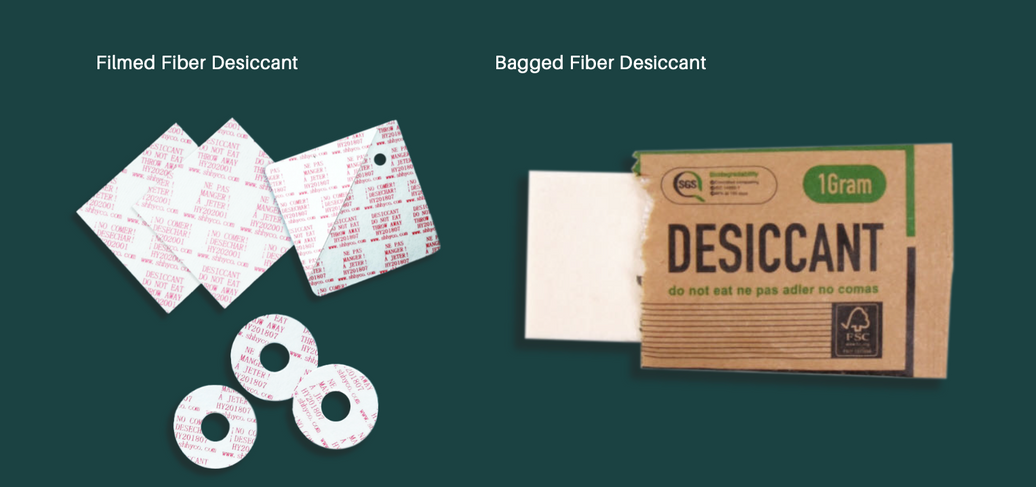
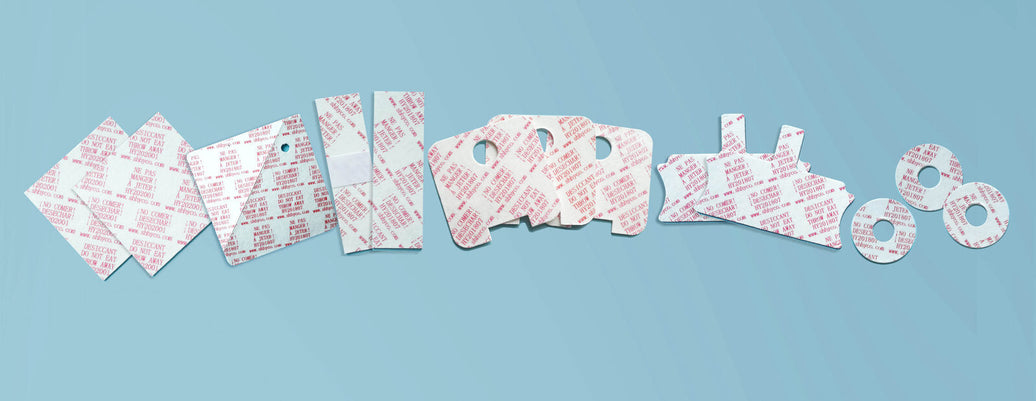
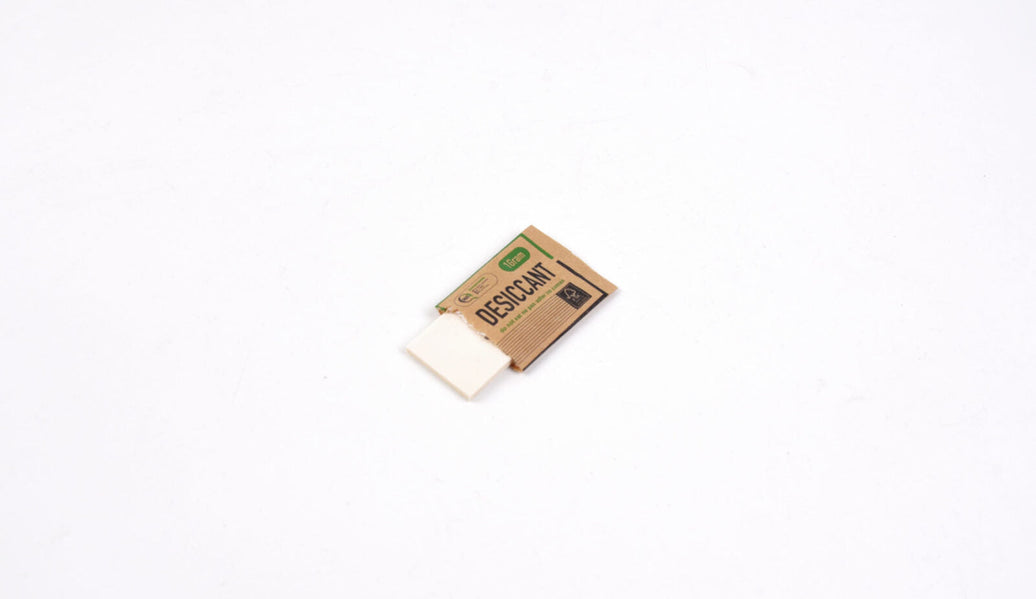
Format by package. For bulk bags and liners: high-capacity fiber sachets (25–60 g, custom weights) inside the liner, dust-free by construction. For retail cans and tubs: a film desiccant card under the lid — a rigid card, stiffer than some credit cards, wrapped in paper rather than plastic, die-cut to the can diameter so it sits flat, stays visible, and lifts out in one motion. It can be printed with a full-color logo in the center. Details in the film desiccant guide.
Foreign-matter discipline. In a category where the end consumer may be an infant, a bead-filled sachet in a scooped powder is an unacceptable failure mode. Fiber desiccant contains no loose beads or fines — the risk profile of loose-fill formats is covered in loose-fill desiccant risks.
Documentation for dairy and formula QA
Infant formula manufacturing runs under 21 CFR Part 106/107, and dairy plants under FSMA preventive controls — packaging components need files, not promises. ATMOSIScience fiber desiccant is manufactured under SGS ISO 9001 (Cert. CN05/31171), with full raw-material disclosure (lignocellulose fiber, calcium chloride, PLA, food-grade paper, water) and compostability under ASTM D6400 and EN 13432. The supplier-vetting checklist is in our B2B buyer's guide.
Frequently asked questions
Why does milk powder cake even in unopened cans?
Headspace moisture sealed in at filling plus slow permeation is often enough to push amorphous lactose past its sticky point during warm distribution — no opening required.
Is a desiccant acceptable inside infant formula packaging?
The desiccant must be food-contact documented, dust-free, and formatted so it cannot fragment or hide in the powder. A rigid, paper-wrapped film card meets those conditions; verification belongs in the 21 CFR Part 106 packaging file.
What about nitrogen-flushed cans?
Nitrogen flushing displaces oxygen, not water vapor — and its protection ends at first opening. Desiccant and flushing solve different problems; see our comparison of desiccant vs. oxygen absorbers vs. nitrogen flush.
How much desiccant does a 25 kg bag need?
It depends on liner type, storage climate, and rotation time. Our team runs the calculation against your spec as part of a quote.
Keep the scoop moving from first opening to last
ATMOSIScience supplies food-grade fiber desiccant in bulk sachets and printable film cards at B2B scale, with the ISO 9001 and compostability documentation dairy QA requires.
Test it against your own powder first. Order the Fiber Desiccant, or request bulk pricing and certificates through our desiccant solutions page or contact our team.
Related reading: Why Powders Cake · Desiccant for Baking Mixes · Desiccant for Powdered Drink Mixes
Get a desiccant spec & bulk quote for your dairy powder
Tell us your powder, package format, and distribution conditions — our team responds with a capacity calculation, format recommendation, certificates, and bulk pricing.