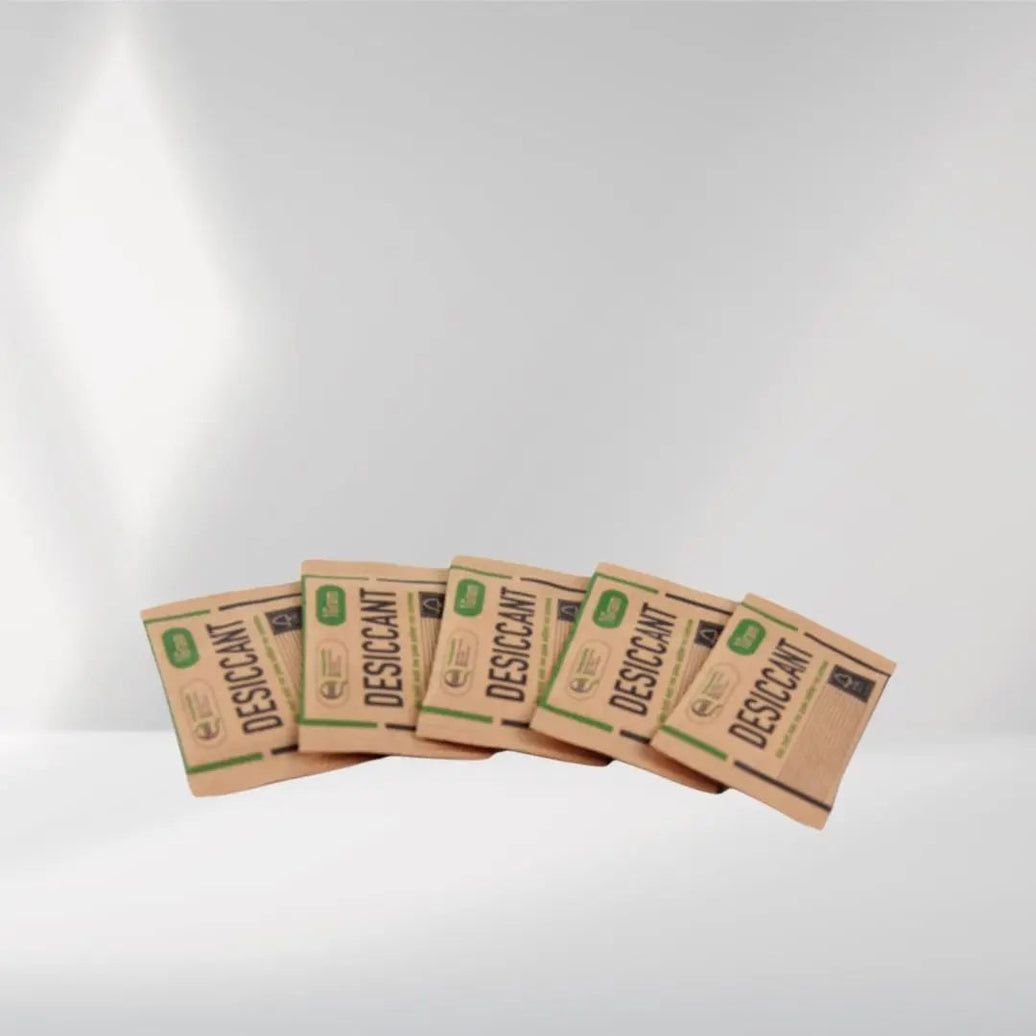
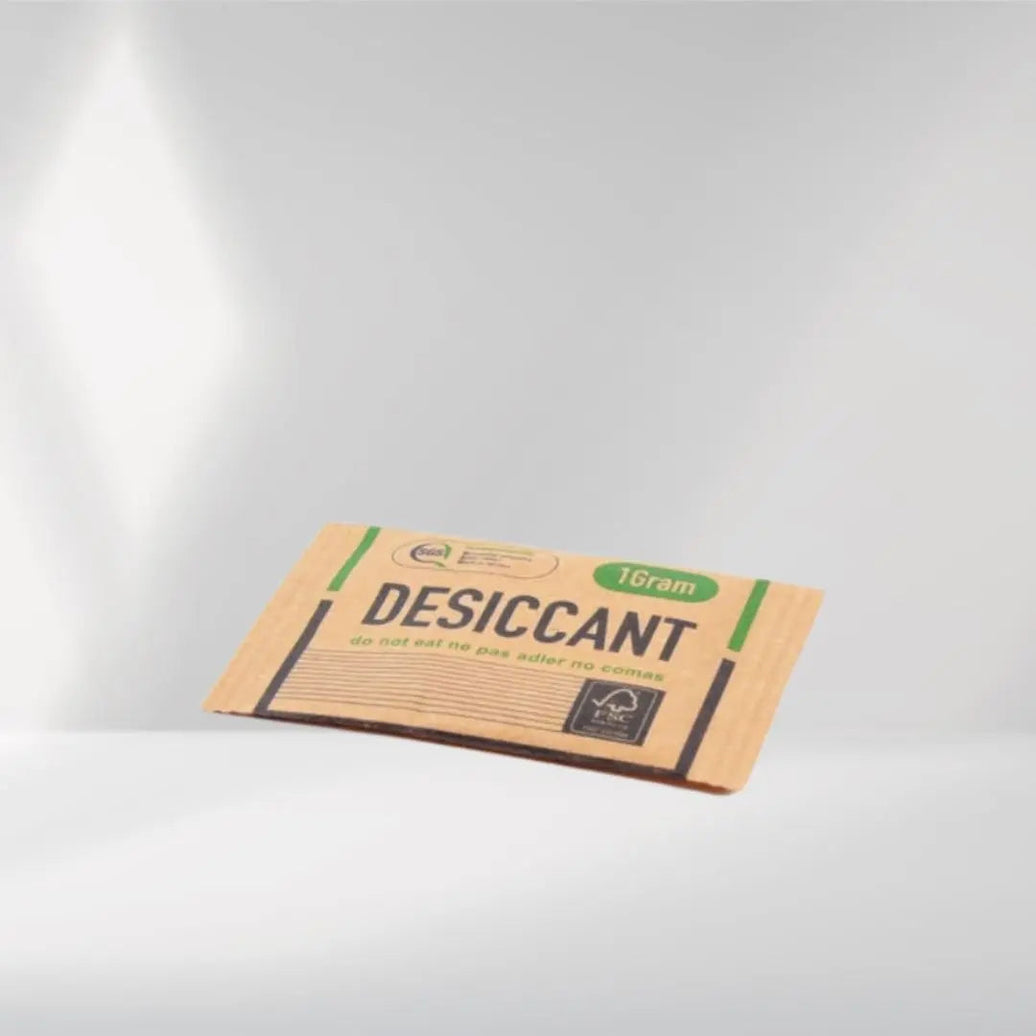
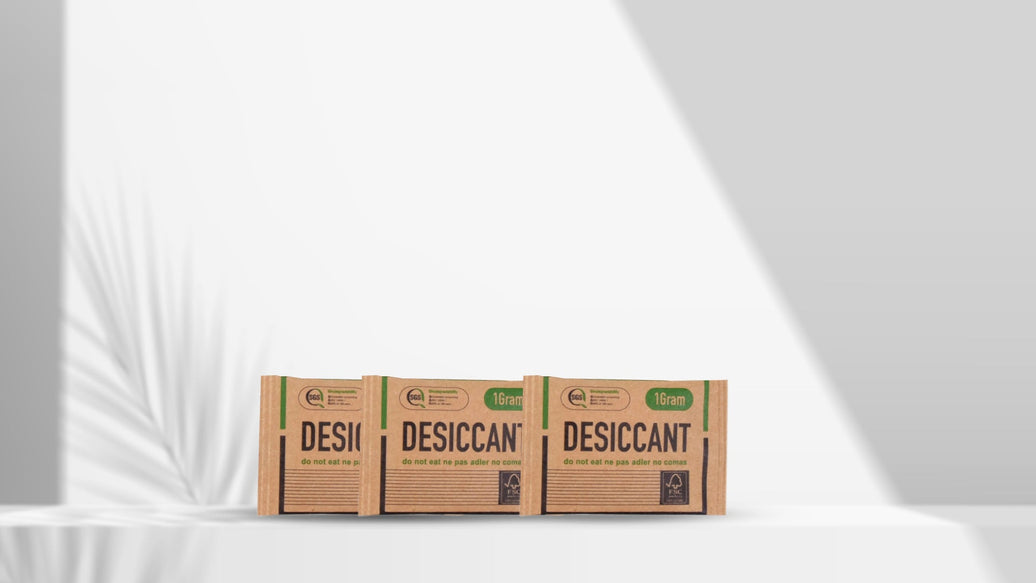
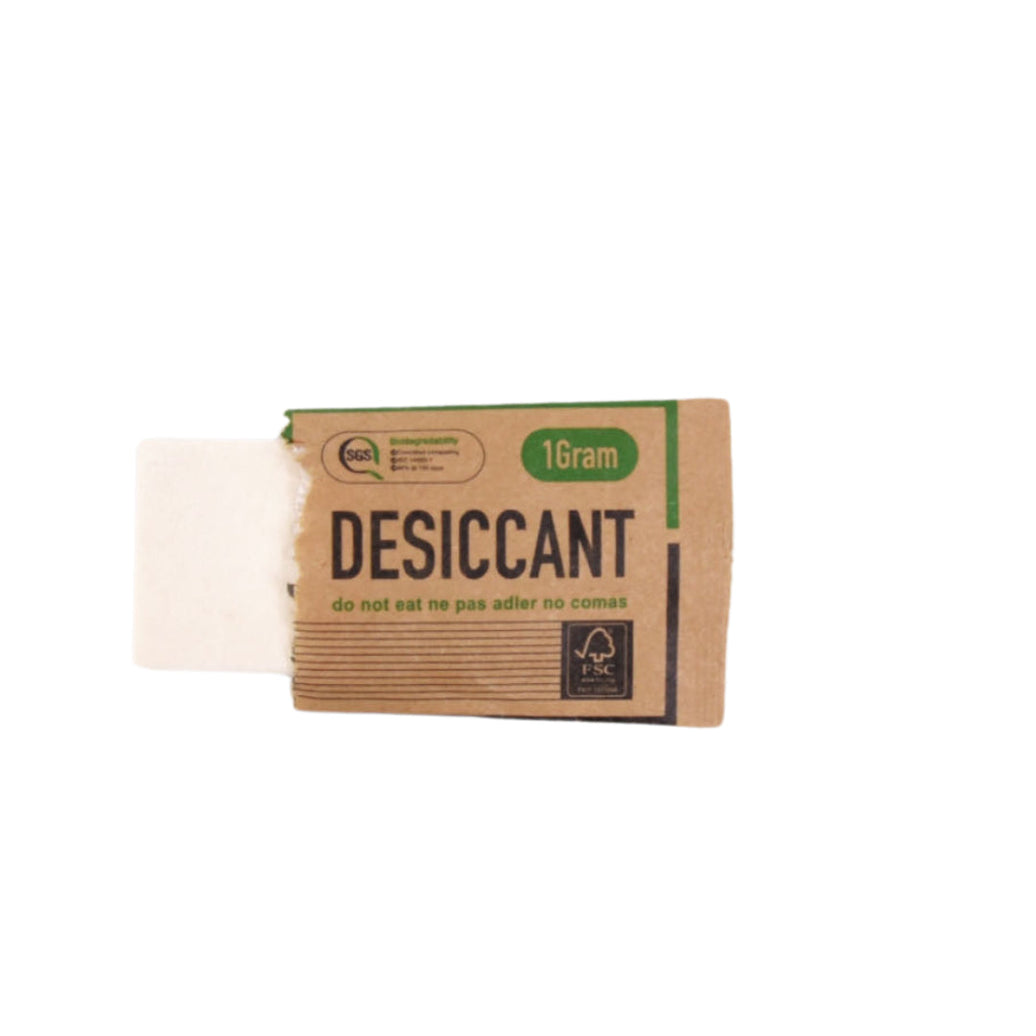
Two powders with identical moisture content can have completely different shelf lives. The reason is that stability is not governed by how much water a powder contains, but by how available that water is to drive reactions — a property measured as water activity (aw). Any QA team writing a shelf-life spec for a powder should be specifying and testing water activity, not just percent moisture. This guide explains the difference and how it connects to desiccant selection.
Moisture content vs. water activity
Moisture content is the total water in the powder, by weight. Water activity is the ratio of the water vapor pressure of the powder to that of pure water at the same temperature — a 0 to 1 scale that reflects the free, reactive water available to microbes and chemical reactions. Two powders can share a moisture content while one binds its water tightly (low aw, stable) and the other holds it loosely (high aw, reactive). Water activity, not moisture content, predicts caking, microbial growth, and degradation.
The link between water activity and headspace RH
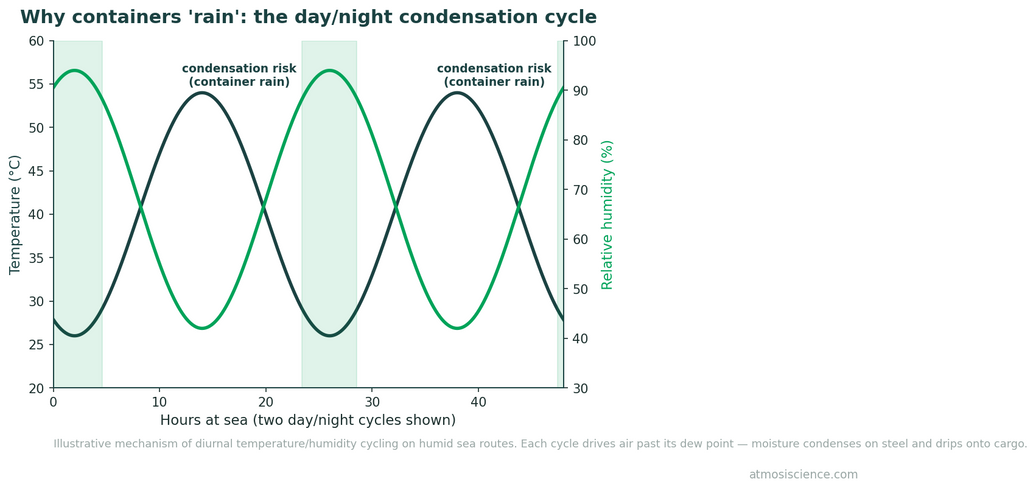
At equilibrium, a powder’s water activity equals the relative humidity of the air around it, divided by 100 — the equilibrium relative humidity (ERH). An aw of 0.45 means the powder will sit in balance with 45% RH air. This is the bridge to packaging: control the headspace RH and you control the powder’s equilibrium water activity. A desiccant lowers headspace RH, pulling the powder toward a lower, safer aw — which is exactly why in-pack desiccant is a stability tool, not just an anti-clump accessory.
Why the thresholds matter
Different failure modes switch on at different water-activity levels. Microbial growth largely stops below about aw 0.60, with molds and osmophilic yeasts possible above roughly 0.60–0.70. Many chemical reactions — lipid oxidation, non-enzymatic browning, vitamin loss — accelerate as aw rises through the intermediate range. Caking and deliquescence have their own critical points, above which a powder bridges or dissolves. The practical target for most dry powders is to hold aw low and stable across shelf life; the caking mechanics of crossing that threshold are in our pillar on why powders cake.
How to use water activity to spec a desiccant
1. Measure the powder’s starting aw and identify the threshold you must stay under (microbial, caking, or the most sensitive reaction).
2. Convert that to a target headspace RH — they are the same number, ERH.
3. Size the desiccant to hold headspace under that RH across shelf life and opening frequency, using the volumetric method in our dosage guide.
4. Verify with a re-opening simulation, not just a sealed sample — the protocol is in our sample evaluation guide.
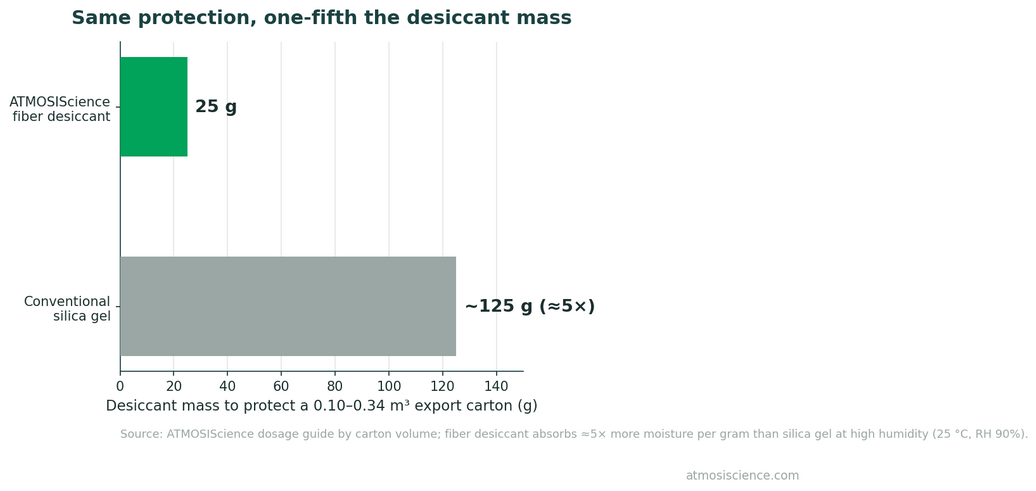
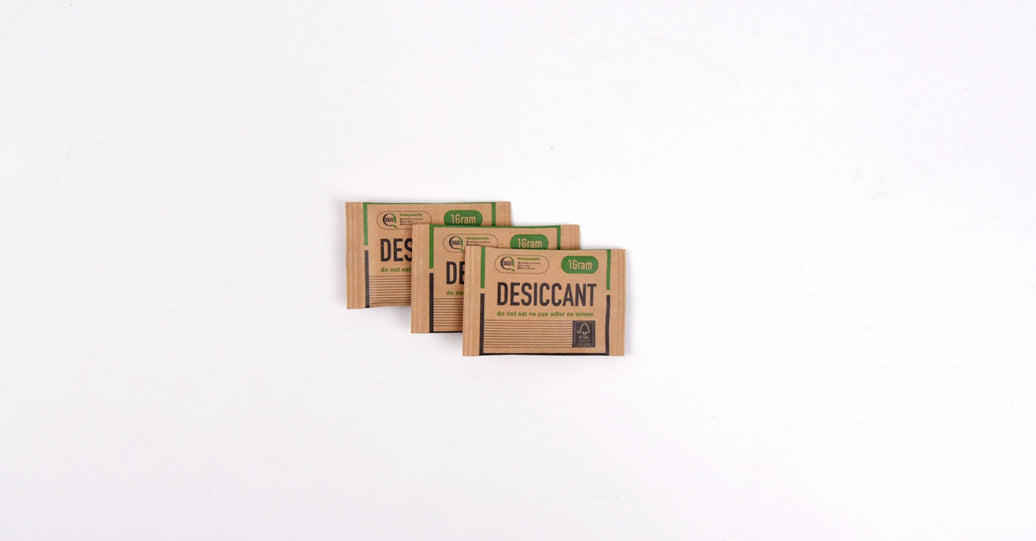
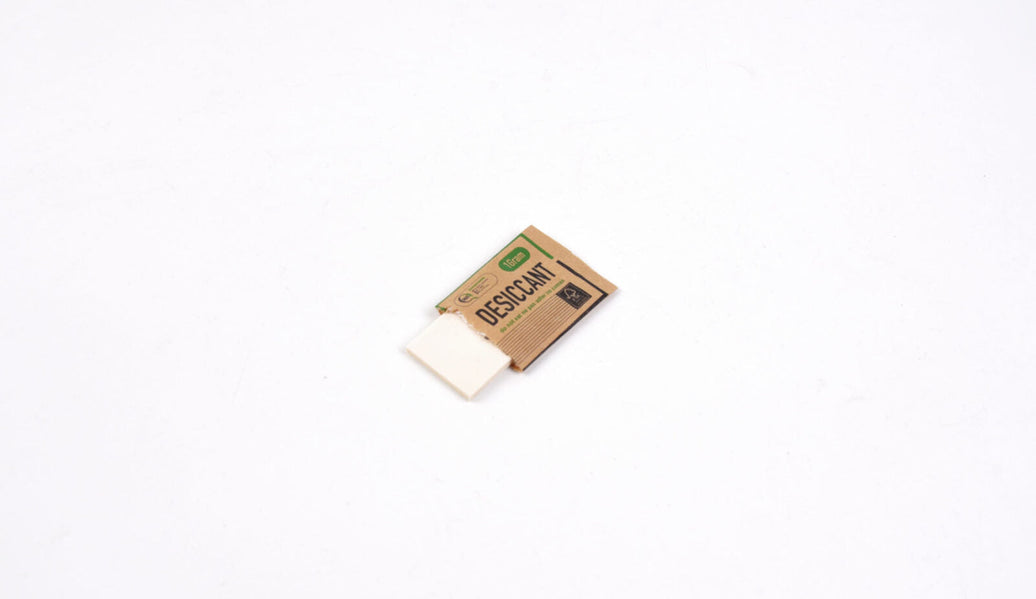
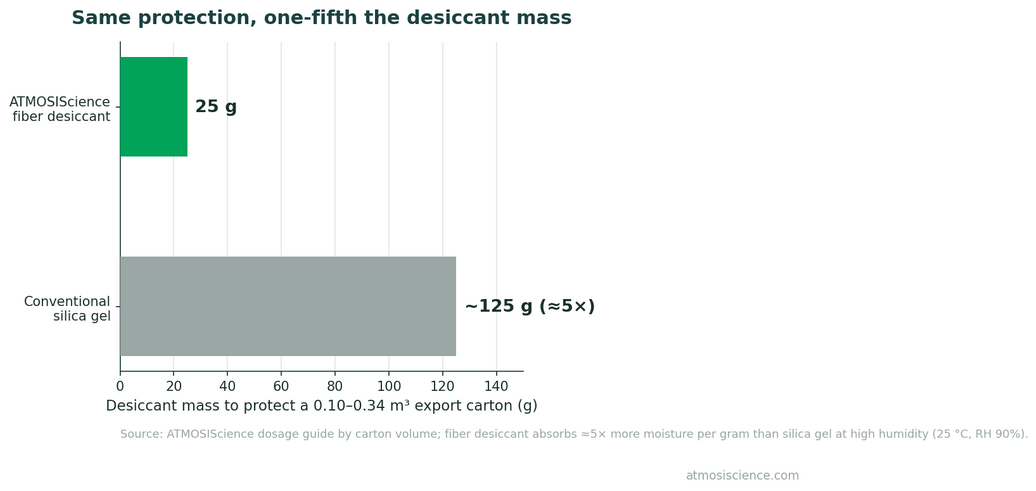
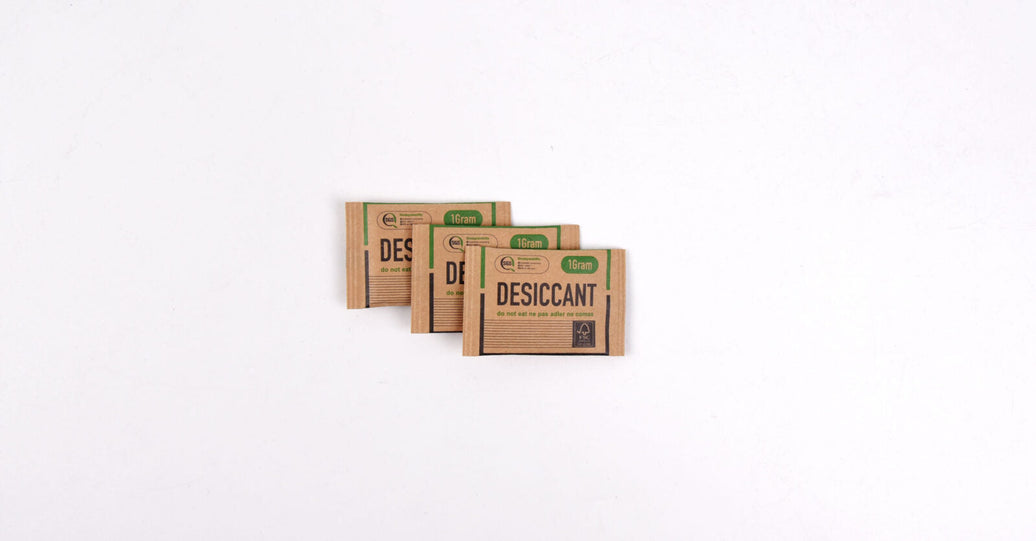
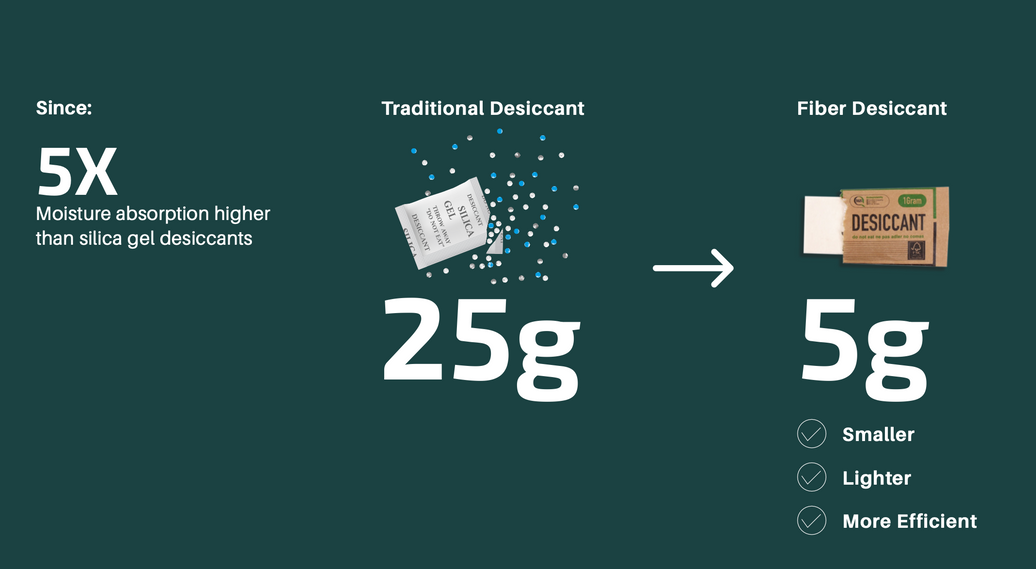
Capacity decides how long the target holds: fiber desiccant absorbs over 70% of its weight at 25°C and 90% RH versus roughly 30% for silica gel, so it keeps aw under threshold through more openings. Where a product needs a specific band rather than the driest possible state, two-way fiber control targets it — the mechanism is in how fiber desiccant works.
Frequently asked questions
Should our spec use moisture content or water activity?
Both have a place, but water activity predicts stability and microbial safety far better — specify and test aw for shelf-life claims.
Does a desiccant change water activity or just RH?
By lowering headspace RH it pulls the powder toward a lower equilibrium aw over time — the two are linked through ERH.
Can a powder be over-dried?
Some products lose flow, develop static, or degrade if taken too dry. Two-way desiccant can hold a target band instead of driving aw to zero.
Spec to a water-activity target
ATMOSIScience helps convert your water-activity target into a desiccant spec sized to your pack and shelf life. Explore ATMOSIScience desiccant solutions, request a sample of the Fiber Desiccant, or contact our team for a sized spec and a bulk quote.
Related reading: Reading a Moisture Sorption Isotherm · Why Powders Cake · Sample Evaluation Protocol
Convert your water-activity target into a desiccant spec
Tell us your powder’s target aw or RH, container, and shelf life — our team returns a sized desiccant recommendation and a verification method.