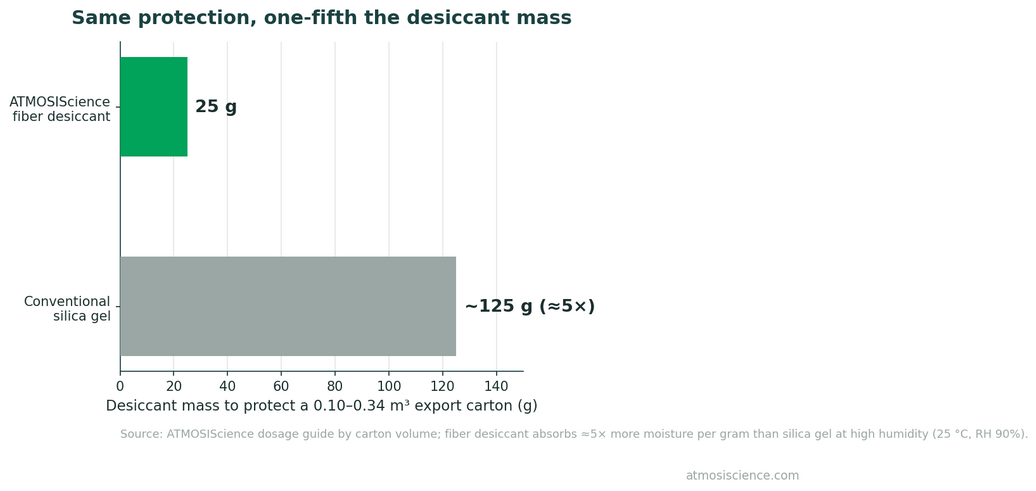
Switching desiccant usually sounds like a procurement headache: requalify the material, redesign the insert, retrain the line. With fiber desiccant the switch is unusually simple, because it replaces silica gel essentially one-for-one — and almost always with far less mass. For most carton applications you can use roughly one-third to one-fifth of the silica-gel weight and still achieve equivalent or better moisture protection.
This guide shows how to replace silica gel with fiber desiccant, how to size the new dose, and where the savings land.

The capacity math that drives the saving
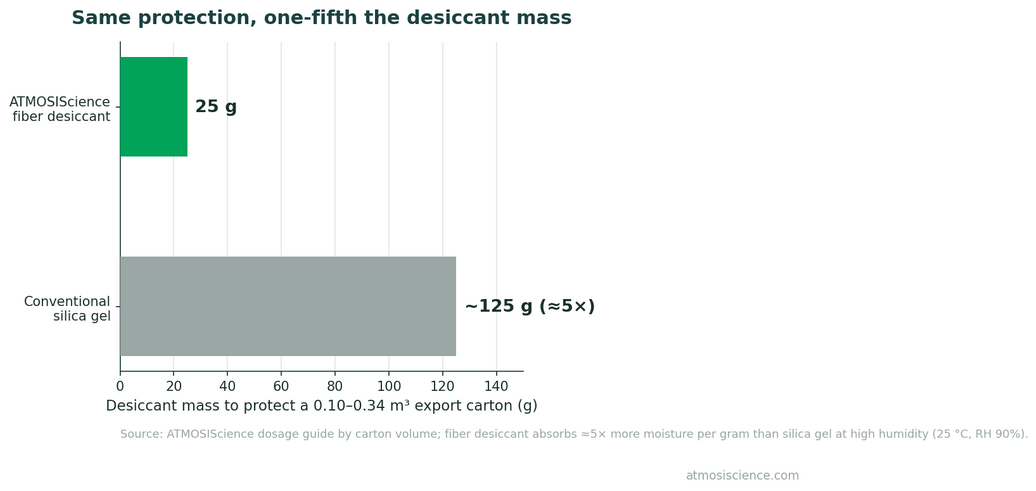
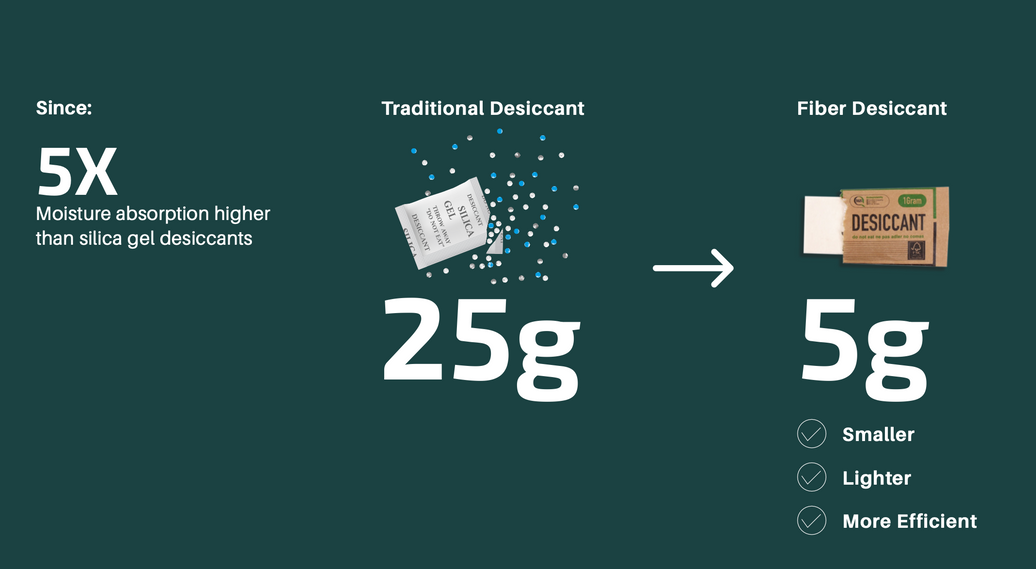
At RH90% / 25°C, one kilogram of patented fiber absorbs about 1,500 ml of water versus around 300 ml for silica gel and clay — roughly 5x the capacity per unit mass. The bagged FPH-1 format reaches over 100% of its own weight at saturation, against silica gel's ~30%.
The practical translation is direct: to protect a standard 0.10–0.34 m³ carton you need about 25 g of fiber desiccant, where a silica-gel or clay program would require a much larger mass for the same moisture capture. A common before/after is a 25 g silica-gel charge replaced by roughly 5 g of fiber.
Where the savings actually come from
The headline is material cost, but the bigger wins are downstream. Less desiccant mass means lighter parcels, and freight is billed by weight — multiplied across every unit, the freight saving often dwarfs the desiccant line item. Smaller inserts free up space inside the package, sometimes allowing a smaller box. Fewer or smaller sachets handle faster on the line. And under EPR regimes, less packaging material means a lower fee base. The same switch reduces four costs at once.
How to size the replacement dose
Dose the fiber by enclosed carton volume rather than by matching the old silica-gel weight:
| Enclosed volume (m³) | Fiber desiccant (g) |
|---|---|
| 0.01 | 1 |
| 0.049 | 5 |
| 0.099 | 10 |
| 0.10 – 0.34 | 25 |
| 0.35 – 0.59 | 50 |
| 0.60 – 0.79 | 75 |
| 0.80 – 1.0 | 100 |
Then validate: place a humidity indicator card inside a trial package under real or simulated distribution conditions and confirm it holds the target RH. That step turns the theoretical reduction into a proven spec before you scale.
What stays the same — and what gets better
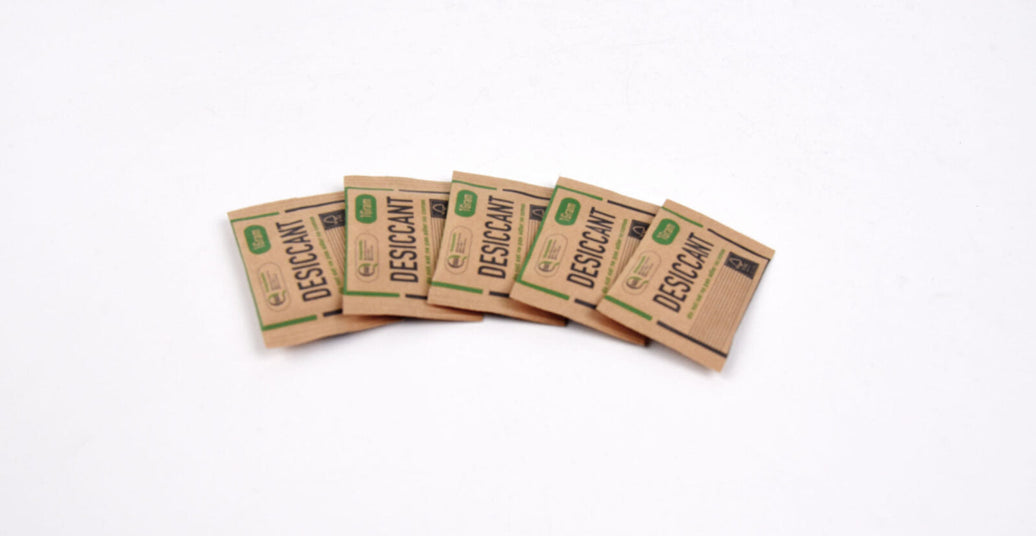
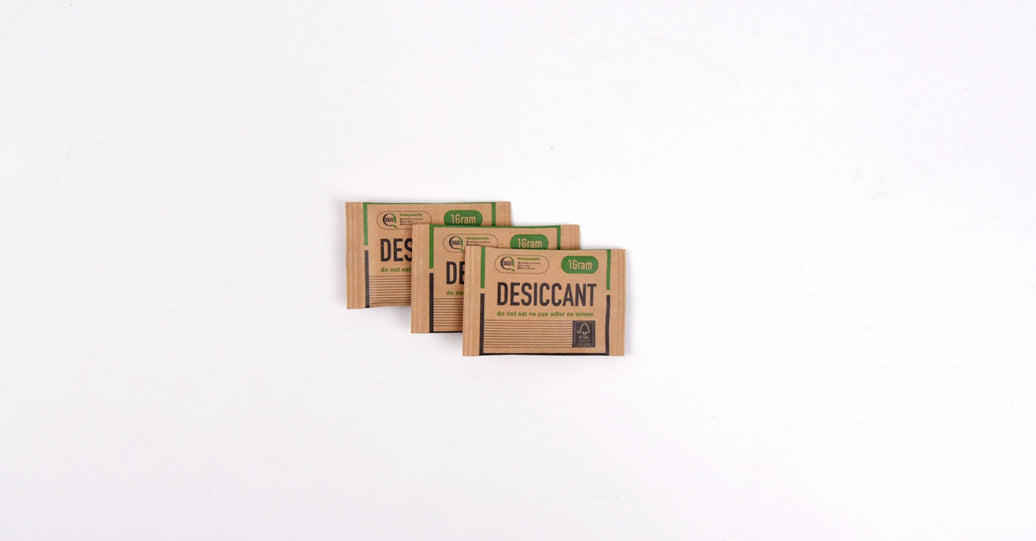
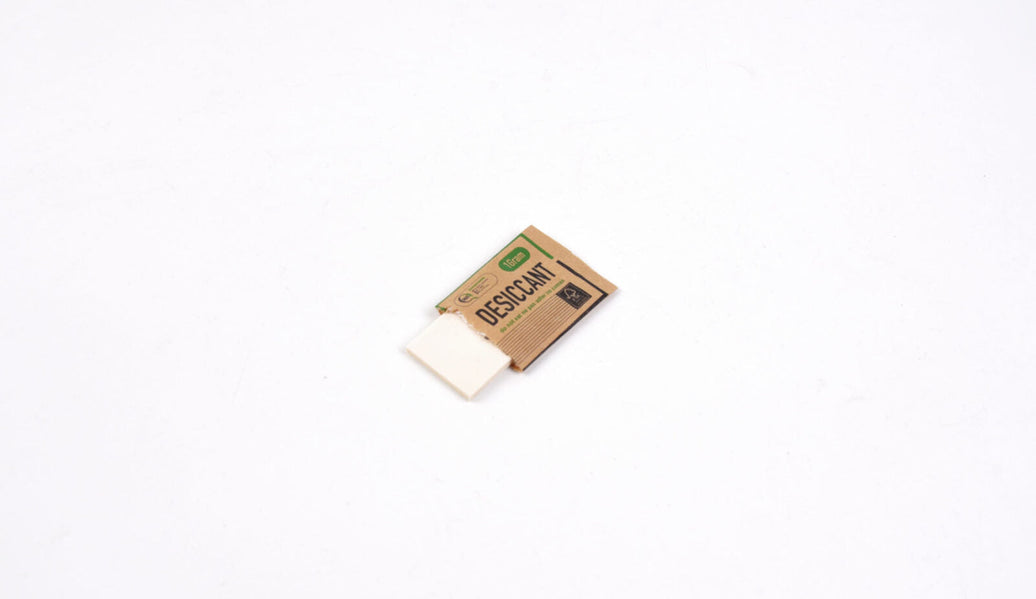
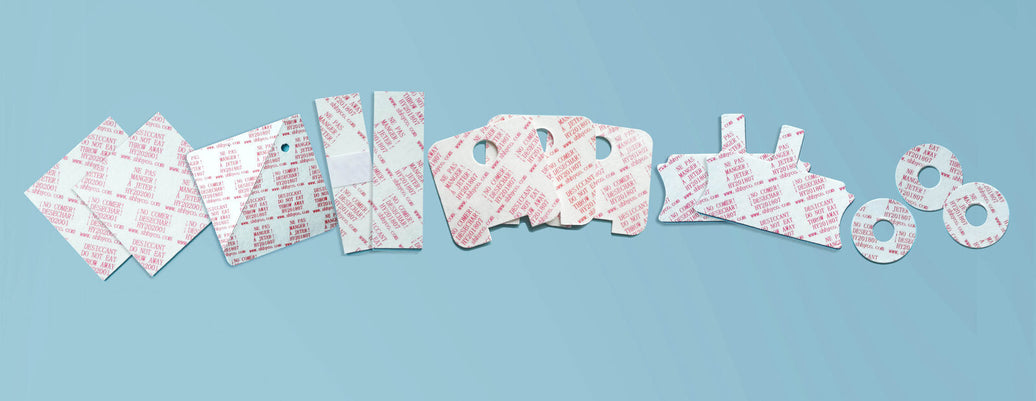
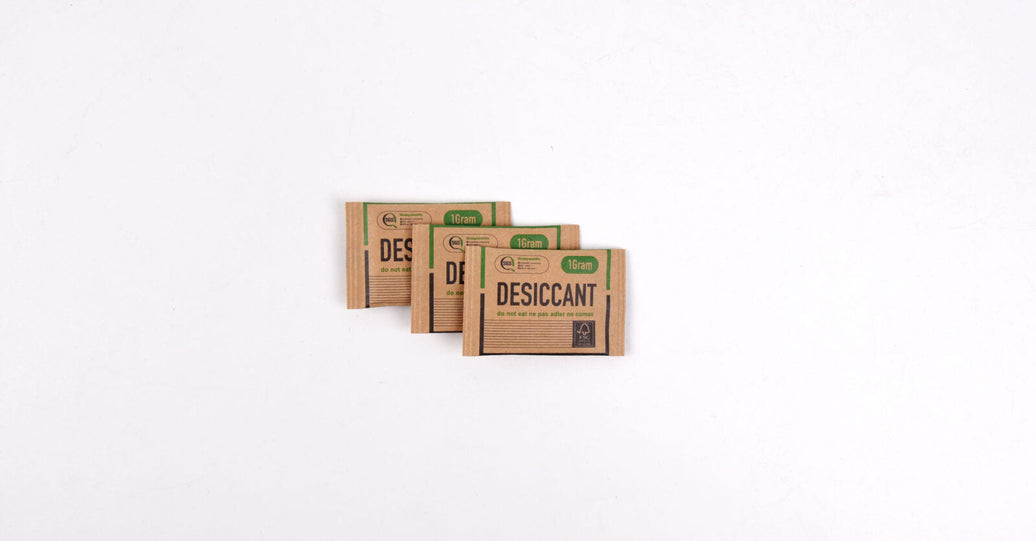
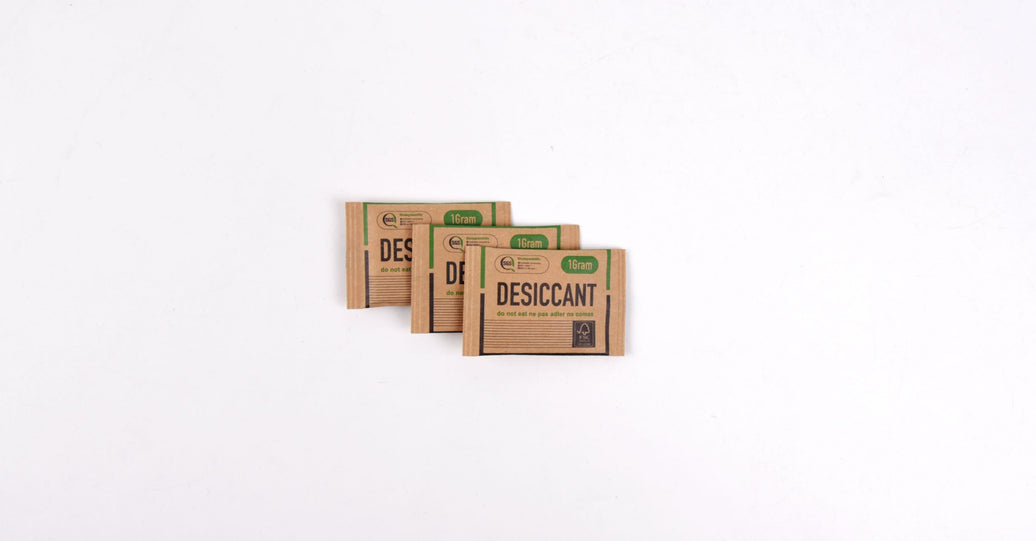
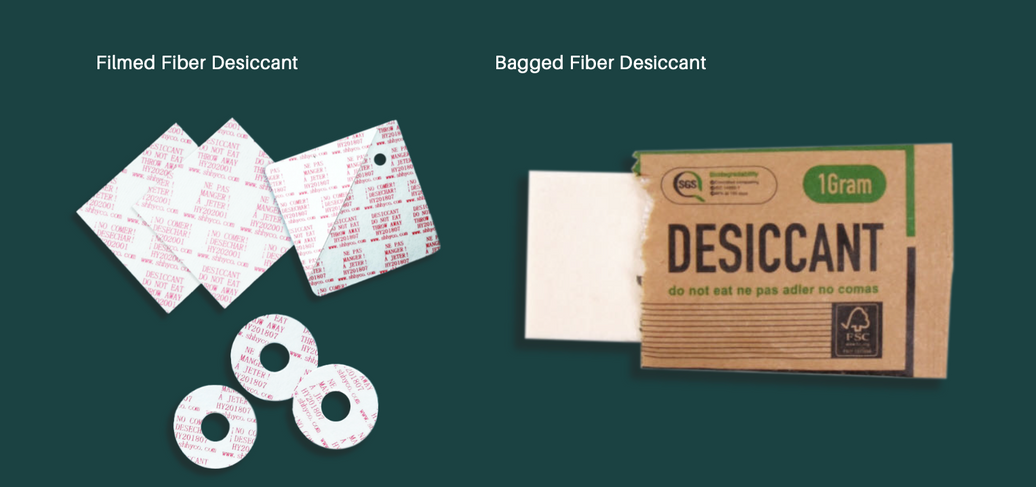
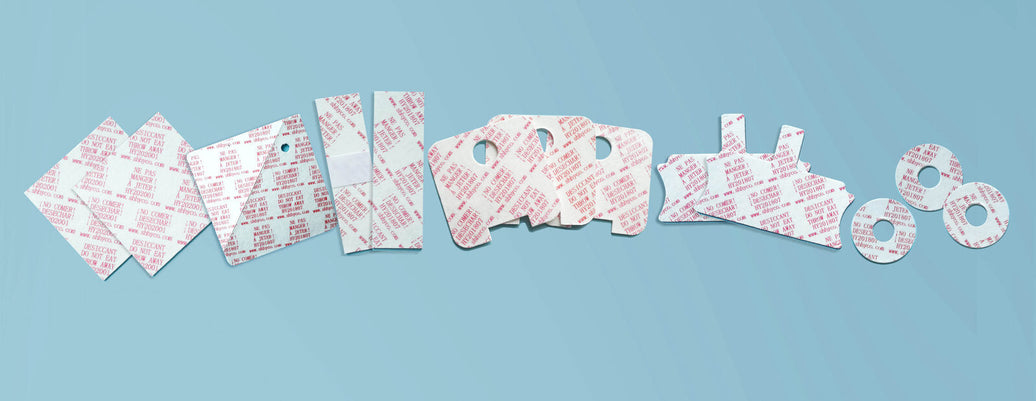
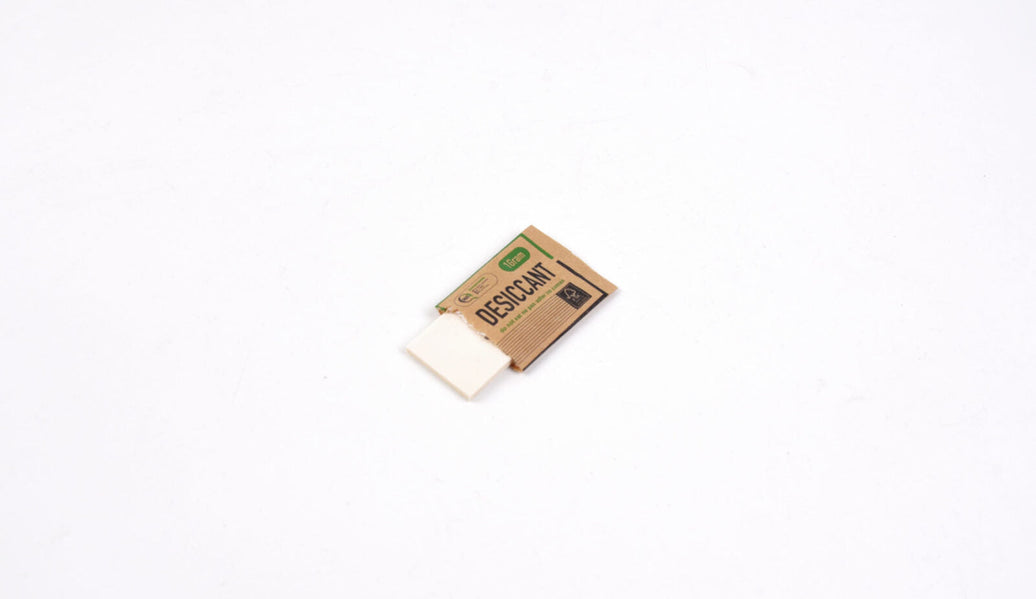
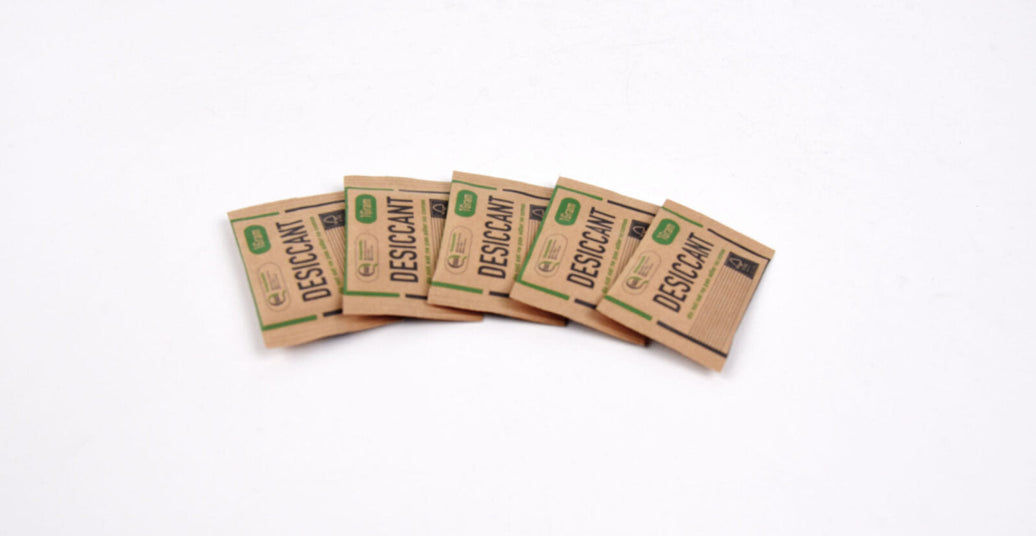
The format range covers existing geometries: bagged sachets (1 g to 60 g and custom) drop into the same cavities, and die-cut filmed pads fit bottle caps and pouches. What gets better is everything around the moisture job — the fiber is dust-free and non-leaking (no bead dust or brine), food-contact documented under FDA 21CFR175.300, biodegradable, and air-dry regenerable. The switch is a downgrade in nothing and an upgrade in capacity, cleanliness, and compliance.
Frequently asked questions
Can I replace silica gel with fiber desiccant 1-for-1?
Yes, and usually with much less mass — roughly one-third to one-fifth of the silica-gel weight for equivalent protection, because fiber absorbs 3 to 5x more per gram.
How much fiber desiccant replaces 25 g of silica gel?
It depends on the package, but a common replacement is around 5 g of fiber for a 25 g silica-gel charge. Always validate by carton volume and a humidity indicator card.
Where do the savings come from?
Lower material cost, lighter freight (billed by weight), smaller package footprint, faster line handling, and a lower EPR fee base — all from reducing desiccant mass.
Do I need to redesign my packaging?
No. Fiber comes in bagged and die-cut formats that fit existing cavities; only the dose changes.
Run the numbers on your own SKUs
ATMOSIScience supplies fiber desiccant across a full weight range and will help model the mass, freight, and fee savings for your specific cartons.
Request a switch-over analysis and bulk pricing through our desiccant solutions page or contact our team, or test the material with the Fiber Desiccant.
Related reading: The True Cost of Silica Gel · How Much Desiccant Per Package?
Get a desiccant spec & bulk quote for your product
Tell us about your packaging needs, and our sales team will respond with a customized fiber-desiccant solution, supporting certificates and competitive bulk pricing.