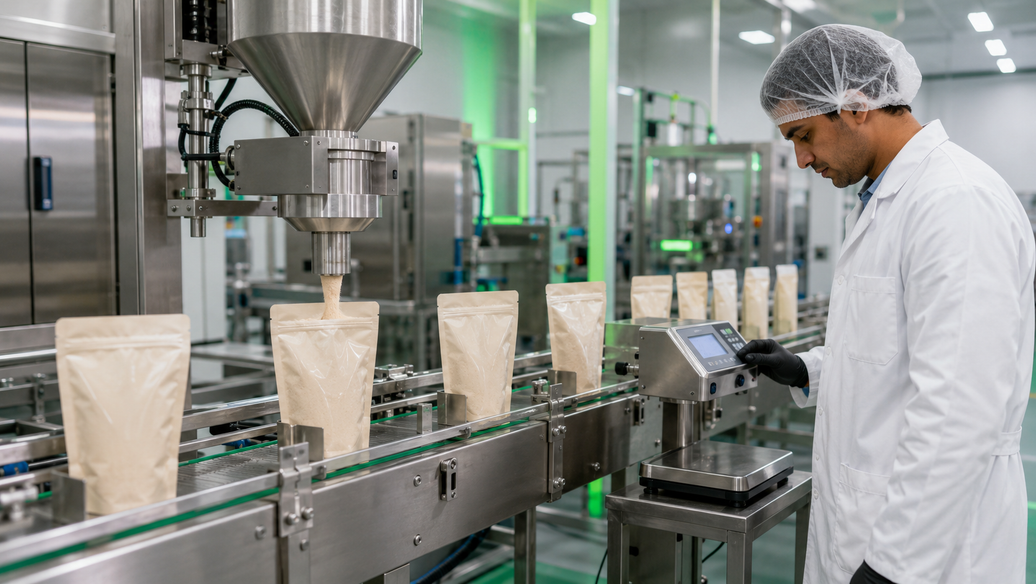
Water-soluble fertilizer has a built-in contradiction: the same solubility that makes it dissolve instantly in the stock tank makes it dissolve slowly in humid air. Nitrate and chloride salts in many blends are deliquescent — above their critical humidity they pull water out of the air and liquefy, then set into the rock-hard mass every grower has chiseled out of a pail. Wettable powders and soluble agrochemicals fail the same way, with a regulatory complication: a caked crop-protection powder no longer doses or disperses as labeled.
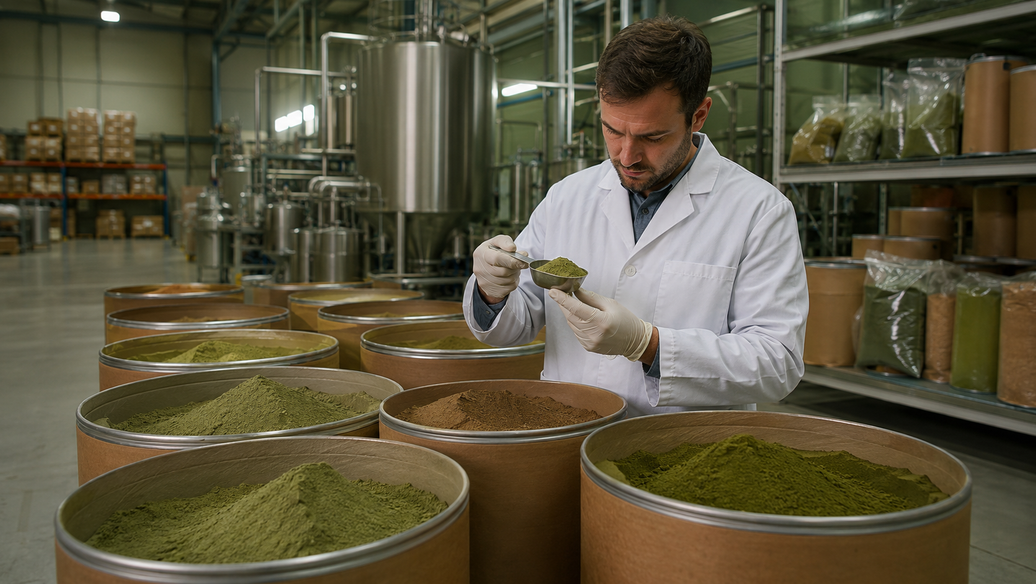
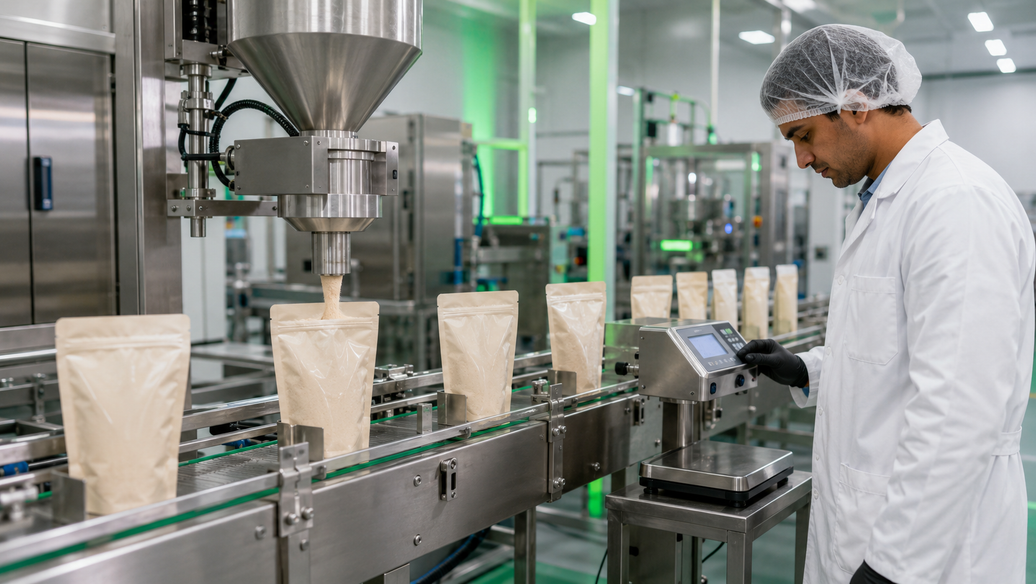
This guide covers moisture control for fertilizer and agrochemical powders — for blenders, formulators, and the hydroponic and lawn-care brands selling into the US retail and grower markets.
Why fertilizer salts cake harder than food powders
Most food powders cake through slow adsorption. Fertilizer salts deliquesce: once headspace humidity crosses the blend's threshold, water uptake accelerates sharply, the salt dissolves at particle surfaces, and the next dry spell recrystallizes it into solid bridges. Blends are worse than single salts — mixed salts typically deliquesce at a lower humidity than any component alone, so an NPK blend can start absorbing in conditions where its ingredients individually would not. The general cascade is in our pillar on why powders cake.
The consequences run past inconvenience:
Dosing drift. A caked water-soluble fertilizer no longer scoops to spec — growers under- or over-dose, and the brand gets the blame for crop results.
Dispersion failure in agrochemicals. Wettable powders and water-dispersible granules that absorbed moisture suspend poorly, clog spray equipment, and deliver uneven coverage — a label-compliance problem, not just a quality one.
Hardened retail stock. A pail that thuds instead of pours is a returned pail, and hydroponic retail lives on repeat purchase.
Speccing protection by format
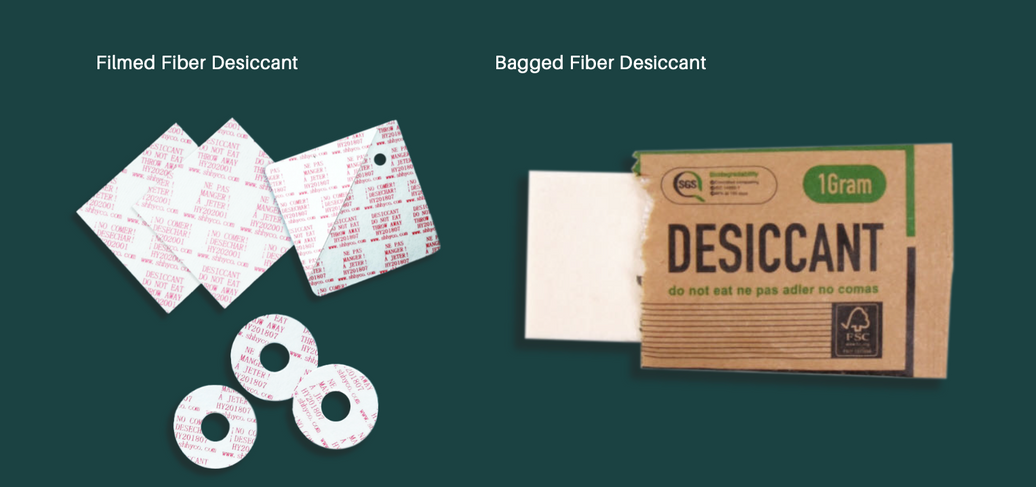
Retail jars, tubs, and pails (hydroponic and lawn-care brands). A film desiccant card under the lid: rigid — stiffer than some credit cards — wrapped in paper rather than plastic, die-cut to the container diameter so it sits flat above the powder and lifts out before mixing. The center prints with a full-color logo. Specs and formats in the film desiccant guide.
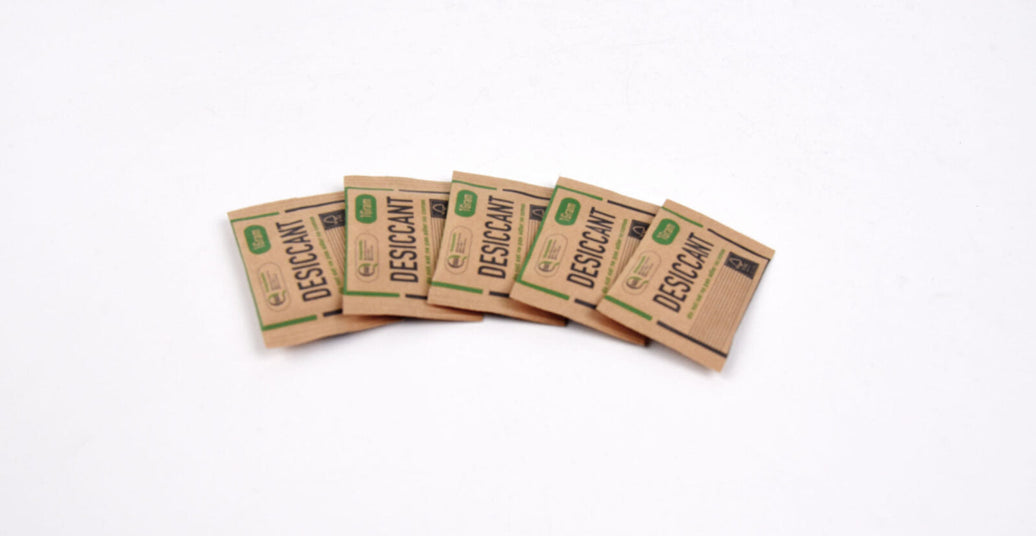
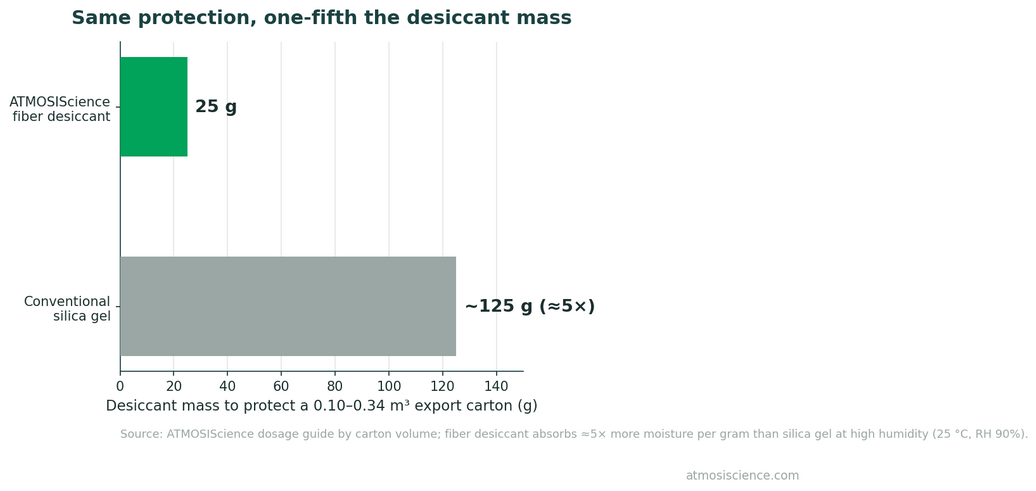
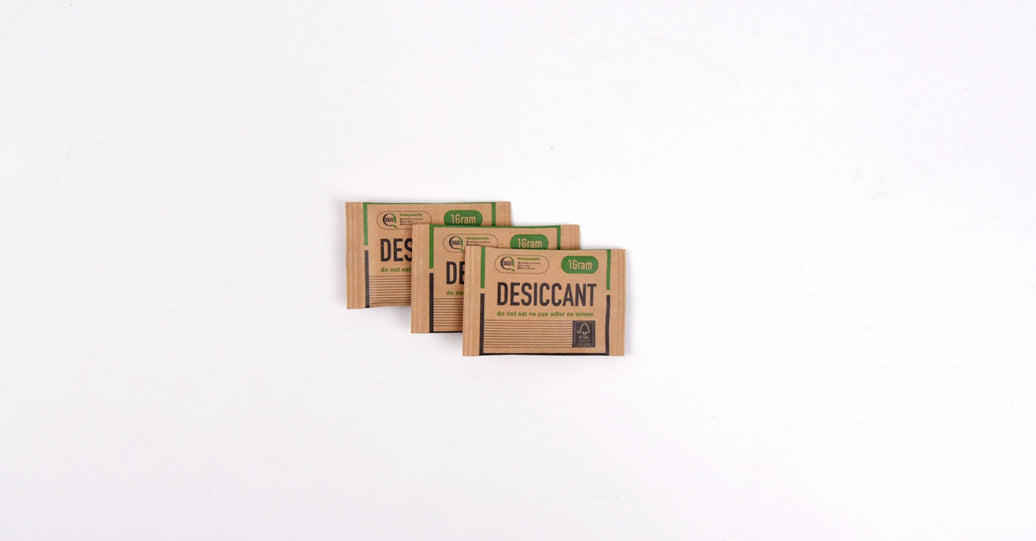
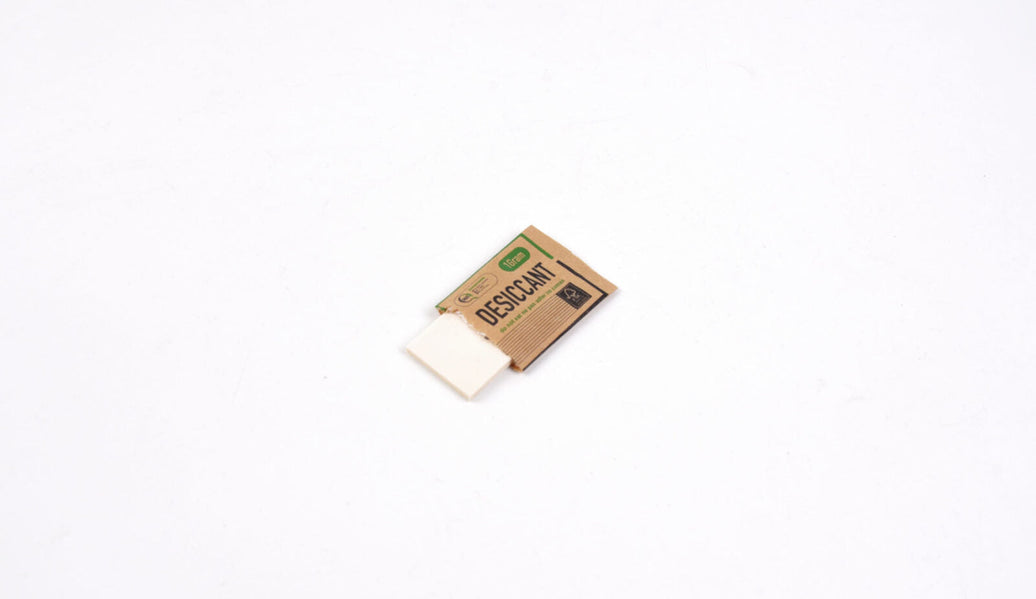
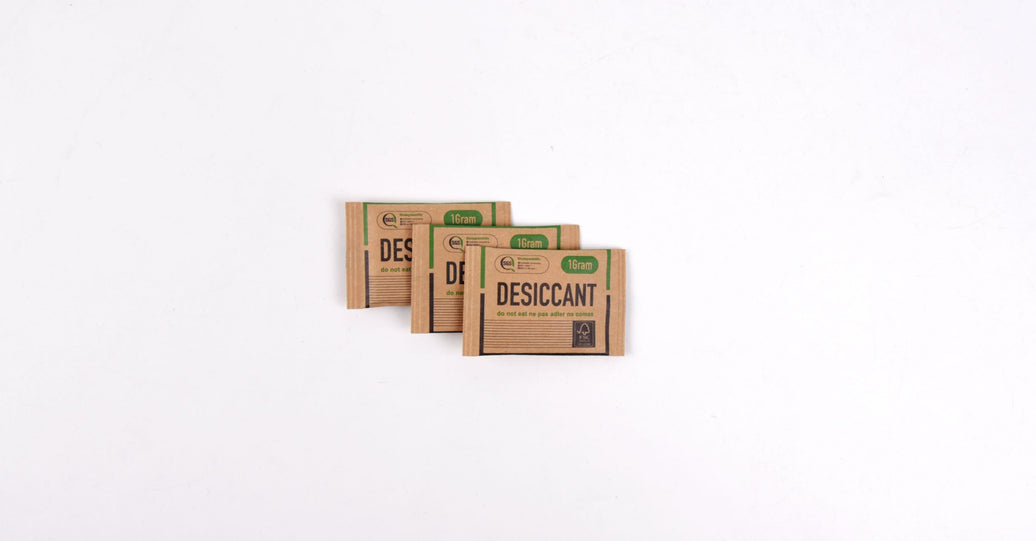
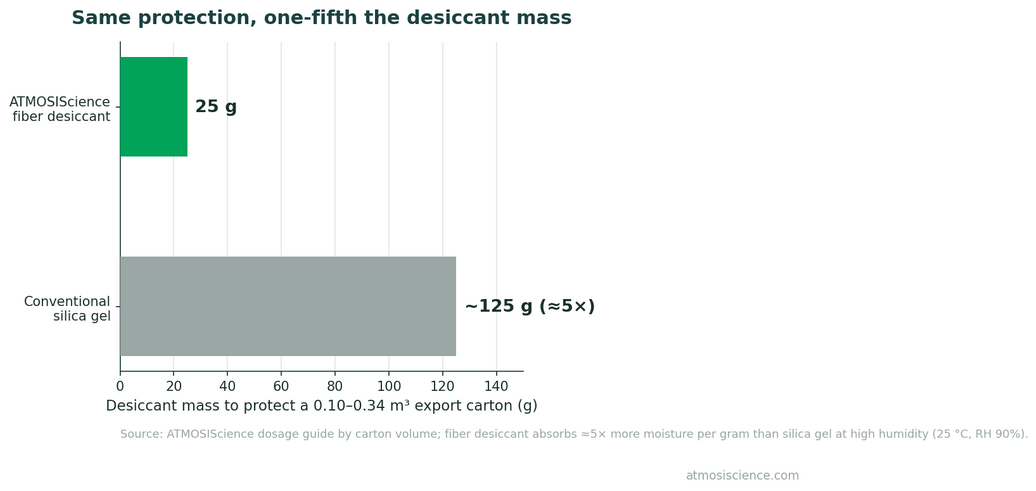
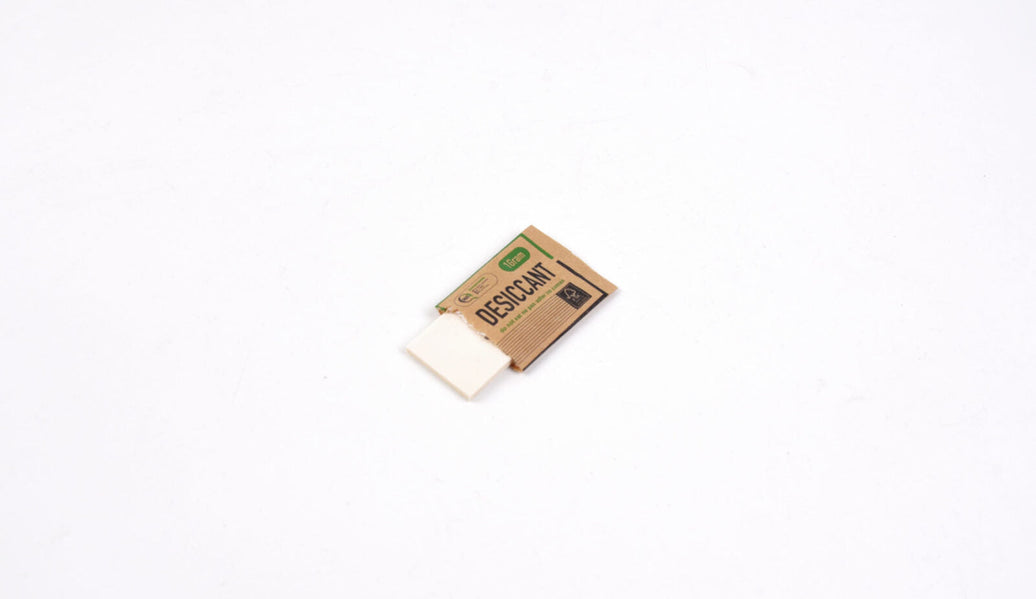
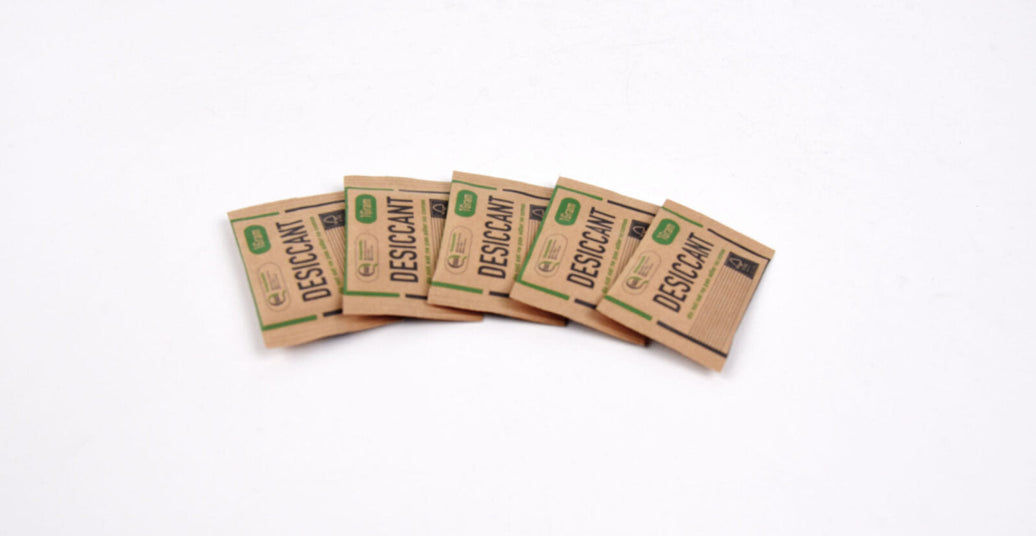
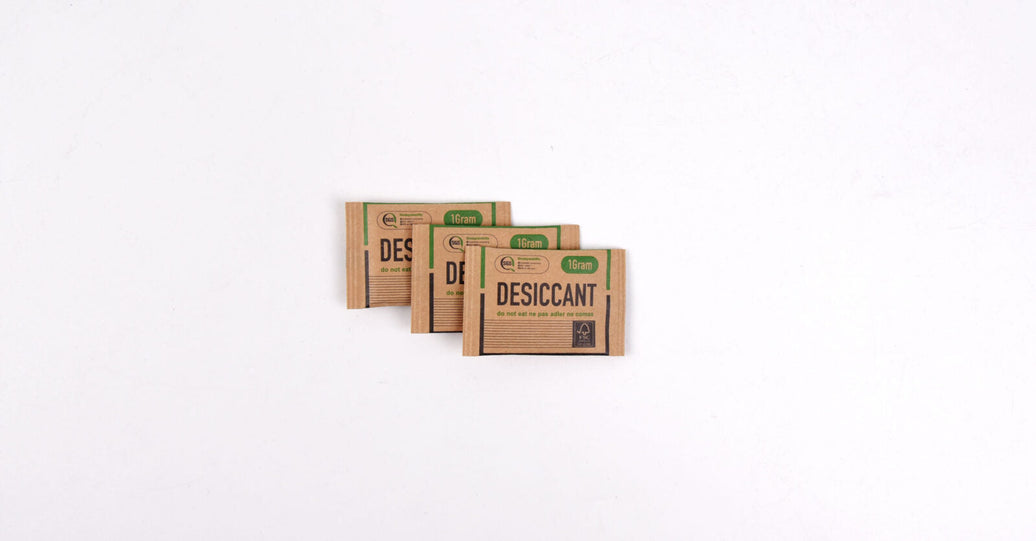
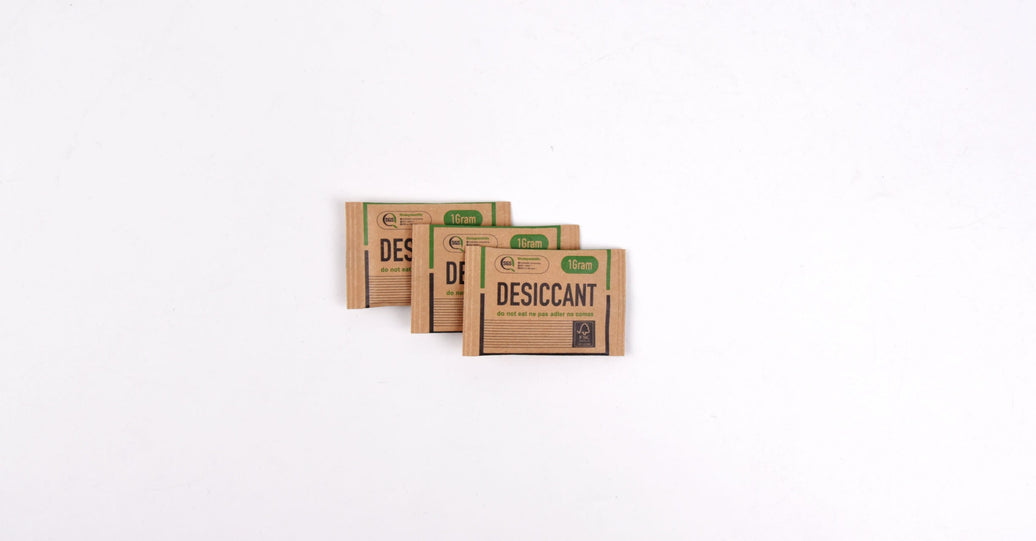
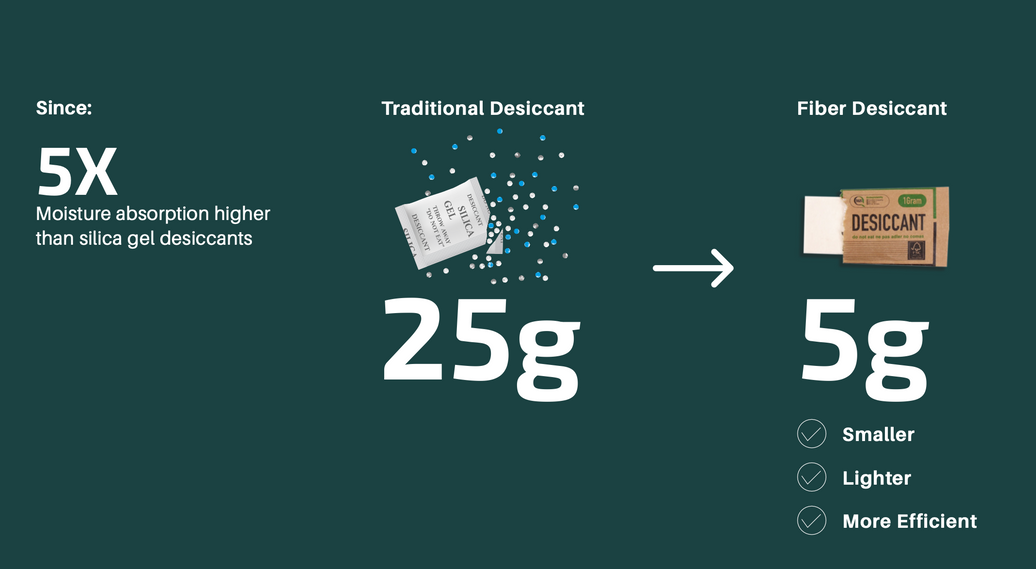
Resealable pouches. A fiber sachet sized to headspace and reopening frequency — grow-cycle products are opened repeatedly across a season, so capacity through use life is the spec that matters. Fiber desiccant absorbs over 70% of its own weight at 25°C and RH 90%, roughly 5x conventional silica gel under identical conditions.
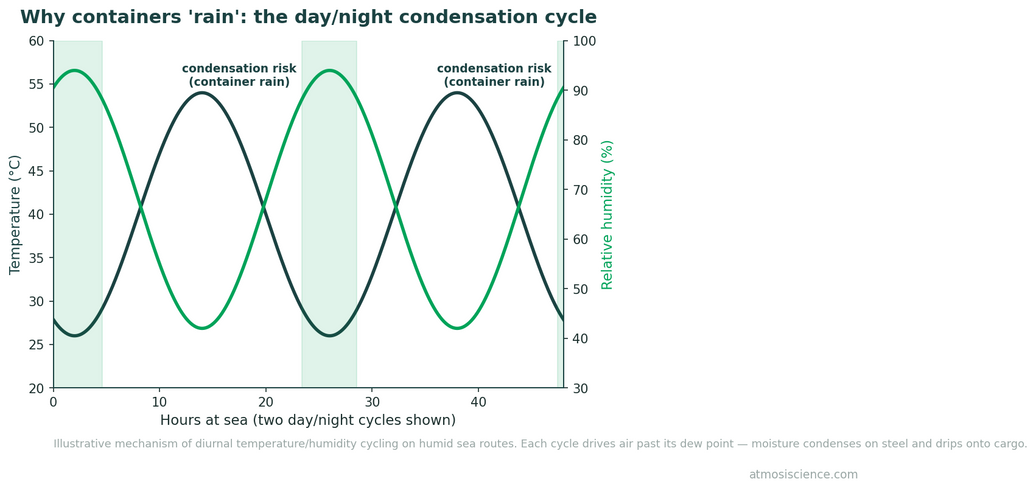
Bulk bags, drums, and export. High-capacity sachets (25–60 g and custom weights) inside liners; about 25 g protects a standard 0.10–0.34 m³ carton (full math in the dosage guide). Sea-freight humidity cycling is covered in the container desiccant guide.
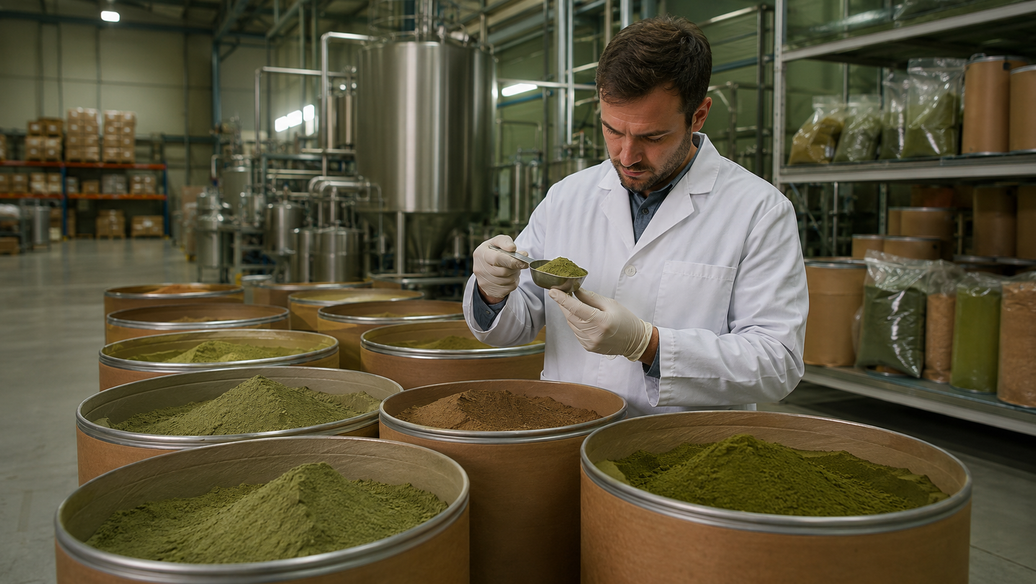
Dust discipline. Clay and loose-bead formats shed fines that contaminate a powder users measure by the gram. The fiber substrate is a continuous, dust-free mat — the loose-fill risk profile is in loose-fill desiccant risks.
The sustainability line agtech buyers actually score
Hydroponic and organic-adjacent brands market environmental responsibility, and retail buyers score packaging accordingly. ATMOSIScience fiber desiccant is compostable under ASTM D6400 and EN 13432, built on a natural plant-fiber substrate, with a documented carbon footprint of 1.44 kg CO₂e/kg — roughly 31% lower than silica gel. Manufacturing runs under SGS ISO 9001 (Cert. CN05/31171) with full raw-material disclosure (lignocellulose fiber, calcium chloride, PLA, food-grade paper, water). Supplier-vetting criteria: the B2B buyer's checklist.
Frequently asked questions
Why does my NPK blend cake faster than the single salts we used to sell?
Mixed salts typically deliquesce at a lower humidity than any single component — blending lowers the threshold. The blend needs headspace protection the single salts may not have.
Can desiccant recover a caked pail?
No — recrystallized bridges are permanent. Desiccant prevents the cycle; it cannot reverse it.
Is the desiccant safe in a product used on food crops?
The fiber desiccant is a packaging component with food-contact documentation (FDA 21CFR175.300) and full material disclosure — paperwork that simplifies both retail audits and export files.
What about humid grow-room storage at the end user?
That is exactly the argument for in-pack desiccant over warehouse climate control: the package protects itself wherever it ends up — including a 70% RH grow tent.
Sell powder that still pours at the end of the season
ATMOSIScience supplies high-capacity fiber desiccant in sachets and die-cut printable film cards at B2B scale, with ISO 9001 manufacturing, food-contact documentation, and certified compostability.
Test it against your own blend first. Order the Fiber Desiccant, or request bulk pricing through our desiccant solutions page or contact our team.
Related reading: Why Powders Cake · Desiccant for Industrial Powders · Calcium Chloride vs. Silica Gel vs. Fiber Desiccant
Get a desiccant spec & bulk quote for your fertilizer line
Tell us your blend, container format, and distribution conditions — our team responds with a capacity calculation, format recommendation, and bulk pricing.