The premium pet category sells texture: the crunch of freeze-dried raw, the snap of a dehydrated treat, the free flow of a powdered topper over kibble. Texture is also the first thing humidity destroys. A freeze-dried treat is among the most hygroscopic products in any aisle — freeze-drying removes nearly all water and leaves a porous structure that pulls it back from the first opening onward.
This guide covers where moisture hits pet products hardest and how US pet brands, treat makers, and co-packers spec a desiccant for pet food — with a format discipline specific to this category: whatever goes in the bag may meet a dog before it meets a human.
Three moisture failure modes in pet products
Freeze-dried treats and raw coatings. The porous, low-moisture structure that makes freeze-dried products shelf-stable also makes them aggressive moisture sponges. Rehydration softens texture, dulls palatability, and raises water activity toward the range where mold becomes a risk in a protein-rich matrix.
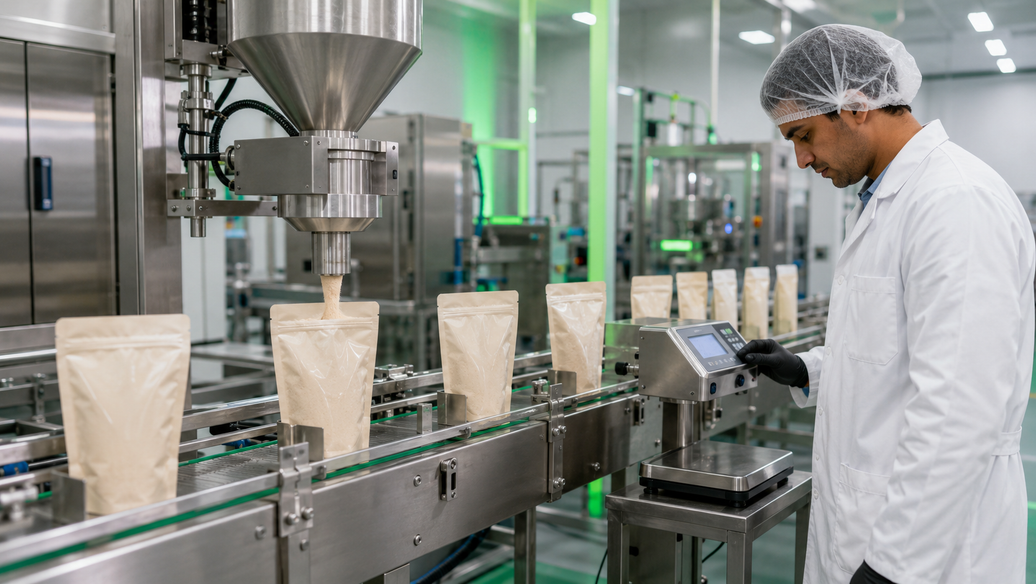
Powdered toppers, broths, and supplements. Bone broth powders, goat milk powders, probiotic and joint-supplement powders combine dairy solids, hydrolyzed proteins, and salts — the same caking chemistry covered in our pillar on why powders cake. A topper that clumps stops being scoopable, and the daily-use ritual breaks.
Kibble and baked treats. Moisture softens crunch and accelerates fat oxidation pathways that show up as rancid smell — the complaint that ends repeat purchase.
The format rule for pet: nothing a pet can ingest
Pet packaging has a failure mode food packaging does not: the consumer may be left alone with the bag. A torn silica-bead sachet inside a treat pouch is a vet visit and a viral review. The format discipline is strict:
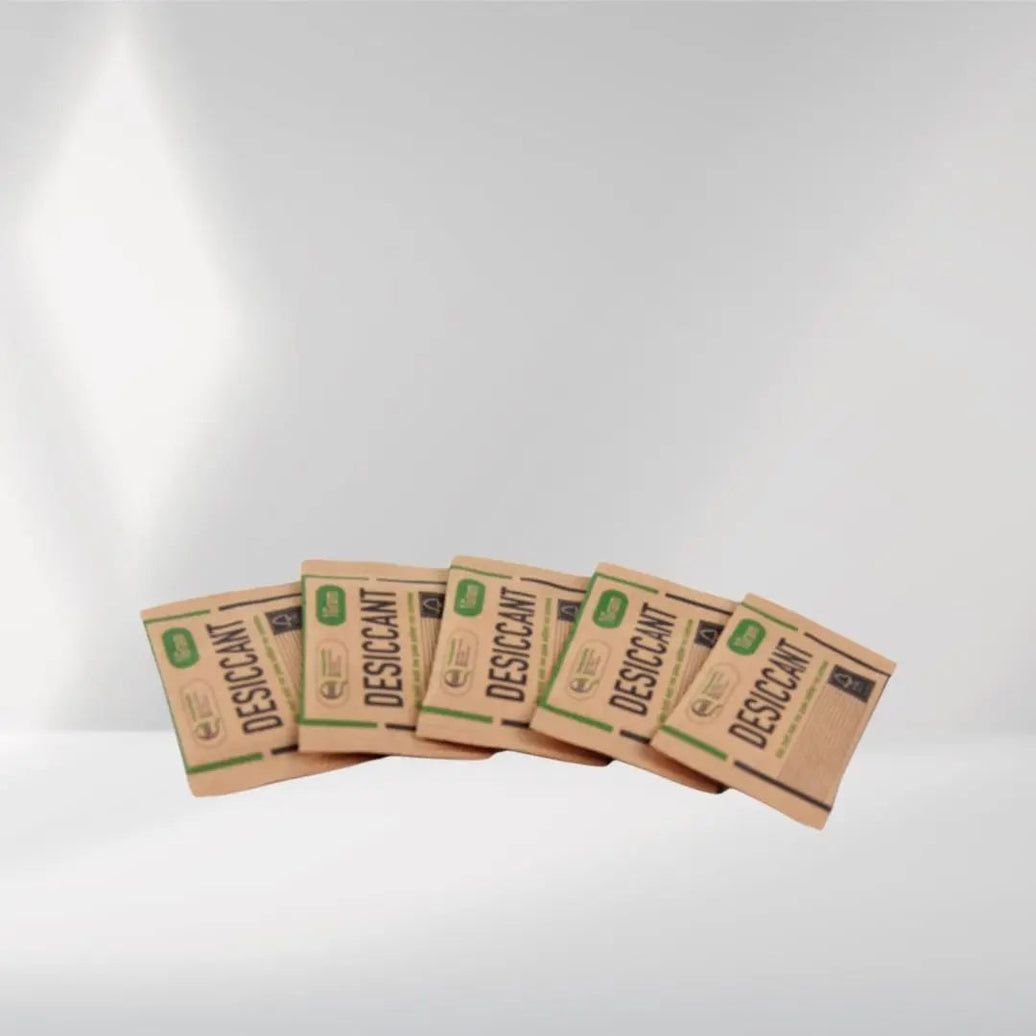
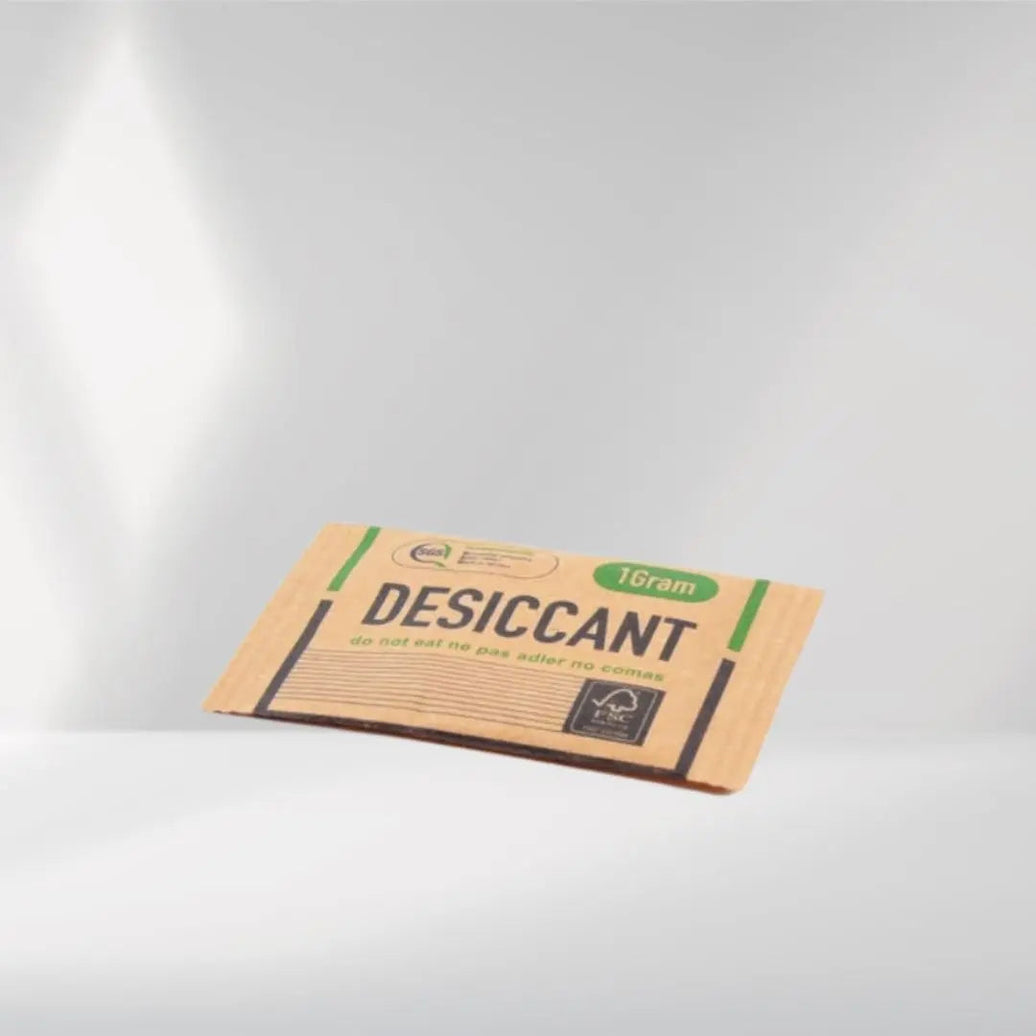
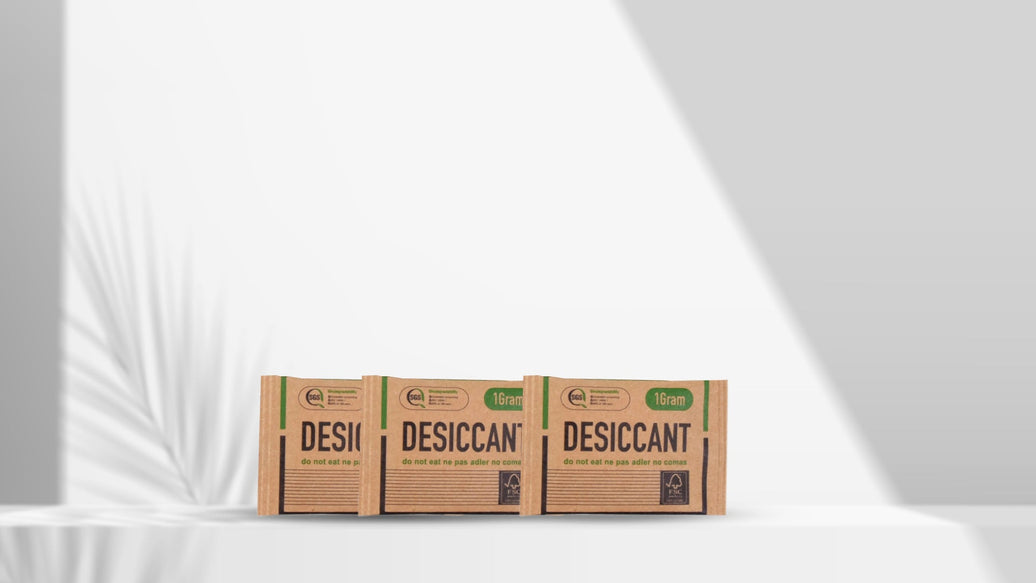
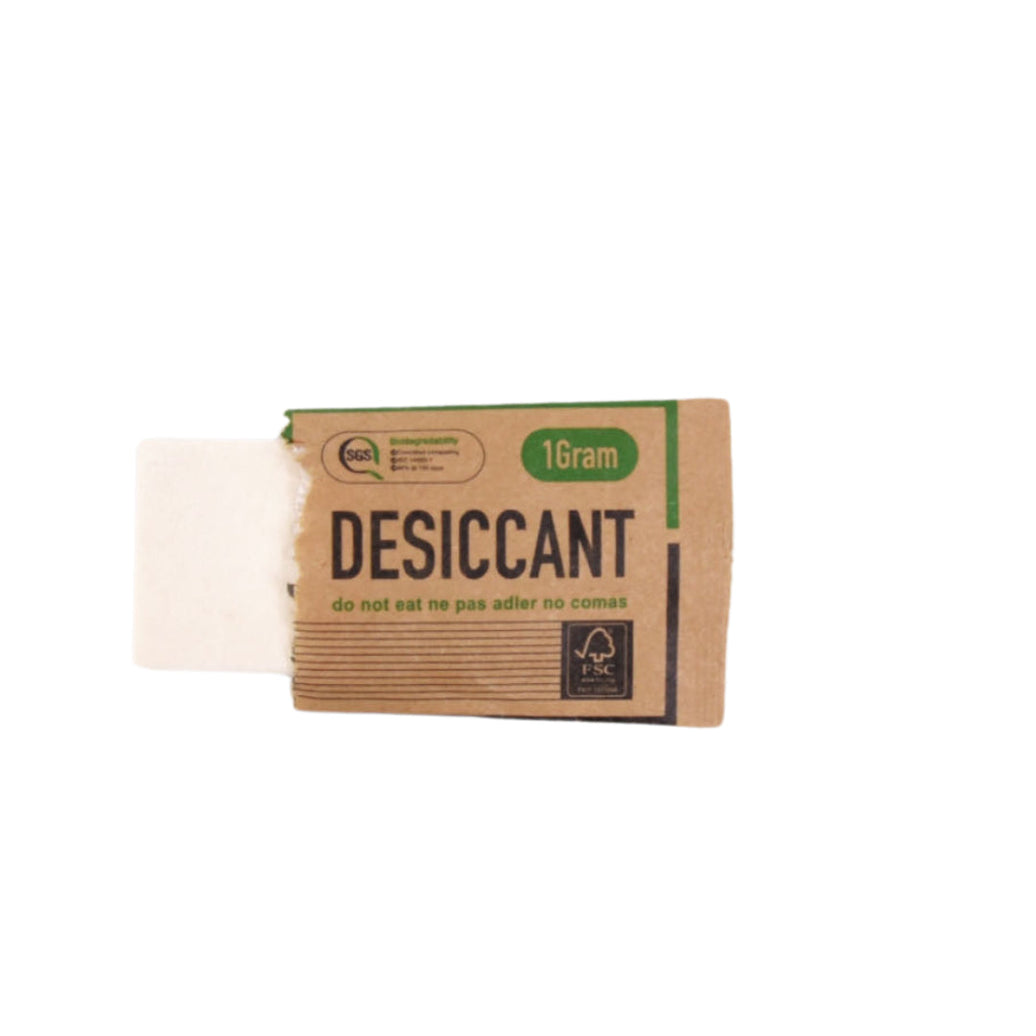
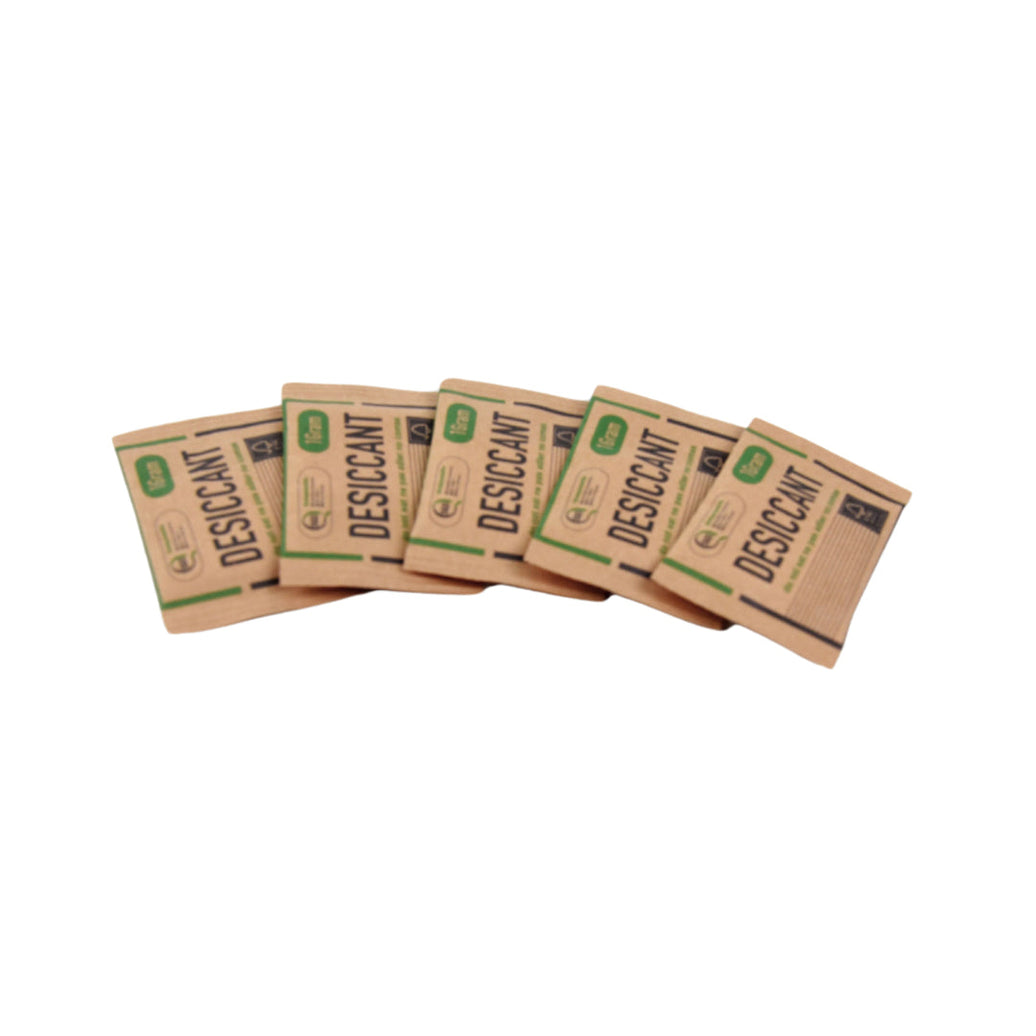
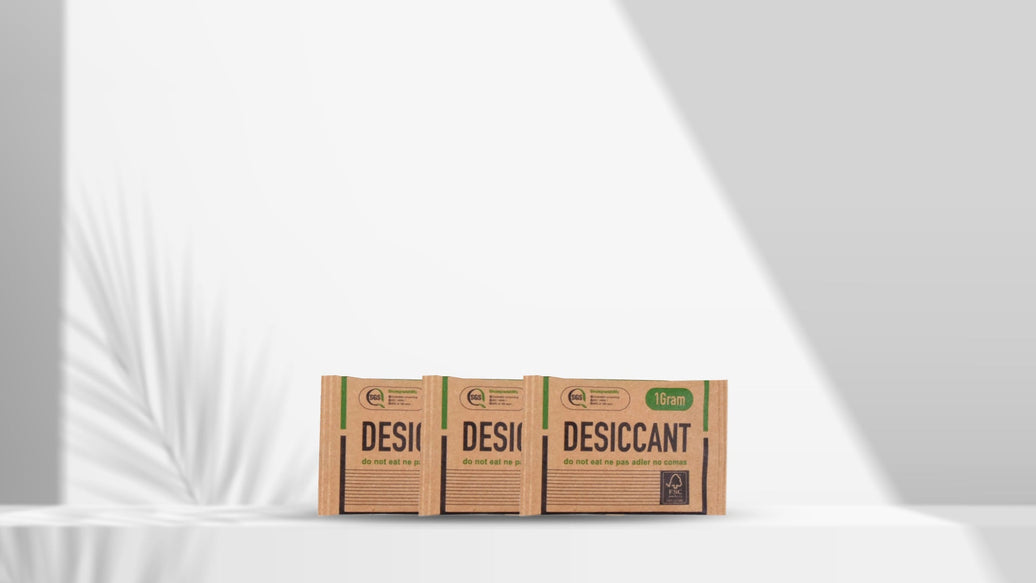
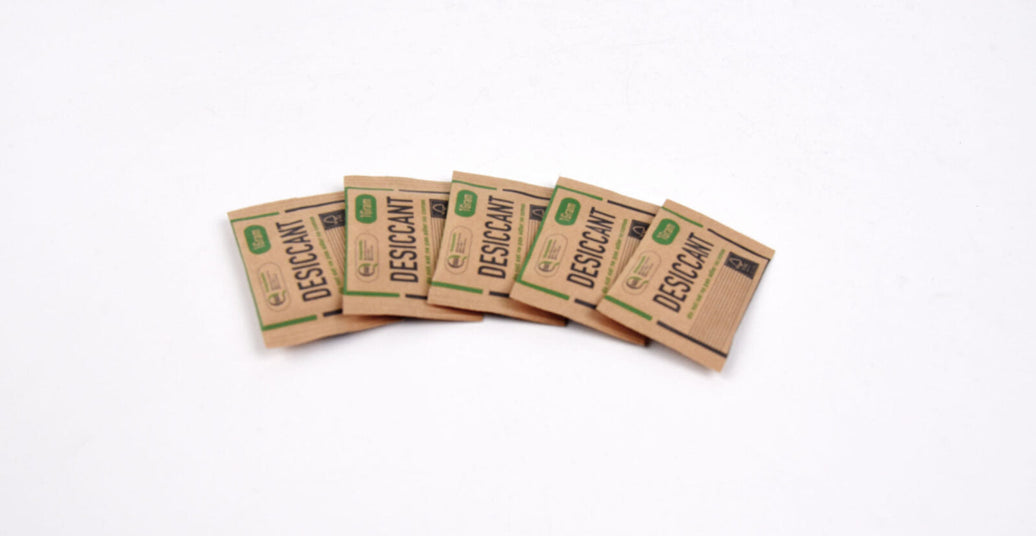
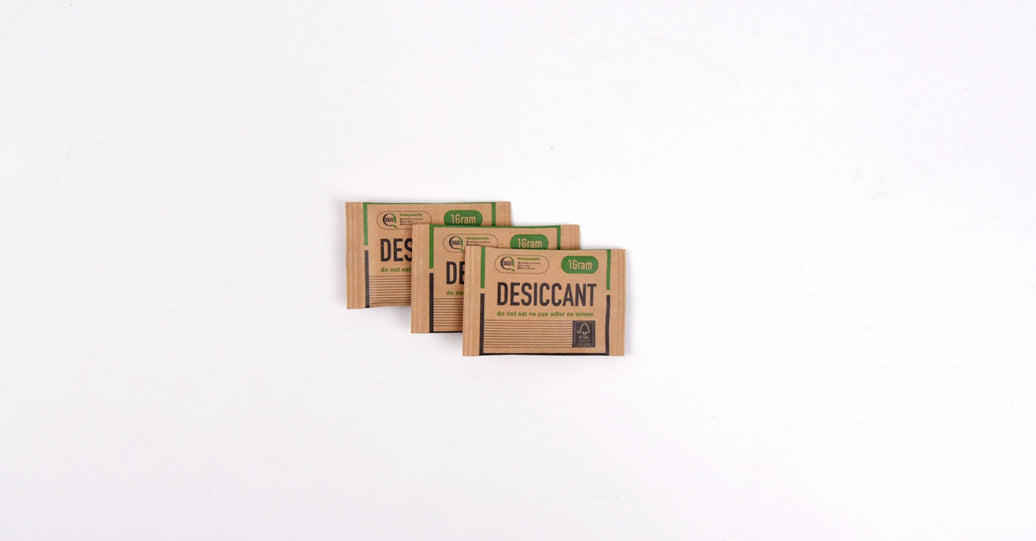
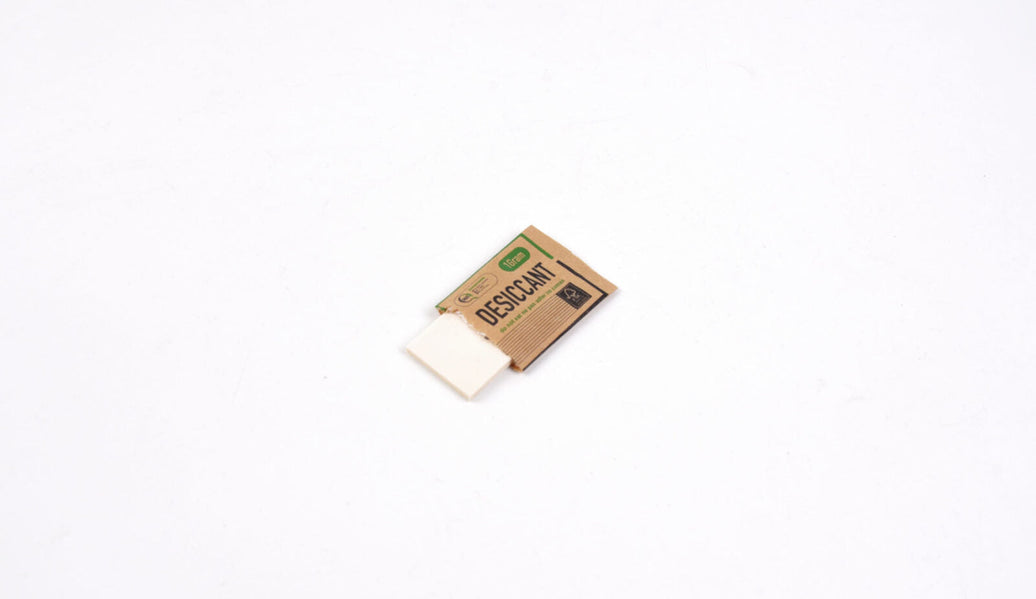
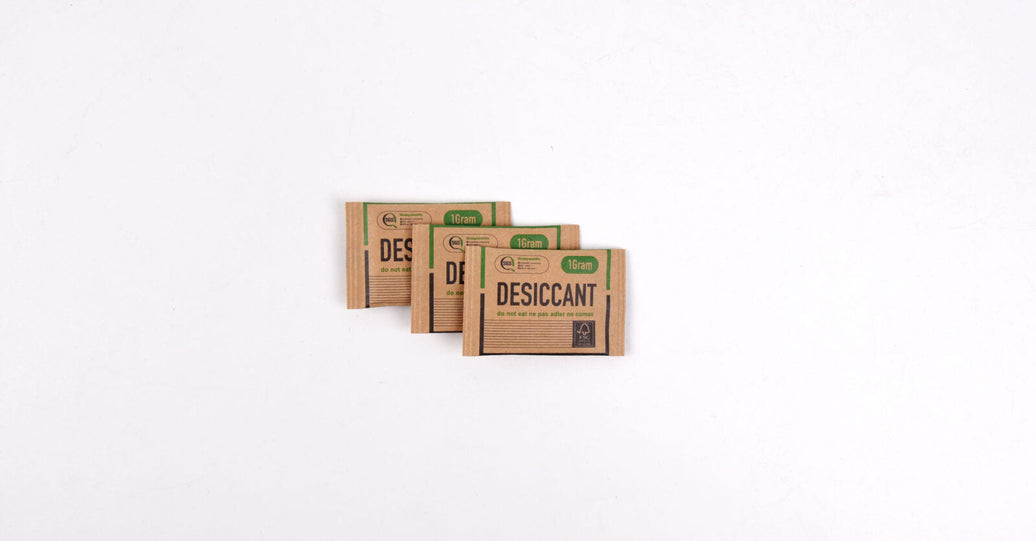
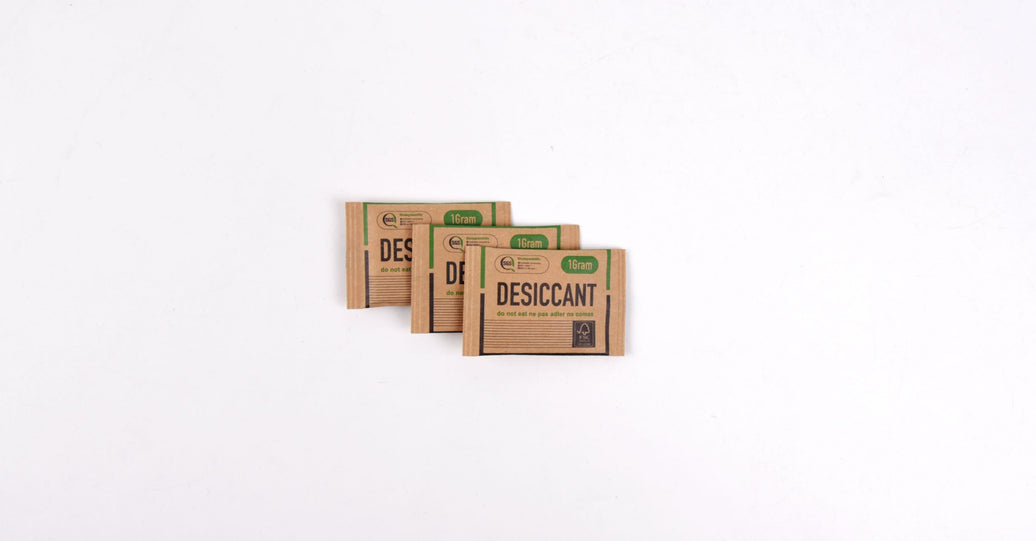
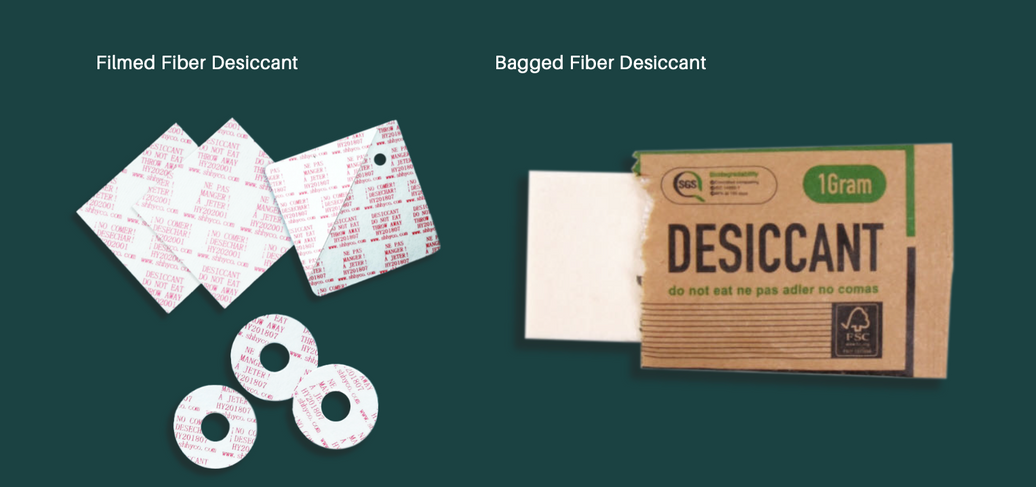
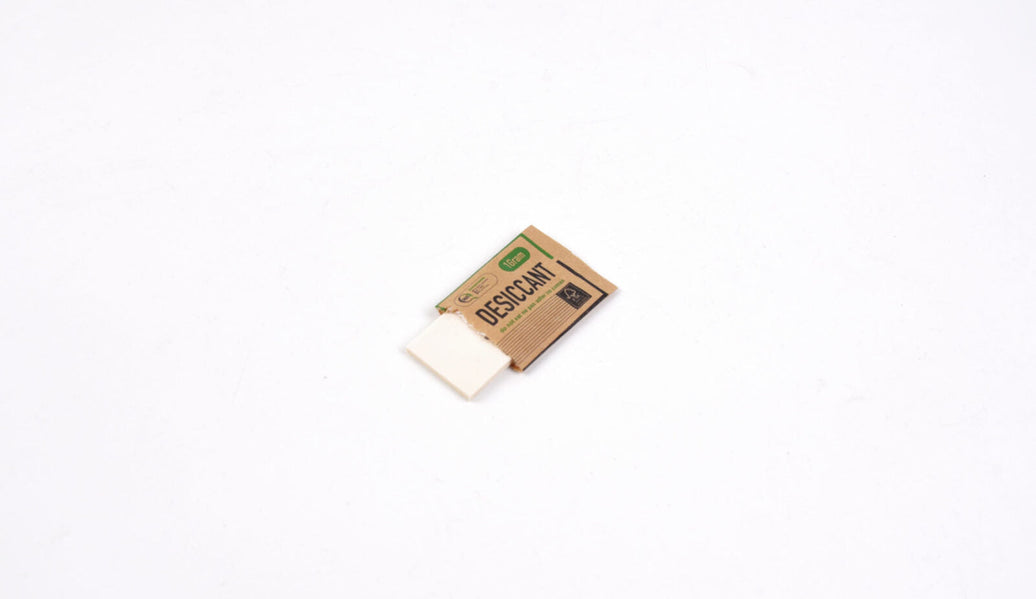
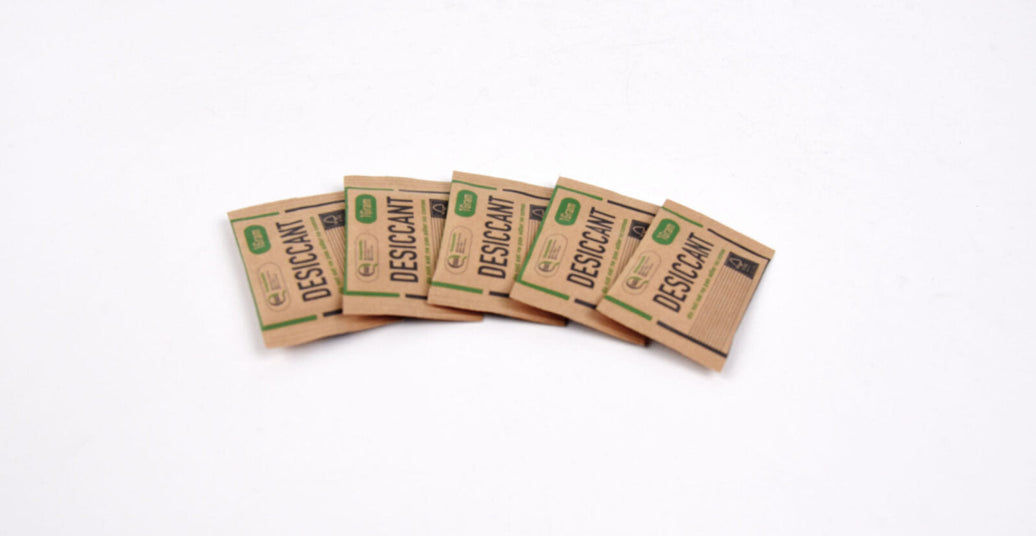
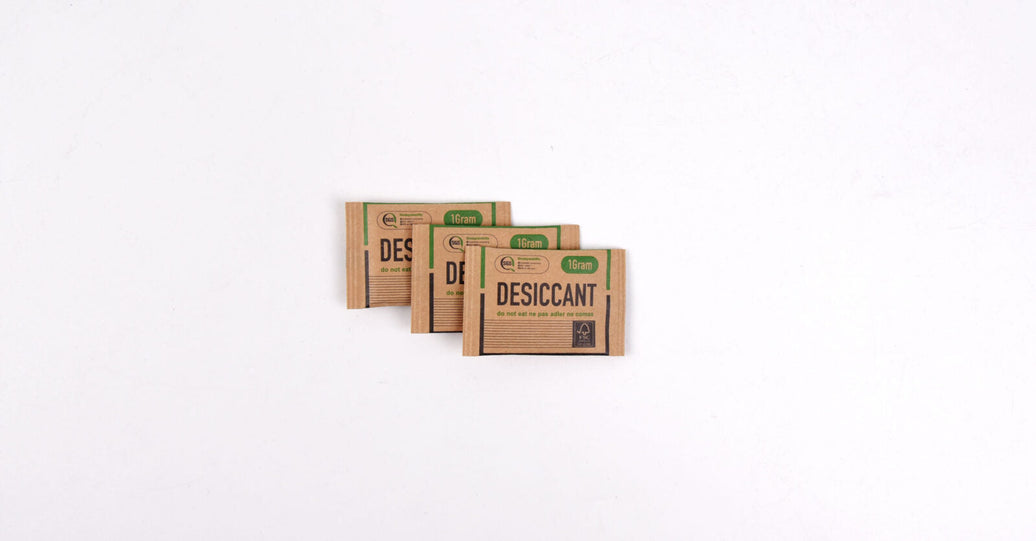
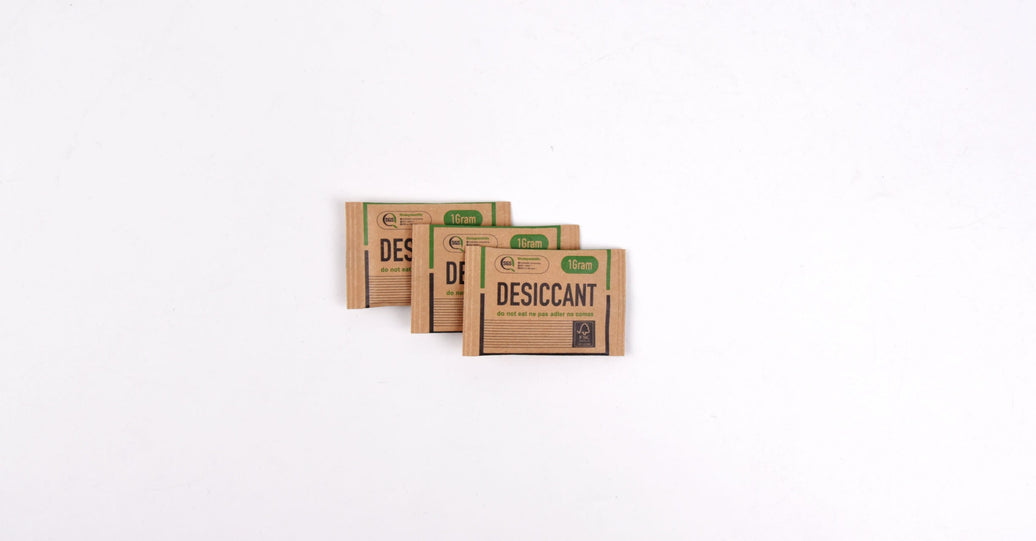
Fiber desiccant sachets are dust-free by construction — a natural plant-fiber substrate with no loose beads to scatter if punctured. The loose-fill risk profile is covered in loose-fill desiccant risks.
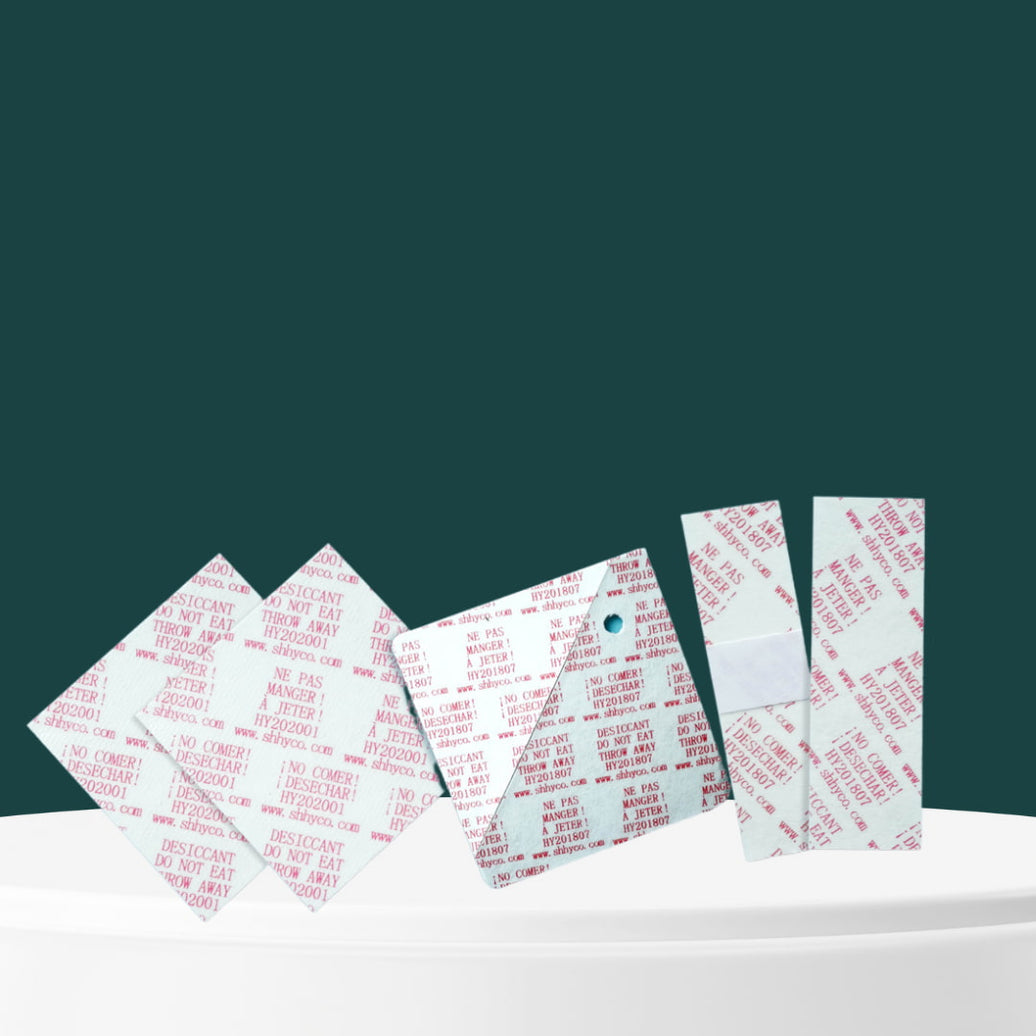
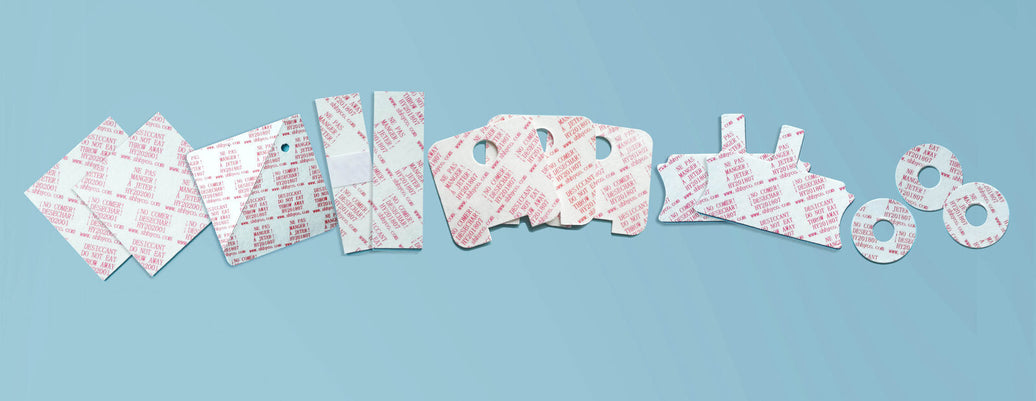
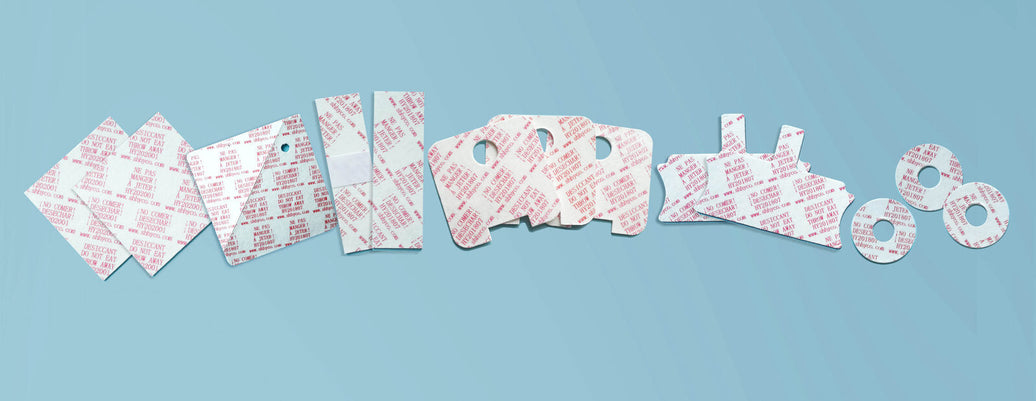
Film desiccant cards go further for tubs and wide-mouth jars: a rigid card — stiffer than some credit cards — wrapped in paper rather than plastic, die-cut to the container diameter. It sits flat and visible under the lid instead of burying itself in the product, so the human removes it before the pet ever could. The center prints with a full-color logo, which premium pet brands use as an unboxing touchpoint. Details in the film desiccant guide.
Speccing by package
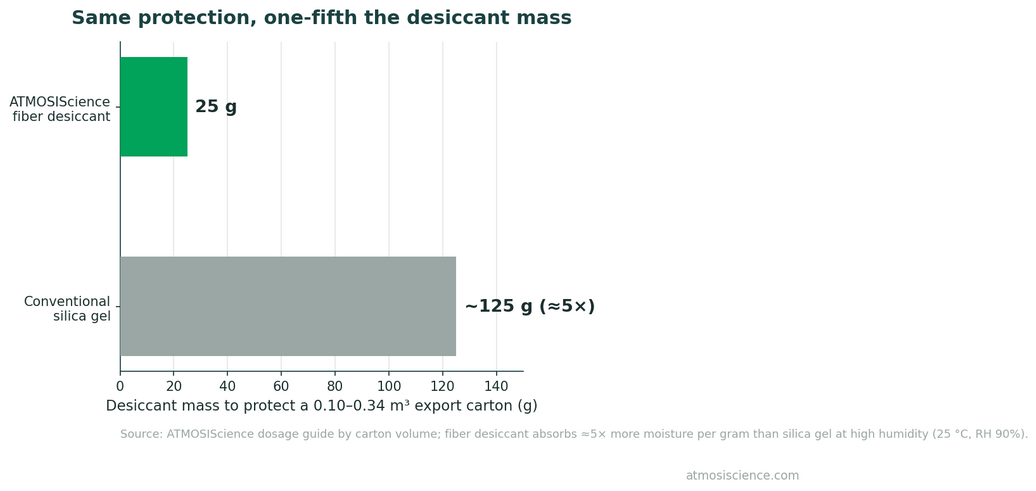
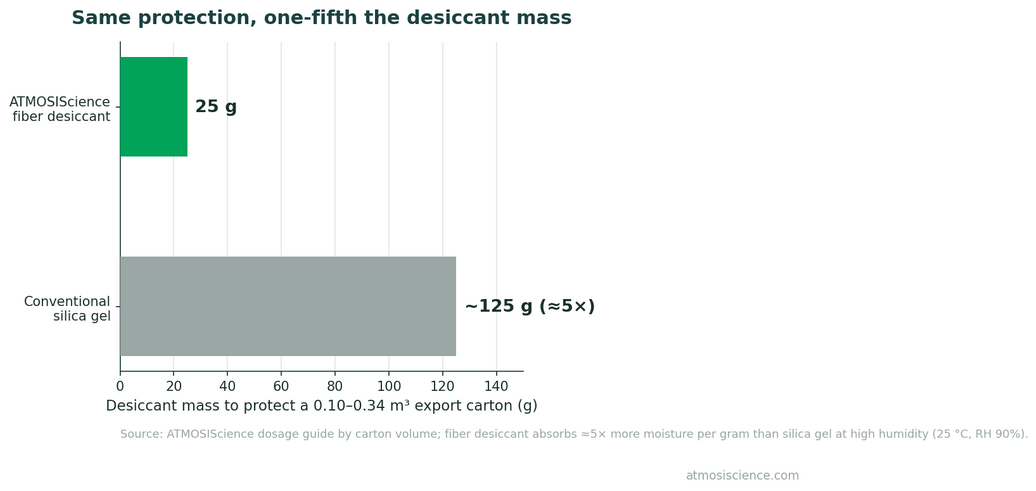
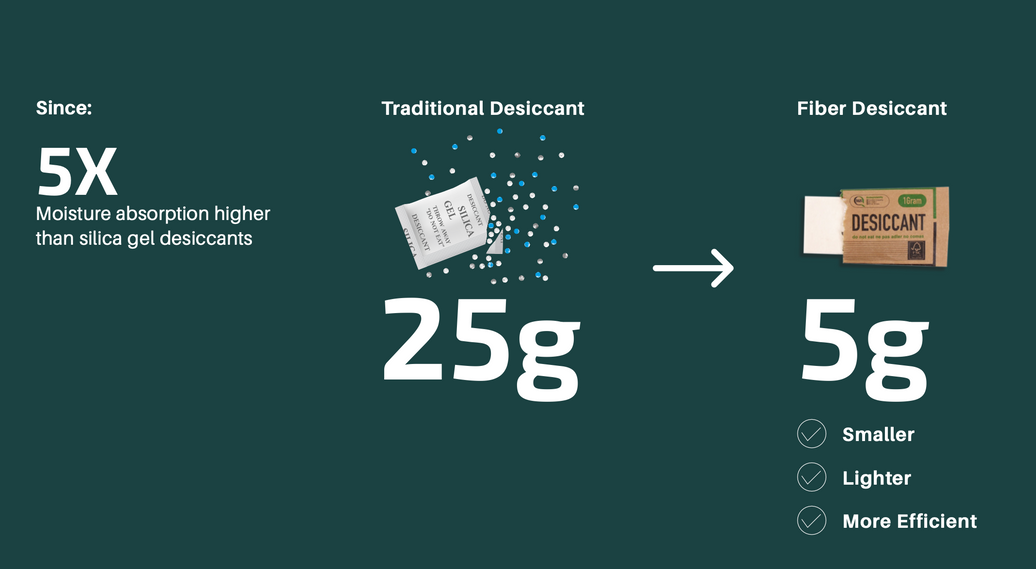
Resealable treat pouches: a 1–9 g fiber sachet sized to headspace and reopening frequency — treats are opened daily, so capacity through use life matters more than transit protection. Fiber desiccant absorbs over 70% of its own weight at 25°C and RH 90%, roughly 5x conventional silica gel.
Topper tubs and supplement jars: film desiccant card under the lid, die-cut to diameter.
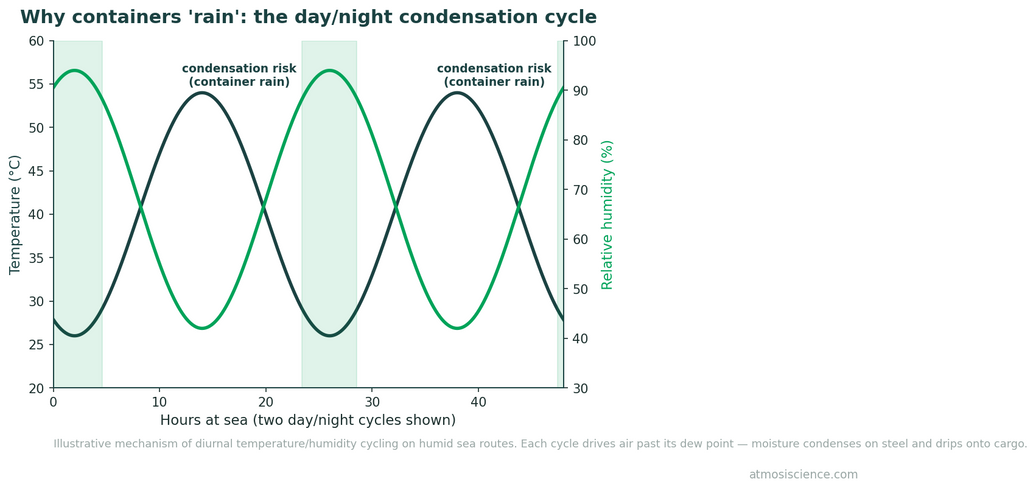
Bulk and e-commerce cartons: about 25 g of fiber desiccant protects a standard 0.10–0.34 m³ carton; math in the dosage guide. For import/export legs, see the container desiccant guide.
Documentation pet QA can file
Pet food plants run under FSMA preventive controls and AAFCO-aligned state programs, and retailer audits increasingly treat packaging components like ingredients. ATMOSIScience fiber desiccant is manufactured under SGS ISO 9001 (Cert. CN05/31171), with full raw-material disclosure (lignocellulose fiber, calcium chloride, PLA, food-grade paper, water). Compostability under ASTM D6400 and EN 13432 matches the sustainability story most premium pet brands sell — a paper-wrapped, compostable insert in a brand marketing "clean" is consistency, not contradiction.
Frequently asked questions
What happens if a dog chews a fiber desiccant sachet?
No desiccant is intended for ingestion, but the fiber format eliminates the scattered-bead scenario: the substrate is a plant-fiber mat with food-contact documentation, not loose silica beads. Brands should still position the insert where the human removes it — which is what the rigid, visible film card is designed for.
Why do freeze-dried treats soften so fast after opening?
Freeze-drying leaves a porous structure at very low moisture — the steepest possible gradient against kitchen air. Each opening feeds it. An in-pack desiccant absorbs that incoming load through the use life.
Do oxygen absorbers replace desiccant in pet packaging?
No — they solve different problems. Oxygen absorbers slow fat oxidation; desiccant controls the moisture that drives texture loss, caking, and mold risk. Many premium SKUs need both; see the comparison guide.
Can the desiccant card carry our branding?
Yes — the film card prints with a full-color logo in the center and die-cuts to your tub or jar diameter.
Protect the crunch that justifies the price
ATMOSIScience supplies food-grade fiber desiccant in sachets and printable film cards at B2B scale, with the ISO 9001 and compostability documentation pet QA and retail audits require.
Test it against your own treats first. Order the Fiber Desiccant, or request bulk pricing and certificates through our desiccant solutions page or contact our team.
Related reading: Why Powders Cake · Desiccant for Powdered Drink Mixes · Film Desiccant Explained
Get a desiccant spec & bulk quote for your pet line
Tell us your product, package format, and use life — our team responds with a capacity calculation, format recommendation, certificates, and bulk pricing.