Functional mushroom and adaptogen powders are one of the stickiest categories in the wellness aisle — literally. Lion's mane, reishi, cordyceps, chaga, ashwagandha, and maca are prized for polysaccharides, beta-glucans, and triterpenes, and most are sold as spray-dried extracts carried on maltodextrin. Every part of that description is hygroscopic. Left uncontrolled, a premium extract turns from fine powder to damp cake, and a brand fielding "arrived as a solid block" reviews.
This guide explains why functional botanicals attract moisture so aggressively, the microbial risk that follows, and how to spec dust-free desiccant that fits a compostable, clean-label pack.
Why mushroom and adaptogen powders pull water so hard
Polysaccharides and beta-glucans. The functional fraction buyers pay for is a sponge for water — long-chain sugars with abundant hydroxyl groups that hydrogen-bond to moisture, soften, and bridge into clumps.
Maltodextrin and starch carriers. Spray-dried extracts are usually deposited on maltodextrin, itself highly hygroscopic. The carrier often sets the caking behavior of the finished powder.
Hygroscopic actives. Ashwagandha and other botanical extracts carry their own moisture affinity, and reishi's bitter triterpene fraction comes with gums that hold water.
Combined, these push the powder's critical humidity low — it can start caking at ordinary indoor RH. The underlying adsorb–bridge–recrystallize cascade is in our pillar on why powders cake.
The risk beyond clumping: microbial and potency loss
Moisture in a botanical powder is not only a texture problem. As water activity rises, mold and bacterial growth become possible — a serious concern for a natural product that a customer expects to be clean. Adsorbed moisture also accelerates oxidation of sensitive triterpenes and pigments, dulling color and eroding the functional claim. Holding headspace humidity low protects flow, microbial safety margin, and potency at once. The controlling number is water activity, explained in our water activity vs. RH guide.
The clean-label packaging conflict
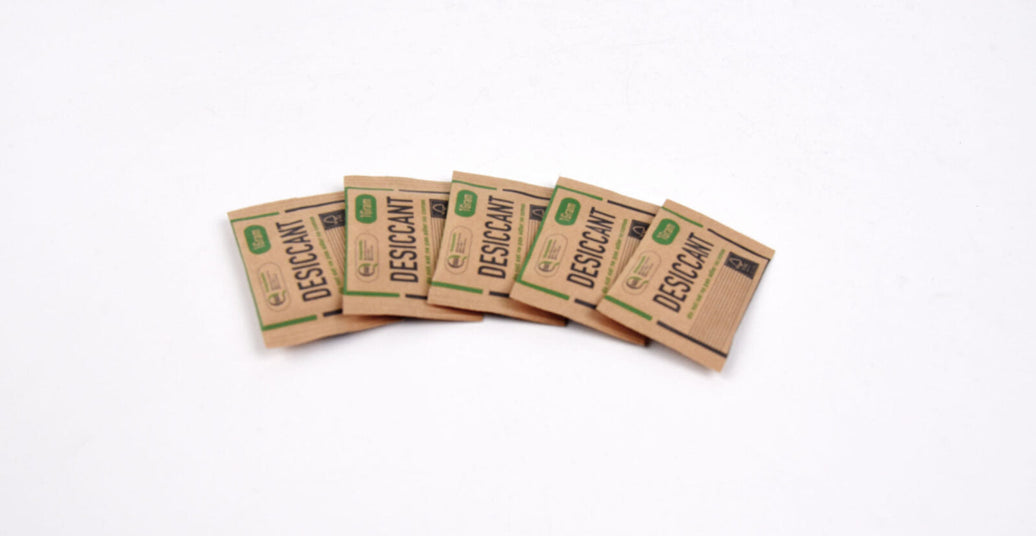
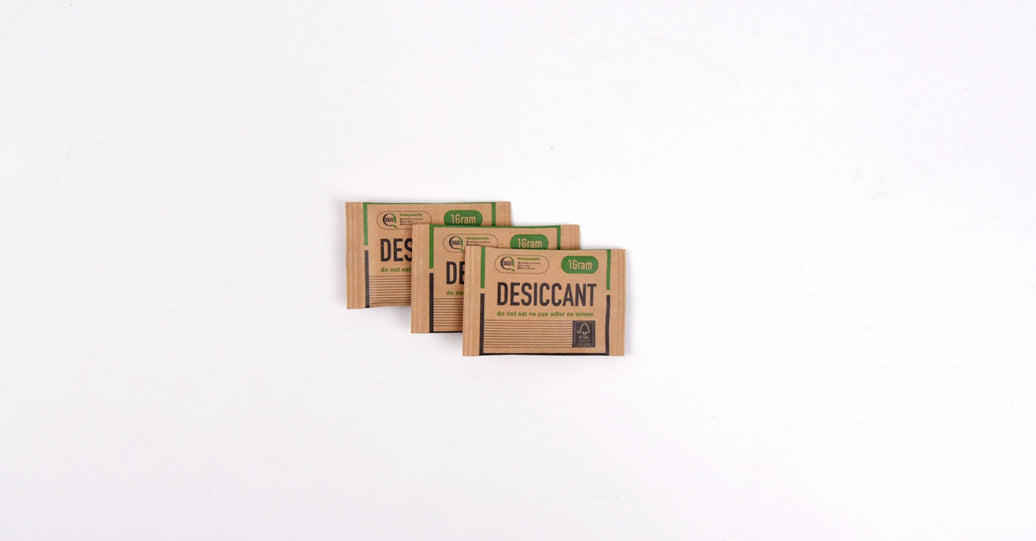
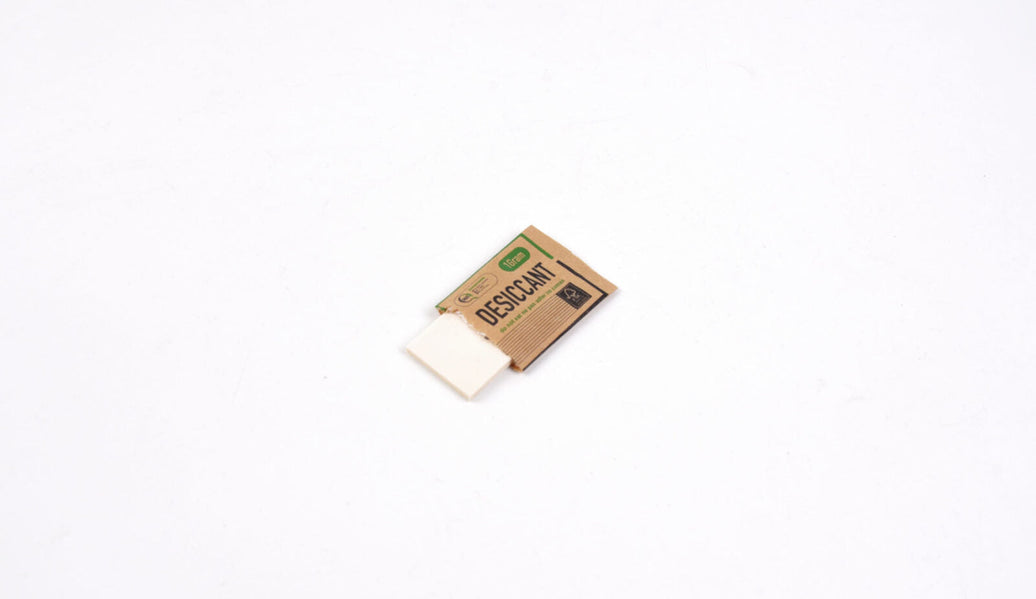
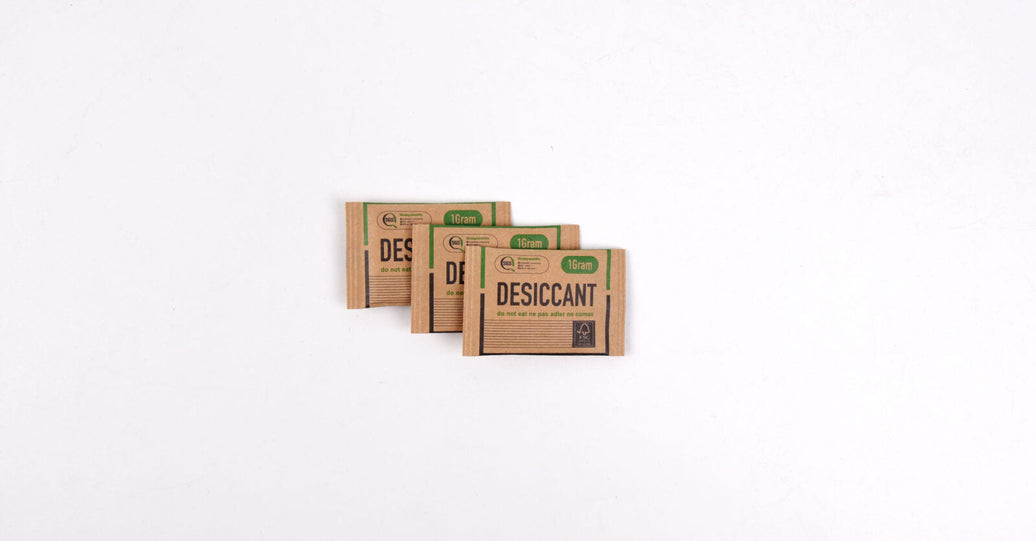
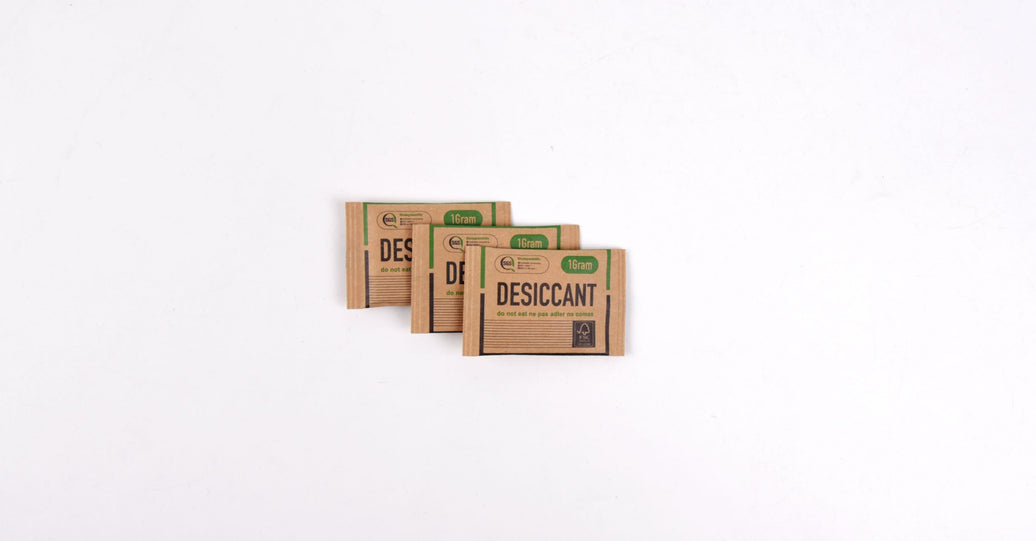
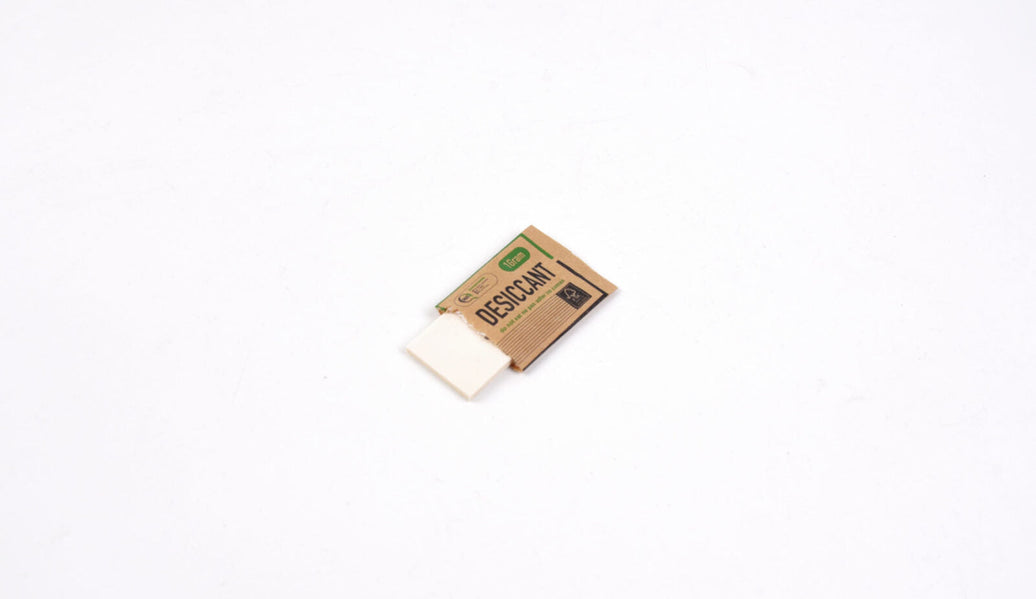
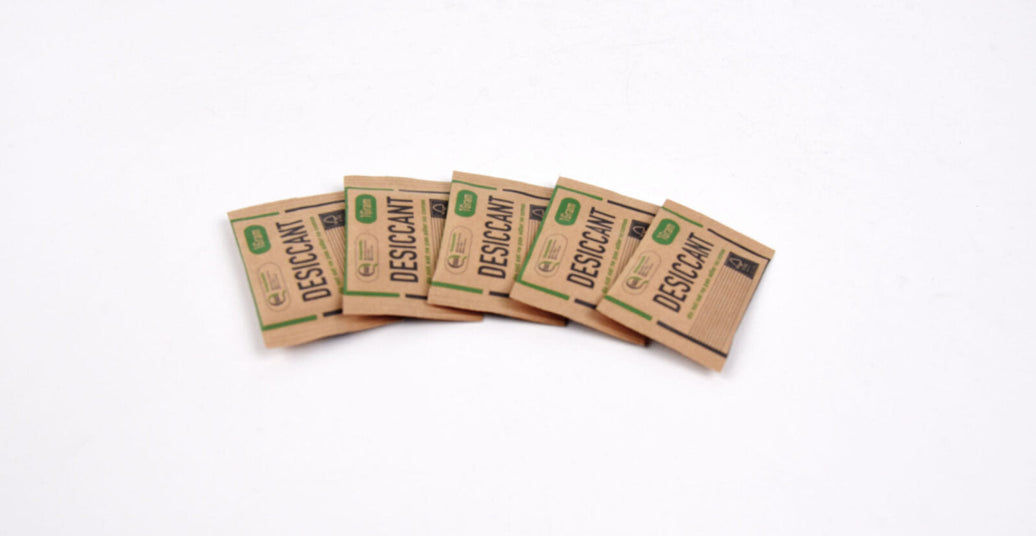
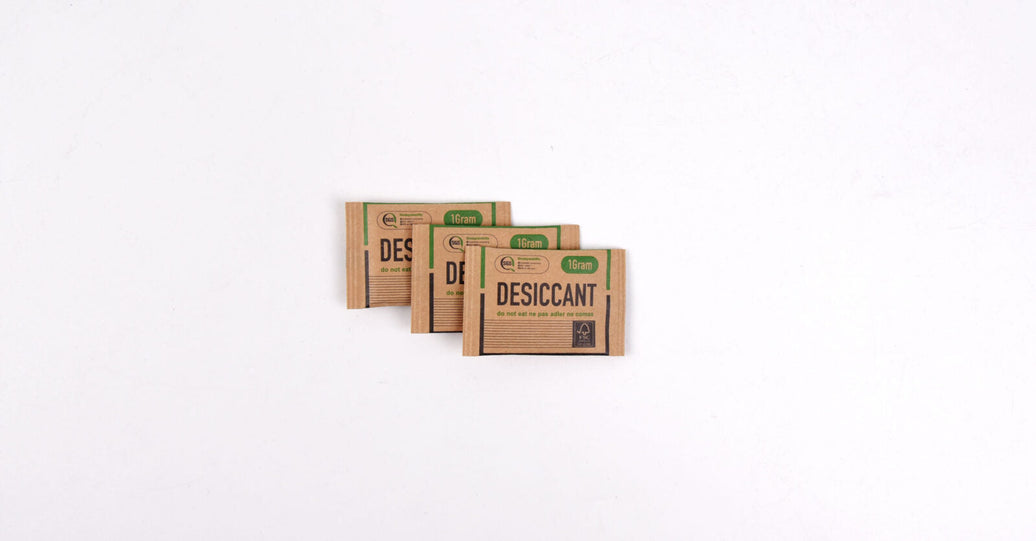
Adaptogen and mushroom brands lean hard into natural, planet-aware positioning — kraft pouches, compostable films, minimalist labels. A plastic silica gel sachet inside that pack is off-brand and, for the compostable-pouch brands, a broken promise. ATMOSIScience fiber desiccant is plant-fiber based, paper-wrapped, and certified compostable under ASTM D6400 and EN 13432, so it matches the story instead of contradicting it. Which compostability mark you actually need is covered in our certifications guide.
Format and dosing
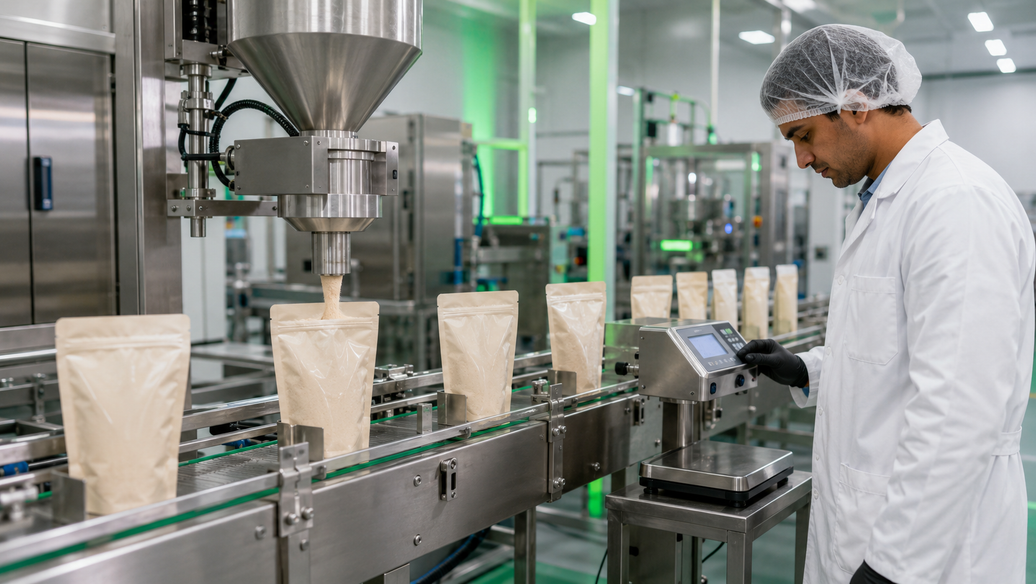
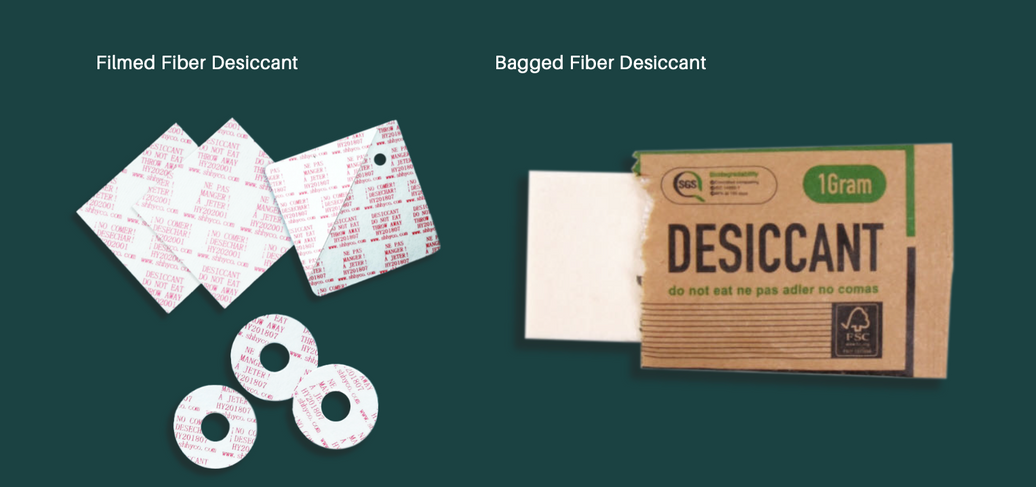
Pouches (single-botanical or blends). One dust-free fiber sachet sized to headspace and reseal frequency. Extract powders are low-density and high-surface-area, so headspace per gram is large — size generously.
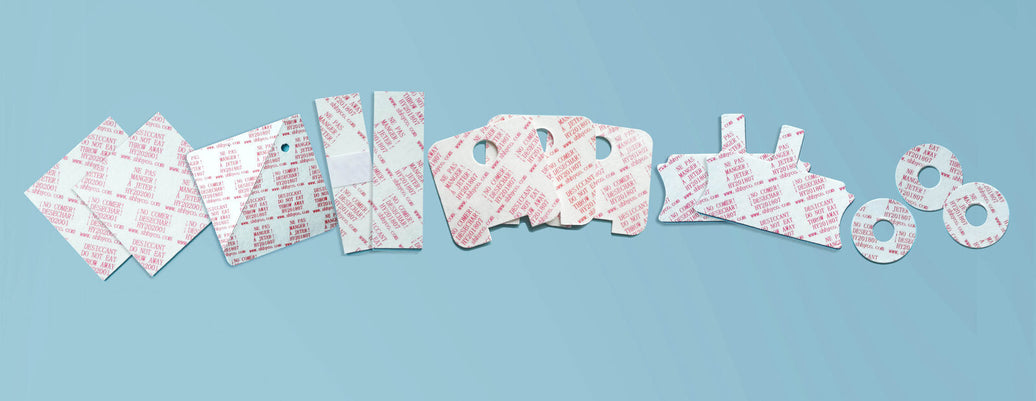
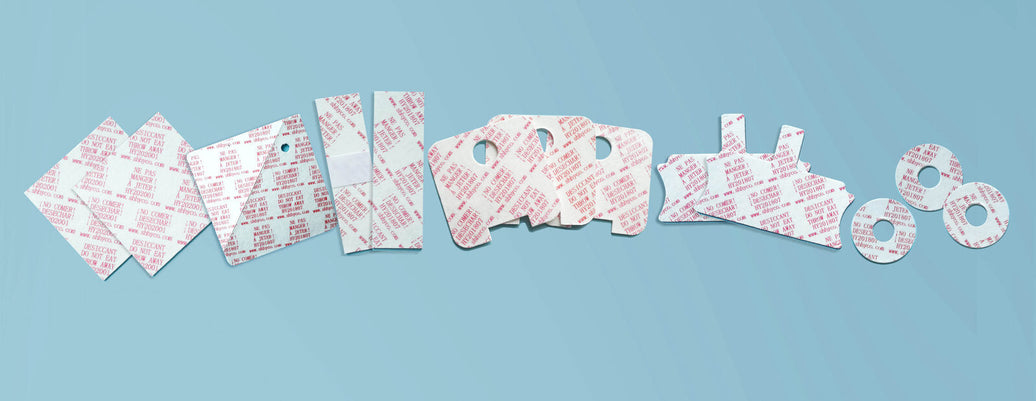
Jars and tubs. A rigid film desiccant card sits flat on the powder bed, prints with your logo, and stays visible instead of burying itself.
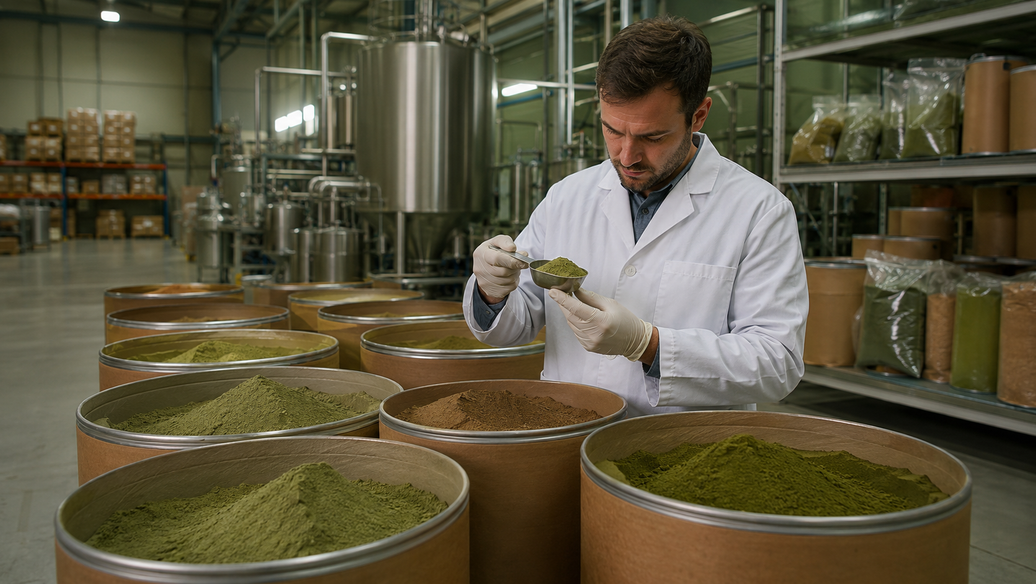
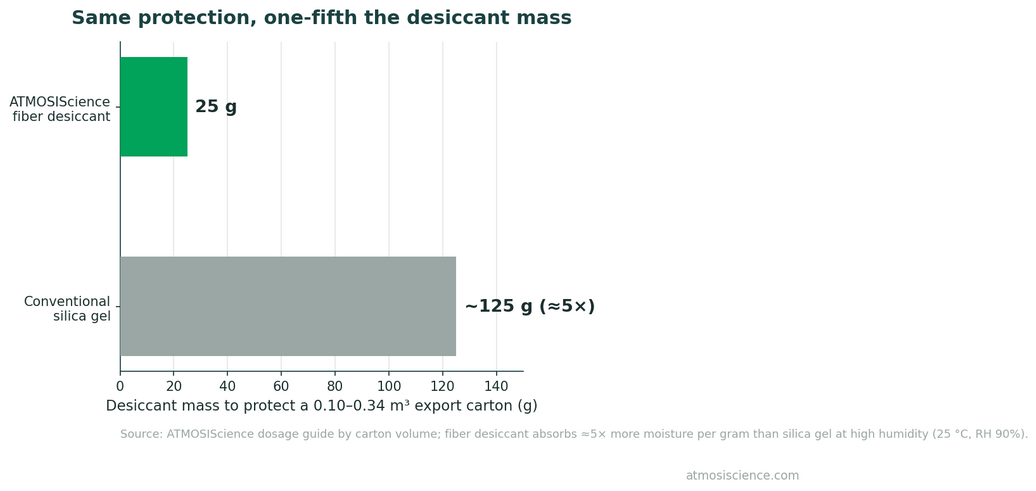
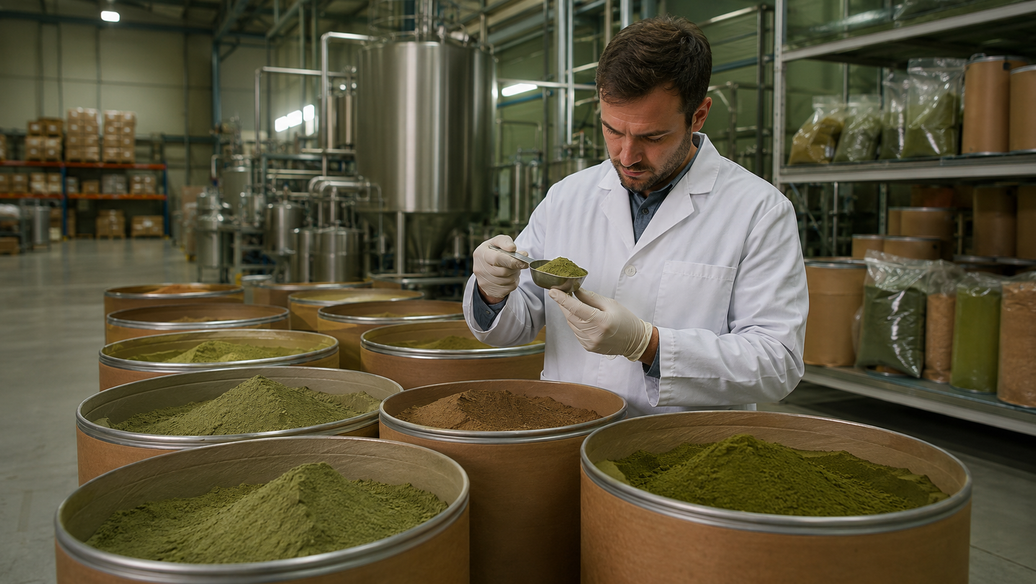
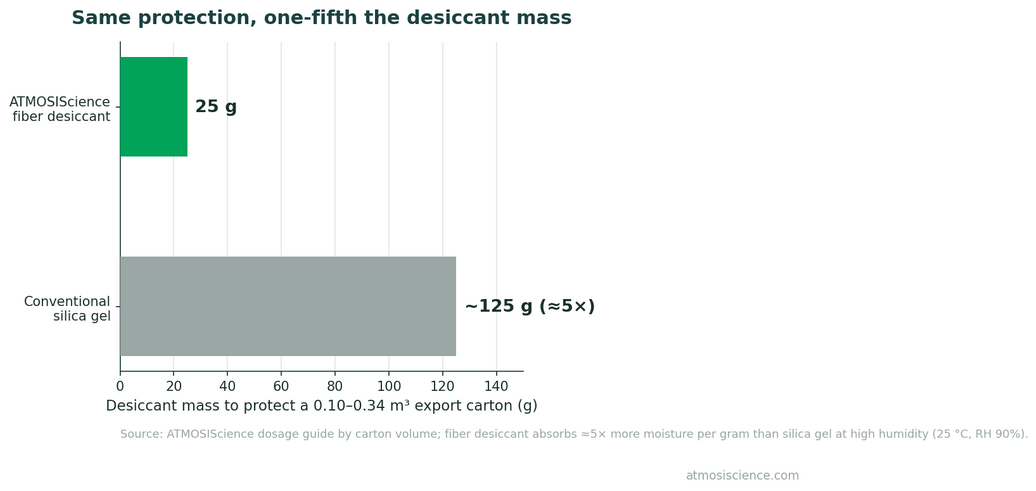
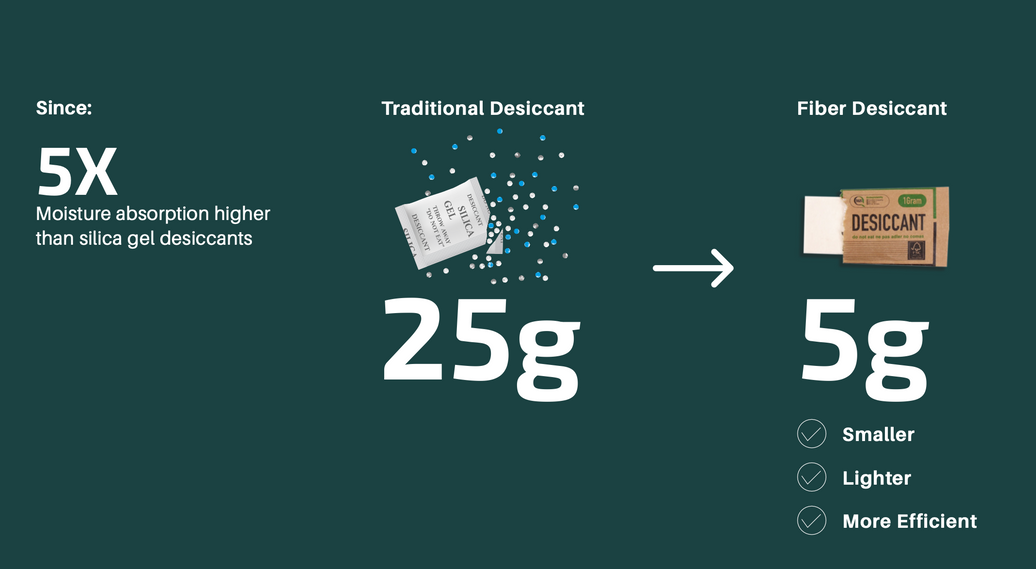
Bulk extract for co-manufacturers. High-capacity sachets in the drum liner; roughly 25 g of fiber desiccant protects a standard 0.10–0.34 m³ carton, about 5x the efficiency of silica gel by weight. Dosage math is in our dosage guide.
Why dust-free matters for an ingested botanical
These powders are stirred into coffee, smoothies, and lattes. Loose silica or clay fines is a foreign-matter failure and an obvious contradiction of a clean-label promise. Fiber desiccant binds its active into a plant-fiber matrix with nothing to shed if punctured — the risk modes it removes are detailed in our article on loose-fill desiccant risks. Its capacity advantage — over 70% of its weight at 25°C and 90% RH versus roughly 30% for silica — keeps a high-surface-area extract protected through the whole use life.
Documentation
ATMOSIScience fiber desiccant ships with FDA 21CFR175.300 food-contact documentation, SGS ISO 9001 manufacturing (Cert. CN05/31171), full raw-material disclosure, and ASTM D6400 / EN 13432 compostability certificates — the pack a supplement QA questionnaire expects, in our supplier qualification guide.
Frequently asked questions
Is the maltodextrin carrier the real problem?
Often, yes. Even when the extract itself is moderately stable, a hygroscopic carrier sets the caking threshold. Desiccant control targets the whole finished powder.
Can a desiccant reduce mold risk?
By keeping water activity low it widens the safety margin against microbial growth. It is a control, not a substitute for good manufacturing and testing.
Will it keep our compostable pouch compostable?
The desiccant is certified compostable and paper-wrapped; confirm your total laminate against your target compost stream.
Keep functional powders functional
ATMOSIScience supplies dust-free, compostable fiber and film-card desiccant for mushroom and adaptogen powders at B2B scale. Explore ATMOSIScience desiccant solutions, request a sample of the Fiber Desiccant, or contact our team for certificates and a bulk quote.
Related reading: Desiccant for Greens & Superfood Powders · Desiccant for Dietary Supplements · Desiccant for Powdered Drink Mixes
Get a desiccant spec & bulk quote for your functional powders
Tell us your extract, carrier, and pack format — we respond with a capacity calculation, a printable film-card mockup, certificates, and bulk pricing.