Quick answer: Choosing a desiccant for fruit powder is about holding the powder below the point where its sugars turn sticky. Freeze-dried and spray-dried fruit and beetroot powders are rich in sugars held in a glassy, non-crystalline state. A little absorbed water, or a warm truck, softens that glass, and the powder cakes into a sticky brick while its colour fades. Control moisture at every stage: dry, sealed ingredient bags, limited open time in the blending room, a desiccant sized for daily opening in the finished pack, and protection from heat in transit. Validate with caking and colour checks, not just weight.
Berry, acai, pomegranate and beetroot powders give wellness blends their colour and much of their appeal. They are also some of the most difficult powders to keep free-flowing. Brands often discover this the hard way: a smoothie blend that pours perfectly in the lab arrives at a customer in summer as a solid, darkened block.
Why fruit and beetroot powders turn sticky
Fruit powders are mostly sugars such as fructose, glucose and sucrose. Drying removes water so fast that these sugars do not have time to crystallise; they set into a glassy solid. A glassy powder is free-flowing while it stays dry and cool. Add a little water, or raise the temperature, and the glass softens. The surface turns sticky, particles fuse, and the powder cakes.
Two things move a fruit powder toward that sticky state:
- Water. Absorbed moisture lowers the temperature at which the glass softens.
- Heat. A powder that is stable at 20 °C can become sticky at the temperatures inside a summer delivery van.
That is why producers often add carriers such as maltodextrin during drying: they raise the temperature at which the powder softens. It is also why moisture control and temperature control work together. The general caking process is explained in why powders cake, and how to find your blend’s threshold in how to read a moisture sorption isotherm.
What moisture does beyond caking
| Effect | What happens |
|---|---|
| Colour fade or browning | Natural pigments in berries and beetroot are sensitive to moisture, heat and light |
| Aroma loss | A collapsed, sticky structure releases and loses volatile flavour |
| Flow loss in production | Bridging in hoppers, smearing in blenders, variable fill weights |
| Blend separation | Sticky fruit particles clump separately from the rest of the blend |
Fill-weight effects are covered in how in-plant humidity taxes powder lines, and blend separation in how humidity affects blend uniformity.
Moisture control from ingredient bag to customer
| Stage | What to do |
|---|---|
| Ingredient storage | Keep bags sealed in a cool, dry store; use a bagged desiccant between liner and outer bag for long holds. See desiccant for bulk bags and drums |
| Blending and filling | Control room humidity, add fruit powders late, limit open time. See humidity mapping a filling room |
| Finished pack | Good barrier plus a desiccant sized for shelf life and daily opening |
| Transit and storage | Avoid heat. Summer shipping and hot warehouses trigger stickiness even when moisture is controlled |
Sizing the desiccant in the finished pack
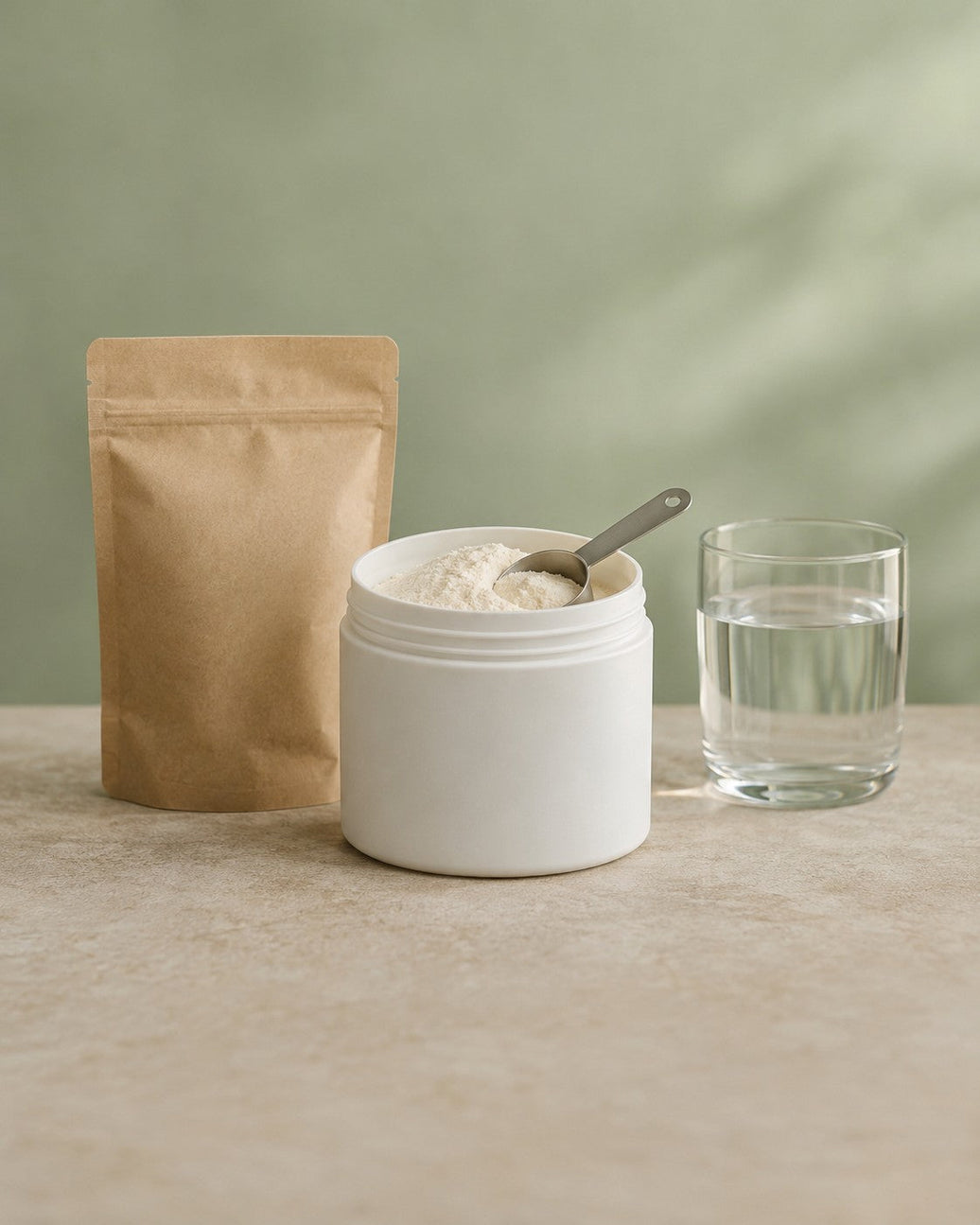
Because fruit powders become sticky at fairly low humidity, size the desiccant at a low target RH. ATMOSIScience fiber desiccant adsorbs more than 10% of its own weight at 20% RH and more than 35% at 50% RH (25 °C), so the target you choose makes a large difference to the dose. Add the moisture from daily openings, as explained in desiccant for packs opened 30 times. For paper or compostable pouches, check the barrier too; see plastic-free supplement packaging and moisture.
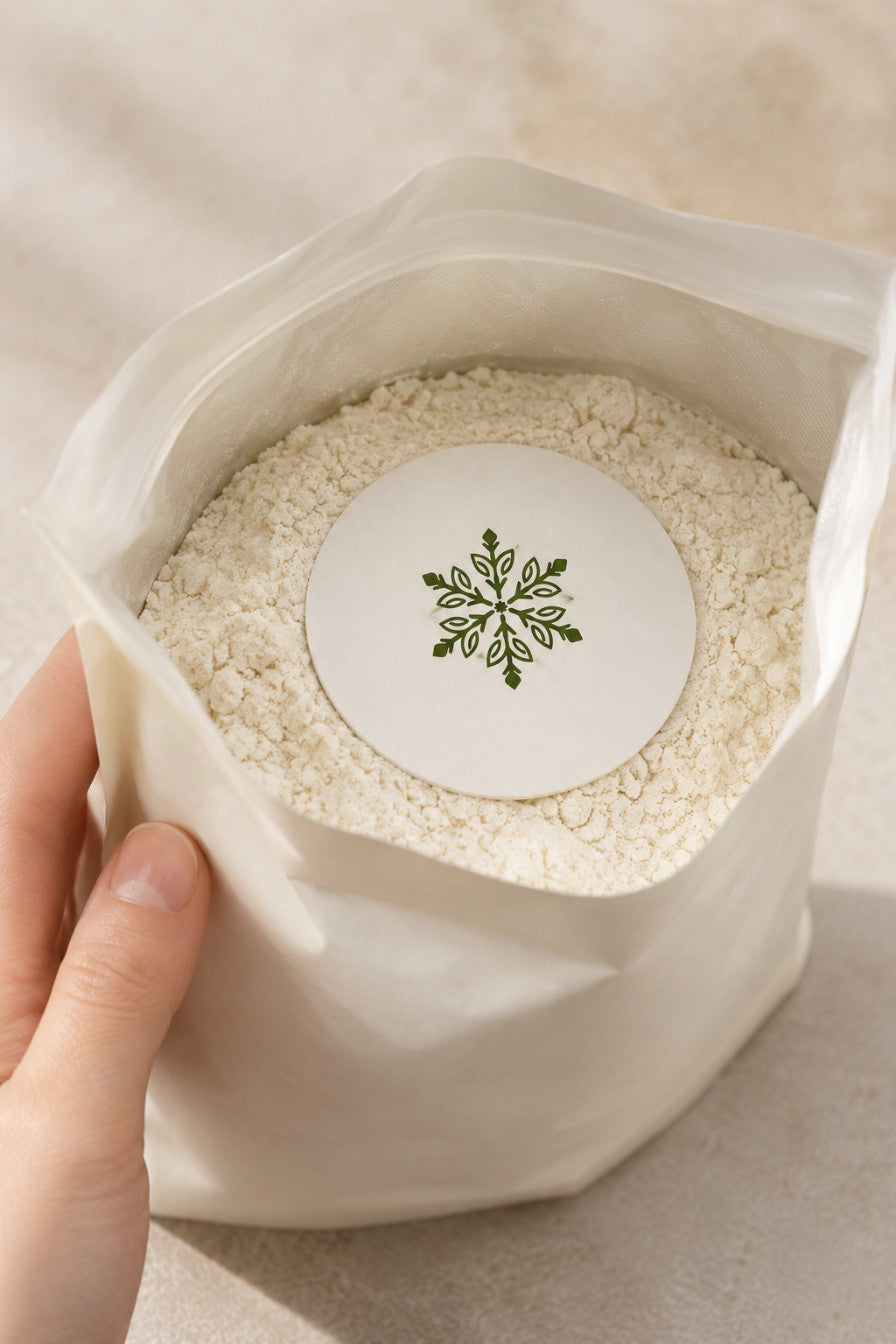
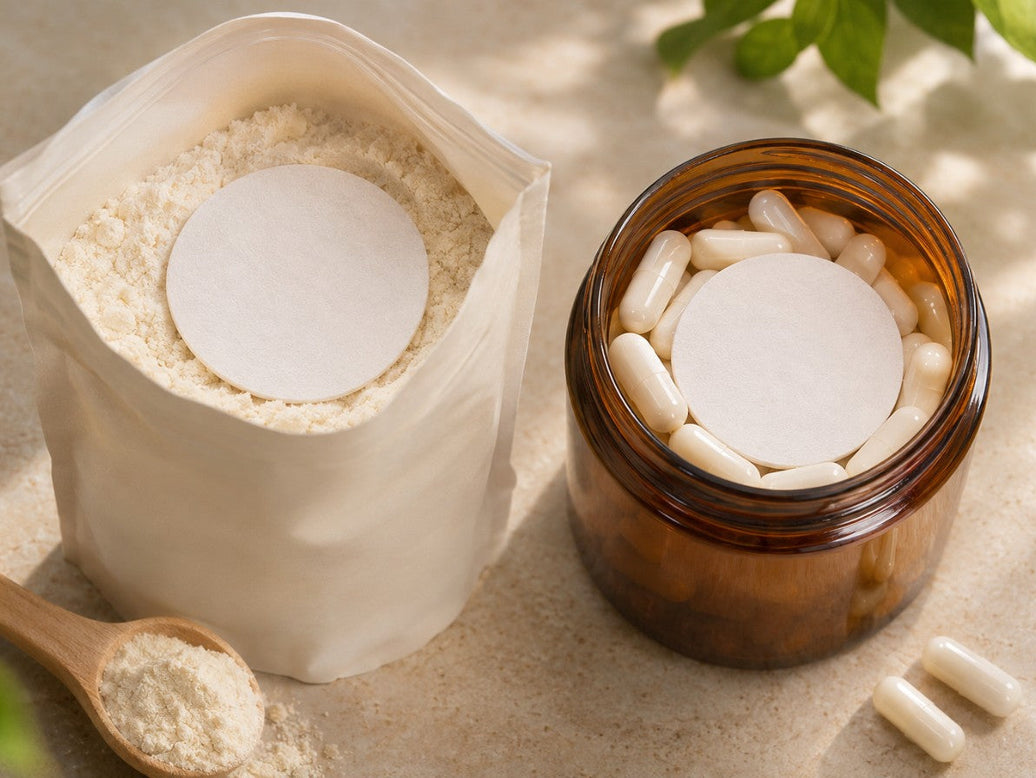
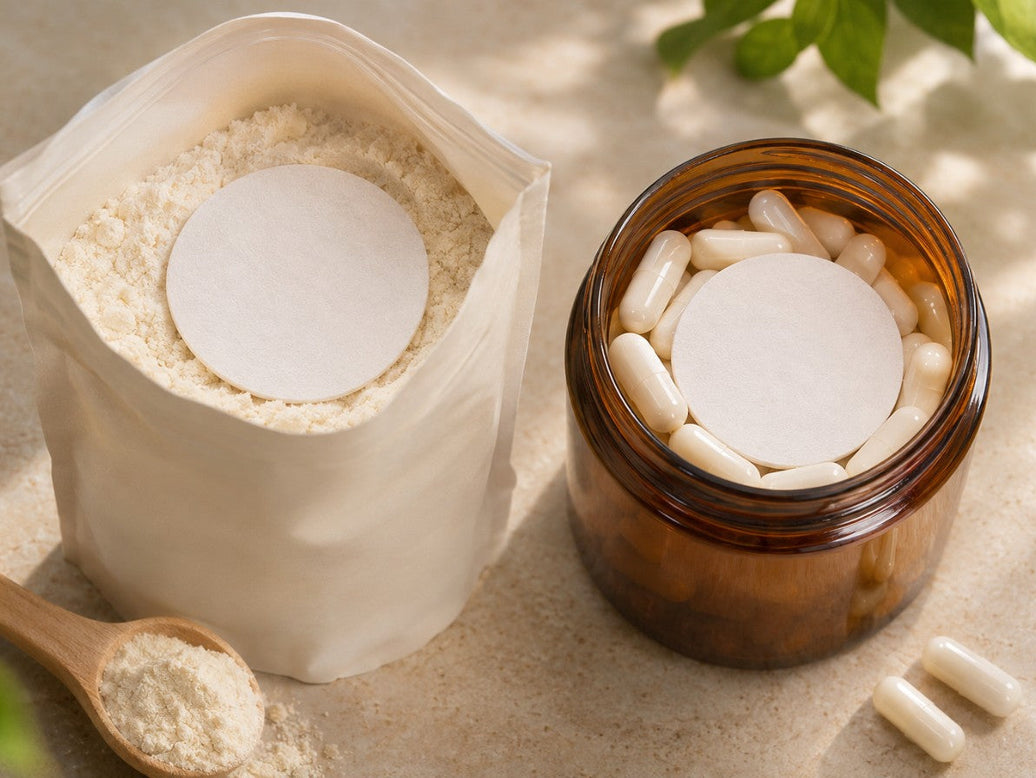
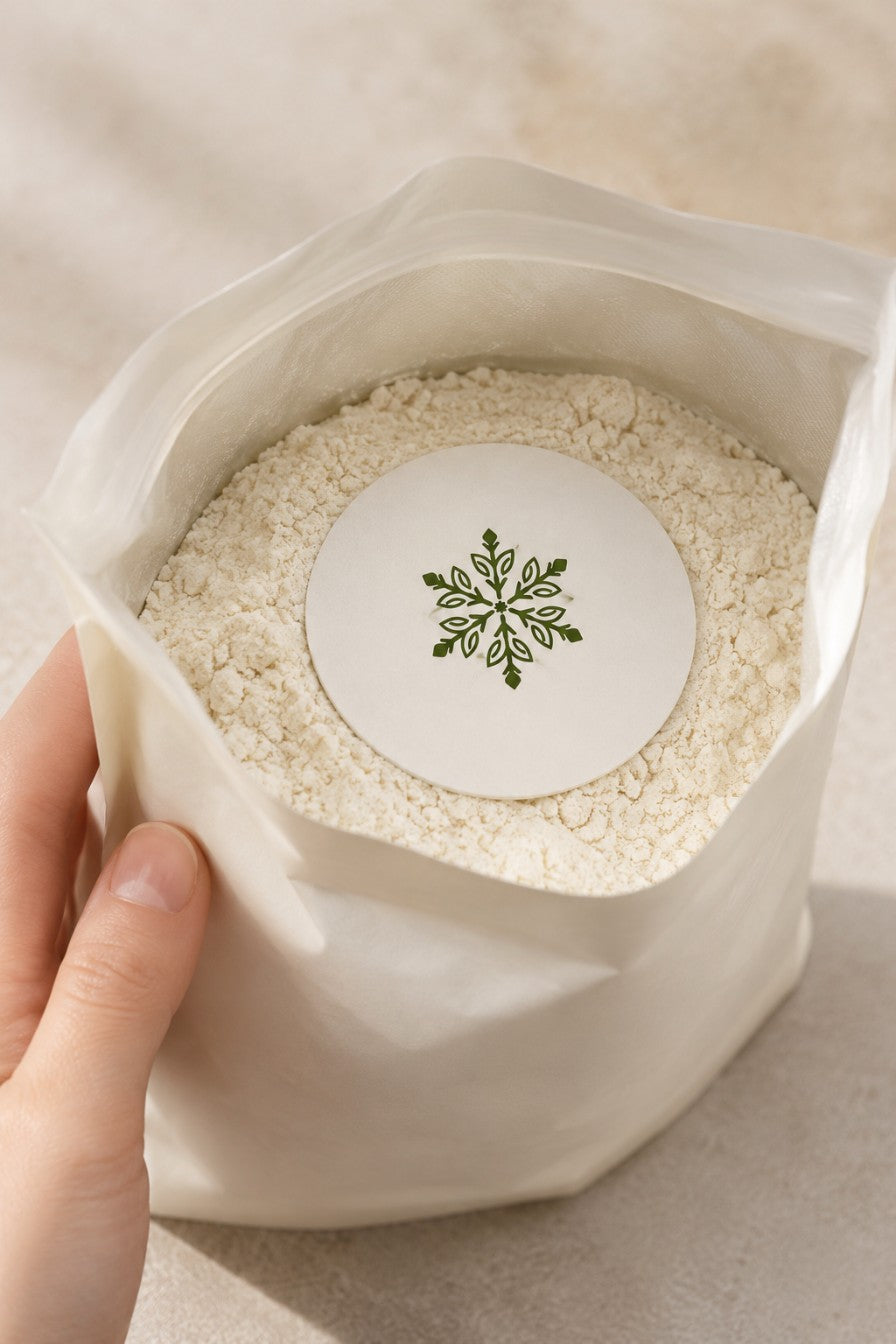
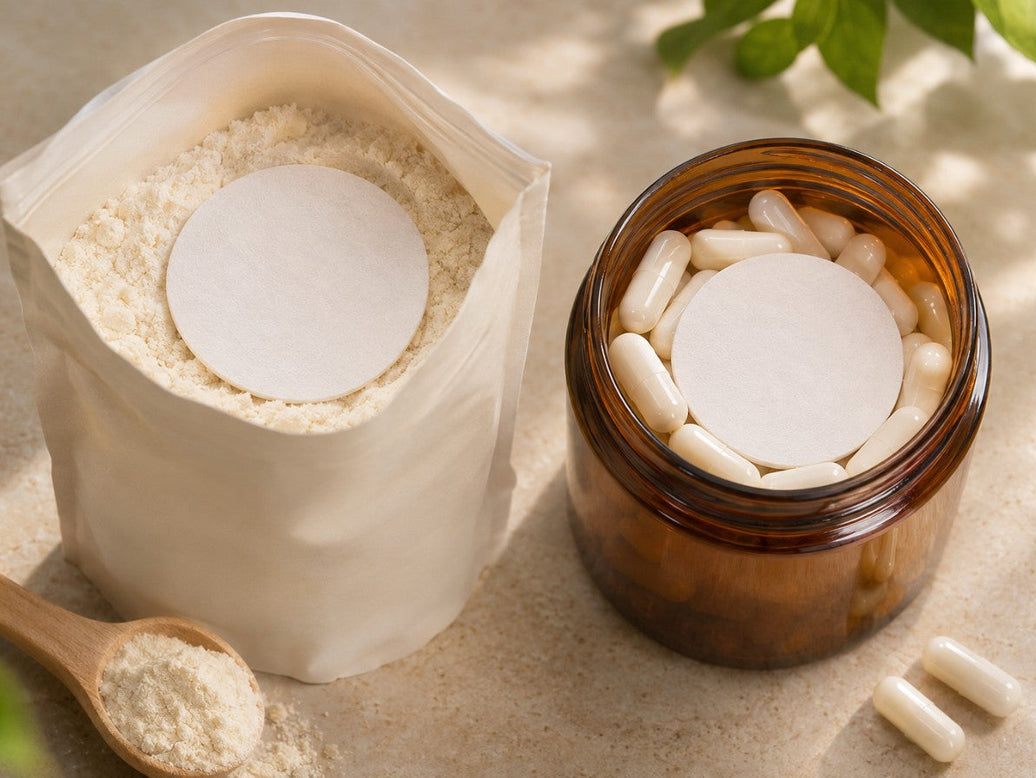
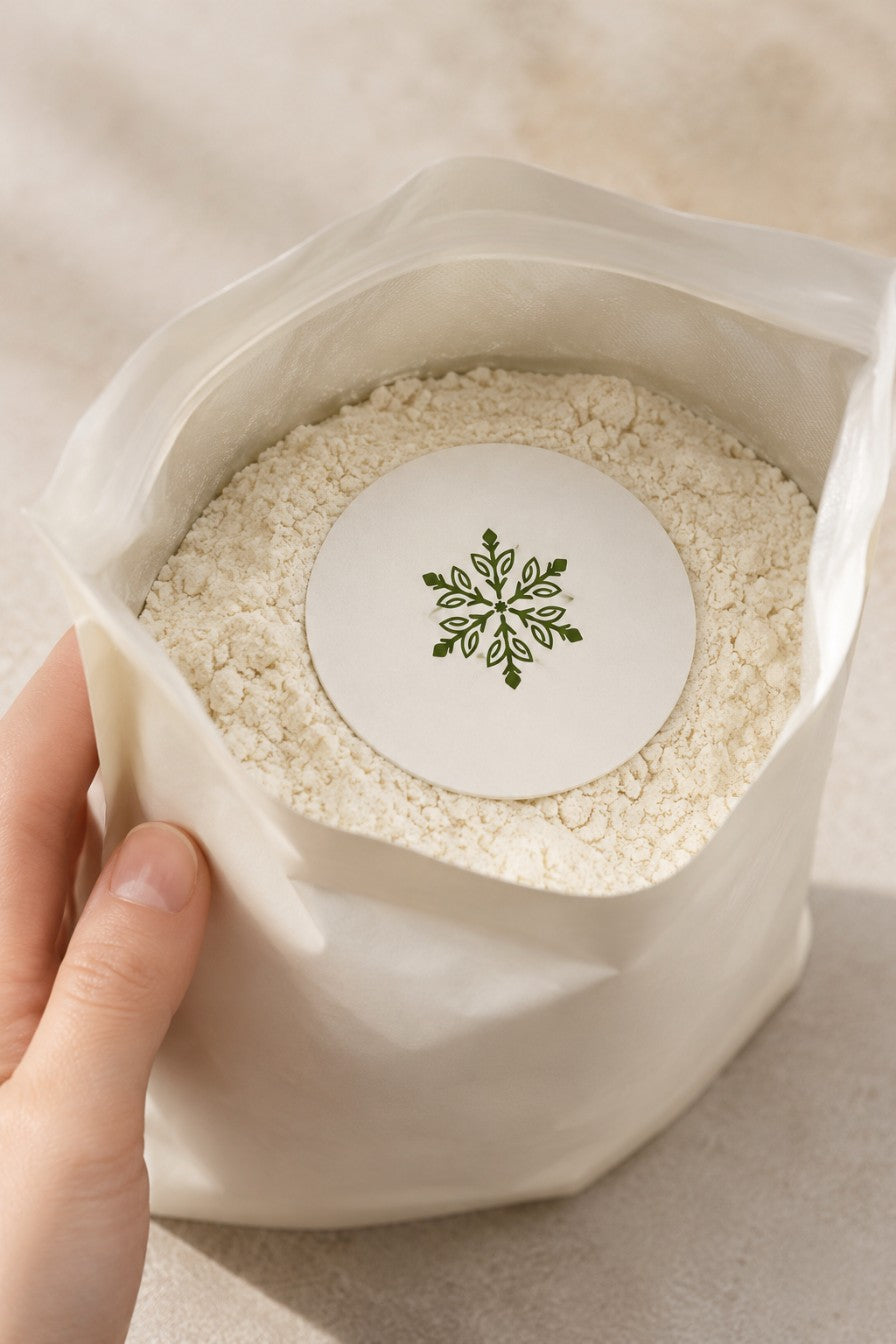
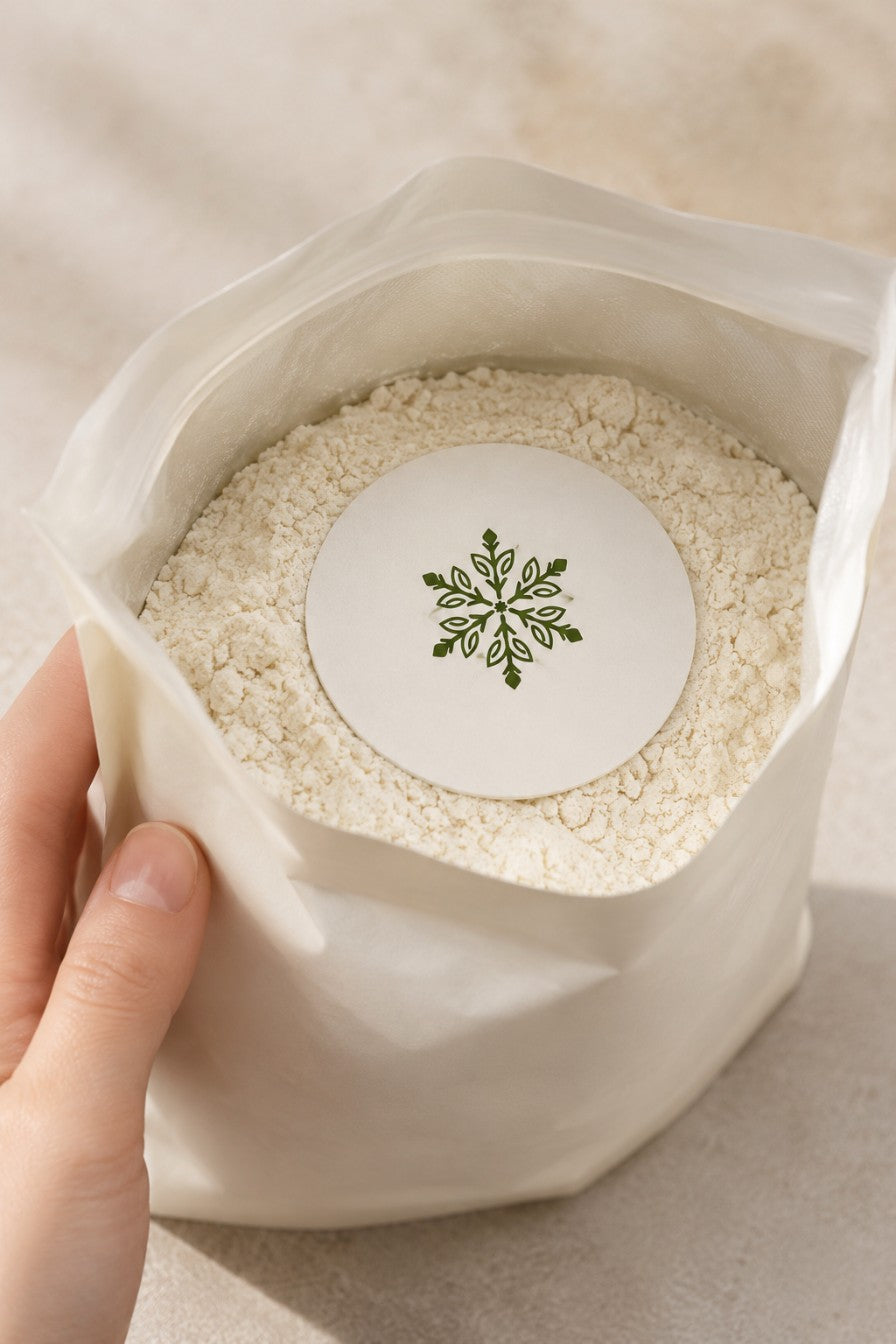
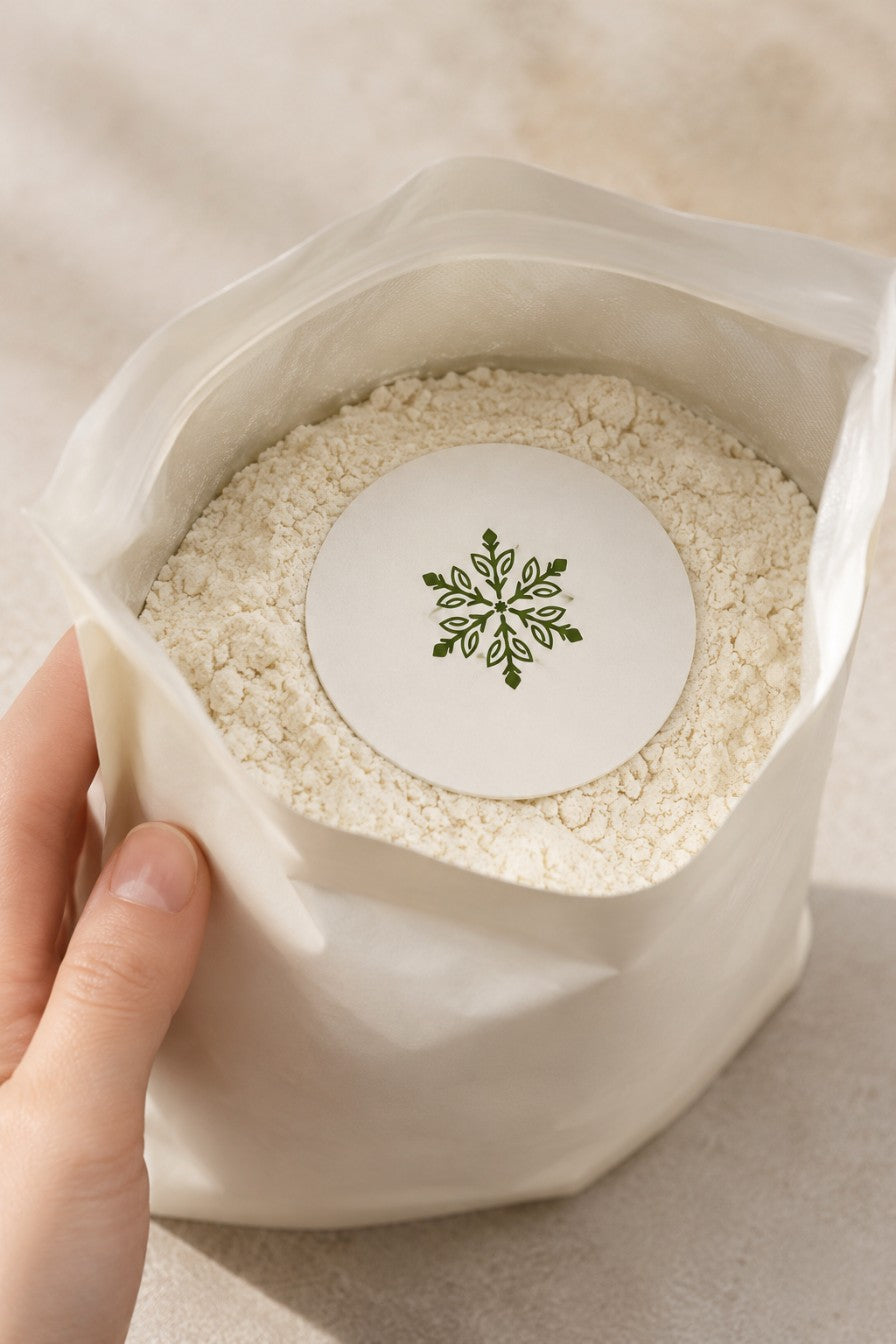
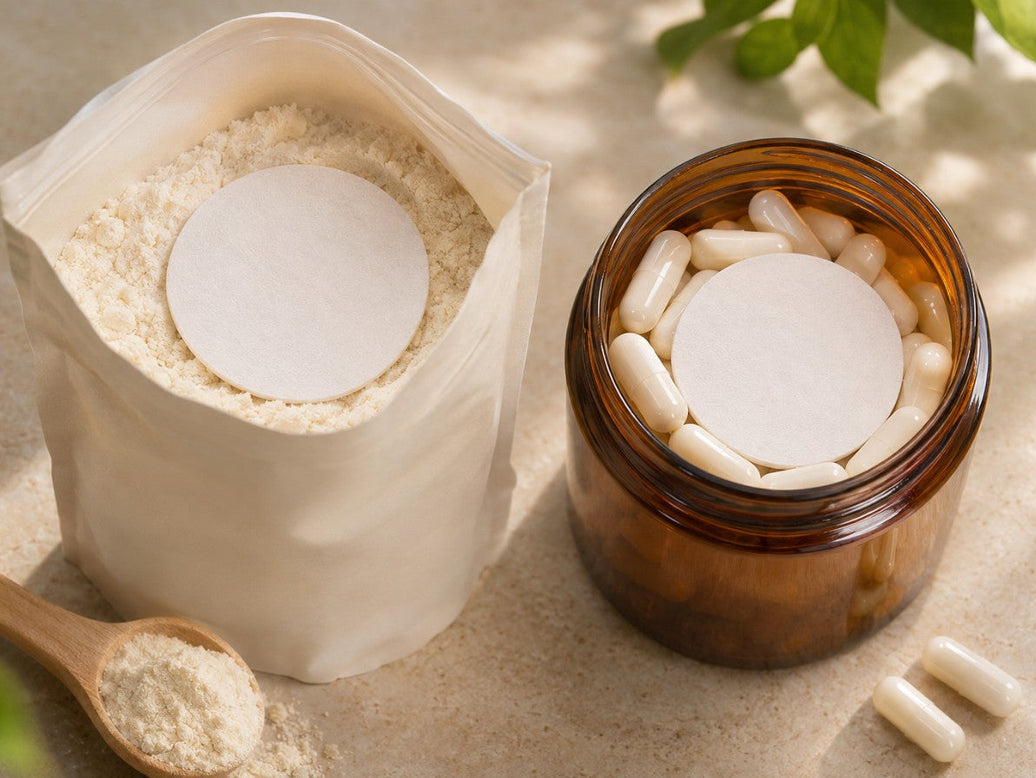
A paper desiccant card fixed in the lid or on the pouch wall keeps working through every opening and cannot shed beads into a brightly coloured powder, where they would be easy to spot. Sizes are in the Fiber Card spec guide.
Validation: watch colour as well as lumps
- Run accelerated and real-time studies on the final pack with an opening schedule.
- Check caking, flow and water activity at each pull point.
- Measure colour with a colourimeter or against a retained reference sample under the same light.
- Include a warm leg that matches your summer shipping, not only a humid one.
Study design is in accelerated shelf-life testing for powders. For green blends that share some of these issues, see desiccant for greens and superfood powders.
Frequently asked questions
Why does beetroot powder go hard?
It is high in sugars held in a glassy state. Moisture and warmth soften that glass, and particles fuse into a hard cake.
Why does freeze-dried fruit powder turn sticky so fast?
Freeze-drying creates a very porous, glassy powder with a lot of surface area. It takes up moisture quickly, and even a small amount makes the surface sticky.
Can a desiccant fix a sticky fruit powder?
It prevents the problem; it does not reverse it. Once particles have fused, drying the air will not separate them.
Does temperature matter as much as humidity?
For fruit powders, often yes. A warm truck can make a dry powder sticky. Control both.
Should fruit powder be stored in the fridge?
Cool storage helps the ingredient, but cold packs opened in warm rooms collect condensation. For consumer packs, a cool, dry cupboard is usually the safer advice.
Keep fruit powders bright and free-flowing
Tell ATMOSIScience the blend, the pack and the markets. We will recommend a Fiber Card size for your target humidity and send samples.
Prefer email? info@atmosiscience.com