For probiotic and enzyme powders, moisture is the number-one enemy of the label claim — often ahead of temperature. Water reactivates dormant cells and enzymes just enough to consume their own reserves and denature, so viable count and activity fall long before the expiry date. A probiotic that ships at 50 billion CFU can arrive well under claim if headspace humidity was left to drift. This is a viability problem, and it is won or lost on relative humidity control.
This guide covers why moisture destroys CFU and enzyme activity, the tight RH target these products need, and how to spec desiccant that holds the window without contaminating a bottle of capsules.
Why moisture is deadlier than heat for live cultures
Freeze-dried and spray-dried probiotics survive by staying in suspended animation at very low water activity. Reintroduce moisture and two things happen. First, metabolic reactions restart at a trickle — the cell burns membrane and internal reserves it cannot replace in the pack, and dies. Second, water enables the oxidation and hydrolysis that damage membranes directly. The result is a steady CFU decline that accelerates with every point of RH.
Enzyme powders — proteases, lipases, amylases, lactase, and digestive blends — follow the same logic. Adsorbed water gives the protein enough mobility to unfold and lose its active conformation, and to drive hydrolytic self-digestion. Activity, measured in units per gram, drifts down.
The controlling spec is water activity (aw), not just RH — most live-culture and enzyme products target a very low aw, and small increases matter. The relationship between aw and headspace RH is explained in our water activity vs. RH guide.
The formats that carry the risk
Capsule and tablet bottles. The classic probiotic HDPE bottle needs an in-bottle desiccant. Because these are re-opened daily by the consumer, capacity has to last the whole in-use period, not just transit.
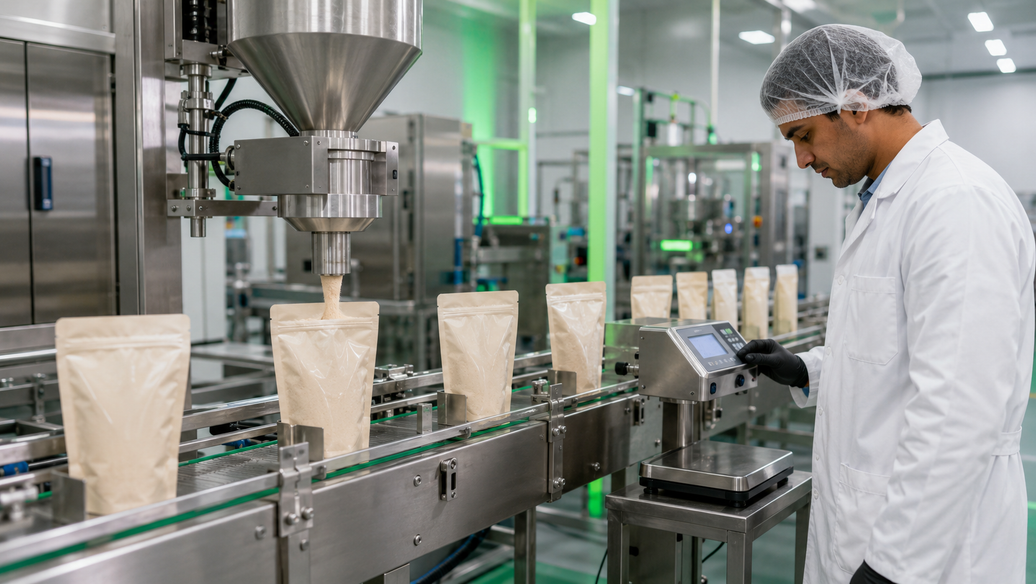
Stick packs and sachets of probiotic powder. Barrier film protects the individual dose; the exposure is the bulk powder before filling.
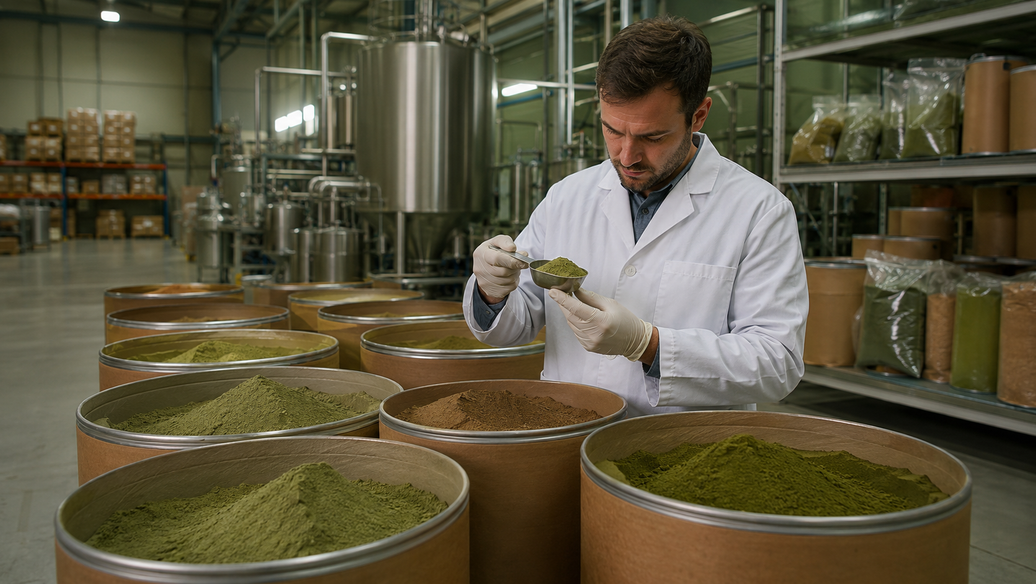
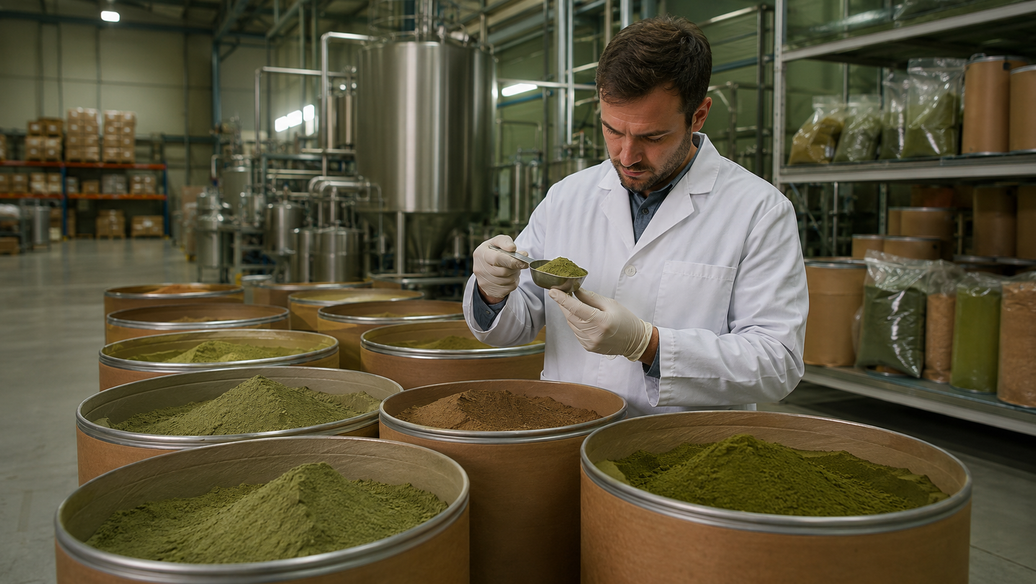
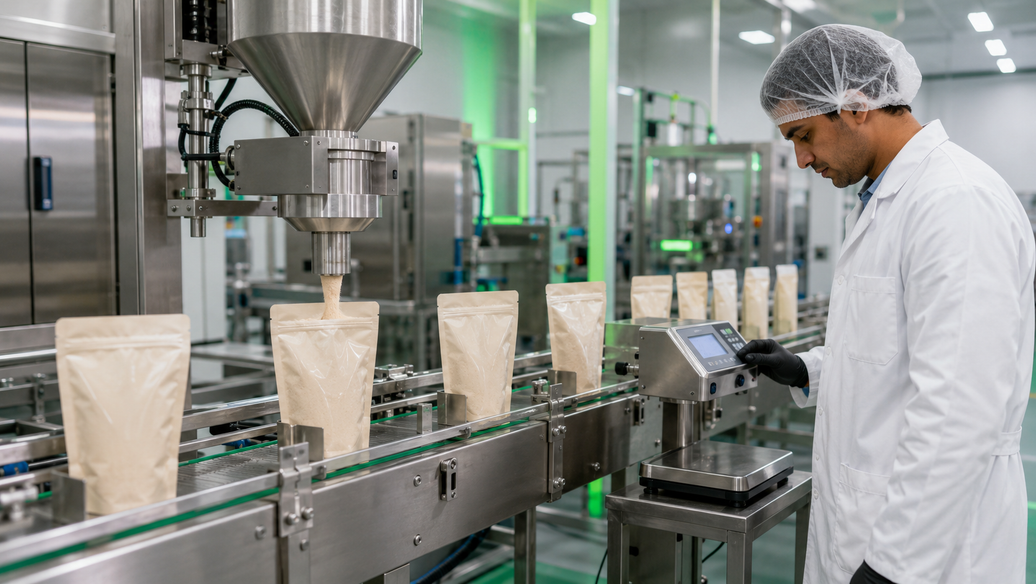
Bulk culture and enzyme concentrate. High-value B2B material shipped in foil-lined drums to finished-goods manufacturers. Every drum re-opening is a viability event, so a high-capacity, reusable desiccant in the liner is the protection.
Why format and dust matter more here than almost anywhere
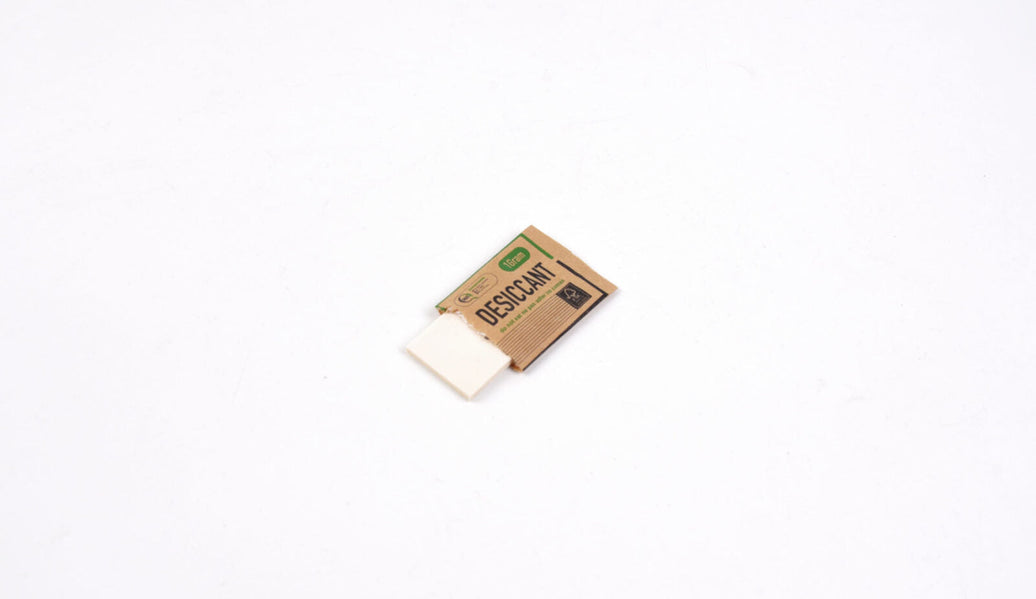
A probiotic bottle is full of capsules a person swallows. Loose silica beads or clay fines mixed among capsules is a foreign-matter failure — and a torn bead sachet is a recall, as detailed in our guide to loose-fill desiccant risks. Two dust-free ATMOSIScience formats fit:
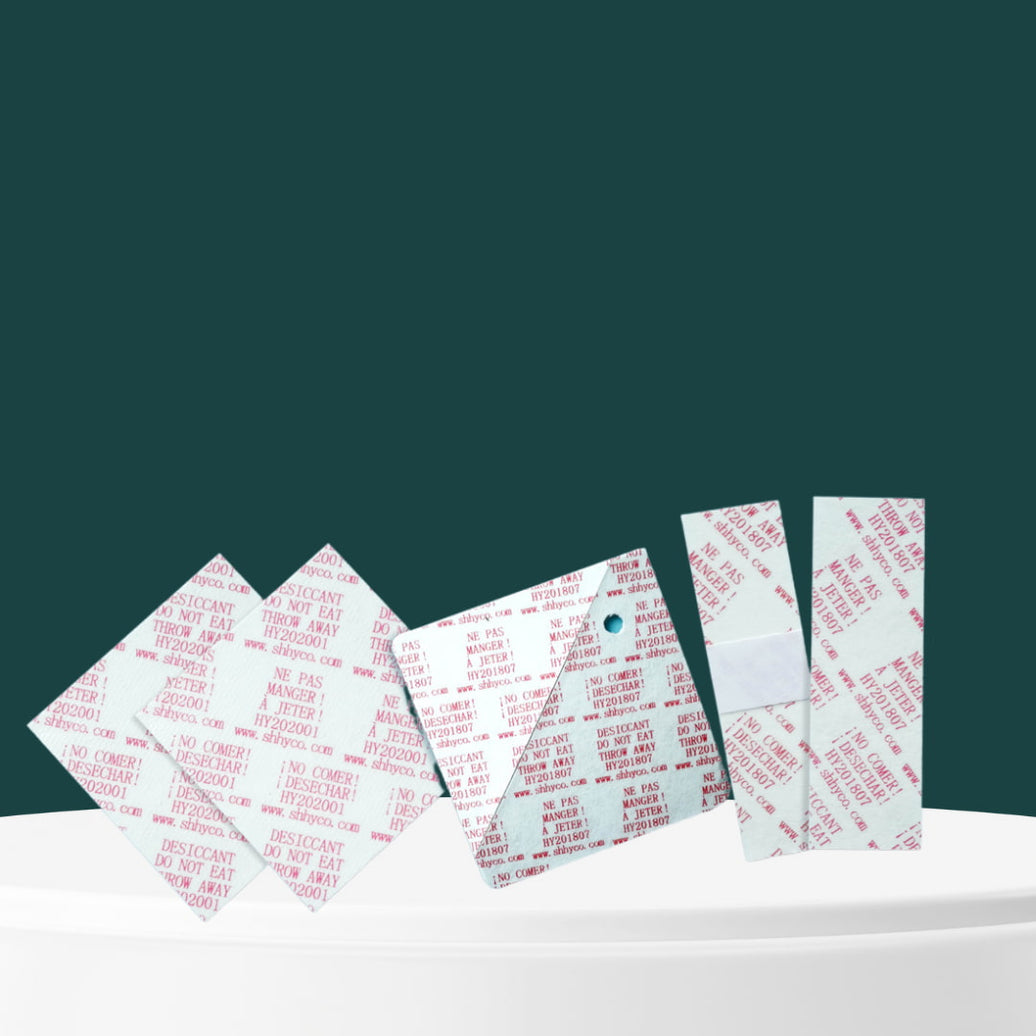
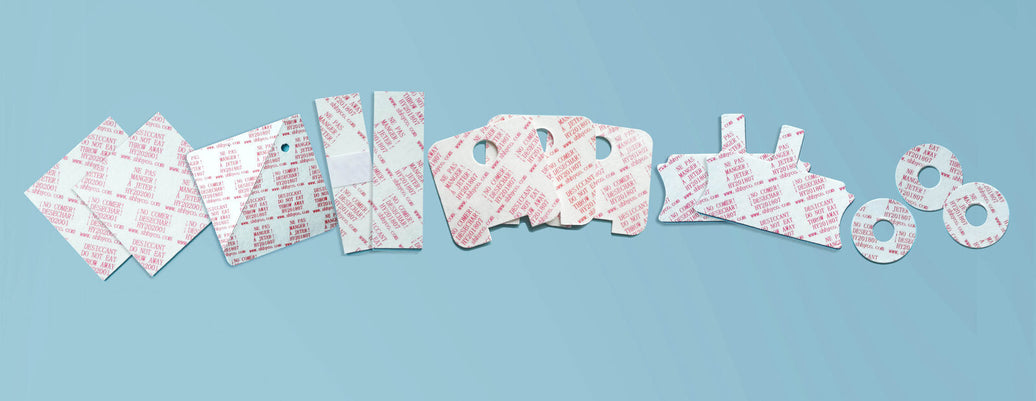
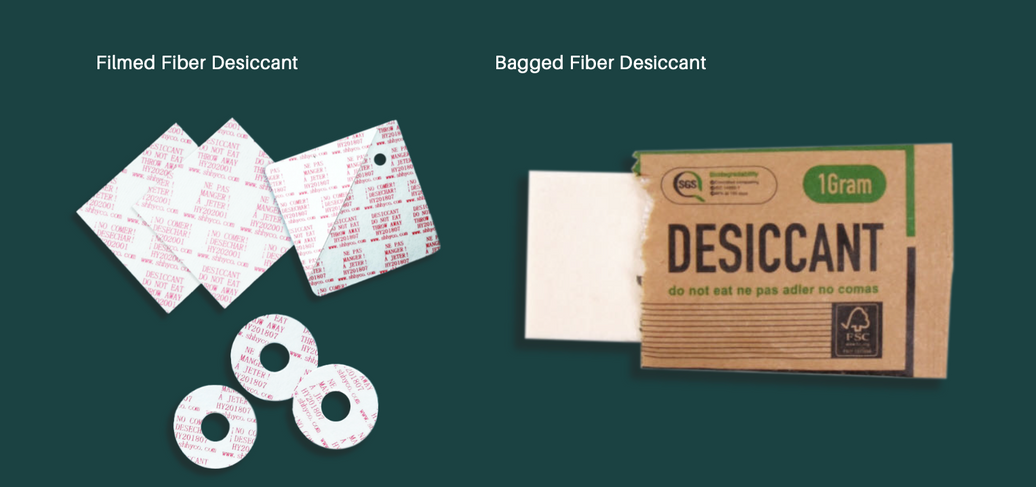
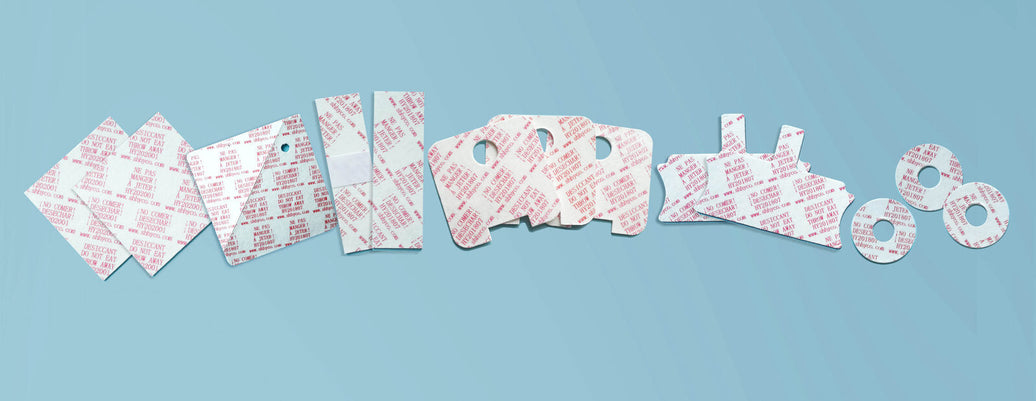
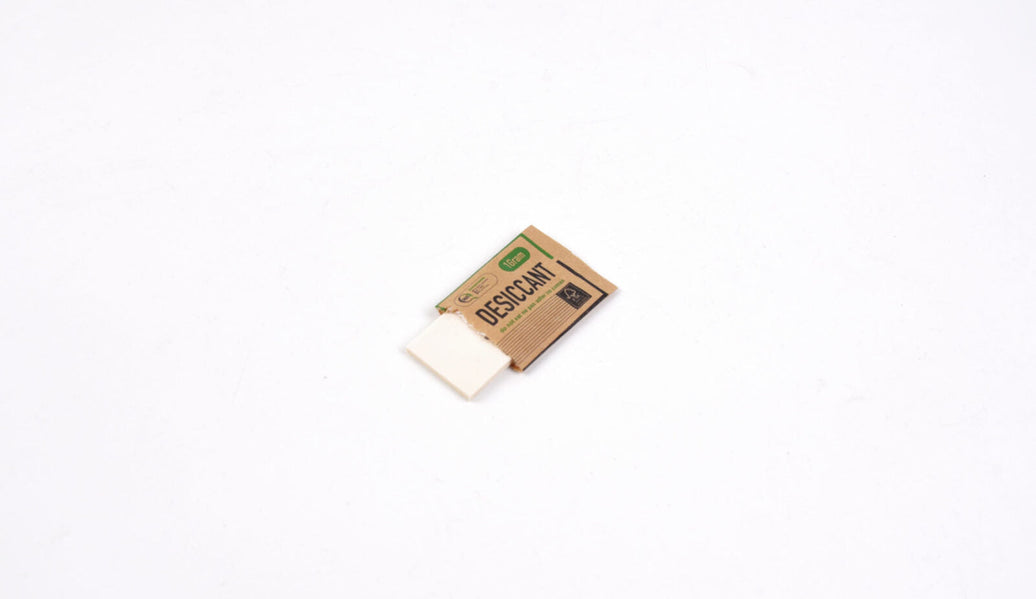
Die-cut film desiccant pads — rigid, paper-wrapped, dropped cleanly into a bottle by an auto-inserter, sitting flat among capsules with nothing to shed. Format and printing are in the film desiccant guide.
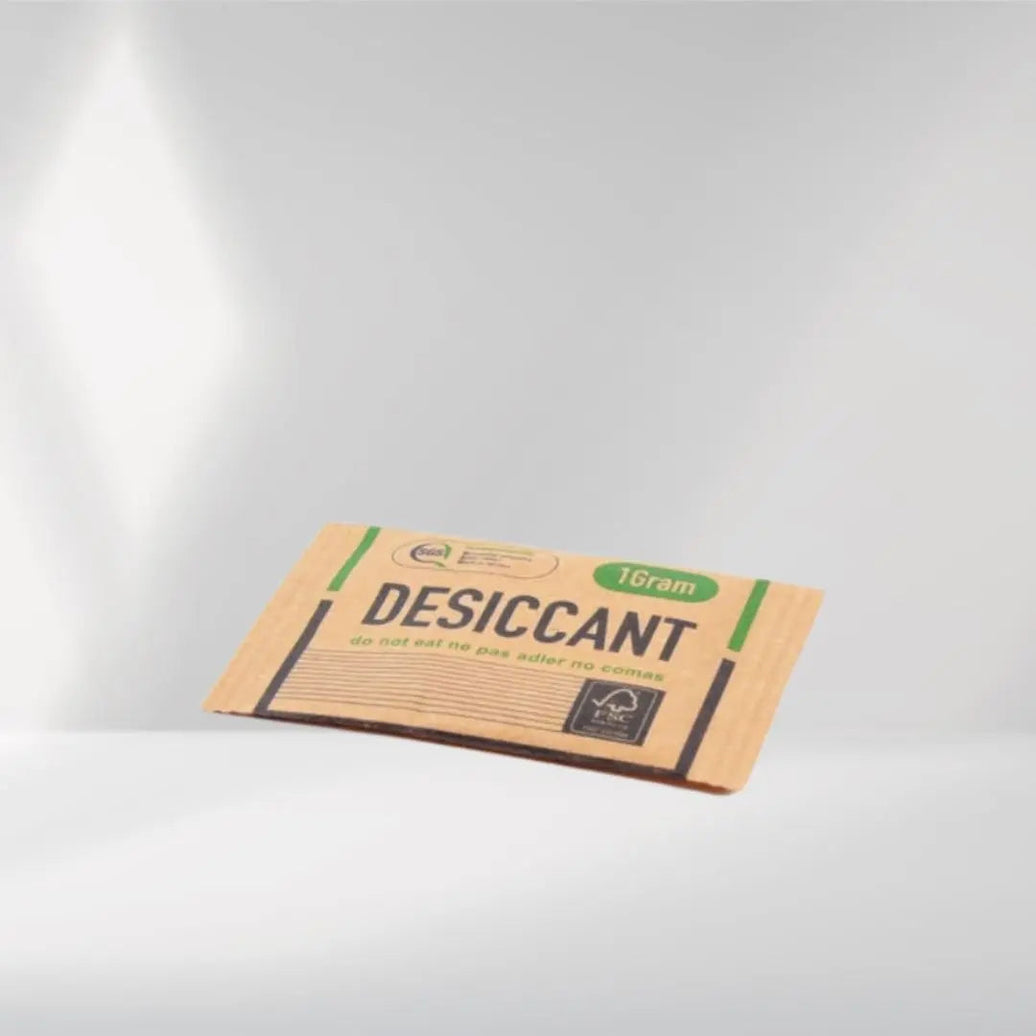
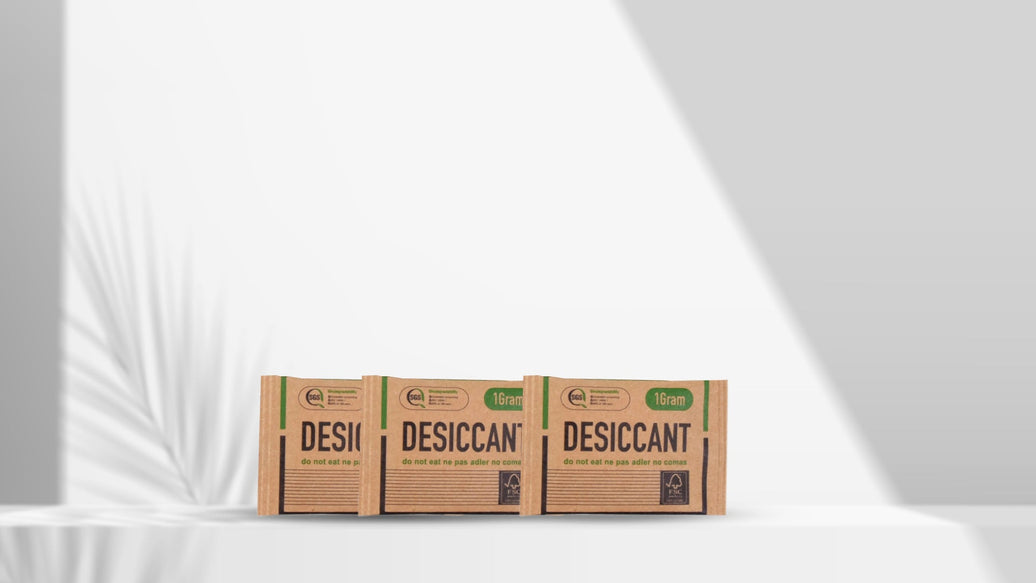
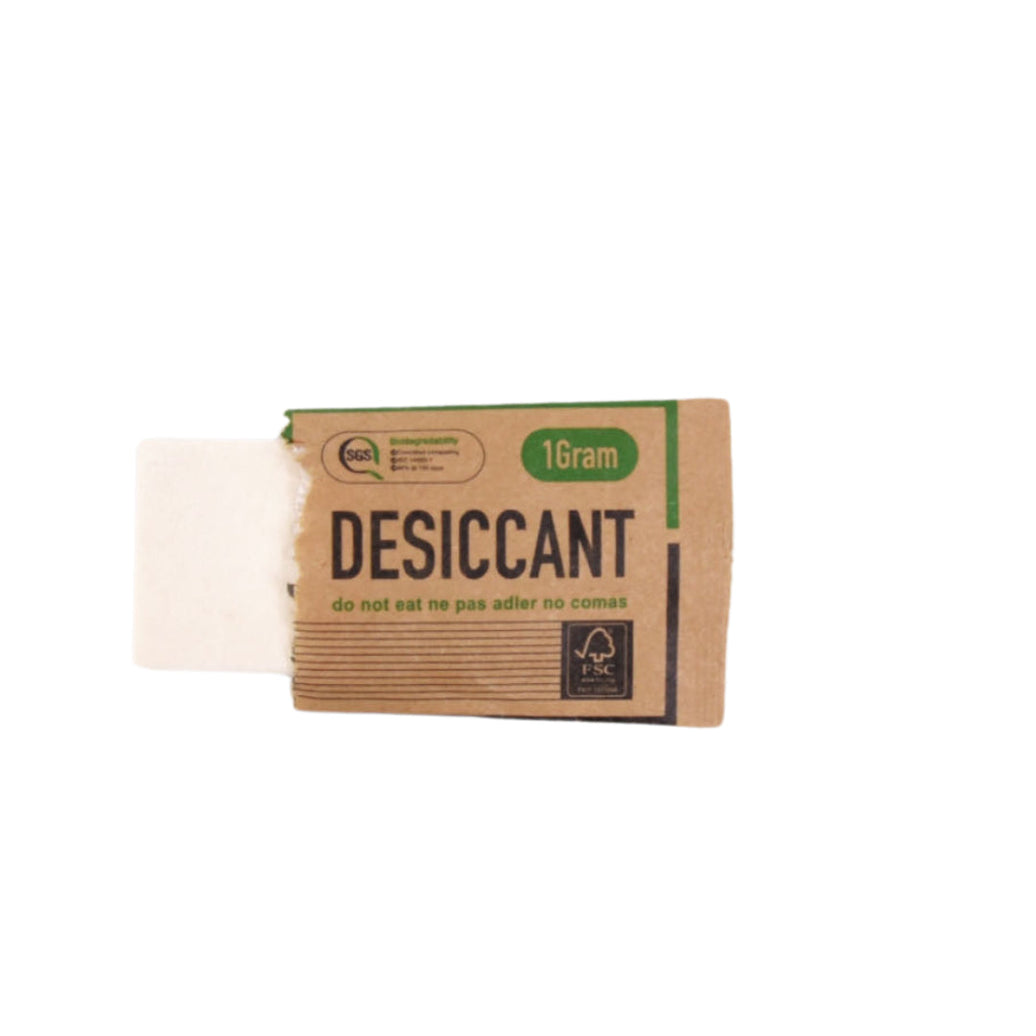
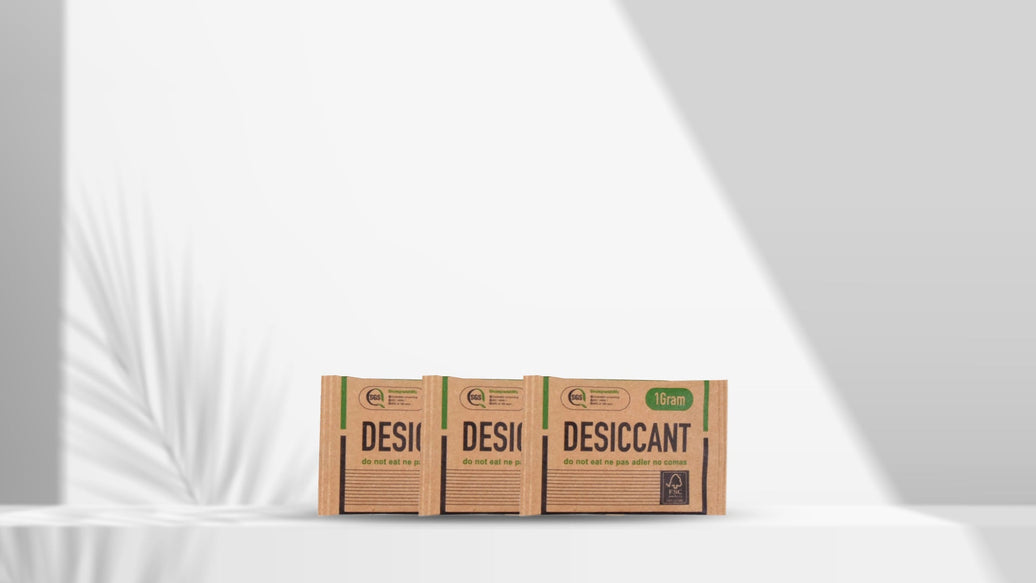
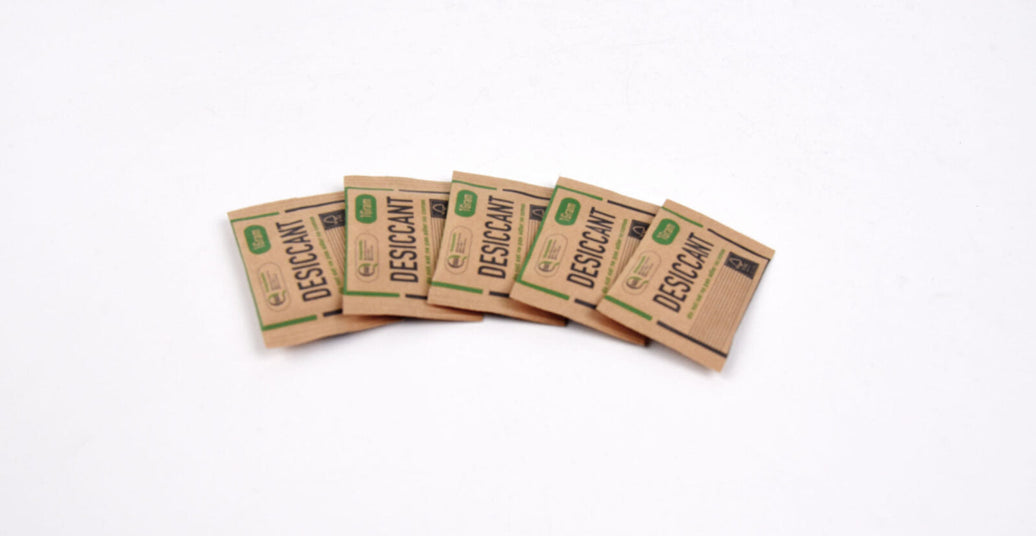
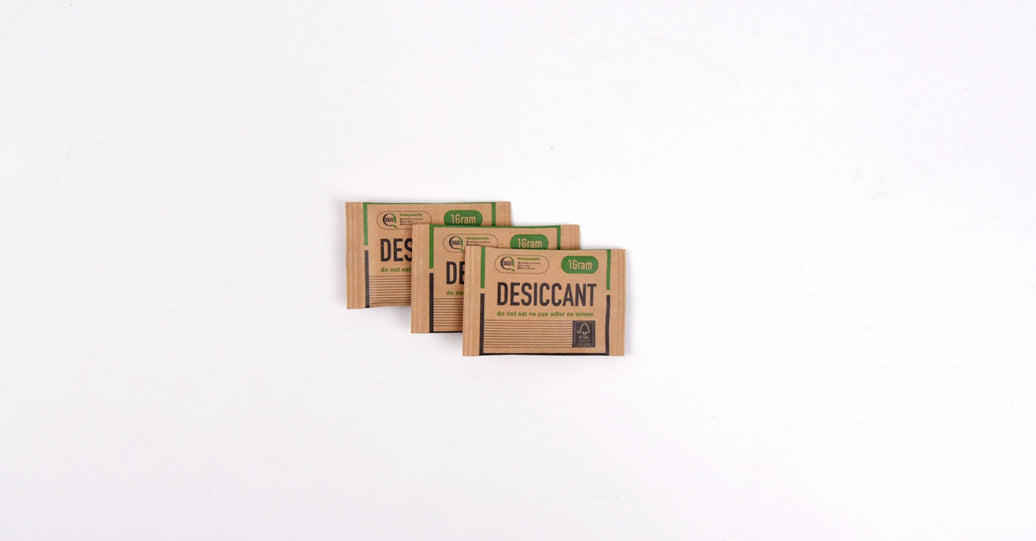
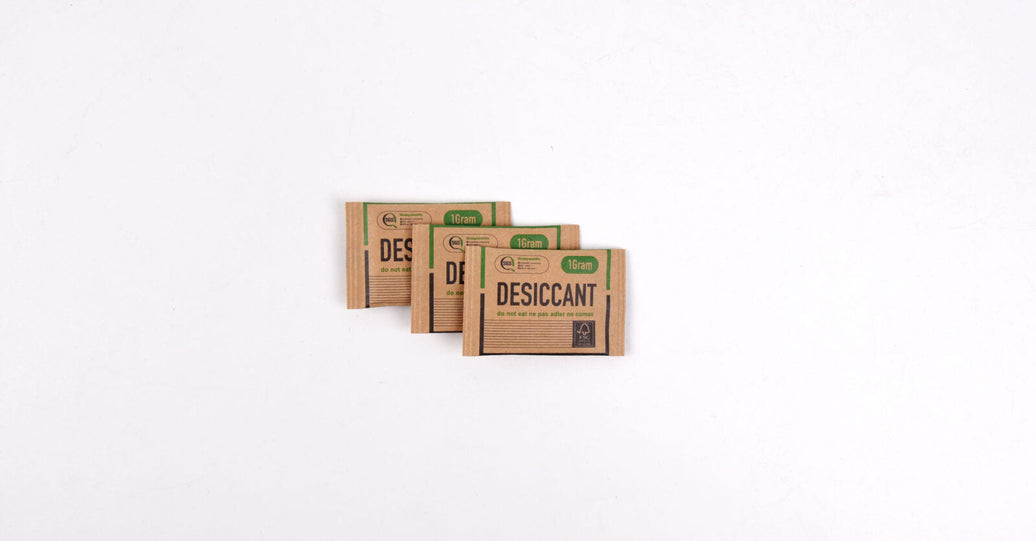
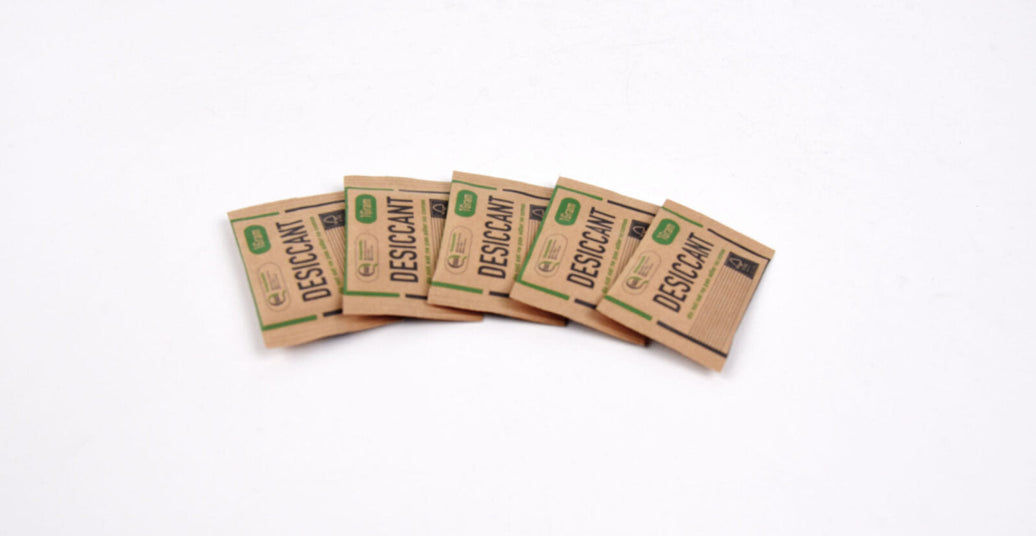
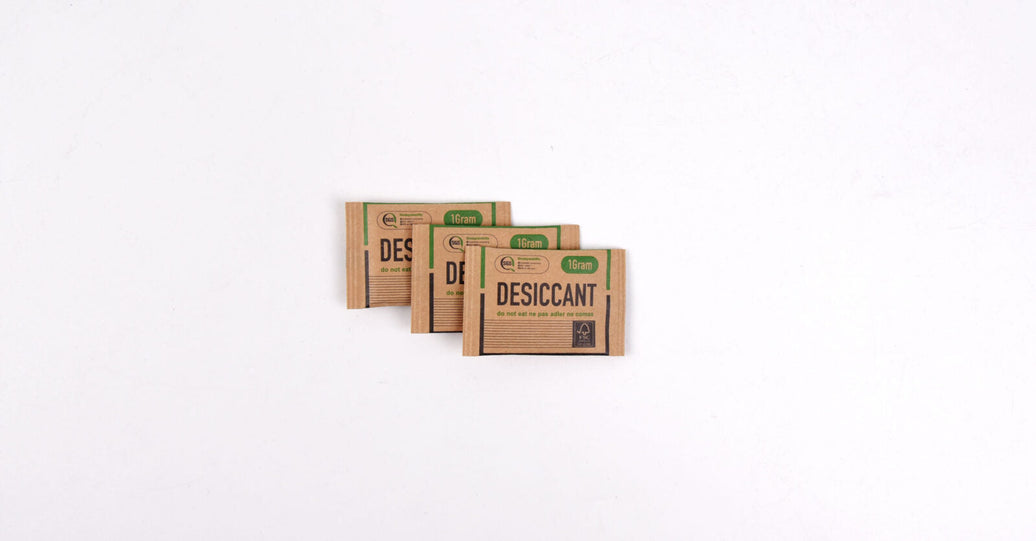
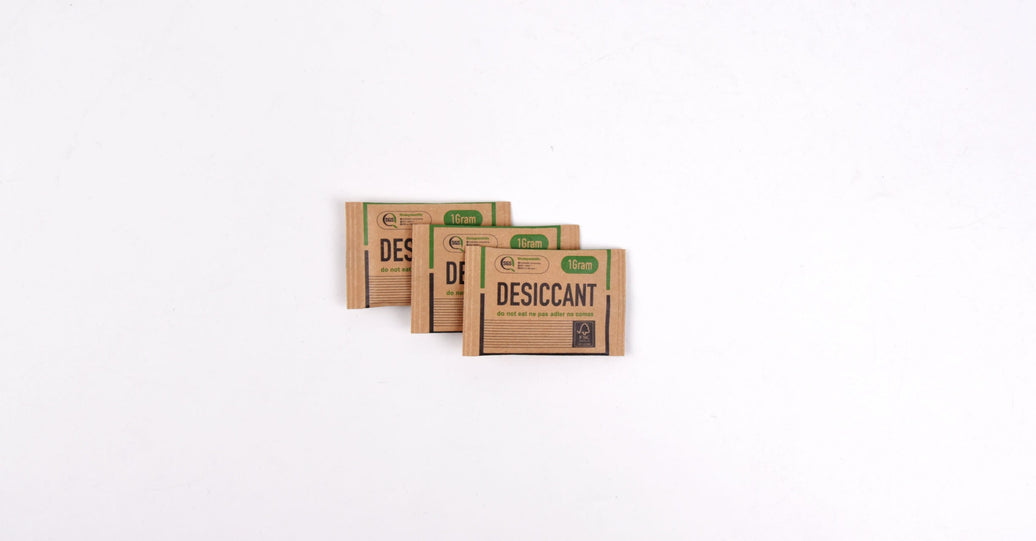
Fiber sachets — dust-free plant-fiber sachets from 1 g up, for pouches and bulk liners.
Capacity and a tight target RH
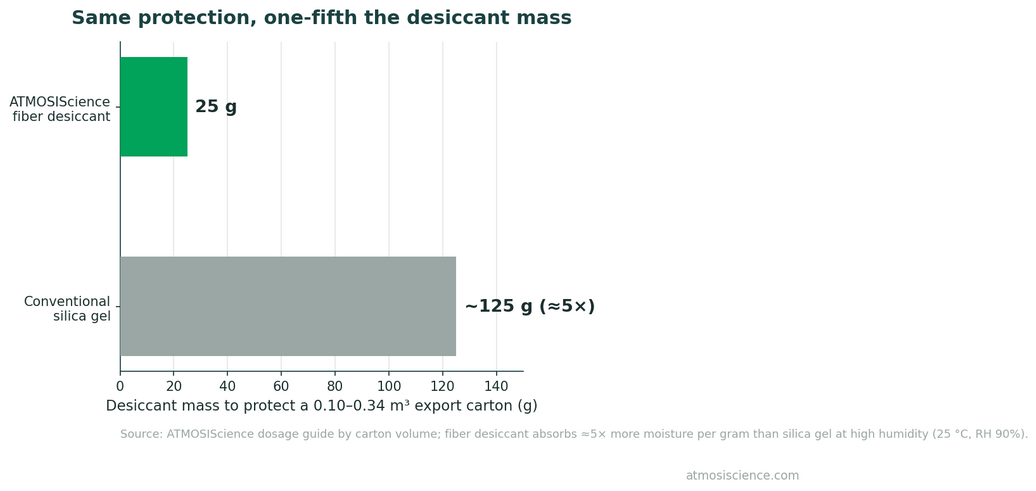
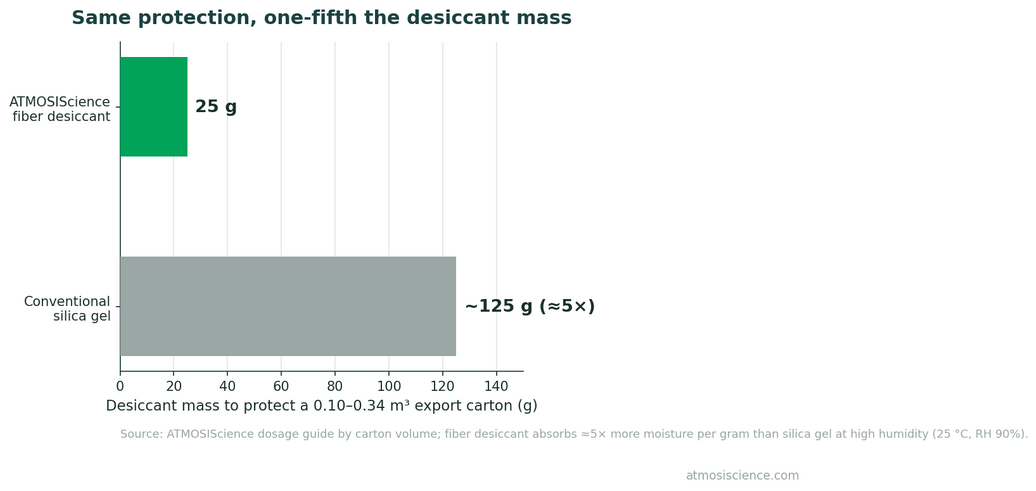
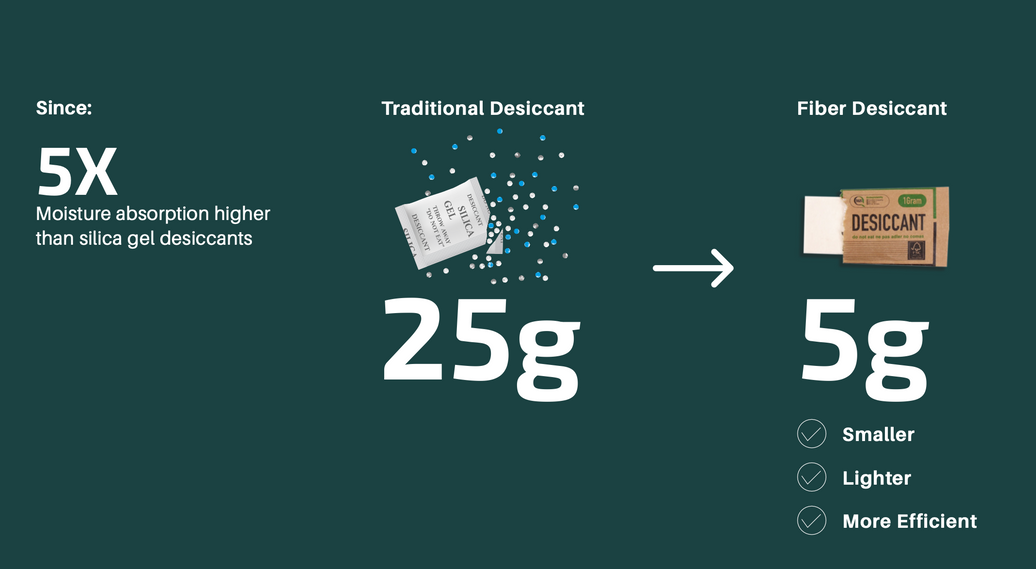
Live cultures demand a low, stable headspace humidity for a long time. Fiber desiccant absorbs over 70% of its own weight at 25°C and 90% RH versus roughly 30% for silica gel, so it holds a low RH through more openings and a longer dwell. Where a product needs a specific low humidity band rather than the driest possible state, two-way fiber control targets that window; the mechanism is covered in how fiber desiccant works.
Documentation for live-culture QA
Probiotic and enzyme brands manufacture under 21 CFR Part 111 and audit their component suppliers hard. ATMOSIScience fiber desiccant ships with SGS ISO 9001 manufacturing (Cert. CN05/31171), full raw-material disclosure, and ASTM D6400 / EN 13432 compostability certificates — the pack a questionnaire expects, in our supplier qualification guide.
Frequently asked questions
Does a stronger desiccant preserve more CFU?
Up to a point — the goal is to reach and hold the product's target low water activity. A higher-capacity desiccant gets there faster and holds it longer through openings, which protects viability across shelf life.
Can a desiccant over-dry a probiotic?
Most live cultures are stored as dry as practical, but some finished formats have an ideal band. Two-way fiber desiccant can be specified to a target RH rather than absolute dryness.
Is a film pad compatible with high-speed bottle lines?
Yes — a rigid, die-cut pad feeds through standard auto-inserters. Line-speed factors are covered in our co-packer insertion guide.
Protect the count on the label
ATMOSIScience supplies dust-free fiber and film-pad desiccant for probiotic and enzyme products, with the documentation live-culture QA requires. Explore ATMOSIScience desiccant solutions, request a sample of the Fiber Desiccant, or contact our team for certificates and a bulk quote.
Related reading: Desiccant for Dietary Supplements · Desiccant for API & Pharmaceutical Powders · Water Activity vs. RH
Get a desiccant spec & bulk quote for your probiotic or enzyme line
Tell us your target water activity, bottle or drum format, and shelf life — we respond with a capacity calculation, certificates, and bulk pricing.