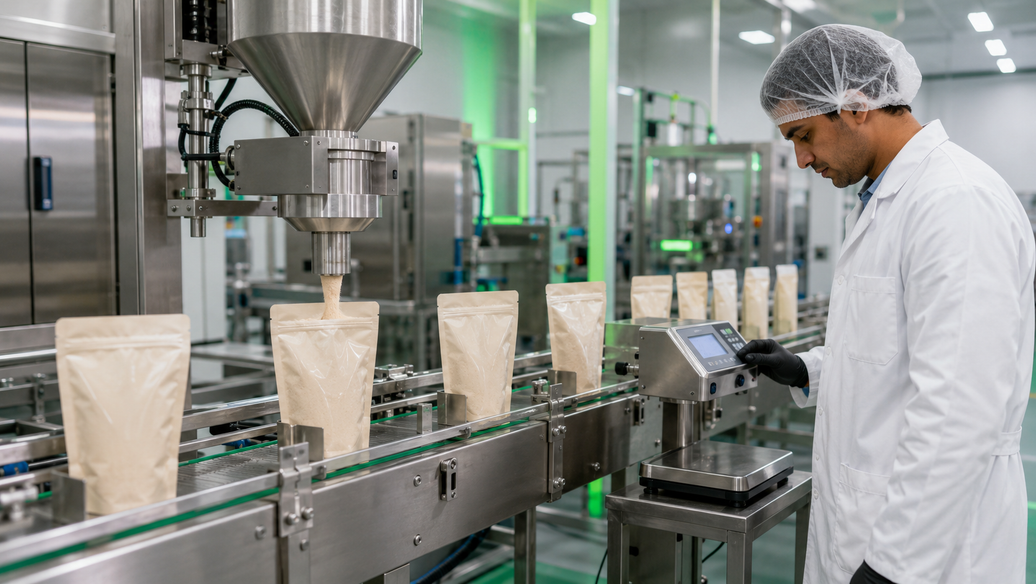
For a moisture-sensitive drug substance, water is not a nuisance — it is a stability-indicating variable that appears on the specification and in the regulatory filing. Adsorbed moisture drives hydrolysis of ester and amide bonds, promotes hydrate and polymorph conversions that change dissolution, and enables the caking that jams a dosing line. Controlling headspace humidity in the container-closure system is part of how pharmaceutical manufacturers hold assay, impurity, and dissolution within spec across the labeled shelf life.
This guide covers the moisture-driven degradation pathways in pharmaceutical powders and how a dust-free, non-ionic desiccant fits API drums, bulk bags, and finished bottles.
How moisture degrades a pharmaceutical powder
Hydrolysis. Many small-molecule APIs contain hydrolytically labile bonds. Water is the reactant; keeping water activity low directly slows the degradation that generates impurities and erodes assay.
Hydrate and polymorph changes. Above a compound-specific critical humidity, an anhydrous form can convert to a hydrate, or one polymorph to another — shifting solubility, dissolution, and bioavailability. This is a container-humidity problem as much as a formulation one.
Deliquescence and caking. Hygroscopic salts and excipients cake, disrupting content uniformity and downstream tablet or capsule filling.
Water activity, not just moisture content, governs these reactions — the principle behind USP water-activity thinking, explained plainly in our water activity vs. RH guide.
Why non-ionic, dust-free construction matters in pharma
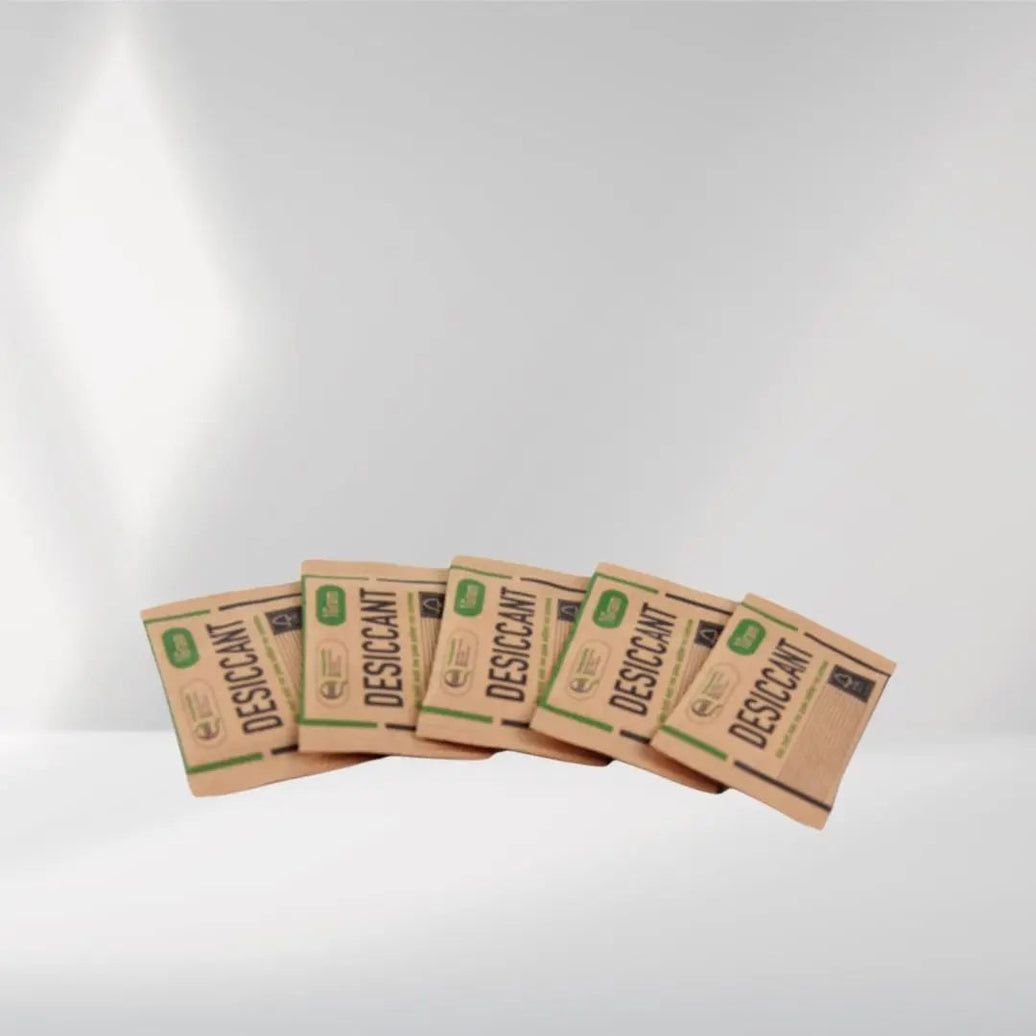
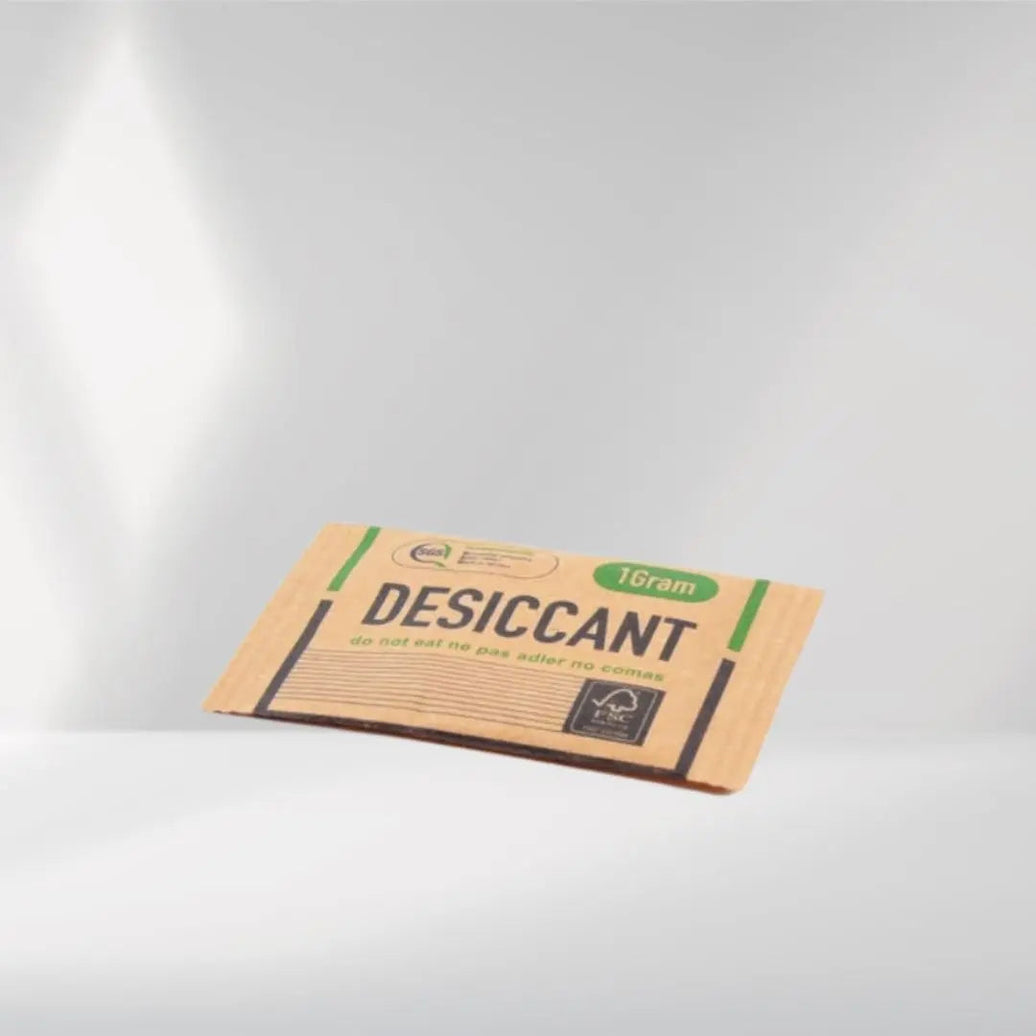
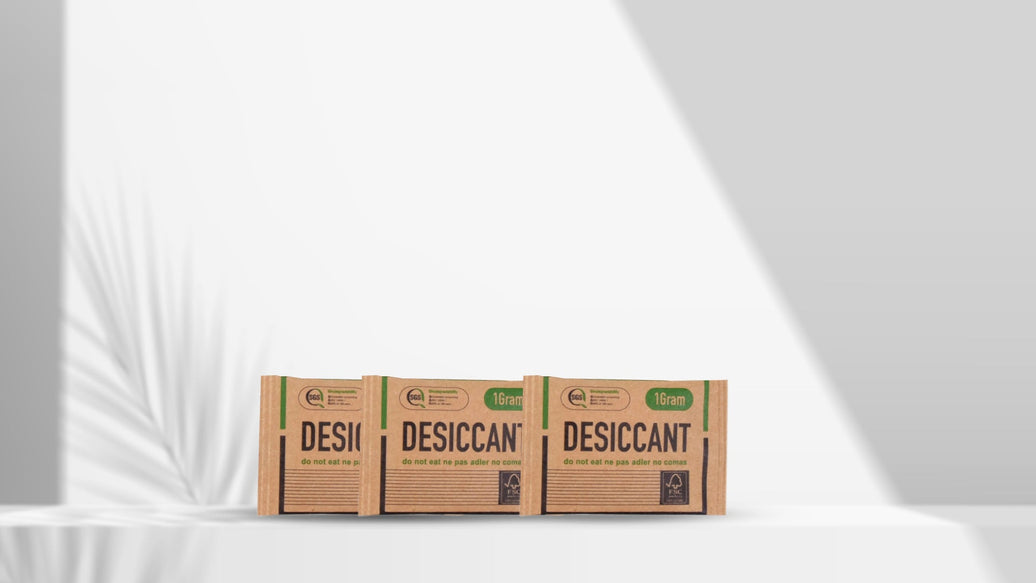
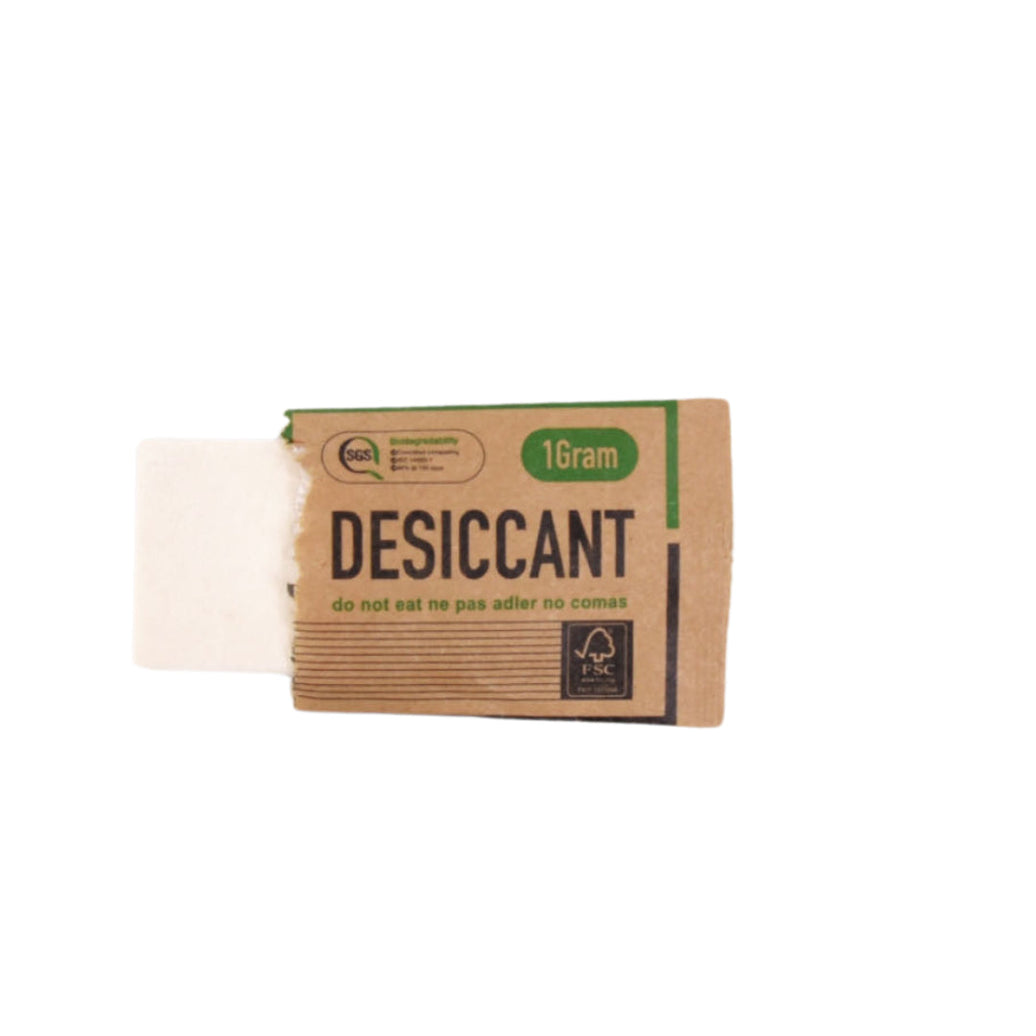
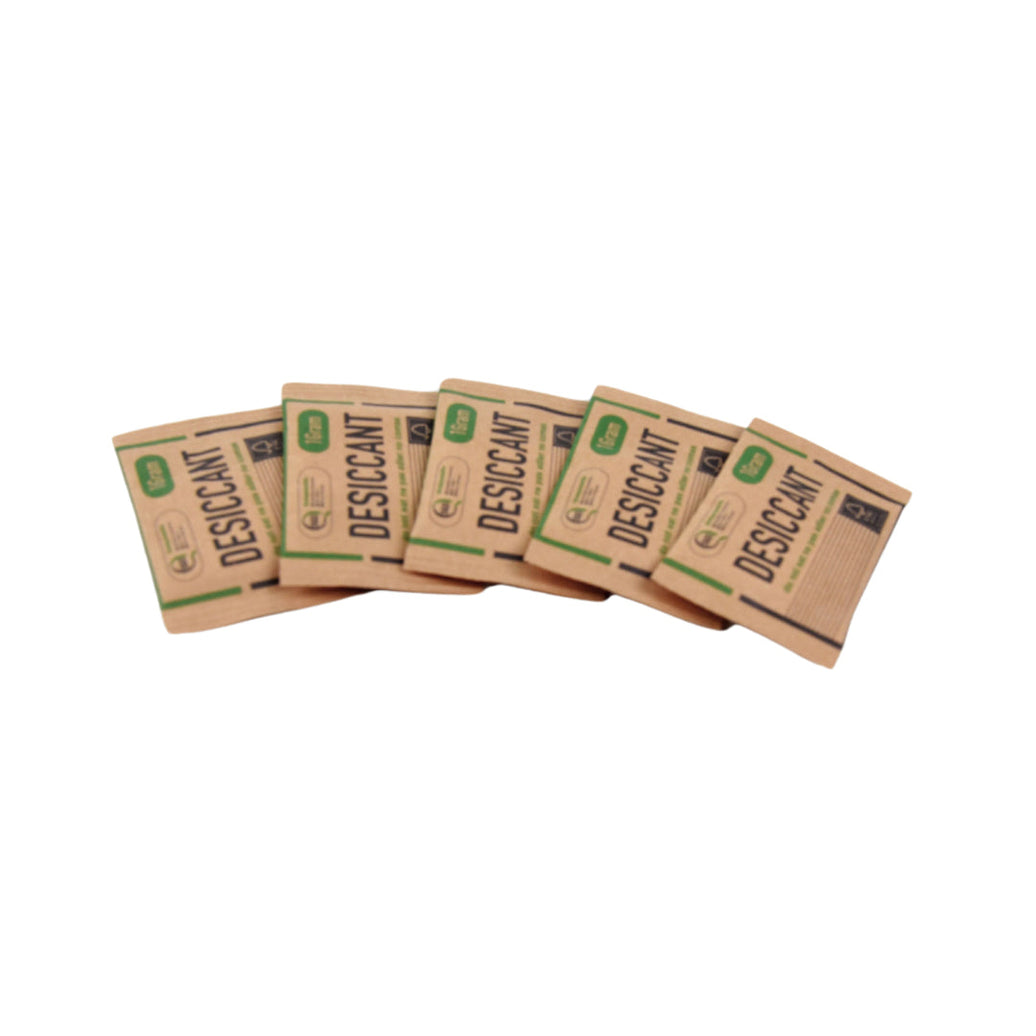
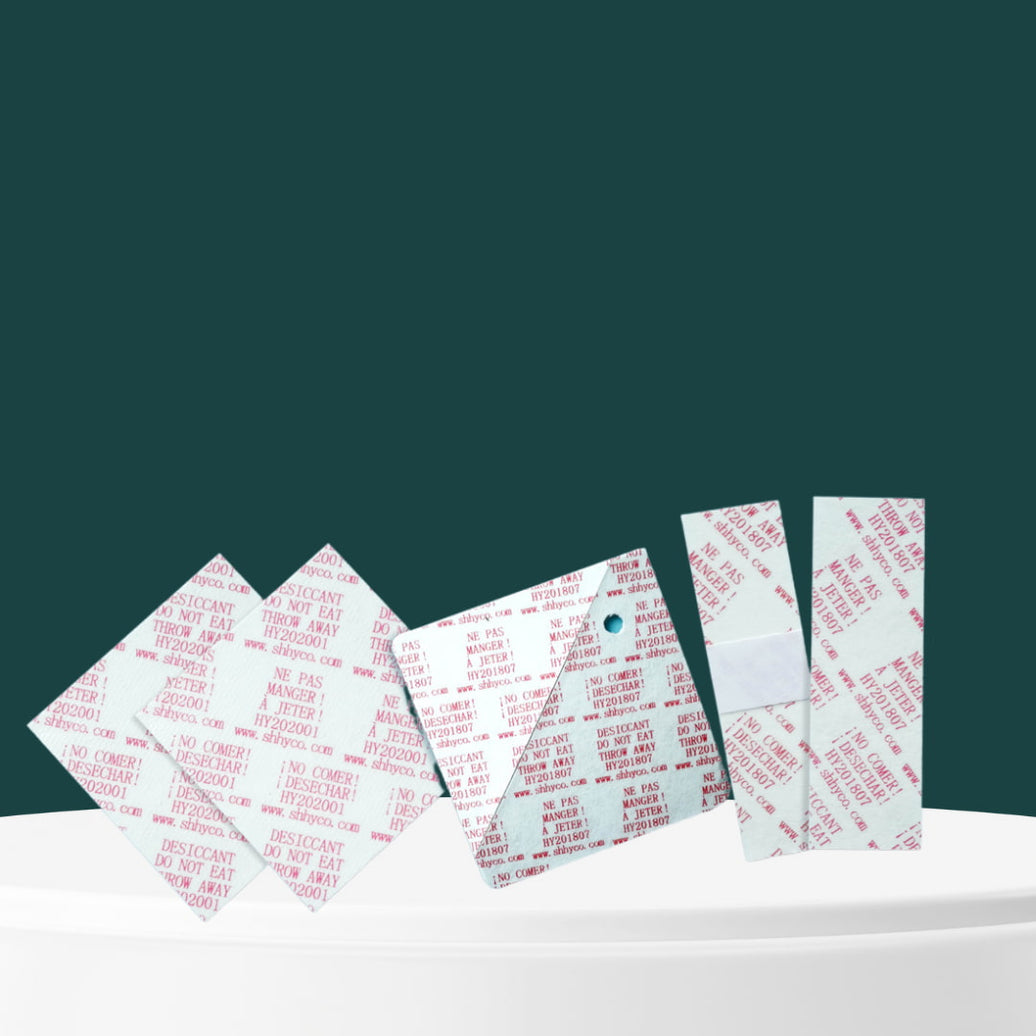
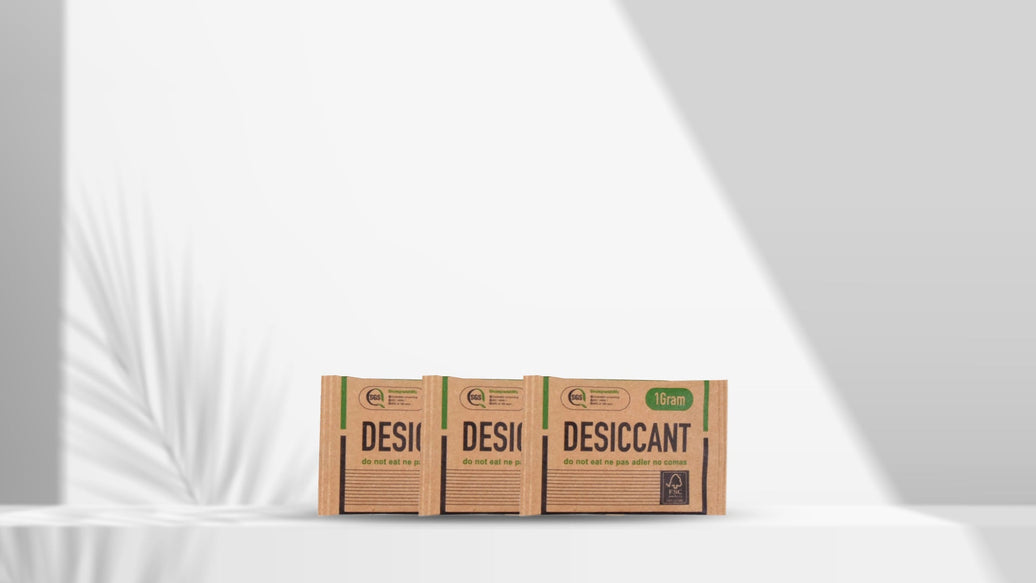
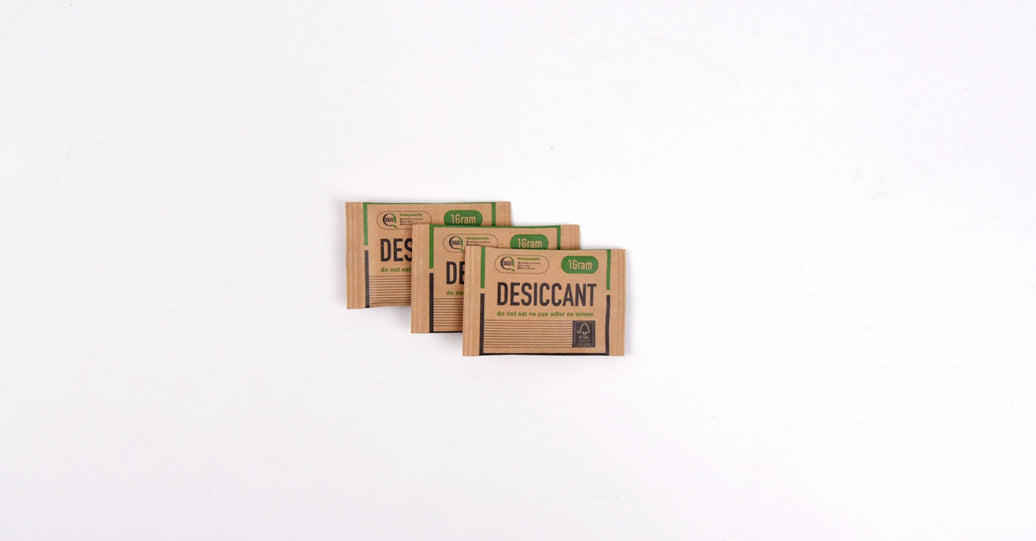
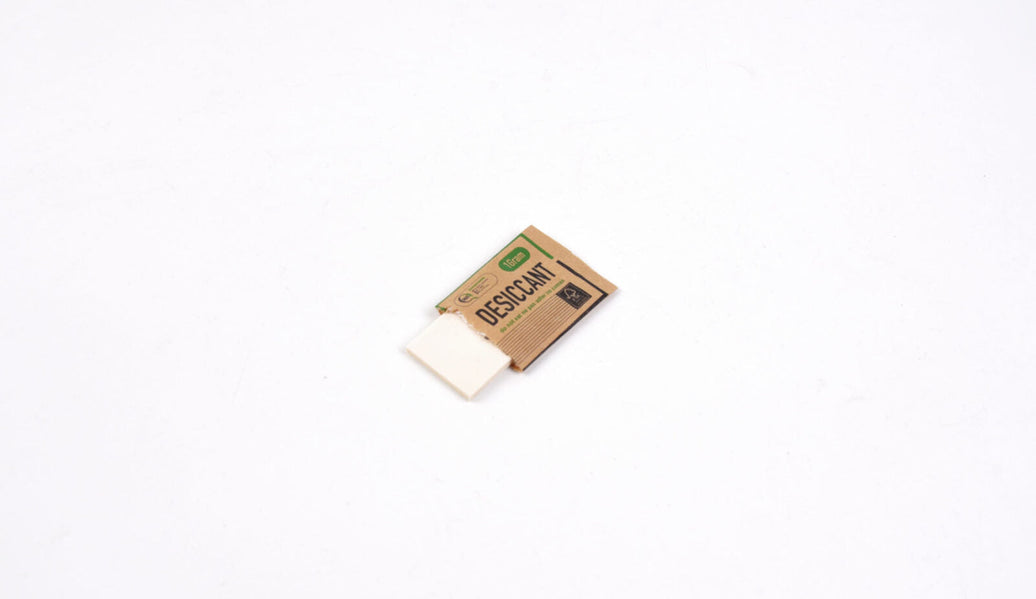
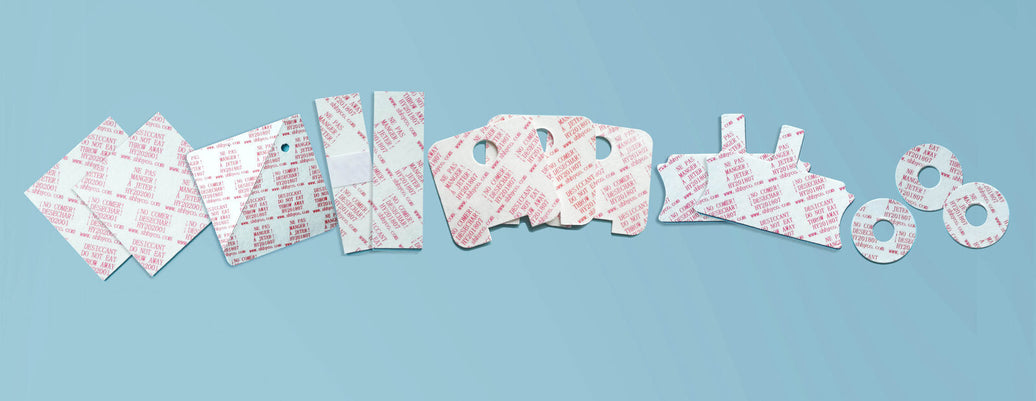
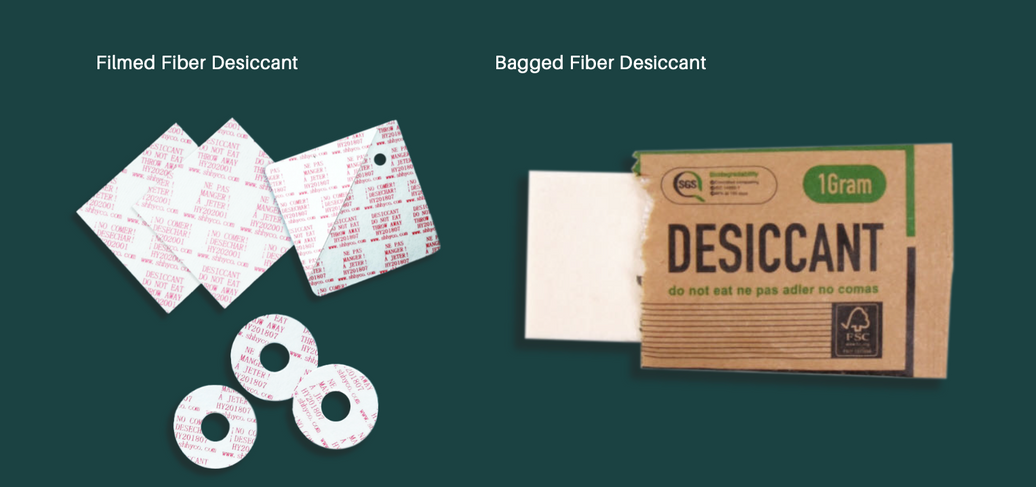
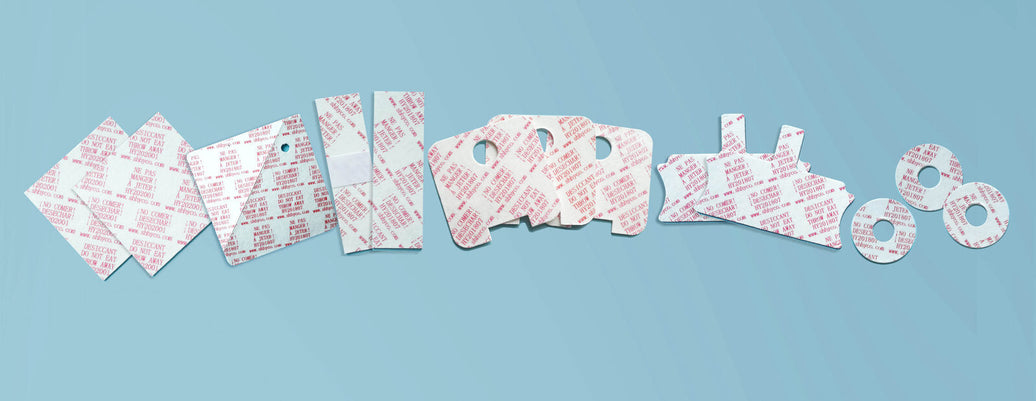
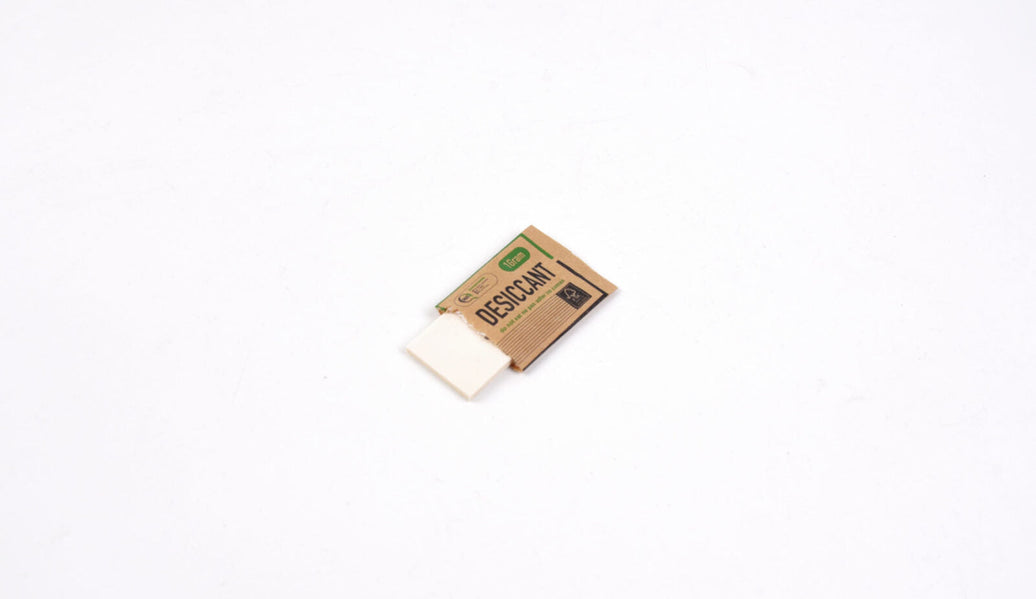
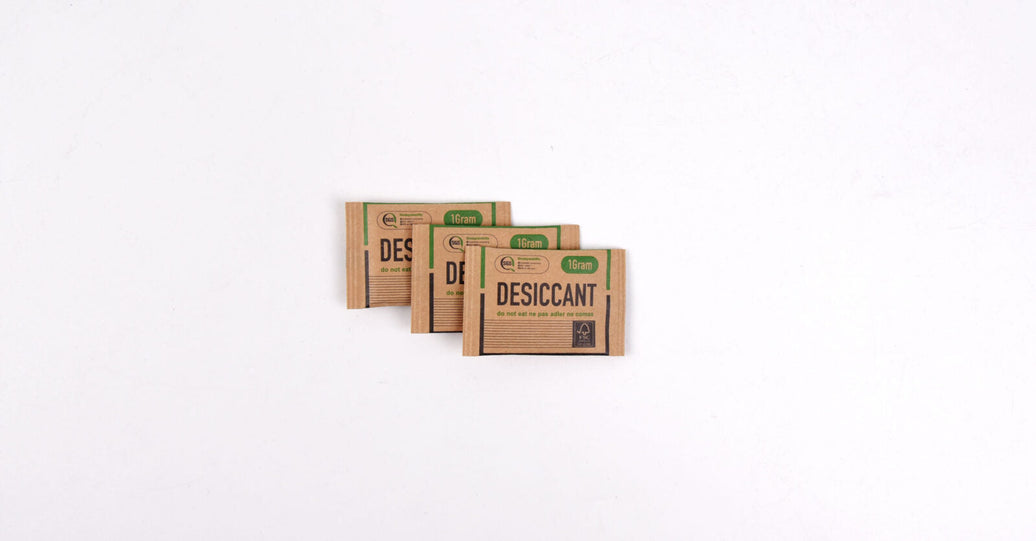
Two properties separate an acceptable pharmaceutical desiccant from an unacceptable one. First, no particulate shedding: silica beads or clay fines migrating into a drug-substance drum is a foreign-matter deviation, and a torn loose-fill sachet is a serious event, as covered in our guide to loose-fill desiccant risks. Second, non-ionic behavior: a desiccant that could contribute mobile ions to a sensitive substance is a liability. ATMOSIScience fiber desiccant binds its active into a plant-fiber matrix — dust-free by construction — and is available in die-cut filmed pads that feed cleanly into bottle lines.
Formats across the pharmaceutical chain
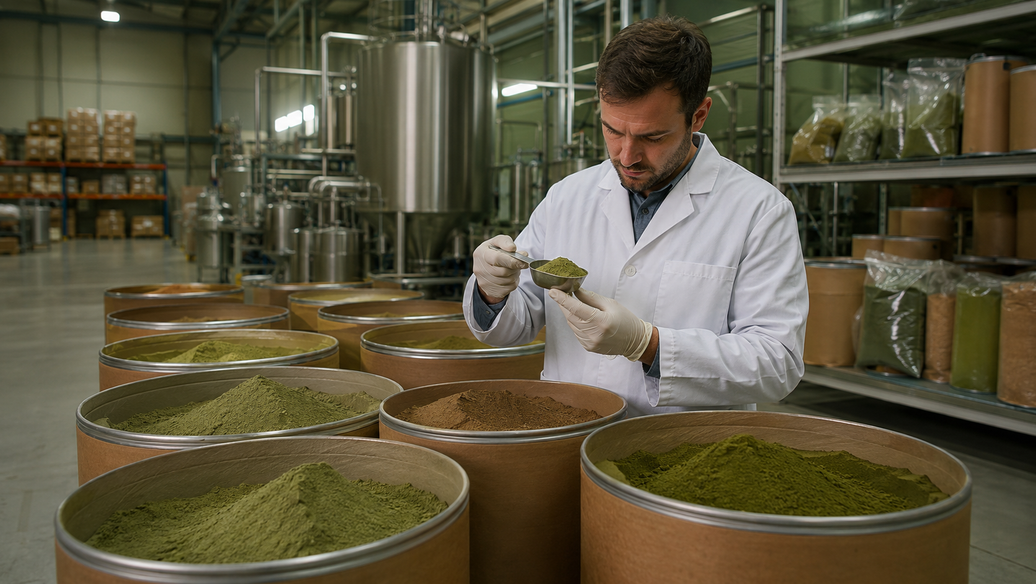
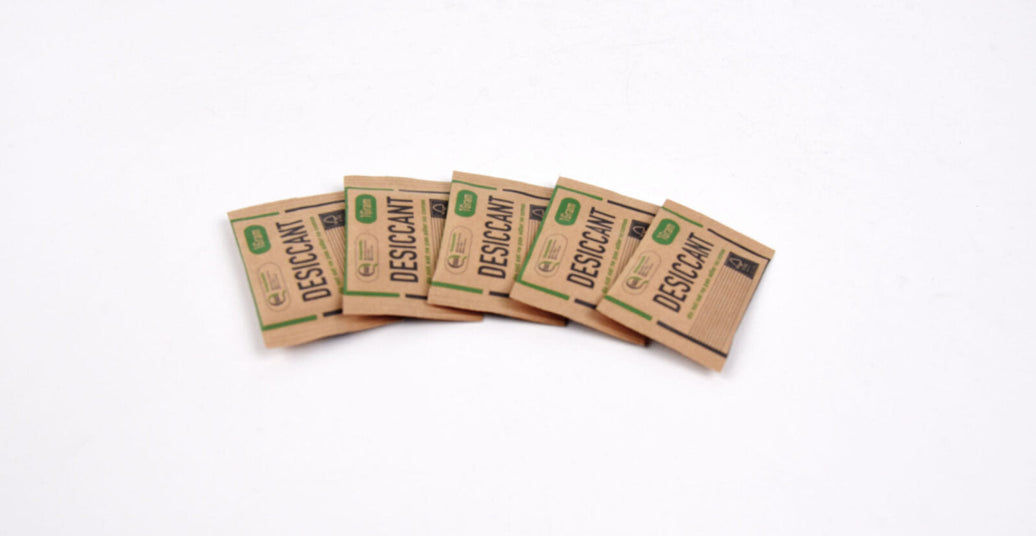
Bulk API drums and bags. High-capacity fiber sachets in the liner hold headspace low through manufacture, shipping, and repeated draw-down at the formulator.
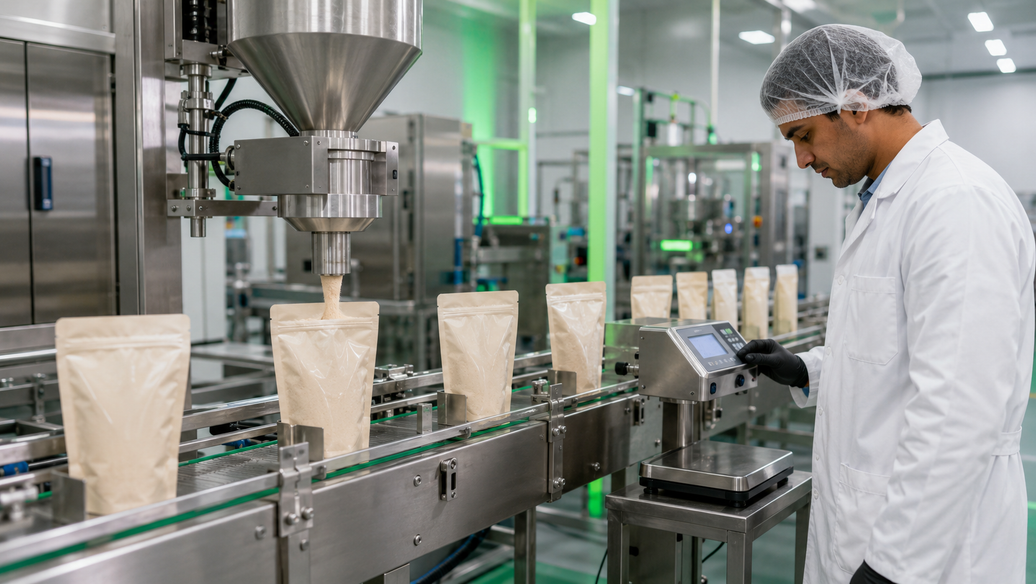
Finished bottles (tablets, capsules, powders for reconstitution). Die-cut film desiccant pads seat flat in the bottle, insert on automated lines, and carry no loose fill.
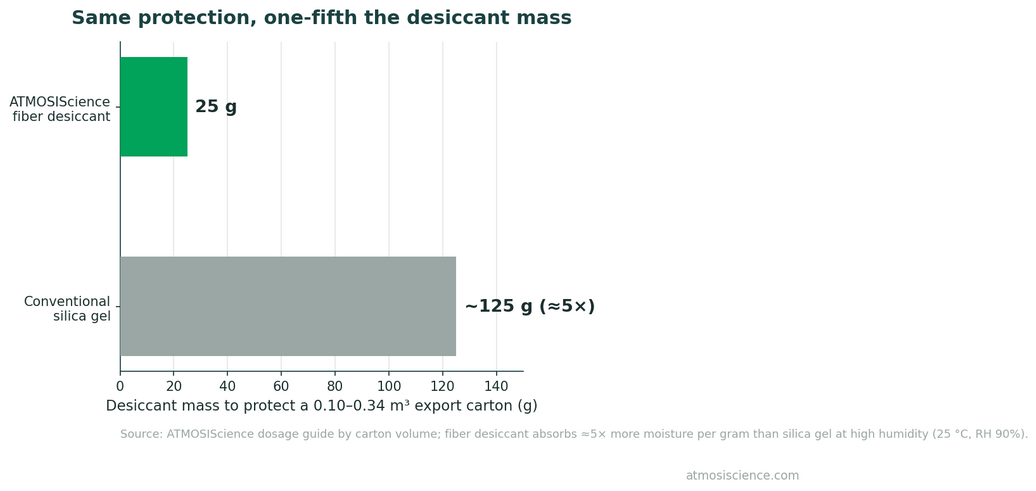
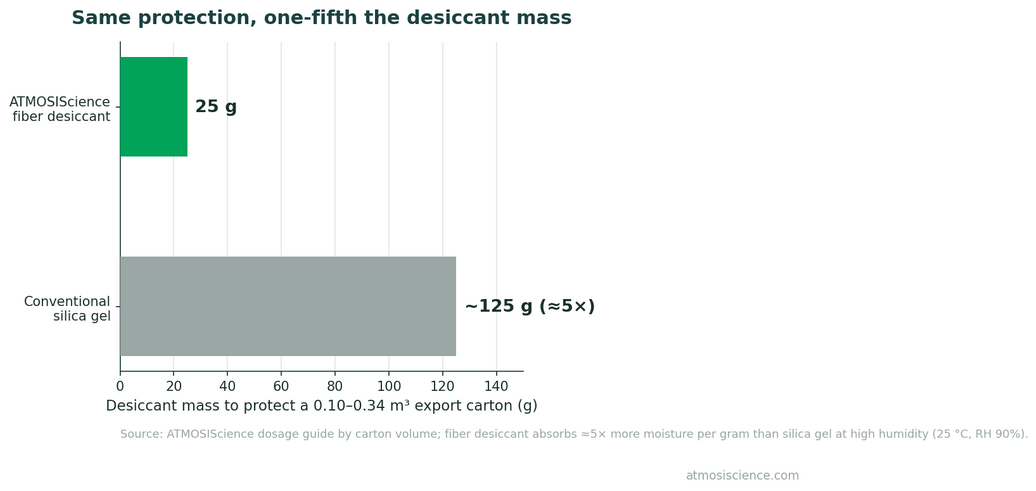
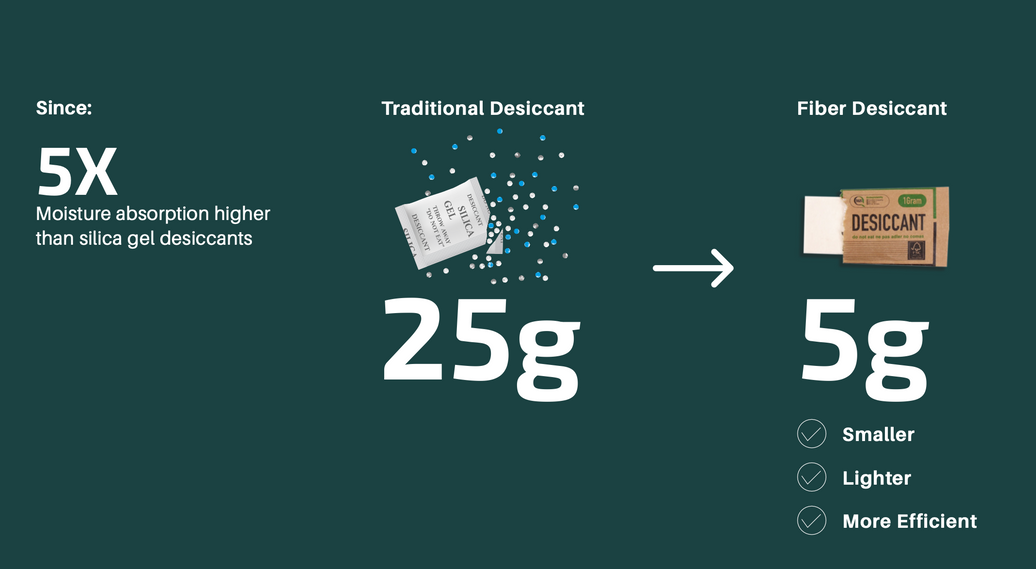
Capacity. Fiber desiccant absorbs over 70% of its weight at 25°C and 90% RH versus roughly 30% for silica gel — relevant where a container must hold a low internal RH across a long dating period and cold-chain excursions.
Regulatory documentation — and what to verify for your filing
ATMOSIScience fiber desiccant ships with SGS ISO 9001 manufacturing (Cert. CN05/31171) and full raw-material disclosure. Pharmaceutical use adds requirements beyond food contact — container-closure justification, stability data under ICH conditions, and any Drug Master File or extractables/leachables data your dossier requires. The verification checklist for a compliance team is laid out in our companion guide, FDA-compliant desiccants for pharmaceutical packaging. Our team supplies the current regulatory pack for your specific application on request.
Frequently asked questions
Can a desiccant prevent hydrate formation?
By holding container humidity below the compound's critical RH, a correctly sized desiccant helps keep an anhydrous form stable. Confirm the target with your solid-state and stability data.
Is fiber desiccant suitable for a regulated drug product?
Its dust-free, non-ionic construction suits the requirement; suitability for a specific filing depends on your container-closure and stability program. Request the regulatory documentation pack to assess it.
How is it dosed for a bottle?
By headspace and the moisture ingress of the closure over the dating period — the same volumetric logic in our dosage guide.
Protect the specification
ATMOSIScience supplies dust-free, non-ionic fiber and die-cut film desiccant for API and finished pharmaceutical powders, with documentation to support a container-closure and stability file. Explore ATMOSIScience desiccant solutions, request a sample of the Fiber Desiccant, or contact our team for the regulatory pack and a bulk quote.
Related reading: FDA-Compliant Desiccants for Pharma Packaging · Desiccant for Effervescent Tablets · Desiccant for Vitamin & Mineral Premix
Request the regulatory pack & a quote for your drug product
Tell us your dosage form, container-closure, and shelf-life conditions — our team responds with documentation, a desiccant recommendation, and pricing.