Quick answer: Australia is two instrument climates in one country: inland and southern cities swing hot and dry (Melbourne heatwaves, Adelaide northerlies, 40°C days that drop room RH fast), while Brisbane, Sydney and the tropical north run warm and humid. A two-way 49% RH pack covers both — releasing moisture through dry heat and blackout-aircon summers, absorbing through coastal humidity — so the same case setup works from Perth to Cairns.
Ask a Melbourne repairer what January brings and the answer is dry-weather work: sharp fret ends, sunken tops and the occasional crack that appeared overnight during a 42°C northerly. Ask the same question in Brisbane and it is swollen tops, high action and the odd musty case. Australia’s guitar population lives across both extremes — sometimes in the same touring week.
Know your zone
| Zone | Cities | Instrument risk profile |
|---|---|---|
| Dry-heat south & inland | Adelaide, Melbourne (summer), Canberra, Perth summers, regional NSW/VIC/WA | Heatwaves + aircon pull rooms well below 40% RH; classic dry symptoms — fret sprout, cracks, sunken tops |
| Humid east coast & north | Brisbane, Sydney (summer), Gold Coast, Darwin, Cairns | Sustained 60–80% RH; swelling, rising action, glue creep, mold risk in stored cases |
| Swing cities | Sydney, Melbourne across a full year | Both symptom sets in one calendar — the hardest case for one-way tools |
The trap for Australian players is buying the tool for last season’s problem: a humidifier after a dry summer, silica after a wet one. Each is one-way — and the climate is not. That is the case for a setpoint system, laid out product-by-product in the packets vs sponges vs gel comparison.
The all-Australia case protocol
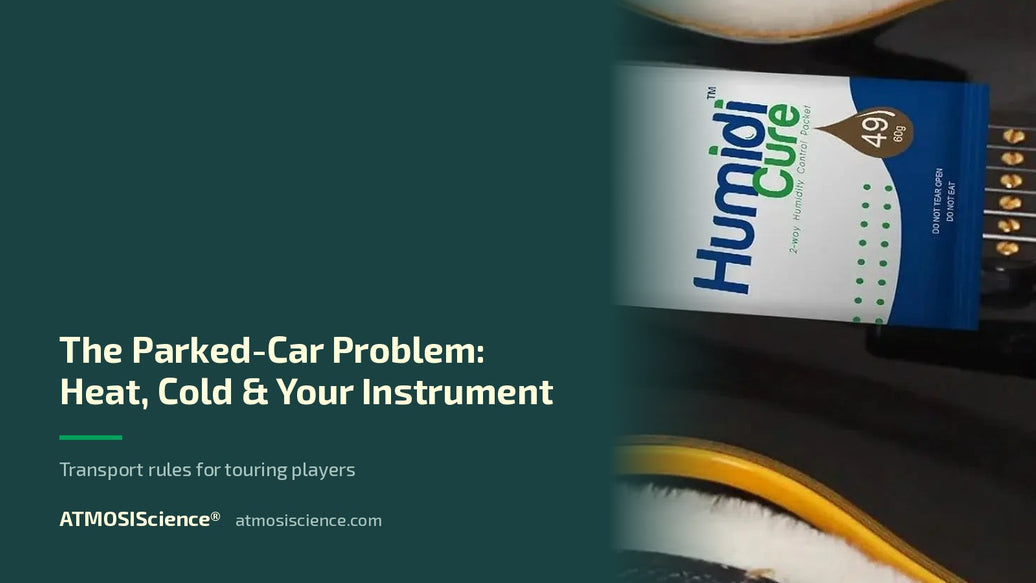
Hard case, closed, out of the sun. Cars are the number-one killer here: a parked car in an Australian summer can cook a case far past safe temperature while stripping its humidity. Boot heat plus dry air is a same-day crack recipe — never leave an instrument in a parked car between December and February.
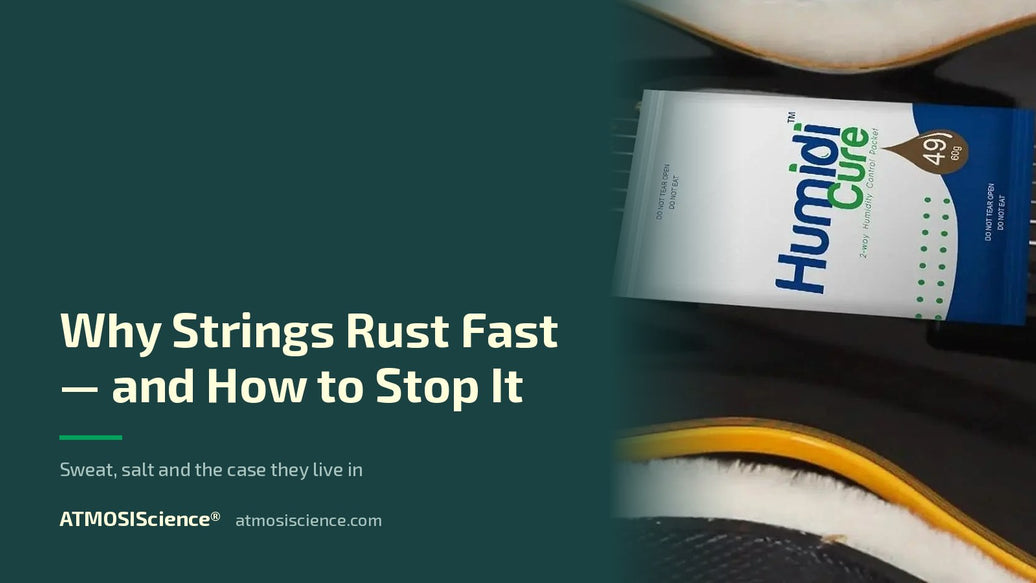
One 60 g Humidi-Cure® 49% pack per guitar or violin case. Through a Adelaide heatwave it releases moisture as aircon and hot dry air pull the case down; through a Brisbane February it absorbs. Plant-fiber construction, no liquid or gel — it cannot leak in a hot car boot the way gel humidifiers can, and it rests safely against the instrument.
An indicator card, checked with the seasons. Healthy is ~50%; act on sustained readings ≤40% or ≥60%. Expect about 3 months of pack life in a well-sealed case — less in leaky cases or during brutal seasons; the card, not the calendar, makes the call.


Touring the coast-to-inland circuit
Sydney → Dubbo → Adelaide in a summer week is a 40-point ambient RH swing. Keep the case closed in transit, give it 30 minutes to equalise after big temperature changes before opening, and let the pack do the smoothing. Shipping instruments interstate? The same pack in the shipping case is standard practice among Australian online instrument retailers — details for shops below.
For Australian retailers, schools and repairers
Showroom walls in coastal stores and inland workshop benches have opposite problems and one solution at case level. Wholesale cartons, counter-display packs and a repair-bench programme (a pack in every outgoing repair case) are available — wholesale programs or info@atmosiscience.com. The full store playbook is in the music-store humidity guide.
For players: one 60 g pack per guitar or violin case, two for cello cases and cabinets. Get the 60 g Humidi-Cure® 49% pack →
Buying for a shop, school or fleet of cases? Wholesale tiers and custom RH programs are available — see wholesale programs or write to info@atmosiscience.com.
FAQ
Evaporative cooling — does it change the plan?
Evaporative systems add moisture while they run, so rooms swing between humid afternoons and dry nights. The case-level setpoint smooths exactly that kind of oscillation.
Is 49% right for Australian-built guitars?
Yes — local luthiers build in controlled rooms in the same 45–50% band as the major US factories. The wood wants the humidity it was built at, wherever it was built.
What about bushfire-season smoke and dryness?
Smoke events usually ride on hot, very dry air masses — treat them as extreme dry days: case closed, pack in, and wipe the instrument down after exposure.
My case lives in a beach-house cupboard all winter. Risk?
Unheated coastal cupboards run humid for months — that is long-term-storage territory. Follow the sealed-case storage method and check the card monthly.
Get the two-climate plan for your postcode
Tell the team where you are and what you play. You will get the dry-heat or coastal protocol (or the swing-city version), with dose and card placement for your case type.
Prefer email? Write to info@atmosiscience.com — a specialist replies within one business day.