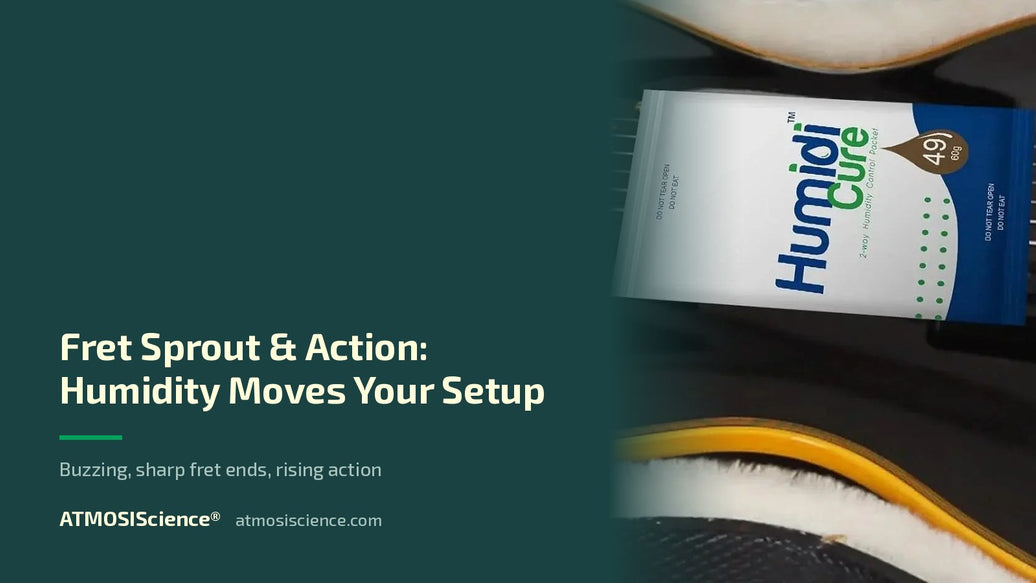
Quick answer: Detune the strings a step, support the neck and headstock, put a fresh Humidi-Cure® 49% pack and an RH card in the case, and box the case with clearance on every side. A closed hard case with a two-way pack rides out the RH swings of trucks and depots; on delivery in freezing weather, let the box warm indoors for a few hours before opening — the same caution Taylor gives for cold arrivals.
Every week thousands of guitars change hands online — and spend three to ten days in trailers and depots where nobody controls the climate. Most transit damage stories are really two stories: impact (a box dropped on a corner) and environment (a guitar that left Miami at 75% RH and landed in a Denver winter at 20%). This checklist, written for private sellers and small shops, closes off both — with the humidity side handled by the case itself.

The 10 steps
1. Photograph everything first. Neck relief, top, headstock front and back, serial — timestamped photos protect both parties and any insurance claim.
2. Detune to reduce tension. Drop each string a whole step or so. You want reduced pull on the neck during shocks, not floppy strings that let the truss-rod-loaded neck whip.
3. Support the headstock and neck. Crumpled paper or foam under the headstock and at the neck heel so the neck cannot flex inside the case. The classic break point on a dropped box is the headstock — an unsupported neck acts like a spring.
4. Immobilise everything that moves. Loose capos, tuners and cables leave the accessory box or get wrapped — a flying capo can gouge a top.
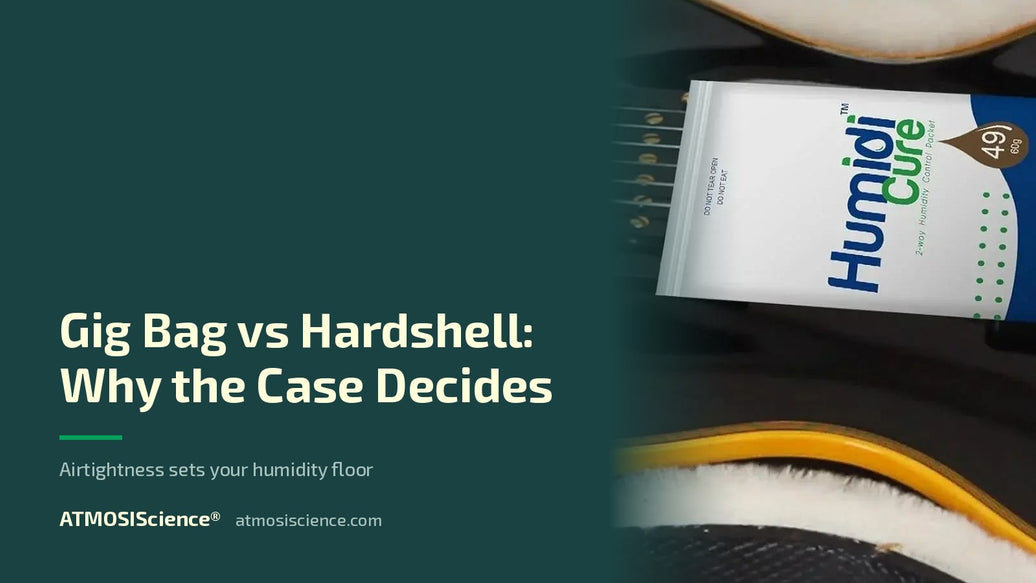
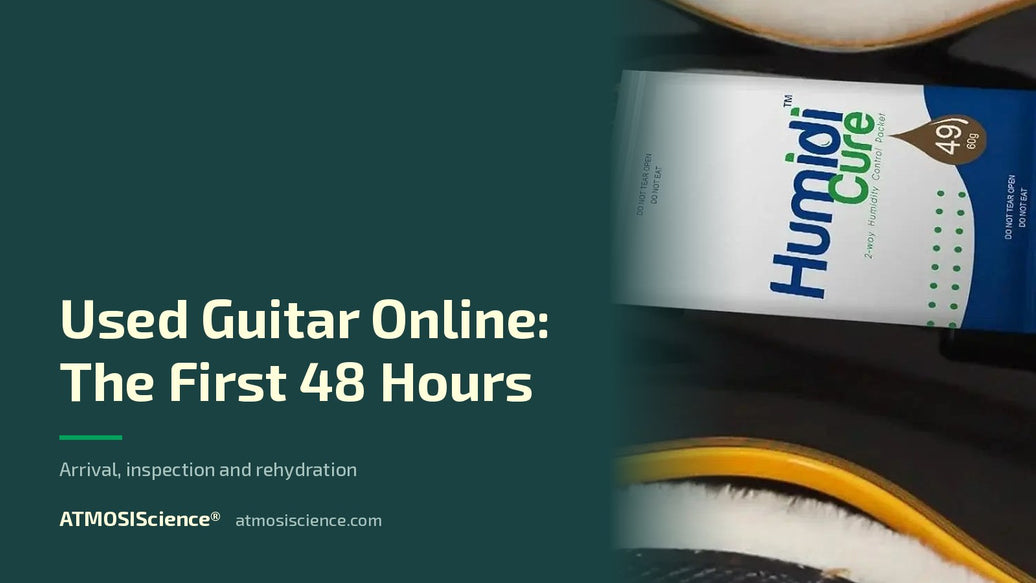
5. Add a fresh 49% pack + RH card. A Humidi-Cure® 49% two-way pack over the strings holds the closed case at 49% ±2% whether the trailer runs dry or damp; the card lets the buyer see on arrival that the guitar travelled in the safe zone — a genuine selling point for your listing.
6. Case inside box, 5–8 cm clearance. Bubble wrap or crumpled kraft on all six sides. The case must not touch the cardboard anywhere.
7. Time the hand-off. Ship early in the week so the box never sits in an unclimatised depot over a weekend — that is where the worst temperature-humidity cycling happens.
8. Mind the season. Summer trailers can exceed 60 °C; winter loads sit below freezing for hours. You cannot control it — you can shorten exposure (express services) and let the sealed case buffer the swings.
9. Insure and label. Declared value, FRAGILE markings, and — more useful — “THIS SIDE UP” with arrows.
10. Brief the buyer on arrival. If it is around or below freezing outside, leave the unopened box indoors for a few hours before opening — Taylor gives the same guidance for its own shipments, because a sudden warm-up on a frozen finish is how cold checking happens. Then open, check the RH card, retune slowly.
Transit scenarios
| Scenario | Biggest risk | Countermeasure |
|---|---|---|
| Winter ground shipping | Deep-cold soak + bone-dry depot air | 49% pack, express service, warm-before-opening note |
| Summer ground shipping | Trailer heat softening glue, then AC shock | Early-week dispatch, insulated spacing in the box |
| Humid-to-dry route (e.g. coast → inland) | Fast moisture loss on arrival | Two-way pack buffers; buyer keeps guitar cased first week |
| International / air freight | Multiple climate zones + long customs dwell | Fresh pack (about 3 months of duty), RH card as arrival evidence |
Why the pack matters in a box you cannot open
A hard case is a decent climate vessel — our case airtightness test shows how much slower a closed case tracks outside swings. Give that vessel a two-way source and sink — a 49% pack with no liquid or gel, just a US-patented plant fiber sheet — and the guitar effectively travels inside its own weather system. The buyer opens the case to an instrument still sitting at its setpoint, with the RH card as proof.

Ship it protected: Humidi-Cure® 49% Humidity Pack — 4-pack, $8.99 · All instrument humidity control
Shop shipping weekly? B2B & wholesale: wholesale program · info@atmosiscience.com
FAQ
Should I ship with strings fully slack?
No. Fully slack strings remove the counter-tension the neck was set up for and let it move more, not less. A step down is the sweet spot most shipping guides converge on.
Gig bag inside a box — acceptable?
For anything you care about, no. A gig bag offers neither impact protection nor a climate seal. If a bag is all you have, double-box with rigid foam and accept the added risk.
Does the buyer need to remove the pack on arrival?
Leave it in — it keeps working for about 3 months total, and the first cased week in a new climate is exactly when the guitar needs it. Point the buyer to our arrival checklist.
What about shipping in a monsoon season?
The two-way pack absorbs as well as releases, so a humid route is handled the same way — fresh pack, sealed case, minimal dwell time.
Selling regularly? Get a shipping kit plan
Or email info@atmosiscience.com.