Quick answer: Sharp fret ends, new buzzing, action that rises in summer and collapses in winter — these are humidity symptoms, not setup failures. Wood shrinks and swells with the air; metal frets and truss rods do not. Stabilize the guitar at 45–55% RH (a case with a two-way Humidi-Cure® 49% pack, ±2% RH, no liquid or gel), give it one to two weeks, and only then pay for a setup.
Every autumn, repair benches fill with the same complaint: 'the fret ends are suddenly sharp' or 'it buzzes now and it did not in July'. The guitar did not wear out. The air changed, the wood followed, and the metal parts stayed put. Understanding that one sentence will save you money for the rest of your playing life.
Fret sprout, explained in one paragraph
Your fretboard — rosewood, ebony or maple — shrinks across its width as it dries. The nickel-silver frets pressed into it do not shrink at all. When heating season (or a dry inland summer) pulls a board in, the fret ends stay where they were and suddenly overhang the edge: 'fret sprout', the sharp edges you feel running your hand up the neck. Repair authorities and major makers say the same thing — Taylor lists protruding fret ends among its classic dry-guitar symptoms, alongside low action, buzzing and a sunken top. Sprout is not a defect; it is a dryness gauge you can feel.
The whole setup moves together
| Symptom | Season / cause | First move |
|---|---|---|
| Sharp fret ends | Dry air shrank the board | Rehydrate at 49% for 1–2 weeks before any filing |
| New buzzing, low action | Dry — top sinks, neck back-bows slightly | Same: environment first, truss rod later |
| Action creeping up, tone going muffled | Humid — top swells and lifts the bridge | Two-way pack absorbs the excess; case between sessions |
| Setup 'will not hold' across seasons | RH swinging between extremes | Stabilize year-round; then one setup holds |

Why 'file the frets' is the wrong first move
Filing sprouted fret ends fits the board at its driest — its smallest — size. When the wood rehydrates and swells back, those shortened frets can end up shy of the edge. Repair shops that see seasonal sprout recommend what we do: restore moisture first and let the board return to size; most seasonal sprout simply disappears. File only what remains after two stable weeks at 45–55% — that residue is real and a tech should dress it. The same logic applies to the truss rod: adjust after the wood settles, not while it is moving. Run the full 12-point symptom checker to see which direction your guitar has drifted.
The stabilize-then-setup routine
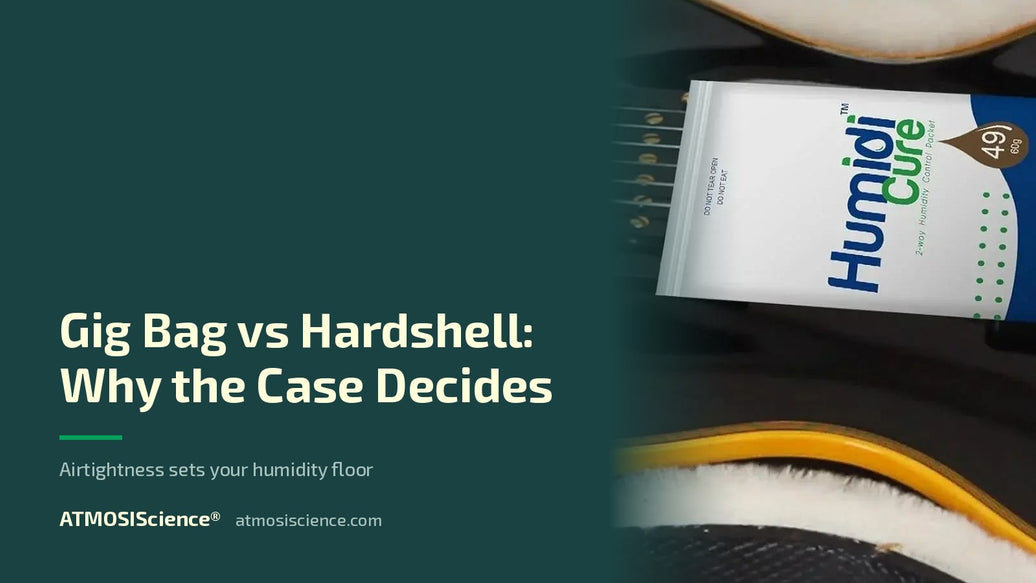
Keep the guitar cased between sessions with a Humidi-Cure® 49% pack — it releases moisture through heating season and absorbs it in muggy months, holding the factory zone either way for about 3 months per pack (case airtightness is the biggest variable in pack life). Add an RH indicator card so you can watch recovery happen. Electric players are not exempt: bolt-on maple necks sprout enthusiastically, as our electric guitar guide explains. Heating-season specifics live in the US winter plan, and the target zone itself in the 45–52% RH sweet spot.

FAQ
How long until sprout recedes after I fix the humidity? Boards begin re-expanding within days; give it one to two weeks at 45–55% before judging. Long-dried guitars can take longer.
Will the fret ends always go back fully? Seasonal sprout usually does. A guitar that lived very dry for years may keep a slight overhang — that is the part a tech files, once, on a stabilized neck.
Should I adjust the truss rod each season? Small seasonal tweaks are normal and harmless — but if you hold RH steady year-round, most players stop needing them.
Is fret sprout permanent damage? No — it is an early warning. The things that follow prolonged dryness (top cracks, bridge lifts) are the expensive stage; sprout is your cue to act now.
Stabilize before your next setup: Humidi-Cure® 49% Humidity Pack — 4-pack, $8.99 · all instrument humidity control. Two-way ±2% RH, no liquid or gel, food-contact safe, US-patented plant fiber, compostable.
Repair shop or teaching studio? Wholesale program · info@atmosiscience.com
Not sure if it is dryness or a real setup issue?
Describe the symptoms — we will reply from info@atmosiscience.com with an honest read: environment fix, tech visit, or both.