Quick answer: A Humidi-Cure® 49% pack typically works for about 3 months — and how airtight your case closes is the number-one variable. A spent pack in a dry climate feels stiff, light and dried-out; in a damp climate it feels heavy and saturated. The reliable tell is your RH card: if the closed case drifts out of 45–55% and stays out for days, replace the pack — then compost it.
“How long does it last?” is the question we get most, and the honest answer has a number and a caveat. The number: about 3 months in typical use. The caveat: a humidity pack is not a battery discharging on a fixed schedule — it is a moisture reservoir exchanging with its surroundings, so its life depends on how hard those surroundings make it work. This guide explains the mechanism, the real signs of a spent pack, and the habits that stretch — or slash — its working life.
How a two-way pack spends itself
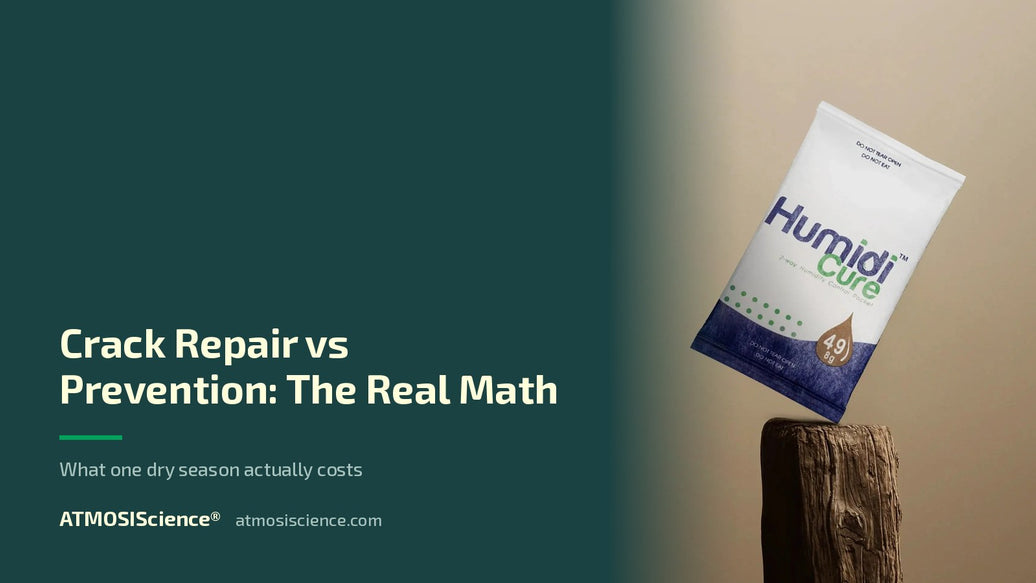
Inside the pouch is a US-patented plant fiber sheet — no liquid or gel — engineered to hold a large moisture reserve and exchange it through a breathable membrane. Below 49% RH the pack releases moisture; above 49% it absorbs; at setpoint it rests, holding the case at 49% ±2%. Every gram it gives to a dry case, or soaks up from a muggy one, is a withdrawal from the reserve. When the reserve is exhausted in either direction, the pack sits inert — it does not turn harmful, it simply stops correcting.

Signs your pack is spent (and false alarms)
| Observation | Meaning | Action |
|---|---|---|
| RH card reads below 45% for several days, case closed | Reserve given out (dry-climate exhaustion) | Replace pack now — this is the sign that matters |
| Pack feels rigid, papery and noticeably light | Physically confirms dry-side exhaustion | Replace; compost the old one |
| Pack feels heavy, cool and saturated; card creeps above 55% | Absorb-side exhaustion (tropics, monsoon) | Replace; air the case; see the mold-prevention guide |
| Pack firmed up slightly in week one | Normal early equalisation with your case | Nothing — false alarm |
| Card swings during a 2-day gig trip, recovers at home | Case opened often; pack still correcting | Nothing — that recovery is the pack working |
What shortens (or stretches) the 3 months
Case airtightness — the #1 variable. A snug modern case with good gaskets makes the pack's job easy; a loose vintage chipboard case leaks exchange air constantly and can halve pack life. Our airtightness comparison ranks case types. Climate gap: a pack fighting 25% winter air or 80% monsoon air works harder than one trimming 55% to 49%. Opening frequency: every opening resets the case to room air. Daily players should expect the short end of the range; a stored instrument gets the long end. Dose: an under-dosed big case (one pack doing a two-pack job) exhausts early — check the dosing guide.

End of life: compost, don't bin
When a pack is done, the fiber core goes in home compost or your green bin — it is plant fiber, food-contact safe, with no liquid or gel. We do not recommend oven or microwave “recharging” rituals you may see online: the pack is engineered for one full duty cycle at a calibrated setpoint, and DIY re-wetting cannot restore the 49% ±2% accuracy that makes it worth using. Replace, compost, and keep the RH card — cards outlive many packs.
Time to swap? Humidi-Cure® 49% Humidity Pack — 4-pack, $8.99 · All instrument humidity control
Stores & studios running packs across a fleet: B2B & wholesale pricing via the wholesale program · info@atmosiscience.com
FAQ
Does an unopened pack expire on the shelf?
Keep spares in their sealed outer packaging away from heat and they hold their reserve until you deploy them — the clock effectively starts when the pack starts exchanging with room air.
Can I move a half-used pack to another case?
Yes — its remaining reserve travels with it. Just remember the receiving case inherits a pack partway through its duty, so watch the card.
Is a spent pack dangerous to leave in the case?
No — it is inert plant fiber. The danger is the false sense of protection, which is why the RH card check matters more than the calendar.
Why do you say “about 3 months” instead of a bigger number?
Because honesty ages better than marketing. Real cases leak at wildly different rates, so we quote the typical duty — about 3 months — and teach you the signs instead of promising a number your chipboard case cannot deliver.
Questions about your setup?
Or email info@atmosiscience.com.