Quick answer: Buildings that are heated or cooled only on service days put instruments through weekly humidity whiplash — the most damaging pattern there is. Keep sanctuary temperature changes gradual, hold pianos near 42–50% RH and follow organ builders' guidance of roughly 50–60%, and protect every cased instrument — guitars, basses, strings — with a two-way Humidi-Cure® 49% pack (±2% RH, no liquid or gel).
A worship space is one of the hardest environments a wooden instrument can live in. The building is large, often old, and its climate system runs on the service schedule, not the instruments' schedule. Saturday night the sanctuary sits cold; Sunday morning the heat comes up fast; by Monday it is cold again. Every one of those cycles moves the relative humidity in the opposite direction of the temperature — and the pipe organ, the piano and the band's guitars all take the ride.
The Sunday-only heating problem
Organ builders have warned about this pattern for decades. Independent builder guidelines — including the widely circulated advice organ firms give the congregations they serve — recommend keeping relative humidity around the organ in roughly the 50–60% band, never letting it fall below about 30% or rise above 80%, and avoiding rapid heating before services. The reason: an organ is mostly wood (windchests especially) and leather, and both swell and shrink as RH changes. Winter heating that races from 10°C to 22°C in two hours can halve the RH in the room; over a season, that means split chest seams, leaking valves, ciphers and tuning drift. Several builders recommend the opposite of intuition: keep the building modestly heated and lower the thermostat when unused, rather than swinging it hard twice a week.

One building, three instrument strategies
| Instrument | Target | Strategy |
|---|---|---|
| Pipe organ | ~50–60% RH, stable | Gentle heating schedule, RH card at the console, consult your organ builder before adding room humidification |
| Piano | 42–50% RH | Position away from radiators, vents and exterior stone walls; monitor; see our piano humidity guide |
| Backline: guitars, basses, strings | 45–55% RH in the case | Cased between services with one Humidi-Cure® 49% pack each — the case rides out the building's swings |
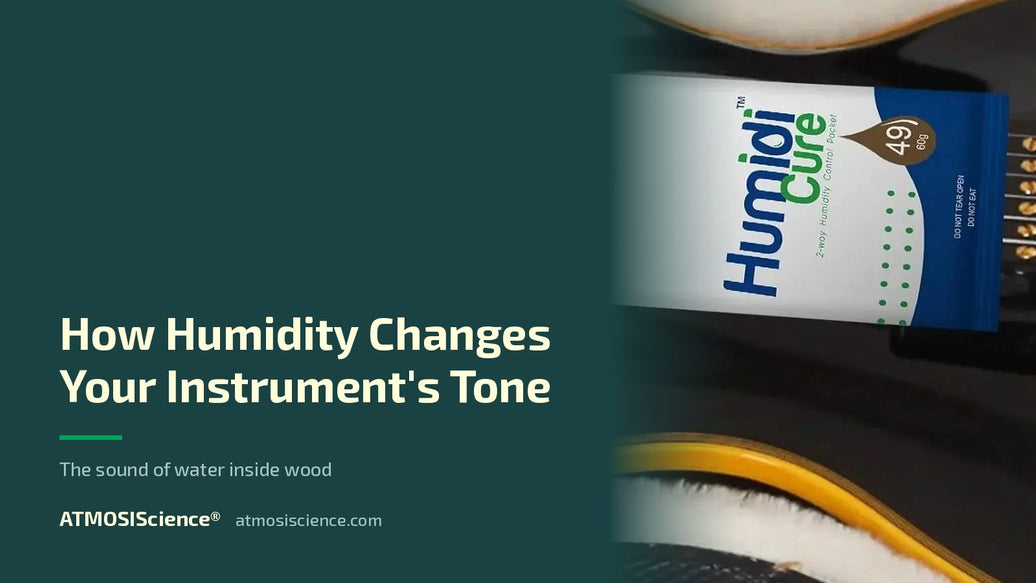
The cased instruments are the easy win. A hardshell case is a small, controllable microclimate: one two-way pack holds it at 49% ±2% for about 3 months, releasing moisture through dry heating weeks and absorbing it in muggy summer stretches — how airtight the case is remains the biggest variable in pack life. The building can swing; the case does not. That is the same logic touring players use in our flying and touring guide, and it is why the worship team's guitars should never hang on open stands from Sunday to Sunday through a heating season like the one in our US winter plan.
A seasonal calendar that fits the service schedule
Heating season (US, Korean and northern-hemisphere winters): program setbacks so warm-up is gradual, keep an RH indicator card at the organ console and inside the piano lid area, and re-case backline instruments immediately after rehearsal. Cooling season (Singapore's year-round air-conditioning, Australian and Korean summers): air-conditioning dries the air while it cools, so cased packs keep working — they simply switch from releasing moisture to absorbing it. Shoulder seasons: replace packs on a term calendar — about 3 months lines up neatly with a quarter — and log the RH cards weekly.

FAQ
Should we humidify the whole sanctuary? Whole-building humidification is expensive and, done badly, causes condensation damage in cold walls. Start with microclimates — cases, covers, the piano's corner — and gentle temperature scheduling. Consult your organ builder before any room-level system.
Our church is coastal — humidity is high, not low. Same plan? Yes. Two-way packs absorb excess moisture as readily as they release it, which matters in Australian coastal parishes and tropical Singapore alike.
Who should own this? Give it to the same person who owns the service tech checklist: cards logged weekly, packs replaced about every 3 months, thermostat schedule reviewed each season.
Does this help our budget case? A single organ chest repair or piano pinblock failure costs more than years of monitoring and packs. Prevention is the cheap line item.
Protect the backline this week: Humidi-Cure® 49% Humidity Pack — 4-pack, $8.99 · all instrument humidity control. Two-way ±2% RH, no liquid or gel, food-contact safe, US-patented plant fiber, compostable.
Facilities team or worship-tech director? Volume pricing for congregations: wholesale program · info@atmosiscience.com
Get a free humidity plan for your worship space
Tell us about the building and what is in it — we will reply from info@atmosiscience.com with a season-by-season plan.