Quick answer: Months of storage is when cracks actually happen — nobody is there to notice the drift. The sealed-case method: clean and slightly detune the instrument, load a fresh 60 g two-way 49% pack and an indicator card, latch the hard case, store it off the floor away from outside walls and vents, and glance at the card monthly. Wood stays at 49% while the room does whatever it wants.
Deployment, a semester abroad, a house move, a second instrument that only comes out for recording season — every player eventually parks an instrument for months. Storage damage is uniquely unfair: it compounds silently and presents all at once, as the crack you find in spring or the neck that shifted a season ago. The method below is the one used for museum wood and applied at case scale.
Step 1 — prepare the instrument (20 minutes)
Wipe strings, fingerboard and finish (skin salts etch over months), fit fresh-ish strings detuned a half to whole step — enough tension to keep the neck loaded, not enough to fight seasonal movement — and photograph everything, including the action at the 12th fret. The photos are your before-record if anything needs a conversation later.
For violin-family instruments, slack the bow fully and store rosin away from the hair; the instrument itself follows the same rules as guitars — the violin storage guide covers the family-specific details.
Step 2 — load the case climate
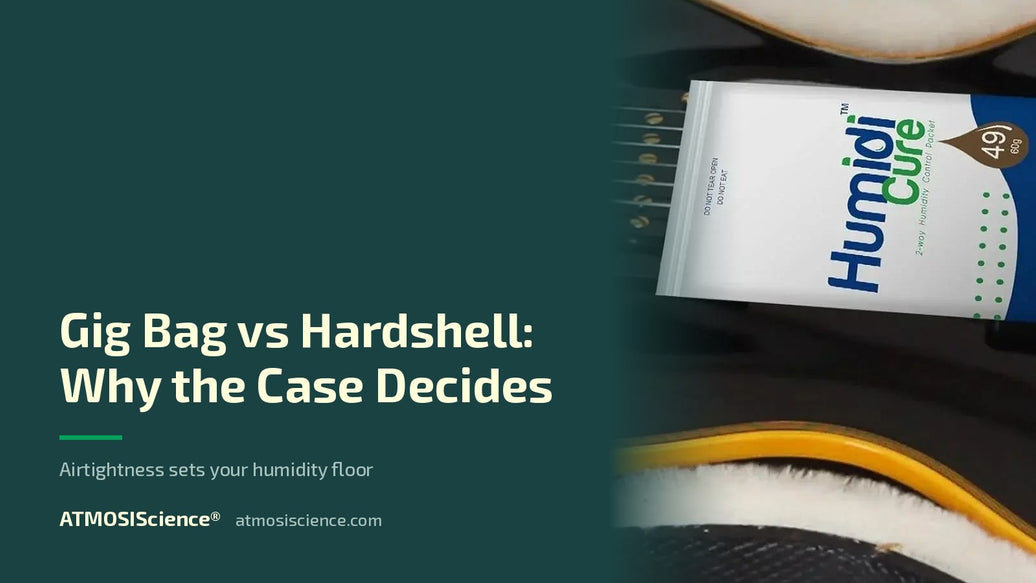
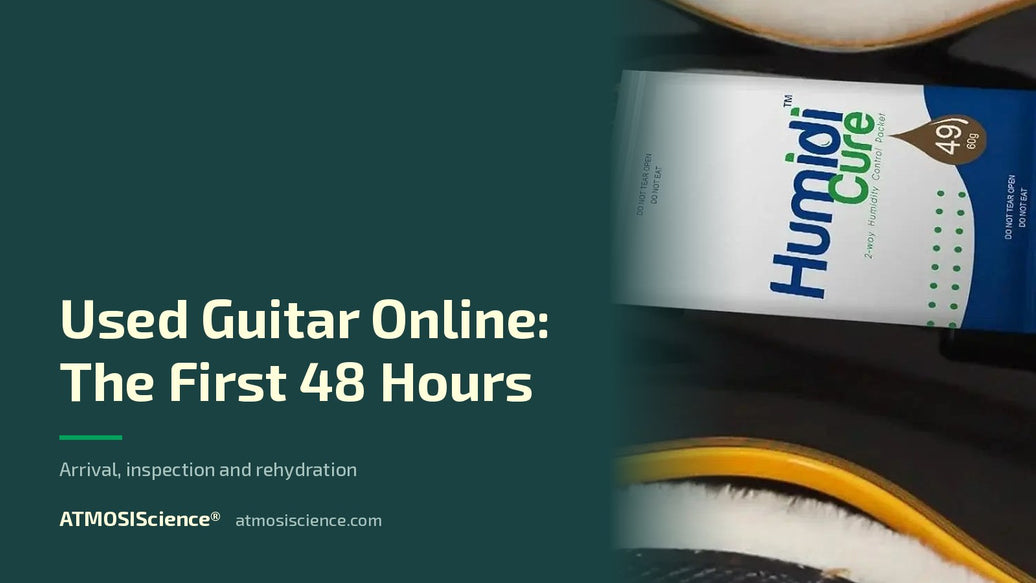
One fresh 60 g Humidi-Cure® 49% pack per guitar or violin case — fresh matters: you want the full ~3 months of service running from day one, and sealed spares keep 12 months from the manufacturing date, so buy the storage supply upfront. Indicator card face-up at the headstock. If the case seal is tired (a case that closes with daylight at the edges), gasket-tape the rim or upgrade the case before trusting it for a season — case airtightness is the single biggest variable in how long the pack holds the line.

Step 3 — position the case
Where the case sits decides how hard the pack works. Interior closet beats garage, attic or basement — you are avoiding temperature cycling as much as humidity extremes. Off the floor (concrete wicks moisture; heated floors bake), away from outside walls, radiators, vents and any window sun. Flat or on edge both work; what matters is stable, dark and boring. An instrument stored in living-space conditions with a controlled case interior is in the safest environment it will ever know.
Step 4 — the monthly minute
Once a month: open the lid, read the card, close the lid. Around 50% — done in ten seconds. At or below 40%, or at or above 60%, for the second month running: swap the pack (the touch test confirms — stiff means spent) and re-check the case seal. Set the reminder on your phone the day you store the instrument; the whole year of protection costs twelve minutes and typically three to four packs. Storing through a tropical or monsoon climate? The wet-side variant of this method is in the Singapore guide; deep-winter storage follows the US heating-season plan.

Coming out of storage
Reverse gently: let the case acclimate to the room for 30 minutes if it stored anywhere cooler, read the card one last time (your exit record), tune up in two sessions rather than one yank to pitch, and expect a settling week before judging the setup. If the card held the green band all season, the action photos from day one should match what you see — that is the method working.
For players: one 60 g pack per guitar or violin case, two for cello cases and cabinets. Storage supply: 60 g Humidi-Cure® 49% packs →
Buying for a shop, school or fleet of cases? Wholesale tiers and custom RH programs are available — see wholesale programs or write to info@atmosiscience.com.
FAQ
Should I loosen the truss rod for storage?
No — with strings detuned only slightly, the neck stays in its working equilibrium. Truss-rod changes are for setup adjustments, not storage.
Climate-controlled storage units — still need the pack?
“Climate-controlled” units regulate temperature; humidity rides along unmanaged in most facilities. The sealed-case method assumes nothing about the room — that is its point.
Can I store two instruments in one big case or cabinet?
Cabinets work with two packs (the cello/cabinet dose) and one card at eye level. Keep one system per enclosed space — do not mix pack types or add a sponge humidifier alongside.
What about the strings — won’t they be dead in six months?
They will be fine for the first play-in; replace them at the first proper setup after storage. Strings are consumables; a cracked top is not.
Get the storage protocol + a season calculator
Tell the team how long the instrument is going away and where it will sit. You will get the printable protocol and the right pack count for the whole storage window — no over-buying.
Prefer email? Write to info@atmosiscience.com — a specialist replies within one business day.