A violin is more vulnerable than a guitar. The top is unsupported by an internal soundpost only — meaning a single dry winter can crack a soundboard worth more than a used car. The bridge stands free under string tension, ready to lean if the geometry shifts. The varnish is often original, fragile, and centuries old.
The rules for storing a violin properly are not complicated, but they are unforgiving when broken. Here is everything you need to know, whether you are putting your violin away for an evening or for a season.
Rule 1: The Case Is the Real Climate
Most violinists treat the case as a transport box. It is not. The case is your instrument's permanent home, climate-controlled or not. Every hour the violin spends outside the case, it is breathing whatever the room is breathing — heated air at 18% RH, summer air at 75% RH, the fluctuations of a car trunk.
Inside a closed case with a 2-way humidity packet, the air is stable. That is where the violin should live, except when you are playing it.
This single habit shift — close the case when you are done — adds years to the instrument.
Rule 2: Hit 45–52% RH and Hold It
The conservation standard for fine wooden instruments is 45–52% relative humidity. Violins are built within this range, and they should live within this range.
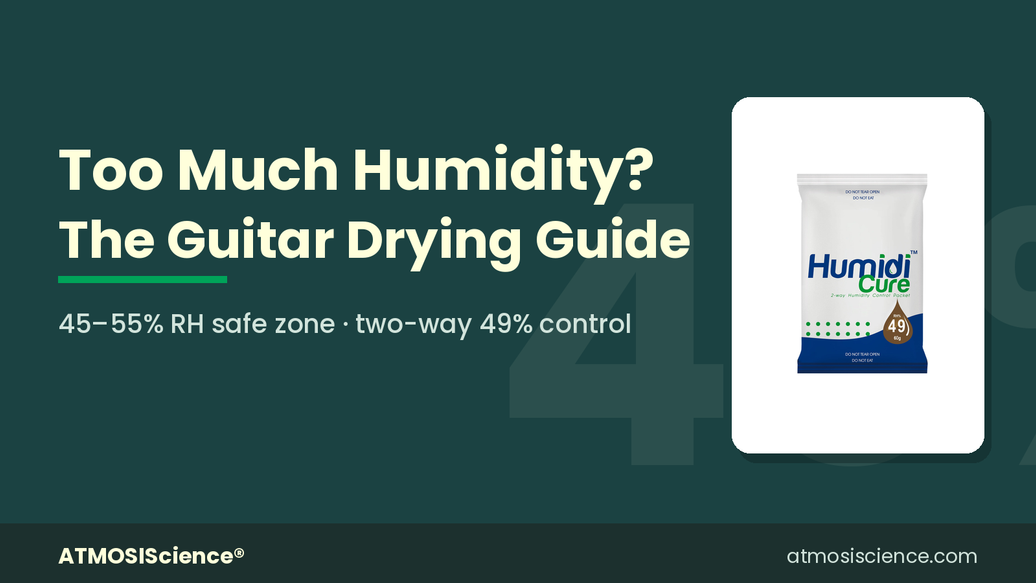
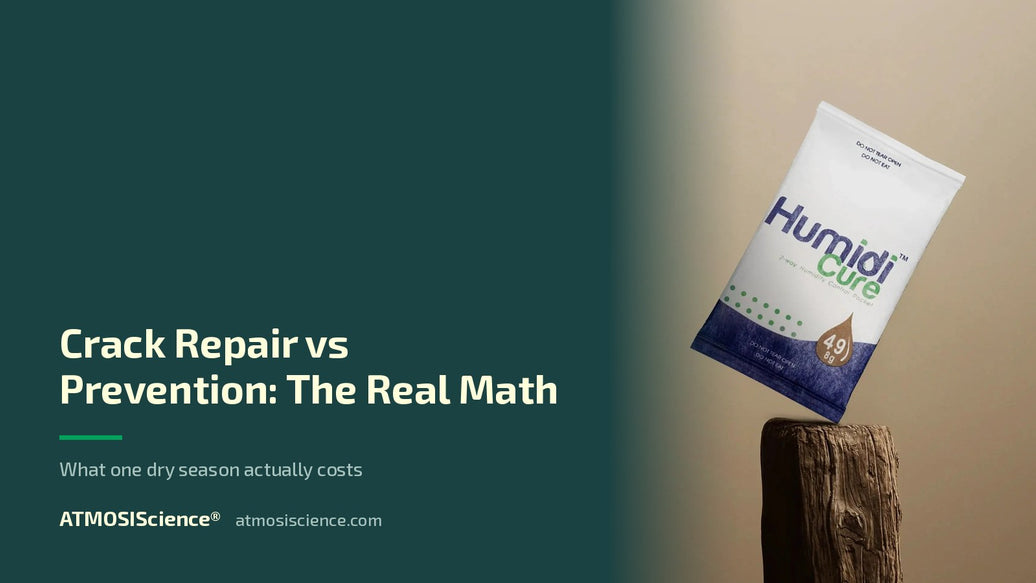
The most reliable way to hold that target is a 2-way humidity control packet inside the case. Humidi-Cure 49% is engineered for exactly this — it absorbs moisture when the case is too humid, releases moisture when too dry, and holds 49% ±2% for three to six months on a single 60g packet.
Drop one in. Close the case. Replace it twice a year.

If you also want verification, drop a small digital hygrometer in the case. The little ones designed for guitar cases work fine for violin cases. Check it weekly in winter and monthly in summer.
Rule 3: Loosen the Bow, Always
Every time you stop playing, loosen the bow hair until the stick has its natural curve back. A bow left tightened for hours — let alone overnight — will gradually lose its camber and its hair will stretch unevenly. A re-camber and rehair costs $100–$300. Loosening takes two seconds.
Store the bow in its case slot, not loose against the violin. Bows that rattle around scratch tops.
Rule 4: Wipe Down Before You Close the Case
Rosin is sticky and slightly acidic. Left on the top of the violin, it bonds to the varnish over time, eventually requiring a luthier to remove it. Sweat from your hands does the same to the neck and chinrest area.
A 30-second wipe with a clean, dry microfiber cloth — top, strings, neck, chinrest — every time you finish playing protects the finish for decades.
Use a dry cloth. Polish only occasionally and only with violin-specific polish, never furniture polish, never alcohol-based cleaners.
Rule 5: Where the Case Goes Matters
Once the violin is inside a humidity-controlled case, where you put the case still matters:
- Not next to a radiator, heat vent, or fireplace. Even a closed case warms unevenly when one side is baking.
- Not in direct sunlight. UV degrades varnish through the case lid over years.
- Not on a concrete basement floor. Concrete wicks moisture and runs cold.
- Not in a car trunk overnight. Temperature swings of 50°F+ are normal in summer and winter trunks.
- Yes: an interior closet, a music room shelf, a dedicated stand inside a sealed cabinet.
A closet on an interior wall of a heated home is, for most players, the single best long-term storage spot in the house.
Rule 6: Loosen the Strings Slightly for Long-Term Storage
For storage longer than a month — say, a college student leaving the violin home for summer — drop the strings half a step or a full step in pitch. Not slack: just enough to take the edge off the string tension.
This reduces the constant pull on the bridge and top, lowering the risk of a soundpost shift if the wood moves at all during the storage period.
When you take the violin back out, retune slowly over several days. Strings settle better that way, and the wood gets time to re-acclimate.
Rule 7: Pay Attention to the Soundpost
The soundpost is a small dowel of spruce wedged inside the violin between the top and back, held in place only by friction. It transmits vibrations from the top to the back. If the top shrinks (low humidity) or swells (high humidity), the geometry changes and the soundpost can:
- Lean and lose contact
- Press hard enough to crack the top from inside (a "soundpost crack" — the most expensive violin repair there is)
- Fall over entirely
The single best way to protect the soundpost is — you guessed it — to hold the case at stable humidity. The post is fine when the wood around it is stable. The post is in danger when the wood is moving.
If you ever hear a rattle when you tilt the violin, or if the tone suddenly goes thin and nasal, take the violin to a luthier the same week. Do not play it hard. The soundpost may have shifted.
Rule 8: The Once-a-Year Luthier Visit
Even with perfect storage, take the violin to a qualified luthier once a year for a checkup. They will look for:
- Open seams (the rib-to-top or rib-to-back glue lines)
- Bridge lean (the bridge should be perpendicular to the top)
- Soundpost position
- Crack development
- Bow condition
A 30-minute checkup costs $40–$80. It catches problems while they are still cheap to fix.
Storing Long-Term: A Checklist
If you are storing a violin for months — moving abroad, taking a hiatus, leaving an instrument for a child to grow into — do this:
- Wipe the violin clean.
- Loosen strings half a step.
- Loosen the bow completely.
- Drop a fresh Humidi-Cure 49% packet in the case.
- Latch the case closed.
- Store the case flat, in an interior closet, off the floor.
- Open and check the case every 30 days. Look at the indicator card. Replace the packet at 3–6 months.
- Don't store anything else in the case — sheet music, mutes, spare strings — that adds clutter and pressure points.
The Bottom Line for Violinists
Violins survive centuries when they are stored correctly. They get destroyed in single seasons when they are not.
The discipline is small: close the case, hold the humidity, loosen the bow, wipe the wood. Five seconds of habit, repeated, is the difference between a violin that outlives you and a violin that needs $2,000 of repair work next spring.
A 2-way humidity packet is the most automatic of those habits — it works while you sleep, while you tour, while you forget. Drop one in and let the chemistry do what your attention cannot.