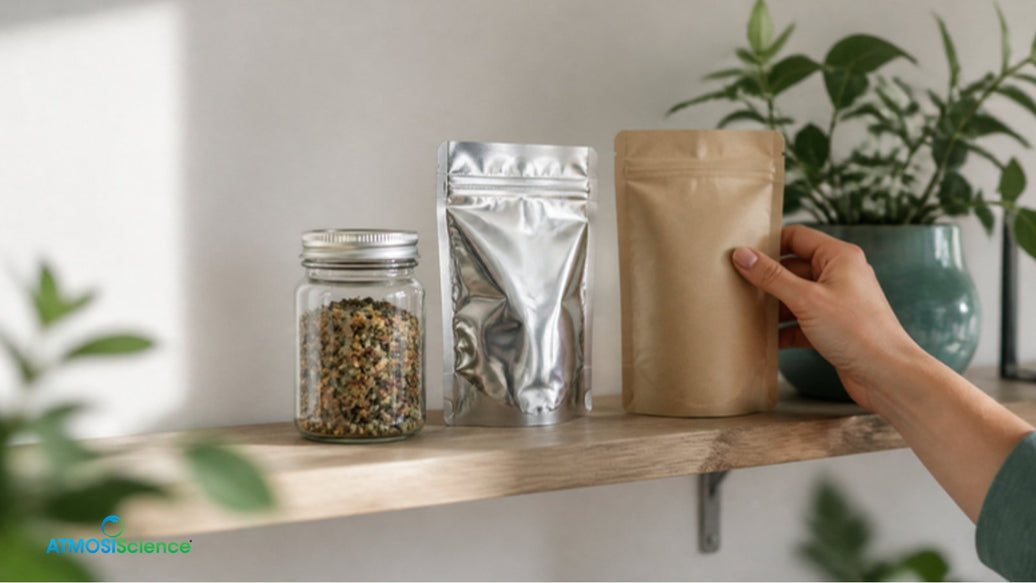
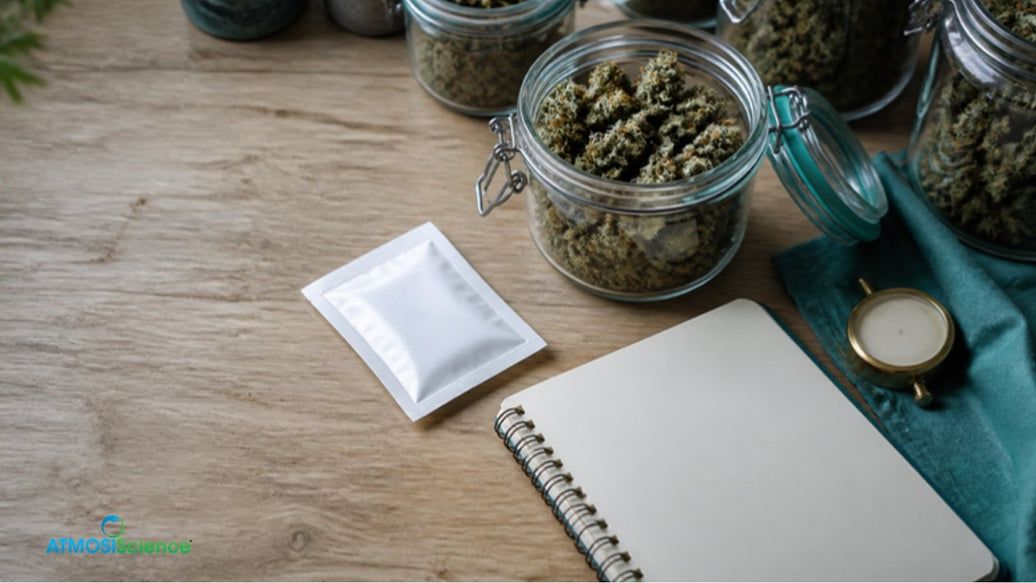
Three storage options cover most of the home cannabis market: a glass mason jar, a generic mylar bag, and a two-way humidity pouch like ruksak®. They look interchangeable from the outside. They are not. The right choice depends on how much flower is being stored, how long it needs to last, whether children share the home, and whether the goal is daily access or long-term archive.
Already own jars? Give them the 2-way part
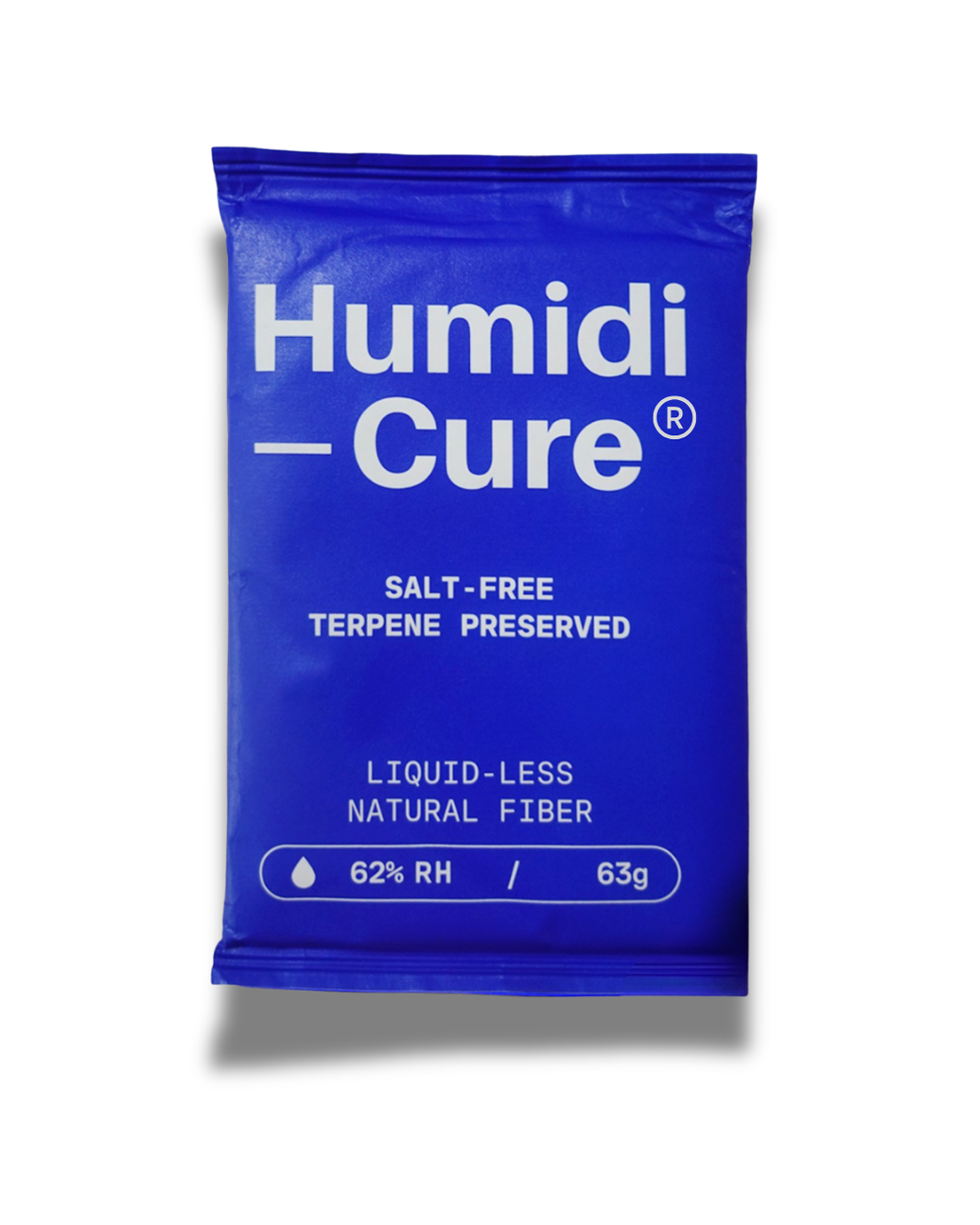
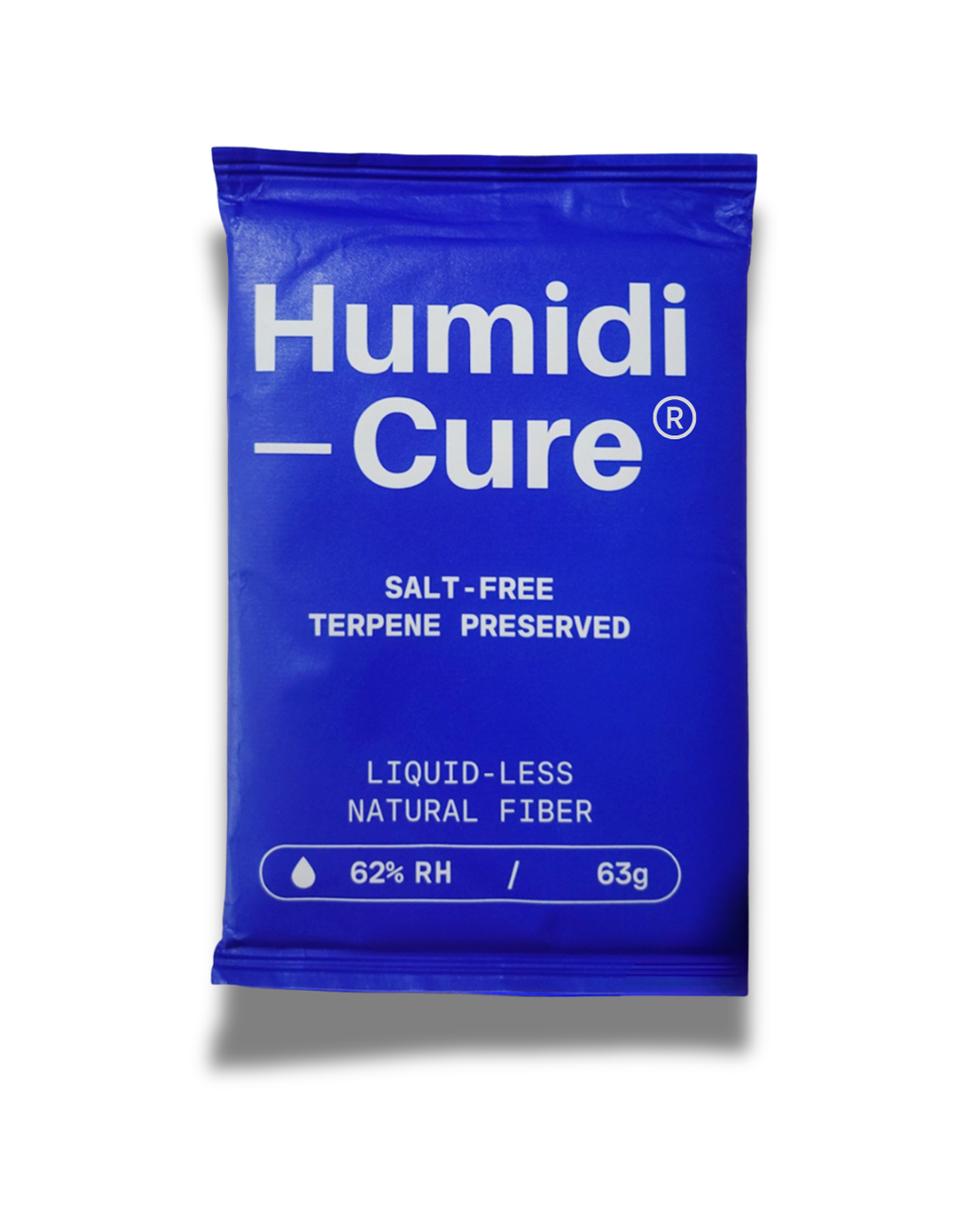
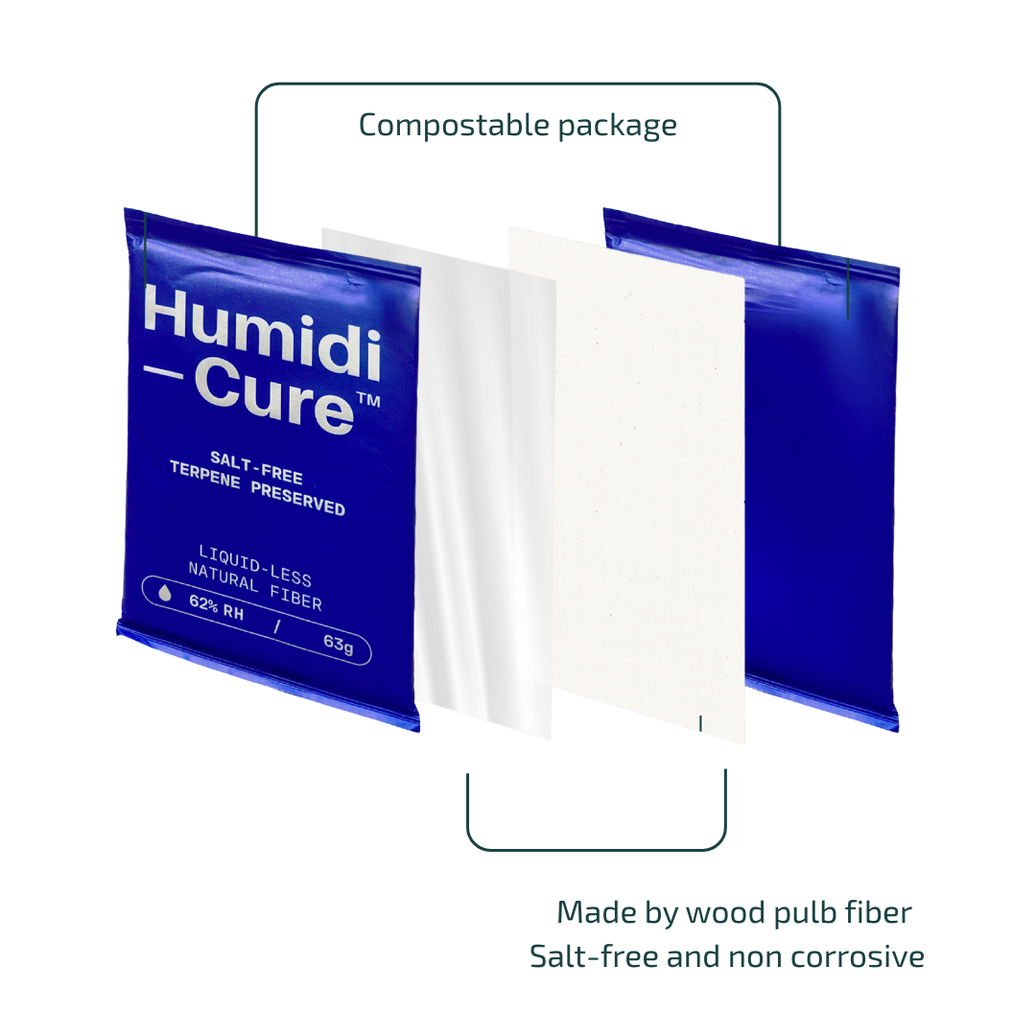
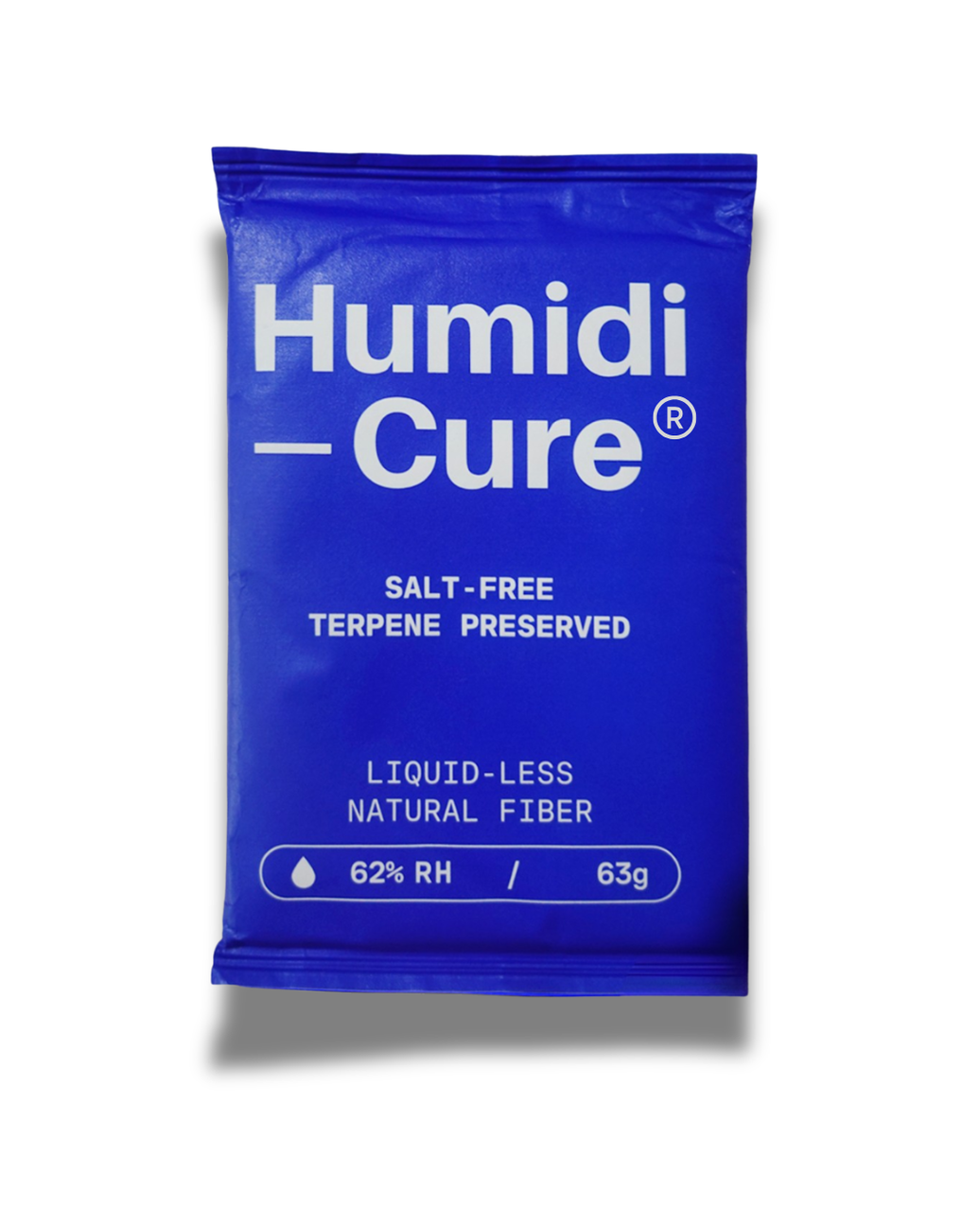
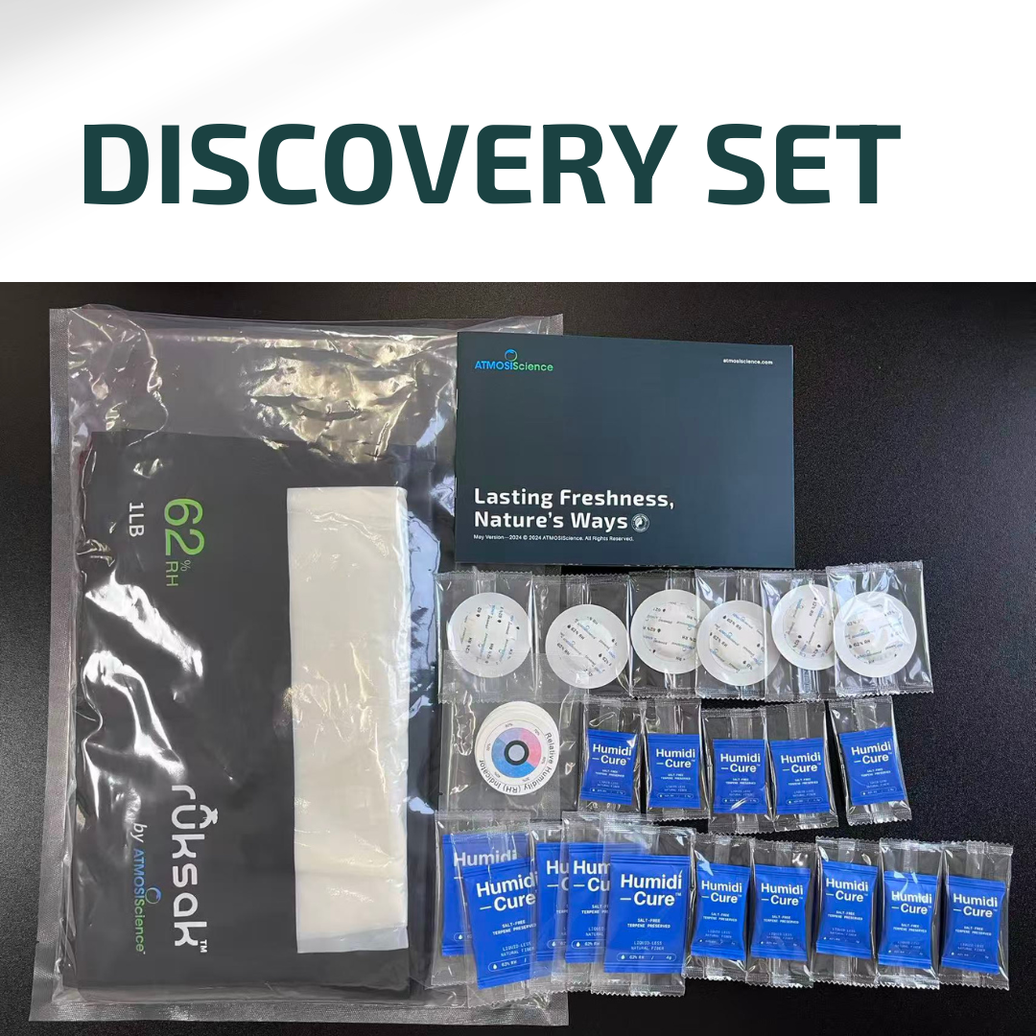
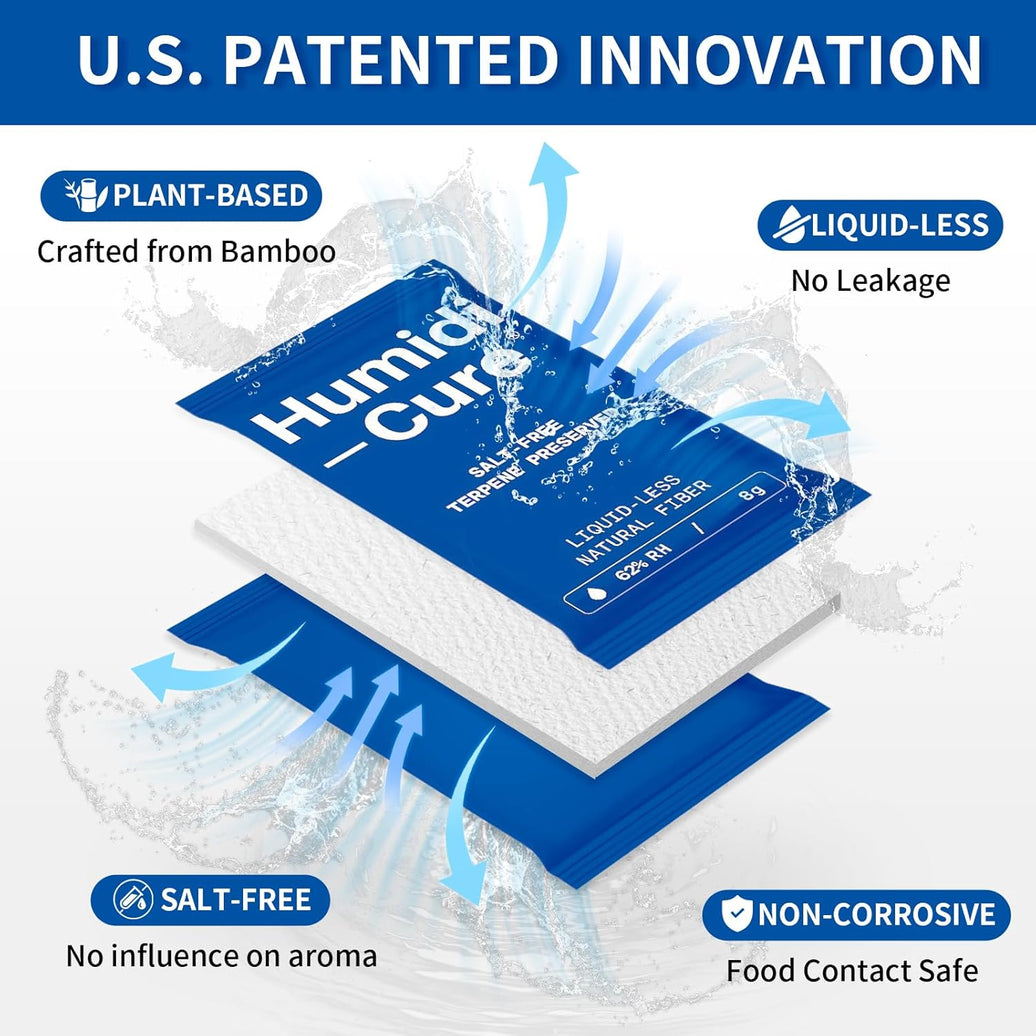
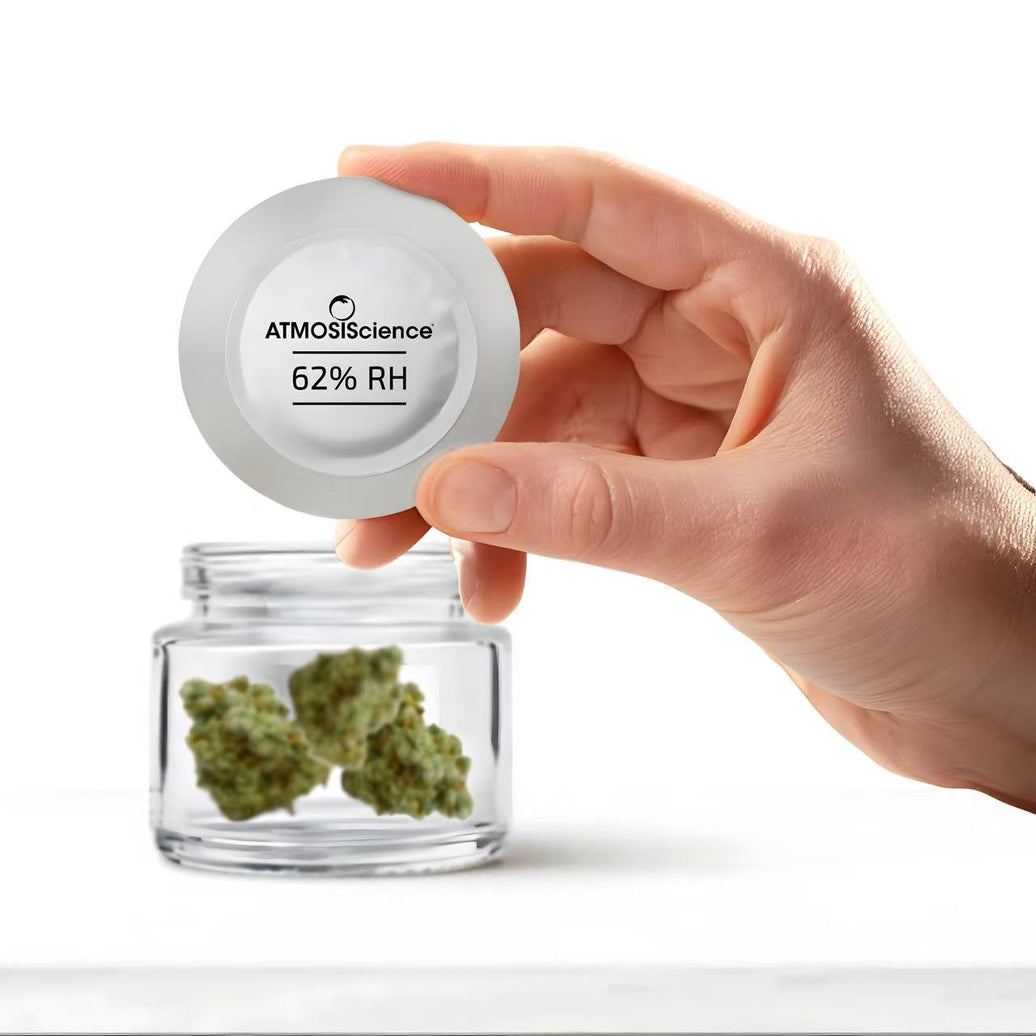
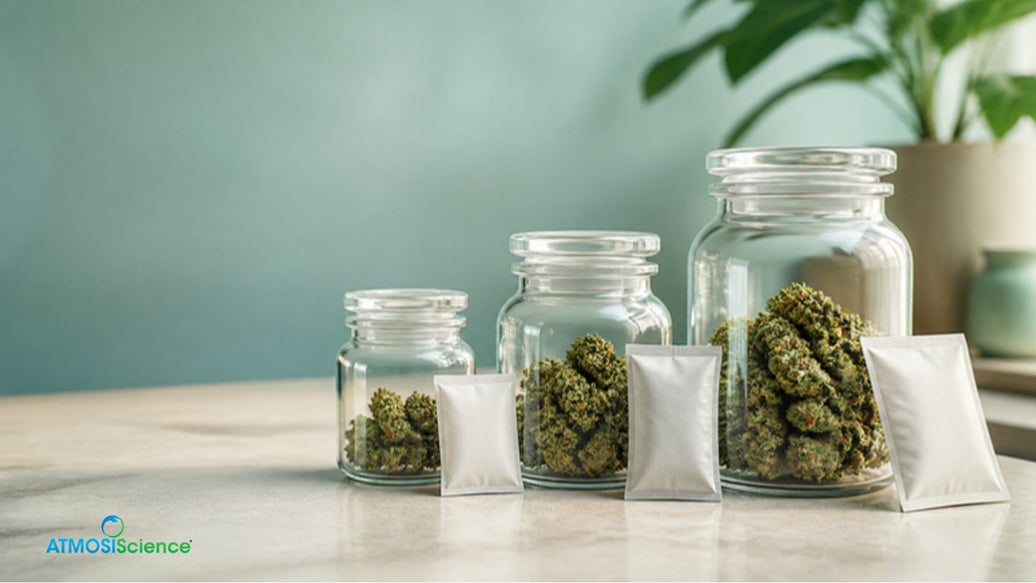
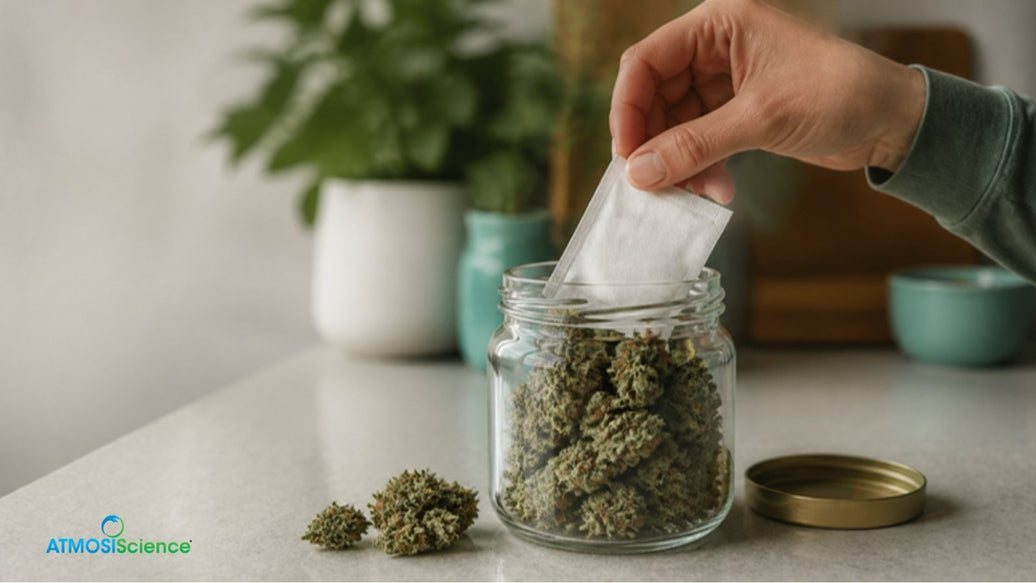
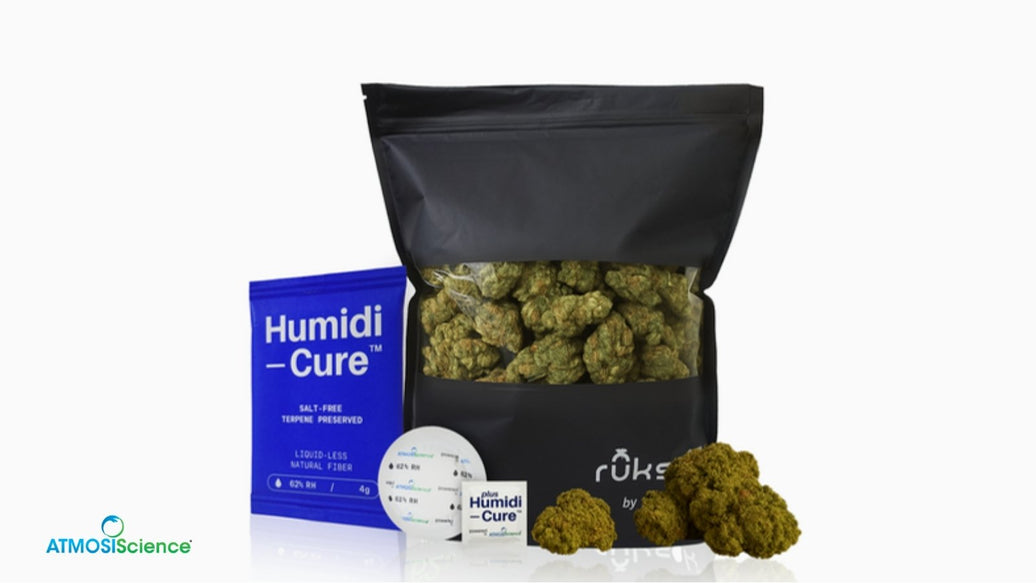
A jar is only as good as the humidity inside it. Drop a Humidi-Cure® 62% pack in each one and it holds 62% RH both ways: 1.5g for an eighth, 4g for a half ounce, 8g for an ounce
Shop Humidi-Cure® 62%, from $7.99 →Which pack size? Use the calculator →
The short answer
| Use case | Best choice |
|---|---|
| Daily personal stash, 3.5–28 g | Glass jar + Humidi-Cure® 62% pack sized to the flower (1.5 g, 4 g or 8 g) |
| Bulk home stash, ½ lb to 1 lb | ruksak® ½ lb / 1 lb — built-in 62% RH, child-resistant zip |
| Long-term archive (6+ months) | Glass mason jar + internal two-way humidity pack, kept cool and dark |
| Travel / discretion | Small opaque airtight container + a 1.5 g Humidi-Cure® 62% pack |
| Bulk freeze (extract input only) | Mylar + vacuum, RH at 60–65% before sealing |
The headline: a glass jar without a humidity pack drifts with whatever moisture the flower brought in, plain mylar has no humidity control at all, and a two-way pack or pouch is the only one of the three built to hold a set point.
What each option actually does
Mason jar (glass)
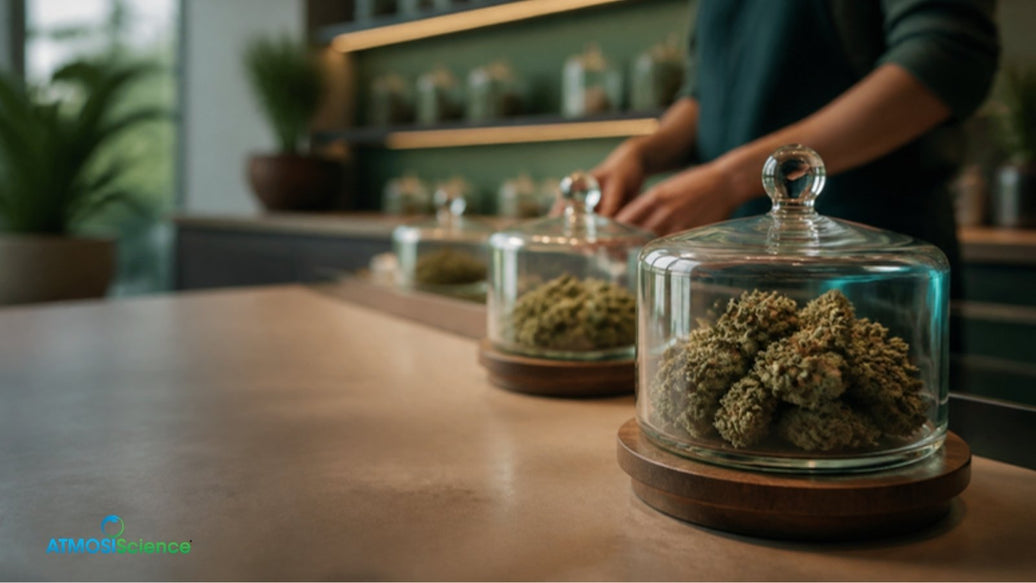
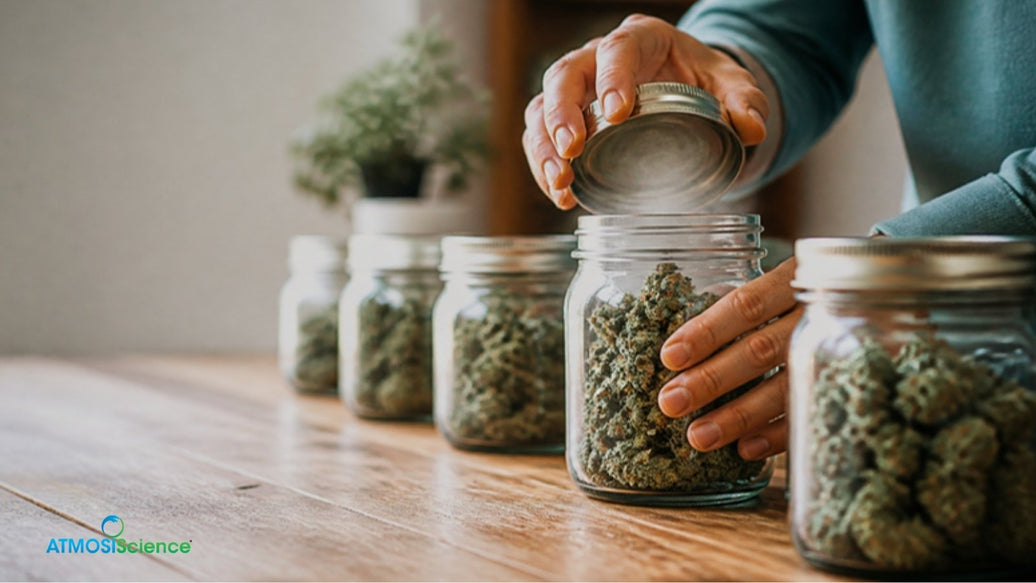
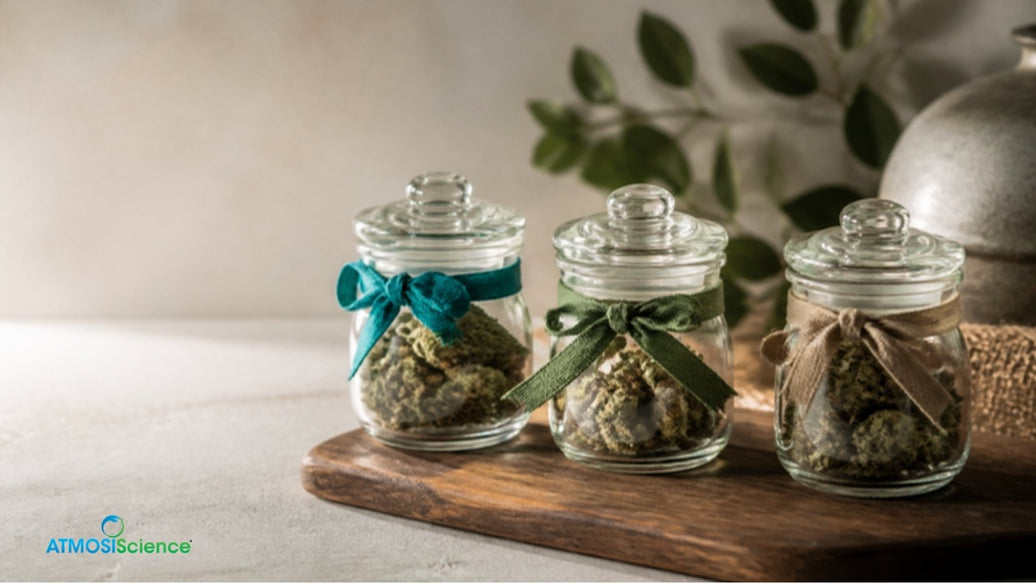
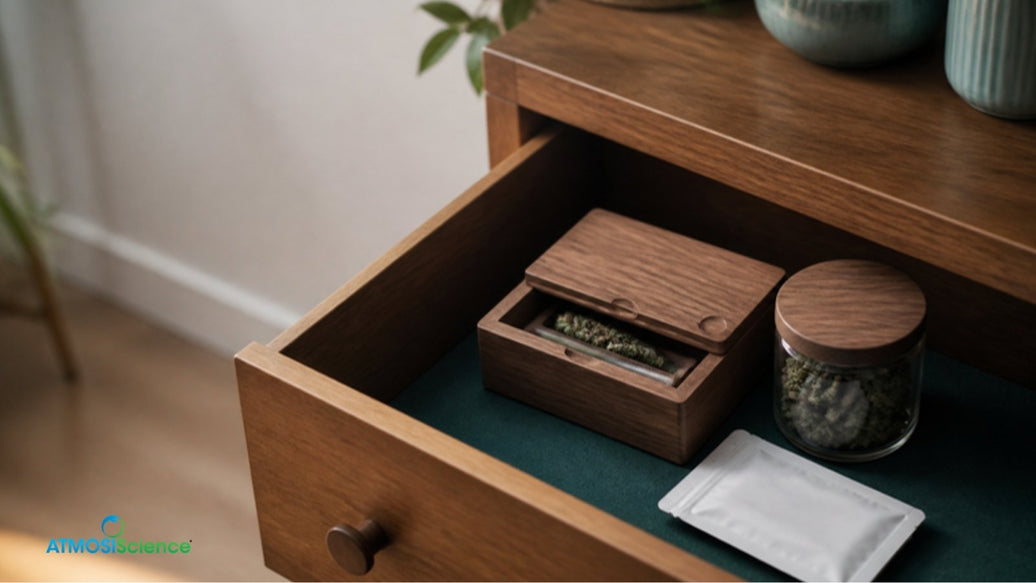
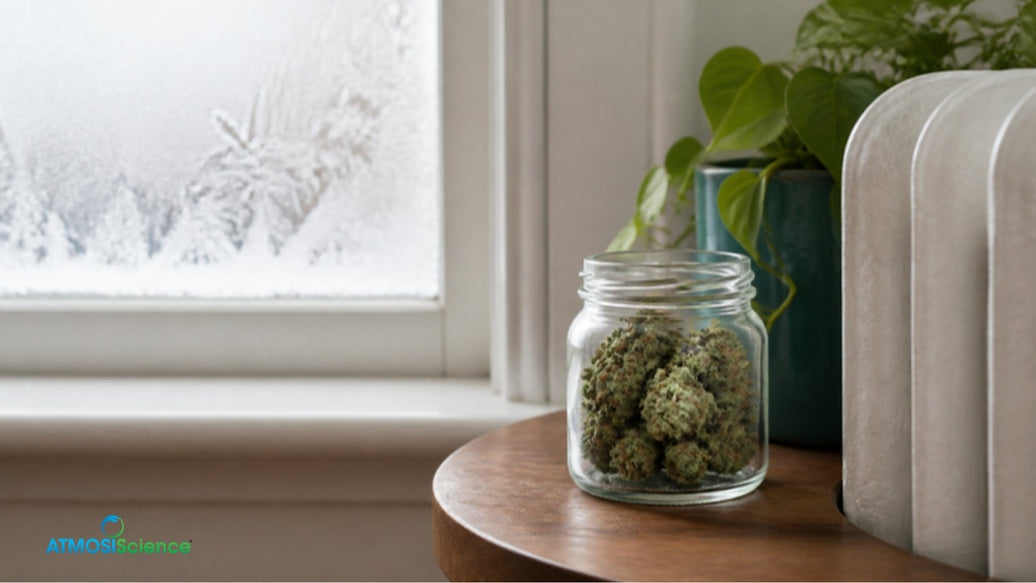
A wide-mouth glass jar is sealed, inert, and gives a clear view of the flower. What it does not do: control humidity. The jar is at the mercy of whatever RH the flower entered with. If flower goes in at 70% RH, the headspace stays at 70% RH (mold risk). If it goes in at 50%, it stays at 50% (dry, harsh smoke).
A mason jar with an in-jar humidity pack at 62% RH solves this — the pack does the work, the jar just provides a sealed container.
Mylar bag
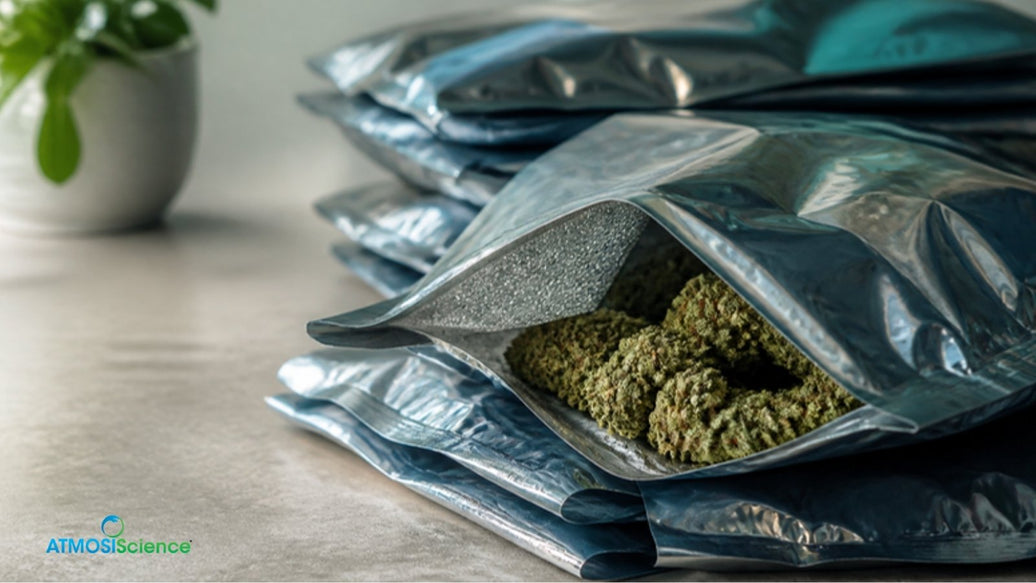
Generic mylar (the silver foil-style bag) is excellent at one thing: blocking light and oxygen. It is not airtight in the way most users assume — water vapor still moves through the seam over weeks, and the headspace inside the bag has no humidity control mechanism.
The result: flower in plain mylar tends to lose weight during storage as moisture migrates outward, and nothing inside the bag puts it back.
ruksak® (matte-black mylar pouch with built-in two-way humidity fiber)
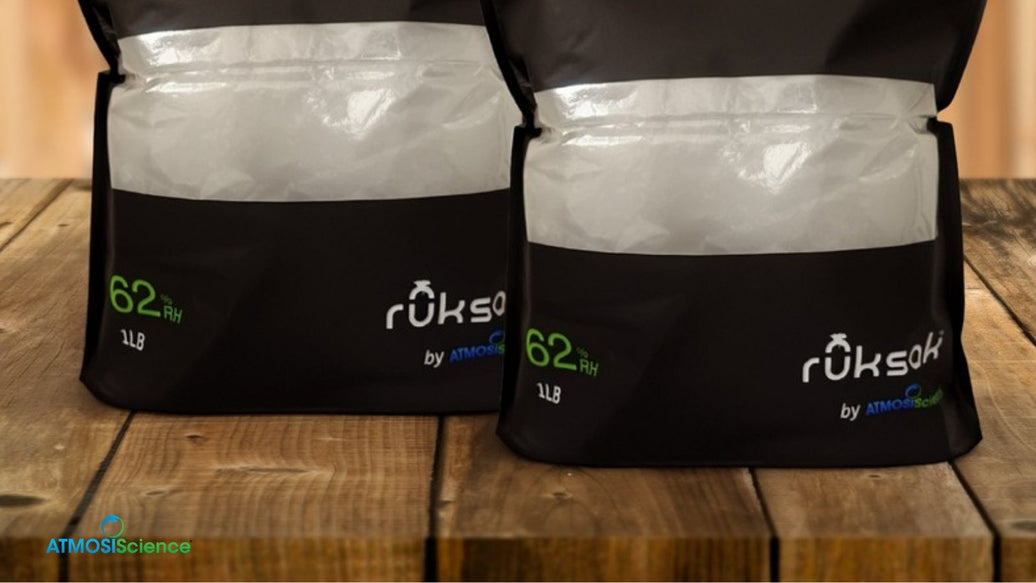
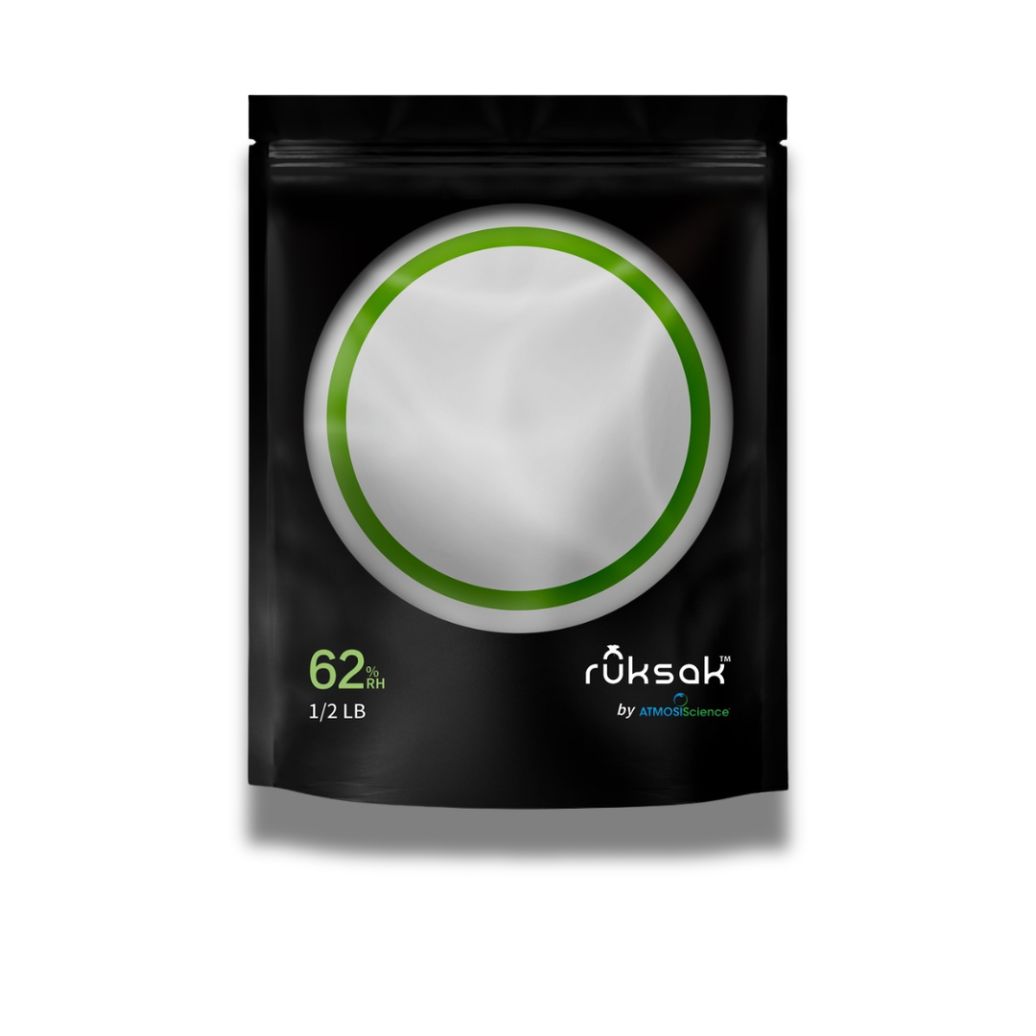
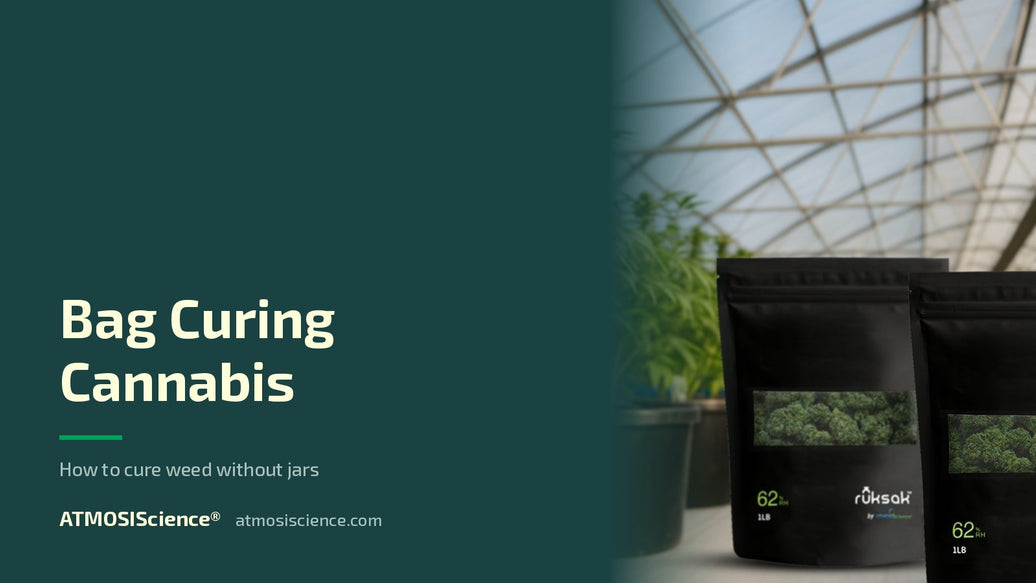
ruksak is a matte-black mylar stand-up pouch with a clear window in the body. Inside the pouch sits a plant-fiber two-way humidity sachet set to 62% RH. The pouch closes with a child-resistant zipper.
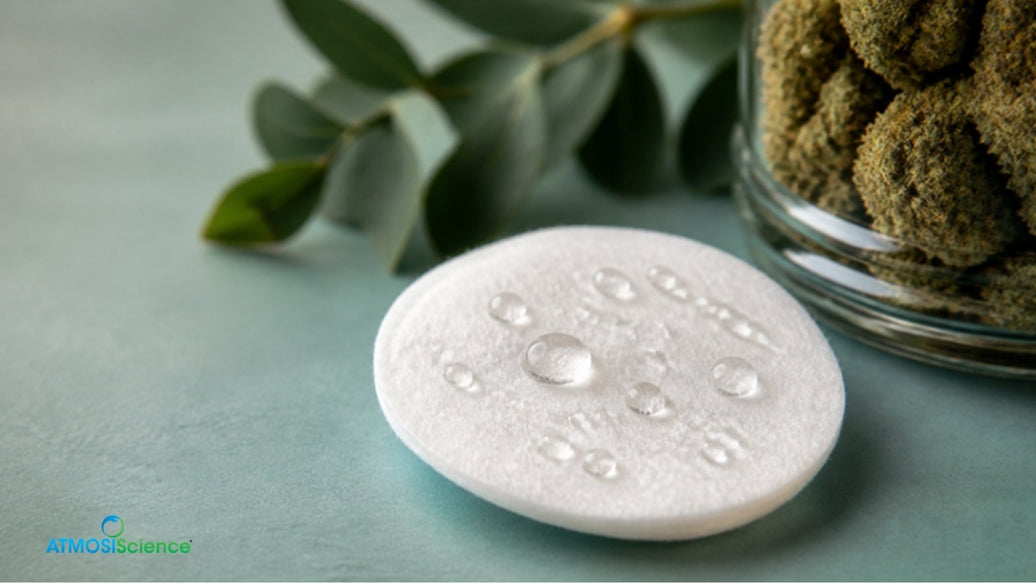
The mechanism: the fiber holds the headspace at 62% RH. If flower enters wetter than 62%, the fiber absorbs water. If flower enters drier, the fiber releases water. Either way, the equilibrium sits at the labeled RH and the flower stops losing aroma to its container.
ruksak retail sizes are ½ lb and 1 lb, with the fiber load matched to each size's headspace. Other sizes are available as OEM runs.
What independent testing shows
In independent testing by MCR Labs (Massachusetts), a 7 g ruksak held its interior near 60% RH over a 30-day study and about 57% RH at 60 days. That is the job a two-way fiber does: it keeps pulling the container back toward its set point instead of drifting with the room.
The takeaway: mason jars without internal humidity control are not a long-term storage solution; they are a sealed display container. Plain mylar blocks light but does nothing for moisture. A two-way pack in the jar, or a pouch with the fiber built in, is what actually holds the number.
When a mason jar is still the right answer
For long-term archive — six months or more — many cultivators and aficionados still prefer a wide-mouth glass mason jar with an internal two-way humidity pack, kept cool and dark. For jars, Humidi-Cure® 62% packs are the stocked option; see the 62 vs 58 vs 65 RH guide for the trade-offs between set points.
What ruksak is built for
ruksak is built for the daily-to-90-day window where most personal cannabis sits:
- Anatomy: 1) child-resistant zipper, 2) opaque proprietary mylar film, 3) breathable inner film, 4) two-way humidity fiber at 62% RH (custom RH available for OEM).
- Sizes: ½ lb (227 g) and 1 lb (454 g) retail; other sizes for OEM.
- Closure: Child-resistant zipper (squeeze-and-slide).
- Window: Clear rectangle for visual ID without opening.
- Material: The internal humidity sachet is plant-fiber based.
What ruksak is not
- ruksak is not a bamboo-exterior bag. The exterior is matte-black mylar. The bamboo is in the fiber inside the humidity sachet.
- ruksak is not smell-proof in the absolute sense. Mylar reduces odor significantly; it does not eliminate it.
- ruksak does not rehydrate flower instantly. A 62% RH pack added to dry flower releases water over 48–96 hours.
FAQ
Is mason jar storage better than mylar for weed? For long-term archive (6+ months) with an internal humidity pack, mason jars edge out mylar because glass is fully inert and easy to inspect visually.
How long does cannabis stay fresh in ruksak? In independent MCR Labs testing, a 7 g ruksak held its interior near 60% RH over 30 days and about 57% RH at 60 days.
Does ruksak need a separate humidity pack? No. The two-way humidity fiber is built into the pouch.
Can I reuse a ruksak pouch? The pouch can be re-zipped and reused for short-term storage of the same product. The internal fiber's two-way capacity has a finite lifespan, so swap to fresh control once it is used up.
Is ruksak child-resistant? Yes. The zipper uses a squeeze-and-slide pattern that requires two coordinated motions.
What about freezer storage? Long-term freeze (extract biomass) usually uses vacuum-sealed mylar at 60–65% RH starting moisture.
Bottom line
For the personal-stash window where most home cannabis lives, the container matters less than what holds the humidity inside it. A jar with a two-way pack, or a pouch with the fiber built in, beats a plain jar or plain mylar bag on aroma and burn, and ruksak adds child-resistance on top.