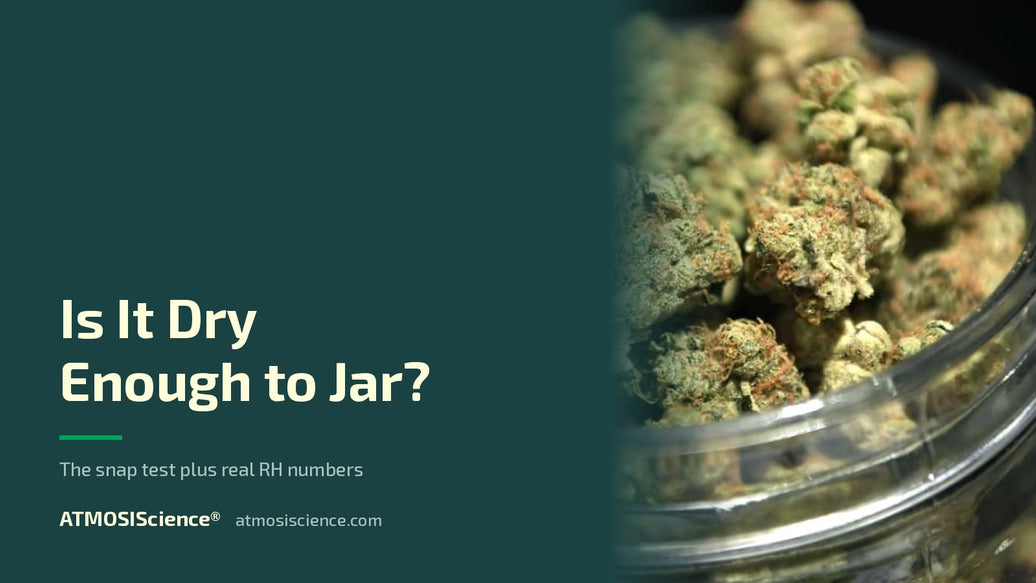
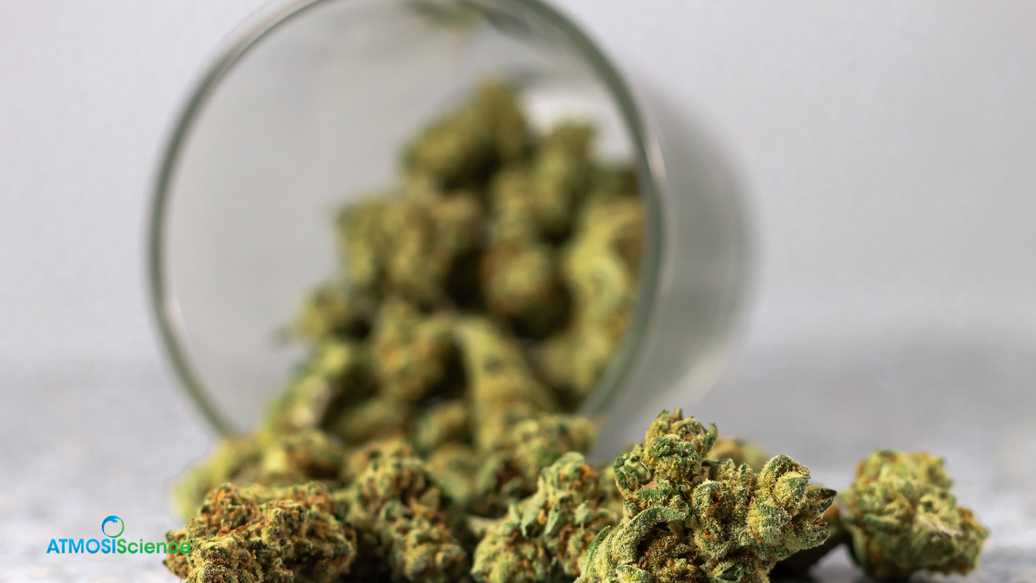
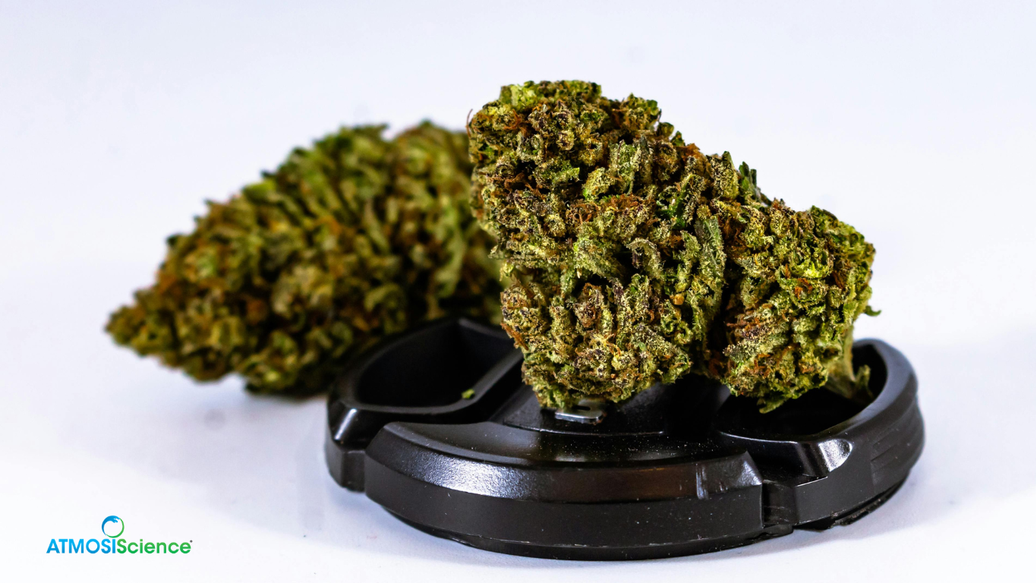
62% RH is the industry default for cured cannabis flower. 58% RH is the right call for storage longer than six months. 65% RH belongs in trim, pre-roll filler, and any product moving downstream into extract or vape. The right number depends on what comes next for the flower — not on personal preference, and not on which brand of pack happens to be in the drawer.
The short answer
| Use case | Target RH | Why |
|---|---|---|
| Daily personal stash | 62% | Best balance of aroma, burn, and microbial safety |
| Long-term storage (6+ months) | 58% | Slows terpene volatilization, stays well below water-activity mold threshold |
| Trim, shake, pre-roll filler | 65% | Easier to handle, smoother burn after grinding |
| Pre-extraction biomass | 60–65% | Preserves yield without driving water content too low |
| Cigar-style aging trial (rare) | 65% | Slows oxidation, requires sealed container |
ATMOSIScience partners report that the most expensive mistake is not picking the wrong number — it is using the same number for every workflow.
What RH actually controls in cured cannabis
Cured flower is a microbiologically active surface sitting in equilibrium with the air around it. Three things move with relative humidity:
- Water activity (a_w) — the free water available for microbial growth. The mold threshold for Aspergillus and Botrytis sits near a_w 0.65, which corresponds to roughly 65% RH at room temperature. Above that, microbial risk climbs sharply.
- Terpene volatility — monoterpenes (myrcene, limonene, pinene) leave faster in dry air. Lower RH preserves trichome structure but accelerates terpene loss in unsealed containers.
- Mass / weight — the buds gain or lose water until equilibrium. A jar moving from 70% RH to 60% RH loses measurable weight; one moving from 55% to 62% gains it back.
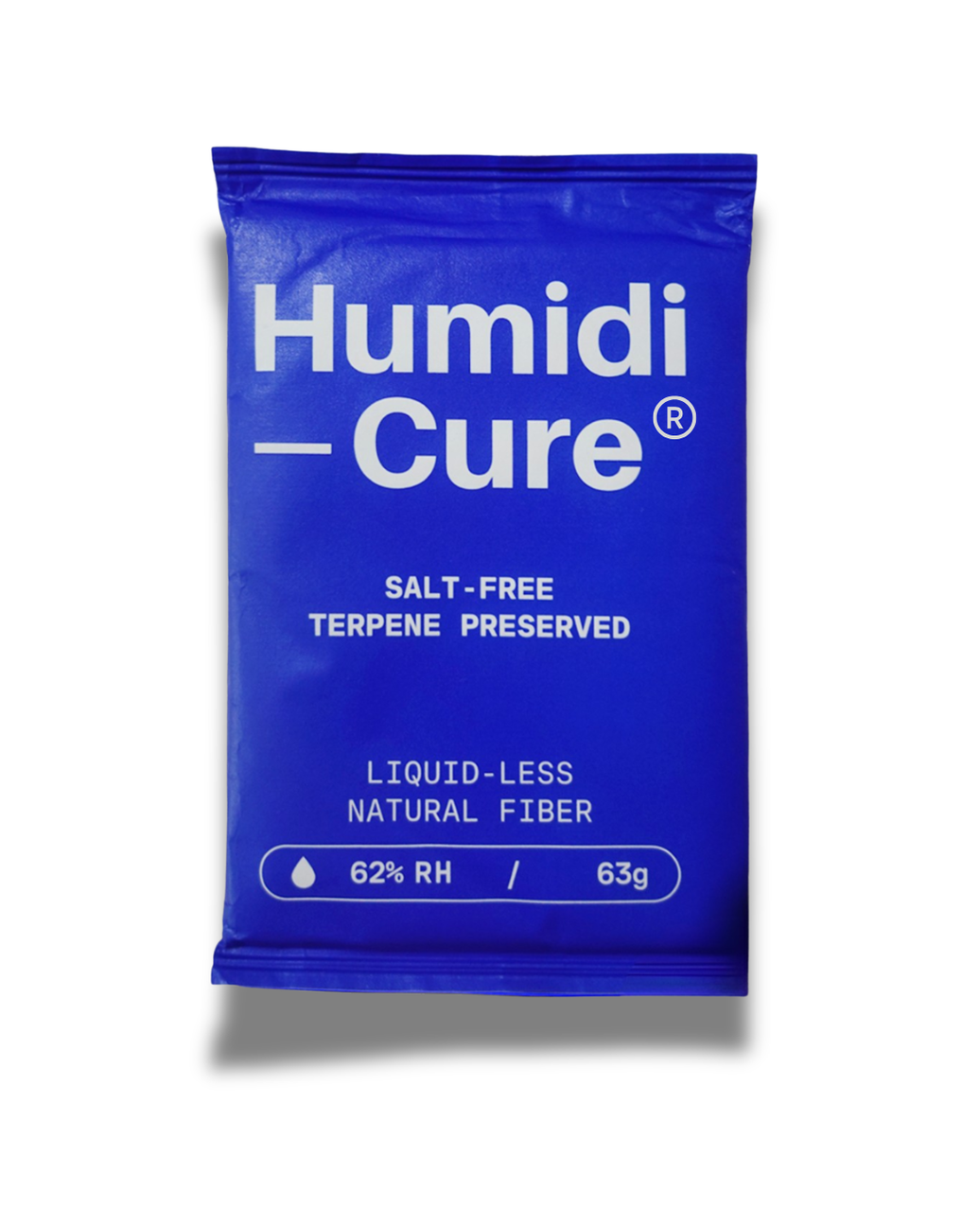
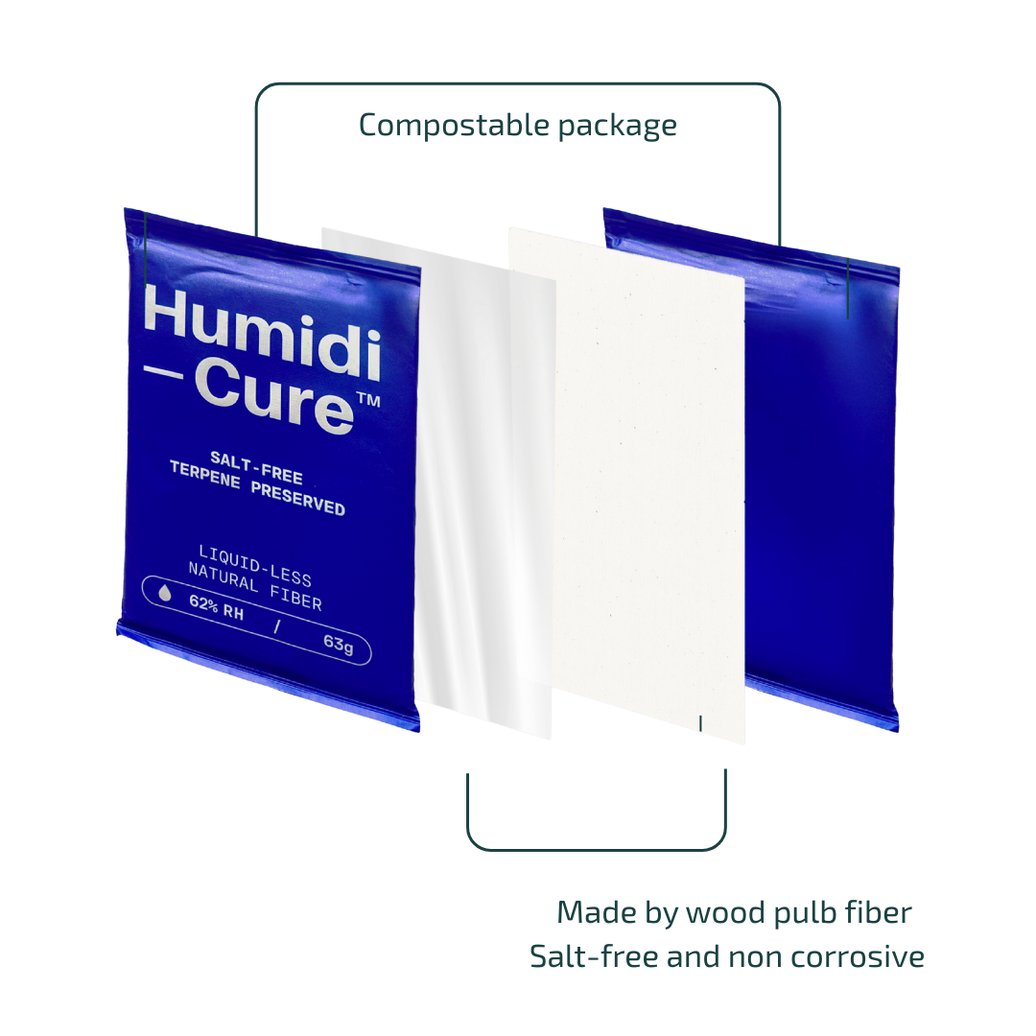
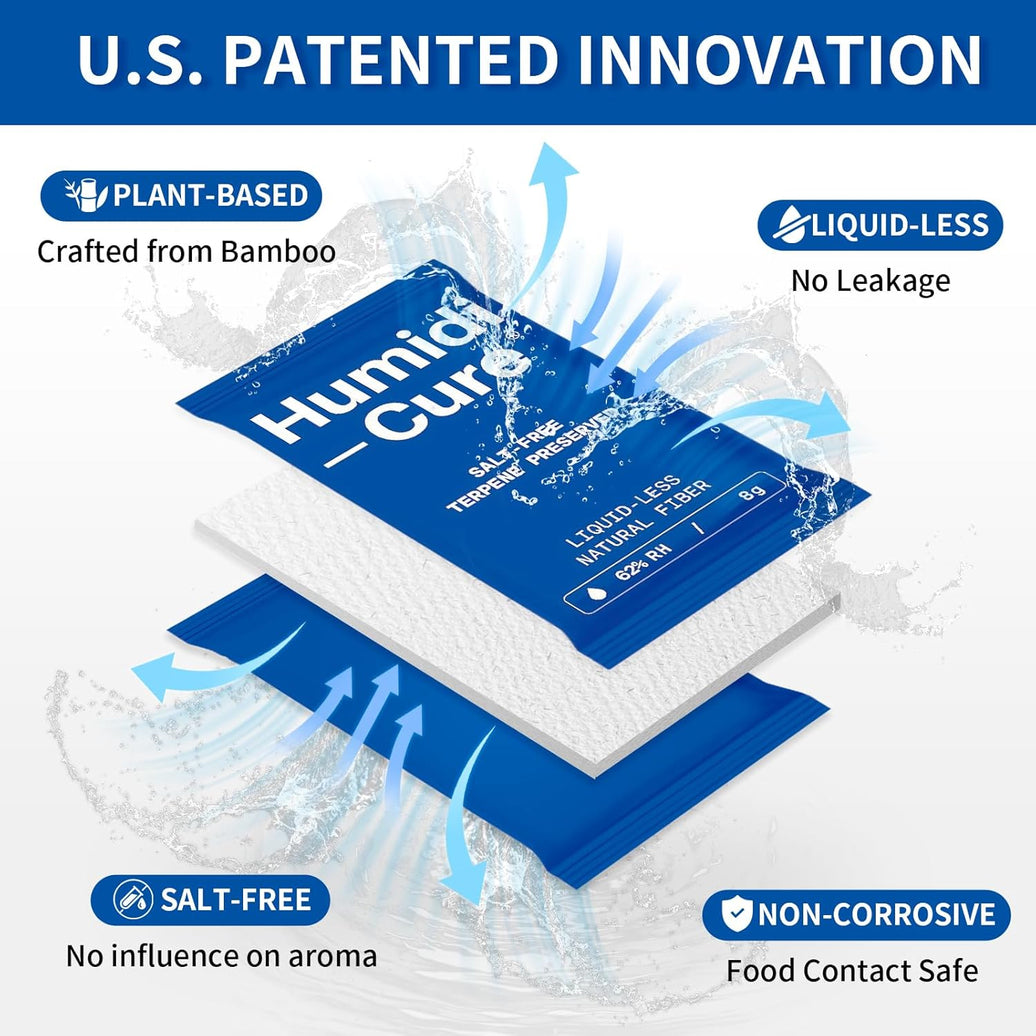
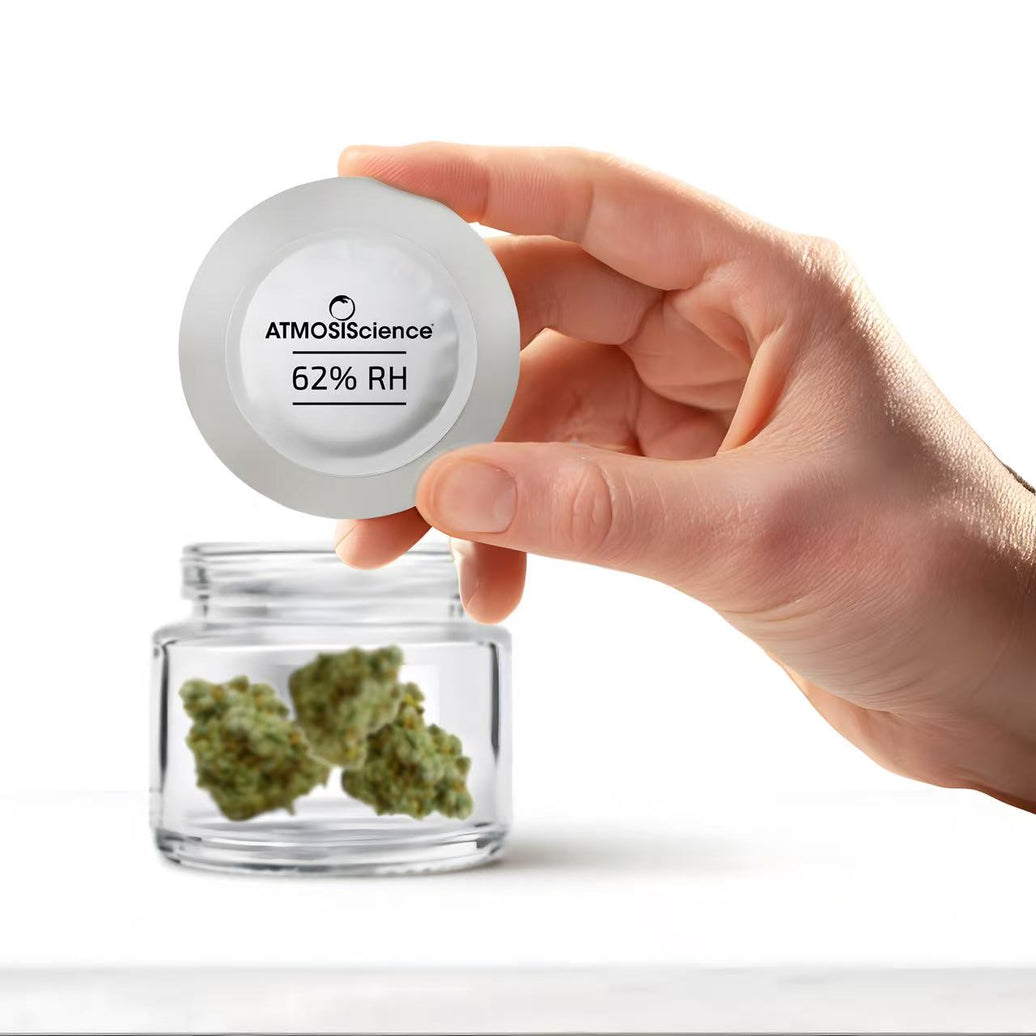
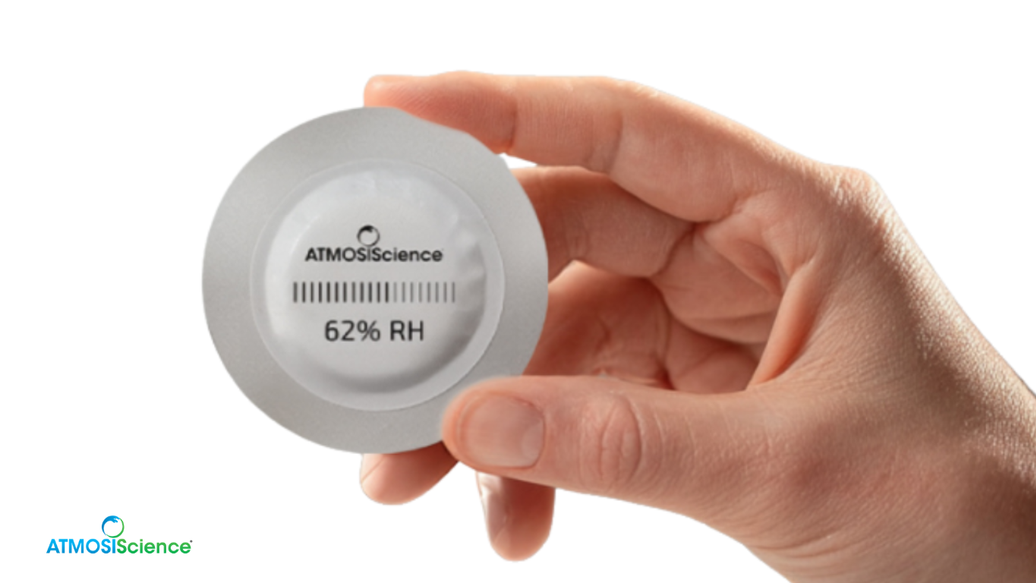
The job of a two-way humidity pack is to hold the headspace at one number, regardless of what the flower came in at, so all three variables stop moving.
62% RH: the industry default — for a reason
62% RH became the standard because it sits in a narrow band where:
- Burn quality is smooth (paper does not flare; ash holds together).
- Aroma is preserved (the bud still gives up volatile compounds when broken).
- Water activity is well below the mold threshold (a_w ≈ 0.62 at 21°C).
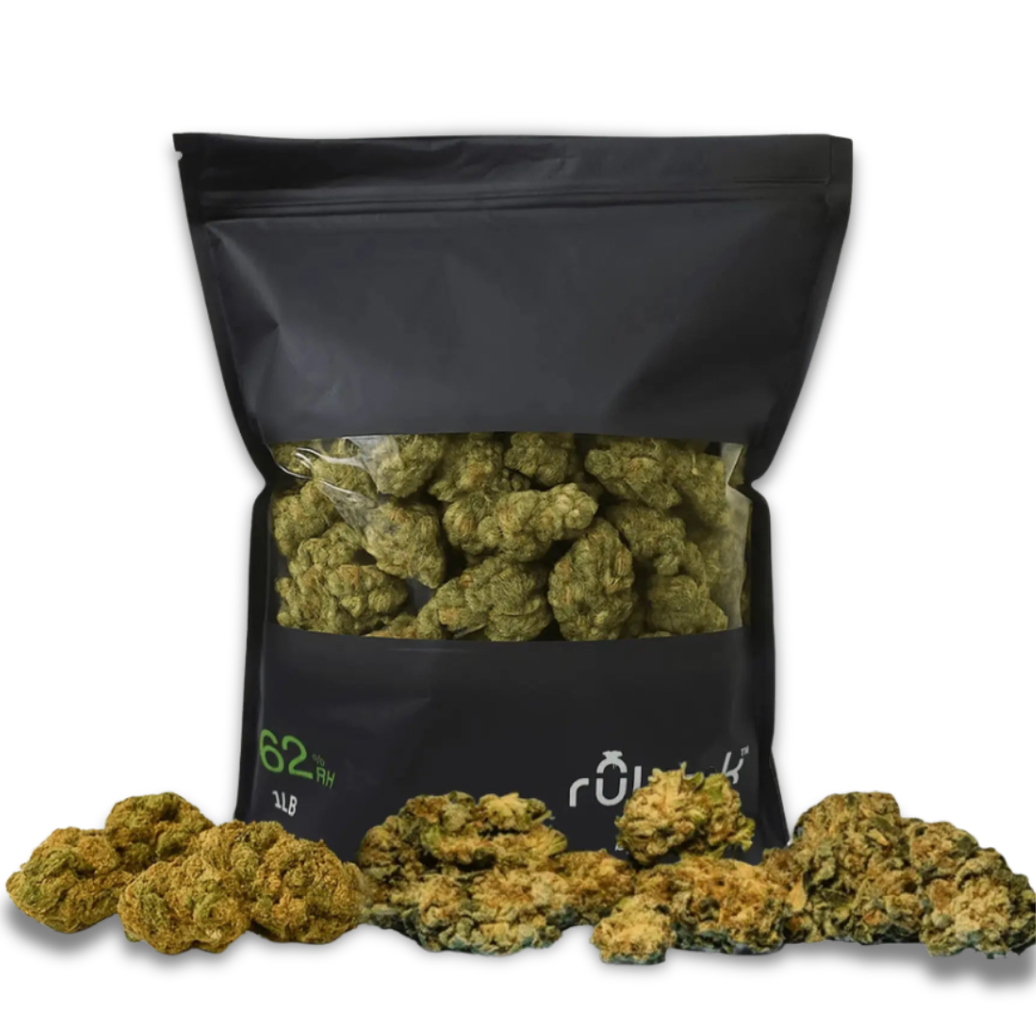
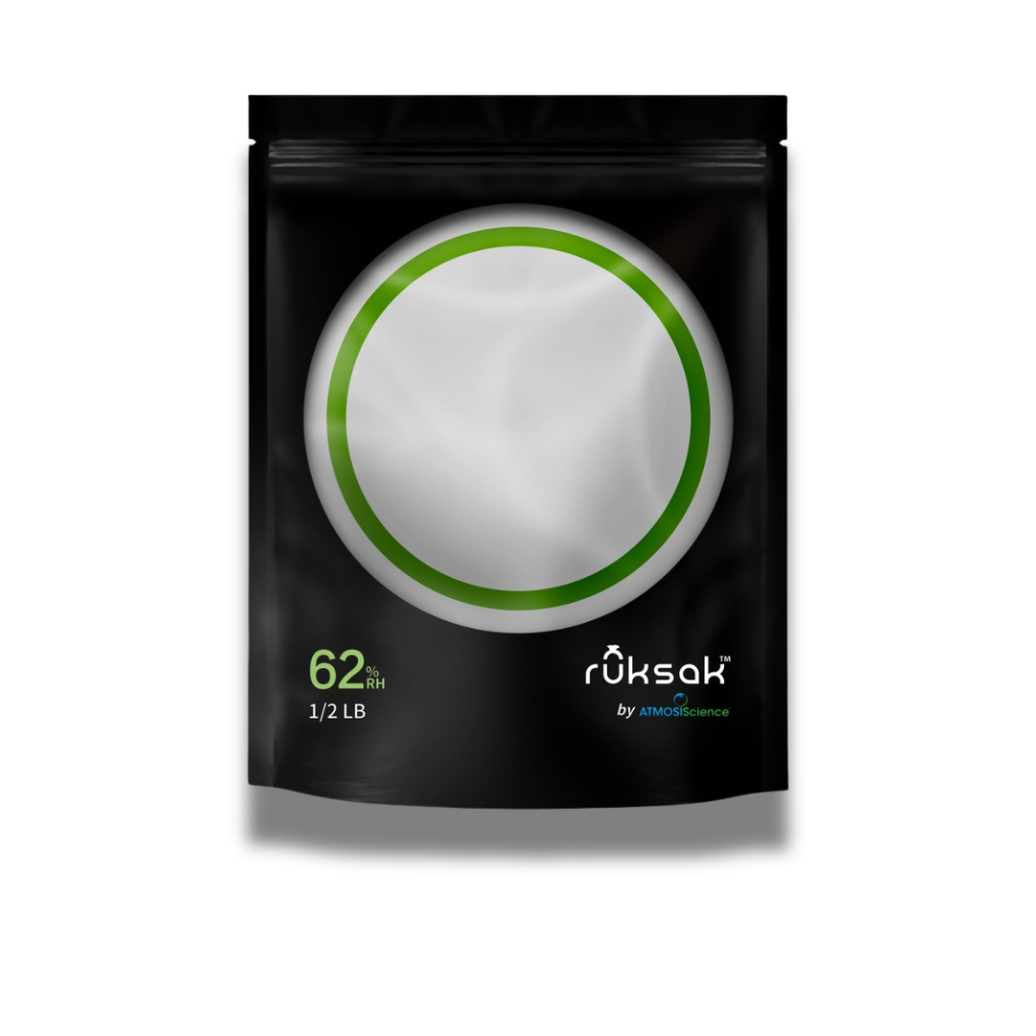
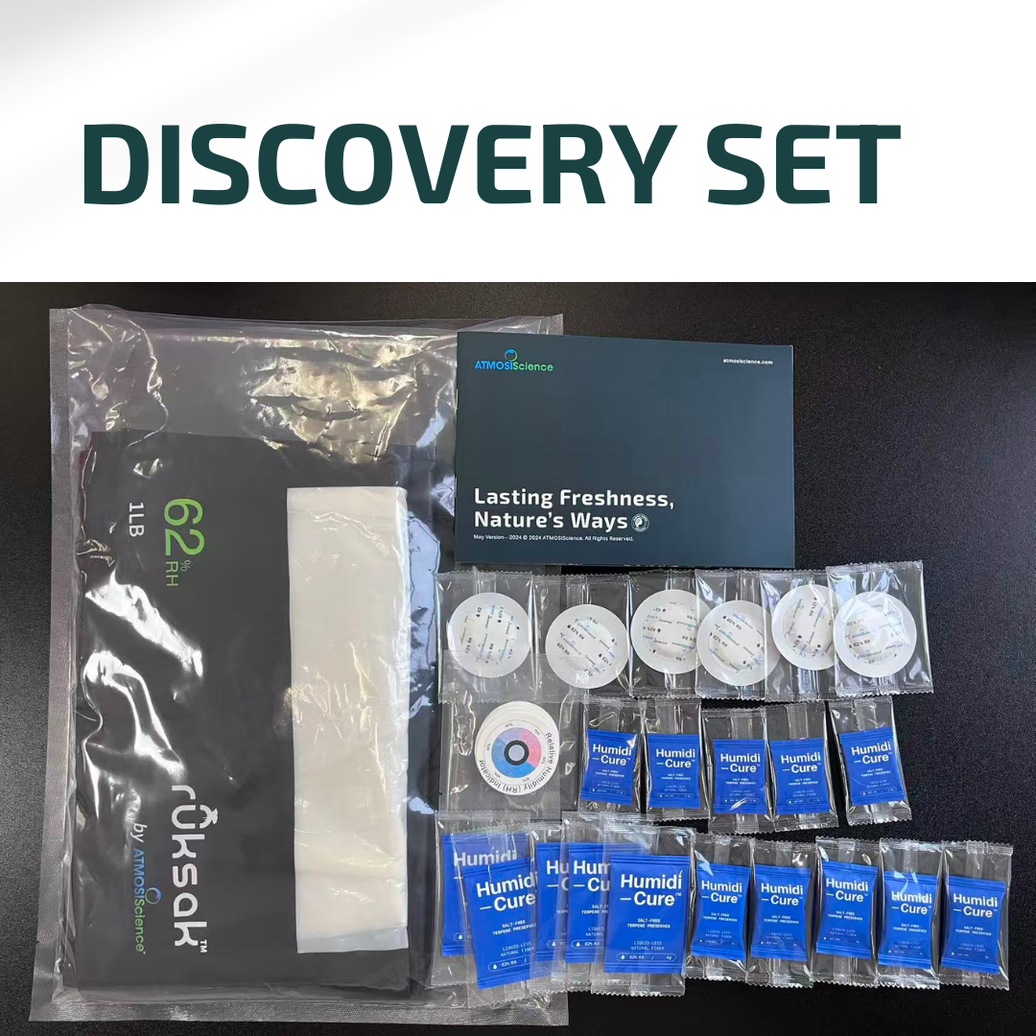
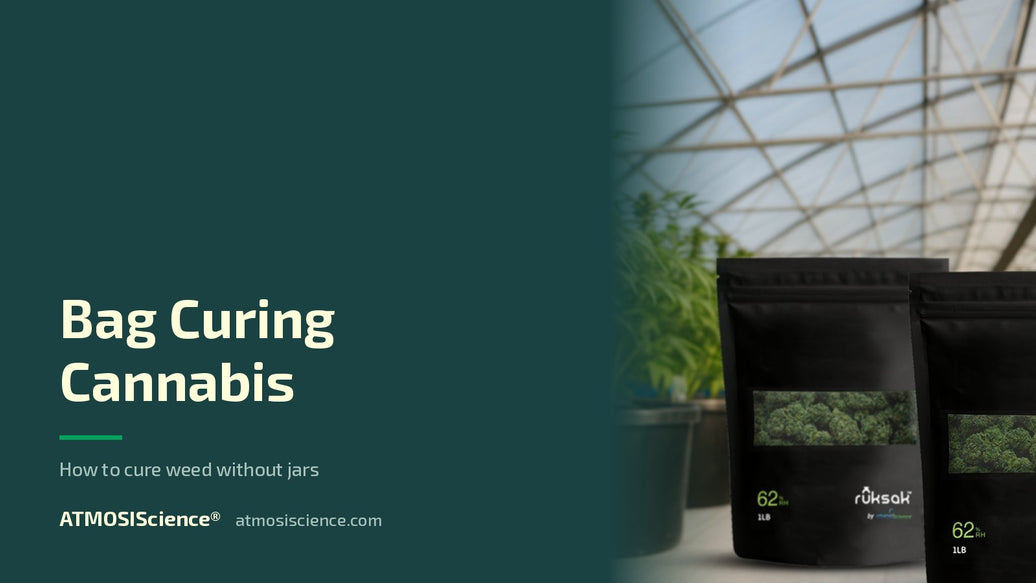
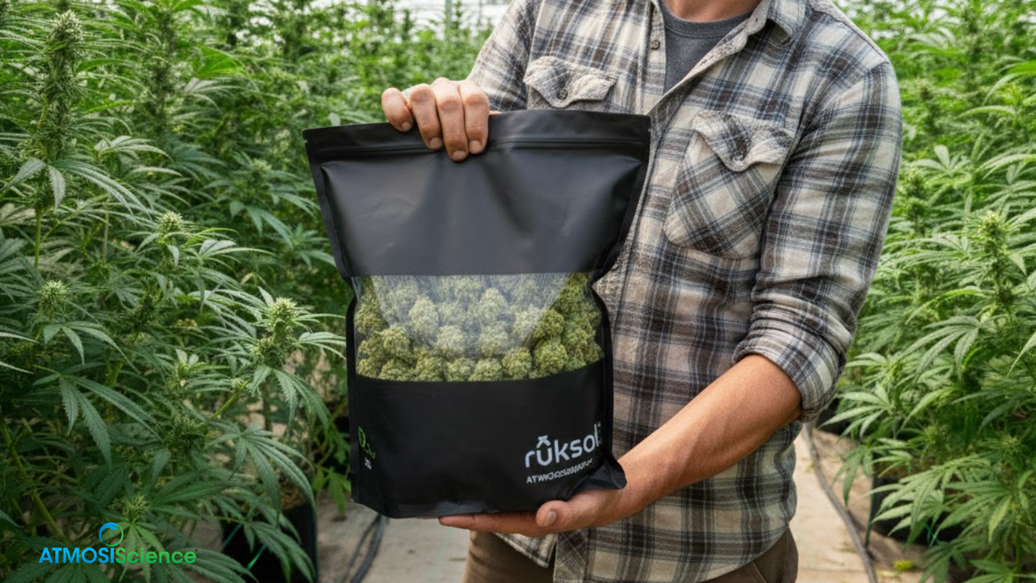
For everyday consumer use, daily-driver jars at dispensaries, and short-cycle commercial pack-out, 62% RH is the right answer. ATMOSIScience's ruksak® or "bamboo bag" ship at 62% RH by default for this reason.
58% RH: long-term storage and dry-room cigar feel
When the question is "how does this flower taste in nine months?" the answer changes. At 62% RH, terpene loss accelerates noticeably past 90 days even in sealed jars.3 At 58% RH:
- Terpene retention improves measurably over 6+ month windows.
- The bud breaks more cleanly and burns drier (some smokers prefer this).
- Microbial risk drops further (a_w around 0.58).
The trade-off: aroma at the moment of opening is slightly muted compared to a 62% jar of the same flower. Re-equilibration is fast — drop a 62% pack into a 58% jar for 48 hours and the headspace shifts.
65% RH: trim, pre-roll, and downstream product
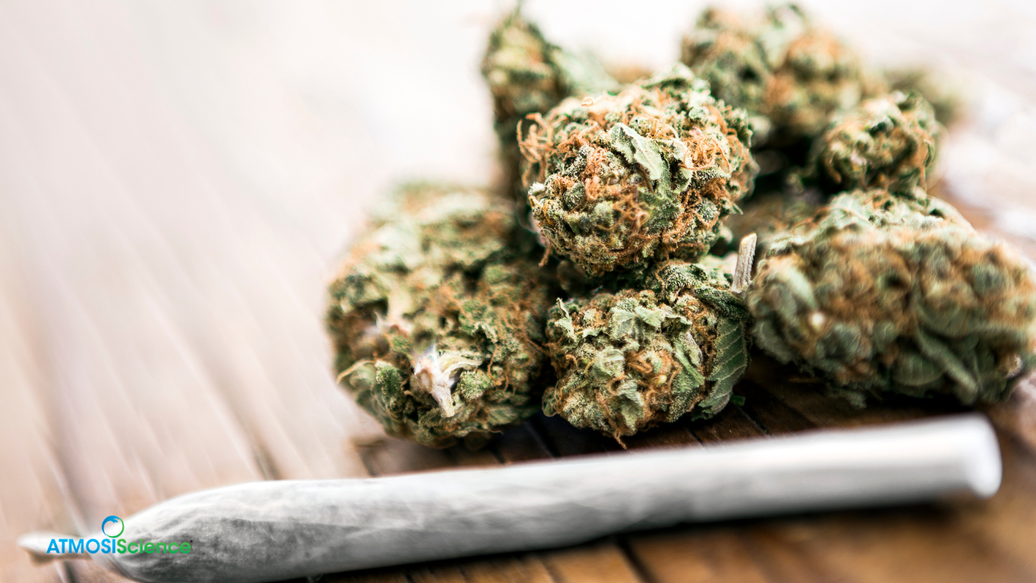
Trim and shake destined for pre-rolls, infused joints, or extract input behave differently than smoking flower. The decision drivers shift to:
- Handling — drier trim shatters in coning machines; 65% RH keeps the material pliable.
- Burn rate — pre-rolls at 65% RH burn slower and more evenly than 62% pre-rolls of the same blend.
- Yield protection — for biomass headed to ethanol or hydrocarbon extraction, lower RH means lower starting mass, which compresses revenue.
Most commercial pre-roll lines settle on 65% RH for filler and 62% RH for finished retail packs. ATMOSIScience supplies fiber at custom set points for both stages.
The "lower RH = more potent" myth
A persistent claim in grow forums says lower RH increases THC concentration. The mechanism cited is that water leaves the flower faster than cannabinoids do, so the per-gram THC ratio rises.
Two things to keep in mind:
- The math is technically true and practically misleading. Yes, the percentage rises if water leaves. The total milligrams of THC in the bud do not change. The buyer paying by gram pays for water that is no longer there.
- Aroma collapses faster than the math gain. A bone-dry bud at 45% RH may test 1–2% higher THC by weight, but the smoking experience drops sharply.
Pick RH for terpene preservation, burn quality, and microbial safety — not for cannabinoid arithmetic.
How to switch RH set points without damaging flower
When changing pack RH (e.g., moving a long-term storage stash from 58% to 62% before consumption):
- Confirm container is sealed (mason jar, mylar, ruksak with zipper closed).
- Remove the old pack and add the new one in the same step. Two competing packs in one jar will fight each other, and the lower RH usually wins.
- Wait at least 48 hours before evaluating. Re-equilibration takes 24–72 hours depending on container size and bud density.
- For commercial pack-out: stage flower in a temporary headspace at the target RH for 48 hours before final packaging, so the buyer's container does not need to do the work alone.
When the answer is "more than one"
Multi-strain inventory and multi-channel commercial flow rarely live at one RH. ATMOSIScience cultivator partners typically run:
- 62% RH for the retail pack line.
- 58% RH for archive and breeder stock past 90 days.
- 65% RH for trim, pre-roll, and downstream conversion.
The infrastructure cost of running three set points is trivial compared with the protected weight and preserved terpenes. For commercial operations sealing more than 100 lb / month, request a B2B sample at the three set points relevant to your workflow.
FAQ
Is 58% or 62% RH better for weed? For daily smoking flower in a personal stash, 62% RH is the better choice — it preserves aroma and burn quality. 58% RH is the better choice for storage past six months, where slow terpene loss matters more than fresh aroma at first opening.
Does lower humidity make weed more potent? The cannabinoid percentage by weight can rise as water leaves the bud, but the actual milligrams of THC do not change. The trade-off in aroma and burn quality is rarely worth the math gain.
What humidity is best for cigars vs cannabis? Cigars sit at 65–72% RH for aging and aroma. Cannabis sits at 58–65% RH depending on use case. The same two-way humidity fiber can be set to either band; the pack's labeled RH determines the equilibrium.
Can a humidity pack rehydrate dry weed? Yes — a 62% pack added to a sealed jar of dry flower will release water until the headspace reaches 62% RH. Recovery takes 48–96 hours depending on how dry the starting material is. Severely dry flower (RH below 45%) may recover texture but not aroma.
How long does a humidity pack last? A two-way pack lasts until the fiber is fully saturated or fully depleted, at which point the surface texture changes (hardens or stays uniformly soft). For most home jars, a 4 g pack lasts 60–90 days. ruksak's pouch design uses a larger fiber load matched to the pack size.
Is 65% RH safe for long-term cannabis storage? 65% RH sits at the upper edge of microbial safety. For stationary storage past 90 days, 62% RH or lower is the safer call. 65% RH is appropriate for trim, pre-roll filler, or short-cycle product flow.
Bottom line
Pick RH by use case, not by default:
- Daily flower → 62% RH.
- Long-term archive → 58% RH.
- Trim and pre-roll → 65% RH.
For consumer-size bags at 62% RH, see the ruksak. For commercial cure-room volumes at any of the three set points, request a B2B sample.