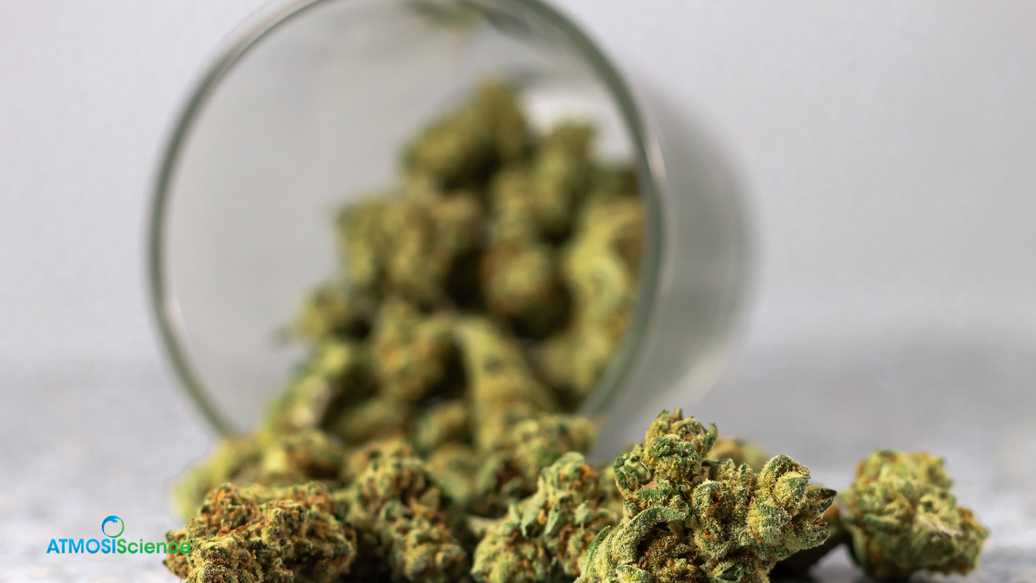
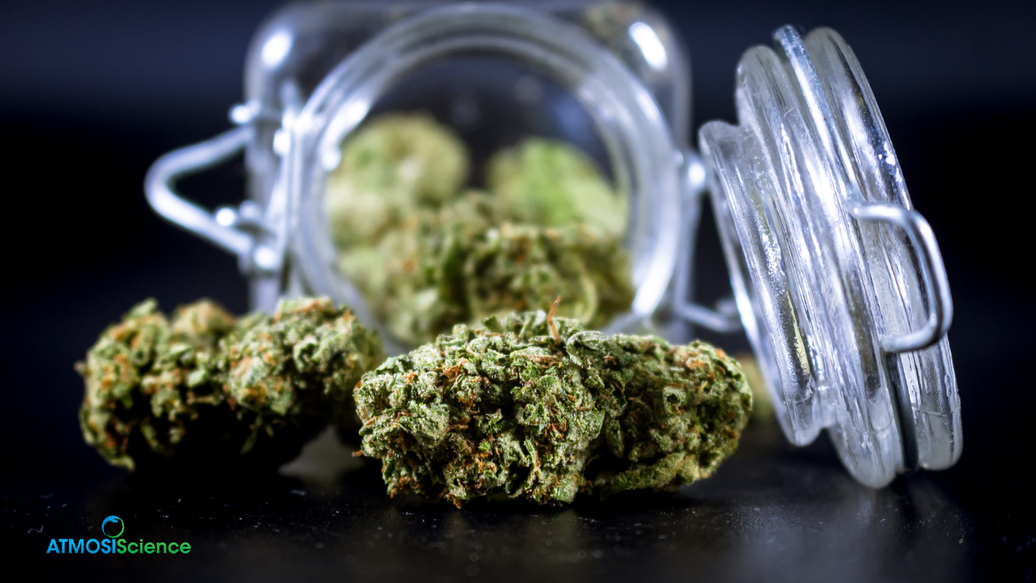
If you’ve ever opened a jar and thought, “Why does this feel different than yesterday?” you’ve already discovered the uncomfortable truth about cannabis storage:
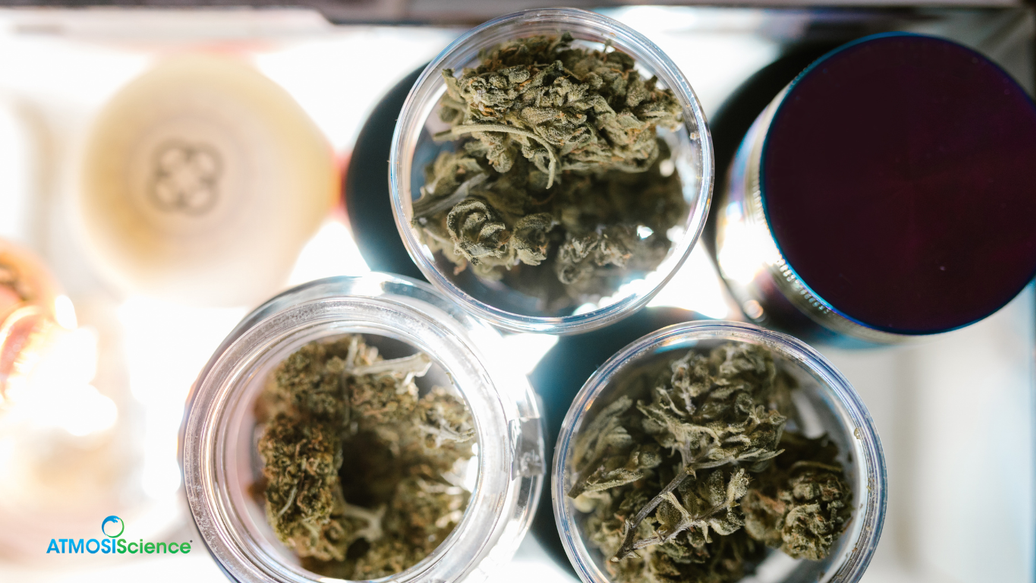
Your jar isn’t a container.
It’s a tiny weather system.
And the “best humidity” question isn’t really about a number. It’s about keeping that tiny weather system from drifting until your last bowl smells and hits like your first.
So let’s answer the question the way your flower experiences it.
The two ways storage quietly ruins good flower
Most storage failures don’t look dramatic. They feel like this:
1) “It’s still fine… but it’s quieter.”
Aroma fades faster than it should. The jar pop loses that punch. The experience gets flatter.
2) “It’s not bad… but it’s inconsistent.”
One jar feels springy. Another feels crisp. Same batch, same day, different vibe.
People blame the brand. Or the cure. Or the jar seal.
But a lot of the time, it’s simpler:
Your humidity is drifting because your storage microclimate isn’t stabilized.
So what is the best humidity to store weed?
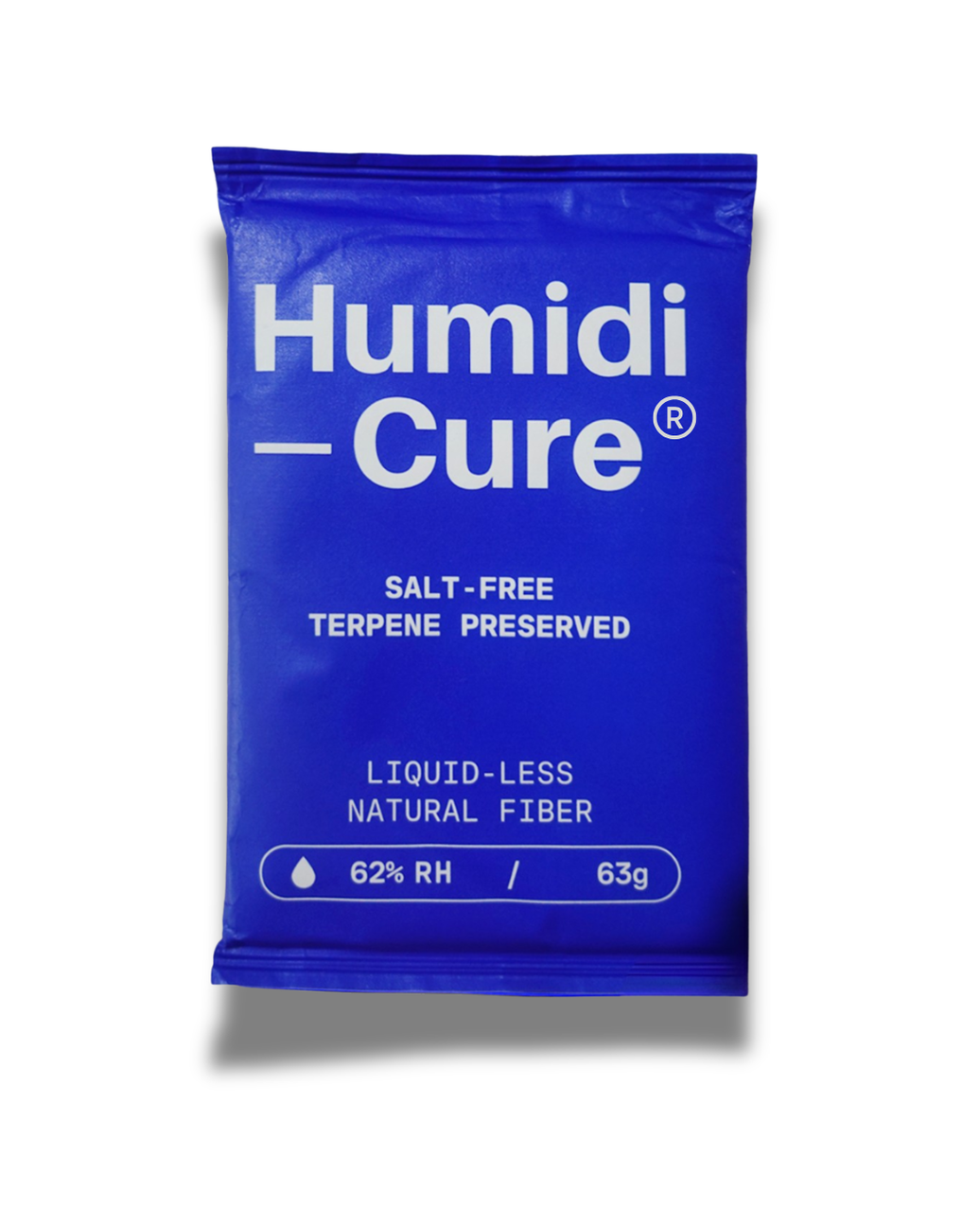
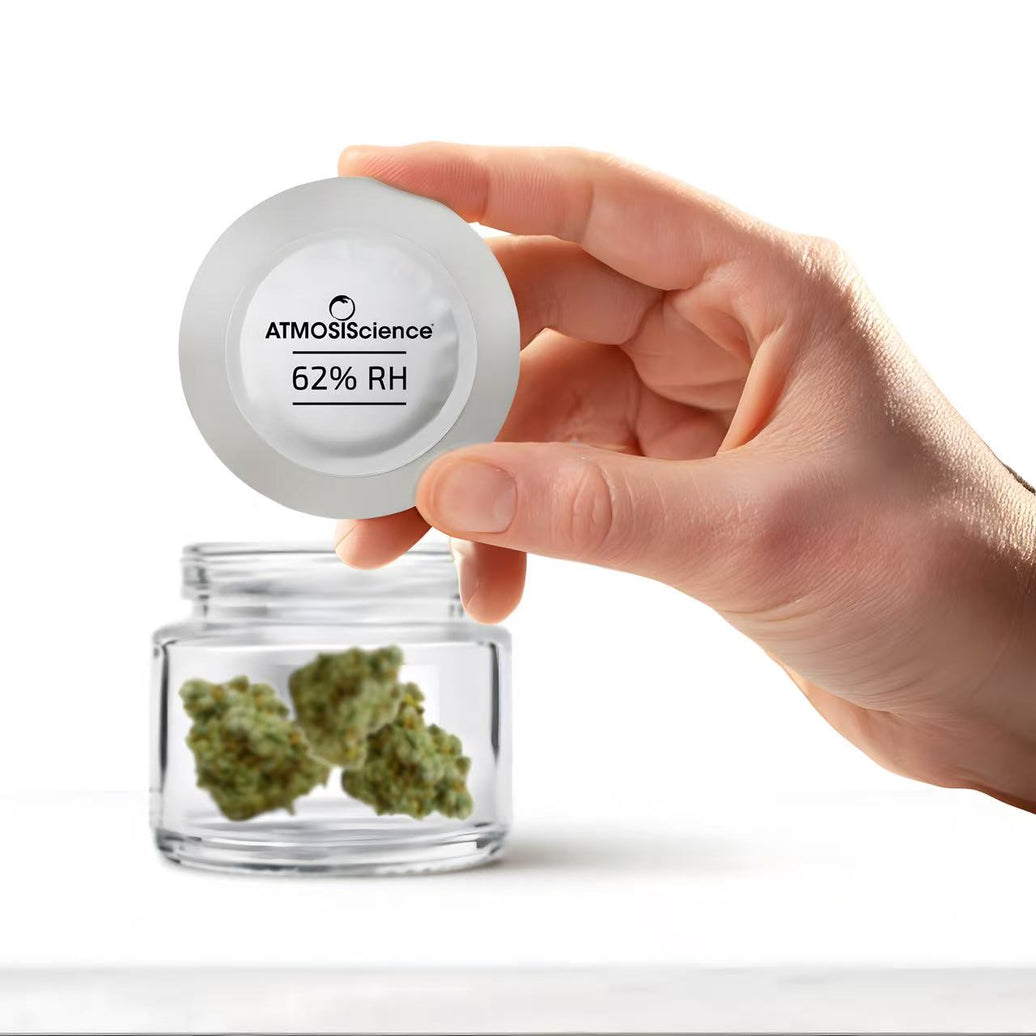
ATMOSIScience’s Humidi-Cure guidance for herbs targets 62% RH, designed to keep products from becoming too wet or too dry and to protect aroma and taste over time. Humidi-Cure is built to hold its claimed RH with ±2% precision under normal storage conditions (not extremely warm/wet, and not excessive opening). It’s also designed to activate fast (about 2–3 hours, positioned as ~3× faster than average competitive products).
That’s why, for most everyday weed storage where you care about aroma + texture + consistency, the “best humidity” is the low-60s zone, with 62% being the practical target ATMOSIScience is engineered around.
If you want the simplest, most direct takeaway:
Store weed around 62% RH if your goal is keeping flower stable, aromatic, and consistent in real-world use.

Why that number works (without the technical headache)
Here’s what’s really happening in your jar:
-
Flower releases moisture into the air.
-
The air gives moisture back to the flower.
-
This goes back and forth until the system settles.
If the air inside gets too humid for too long, mold risk pressure rises.
If it gets too dry, flower gets brittle, harsher, and less aromatic.
The “best humidity” is the zone where that back-and-forth stops swinging and settles into a stable middle ground.
That’s what 62% is trying to do:
keep the microclimate calm.
The storage mistake that makes “best humidity” irrelevant
Even if you pick the perfect RH target, you can still lose the game with one habit:
Constant opening = constant weather changes
Every time you open the jar, you reset the microclimate.
Humidity shifts. Temperature shifts. The system has to “re-balance” again.
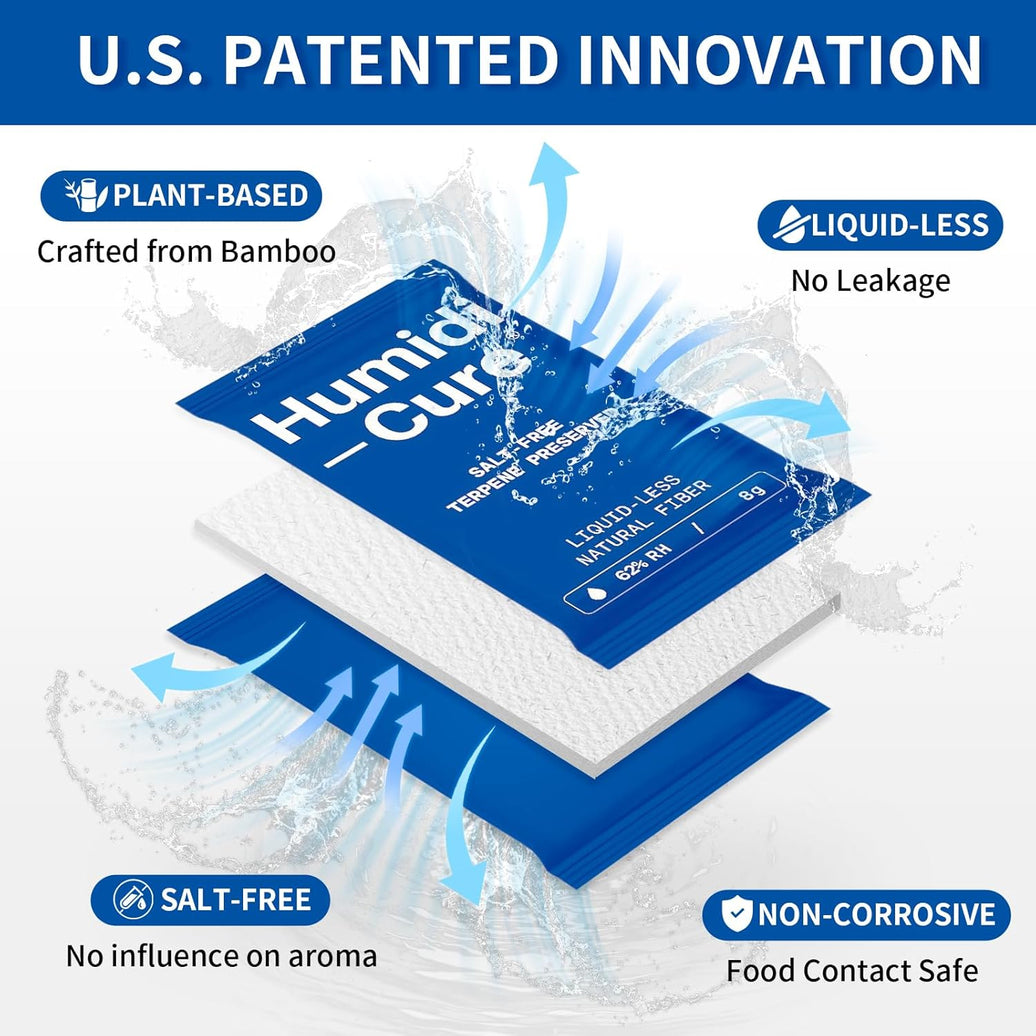
That’s why ATMOSIScience doesn’t just focus on a number. Humidi-Cure is designed to both absorb and release moisture, so the microclimate can recover and settle back into the target zone.
And they designed it to avoid a common headache: leaking liquid.
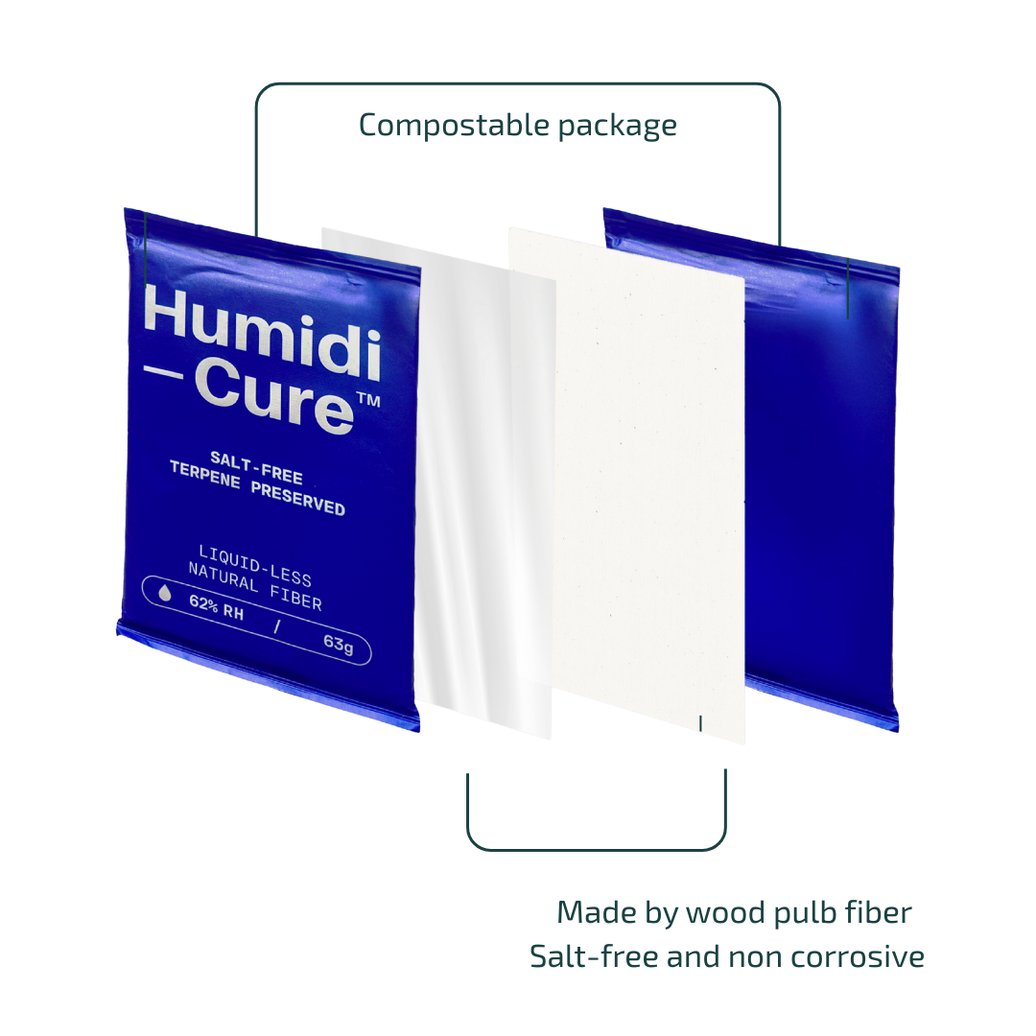
Humidi-Cure contains no liquid, using a biodegradable fiber with a U.S.-patented formulation to reduce and release moisture, and it’s positioned as non-corrosive and safe for food contact.
So the point isn’t “62% once.”
It’s “62% repeatedly, even after real life happens.”
“How do I actually use this without guessing?”
This is where ATMOSIScience is unusually practical.
Humidi-Cure comes in sizes matched to the amount of product and container size. In their usage recommendation table for herbs at 62% RH:
-
1/8 oz in a 1–2 oz container uses a 1.5g pack
-
1/4 oz in a 2.5–5 oz container uses a 3g pack
-
1/2 oz in a 5.5–7 oz container uses a 4g pack
-
1 oz in an 8–10 oz container uses an 8g pack
-
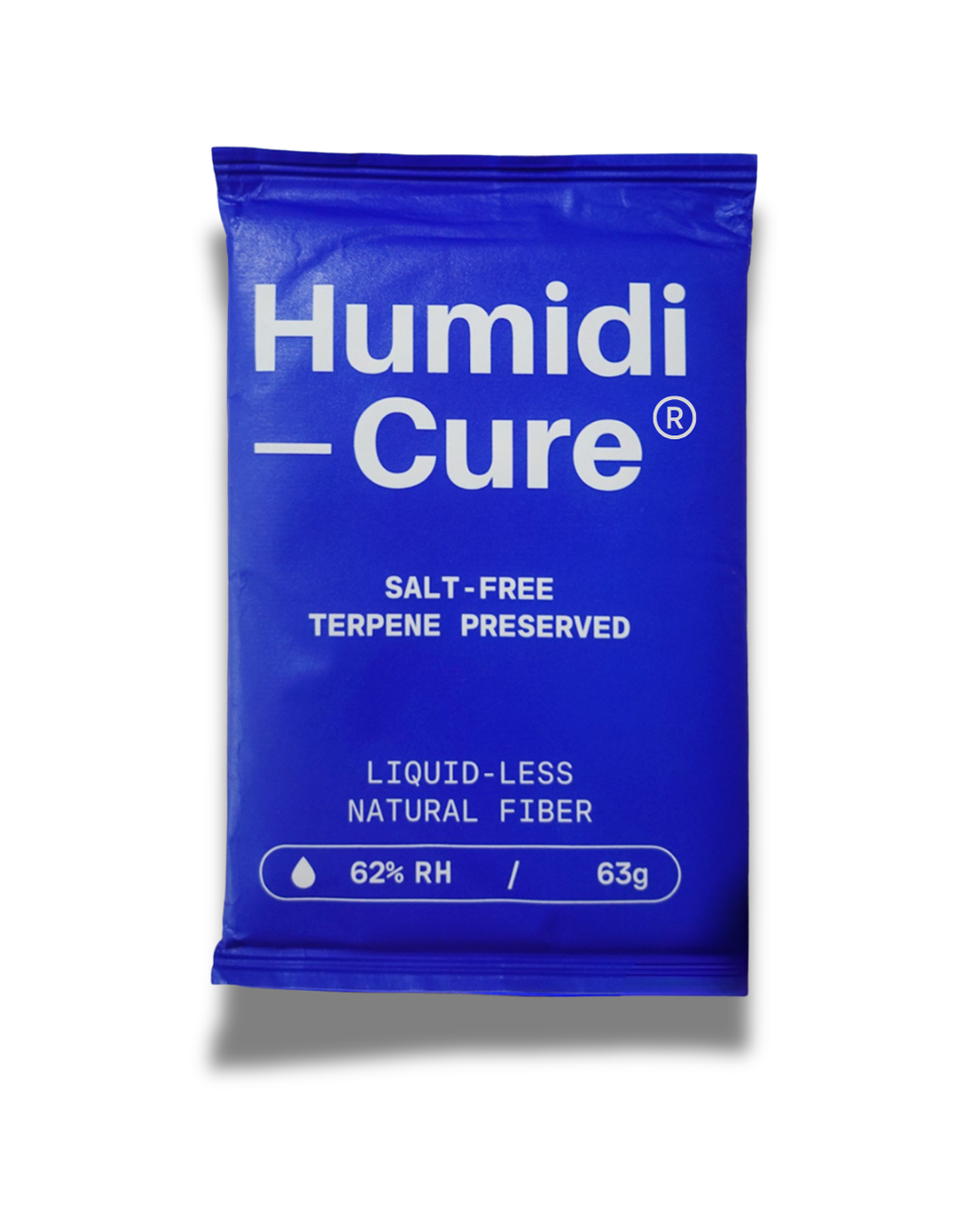
1 lb in a 16–24 oz container uses a 63g pack
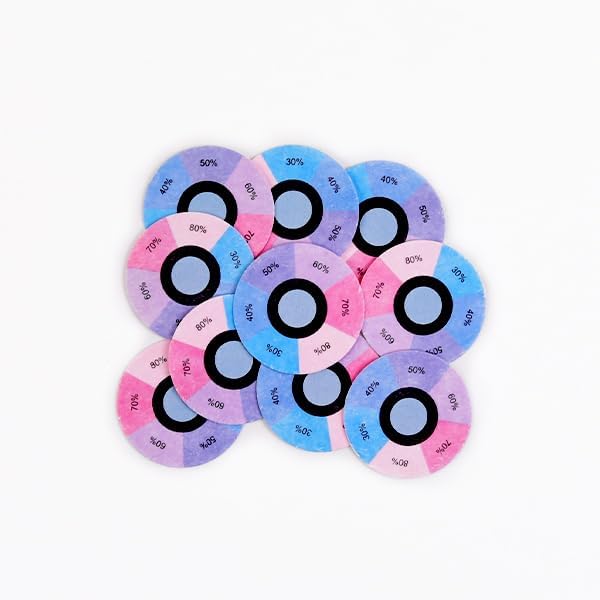
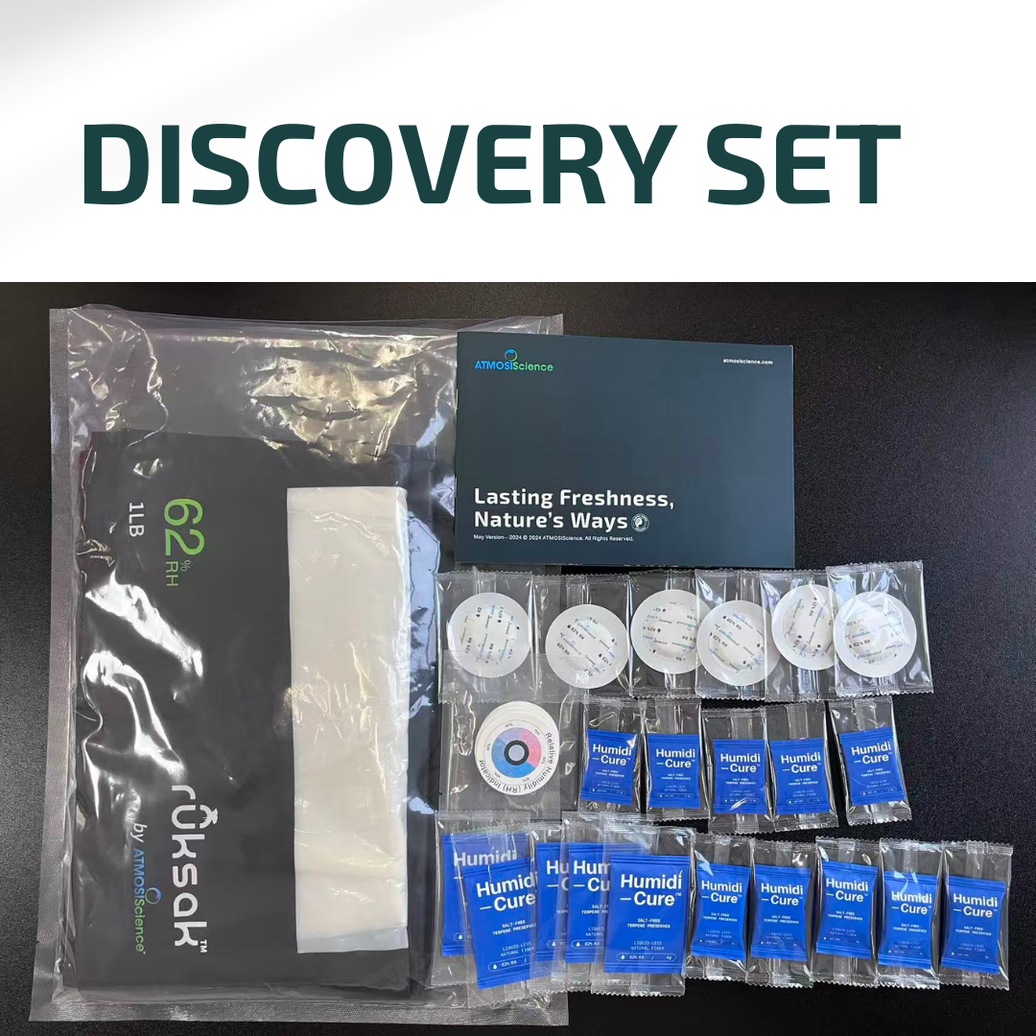
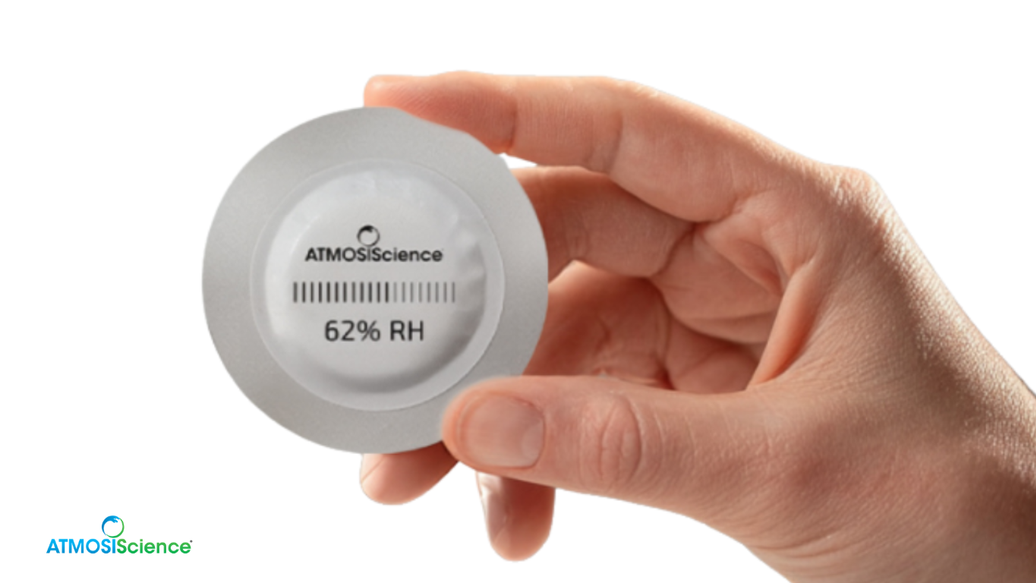
They also include a complimentary RH Indicator Card (lighter than a hygrometer, easy to read) so you can see what the jar is doing and know when it’s time to replace the pack.
Shelf-life guidance: 12 months unopened and 120 days after opening (stored cool, dry, stable).
And one important “don’t” they call out: don’t mix multiple humidity products in one container, because it can interfere with accuracy.
What if you’re storing bulk, not jars?
Here’s where the “best humidity” conversation usually breaks.
Bulk isn’t gentle. It’s staged, moved, opened, resealed, held, moved again.
So “I use humidity packs” can still fail because the environment keeps changing.
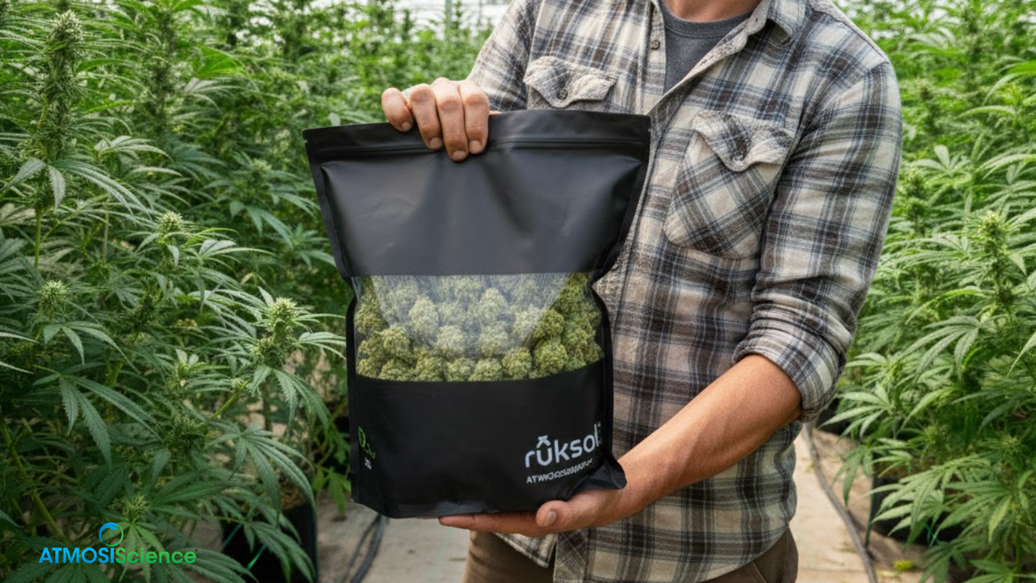
That’s why ATMOSIScience built storage formats where humidity control is part of the packaging system:
-
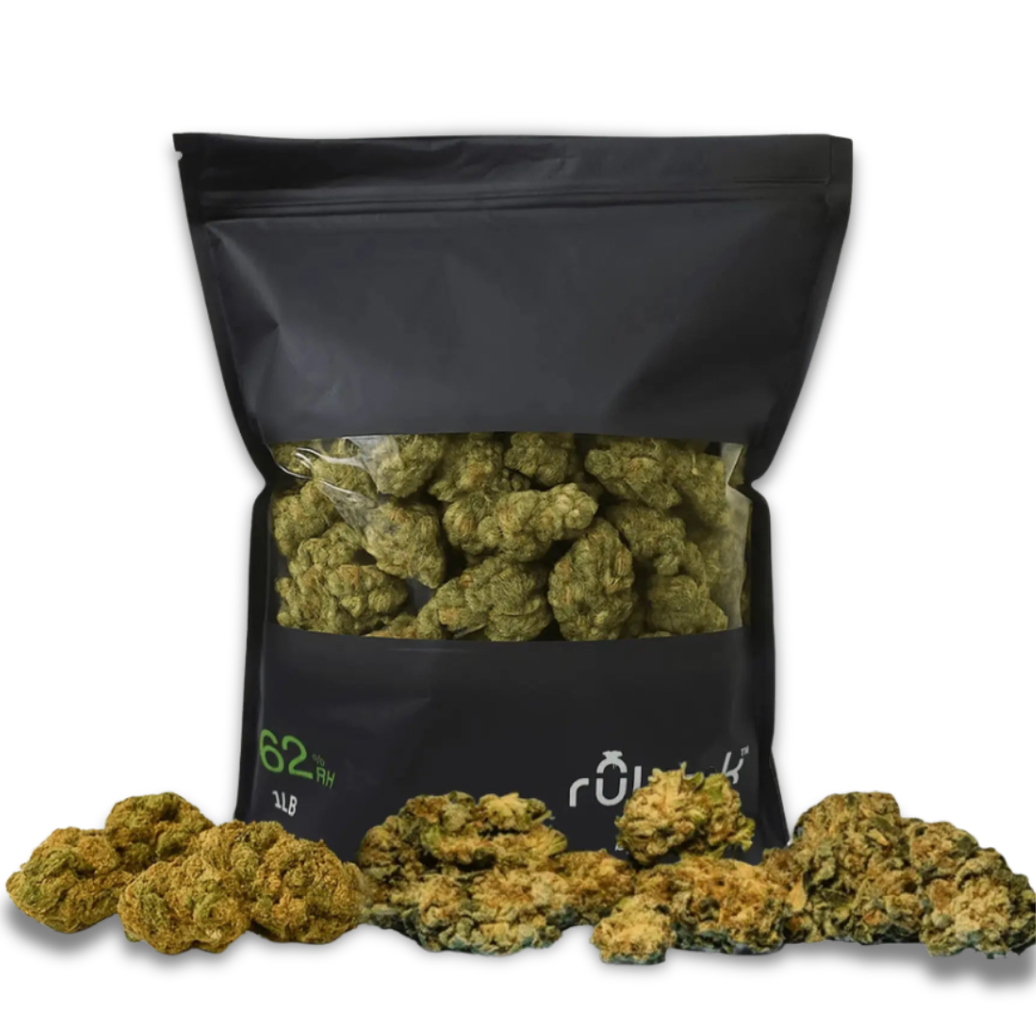
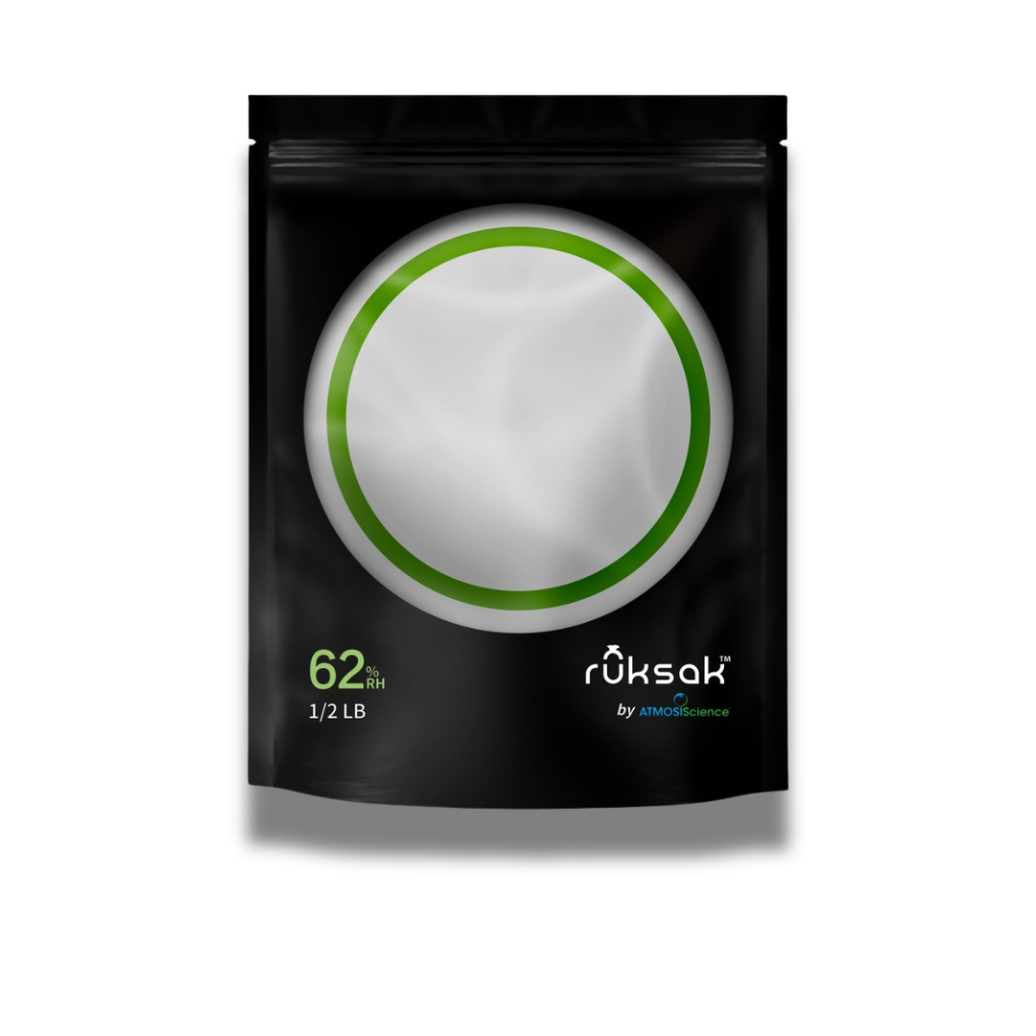
ruksak® uses built-in two-way humidity control fiber so you don’t need separate packs for storage, designed as a simpler workflow for flower storage with packaging designed around controlled microclimate behavior.
And if you want humidity control integrated into your packaging approach (instead of a separate accessory), ATMOSIScience also offers solutions like their ATMOSIScience Liner, depending on how you pack and store.
The answer to “best humidity to store weed” in 2026
It’s not a magic number.
It’s a stability decision.
If you want flower that stays recognizable from the first opening to the last, you’re not chasing humidity—you’re controlling drift.
And ATMOSIScience’s storage approach is built around holding a stable microclimate at 62% RH for herbs, with liquidless, biodegradable fiber designed to both absorb and release moisture.

Want your last jar to feel like your first?
Start with the storage format that matches how you actually handle flower:
-
Humidi-Cure 62: https://atmosiscience.com/products/humidi-cure-62
-
Humidi-Cure Plus: https://atmosiscience.com/products/humidi-cure-plus
-
ruksak® 1/2 lb: https://atmosiscience.com/products/ruksak-1-2-lb
-
ruksak® 1 lb: https://atmosiscience.com/products/ruksak-1lb
-
ATMOSIScience Liner: https://atmosiscience.com/products/atmosiscience-liner
If you’re serious about consistency in 2026, don’t just store weed.
Store a stable microclimate.