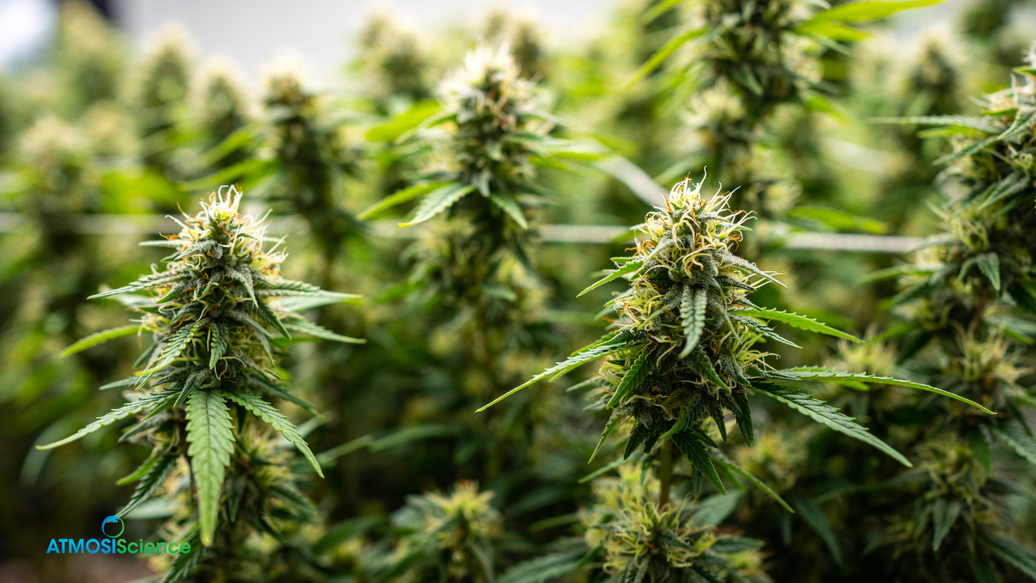
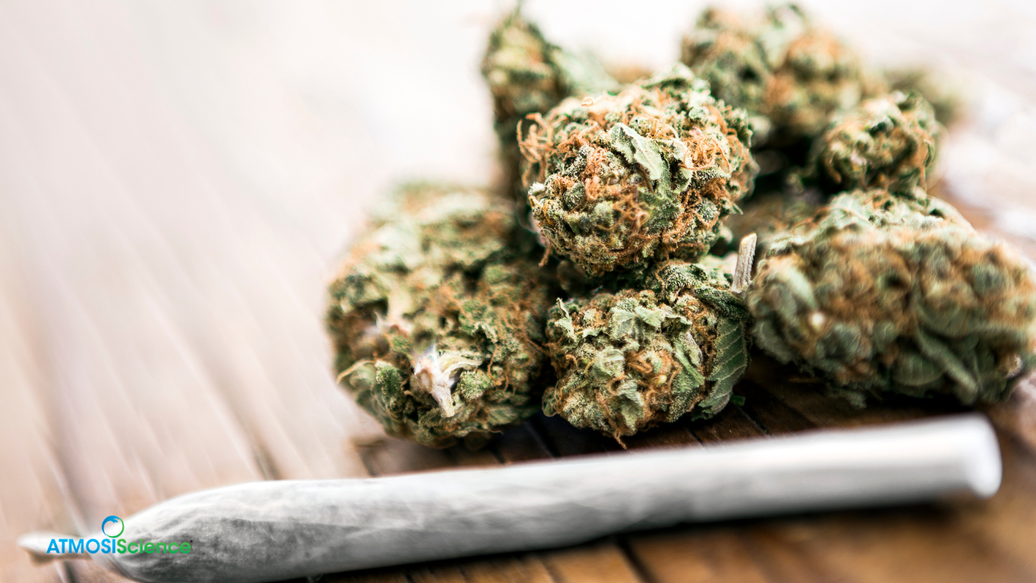
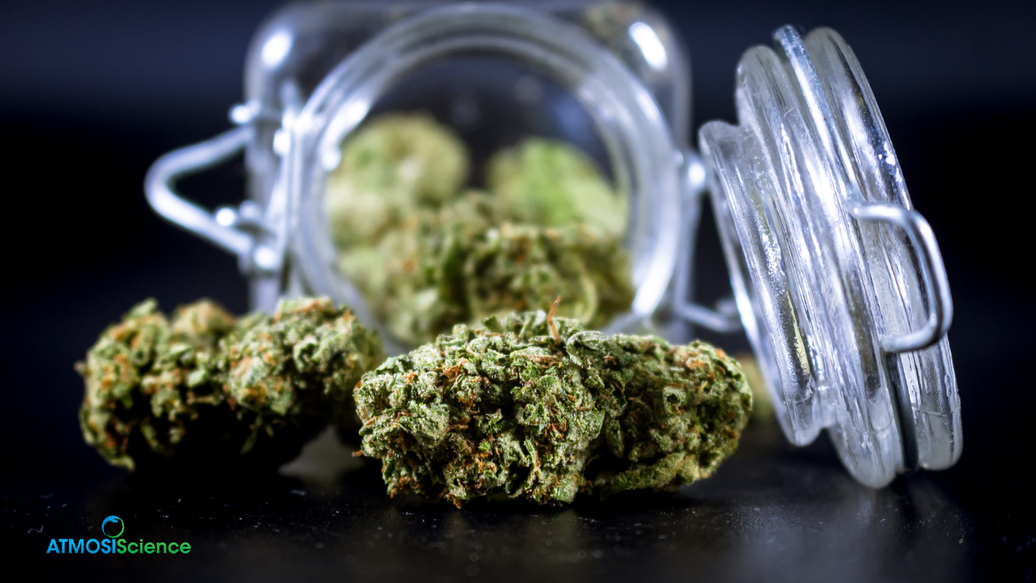
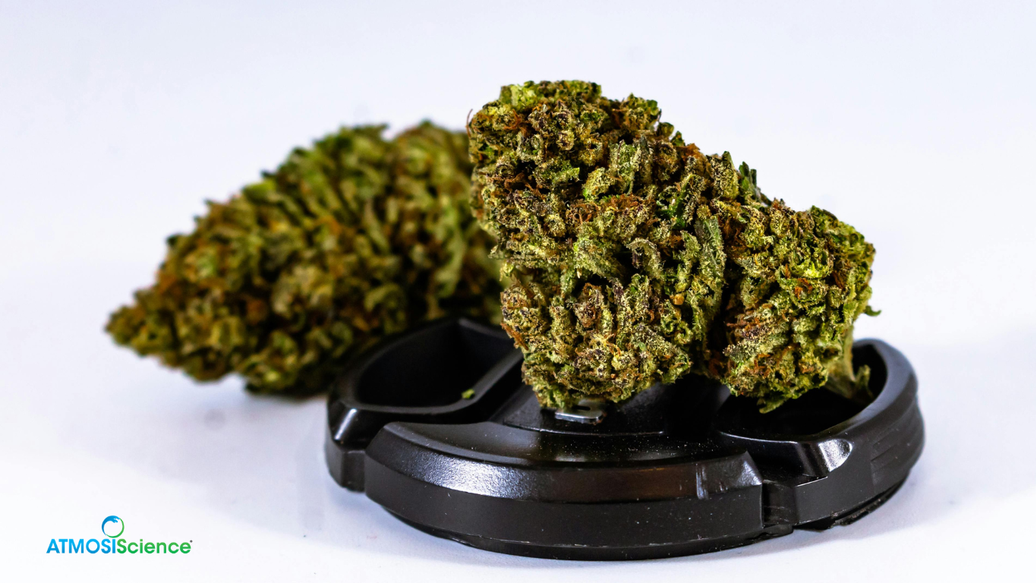
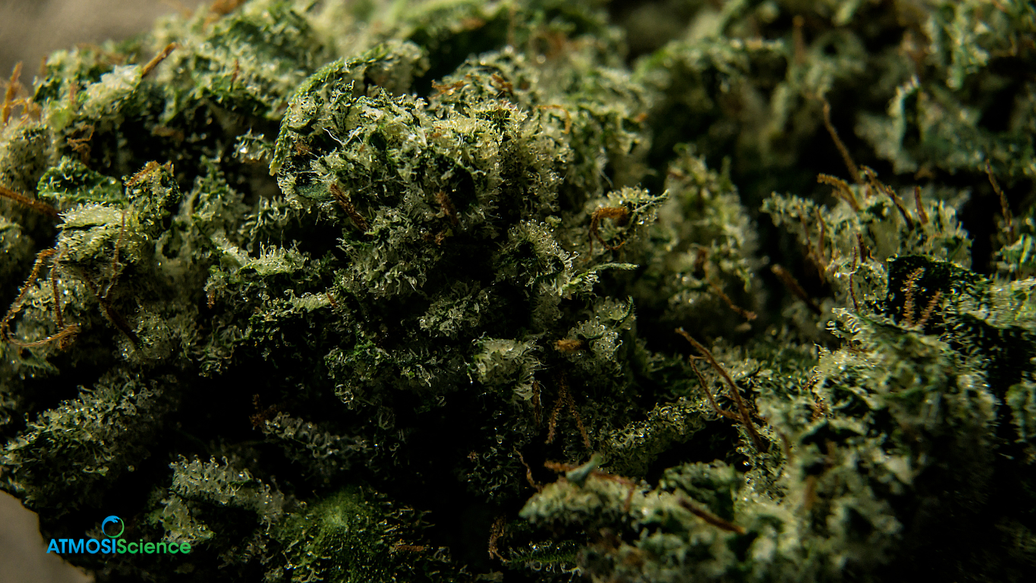
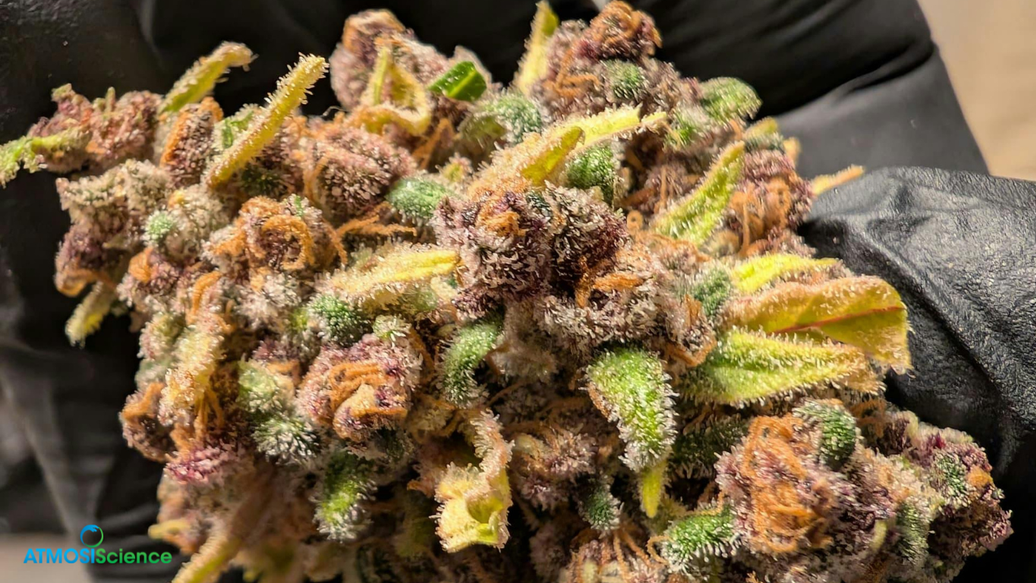
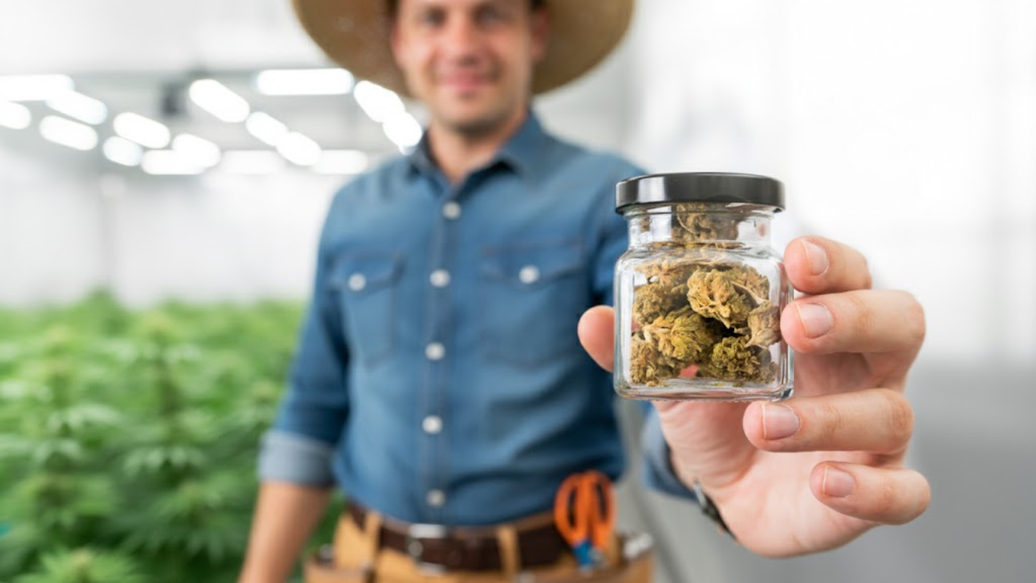
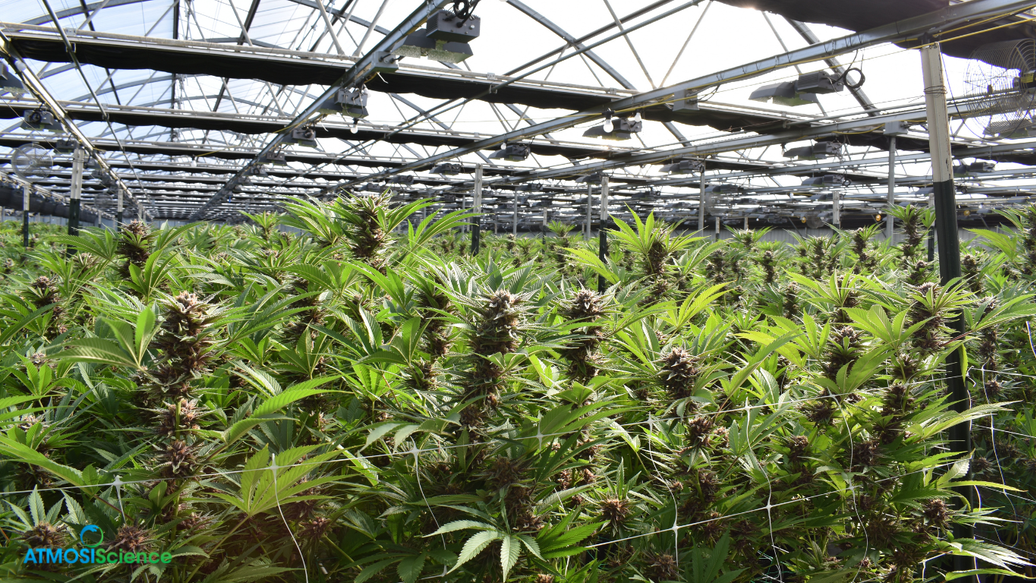
Terpenes are the first thing cannabis loses and the last thing anyone measures. A flower that tested at 3.2% total terpenes at harvest can measure 1.9% sixty days later in the wrong storage, and most cultivators never re-test to find out. The customer does, though — on the first open, on the first pull.
Terpene preservation is a storage problem, not a harvest problem. The cultivar was already capable of the terpene load that came out of the trim room. Everything after that is loss management. This article lays out the four variables that drive long-term terpene loss and the storage specification that defends against them.
The four variables that drive terpene loss
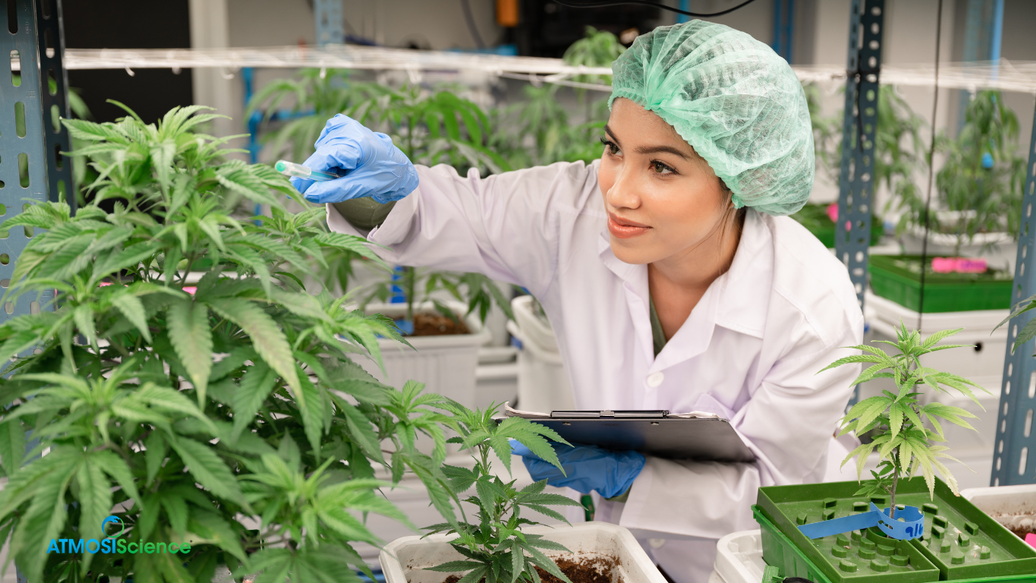
The team at ATMOSIScience has tracked terpene decay curves across sealed, semi-sealed, and open-container storage at multiple partner cultivators. Four variables explain almost all the variance.
1. Relative humidity
Monoterpenes — myrcene, limonene, pinene, linalool — are the most volatile and the most loss-prone. They partition out of plant matter faster in dry air than in humid air because the dry matrix itself is more permeable to vapor movement. Below 55% RH, monoterpene decay accelerates measurably. Above 68% RH, the flower stays nose-heavy but becomes a mold-risk environment.
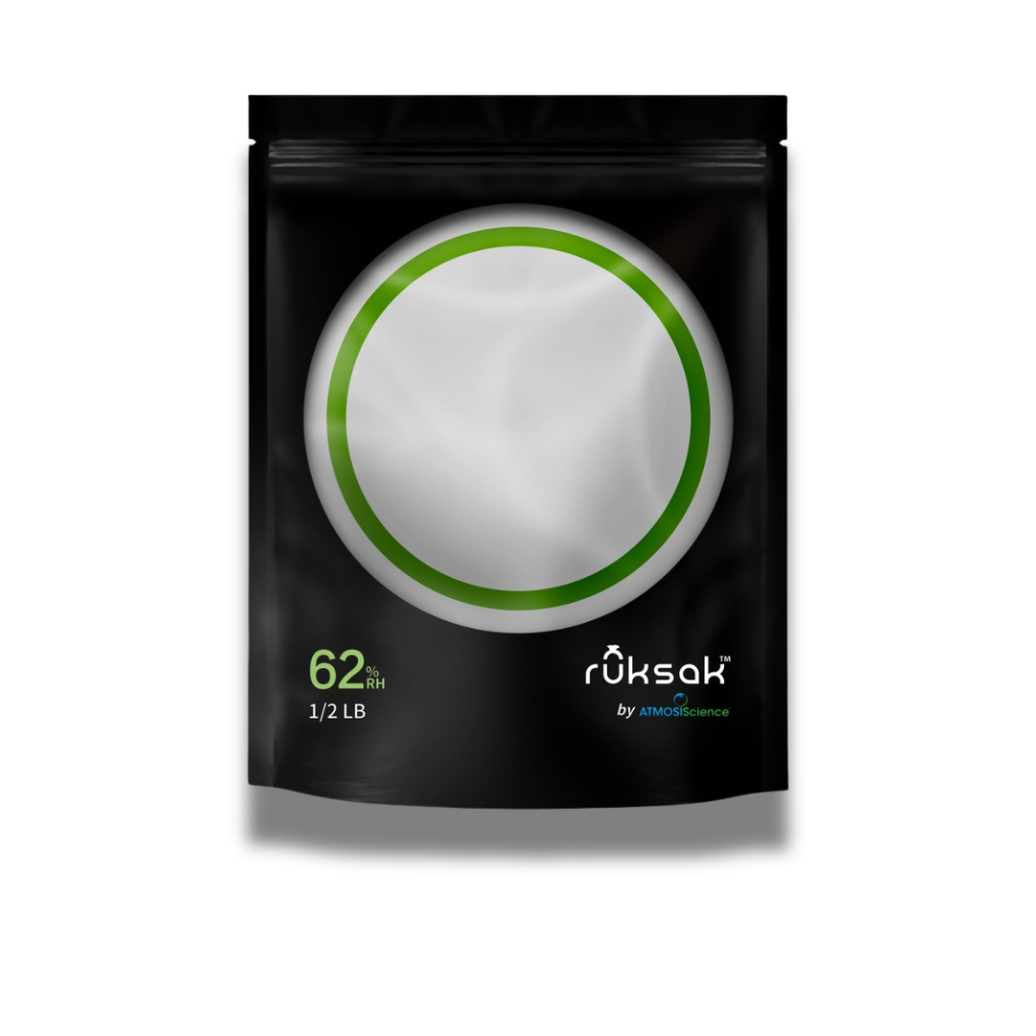
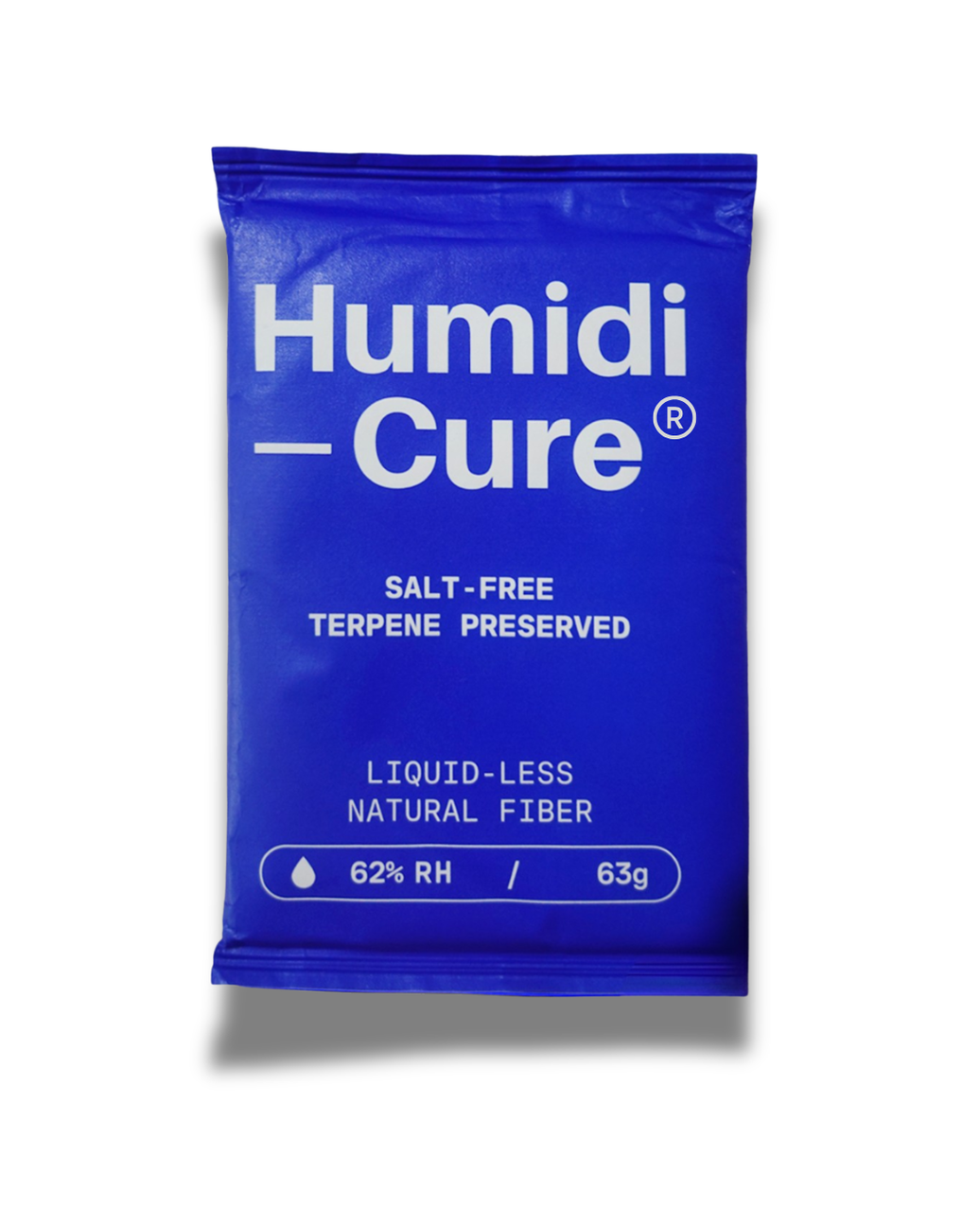
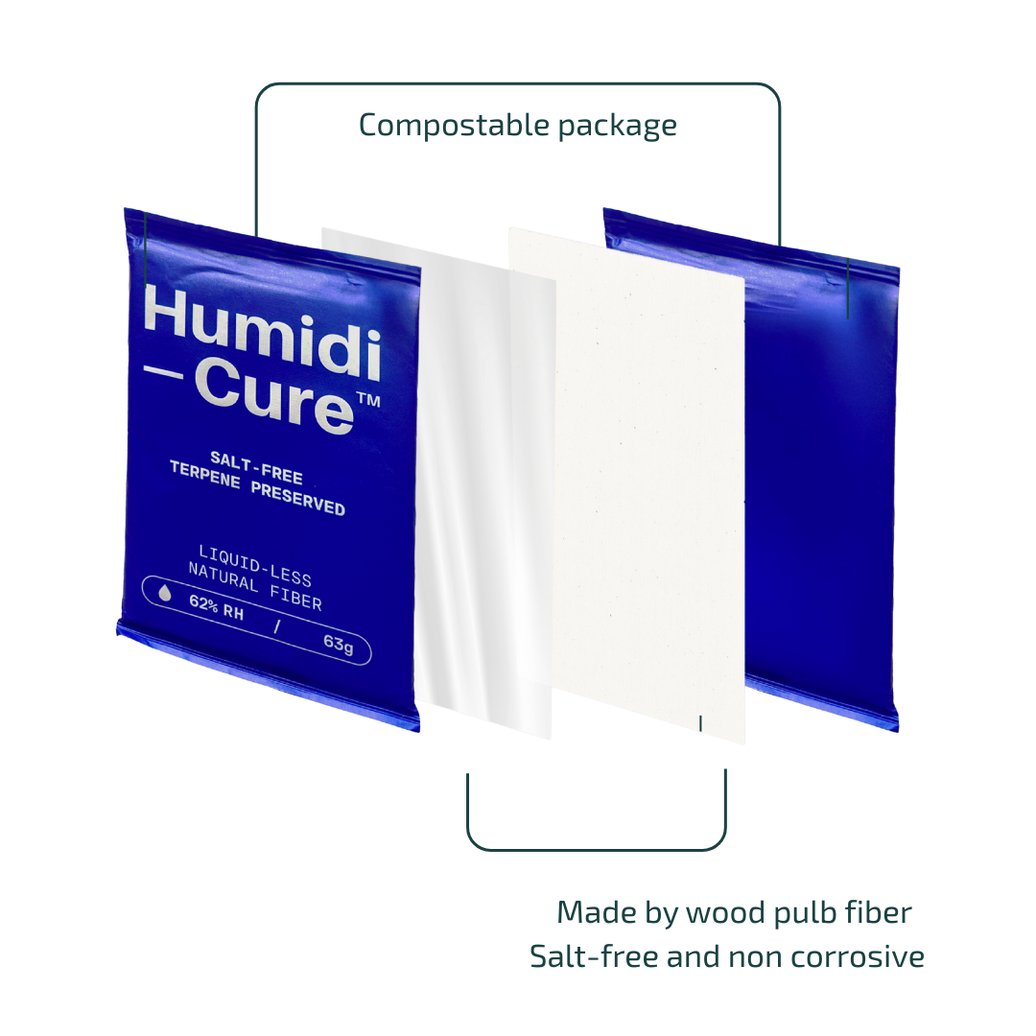
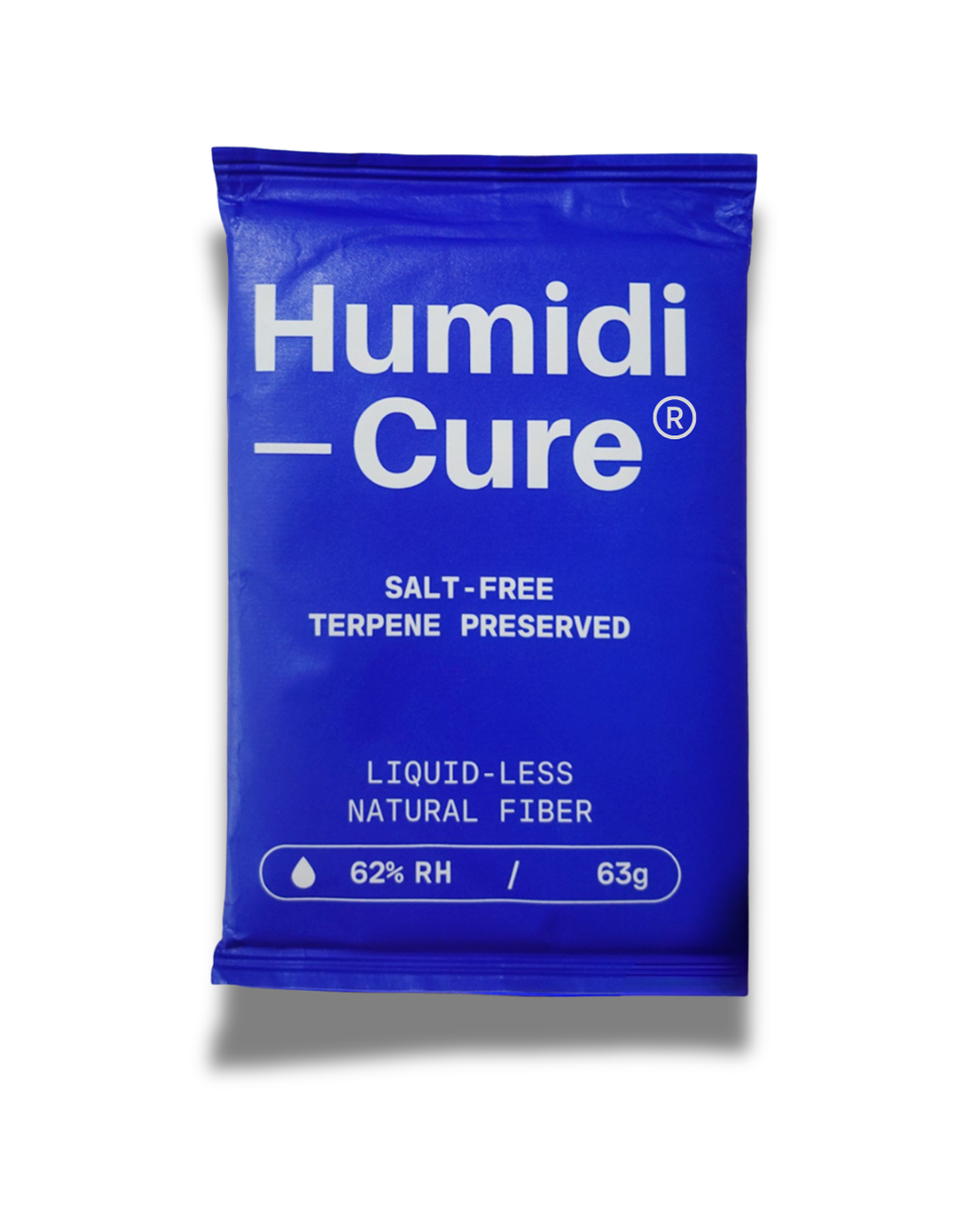
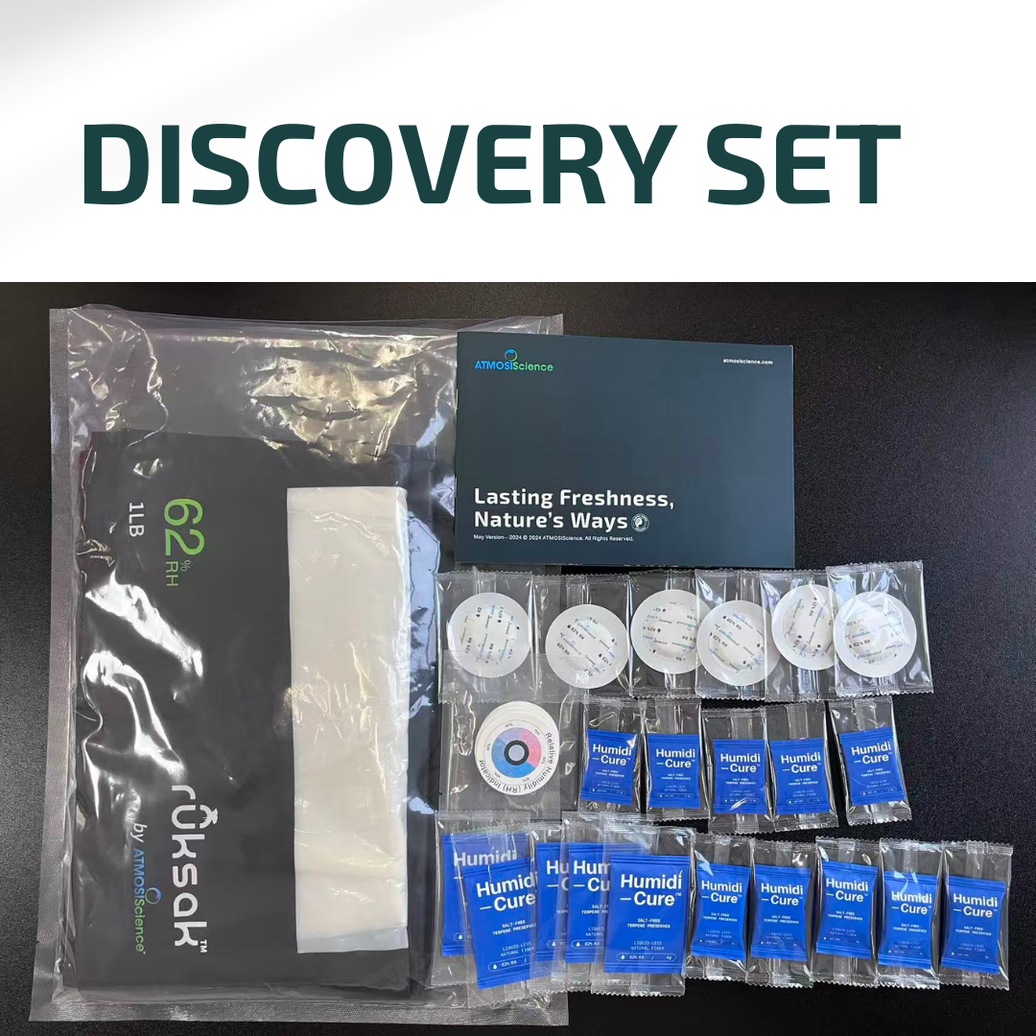
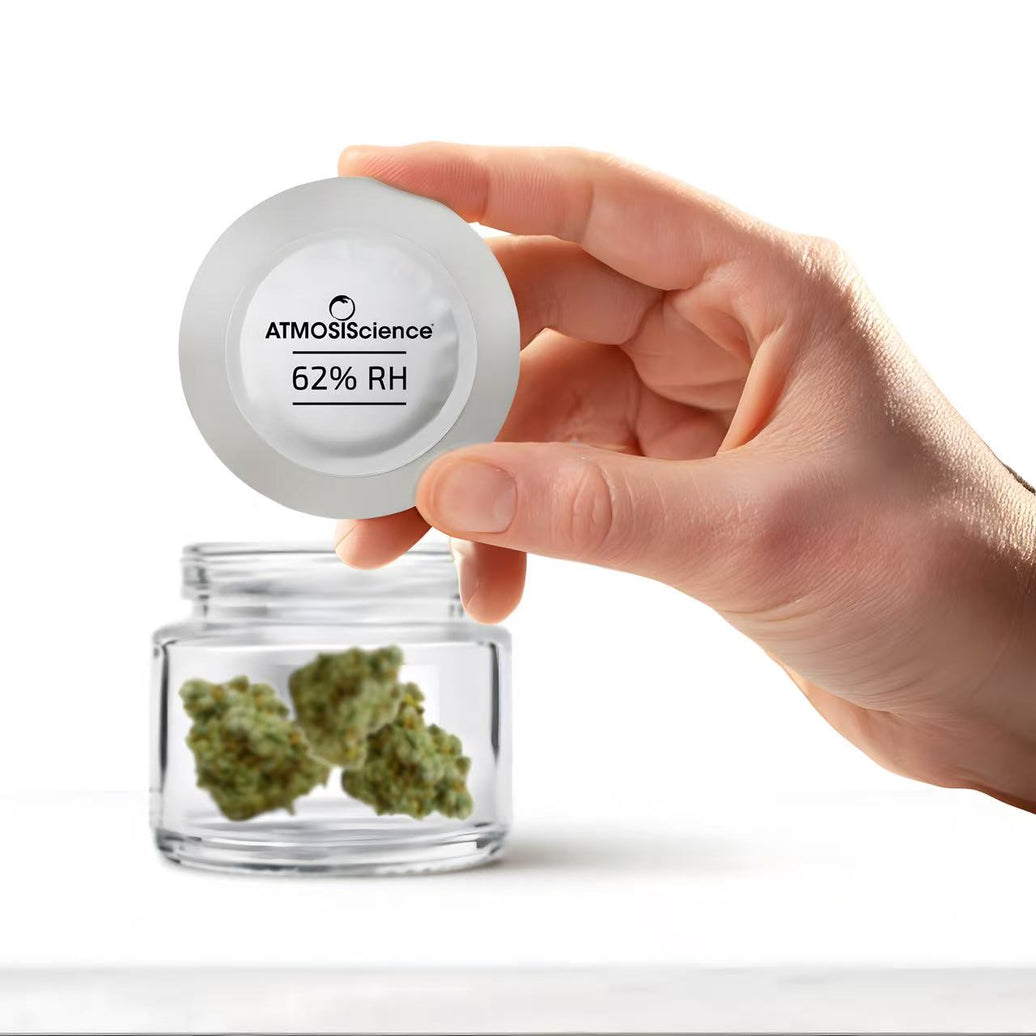
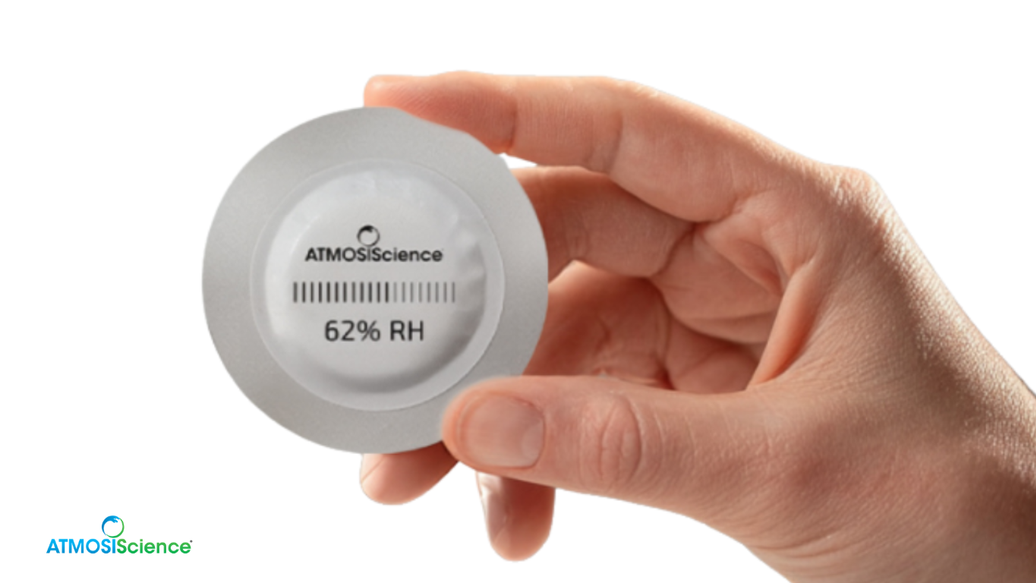
The stable zone is 59–64% RH. The reference point is 62% RH. This is the same standard referenced in the cannabis bulk storage guide and the reason ruksak ships with a two-way humidity control fiber tuned to exactly that value.
2. Light
UV-A and UV-B photons carry enough energy to break down THC into CBN and to degrade terpene double bonds. A pound of flower sitting under standard fluorescent backroom lighting in a clear jar loses visible color within 30 days and measurable terpene content within 60. Direct sunlight is worse by an order of magnitude.
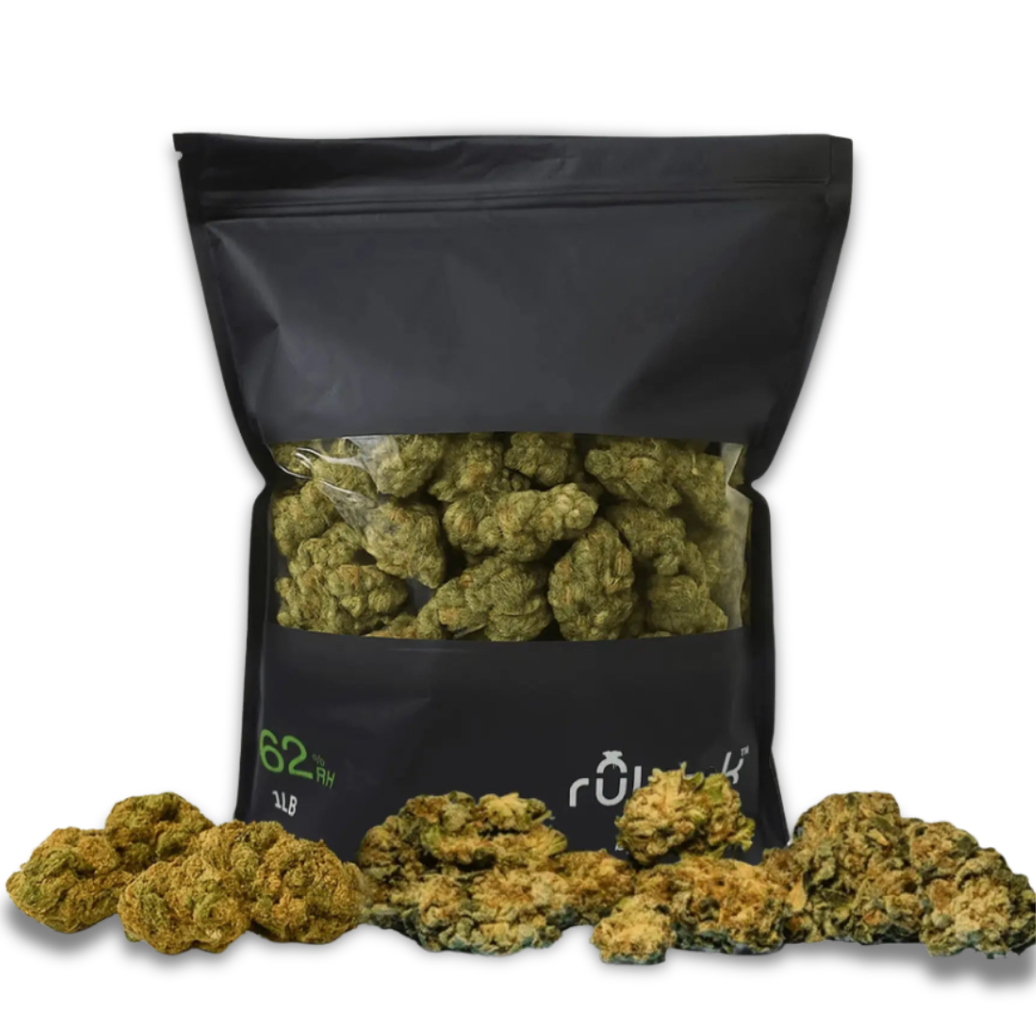
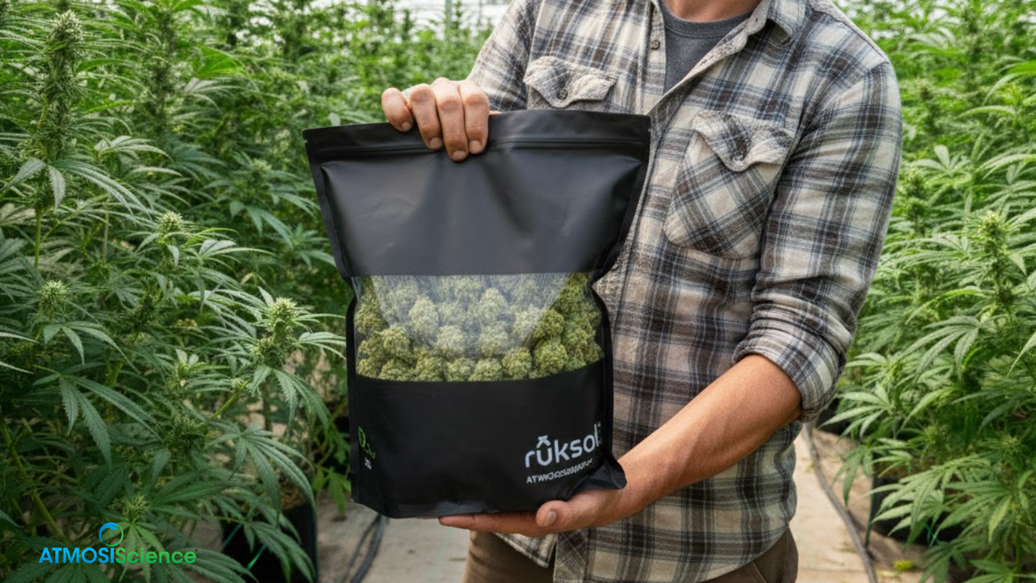
The defense is an opaque outer layer. The ruksak pouch uses a matte-black proprietary film that blocks nearly all incident light while the clear front window lets buyers and cultivators inspect the flower without opening the seal.
3. Oxygen
Oxygen oxidizes terpenes and THC. It is also the fuel for any aerobic microbial activity inside the container. The defense is a low-oxygen-permeability inner film layer. Standard mylar is already excellent on oxygen barrier; the ruksak inner film is tuned to let water vapor move freely (so the control fiber can do its job) while keeping oxygen transmission low.
4. Temperature
Every 10°C rise roughly doubles the rate of most chemical reactions, including terpene volatilization and oxidation. Long-term storage in a backroom that swings from 60°F in winter to 85°F in summer is storing cannabis at two different chemical timelines. Cool (55–70°F) and stable is the target. Freezing is not necessary for flower — in fact, freezing and thawing can rupture trichome heads and release terpenes prematurely. Freezing makes sense for fresh-frozen concentrate material, not cured flower.
What a terpene-preserving storage container actually looks like
Put the four variables together and a spec sheet emerges:
-
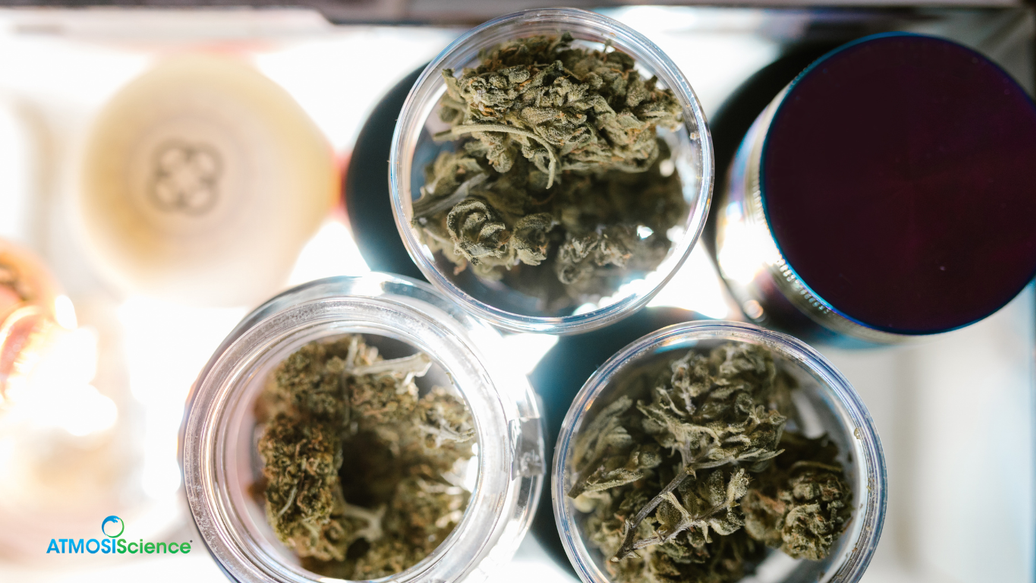
Sealed container (not a jar with a gasket that cycles air every open)
-
Two-way humidity control medium locked at 62% RH (± 1%)
-
Opaque outer film blocking visible and UV light
-
Low-oxygen-permeability inner film
-
Child-resistant closure for compliance
-
Inspection window so the container does not have to be opened to check product
-
Stable, cool ambient storage location (55–70°F)
Every one of those specs is satisfied by ruksak. The 4-layer anatomy — CR zipper, opaque outer film, breathable inner film, 2-way humidity-control fiber — was built against this exact list.
Case study: what the data looks like
A California-based craft cultivator running 200 lb/month of high-terpene hybrids switched from nitrogen-flushed Mylar bags with one-way humidity packs to ruksak 1 lb pouches in Q3 2024. The team tracked lab terpene retests at harvest, 30 days, 60 days, and 90 days on five representative strains.
The pattern across all five strains:
-
Under the previous storage, total terpene content at 90 days averaged 71% of the at-harvest value.
-
Under ruksak at 62% RH, total terpene content at 90 days averaged 88% of the at-harvest value.
-
Monoterpene-dominant strains (strong myrcene / limonene profiles) saw the largest improvement — roughly 22 percentage points of relative retention.
In the cultivator's words:
"We cut $40K a month in shrink and terpene loss the first quarter. The buyers noticed before the P&L did." — 200 lb/month cultivator, Northern California
Practical handling rules for long-term stock
Three behavioral rules matter almost as much as the container spec.
First: minimize opens. Every time the seal is broken, the internal equilibrium restarts. Pre-portion bulk into the unit size the buyer actually takes — 1 lb or half-pound — so the container is opened once, on the buyer side.
Second: do not re-season. When a fresh flower goes into a sealed container with a properly-calibrated 62% RH control fiber, the first 24–48 hours are equilibration. Do not open the bag during that window. Let the system settle.
Third: do not stack under load. The CR zipper on ruksak reseals reliably but is not rated to hold under compressive load from a heavy stack. Store pouches upright or in a single layer in flat trays.
The short version
Terpenes leave flower by four routes: evaporation into dry air, photodegradation under light, oxidation in ambient oxygen, and chemical acceleration at warm temperatures. A storage container that defends against all four — sealed, humidity-locked at 62% RH, opaque, oxygen-resistant, cool — preserves 15–20 percentage points more terpene content over 90 days than standard mylar with one-way humidity packs. That is real money in a market where buyers are starting to pay up for nose and to re-test for it.