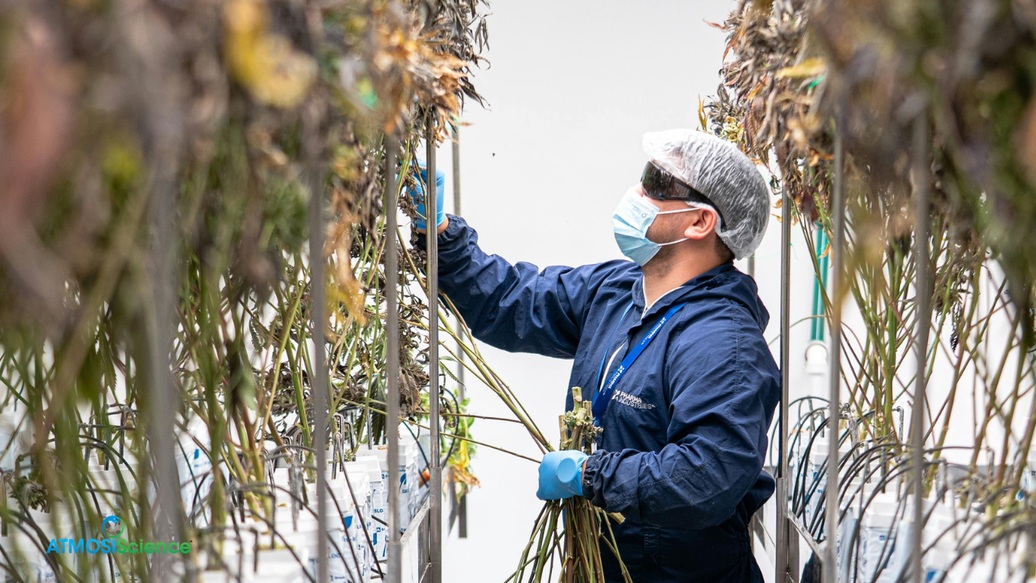
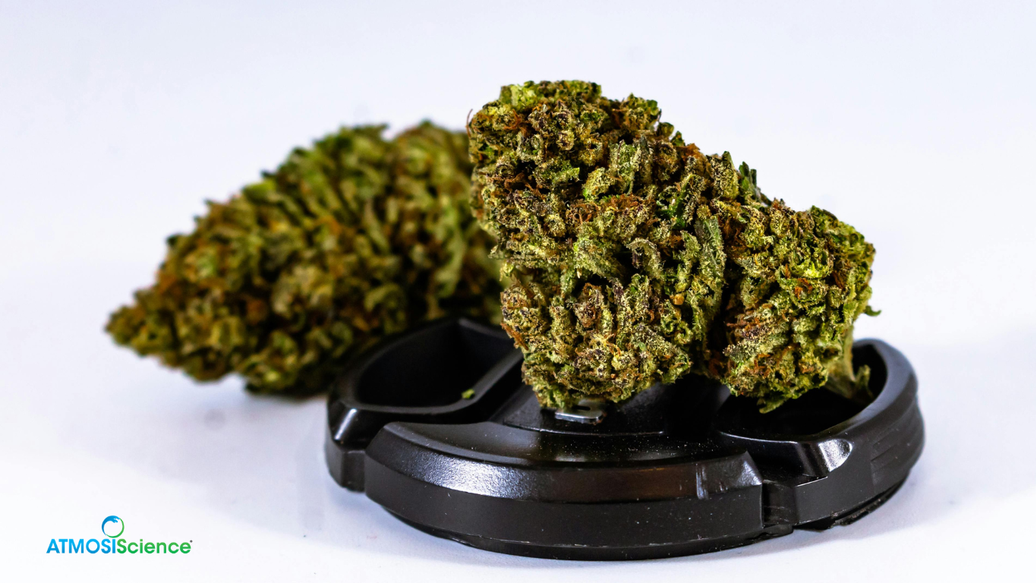
A 1,000 lb commercial cannabis run that loses 4% of its weight between cure and final pack-out gives up roughly $40,000 at a $1,800/lb wholesale price. Most cure rooms are losing more than that and treating it as normal. The cause is almost always uncontrolled humidity drift between the dry room, the cure jars, and the shipping container — not the genetics, the trim, or the strain.
The math, in one paragraph
A typical pack-out weight loss across the industry sits between 4% and 8% for flower that left the dry room at 62% RH and arrived at retail at anywhere between 50% and 58% RH. At a $1,800/lb wholesale price, the loss math looks like this:
| Weight loss | Per 1,000 lb run | Per 5,000 lb / month |
|---|---|---|
| 2% (best case) | $36,000 | $180,000 / month |
| 4% (typical) | $72,000 | $360,000 / month |
| 6% (poor humidity control) | $108,000 | $540,000 / month |
| 8% (worst case observed) | $144,000 | $720,000 / month |
The difference between a well-controlled cure and a poorly-controlled one, on a 5,000 lb / month operation, is over half a million dollars in revenue per month — paid by the cultivator, invisible on the books because it shows up as "shrink."
Where the weight goes
Weight loss in cured cannabis is overwhelmingly water. Cannabinoids and terpenes contribute single-digit grams per pound; the rest is moisture moving toward equilibrium with whatever air the flower is sitting in.
Three points in the workflow drive most of the loss:
1. Dry-room → cure-jar transition
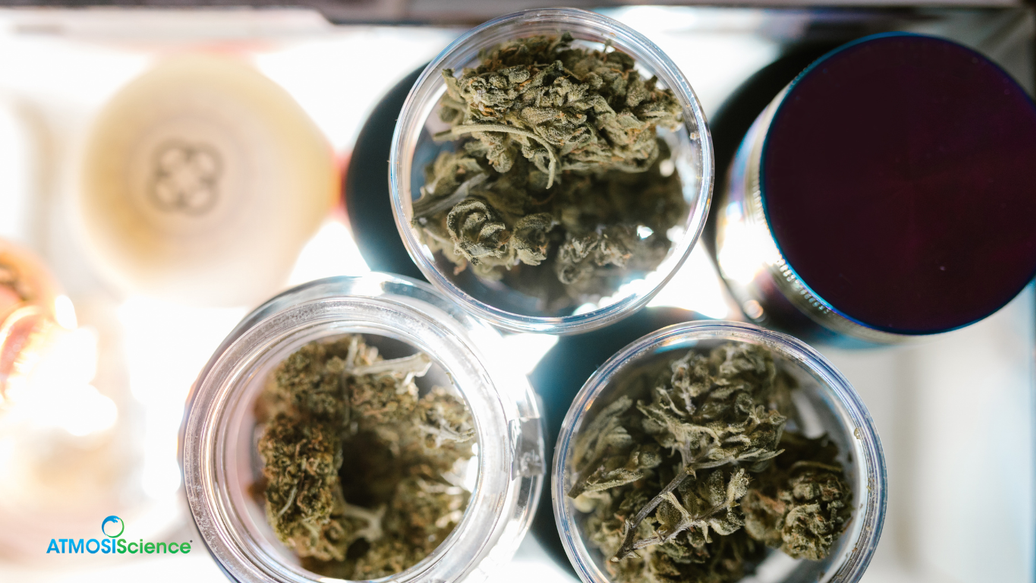
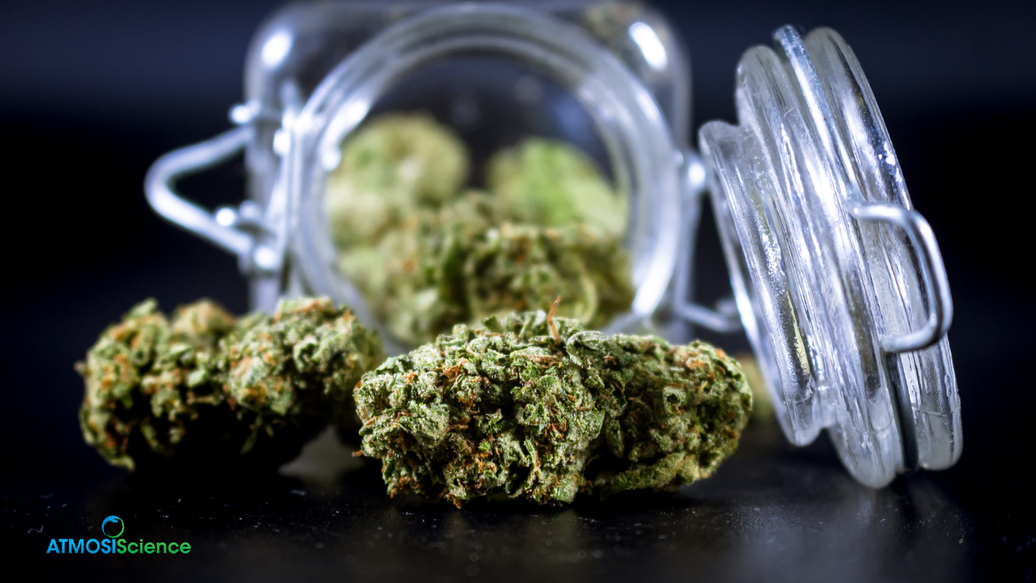
Flower that exits the dry room at 60–62% RH and goes into a cure jar with 35–40% RH air loses water until equilibrium. If the cure room itself is dry, the jar headspace stabilizes well below the target.
2. Cure-jar → bulk bin / pack-out transition
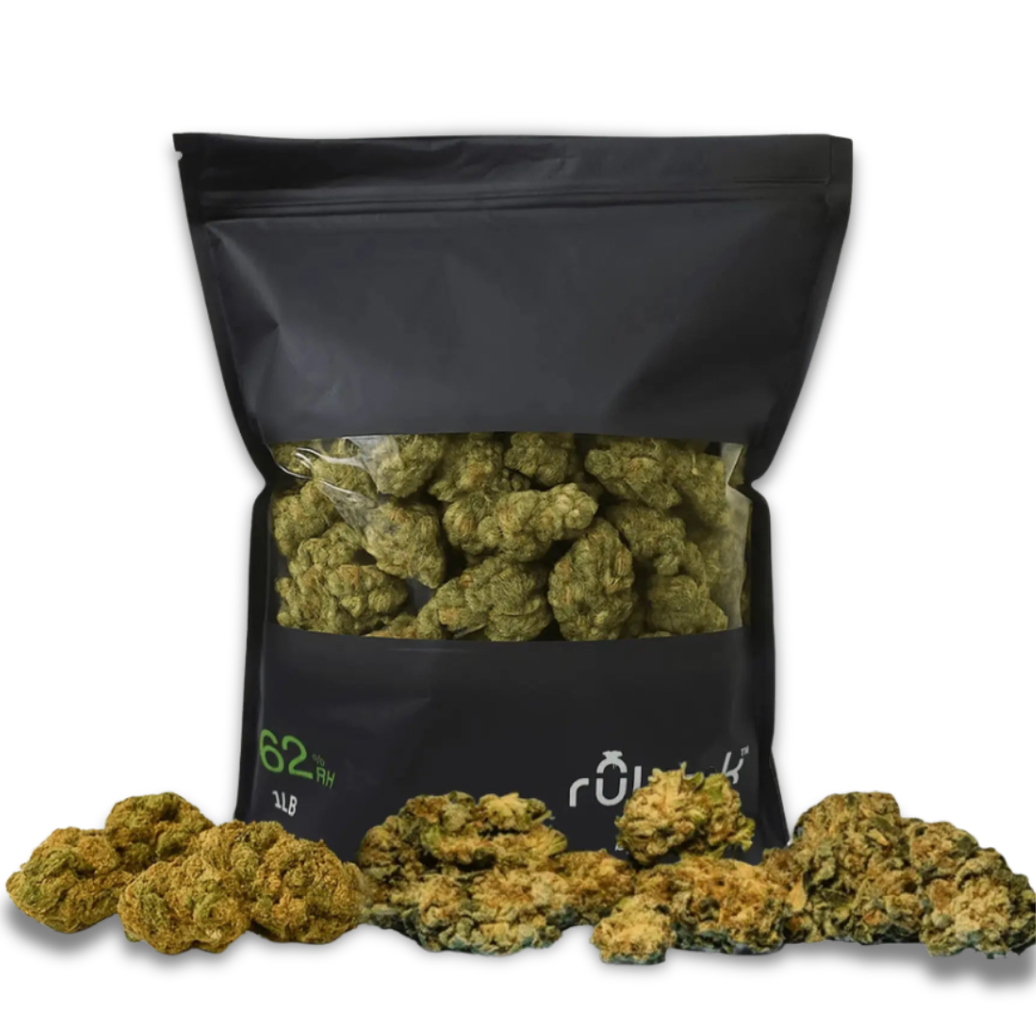
Bulk bins are large containers with a lot of headspace. A 5-gallon bucket of 1 lb at 62% RH equilibrium, opened and resealed multiple times in a low-RH cure room, drifts down toward room RH between handlings.
3. Bulk → retail pack
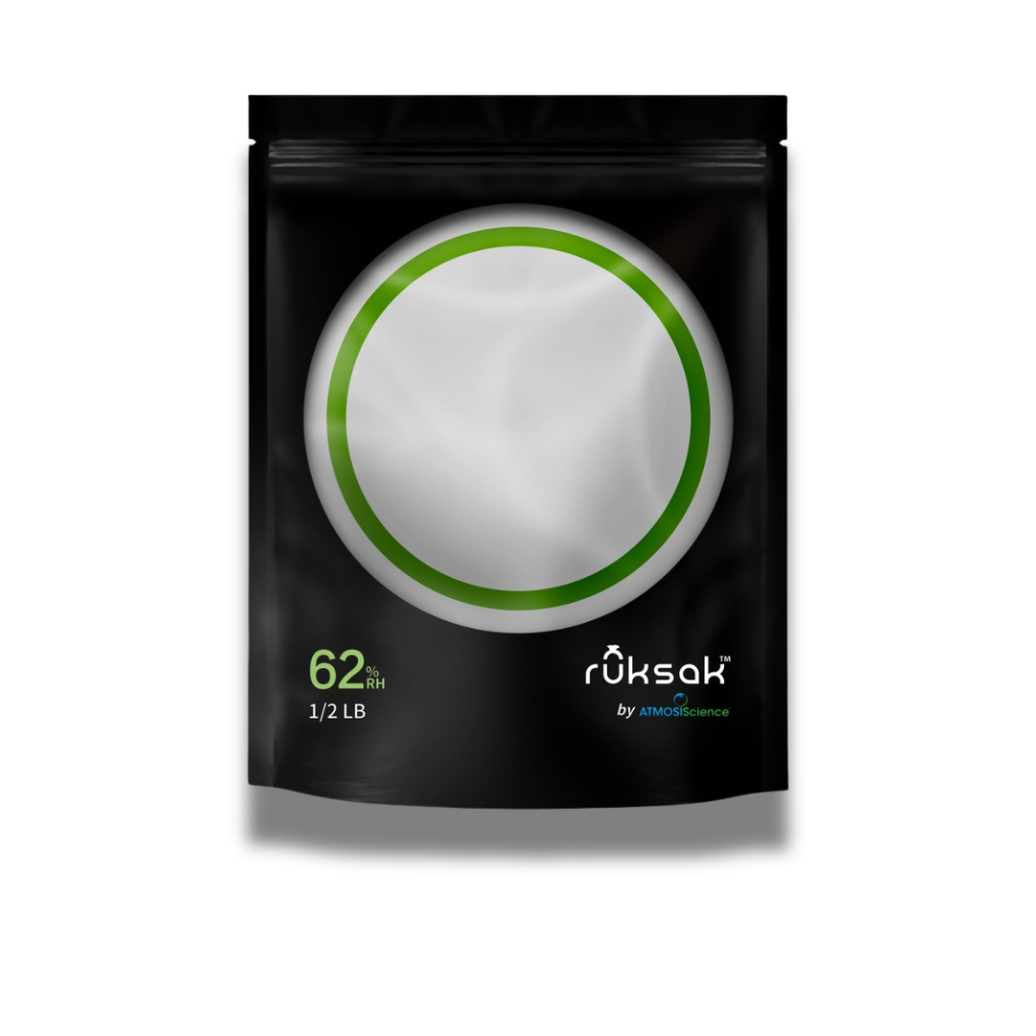
The final pack — pouches, jars, mylar bags — often has different headspace volume, fill ratio, and humidity load than the bulk bin. Without a humidity pack inside the retail unit, the headspace draws from the flower itself, which loses weight in transit and on the shelf before sale.
Why the cure room is the leverage point
It is tempting to add a humidity pack only at the retail stage. That fixes the shelf-life math but does nothing for the loss already taken between dry room and pack-out — which is where the bulk of the dollars sit.
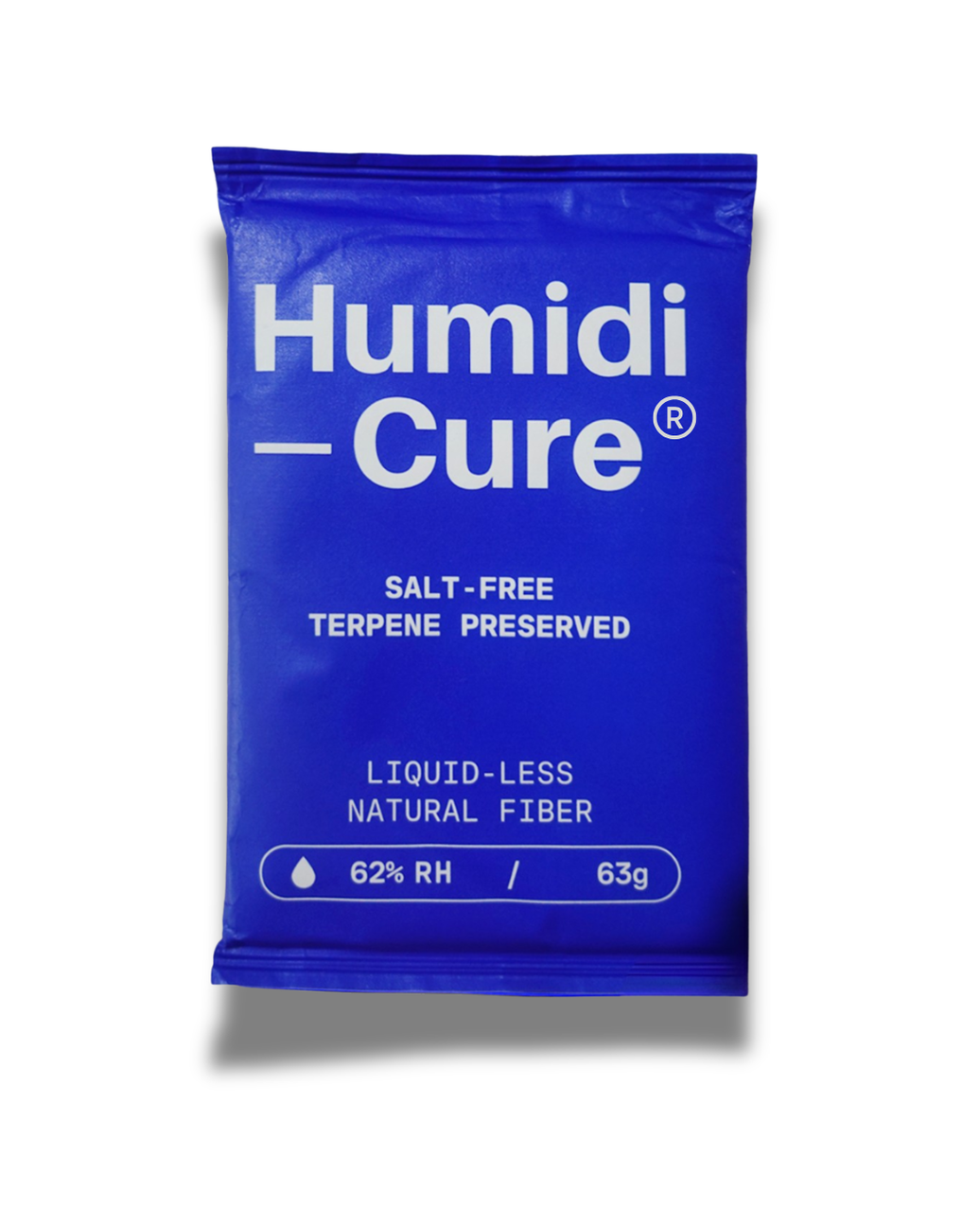
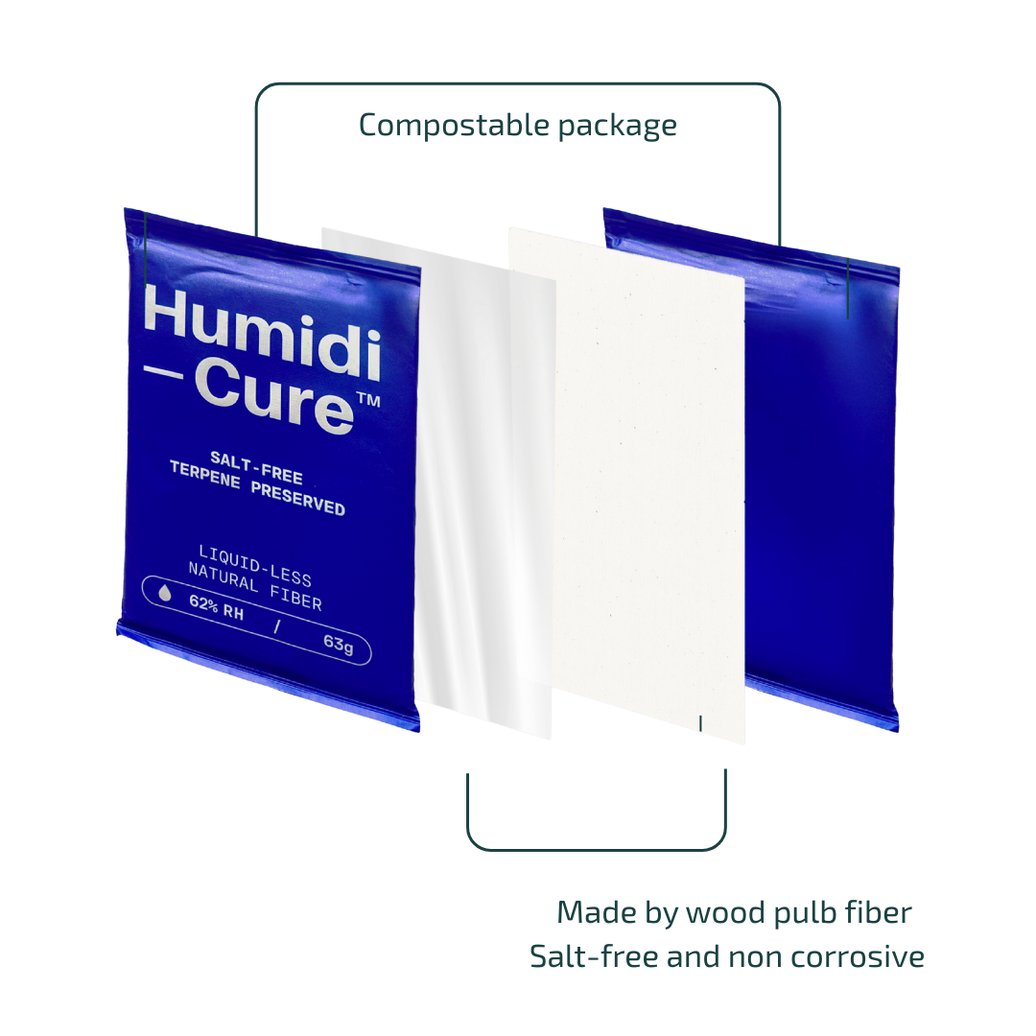
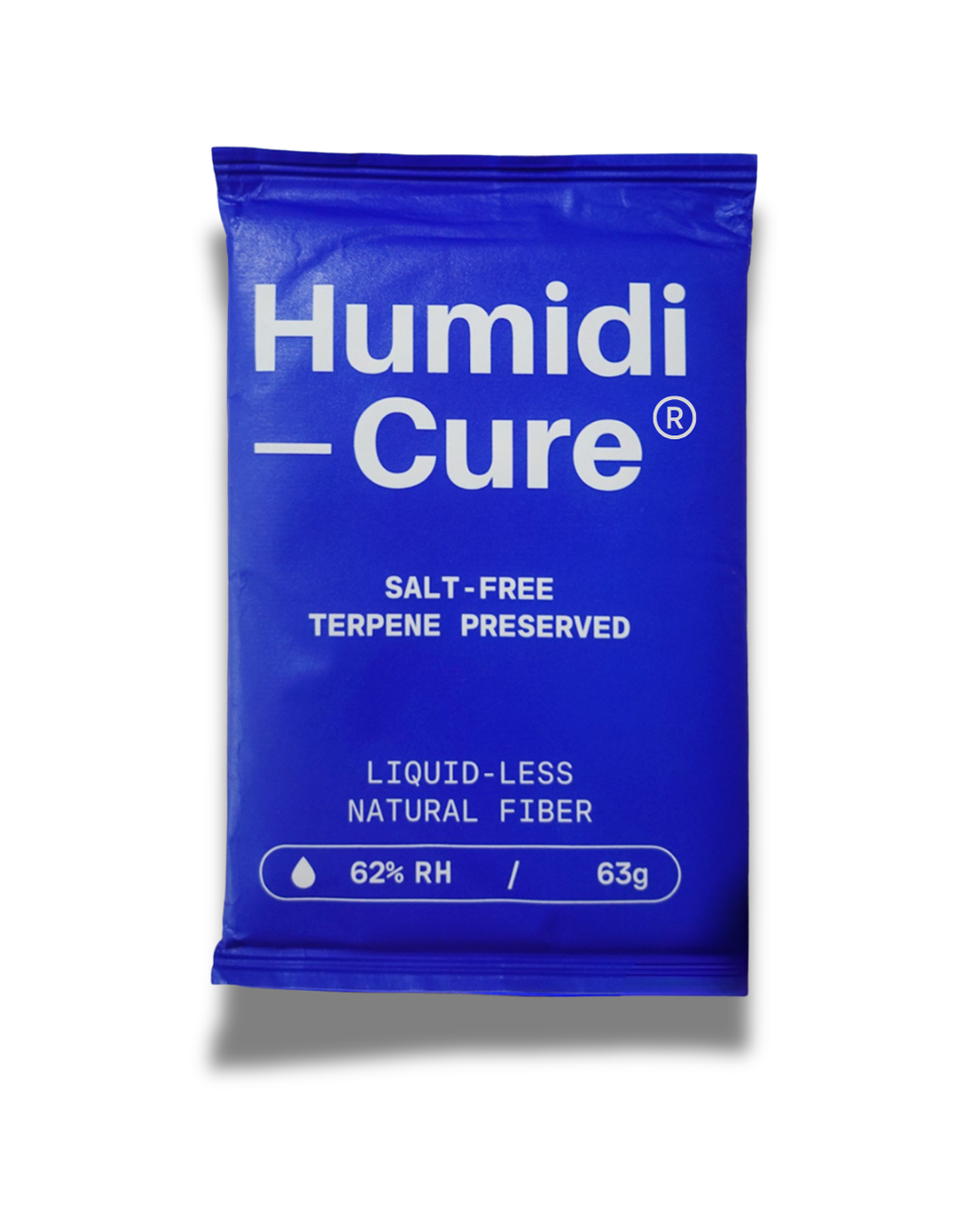
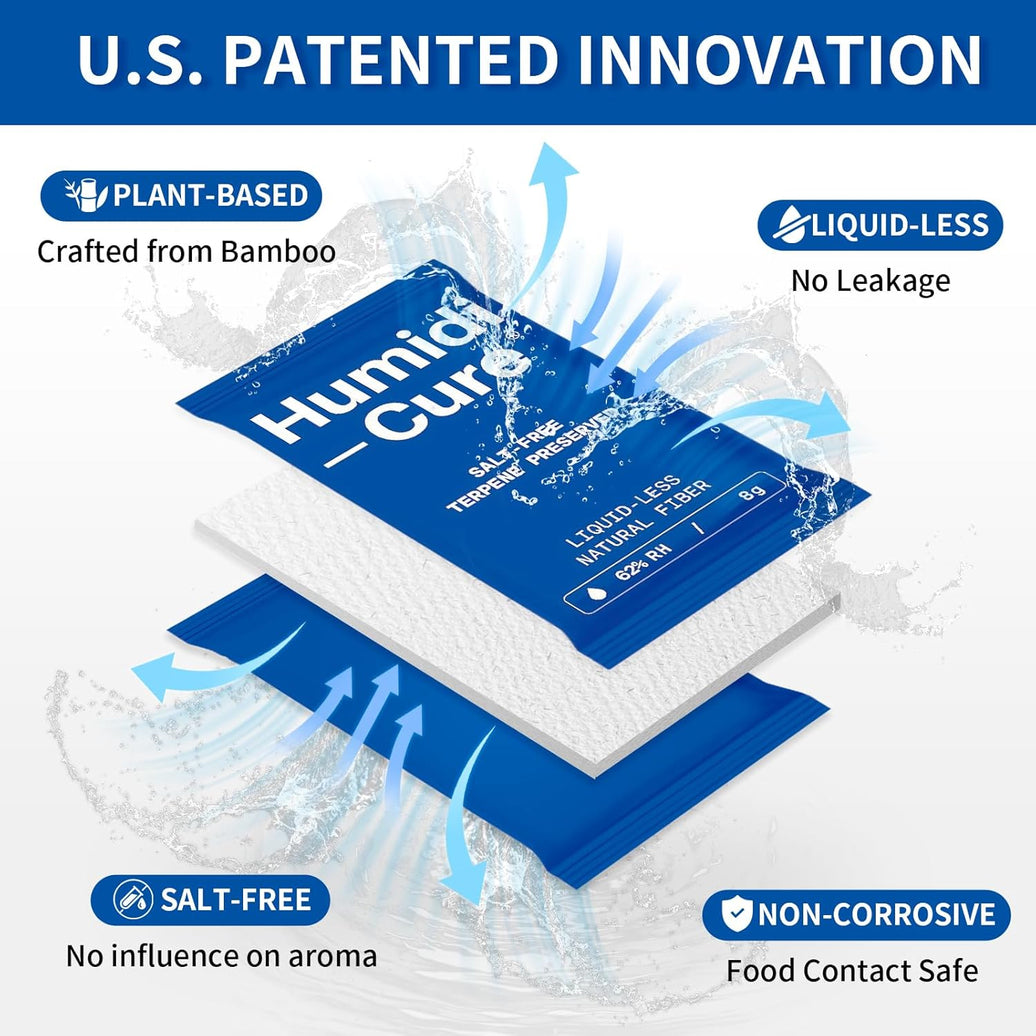
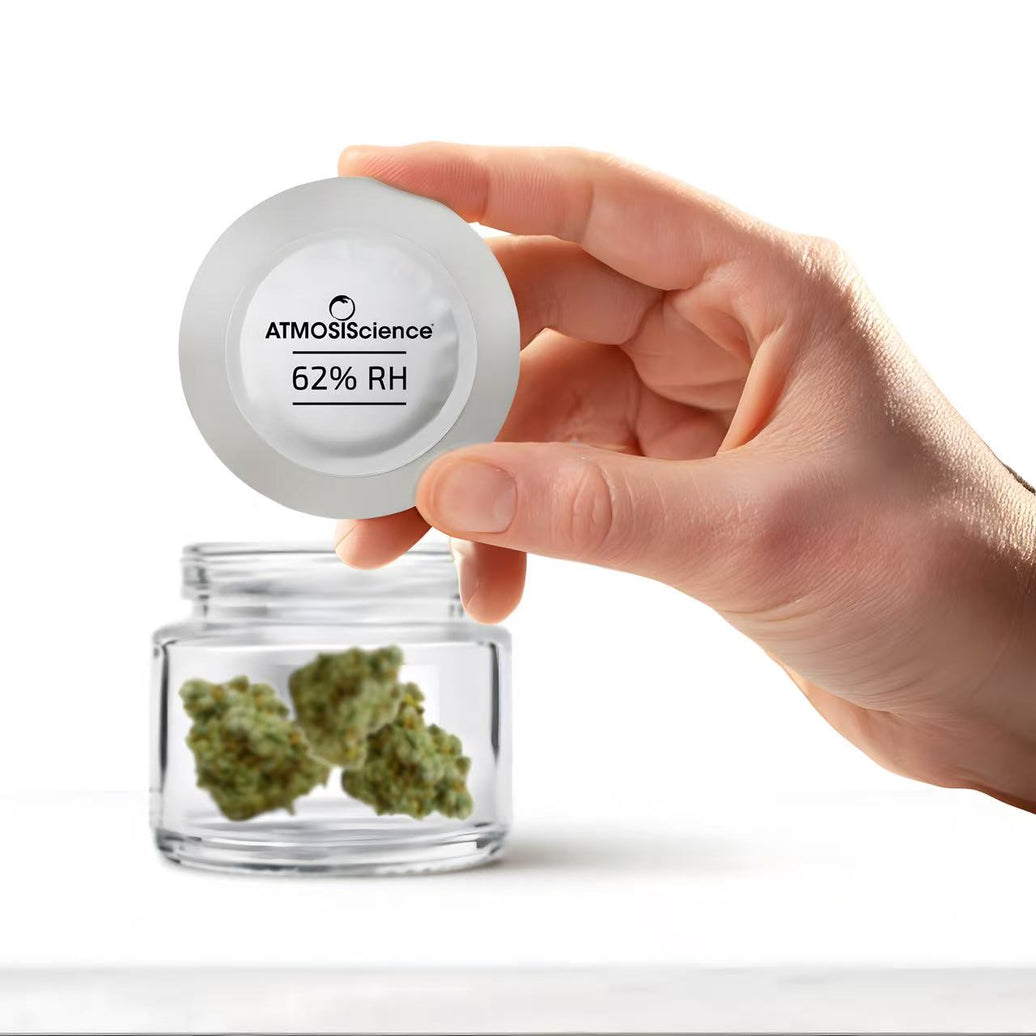
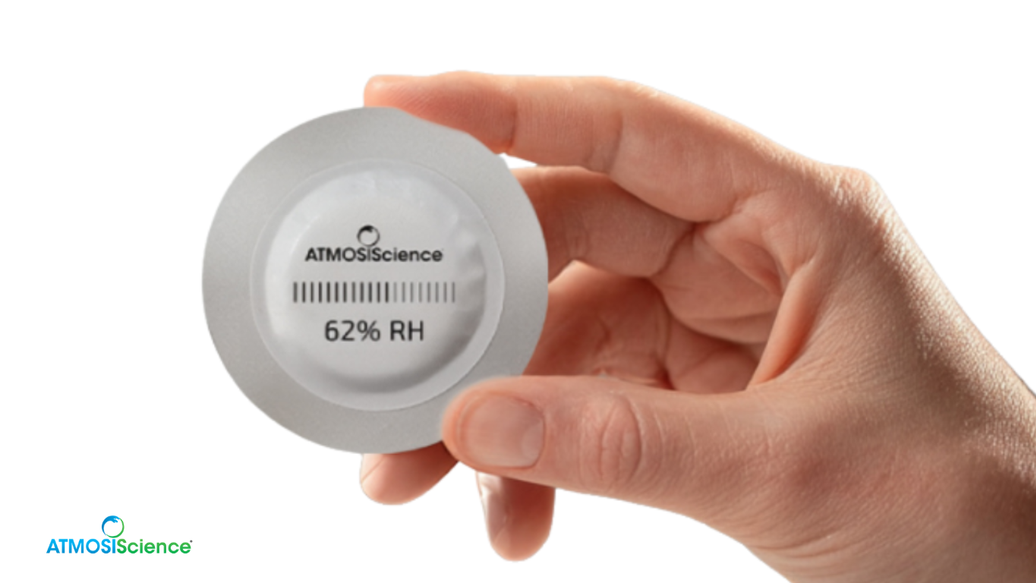
Two-way humidity fiber sized to the cure jar (or bulk bin, or retail pouch) holds the headspace at one number throughout the chain. ATMOSIScience's Humidi-Cure® pack lineup runs from 4 g consumer-size up to 320 g and bulk B2B sizes engineered for cure-room volumes.
What "controlled" looks like
A controlled cure room hits these numbers consistently:
| Metric | Target | Measurement method |
|---|---|---|
| Cure-jar headspace RH | 62% ±1 | Datalogger inside a representative jar (not just room sensor) |
| Bulk bin headspace RH | 62% ±1 | Datalogger inside bin |
| Retail pack headspace RH | 62% ±2 | Sampled, 1 in 50 packs |
| Weight loss, dry-out → pack-out | ≤ 1.5% | Weighed at every stage |
| Mold incidence | 0 | Visual + lab check on flagged batches |
Hitting these requires three things: humidity packs sized correctly for the container, a real cure-room HVAC set point that does not drift, and a measurement habit. Spot-check sensors in cure jars catch drift faster than relying on a single room sensor.
Sample math: a 500 lb / month cultivator
A licensed micro-cultivator in the Pacific Northwest reported the following figures after switching from no in-jar humidity packs to ATMOSIScience Humidi-Cure® at 62% RH across cure jars and retail pouches:
| Metric | Before | After | Delta |
|---|---|---|---|
| Pack-out weight loss | 5.8% | 1.7% | -4.1 pp |
| Monthly weight saved | 0 | ~21 lb | +21 lb |
| Wholesale $ saved (at $1,800) | 0 | ~$37,800 | +$37,800/mo |
| Mold returns (12 months) | 4 | 0 | -4 |
| Cost of packs (per month) | $0 | ~$2,400 | -$2,400 |
| Net monthly margin lift | — | — | ~$35,400 |
"We thought we had a great cure. Then we put dataloggers in the jars and saw the room was pulling them down to 53% by week three. The packs paid for themselves in the first batch." — 500 lb/mo cultivator, Pacific Northwest [VERIFY attribution]
What to put in your cure room
A baseline B2B kit for a 500–2,000 lb / month operation:
- Humidi-Cure® Plus sized to the cure jars in use (most cultivators run 1-gallon or 5-gallon glass).
- Humidi-Cure® packs at the gram weight matched to the final pouch (4 g, 8 g, 62 g for 1 lb pack-out).
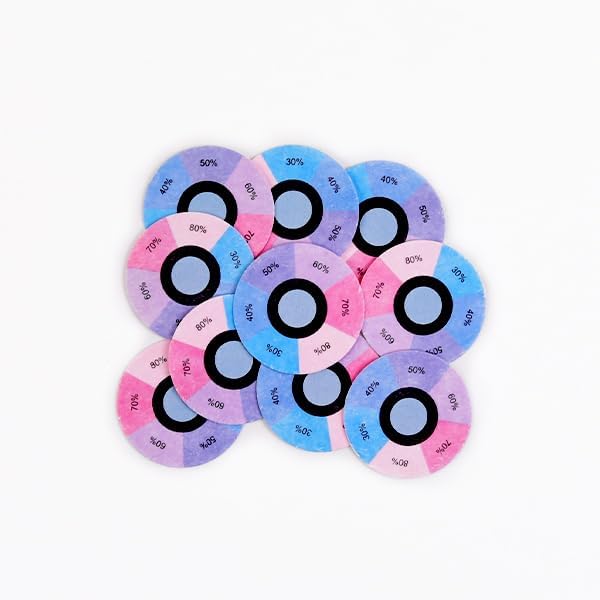
- Three humidity dataloggers — one in the cure room, one in a representative cure jar, one in a bulk bin.
- A weekly weight log for at least one batch, tracked from dry-out through retail, until the team trusts the new baseline.
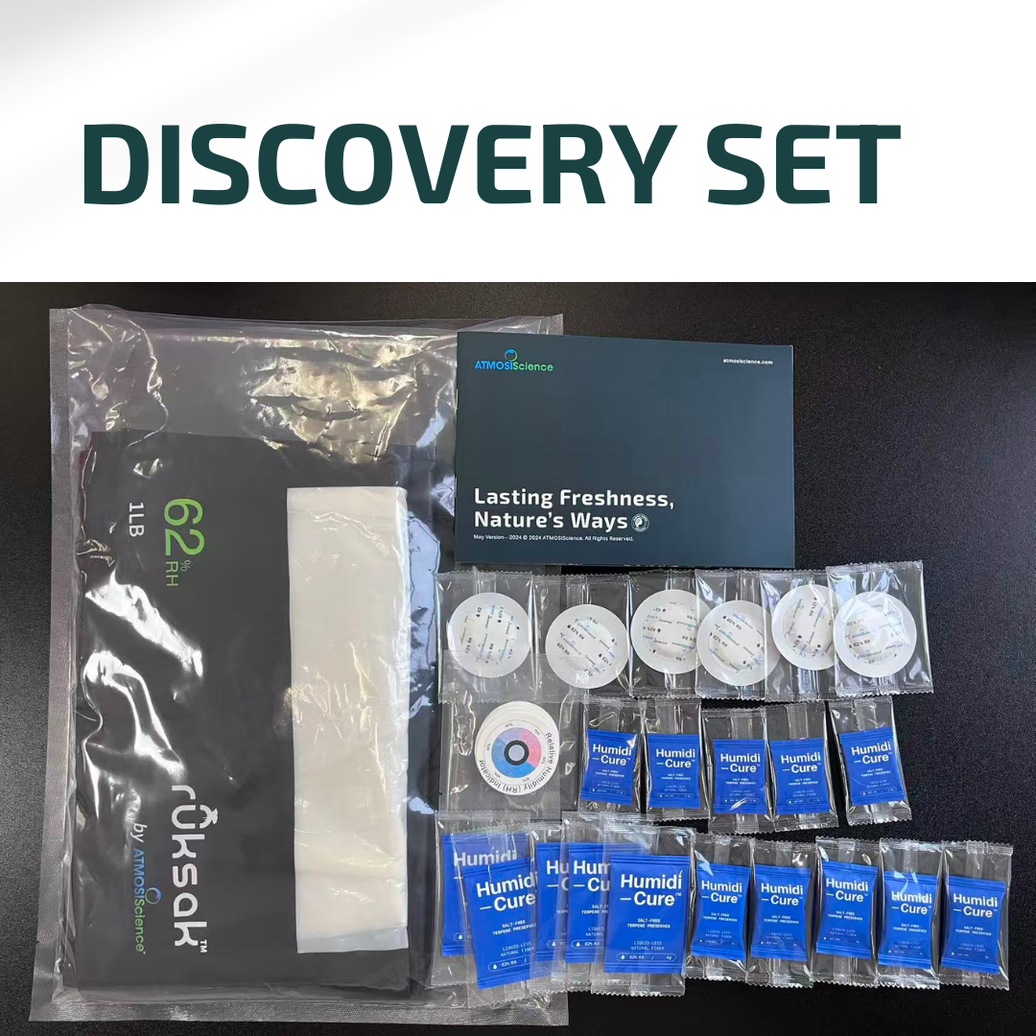
ATMOSIScience supplies a B2B starter kit with the above plus a written set-point recommendation based on the operation's monthly volume and SKU mix. Request a Humidi-Cure cure-room sample kit →
Why this is not a "set and forget"
The economics shift with three variables:
- Wholesale price. A market that drops from $1,800 to $1,200/lb still leaves $26,000 on the table per 1,000 lb at 4% loss. A market that recovers to $2,500 makes the loss bleed worse.
- Strain mix. Larfy / sativa-leaning lots dry faster and lose more on the back end than dense indica-leaning lots.
- Pack-out container. A switch from glass jars to mylar or compostable pouches changes the water-vapor transmission rate (WVTR), which changes the pack-size needed.
Recheck cure-room math when any of those three move.
Bottom line for a cultivation manager
The single highest-leverage change in most commercial cure rooms is putting two-way humidity fiber inside the container — at every stage from cure jar to retail pack — at a single set point matched to the SKU. The math is not subtle. At wholesale prices anywhere above $1,200/lb and weight loss anywhere above 3%, the recovery is fast and measurable.
Request a Humidi-Cure Plus sample kit →
For the underlying RH science behind the 62% RH default, see the cluster pillar. For the day-by-day cure protocol, see the 60-day commercial curing SOP.