Open a jar of flower that has been sitting on a shelf for two months and something has usually gone wrong. The nose is flatter than it was the day it came home. The buds crumble instead of snap. The smoke hits harsher on the throat. Most home storage problems look the same in the end, and they all come from the same four things: the flower dried out, the light got to it, the oxygen got to it, or the temperature swung too much.
Fresh flower at home is not complicated. It just has to be defended against those four variables. Here is what actually matters and what does not.
The four things that matter
1. Humidity
This is the one people get wrong most often. Cannabis flower is alive in a chemical sense — it holds moisture, and it gives moisture up to dry air or pulls it in from humid air until it matches its surroundings. The target is 62% relative humidity (RH). That number is not random. At 62% RH, trichomes stay intact, terpenes hold, and the flower neither crumbles nor gets spongy.
Below 55% RH the flower gets brittle and loses aroma. Above 68% it starts to risk mold. A jar on a kitchen shelf in most US homes is sitting at around 30–45% RH, which is over-drying territory. That is why flower stored in a plain jar goes flat fast.
The fix is a two-way humidity control system — something that both gives moisture back when the air gets too dry and pulls it out when the air gets too humid, locking the number at 62%. Two-way means the container holds the set point for months, not until a silica pack is saturated.
2. Light
Sunlight and strong indoor light degrade the compounds in cannabis. UV specifically breaks down THC and damages terpenes. A clear glass jar on a sunny windowsill is the worst possible container for flower. A clear jar in a dark cabinet is better, but still not great — any time the jar comes out, light gets in.
The fix is an opaque container. Dark glass helps. Matte-black mylar with no light transmission helps more.
3. Oxygen
Oxygen slowly oxidizes the active compounds in cannabis. An airtight seal matters. A jar with a threaded lid and a rubber gasket does reasonable work on the first seal, but the gasket loses grip over repeated opens. A resealable child-resistant zipper top on a mylar pouch holds seal longer because the seal is engineered to cycle.
4. Temperature
Cool and stable is the goal. 55–70°F is the home comfort zone for flower. What actually damages cannabis is not cold — it is swings. A kitchen that sits at 65°F all winter and 82°F in summer is slowly cooking the flower across the warm months and driving moisture cycles on and off the control medium. A bedroom closet or a drawer in an interior wall is usually the most temperature-stable spot in a home.
Refrigerators and freezers are bad ideas for cured flower. The cycling in and out of the cold drives condensation on the flower surface, and in a freezer, ice crystals can rupture the glandular heads on trichomes and lose exactly the terpenes the storage is trying to protect.
What a home storage container should look like
Put all four defenses together and the spec is simple:
-
Sealed, low-oxygen
-
Locked at 62% RH with a two-way system
-
Opaque against light
-
Resealable without losing the seal
-
A way to see the flower without opening it — because every open restarts the whole equilibrium
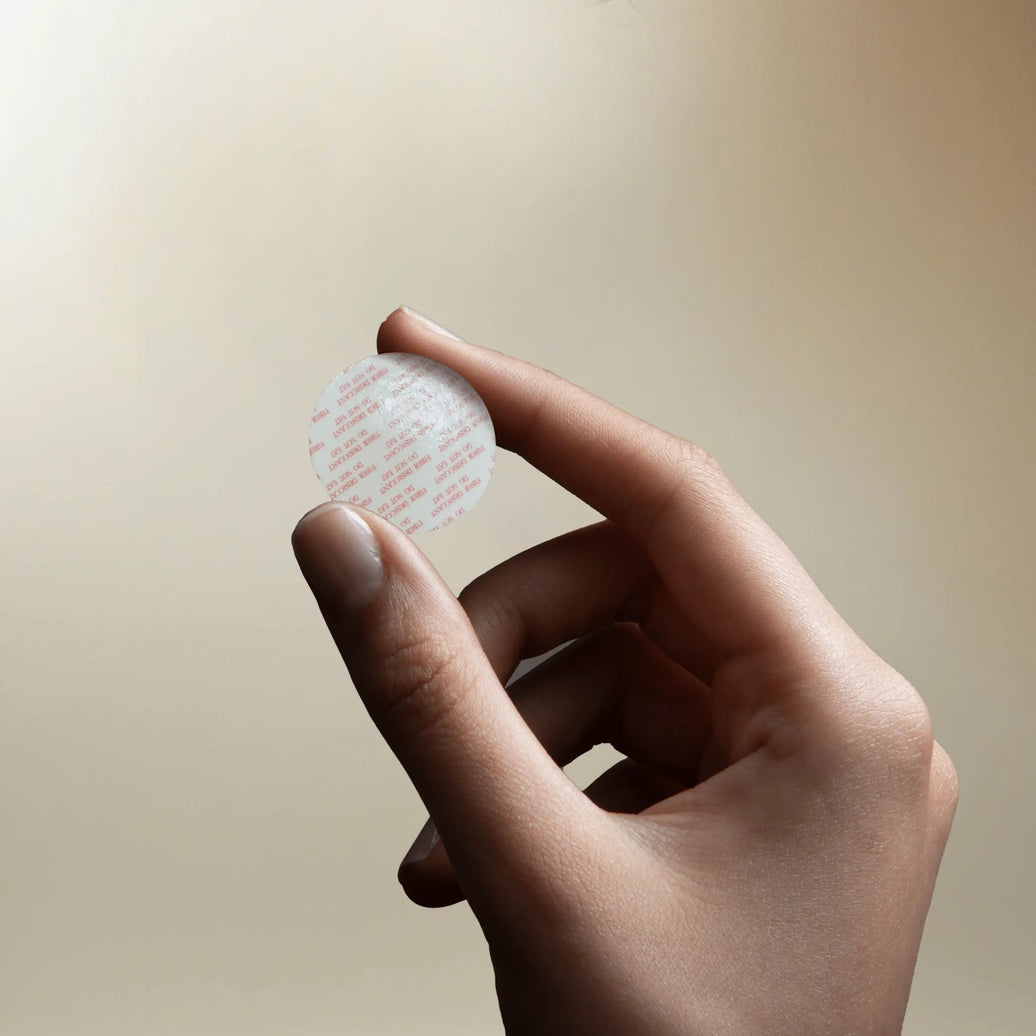
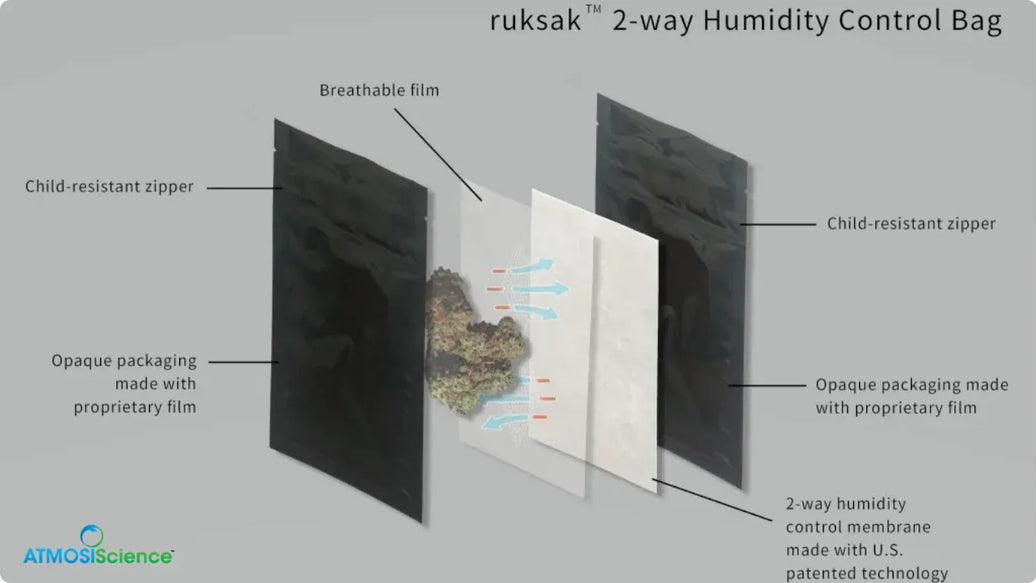
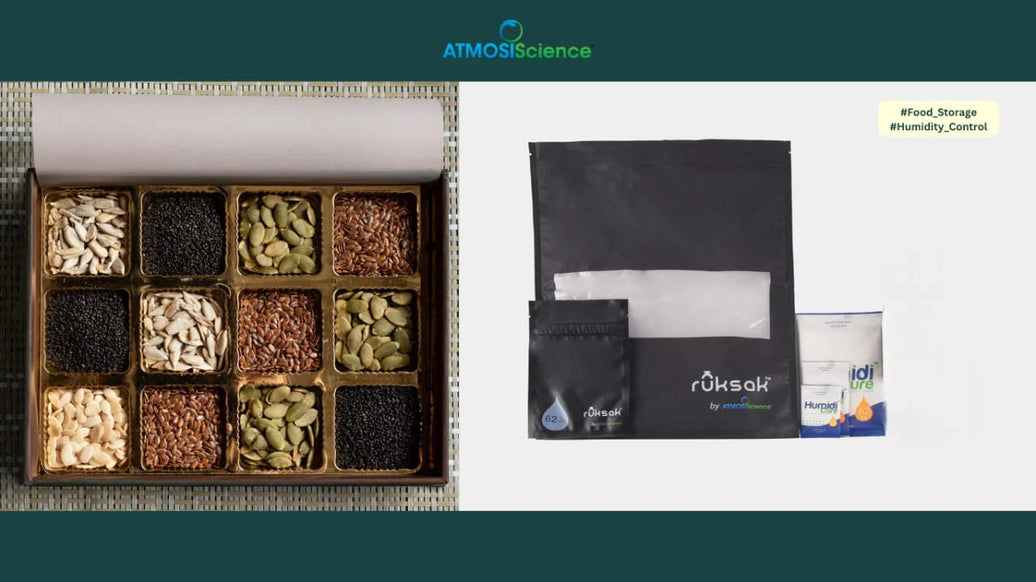
ruksak from ATMOSIScience was built against that list. The outer layer is matte-black mylar that blocks light. The inner layer is engineered to hold the internal atmosphere. The humidity control sits inside as a compostable bamboo-fiber sachet tuned to 62% RH — two-way, so it holds that number for months whether the kitchen is humid or dry. The top is a child-resistant zipper that reseals reliably every open. A clear rectangular window on the front shows the flower without breaking the seal.
For home quantities, two sizes cover almost every need: the ruksak 7g for a quarter-ounce on hand, and the ruksak 14g for a half-ounce.
Things not to do
A few common home storage habits that damage flower faster than most people realize:
Do not use a clear mason jar on a counter. Two of the four defenses (light and opaque) fail immediately, and most home jars sit far below 62% RH, so the flower dries out in weeks.
Do not use a plastic baggie. Plastic sandwich bags leach plastic compounds that can bind to terpenes, and the seal is neither airtight nor child-resistant. They also have no humidity regulation.
Do not freeze or refrigerate cured flower. Condensation and ice crystals cost more than the cold helps.
Do not keep flower in a humidor meant for cigars. Cigar humidors typically run at 68–72% RH. That is too wet for cannabis — it pushes into mold-risk territory over weeks.
Do not store near a stove, dishwasher, or south-facing window. Temperature swings and humidity swings in those locations destabilize the equilibrium inside the container.
Where to keep the pouch
Inside the home, the best spot is a drawer or cabinet on an interior wall, away from direct light and heat. A bedroom dresser drawer works well. A kitchen cabinet near the stove or dishwasher does not. An attic, garage, or shed swings too much in temperature year-round in most climates.
A ruksak sitting in an interior drawer at 65°F holds its 62% RH for months because the two-way fiber inside defends the set point regardless of the ambient humidity in the room.