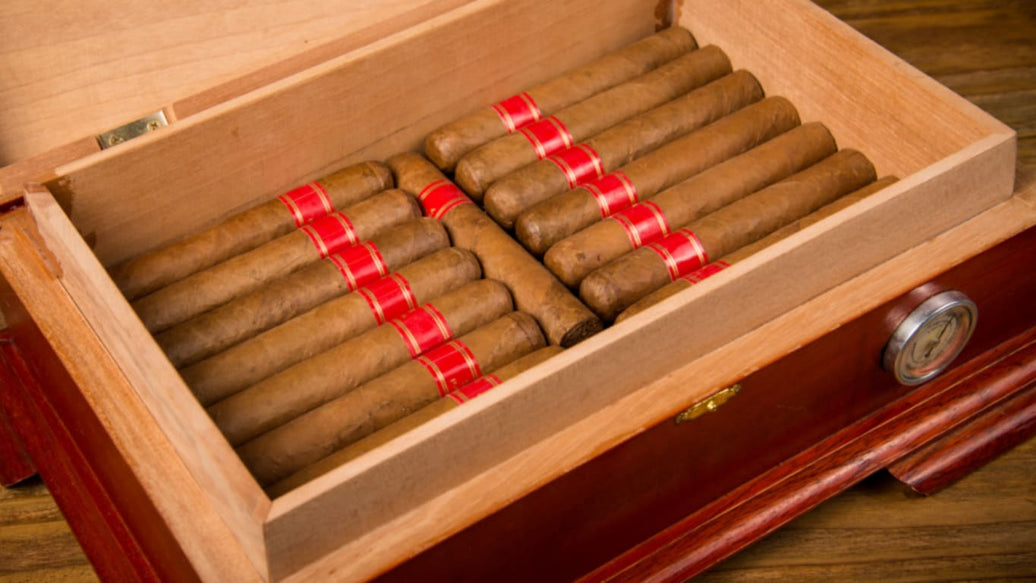
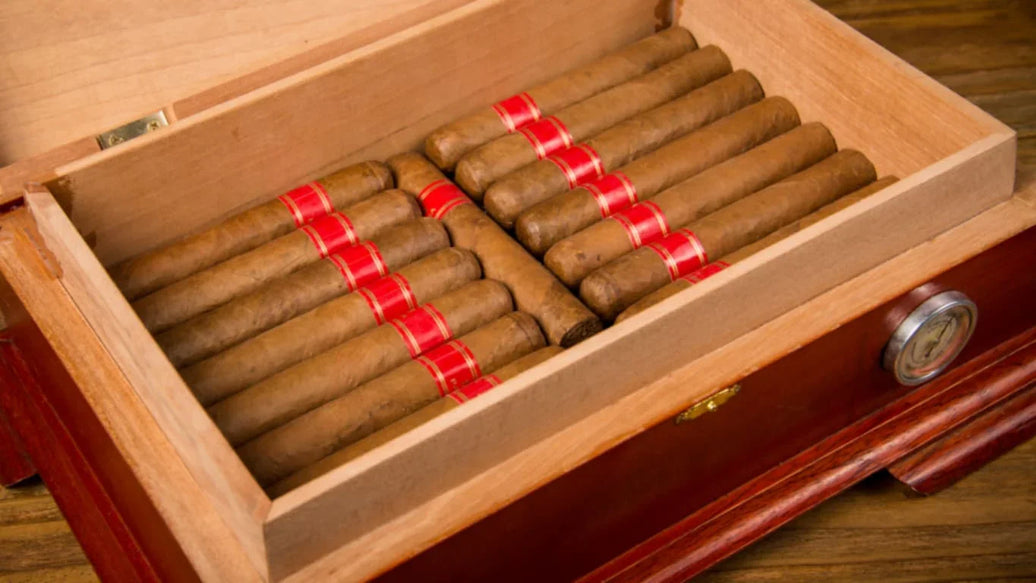
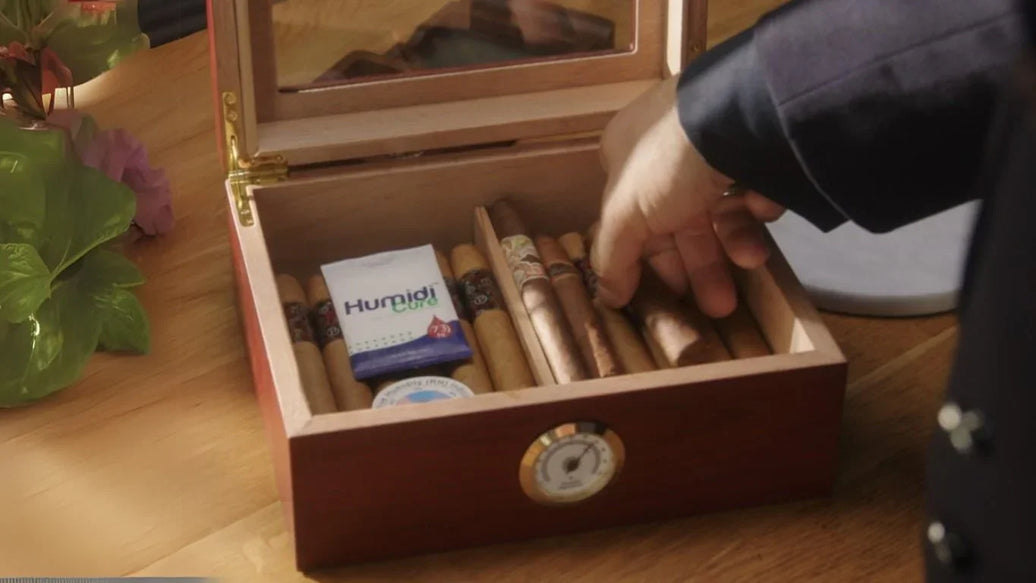
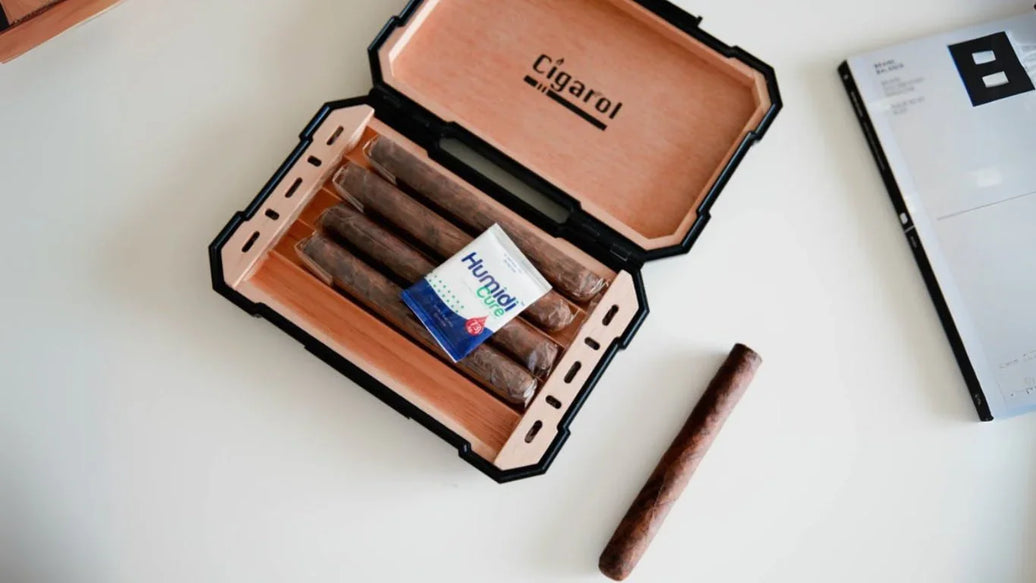
The same humidor, in the same corner of the same room, lives in two different climates a year apart. In January, forced-air heating drives indoor humidity below 30% — sometimes below 20% in northern states — and the room pulls moisture out of the box around the clock. In July, an unconditioned room in much of the country sits above 75% RH, and the flow reverses. Most 'mystery' humidor problems are not mysteries; they are seasons.
Winter: the slow drain
Dry heated air steepens the moisture gradient across the humidor's seal, so the box leaks moisture faster than at any other time of year. The symptoms arrive in February: hygrometer readings that sag days after a refill, wrappers losing sheen, and humidification devices depleting weeks ahead of schedule. The practical effects: humidity sources work hardest in winter — expect packs to deplete somewhat faster and check the RH indicator card monthly; keep the box away from radiators, vents, and fireplaces, which add heat on top of the dryness; and resist compensating with extra wet sponges — the overshoot shows up in March as spongy sticks.
Summer: the spike season
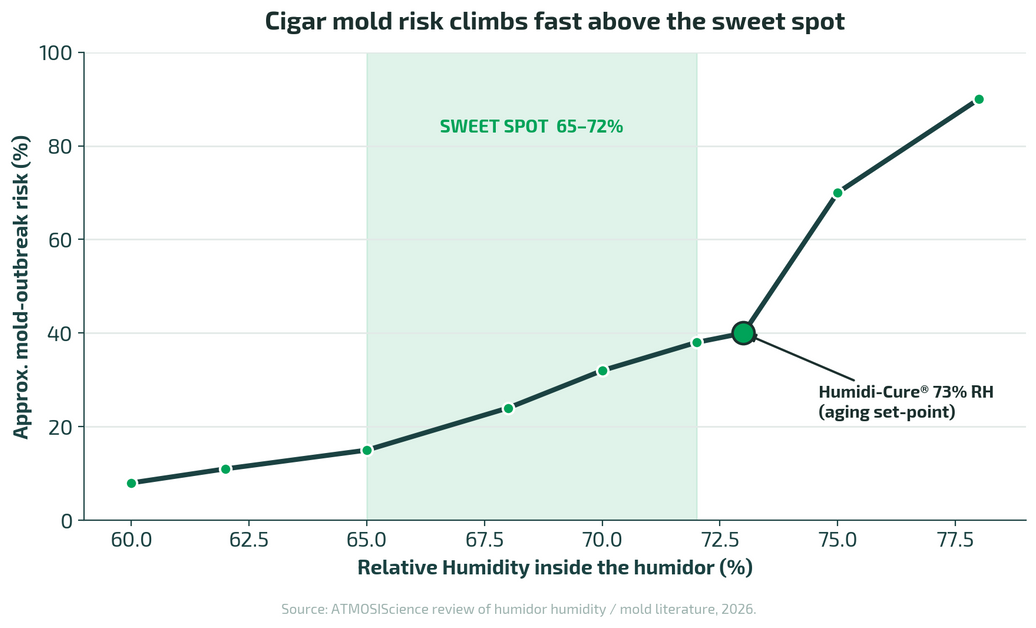
Summer is more dangerous than winter because its failure modes are mold and beetles, not just dryness. Ambient humidity pushes a leaky box upward; heat above 72°F is the hatch trigger for tobacco beetles; and a one-way humidifier keeps adding moisture to a box that is already over target. Rules of the season: keep the humidor in the air-conditioned part of the house, out of sun, never in a garage or attic; aim for under 70°F; and make sure the humidity source can absorb, not just emit.
The two-way answer to both seasons
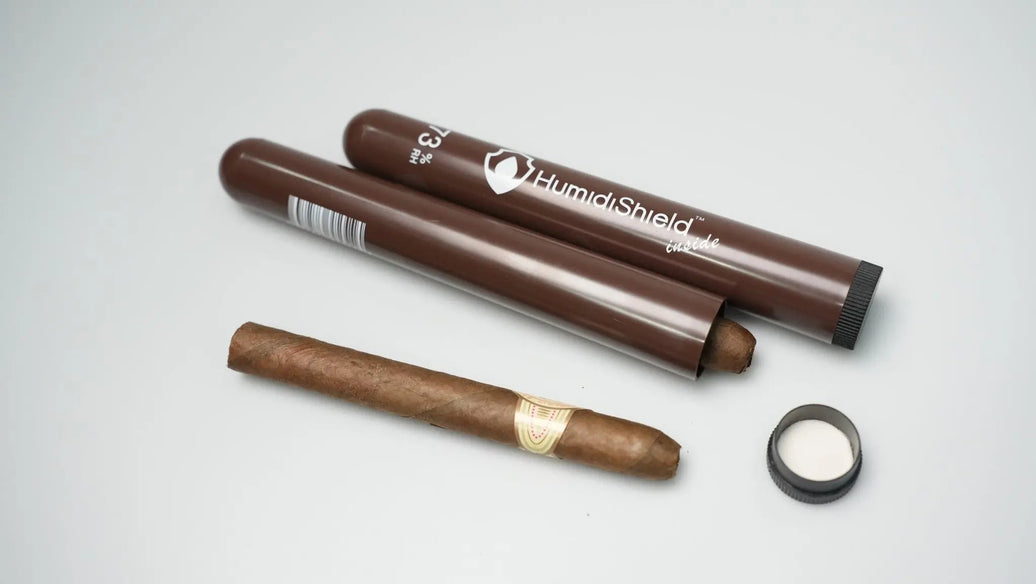
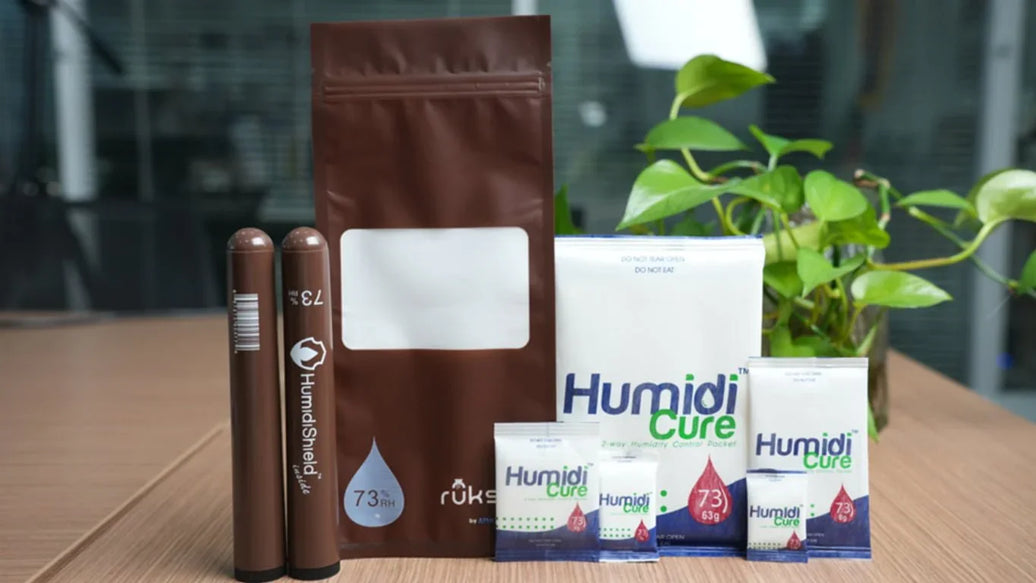
The reason seasonal storage feels like work is that one-way humidification only fights winter. A Humidi-Cure 73% two-way pack releases moisture into the dry winter box and absorbs the summer excess — same pack, no settings, holding 73% ±2% in both directions. The salt-free fiber doesn't leak or leave residue in either mode. Seasonal management reduces to one habit: glance at the indicator card when the box opens, swap packs roughly every 3 months.
The seasonal checklist
December–February: monthly RH check; box away from heat sources; expect faster pack depletion. March–April: heating off — watch for the rebound as the room re-humidifies. May–August: temperature is the priority; under 70°F, AC-side of the house, verify the box never reads above 75%. September–November: the calm season — the right time to re-season a tired humidor or audit seals before heating season starts.
Frequently asked questions
Why does the humidor read low every winter?
Heated indoor air below 30% RH pulls moisture through every seam of the box. The box is fine; the gradient is steeper.
Do humidity packs run out faster in winter?
Somewhat — they are releasing against drier air. Budget a pack change closer to the 2-month mark in deep winter, guided by the indicator card.
Where should a humidor live year-round?
An interior, air-conditioned room, out of sunlight, off exterior walls — stable temperature matters more than the specific room.
Is a basement good cigar storage?
Cool, yes — but many US basements run damp. With two-way packs absorbing the excess, a dry-ish basement works; a visibly damp one risks mold on the box itself.
One pack, four seasons
Stop re-tuning the humidor every solstice — let the fiber do both directions.
Shop Humidi-Cure 73% for Cigars — from $9.99
Tobacconist or B2B buyer? Get bulk pricing
Tell us about your packaging needs, and our sales team will respond with a customized humidity-control solution, supporting certificates and competitive bulk pricing.