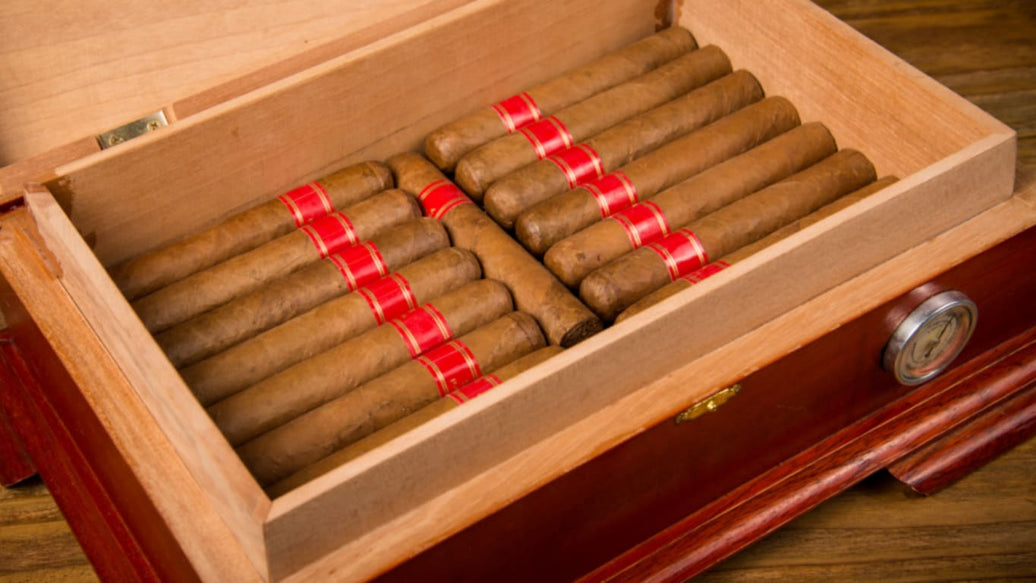
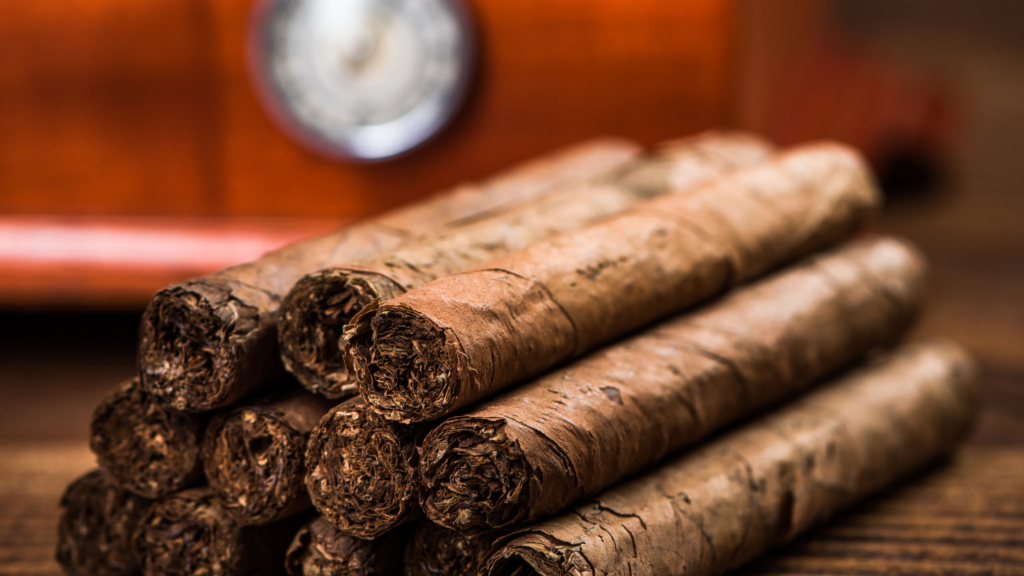
A white film on a cigar triggers one of two outcomes: a collector celebrates, or a collector quietly loses a box. Plume — crystallized oils rising to the wrapper surface — has long been treated as a badge of well-aged tobacco. Mold is a fungus that eats through wrappers and colonizes cedar. They can look similar at arm's length. Up close, they are easy to tell apart.
The five-point test
| Check | Plume | Mold |
|---|---|---|
| Color | Uniform white, slight crystalline shimmer | White, blue-green, or gray; dull and cottony |
| Texture | Fine, even dust across the wrapper | Fuzzy patches with raised centers and visible roots |
| Pattern | Spread evenly over the whole stick | Spotty clusters, often at the foot or under the band |
| Wipe test | Brushes off completely, no trace | Smears, leaves a stain or shadow on the leaf |
| Smell | None — the cigar smells like itself | Musty, damp-basement note |
One more data point settles arguments: plume is rare. It develops on oily, well-aged cigars over years of stable storage. A six-month-old box in a humidor with a wet sponge has mold, statistically speaking, not plume. Worth noting: a growing number of researchers argue most 'plume' photos circulating online are early-stage mold — when in doubt, treat white fuzz as guilty.
If it is mold
- Remove affected cigars immediately — spores travel through shared air.
- Triage: surface specks on the wrapper of an otherwise firm stick can be wiped with a cloth barely dampened in isopropyl alcohol and dry-boxed; mold on the foot, inside the cellophane, or any fuzz at the cut end means the filler is colonized — toss it.
- Inspect the box: mold on cedar means emptying the humidor, wiping it down, and letting it air for days before re-seasoning.
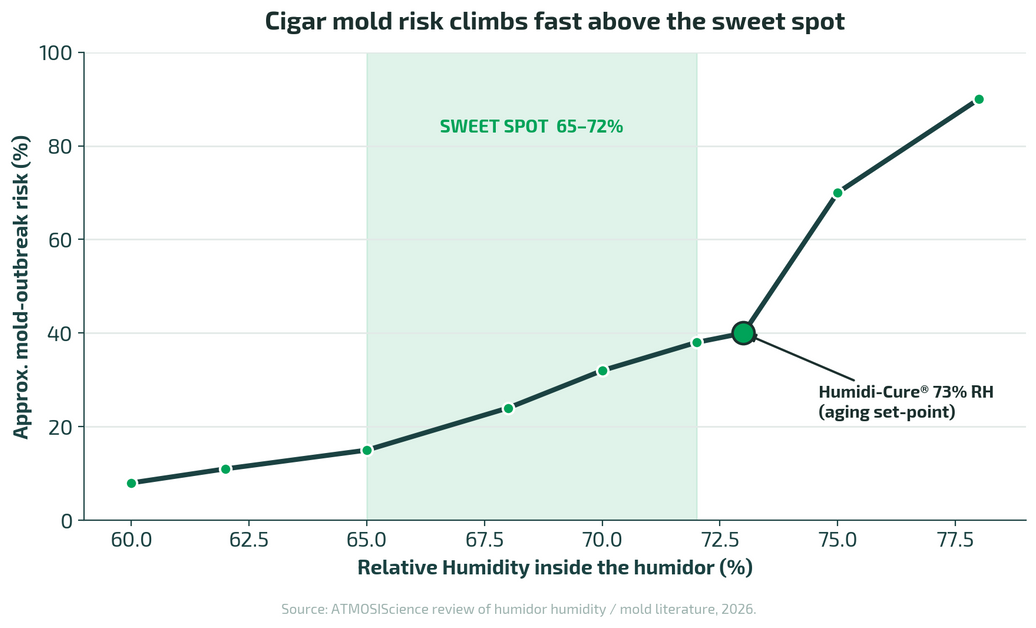
- Find the moisture source. Mold needs sustained RH above ~75%. The culprit is almost always a one-way humidifier, tap water, or summer ambient humidity — the same chain covered in the over-humidification guide.
Prevention is a number, not a habit
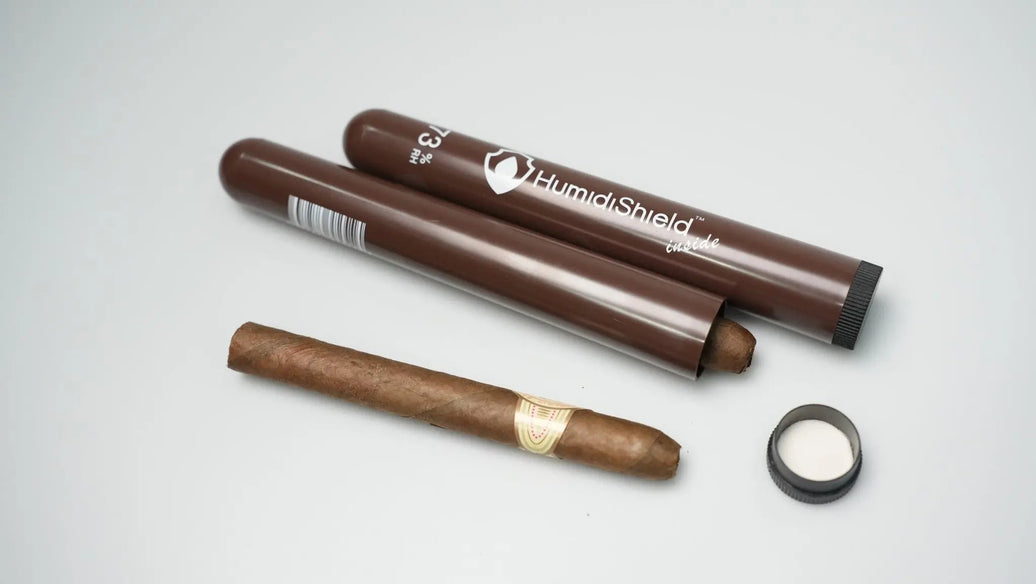
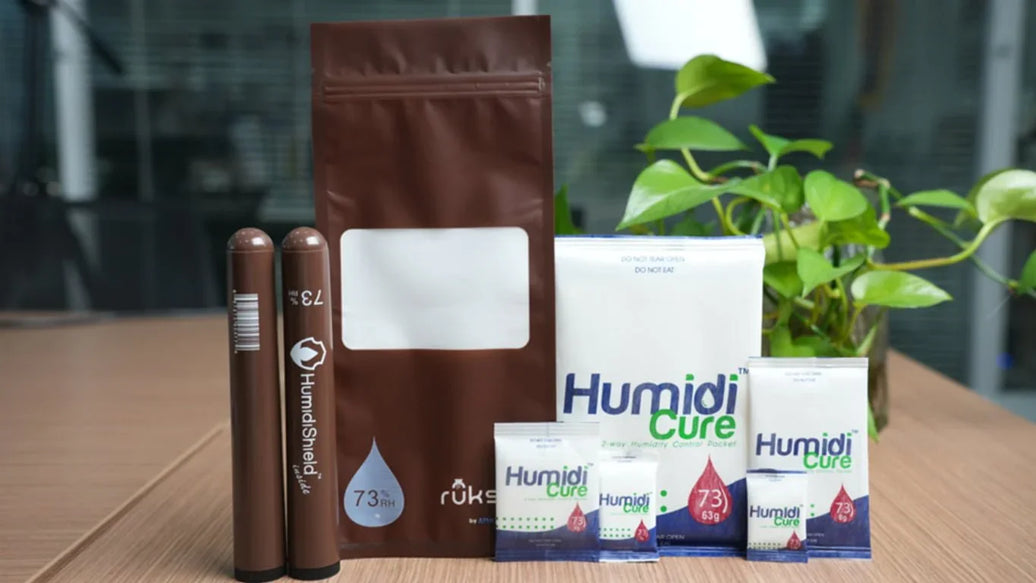
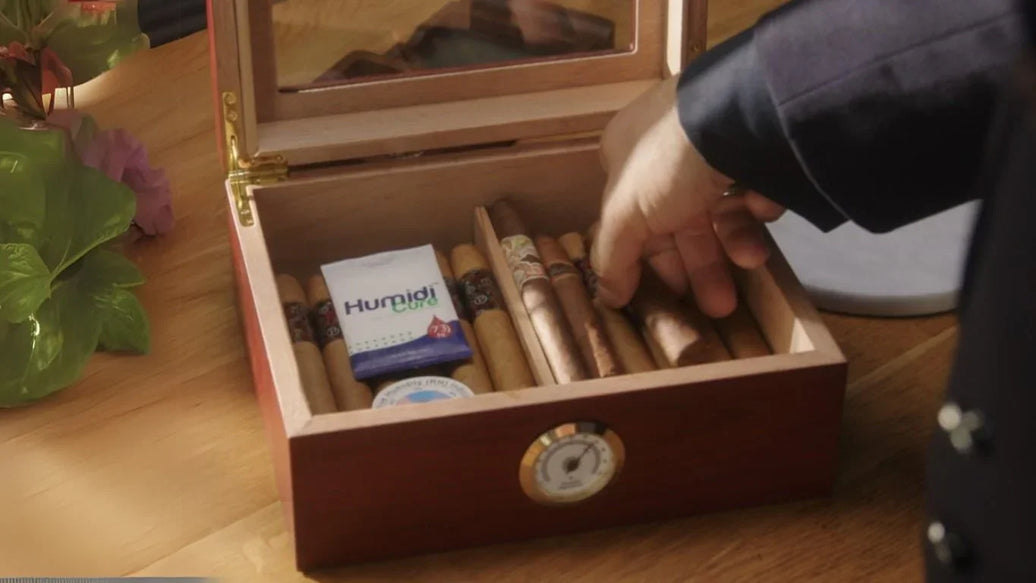
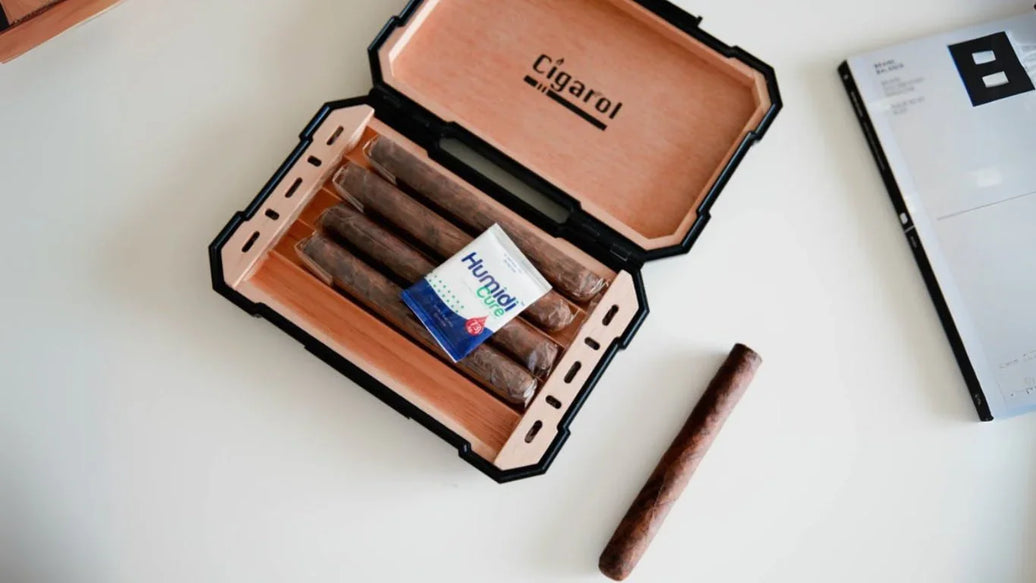
Mold cannot establish at a stable 73% RH. The failure mode is the spike — the wet week after a sponge refill, the humid July in an unconditioned room. A Humidi-Cure 73% two-way pack absorbs moisture the moment the box climbs past the set point and holds ±2%, and because the fiber is salt-free and non-leaking there is no wet surface inside the box to seed growth. An RH indicator card makes a spike visible the day it starts, not the month the fuzz appears.
Frequently asked questions
Is plume safe to smoke?
Yes — brush it off and the cigar is, if anything, in peak condition. The catch is being certain it is plume: shimmer, even spread, zero smell.
Can a moldy cigar be saved?
Light surface mold on the wrapper, caught early — sometimes. Mold at the foot or cut end — never; the inside is colonized.
Does mold spread to other cigars?
Yes, by spore through shared air and contact. One moldy stick means inspecting every stick in the box.
What humidity prevents cigar mold?
Keeping the box pinned at 73% RH or below with two-way control. Mold pressure starts when boxes drift past ~75% for sustained periods.
Make the white stuff boring
At a pinned 73%, the only thing on your wrappers is wrapper.
Shop Humidi-Cure 73% for Cigars — from $9.99
Tobacconist or B2B buyer? Get bulk pricing
Tell us about your packaging needs, and our sales team will respond with a customized humidity-control solution, supporting certificates and competitive bulk pricing.