The tobacco beetle (Lasioderma serricorne) is the only pest that can destroy an entire humidor from the inside. The eggs are microscopic, laid in the tobacco leaf before rolling, and present in some quantity in a meaningful share of premium cigars. That sounds alarming; it is not. Dormant eggs are harmless and stay dormant indefinitely — unless the climate gives them a reason to hatch.
What hatches them
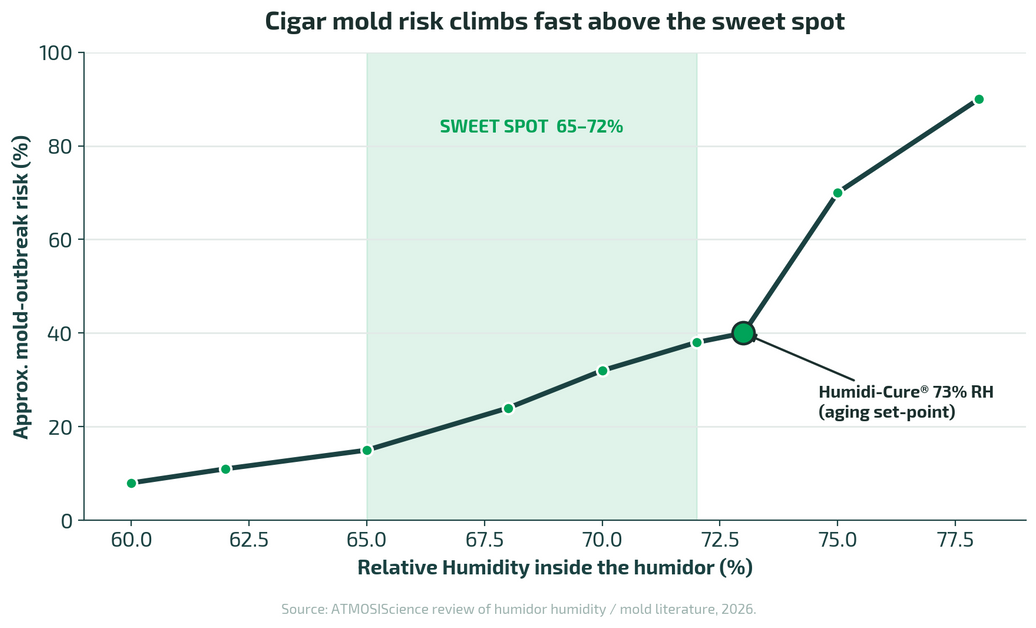
Beetle eggs activate when heat and humidity rise together and stay there. The commonly cited danger line is sustained temperatures above 72°F (22°C) combined with humidity climbing into the high 70s and beyond — exactly what happens in a humidor with a wet sponge sitting in a warm room in July. Temperature is the primary trigger and the one a collector fully controls: a humidor kept below 70°F has effectively no recorded outbreak conditions, whatever the leaf carries.
The warning signs
Pinholes — clean, round holes about the size of a pinhead in the wrapper, sometimes through several cigars in a row. Tobacco dust — fine brown powder collecting in the bottom of the box or inside cellophane sleeves. The beetles themselves — 2–3 mm, reddish-brown, found dead or alive in box corners. One pinhole means an active larva has already eaten through a stick, and every cigar in the box must be treated as exposed.
The emergency protocol: freeze everything
- Bag all cigars from the affected humidor in double zip-seal freezer bags, air pressed out.
- Freeze for 72 hours. Domestic freezers run warmer than commercial units; three days guarantees a kill at every life stage — egg, larva, pupa, adult.
- Move the bags to the refrigerator for 24 hours, then to room temperature for another 24 before opening. Skipping the staged warm-up shocks the wrappers and splits them.
- Vacuum the empty humidor thoroughly, wipe with a barely-damp distilled water cloth, and let it air.
- Restock with a regulated humidity source and an RH indicator card visible inside.
Prevention: never give them the window
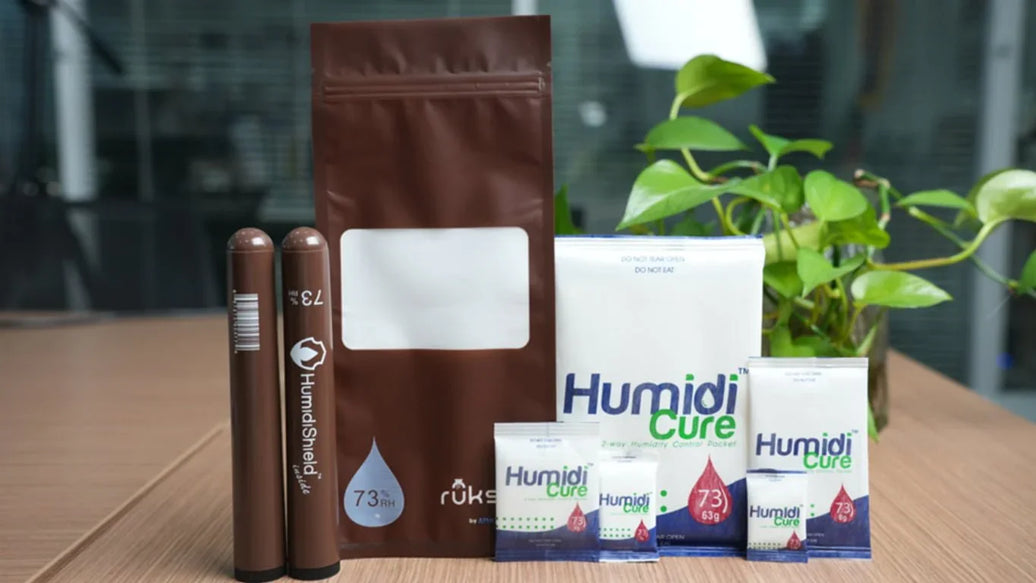
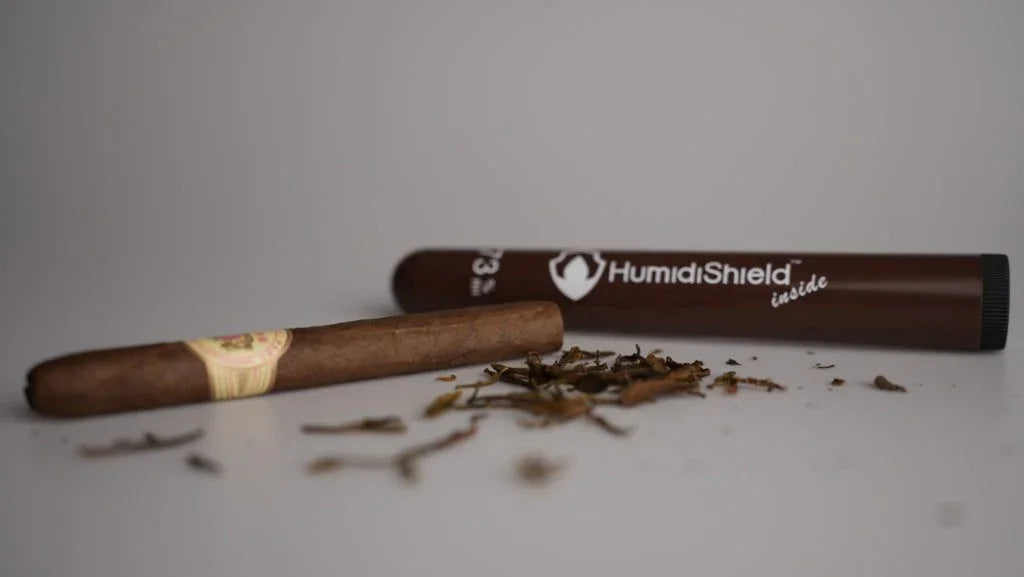
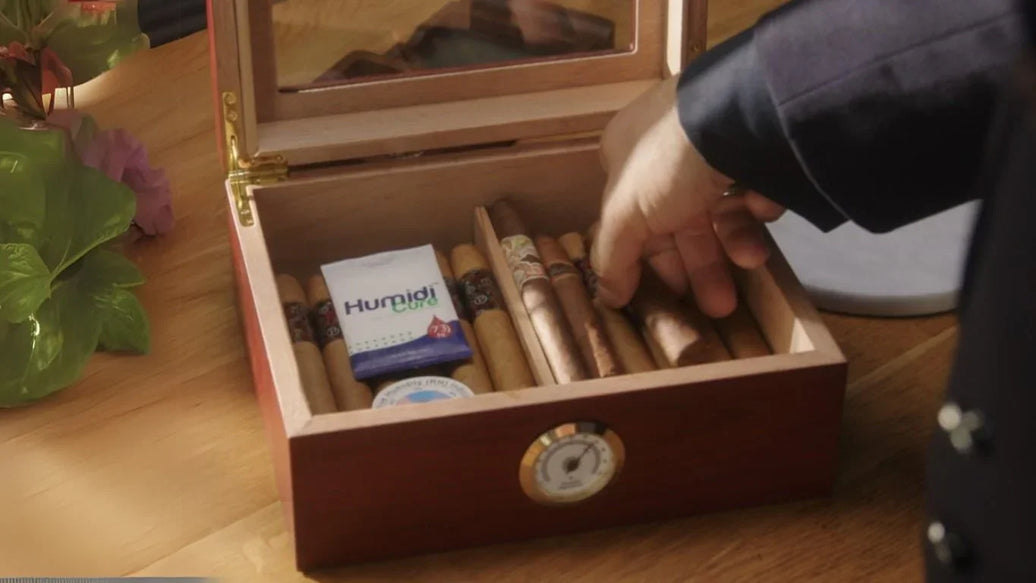
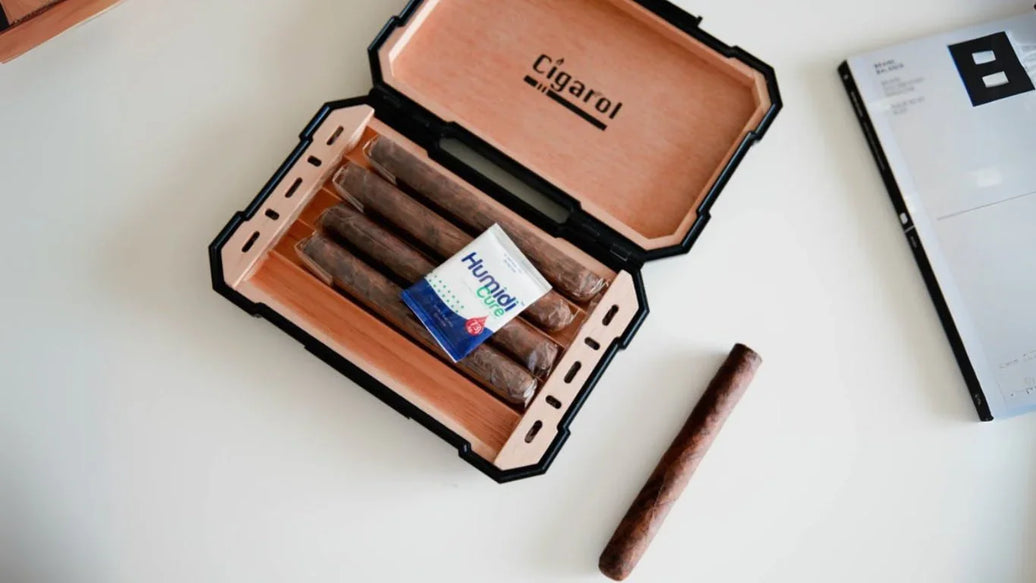
Three rules cover it. Keep the box cool — under 70°F, out of sunlight, away from radiators and electronics. Keep RH pinned, not approximate — outbreak conditions are made by spikes, the wet weeks a one-way sponge produces, not by a set point. A Humidi-Cure 73% two-way pack holds ±2% and absorbs any climb above the set point, which removes the humidity half of the hatch equation entirely. Quarantine new arrivals — a separate tupperdor for 2–3 weeks before new sticks join the main collection. Over-wet boxes are the precursor condition; the over-humidification guide covers how boxes drift there.
Frequently asked questions
Do all cigars have beetle eggs?
Many premium cigars carry some eggs despite factory fumigation and freezing. Dormant eggs are harmless; climate discipline keeps them dormant.
Will freezing ruin the cigars?
Not with the staged protocol above — major manufacturers freeze inventory as standard practice. The damage comes from skipping the gradual warm-up.
One pinhole — toss the stick or the box?
Toss the holed cigar, freeze everything else, clean the box. Larvae move between sticks; treating one cigar treats nothing.
Can beetles appear in a cool, stable humidor?
Practically no. Outbreaks track heat waves, sunny windowsills, and unregulated humidity — not well-kept boxes.
Cool box, pinned RH, zero drama
Beetle prevention is climate discipline, and climate discipline is one pack.
Shop Humidi-Cure 73% for Cigars — from $9.99
Tobacconist or B2B buyer? Get bulk pricing
Tell us about your packaging needs, and our sales team will respond with a customized humidity-control solution, supporting certificates and competitive bulk pricing.