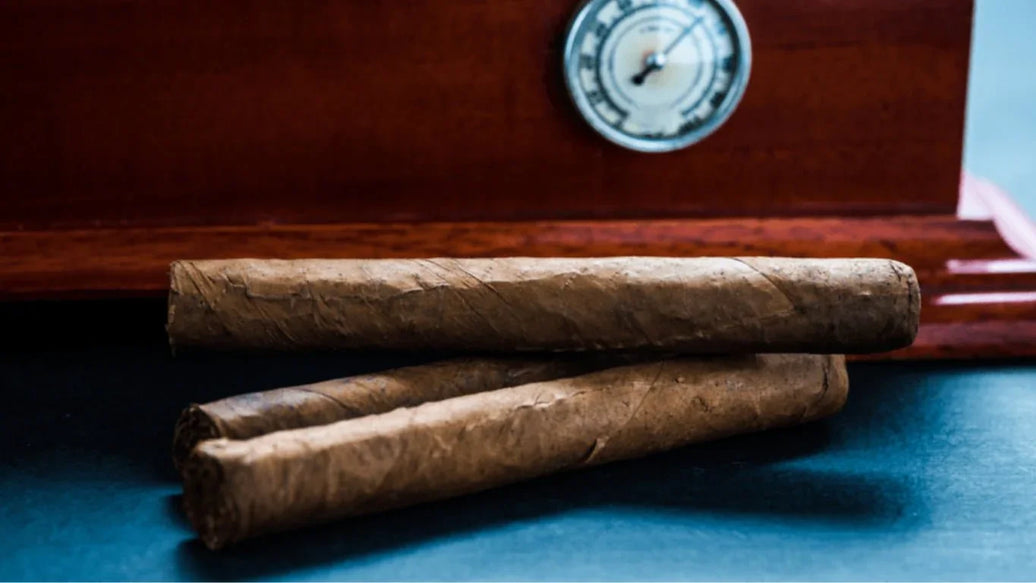
A dried-out cigar is not necessarily a dead cigar. Tobacco is hygroscopic — it gives moisture up and takes it back. What kills a dry cigar permanently is not the dryness itself but the rescue attempt: shock-humidifying a brittle stick swells the filler faster than the wrapper can stretch, and the wrapper splits. Slow is the entire method.
First, assess the damage
Probably saveable: the cigar feels light and papery, crackles softly when squeezed gently, wrapper intact. Borderline: fine cracks in the wrapper, foot tobacco crumbling at the edges. Gone: wrapper split along the body, filler pouring out, or the stick snaps. Oils that have fully evaporated over years do not return — a revived cigar smokes acceptably, not like it did fresh. The honest version: rehydration restores smokeability, not glory.
The slow rehydration method
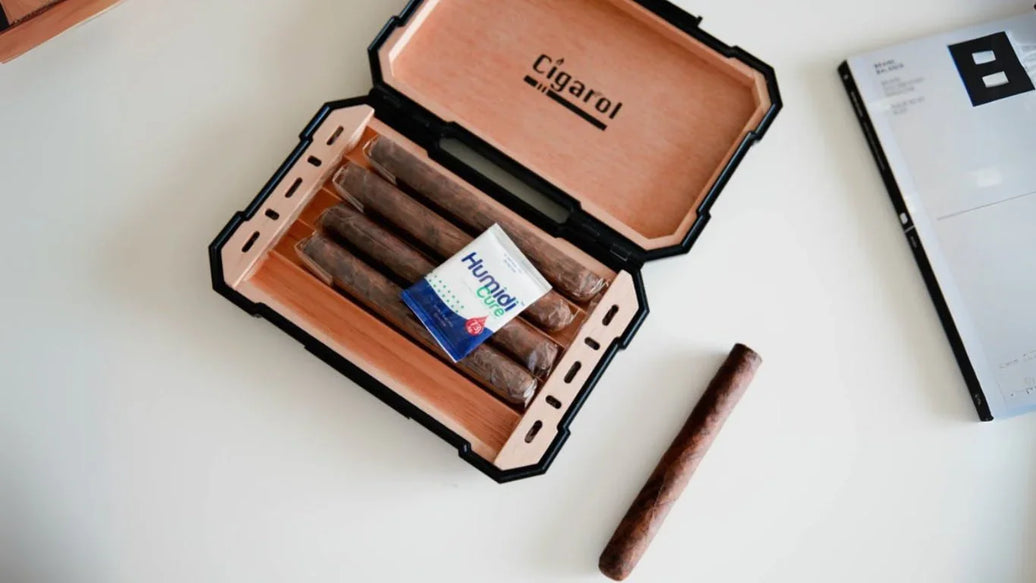
- Seal the cigars in a rigid airtight container — a tupperdor or large mason jar. Avoid bags for brittle sticks; flex equals cracks.
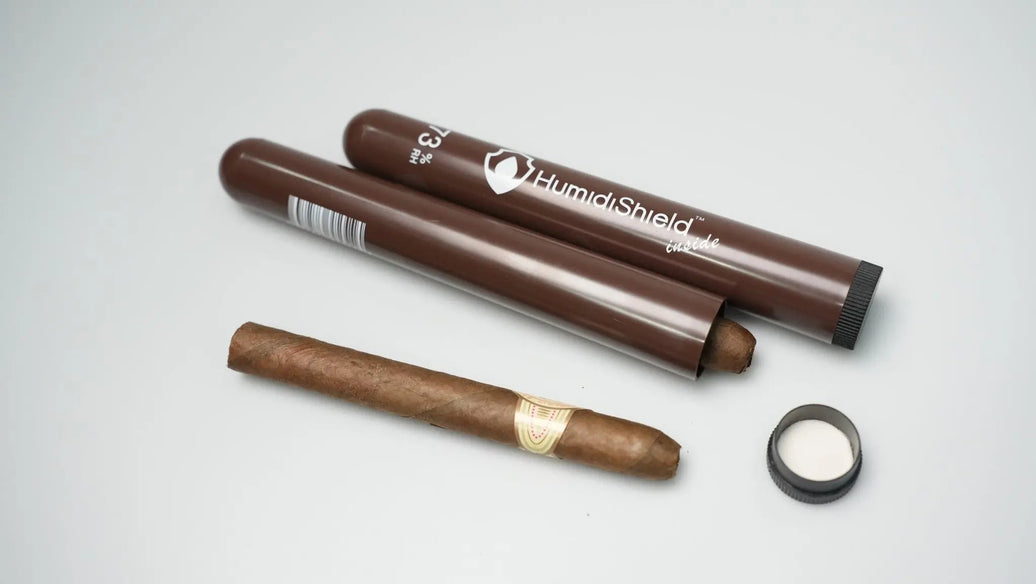
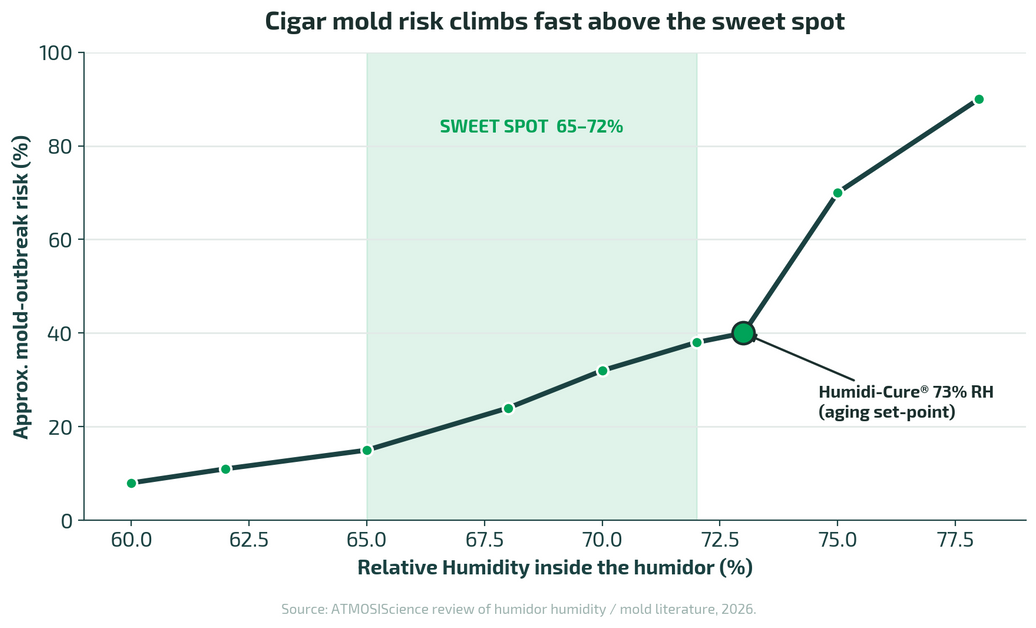
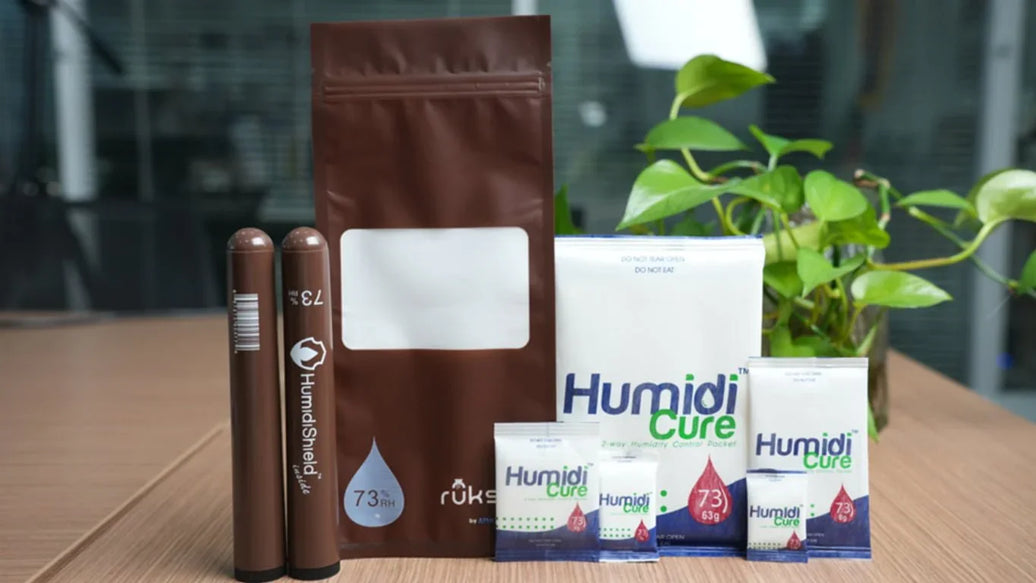
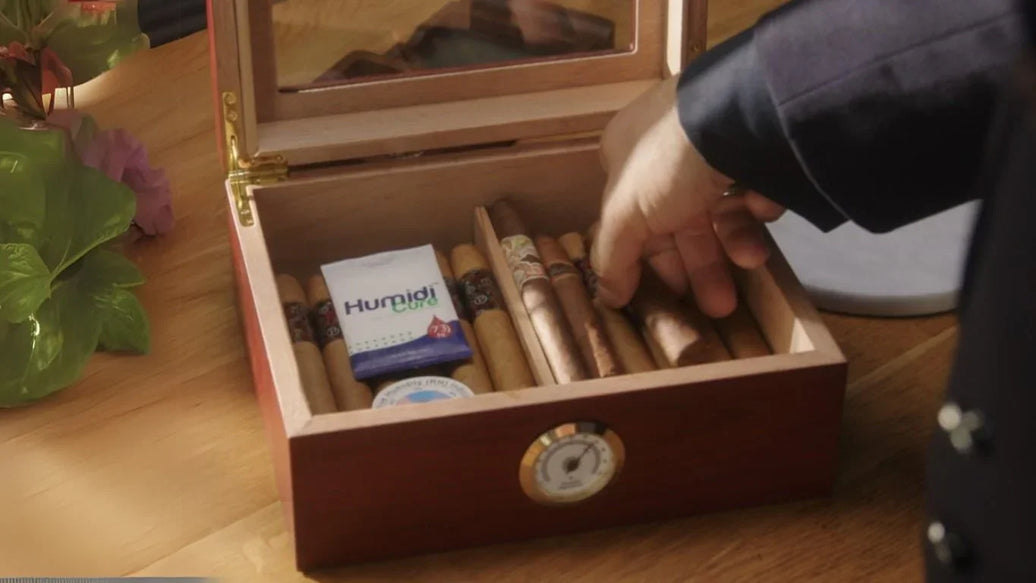
- Add a Humidi-Cure 73% two-way pack — undersized on purpose. For a container that would normally take an 8 g pack, start with a 4 g. A two-way pack cannot push the box past its set point, which is exactly the safety rail shock methods lack — but starting smaller slows the early climb for very brittle sticks.
- Keep the container at room temperature, in the dark, and resist opening it.
- Rotate the cigars 180° once a week so moisture takes evenly.
- At week 2–3, move to the full-size pack and let the box settle at 73%.
Week-by-week: what to expect
Week 1: the wrapper loses its papery feel; the stick still feels light. Week 2: gentle squeeze gives a slow spring-back; aroma starts returning at the foot. Week 3–4: weight feels normal, wrapper has sheen, the cigar is smokeable. Badly dried sticks (months at room air) can take 6–8 weeks. The test: a revived cigar should feel like the others in the humidor — if it still crackles, it needs more time.
What not to do
The bathroom steam trick. Surface moisture swells the wrapper hours before the filler moves — split sticks. Misting with water. Spot-swelling, water stains, and mold roots. The dishwasher-adjacent myths. No. Dropping dry sticks straight into a full humidor. Gentler than steam, but a 65→73% jump in a wet box can still crack the worst sticks, and very dry cigars temporarily drag the whole humidor's RH down — quarantine the patients.
Frequently asked questions
How long does it take to rehydrate a cigar?
2–4 weeks for typical dryness; 6–8 for severe. Faster is how wrappers split.
Can a cracked cigar be saved?
Hairline cracks often close as the leaf rehydrates. Splits that expose filler will not heal, though the cigar may still smoke with a cigar glue repair.
Will a revived cigar taste the same?
Close, not identical. Volatile oils lost to evaporation are gone; what returns is the moisture, draw, and even burn.
How to prevent this happening again?
A sealed box plus a 2-way pack swapped every ~3 months. The dry-out prevention guide covers the rest.
Rescue the sticks, then stop the cycle
One sealed container and one pack rehydrates the collection — the same setup keeps it from drying out again.
Shop Humidi-Cure 73% for Cigars — from $9.99
Tobacconist or B2B buyer? Get bulk pricing
Tell us about your packaging needs, and our sales team will respond with a customized humidity-control solution, supporting certificates and competitive bulk pricing.